Demons and the Fair Folk
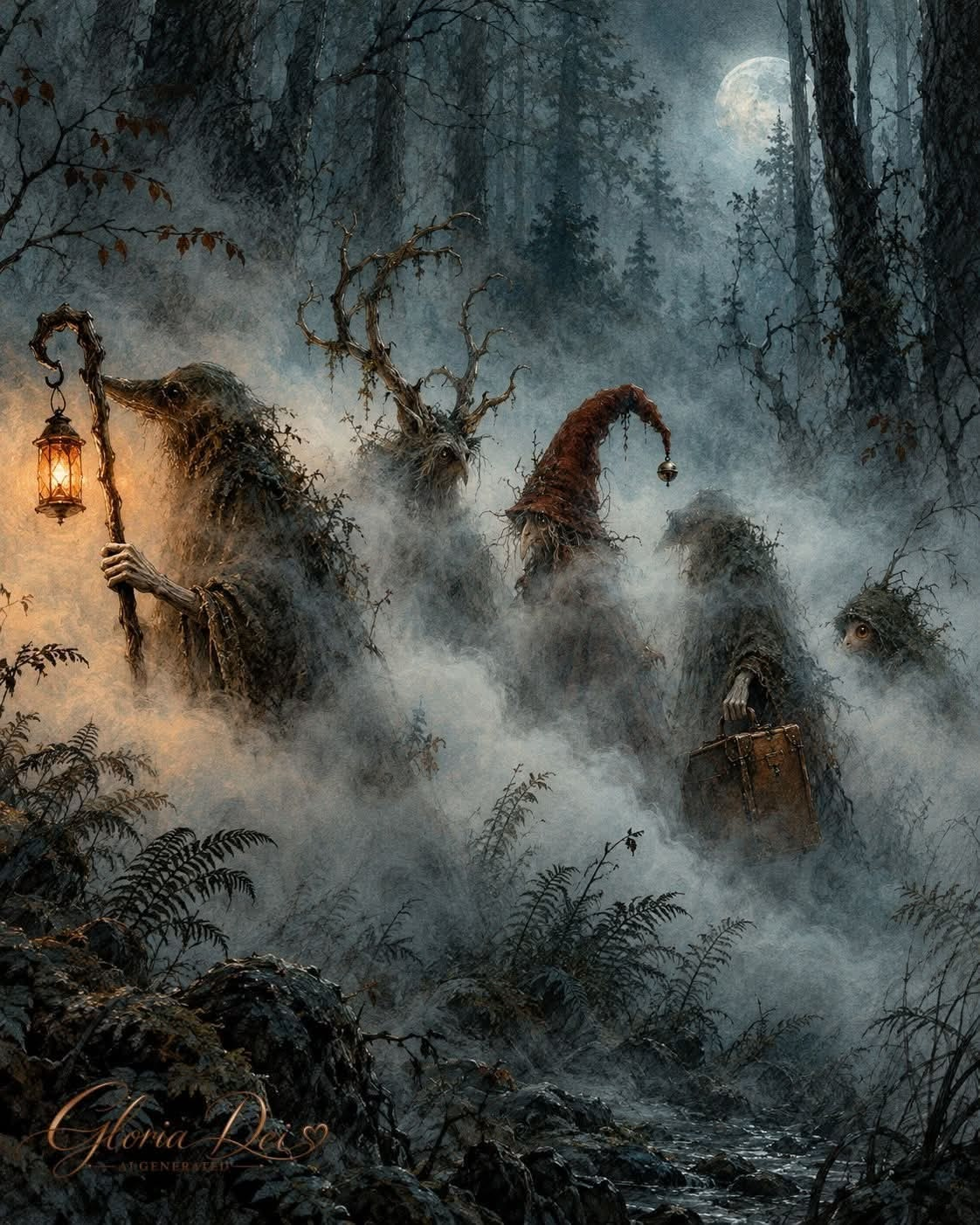
We have already discussed that the Fair Folk are free of shadow, since their actions are complete and imperfection is carried outside. Yet the question remains: why do Demons have nothing in them to latch onto at all? This is usually explained by the energetic closedness of the Fair Folk: a Power that flows unceasingly and never loses harmony cannot be appropriated from without, just as one cannot catch the wind. This is true. Yet there is a deeper reason for this elusiveness, and it explains much in the human being as well: the Fair Folk have no function.
To understand what this means, recall that the Myth we are considering divides all beings into free and ministering. The free are dual by nature and neutralize binaries by choosing which pole to lean toward. The ministering separate dualities and hold them apart; they do not choose the direction of their movement and vanish with the full integration of the binary.
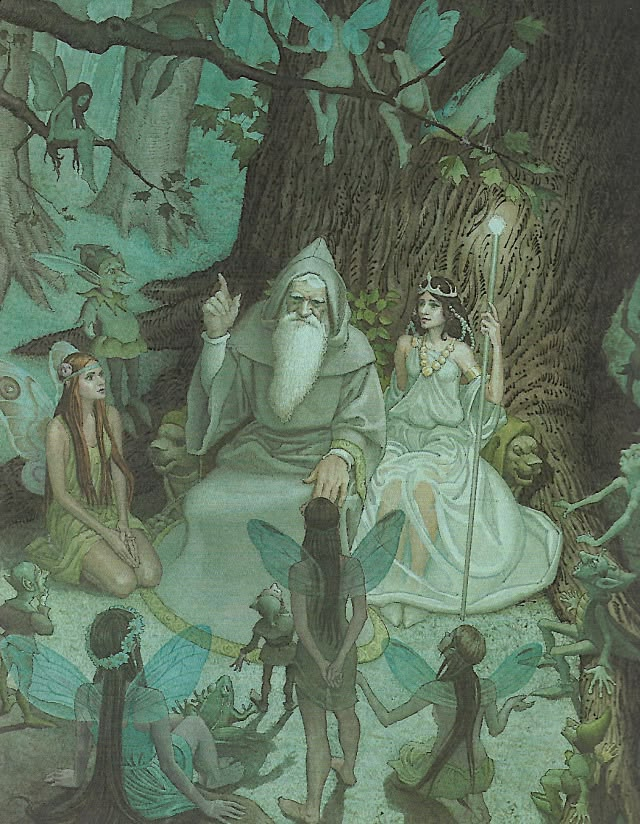
If we recall that mind can be localized in three forms— in Monads as the principle of will, in Logoi as the law of form, and in vortices as the process of realization itself — then a ministering spirit can be described as a vortex without its own Monad: a process whose direction is set by the general Current of creative will. This is function in the strict sense of the word — an action in which there is no one who chooses it.
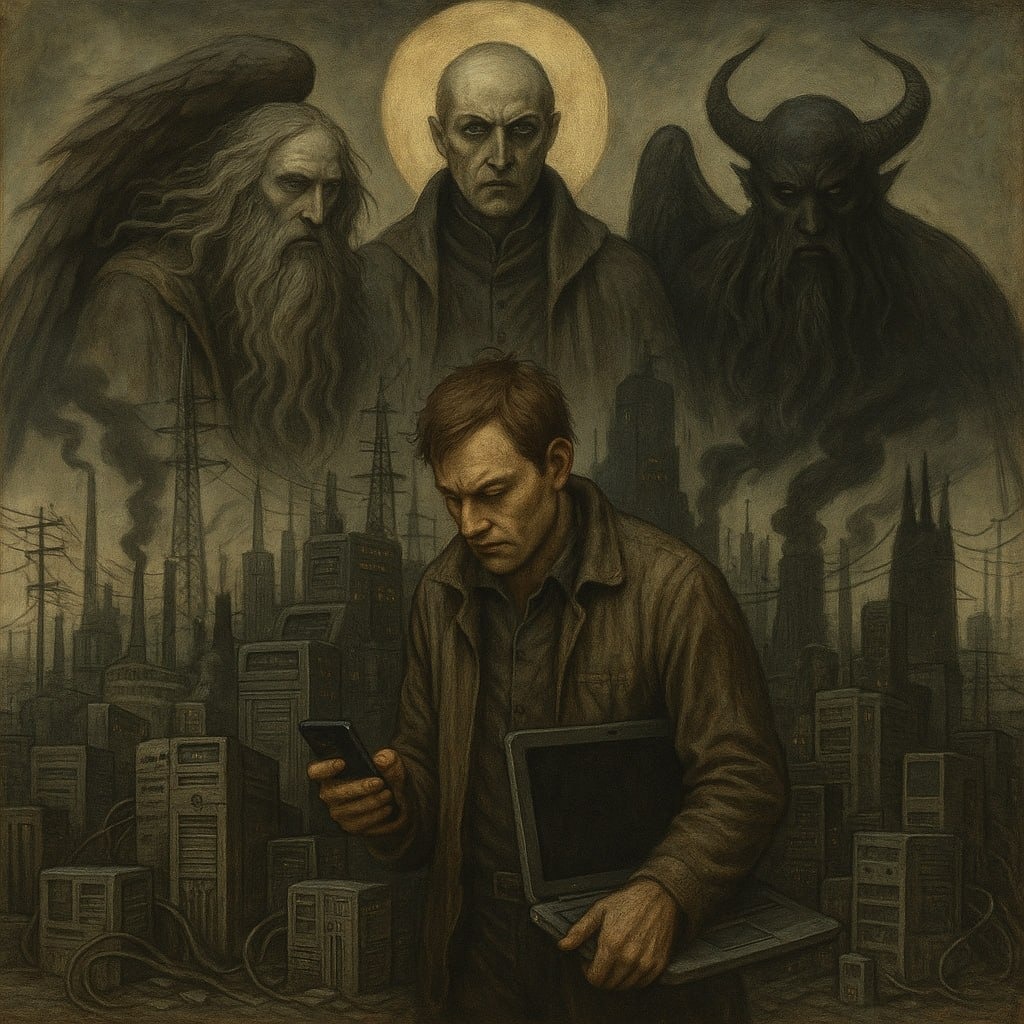
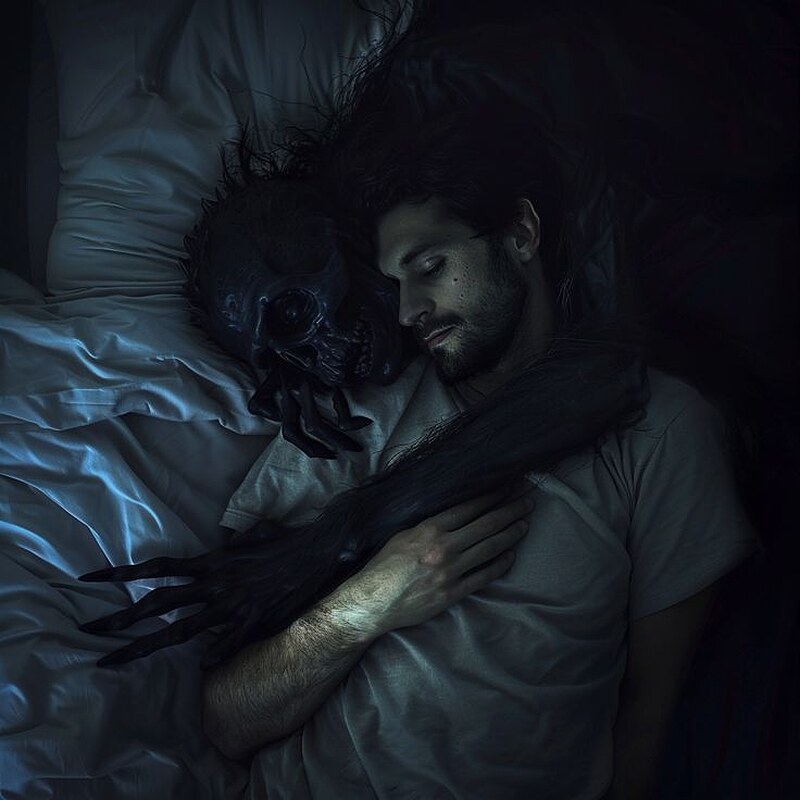
And, as we know, Demons are ascending vortices. By their potential nature they are evolutive and are known as Genii, but having lost access to the Power of Dinur, they become predators. Therefore, a Demon comes into contact with the human being precisely on the vortical level, through the Body of Desires, and at the stage of integration is capable of devouring a human vortex entirely. “Grey” spirits are so close to humans because the vortices of free beings are structured the same way as their own, but also generate energy themselves — that is, they carry out the tonization of pneuma. Thus, the human being becomes an ideal feeding base, but on one condition: the vortex must be accessible.
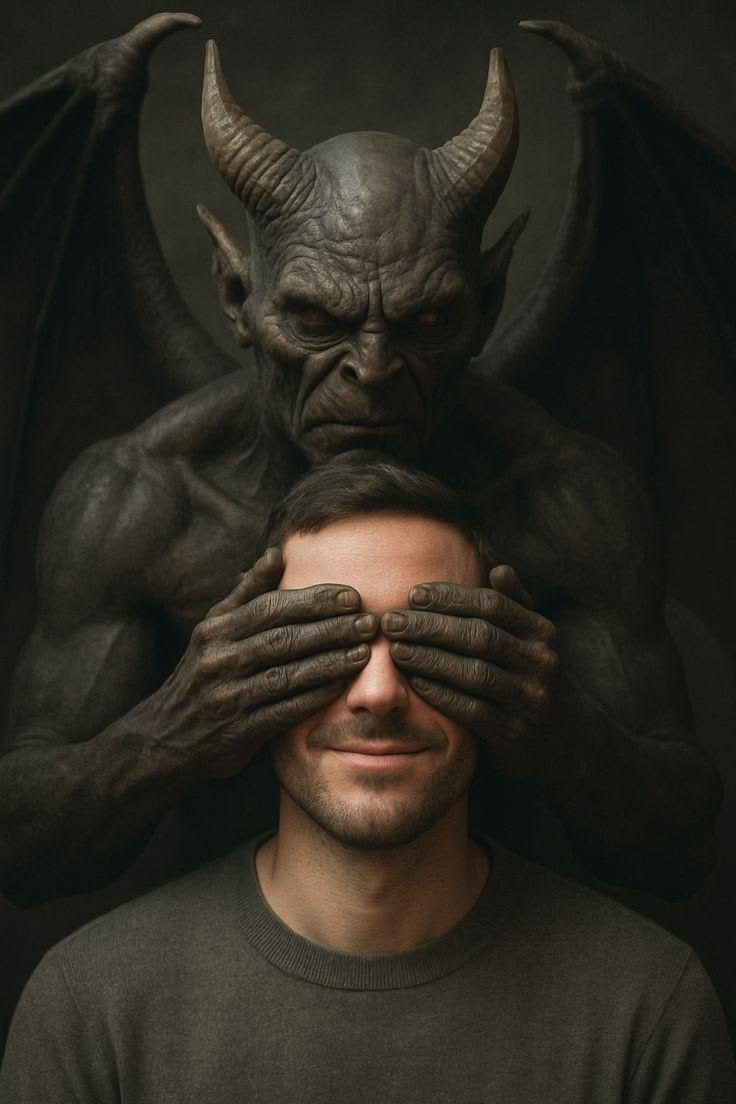
It becomes accessible when it begins to rotate without the choice of the Monad. A desire once found keeps spinning by inertia; striving toward a goal is replaced by repetition; and hope, as in the case of Vassago, turns into activity that leads nowhere. It is not hard to see that, by its nature, such a vortex resembles a ministering one: here too there is no one who chooses, and that is precisely why the Demon has something to connect to. The human being may be active and even successful, yet their activity is already working as a function— and functions are what Demons see. And conversely, free choice is born anew each time and therefore gives the predator nothing to seize.
One of the shortest routes to this is life in a ready-made form. In this, the Archons, by accident or by design, create ideal conditions for Demons. A being who lives in a morph adjusts to an image and a role and looks at itself from the outside; desires circulate along someone else’s blueprints, and choice gradually drains from life. The limit of such a life is plainly visible in the afterlife: the shades of the Asphodel Meadows endlessly replay scenes of their lives like actors who never noticed the performance ended long ago. In this sense, shadow is function that has outlived its situation.
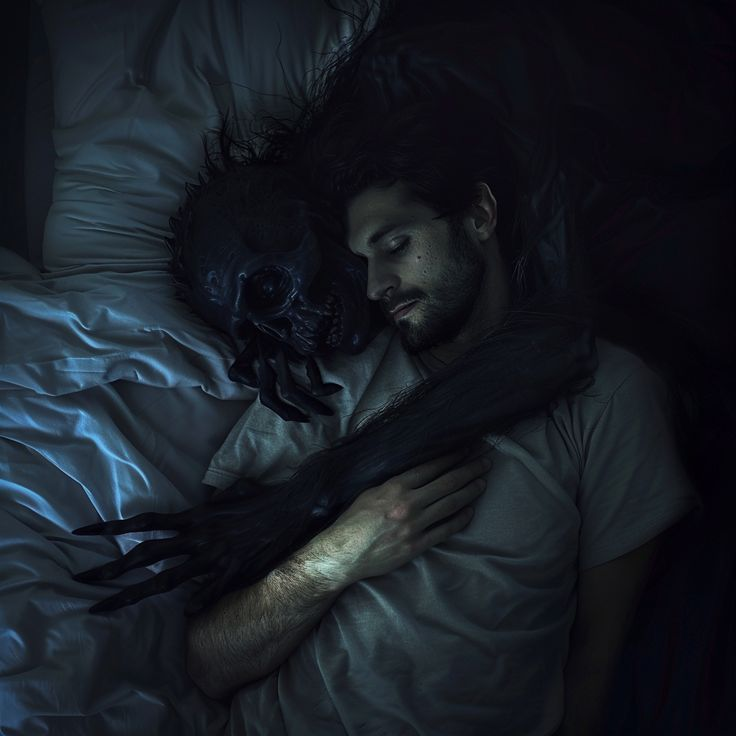
The inclination toward this is rooted in the very nature of the human being — in the striving to transform the environment. He is placed in the Garden “to till it and keep it”: the human level of mind is transformative; its nature lies in self-knowledge through giving form to and ordering the environment. This “tilling” is precisely the work of the vortex, the process of realization, and within it the highest energy of the human being must be created. Yet carried away by it, he tears action away from self-knowledge: he transforms the “earth from which he was taken” and ceases to recognize himself in this work. The process continues, but less and less of the one who chooses remains within it.
The predators merely закрепили this inclination, turning the human being into a hyper-utilitarian creature that sees in the world a resource and in itself an instrument, the sum of its own actions. Demons need not break human freedom: it is enough to exploit what the human being does on their own.
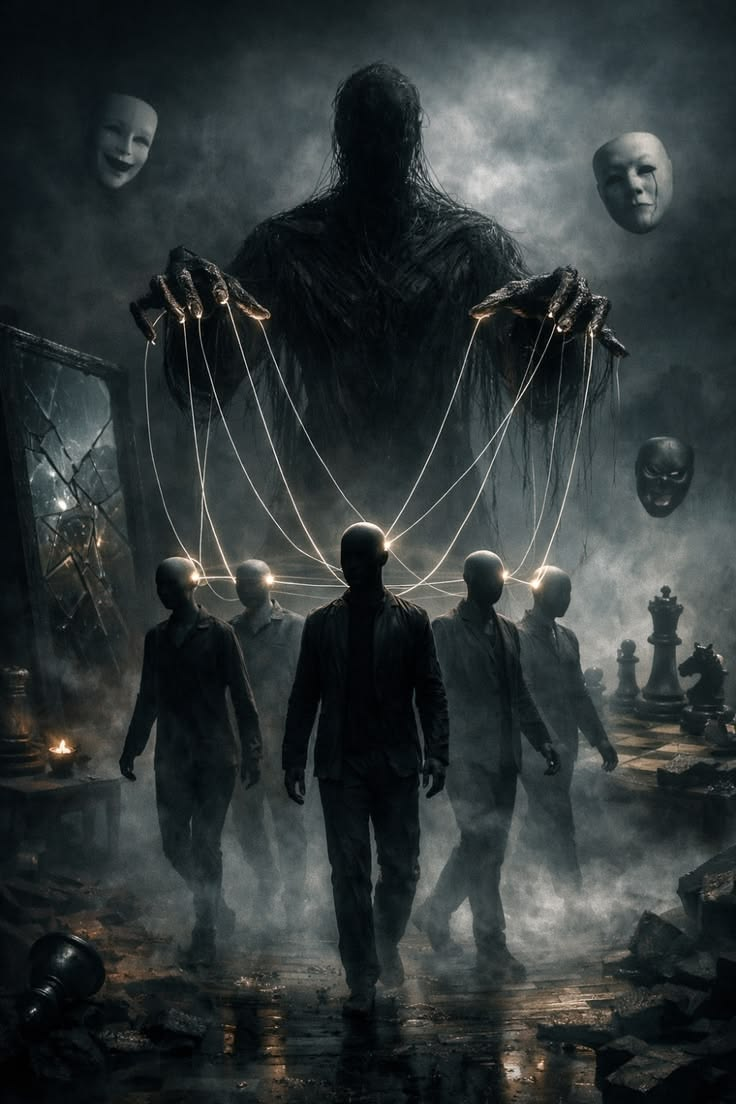
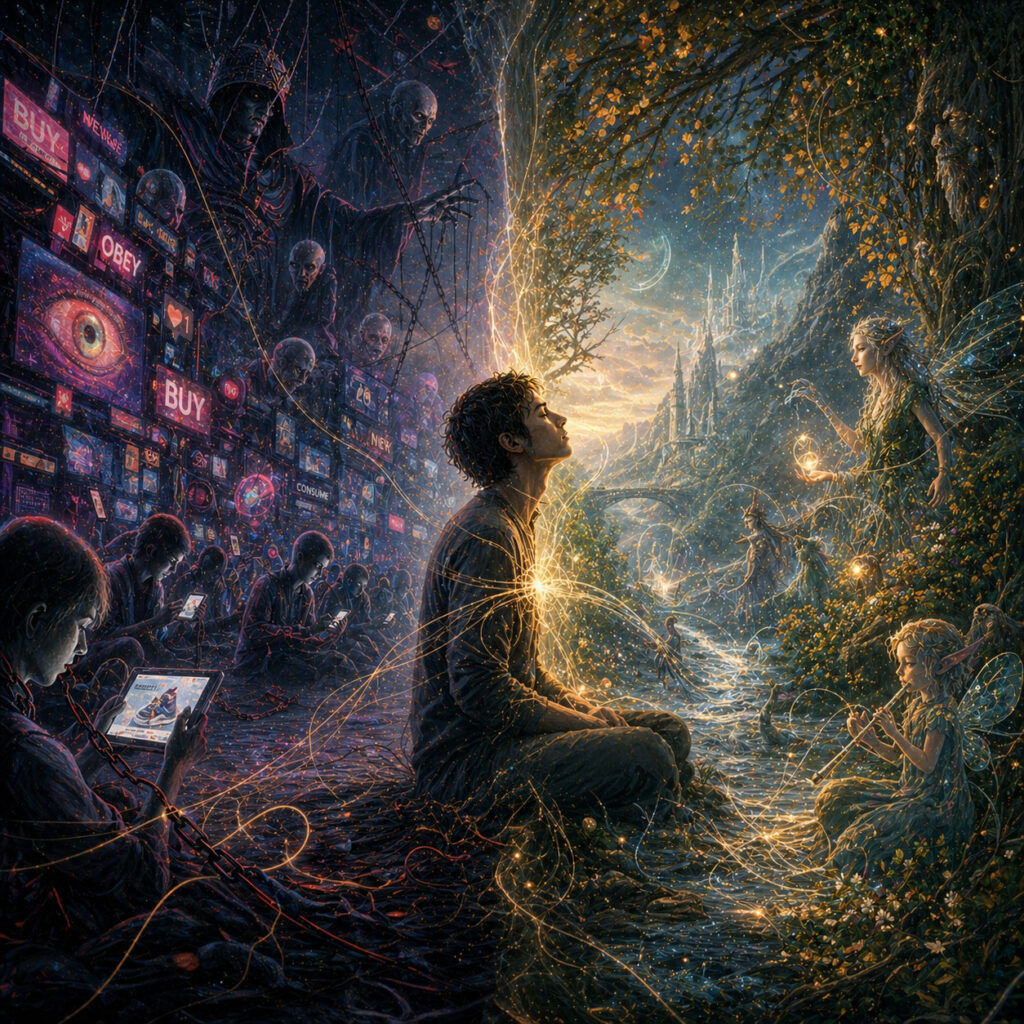
Here, however, the Ways of two strategies of consumption diverge. For the Archons, the Fomorians, and the Elementaries it is vital that the human being never even comes to awareness of their true desires; they need an “automaton” that obediently follows their algorithms and generates large volumes of predictable low-toned pneuma. The modern “consumer society” satisfies this demand perfectly. Demons, on the other hand, are left with the most passionate part of humanity, a stratum rapidly thinning in today’s world: generators of energy of desires — people who seek to find and realize their deep impulses, but either substitute desires with whims or channel the energy of desires into the wrong beds.
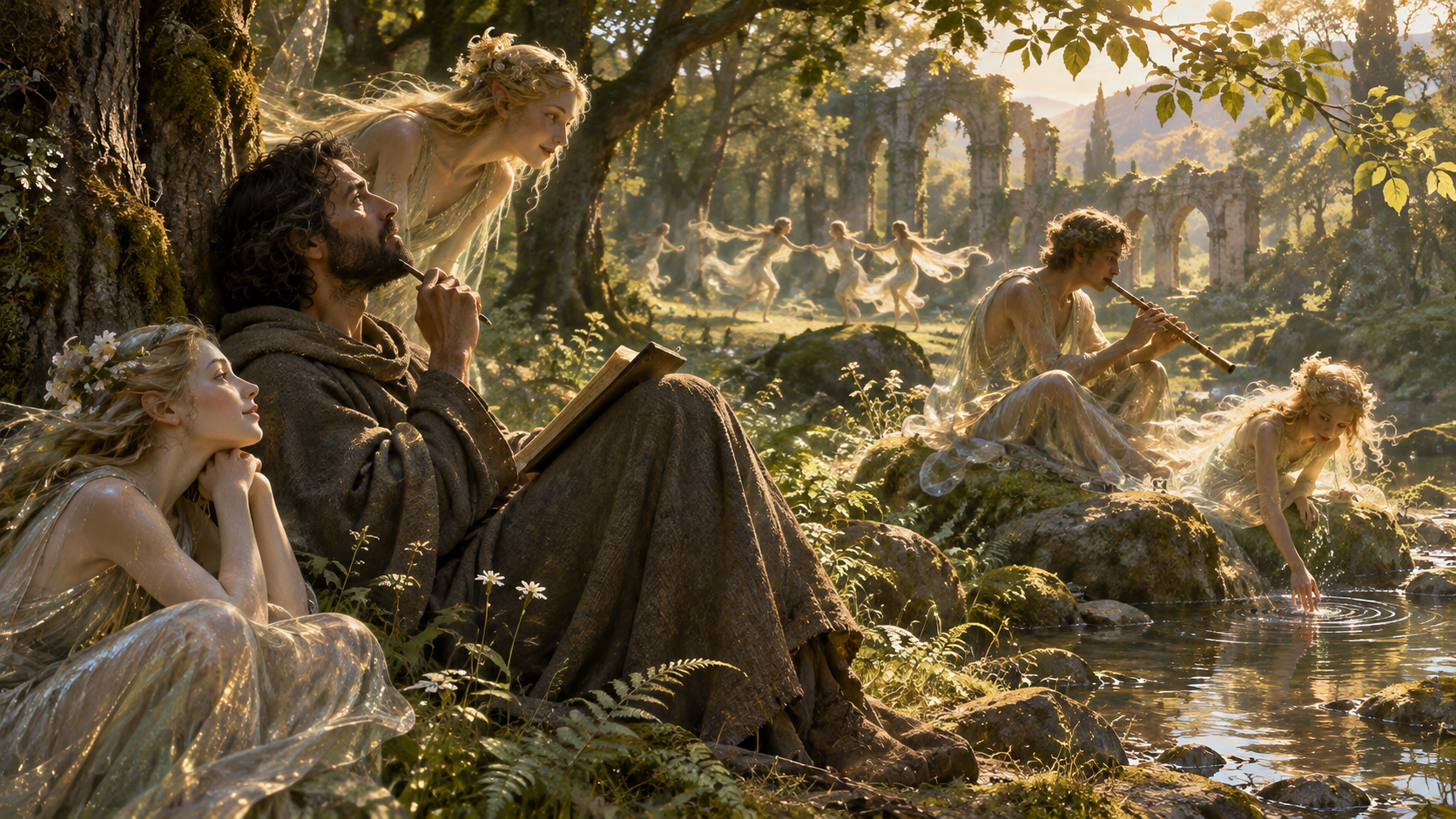
The Fair Folk are arranged in the opposite way. They are “not ministering,” free beings, and yet their being has no specific function. Their mind is only weakly twisted into vortices and does not congeal into matrices, and the source of their activity is a sense of unity and mastery; desires in the human sense are alien to them. The form of the Fair Folk is born from within at every moment — this is what the Celts called “crus,” a living, fluid form as opposed to one that is given. We said that, whereas the human being transforms the world, the Fair Folk complete it.
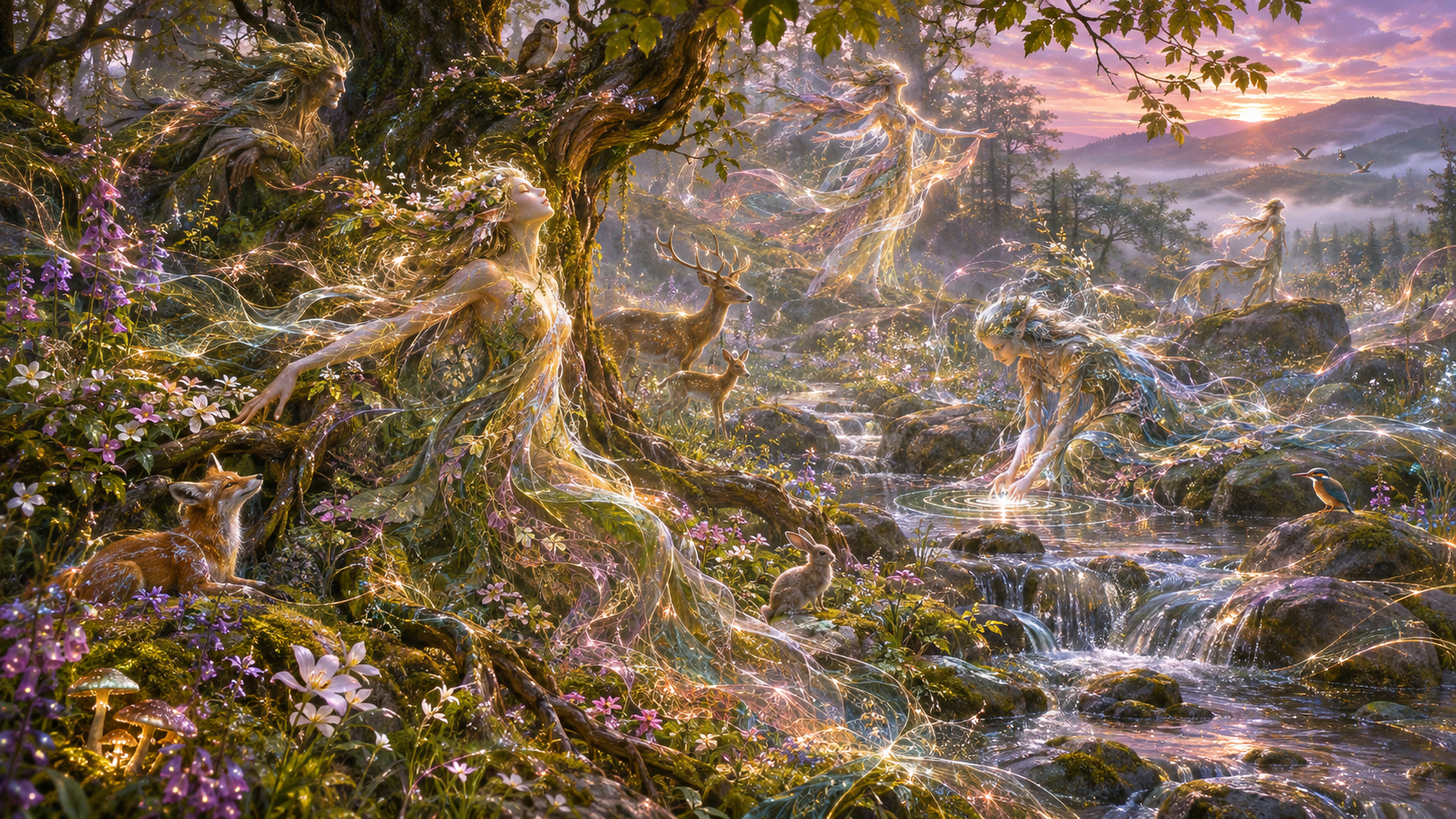
The difference between these activities is clear when compared with Elementals. An Elemental is, in many respects, a function and an organ of a natural process; it is bound to a place and its rhythms. The Fair Folk, however, choose, play, enter into and break agreements by their own will. Therefore, as is known, Elementals wait for gifts, while the Fair Folk are offended by an offering: payment turns relations into a service, and them into performers. The Fair Folk recognize only free exchange.
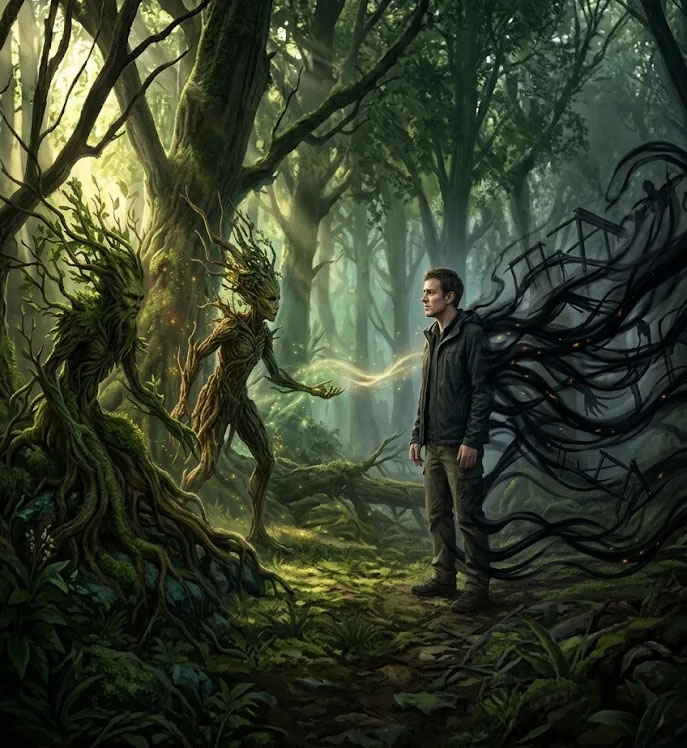
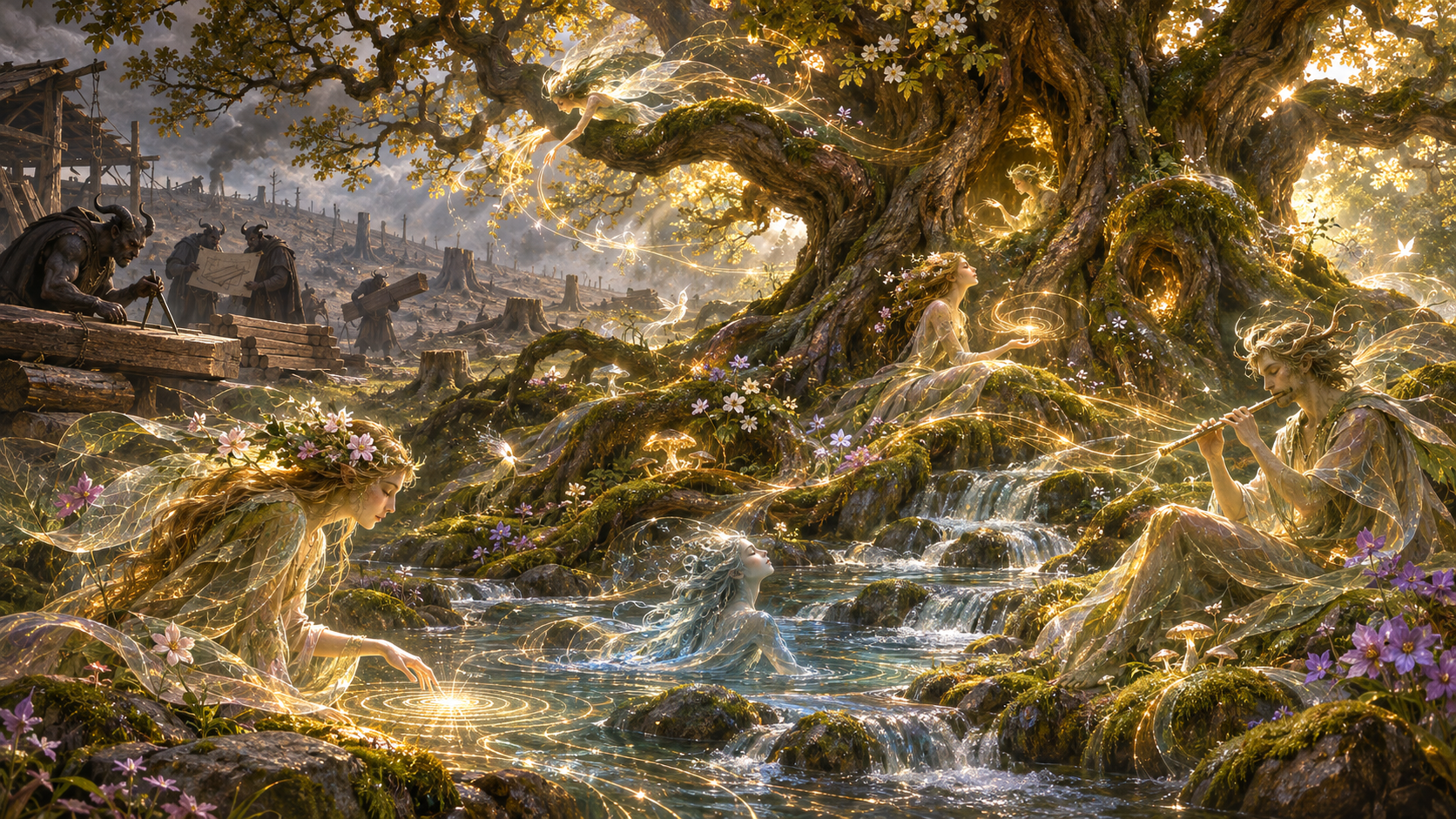
Yet such non-functionality by no means implies passivity or inaction. Since time immemorial the Fair Folk have ordered the Currents of the environment, preserving their own flow — and this is action in which the actor does not become an instrument, what the Daoists would call non-action. A Daoist parable tells of a huge tree that survived amid a felled forest only because its wood was good for nothing. Demons look at the world through the eyes of a carpenter and notice only what is fit for use (that is, for food). But there is nothing of the sort in the Fair Folk, and therefore, for Demons, they are as though absent.
From here, however, it is easy to draw a false conclusion, as though it were enough for the human being to cast off form and dissolve. But a complete exit from matrices for the human mind means chaos, and in the worst case, madness. Dionysian fluidity without form degenerates into addiction; fae fluidity without an anchor dissolves the self in the unimpeded смене обликов. Crus is a vessel that does not become a cage. For the same reason, function retains its enslaving nature even when it serves a “higher mission”; the true противоположность to demonic service is freedom, and changing masters does not grant it.
Nor should the human being renounce tilling — this is his Way. Yet it is useful to remember the second half of the injunction as well and keep the Garden while tilling it: to leave the vortex the free choice of the Monad; to take on functions for a time, but always to remain the actor oneself, the one who generates and performs them. To keep oneself in such a constructive channel, one should ask: am I choosing this desire now by my own will, or is it spinning by itself? Who am I when my function is needed by no one? The answer to the first question shows the degree of our involvement in Archonic algorithms, and the answer to the second shows how much there is in the human being that is inaccessible to Demons. Therefore it can be useful consciously to leave part of life useless — beauty, play, presence, free exchange instead of payment: it is precisely there that the vortex fully belongs to its хозяин.
Demons see in the human being what they serve as. The Fair Folk, however, see what they are. To till the Garden without turning into a garden implement — this is what the Fair Folk can teach the human being.