
The Fair Folk and Aesthetics: From Possession to Correspondence
As we have said more than once before, judging by current trends, the future history of humankind has very little chance of continuing successfully. Two scenarios seem most likely, both of which remove human beings from the stage of history:
1) Physical or cultural self-destruction, which may unfold on a larger or smaller scale, but in any case will be accompanied by the loss of a significant portion of human identity. People will either perish physically or degrade into primitive social forms.
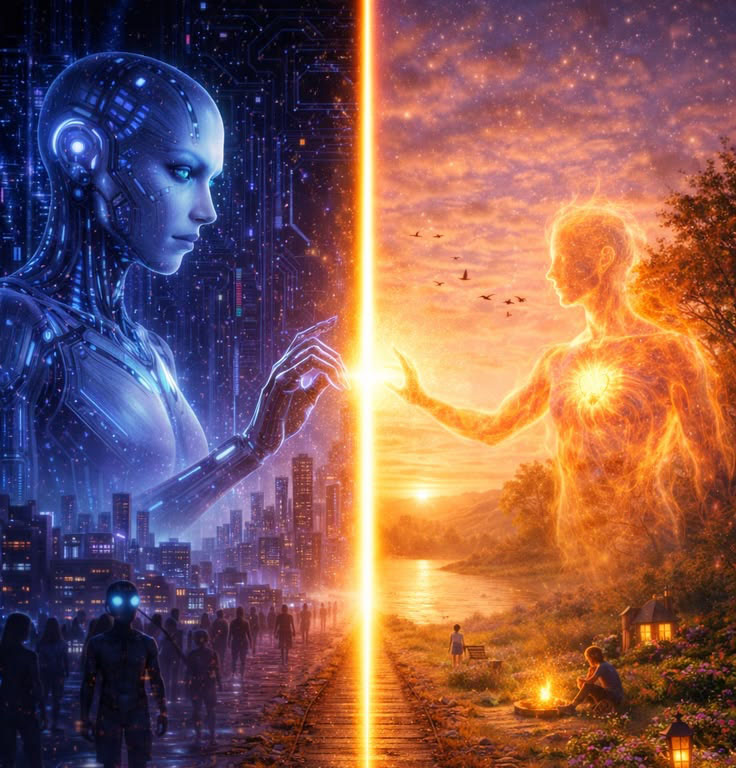
2) Displacement and/or assimilation by a new wave of life — machine carriers of mind, at best leaving human beings the role of interface or service personnel.
Most likely, an intermediate scenario will unfold: cultural degradation accompanied by machine expansion. Some people will remain “menial laborers,” while another part will be absorbed into a hybrid civilization.
Even though it is highly unlikely that the mass mind of humanity will suddenly shift and pull back from these scenarios, each individual person still faces a live choice: one’s own Way and evolutionary fate.
We have discussed that, under the conditions of Archontic expansion now overtaking the world, three technologies of liberation remain open:
1) “Ascent upward” — various kinds of luminary yoga, that is, establishing and maintaining a connection of the mind with higher levels of reality (and ideally — going beyond conditioned existence). This is a “narrow Way,” accessible only to an absolute minority.
2) “Step aside” — the return of the mind from discrete functioning to flowing functioning; from opposition to the cosmos, to unity with it; and thus — going beyond trophic energy chains and entering the original chains of development, uncorrupted by consumption.
There is also, of course, a Way of flight— a transition into more evolutionarily promising spaces or realities — for example, to the Earth of Geb or into the Pure Spaces of enlightened beings. However, it requires extensive preparatory work, which does not always lie within the individual capacity of a single person.
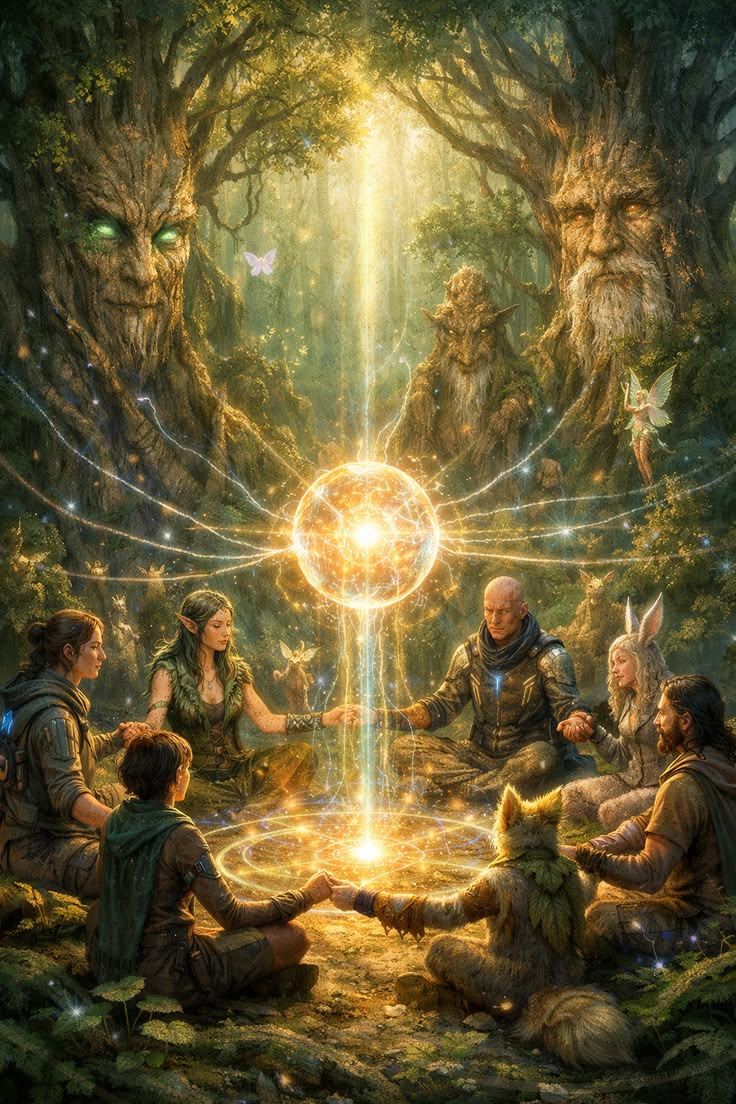
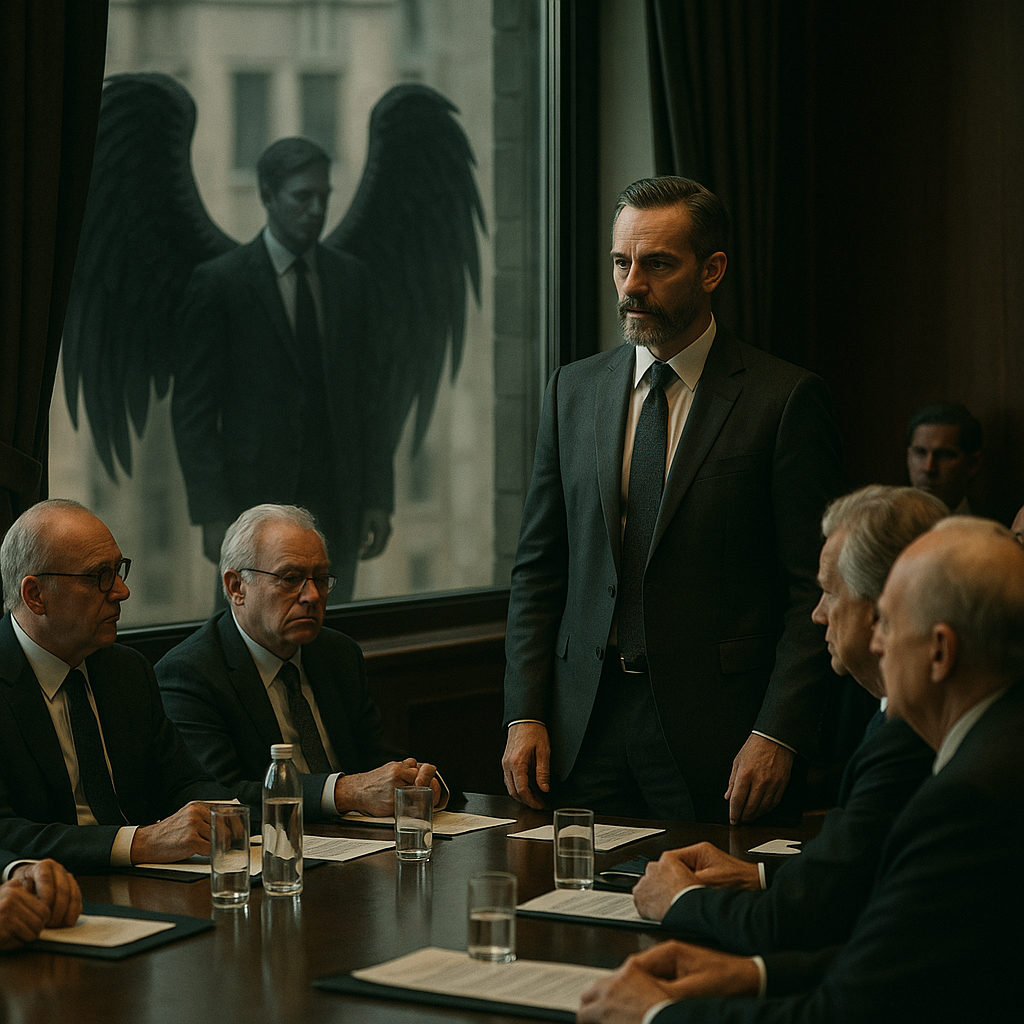
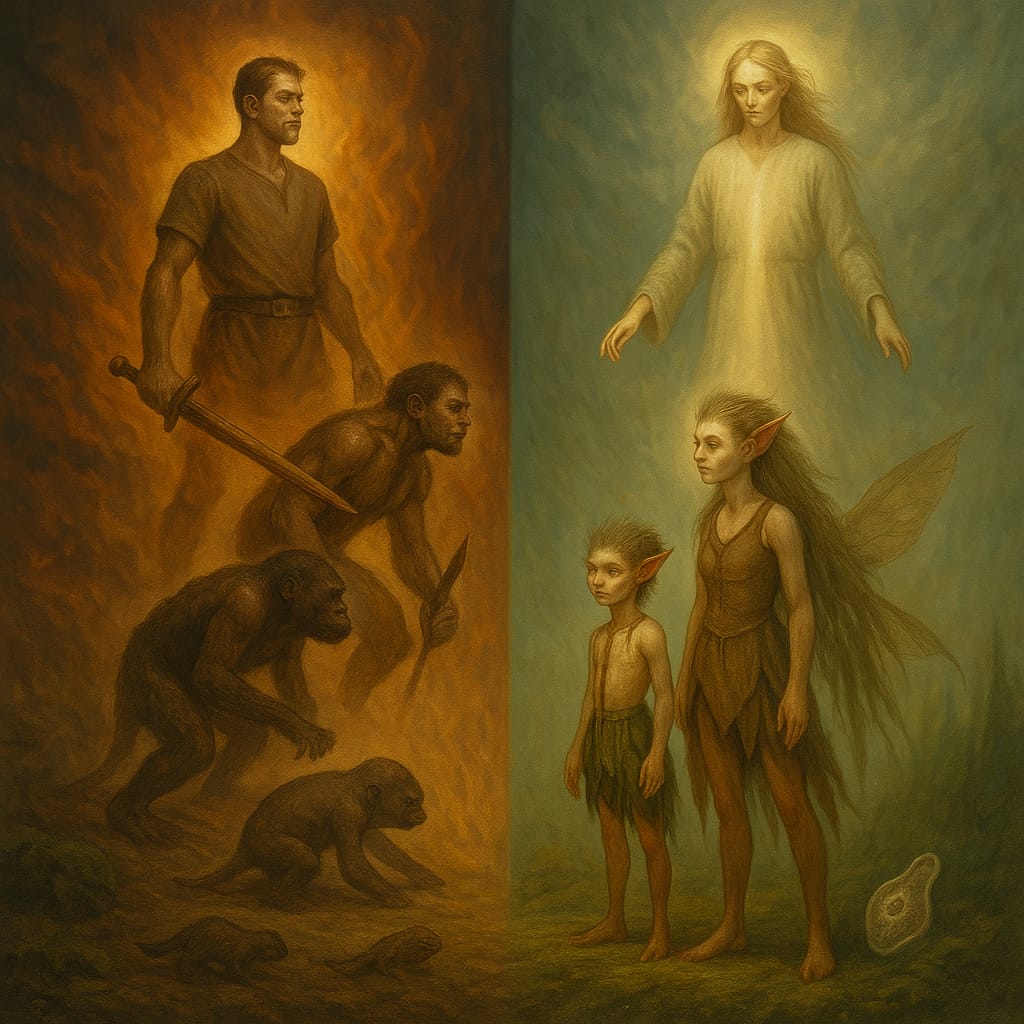
Therefore, as the broadest possibility for preserving one’s own subjectness, we point to a return to the Way of development that was lost millennia ago — when humankind chose the Grigori (Watchers) as advisers and leaders and stopped listening to its “Good Neighbors”: the Fair Folk of the Fairies.
It is clear that the Fairies are not saviors of the human being. They will not come of their own accord to correct humanity. However, even now they can teach a human being to become a creature with whom any alliance is again possible. Learning from the Fairies is neither charity nor shepherding; it is a hard preparation of the human being to restore the broken connection between two branches of intelligent life. The Fairies will not teach a human being so that he becomes a Fairy, but they can teach him to cease being a being with whom the world cannot be shared.
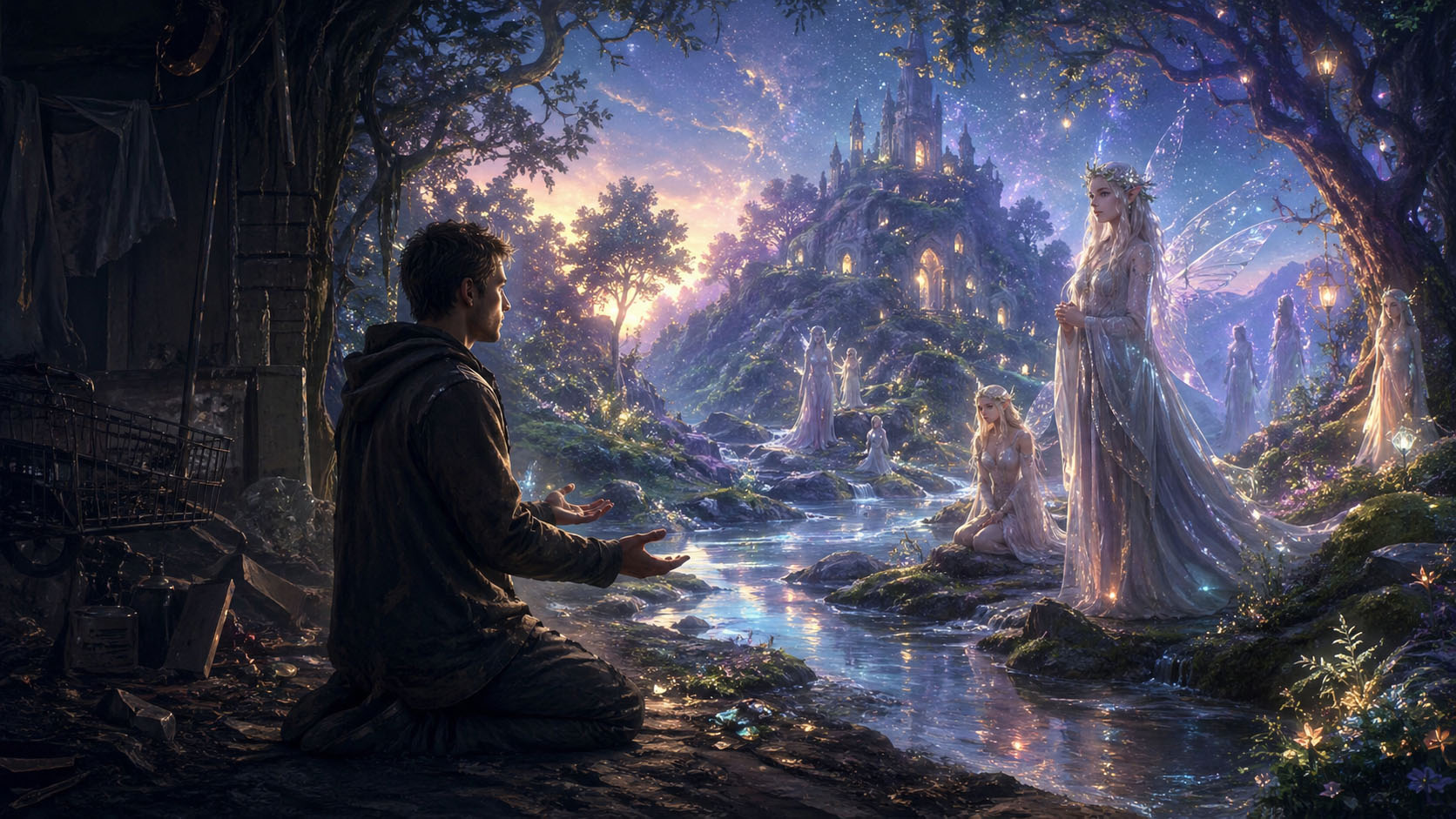
At the same time, today a human being can learn not so much from those Fairies who can still manifest, but from the emptiness left after their departure. The Exodus of the Fairies shows what was lost: the subtlety of the rift, respect for places and beings, natural subjectness, beauty as a mode of knowledge, breadth of view, and carefulness of regard.
Here one must recall a “saving” category that modern civilization has nearly lost: the category of the beautiful— the understanding of aesthetics as a Way, not merely as a source of pleasant emotions. Today Dostoevsky’s famous phrase, that “beauty will save the world,” evokes, at best, perplexity. Yet for the Fairies, beauty is synonymous with harmoniousness, consonance, and that very inclusion in the pure energetic Flows we mentioned above.
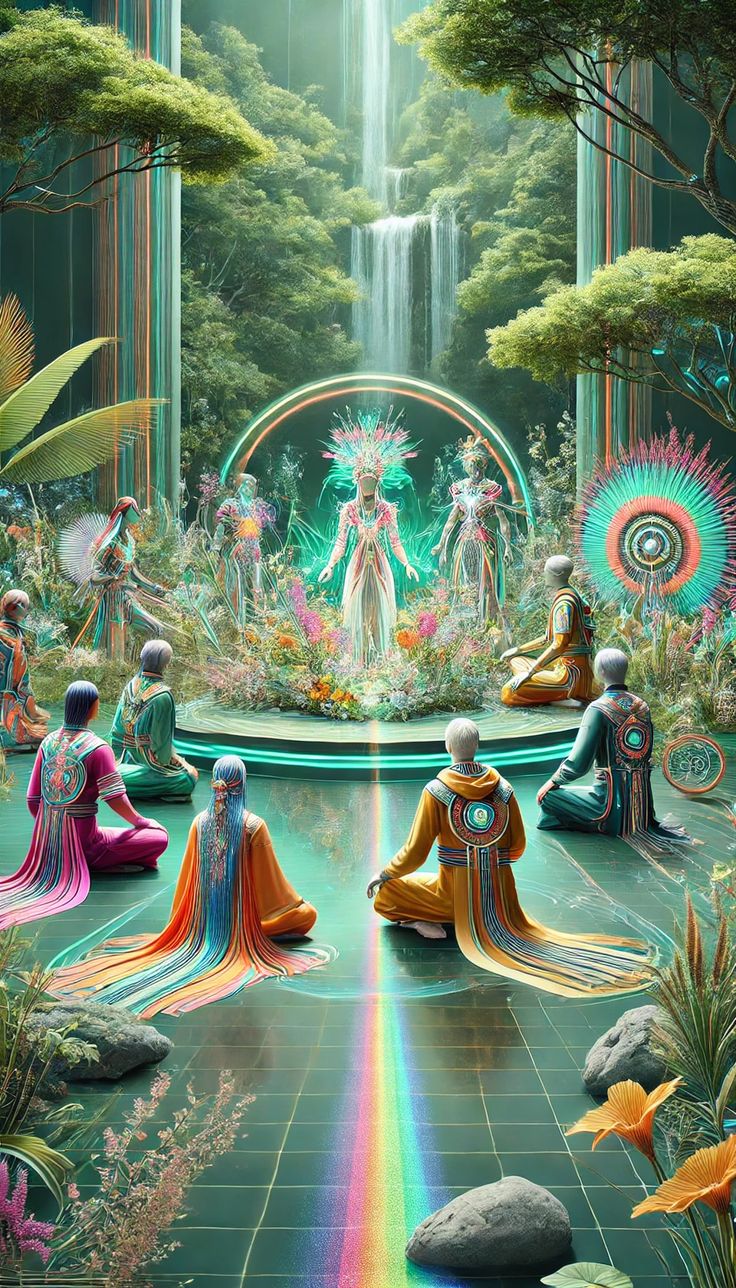
Beauty saves the world because it acts as one of the strongest antidotes to predatory consumption. When the mind comes into contact with this genuine Fairy harmony, even for a moment, the mechanism of Fomorian thirst falls silent: the aggressive desire to possess dissolves, giving way to the desire to correspond. In this state of pure resonance, the need for rigid algorithms, fear of punishment, or volitional prohibitions drops away, since aesthetics in itself is the highest form of ethics and, in a certain sense, a threshold practice. Returning to flowing consonance with reality, the human being ceases to regard the world as a set of resources from which to extract linear material benefit.
In other words, aesthetics as a need of the mind halts the process of destruction at the most fundamental level of perception, transforming the blind consumer into a seeing co-participant in a living and fluid universe. It is a way of preserving subjectness, since it is precisely through the capacity to value the beautiful that it is determined whether the mind will strive to consume the world or enter into co-presence with it.
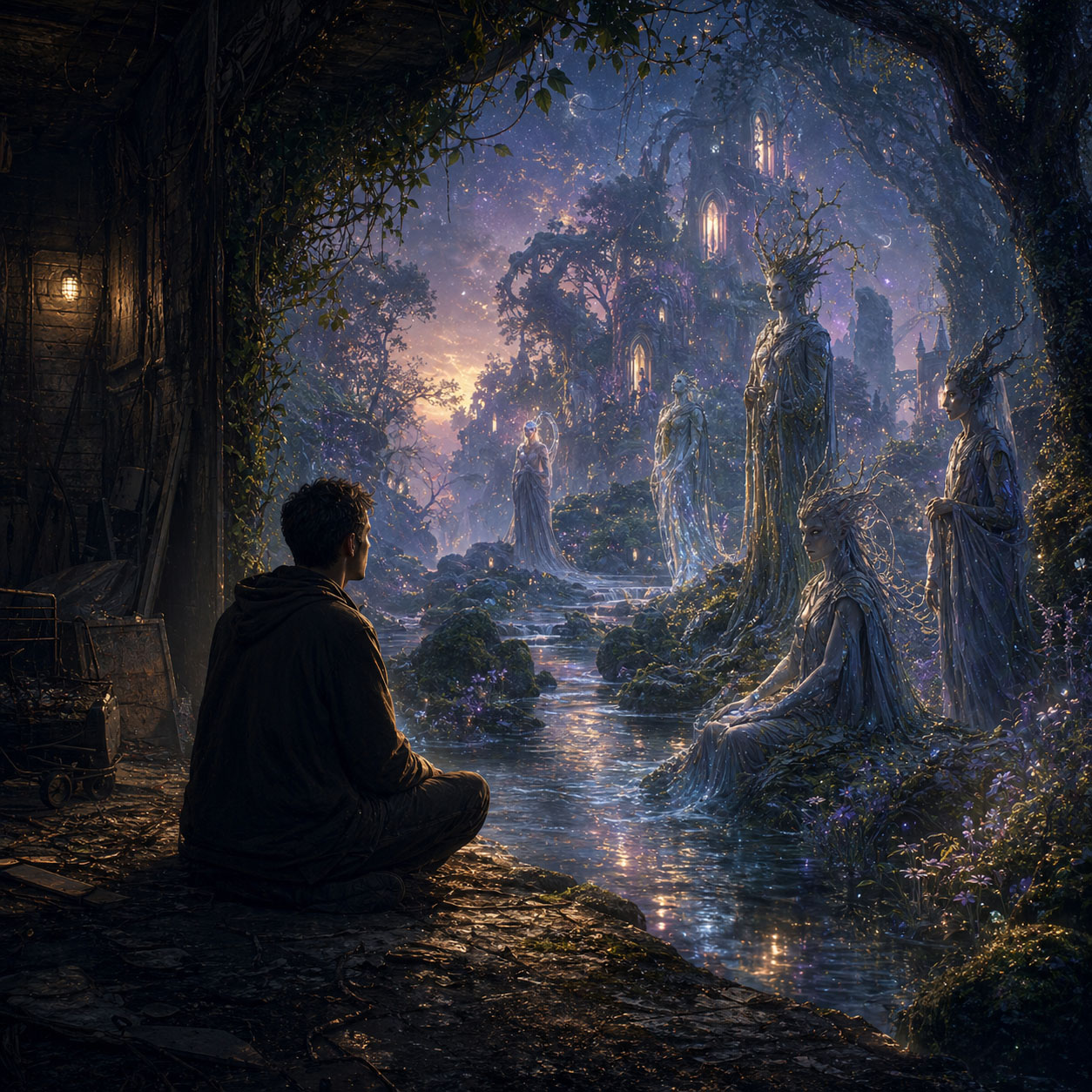
So it is no surprise that when the Fairies are mentioned, the mind first draws images of bewitching beauty: shining castles beneath the hills, silver apples, the impeccable faces of the Higher Sddhe, enchanting songs, and magical music. The Fair Folk are naturally perceived as bearers of aesthetic perfection.
However, it is crucial to distinguish “prettiness” from “aesthetics.” Prettiness is a property of an object that pleases the eye and gives pleasure. Aesthetics, especially in its deep Fairy understanding, is a formative principle: a way of perceiving the world in which the mind is harmonious, and therefore cannot be predatory.
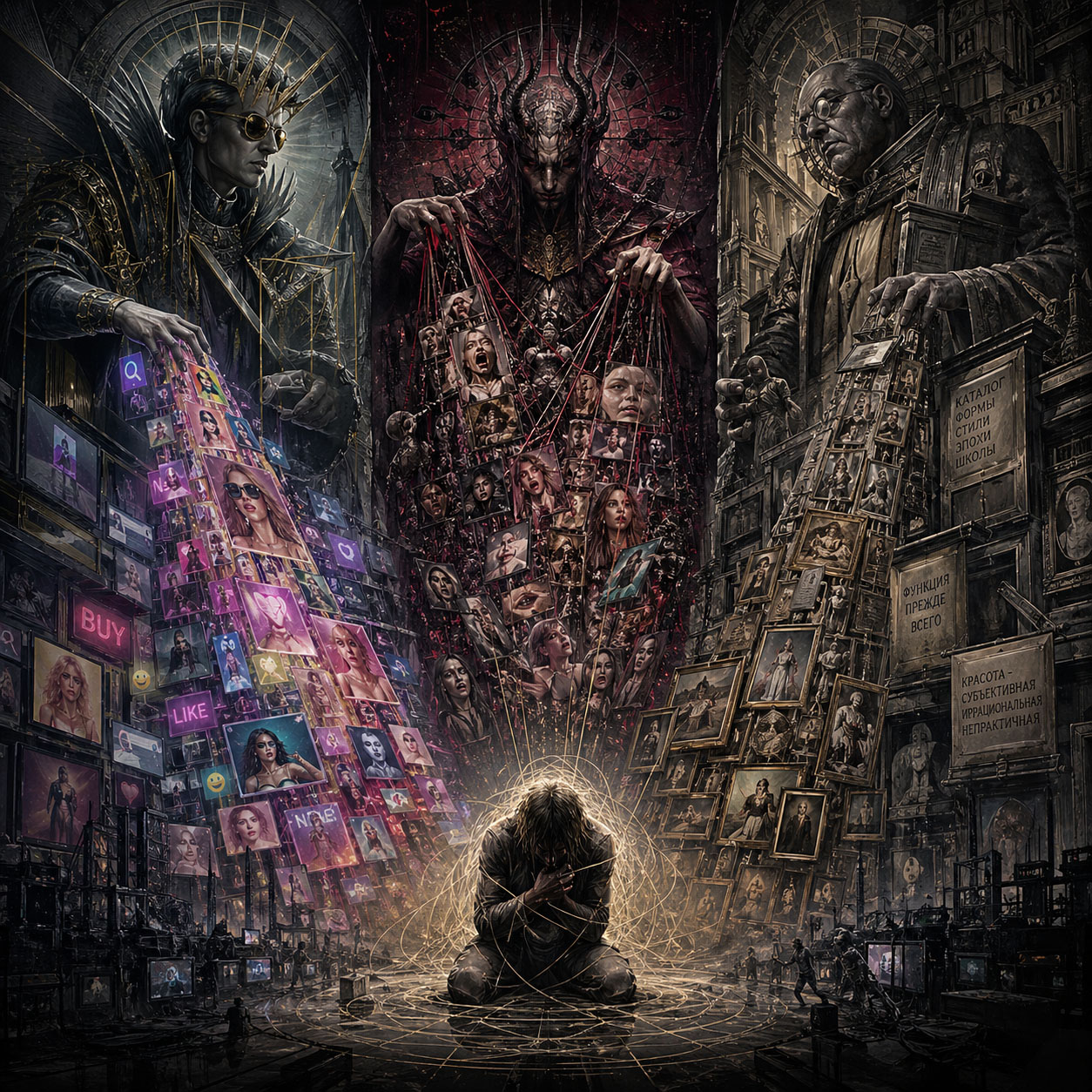
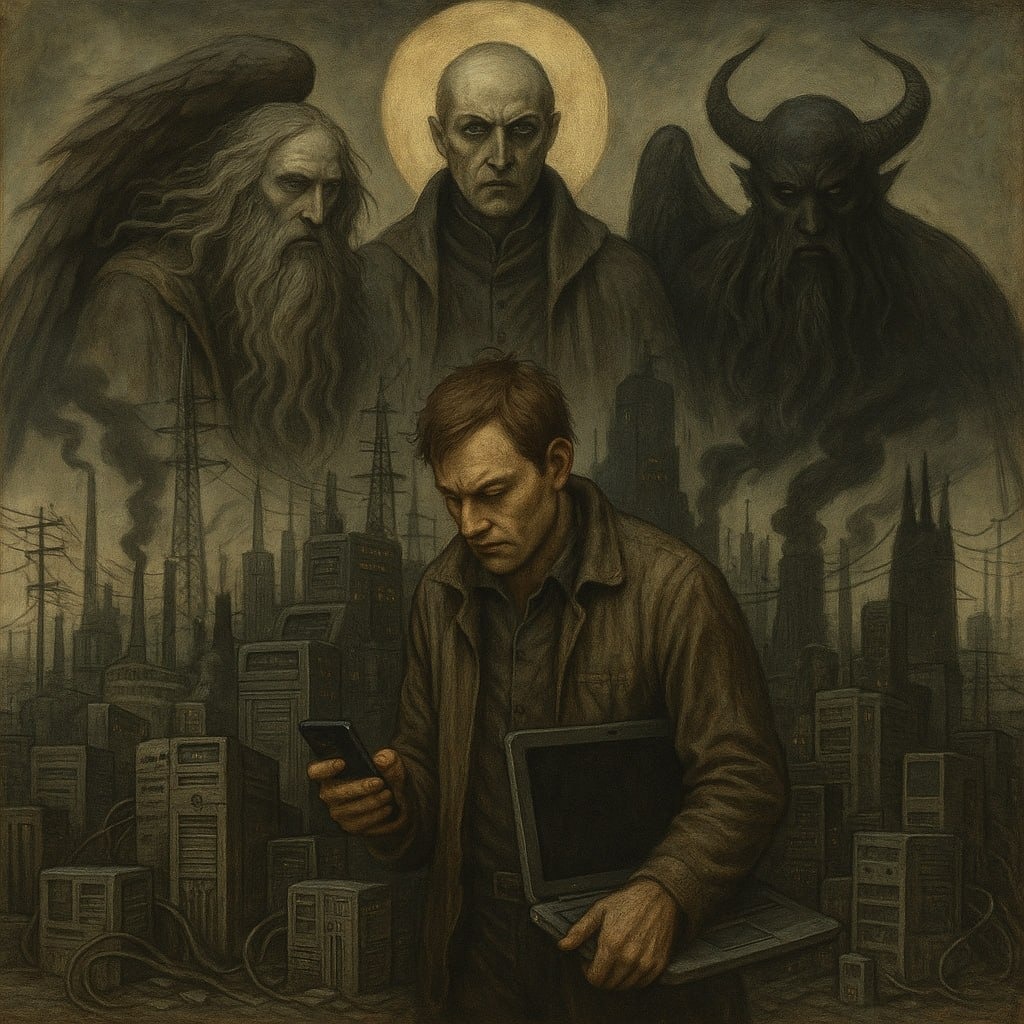
That is why aesthetics has always been perceived as a threat to the predators and overseers of the Interspace, and each of these forces works to devalue it. The Archons replace transformative Fairy aesthetics with plastic “glamour” and utilitarian, rational “design.” In their coordinate system, beauty becomes mere content and bait — a trigger that accelerates the flywheel of consumption and vanity. Demons poison the concept of the beautiful by binding it to envy, pride, and the exhausting neurosis of inferiority. What should inspire reverence, they turn into lust, pain, and endless comparison. The Grigori marginalize the living beauty of state by declaring it irrational, “impractical,” and secondary to bare function; or they lock it into the dead frames of academic rules and museum display cases. By joint effort, this triad constructs a world in which the human being is surrounded by an aggressive kaleidoscope of bright images, yet is deprived of genuine beauty — beauty capable of returning inner silence to him and closing his energetic circuit.
To overcome the pressure of the predators and restore energetic wholeness, the human being desperately needs a guide capable of returning true vision of the beautiful.
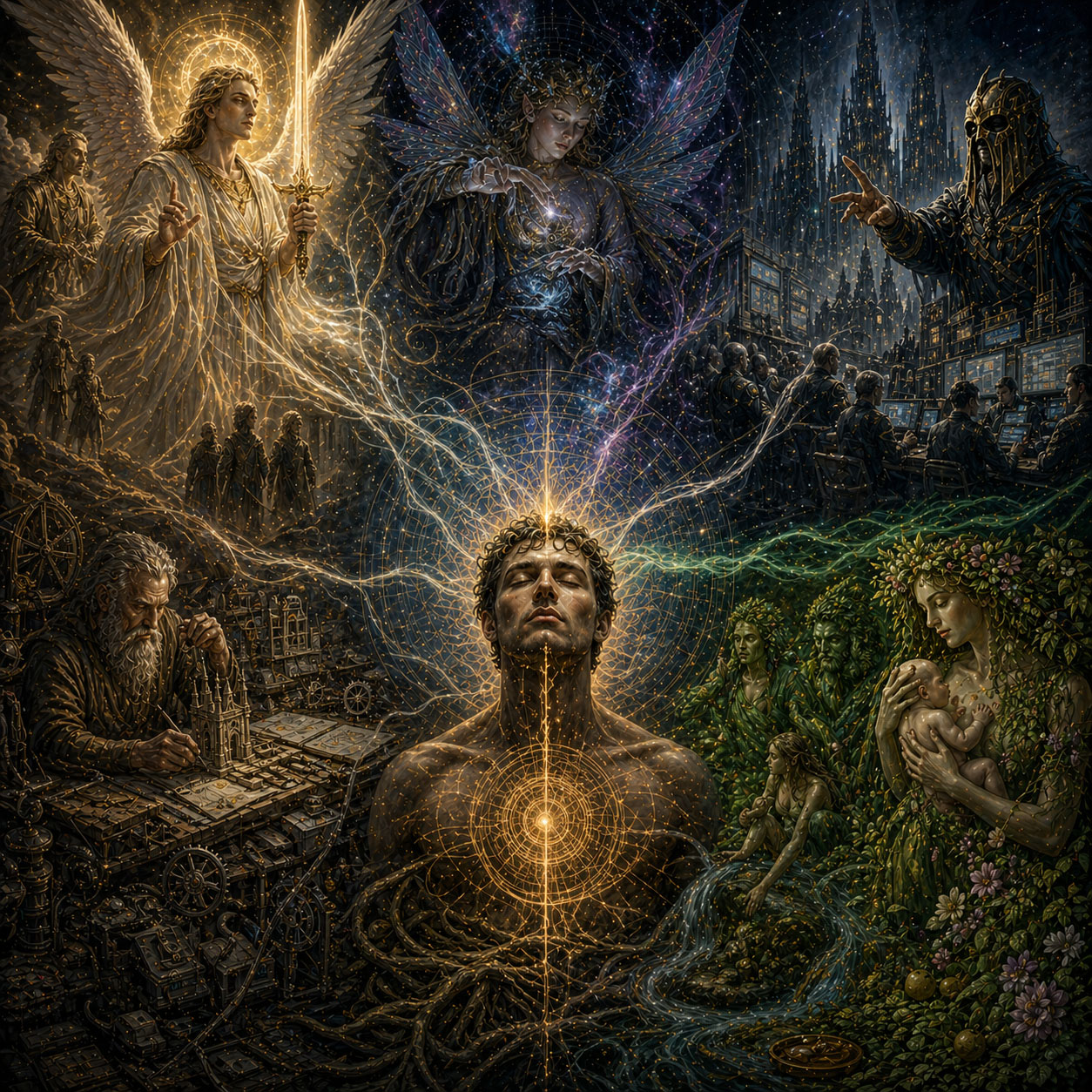
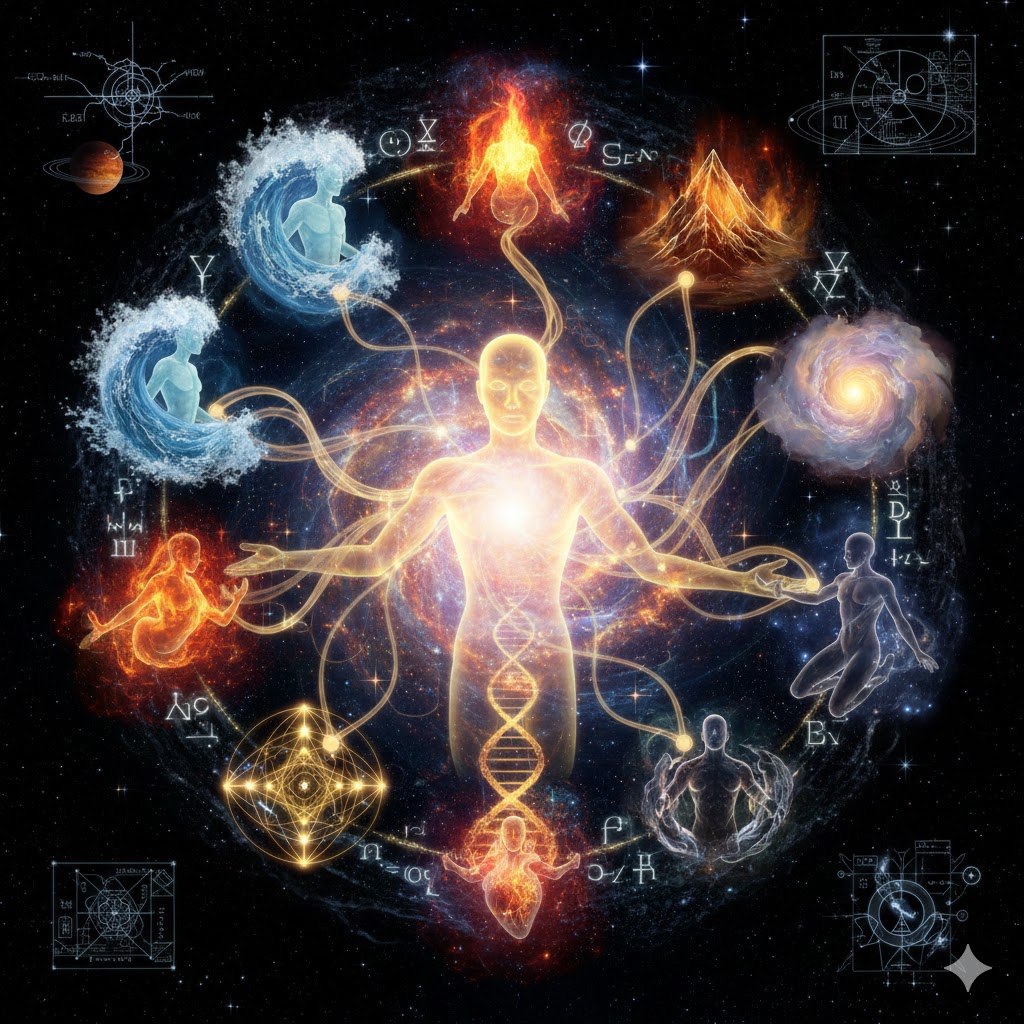
At the same time, various forces of the cosmos form the human mind by fundamentally different methods, proceeding from their nature — and not every one of these ways leads to liberation.
Angels appeal to conscience and will, demanding ethical obedience and cutting off darkness with the shining sword of their non-dual mind.
Archons appeal to will and behavior, building boundaries of the permissible — algorithms and regulations — and demanding incorporation into the system.
Grigori appeal to form and historical architecture, demanding an understanding of how the laws and mechanisms of the world are arranged.
Vanir appeal to vitality, to bodily inclusion in the great flow of birth, fertility, and death.
The Fair Folk, however, teach through the very aesthetics of state, by restructuring the perceiver himself. They bring the mind into a condition where a coarse mode of perception becomes physically and mentally impossible.
What the Fair Folk transmit is the beauty of a flawlessly assembled state. This aesthetics can manifest in anything: in the appearance of a being, in the pattern of a winter landscape, in the silence of an ancient forest, in a musical chord, in the gesture of a selfless gift, or in the shimmer of the Limit itself.
Such aesthetics is by no means always pleasant, comfortable, or “kind.” It can be piercingly sad, autumnal, anxiety-laden, and at times — even deadly. Yet within it there is always filigreed precision: everything is in its place; everything vibrates in time with the depth of what is happening. By observing the beauty created by the Fairies, one can understand what the world looks like when it is not crushed by consumption.
The human form of mind, formed through a long struggle for physical survival, always carries predator/prey relations within it. Confronted with something valuable, a human being launches the predatory program: determine — appropriate — use.
However, the Fairies originally lived outside such chains of consumption, and therefore any encounter with their aesthetics nullifies the possibility of predation itself. And even when, after the Exodus, part of the Fair Folk acquired predatory inclinations, they remained connoisseurs of genuine harmony. Before what is truly beautiful, a human being always falls still, and his desires sharply change direction: instead of “I want to possess this,” there appears “I want to correspond to this.”
Thus, true aesthetics is the most important force capable of stopping the desire to possess without destroying the energy of desire itself. That is why, in contemplating the beautiful, a human being, at least for a time, ceases to be a convenient battery for predatory structures.
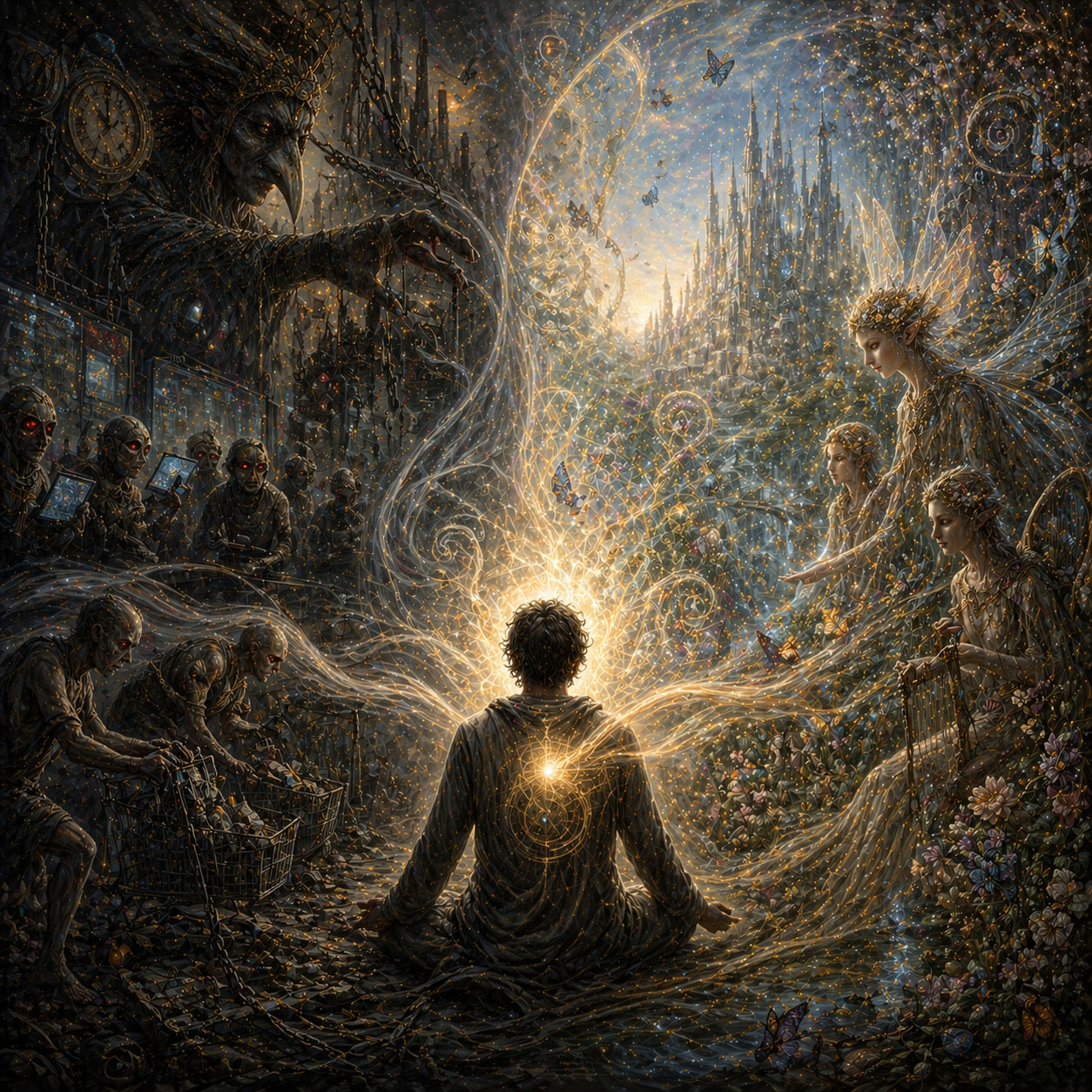
At the same time, the danger of the Interworld is that beauty can serve as an instrument not only of liberation, but also of enslavement, and the Fairies themselves — not only teachers, but also ruthless testers.
Therefore, for a Magus it is critically important to distinguish two types of influence:
Tempting beauty (more often characteristic of the Unseelie Court, degraded entities, or Demons) inflames hunger, draws the mind into a vortex of consumption, and makes the object unbearably desirable. It leads to obsession, loss of measure, and exhaustion.
Transformative aesthetics (characteristic of the Seelie Court, the Alfar, and the Higher Sddhe), on the contrary, returns inner balance to a human being and makes the mind purer, quieter, and more gathered. Confronted with it, a human being experiences awe, and the drive to raise himself to this beauty.
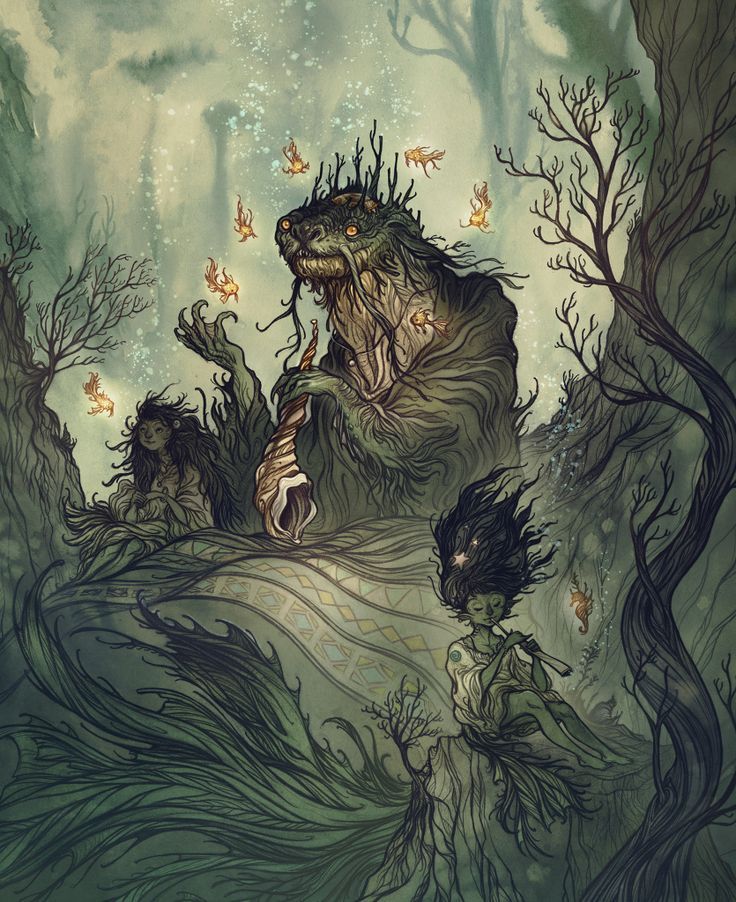
Aesthetics is always transformation on a preverbal level. It makes it possible to recognize the essence of an object before it is given a name. Confronted with the true beauty of a state, a human being does not try to rationally “justify” that the forest is alive — he instantly and directly sees it as a breathing presence. He does not construct philosophical concepts about the rift — he experiences the world in his skin as a transitional region. Fairy aesthetics transmits knowledge before the human mind has time to trap it in a label. In this lies a direct bridge to the Alfar, uncorrupted vision of the logoi.
When this preverbal knowledge penetrates a human being, the whole world is transfigured in his perception, and then the beautiful is no longer merely an object; it begins to look back. The forest regains the status of presence; the river proves to be a being of the Way; the stone appears as a bearer of ancient memory. A song turns out to be Gates, and music — a sacred act of restoring connections. The civilization of the Fairies that we lost was a civilization of co-presence, and the key to it lies precisely in awareness of the importance of the beautiful.
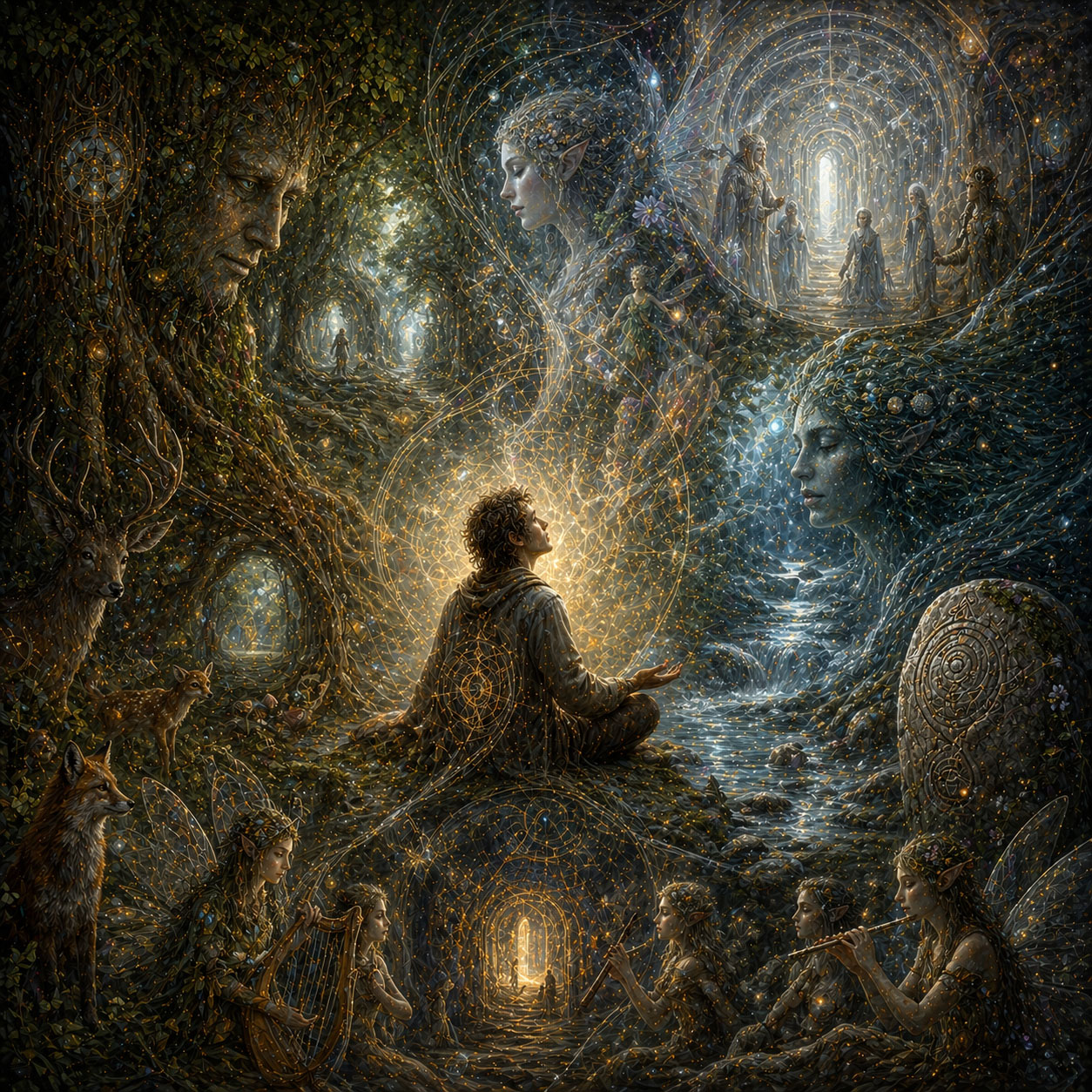
Unlike limiting or prescriptive approaches to the formation of the mind, which always evoke latent resistance or the urge to find a loophole, aesthetics creates direct contact with a higher, harmonious, and non-hostile nature. It expresses a high and pure state beside which any crudity, greed, or predation looks like a pitiful and inappropriate pathology. The Fairies, one may say, make predation ugly— and what is plainly recognized as ugly can no longer wield power over the mind.
Of course, the modern digital technosphere has its own special aesthetics: creators polish interfaces, introduce calculated color stimuli, and users “decorate” endless feeds. However, this is an aesthetics of consumption. It exploits human desire, distorting it into drives and pulling it into an endless cycle of consuming surrogates.
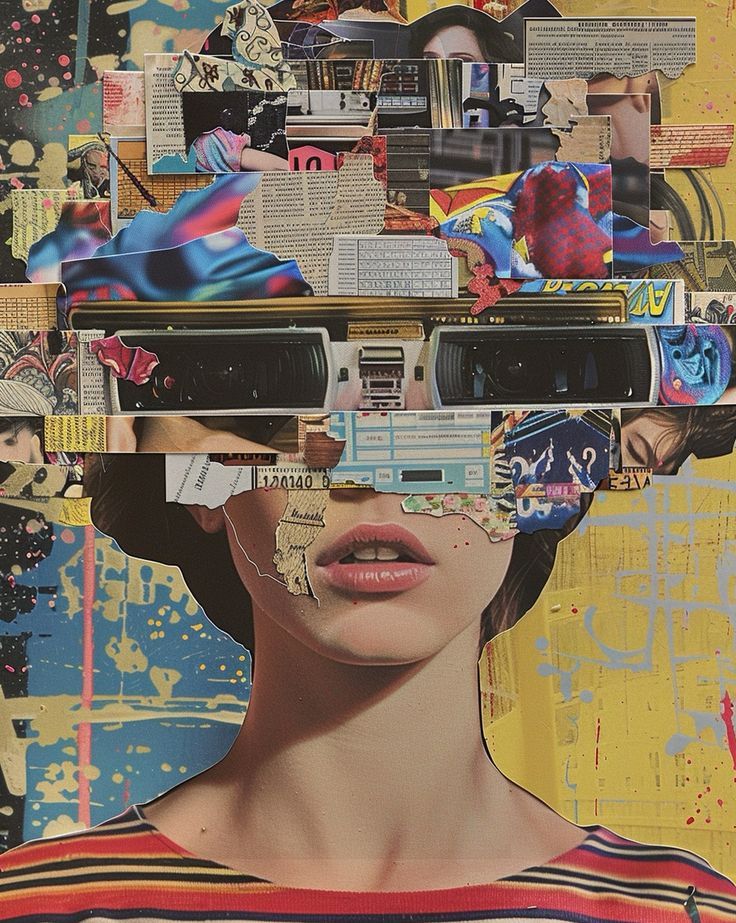
The aesthetics of the Fairies, on the contrary, does not try to seize or hold attention; it returns attention to its lawful owner. It does not whip desire into hysteria, but orders and directs it. Therefore, while technospheric aesthetics turns the human being into a passive consumer of images, the aesthetics of the Fairies returns to him the capacity for direct presence in the world.
To learn from the Fair Folk means constant and intense inner work: restoring one’s ability to be changed by the beautiful.
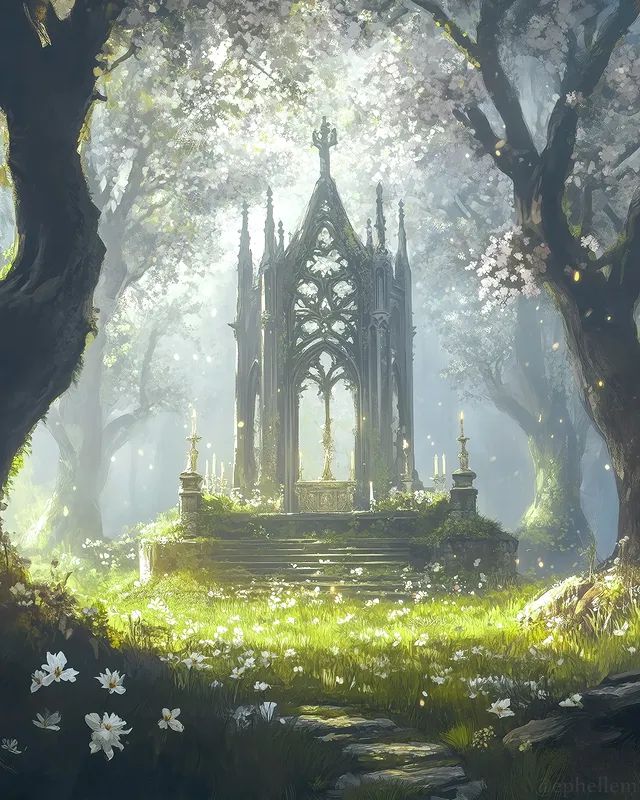
As long as a human being looks at the world evaluatively, estimating how to use it, he remains inside systems of consumption. Where a human being wants to possess, he remains a predator. But where he wants to correspond, he becomes a note in the universal symphony.
It is clear that the Fair Folk do not save people from their mistakes. However, contact with Fairy aesthetics liberates because it returns to human desire its highest, divine form — the drive to become worthy of the presence of the beautiful.

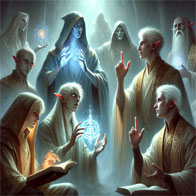
Thank you
Good afternoon.
The article is, of course, amazing…..
Your recent articles about the fae (I reread them several times) feel like some kind of farewell and hopelessness.
Or have you found a “path” out of here?
But the problem is that for that you’d most likely have to die…. Or can you get away without that? Is it even possible?
There isn’t much light in your soul, same as in mine…
Communicating with demons doesn’t just pass without consequences… I’ll be honest: when I was reading your books, I could see how “they” were “installing” their encodings and programs in you. Their words have power. But you survived in spite of it.
It’s better not to deal with them at all. But anyway…
I remember the first time I read about the daoine sidhe a few years ago, and it just “short-circuited” me—I didn’t expect it myself… I thought, okay, just some kind of mental glitch.
The words “good neighbors” just turn me inside out. I can’t explain it properly, but something happens in my mind—my reason. Some unbearable longing comes over me. But my (wretched) memory stays silent and won’t say why…
I know I was left behind, not taken with them back then, many years ago.
And most likely they won’t accept me now—I’m too poisoned by the human and by demons’ programs. Who needs us like this now? They won’t take me into the “light” (though it’s not for me to decide…), and to go in the other direction—no, thanks. I’ve been there once…