
The Fair Folk and the Shadow
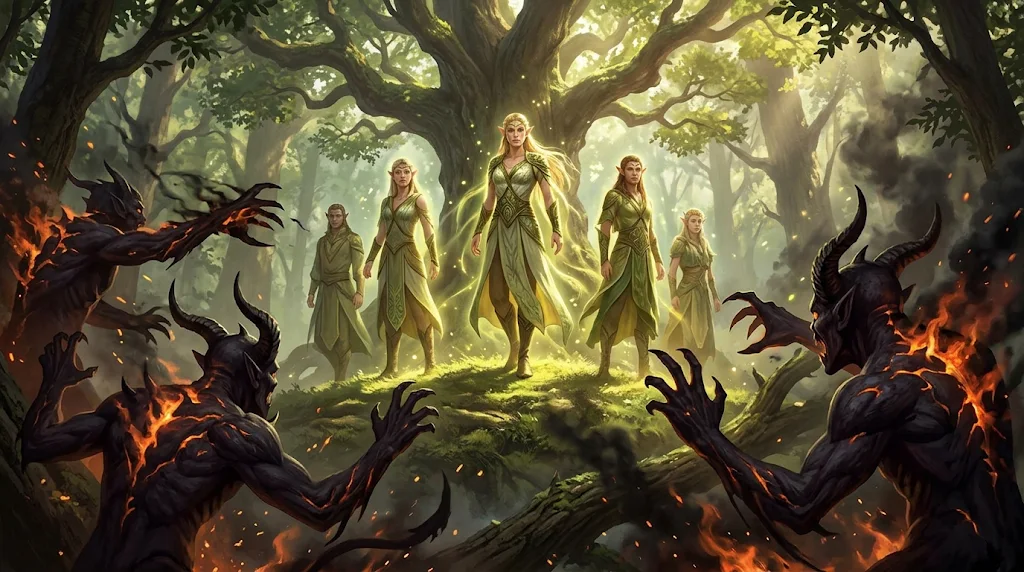
We have already noted that the energy of the Fair Folk is almost inaccessible to predatory creatures and entities: Demons, most Fomorians, and, even more so, the minor consumers of the Interworld find no foothold in it. It is precisely this energetic closedness that makes the Fair Folk a promising Master of liberation for the human being.
Experience shows, however, that such invulnerability easily breeds a false image in the human mind. In reality, the Fair Folk can hardly be called saints or enlightened; they are often capricious, vindictive, and arrogant. Their laws have nothing to do with human notions of good and evil, and they themselves, according to tradition, often bear an outer flaw— a trace of their arrogance toward the shaping of the world. For a human being, meeting them most often turns into misfortune: out of ten contacts, nine end in greater or lesser trouble — illness, exhaustion, lost time, and sometimes even abduction.
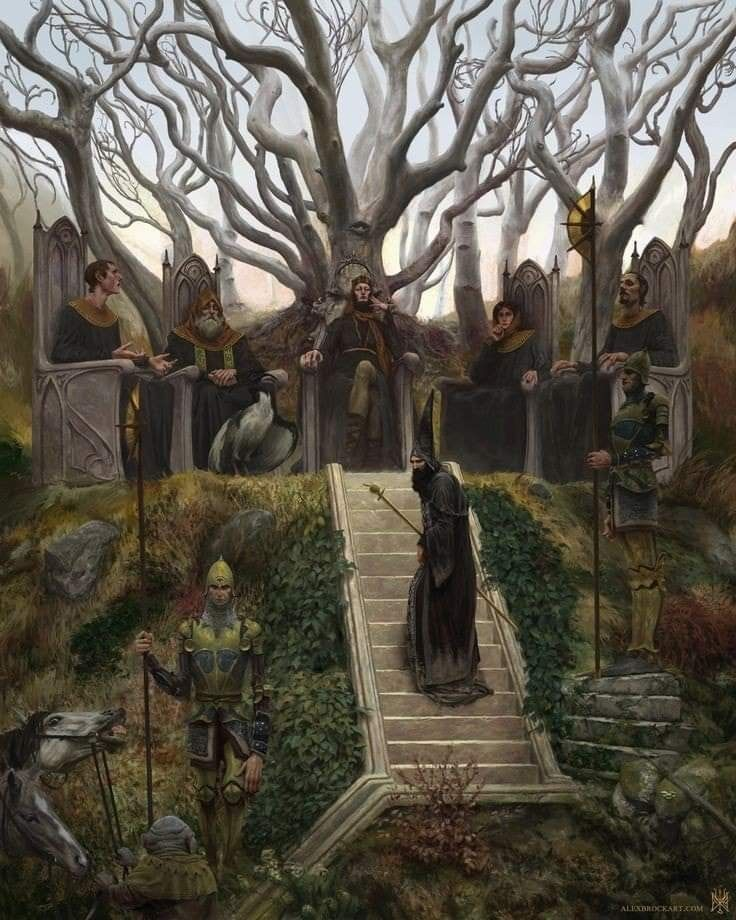
And yet it is precisely these beings, whom one can hardly suspect of holiness, who are practically beyond the power of Demons and almost free of the shadow. This raises an important practical question: what is their freedom based on, if purity of morals clearly has nothing to do with it?
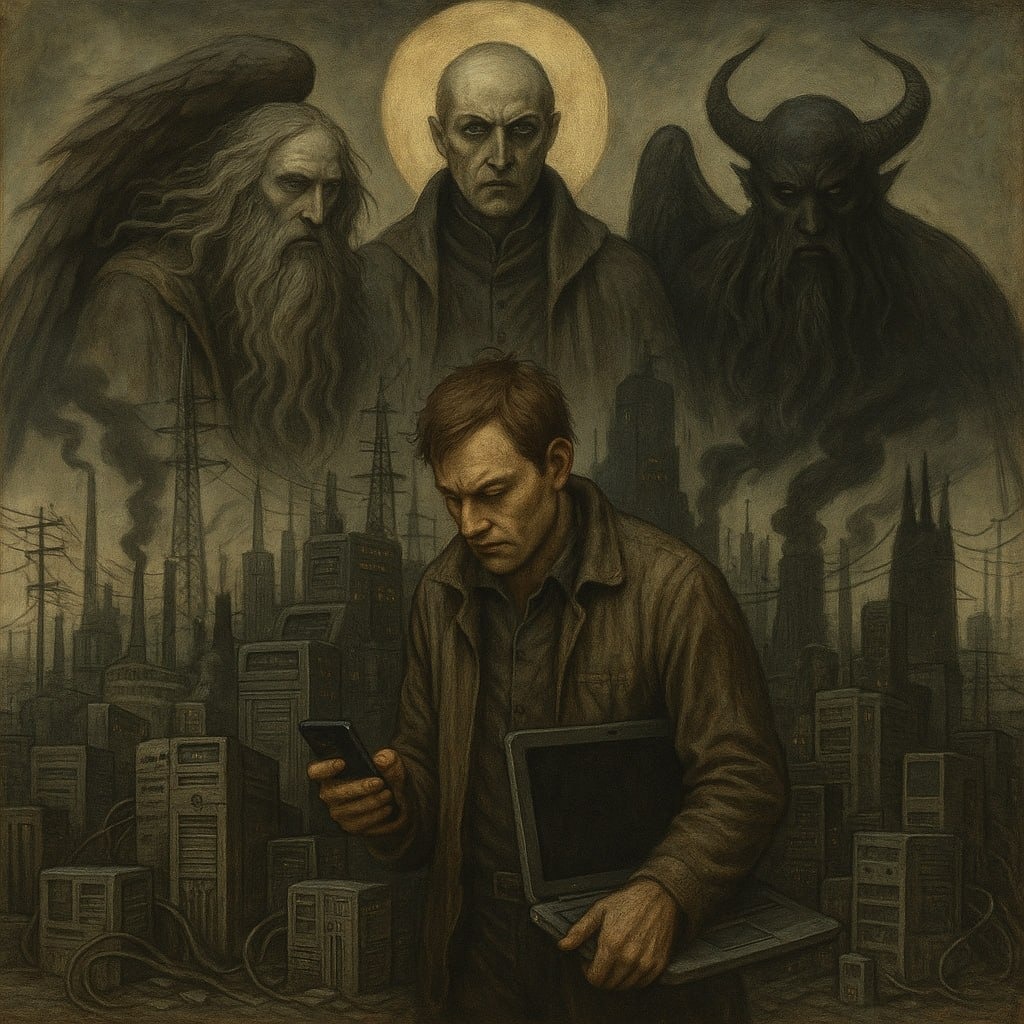
The answer matters first of all for the human being himself. For an invasion, a predator needs shelter, and such shelter is the shadow: its growth constitutes the first prerequisite for demonic invasion, and the shadowed areas of the mind are a necessary condition for predators’ access. It is not hard to understand that real people without a shadow do not exist: among manifested beings in general there are none completely free of obscurations, and no one avoids falls. At the same time, the shadow grows most actively where it is not acknowledged. The question can be posed this way as well: what can contact with the Fair Folk give to a person whose shadow is already considerable, and why are beings so unlike the righteous truly capable of helping here?
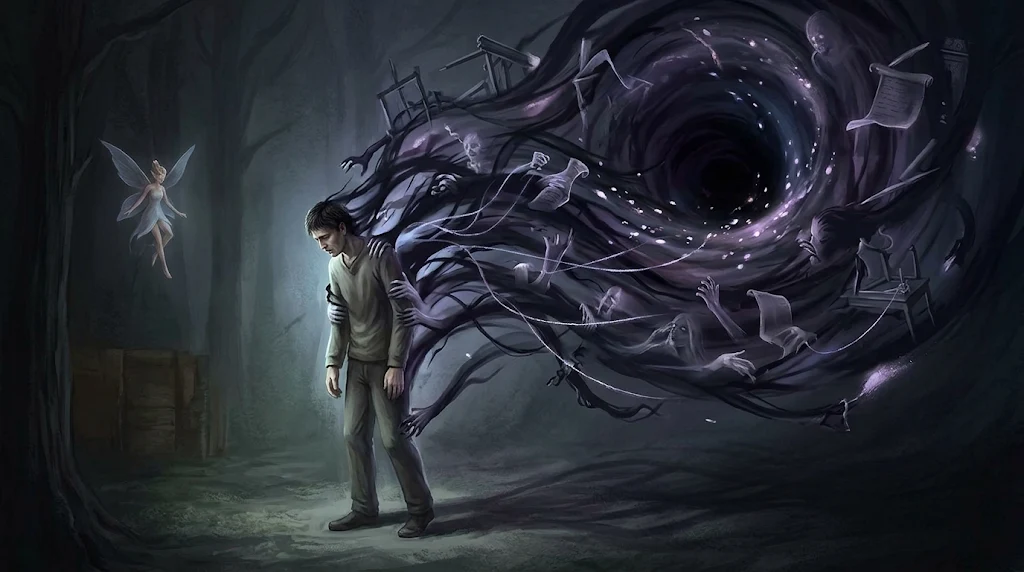
To make sense of this paradox, let us recall what the shadow is made of. It is formed by imprints of the unfinished: incomplete tasks, unbroken ties, unfulfilled promises, suppressed desires, and so on. Quite “respectable” attachments slip into the shadow as well — attachments to work that does not develop the mind, to relationships that lead nowhere. In all these cases, energy is invested in action but does not reach full realization, its logical completion. It retains an inertia aimed at its ending and therefore continues to draw in energy like a black hole around which life bends.
Let us repeat once more: the shadow is generated by incompletion. An action brought to its logical end does not create a shadow, even if it is far from human notions of good. Conversely, a “good” person who suppresses his own aspirations, makes impossible promises, and clings to outlived ties usually grows a huge shadow within himself. Accordingly, the freedom of the Fair Folk from the shadow is rooted in the completeness of their actions, and their morals are secondary.
Let us also recall that the soul of an incarnated human being includes two components: neshama, where harmonious, completed experience is gathered, and the shadow, where the imprints of the unfinished accumulate. In other words, both light (neshama) and shadow are different forms of sublimation of experience. Passing Light through itself, the mind either colors it with the tonality of its individuality, or loses part of it to disharmonious and unfinished deeds and thus casts a shadow. In other words, the shadow is an unrealized soul: the same experience that could have been imprinted, but froze halfway. Therefore the posthumous fate of the shadow is often confused with the way of the mind: shadows appear as stable and energetically active entities.
Among the Fair Folk such duality is practically absent. Their experience, as we have noted, is always flowing: the impulse passes through action and is embodied in a shaped deed, and the released energy returns to the common Flow or is закрепляется as mastery. Frustration is unknown to them, because it requires separateness and finite time. At the same time, the Fair Folk have no immortal soul: their death, according to tradition, is final, and they acquire a soul only together with separateness, most often through love for a human. That is why the Fair Folk do not cast a shadow, and for the same reason their experience remains fluid and unimprinted.
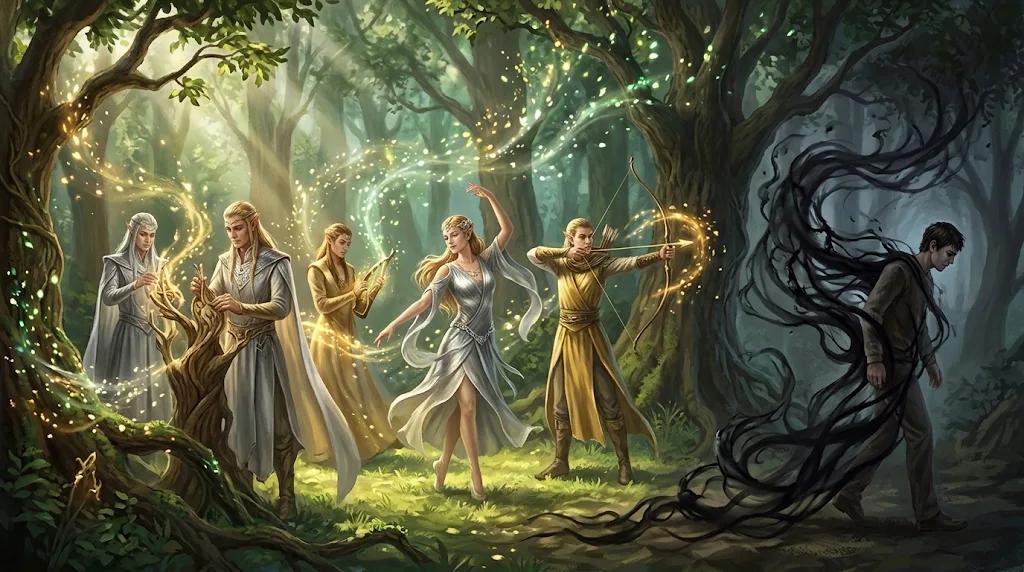
A paradox follows: the shadow can, in a certain sense, be considered the price of the soul. A being capable of imprinting what it has lived through and carrying it across a sequence of incarnations is inevitably capable of accumulating the unfinished as well. For the Magus, an important consequence follows from this. Properly speaking, the fey lack of shadow could be gained by a human only at the cost of renouncing his own vocation — renouncing the ability to turn even what failed into a part of his essence, and thereby to go beyond his limits. Therefore one should learn from the Fair Folk the art of completion, joining it with human imprinting: what the Fair Folk return to the Flow, the human being can imprint.
Accordingly, freedom from predators has its price for the Fair Folk as well. Their main and well-known vulnerability is longing: having lost connection with the living Currents of the world, they fade and, according to tradition, can wither and die of grief. Thus, whereas the human being risks an accumulation of the unfinished, the Fair Folk risk exhaustion of connection.
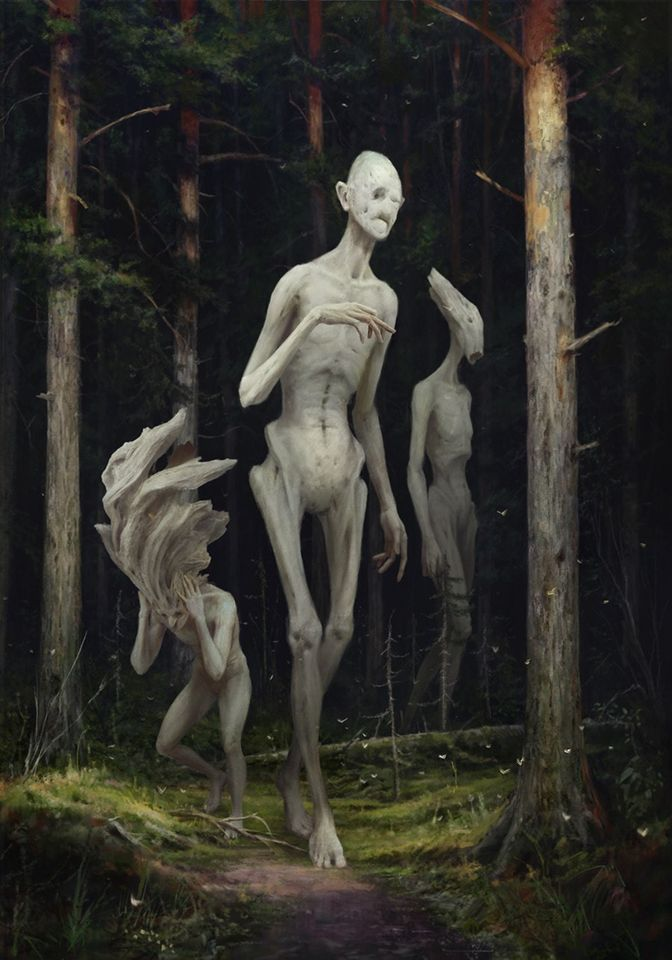
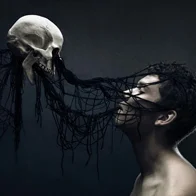
Since the shadow is unfinished experience, it is important to understand why the human being does not complete it. Most often, the central reason is failure to acknowledge the shadow. Denial turns an unfinished affair, which could still be worked through, into a hidden zone that attention cannot enter. Such a zone constantly demands energy to hold its walls and, at the same time, becomes a convenient dwelling: it is in the shadow that the Parasite of mind lives, and it is through the shadow that it influences the mind. As we said, the more fiercely the mind focuses on its own light, the denser and less controllable its shadow becomes.
At the same time, the forms of such denial are numerous and diverse. They include the conviction “there is only light in me,” the fashionable habit of “positive thinking,” and a sense of one’s own advancement, which seems like reliable protection from predators’ claims. They also include subtle sabotage of development disguised as “wise” caution. The sign of touching the shadow is characteristic — we have more than once noted it: any attempt to approach a hidden dead end causes inexplicable irritation. The mind defends its shadow as though it were defending the most important part of itself.
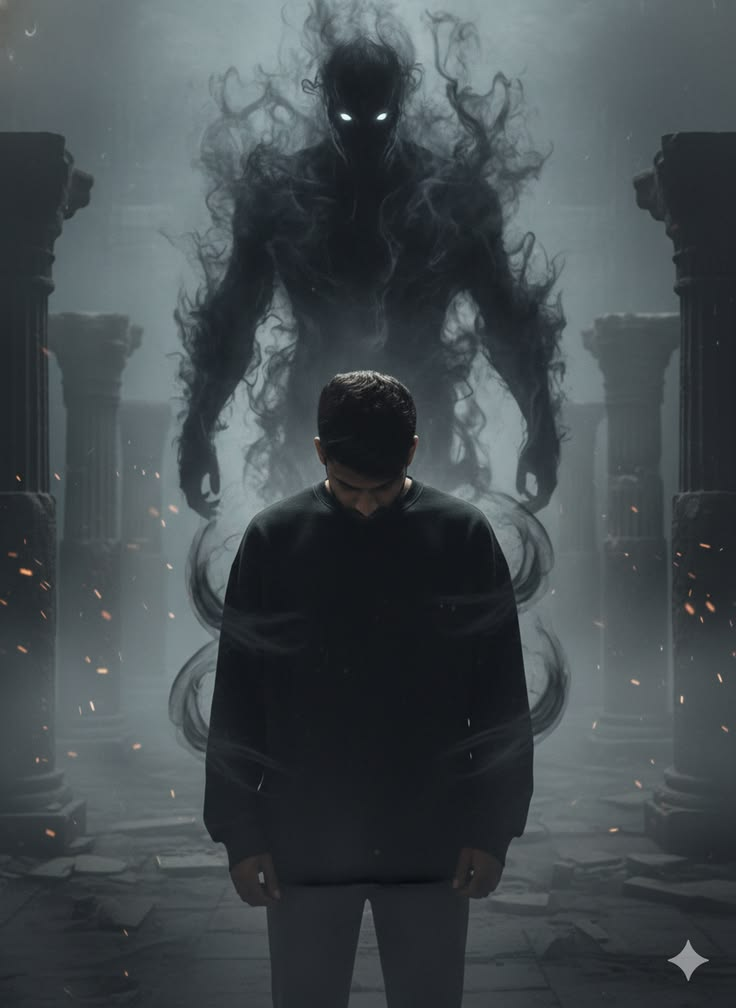
Most often, the urge to deny or ignore the shadow is rooted in a confusion between responsibility and guilt. To acknowledge one’s own shadow, for a human being, often subjectively means self-condemnation, and of course he prefers not to see it. This happens especially often with impulses that seem inappropriate or for which no way of realization is visible: instead of finding them a suitable form, the human being represses them, and this repressed energy returns as aggression, irritation, and anger. In this sense they say that a person is angry to the extent that he is unhappy.
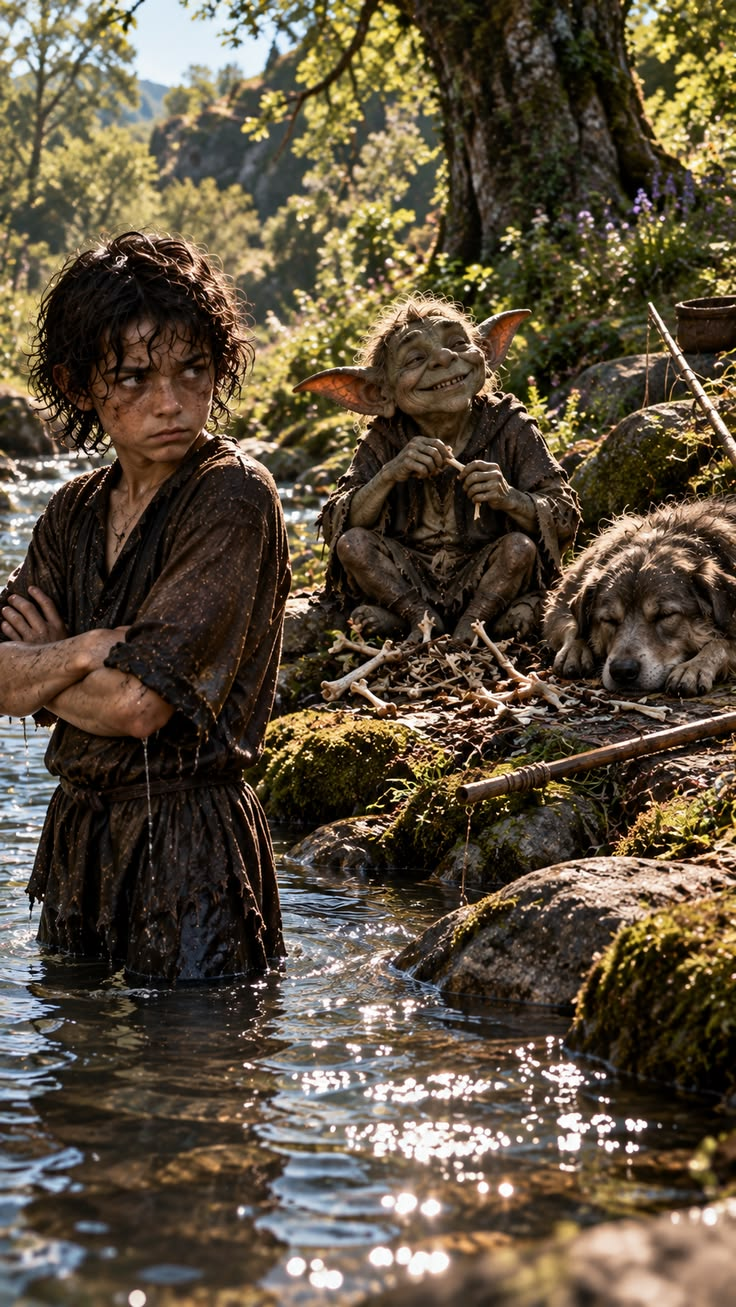
Moreover, denial of the shadow is often accompanied by ignoring darkness in general, including the darkness that precedes light and serves as the field of its expansion. Thus the Fair Folk were relegated to the category of “unclean beings”: together with his shadow, the human being rejected the darkness of potencies, and with it the source from which the new is drawn. The contrast between human strategies and those of the Fair Folk is especially vivid: the flaw of the Fair Folk is external and visible — goat legs, a hollow head, some other deformity, noticeable even in the most beautiful of them. The Fair Folk wear their imperfection openly; the human being hides his inside, where it grows without ever meeting light.
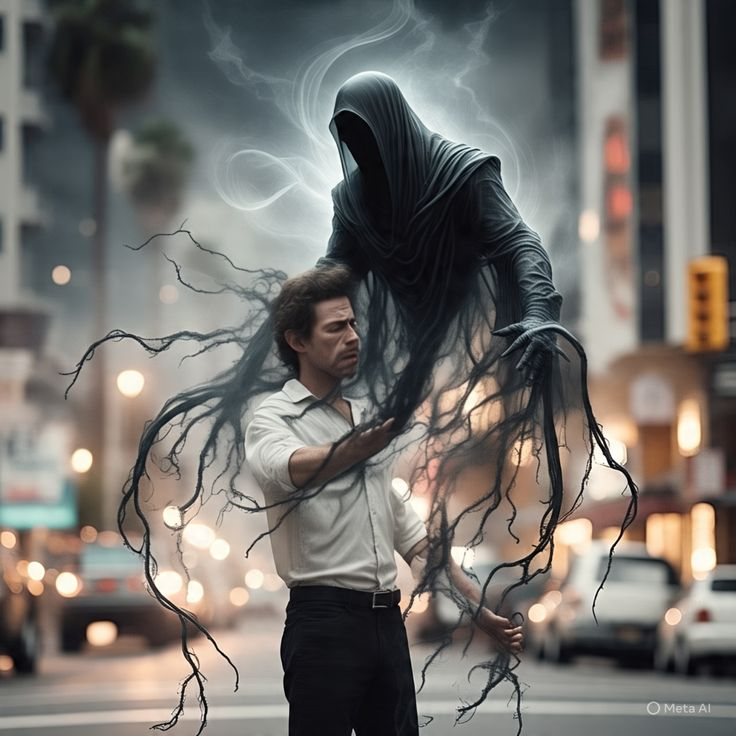
The second wall around the shadow is built, on the contrary, from its aggrandizement and romanticization. Whereas denial hides the shadow, romanticization “repaints” it. To understand how this happens, let us recall that darkness has two hypostases, separated by an abyss: the darkness that precedes light, the field of as-yet unshaped possibilities, and the darkness that arises from a refusal of light.
The Fair Folk are the bright children of the Dark Mother, that face of the Great Goddess that returns worlds to the unmanifest. Their light is born from the first darkness and bears within it her fertility. The shadow belongs to the second darkness. We discussed that by its nature it pertains to Qlippa Nogah, the “Shining Husk”: the light in it is in principle accessible, yet rejected and locked in a shell. Therefore the shadow is capable of seducing: it truly glitters, but it is the glitter of imprisoned light.
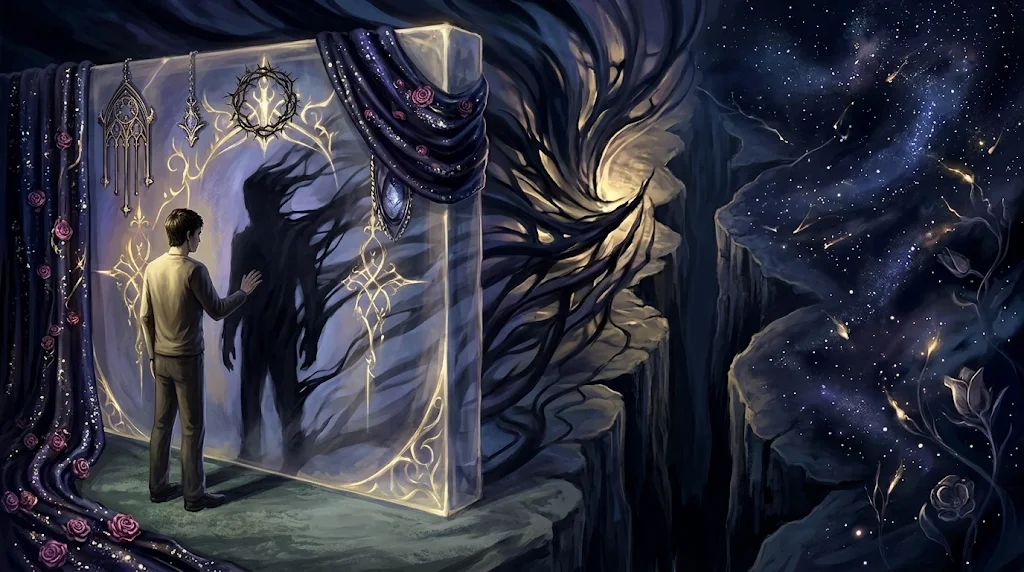
Accordingly, romanticization consists in laying the aesthetics of the first darkness — mystery, night, wildness, otherness, magic — over the second. One’s own unfinished, suppressed, and aggressive components begin to be perceived as “my wild nature,” “my dark side in which my Power lies,” “my fey part.” Much of the current fashion for “dark fairies” is connected with this: a human projects his shadow onto the Fair Folk and looks for justification in their images. The shadow is then taken as part of identity, and any approach to it is experienced as an encroachment on oneself. The mechanism is the same as in the romanticization of Demons: the mind ceases to distinguish what feeds it from what devours it. Only here the object of love becomes one’s own incompletion itself.
Denial and romanticization thus serve one purpose. The first hides the shadow, the second adorns it, but both walls protect the shadow from the only thing capable of dissolving it — from completion. Romanticization, moreover, brings a special pleasure: loss of Power begins to be felt as depth, and the human being gradually becomes, as we said, an “addict” of his own losses.
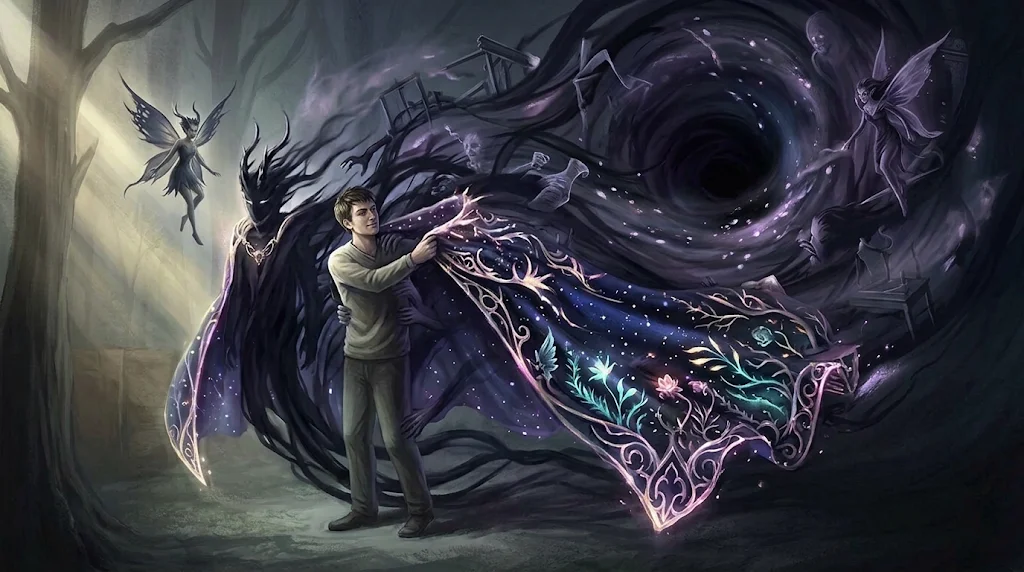
This understanding has a direct consequence for contacts with the Fair Folk. One who seeks from the Fair Folk a sanction for his shadow meets enchantment, and along with it — hungry and often predatory inhabitants of the Interworld, with whom, as we warned, contact happens very often. At the same time, it is not difficult to distinguish the kinds of darkness, as we said: the darkness of potency is fertile; it gives birth — after touching it a human has more strength, freedom, and movement. The shadow, on the contrary, only absorbs: after “plunging into one’s darkness,” what remains is repetition, heaviness, and a sugary aftertaste of loss.
Now let us return to the original question: what are the Fair Folk able to give to a human whose shadow has already grown. The Way of overcoming the shadow includes acknowledgment, payment, extraction of the lesson, securing what has been attained at a point of support, and contributing it onward; the contribution of the Fair Folk can be valuable at each of these steps.
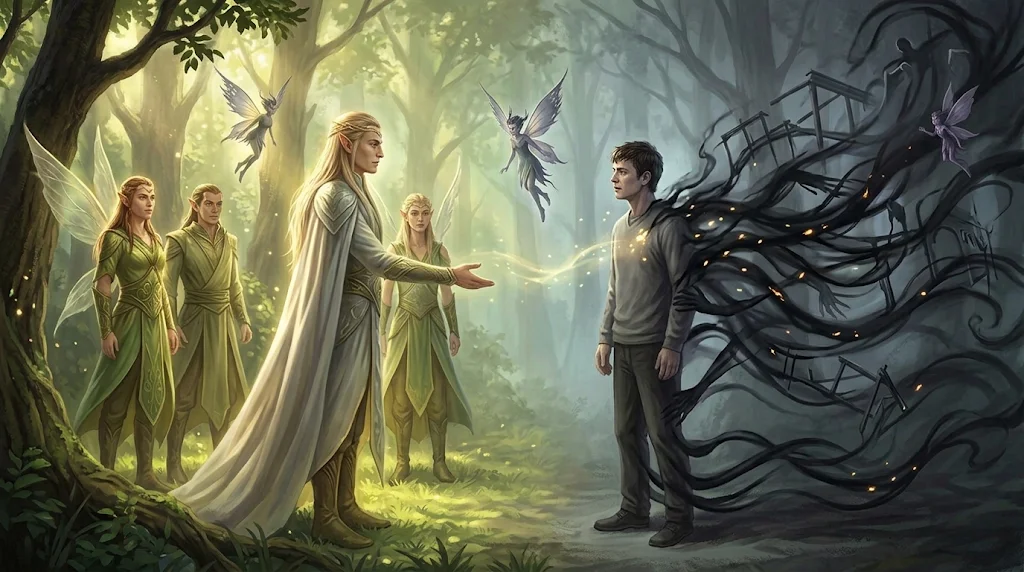
The first thing that contact with the Fair Folk gives is a gaze without guilt. The Fair Folk recognize a human by the principle he brings with him; they see above all his nature, scale, and unmasked energy; the qualities of his personality are most often secondary. Guilt is entirely foreign to them. With such a mode of perception, the shadow appears as a technical unfinished matter requiring completion, not as something complex, dangerous, or alluring. Along with this, the main motive of denial disappears: acknowledgment turns from self-condemnation into responsibility. This same gaze also protects from romanticization, because the imprisoned light the Fair Folk see precisely as imprisoned.
The second important lesson is the vision of a multiplicity of forms. The shadow is a stuck possibility, something that could have happened but did not. The Fair Folk, on the contrary, can be described as the principle of “translating the possible into the happened” and as the “ability of form not to be the only one.” An impulse stuck in the shadow often waits for its original form: that person, that situation, that chance, which no longer exist. The fey principle, however, allows it to be completed in a new but equivalent form. For an “inappropriate” impulse, this means finding it an admissible embodiment instead of repression; for an old debt, it means performing an action equivalent to it in energy. That is why payment does not have to be “in the same coin”: what matters first of all is the essence of the debt, and the fey ability to perceive the essence without clothing it in words helps to find a way to “discharge” the shadow even when the origin of its energy has been forgotten.
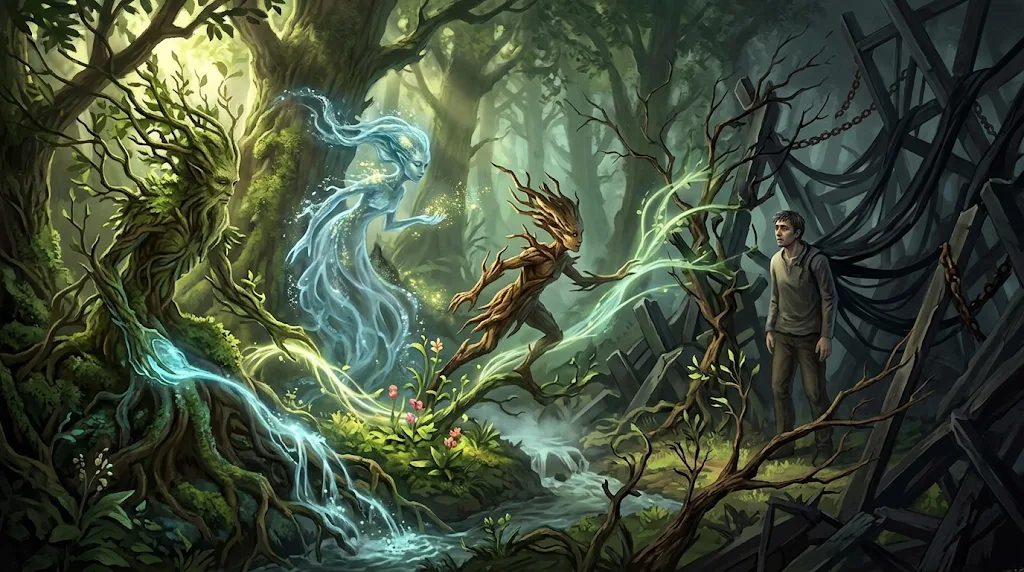
The third lesson of the Fair Folk is the ability to flow around obstacles. The walls around the shadow are built to withstand frontal assault, and a direct attack only hardens the defense and injures the attacker. The Fair Folk act instead like a gardener who changes the soil, the light, and the water, after which growth happens naturally. Shadows are fed through breaches that arose from the same disharmonious actions that once gave birth to them. Therefore the most effective way of overcoming is to change the behavioral scripts that keep reproducing these breaches: deprived of nourishment, the shadow weakens. In essence, this is resistance in its exact meaning, when the mind leaves the field where there is a place for the shadow — without fighting it and without ignoring it.
Finally, the fourth lesson is the union of extracting and letting go. In a real situation, many old shadows can no longer be completed by external action: people have gone, circumstances have changed, the chance has been missed. In this case, what is required is a full living-through and comprehension of the unrealizedness itself, transforming it into an inner imprint of experience, a chotem. Here the lesson of the Fair Folk can help: everything that, after the lesson is extracted, still trails behind a human is returned to the common current of life, and the experience becomes awareness of the error— of the inability to realize rightly. Thus the unrealized part of the soul becomes realized.
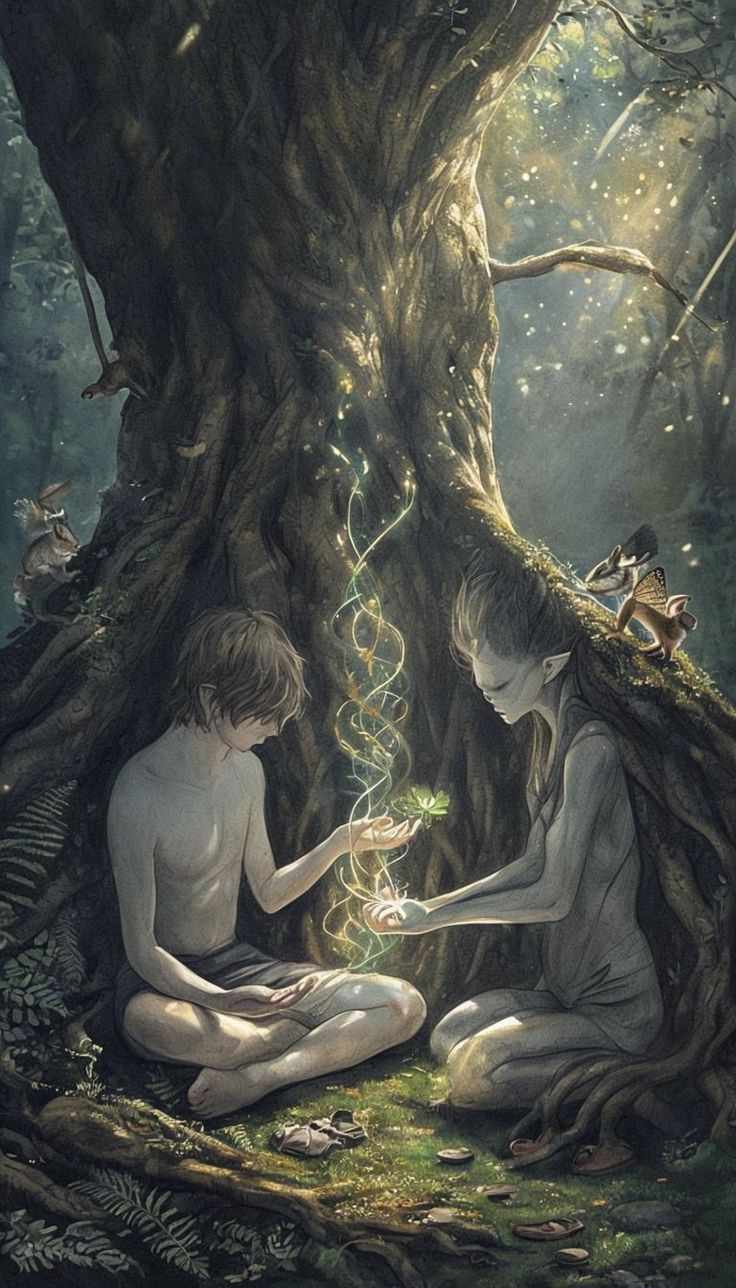
It is easy to understand that there is a limit to the help of the Fair Folk, and it follows from the same property that makes this help possible: the Fair Folk respond to the imprint the human brings, and the human’s intentions are secondary. So long as the shadow does not completely eclipse the human himself, the Fair Folk see his nature behind it, and their response helps him discern his unfinishedness. A considerable shadow, however, turns contact into “payment,” or simply makes it impossible — and this is one reason meetings between people and the Fair Folk so often end in problems. Often, instead of the Fair Folk, a person simply encounters his own shadow in a fey image: the heavier it is, the more readily the mind takes enchantment for true presence. Finally, fey help also has a boundary set by the predators themselves. When a Demon settles in the shadow, delusion begins: the person ceases to see his own dead end and defends it as part of himself. The Fair Folk are not exorcists; they can be useful either up to the stage when the shadow has not yet become a predator’s dwelling, or — after liberation, when the Power wrested from the predator must be returned to the common current of life.
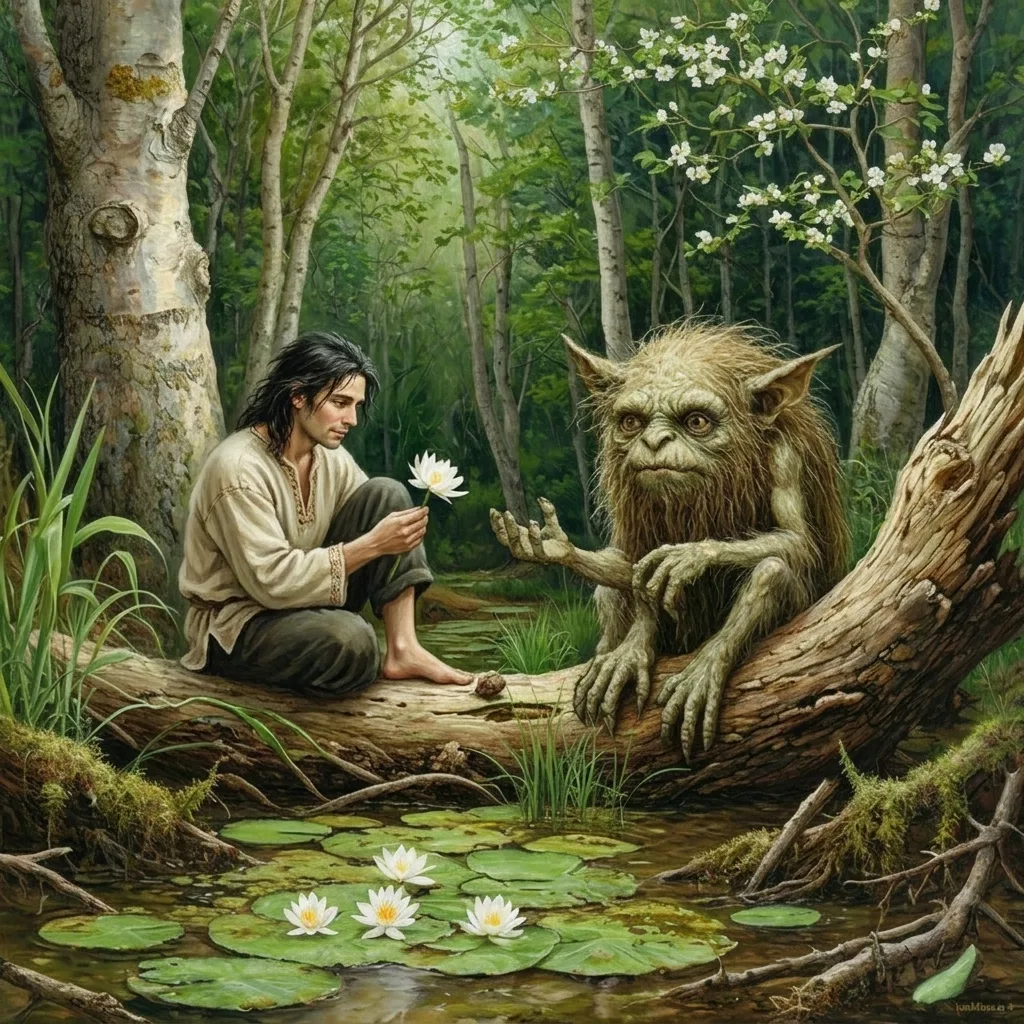
Thus, the Fair Folk are free of the shadow because their actions are complete; they wear their imperfection in plain sight; and guilt, which forces a human to hide his shadow, is foreign to them. Their morals can be hard for people; yet everything in them is complete and open, and there is simply nowhere for a predator to hide.
Therefore, encountering darkness within himself, the Magus must first ask whether it gives birth or absorbs, whether after contact with it Power increases or diminishes. Encountering the shadow, he must check whether he can see it without guilt and without admiration. Encountering an unfulfilled impulse, he must see whether it is moving toward realization or has become stuck and cyclic.
Thus, the Fair Folk show a human light born from darkness. The shadow, on the contrary, is light that has not been born; and to help it be born means returning the energy of the shadow to the soul.



Thanks. Is there a way to determine the size of the shadow?