Desires and Frustrations
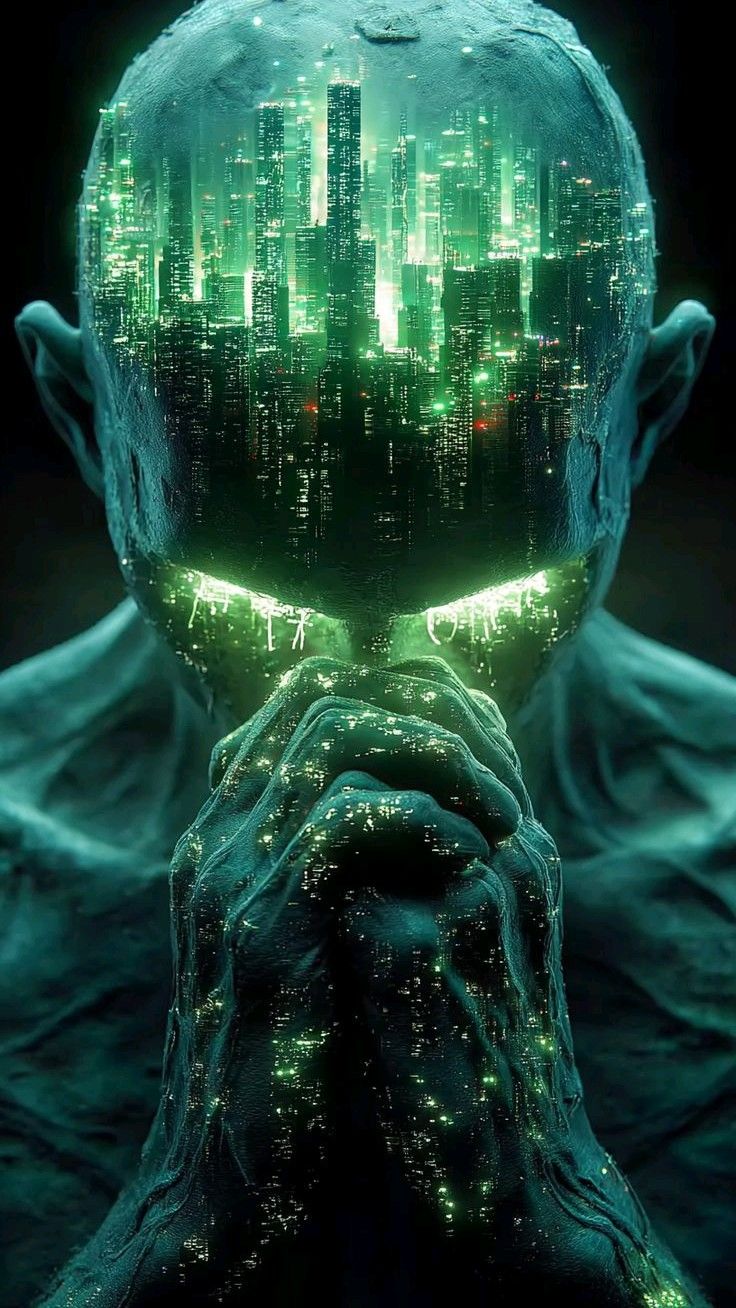
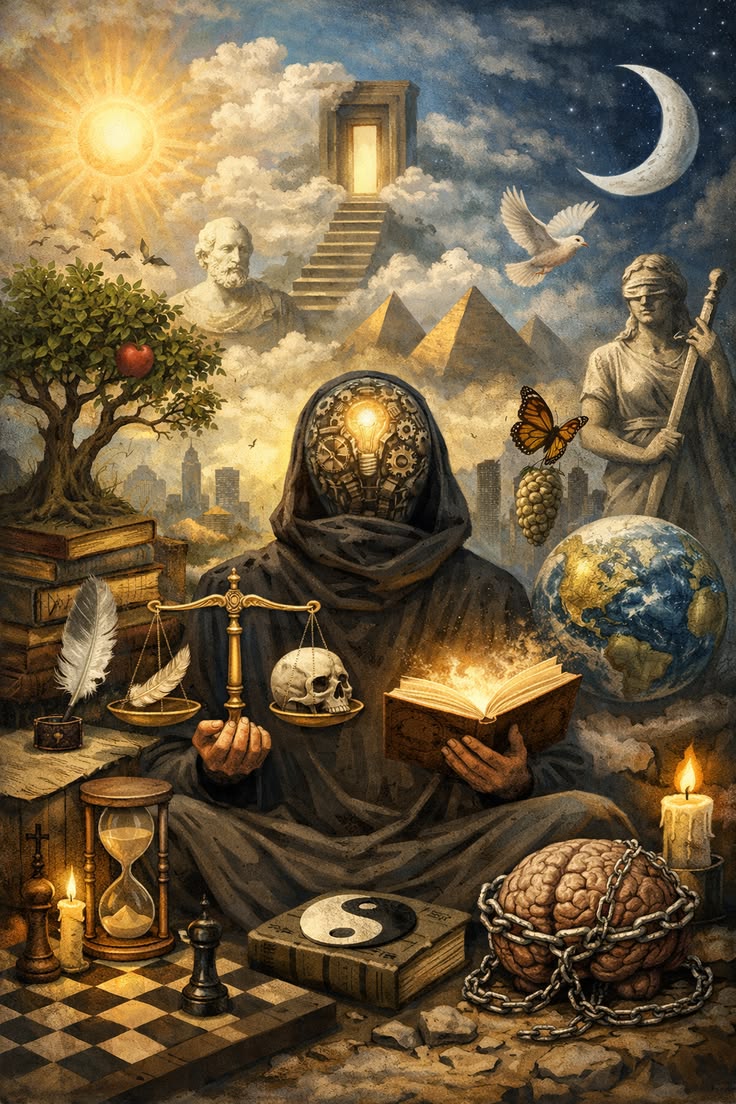
We have already said more than once before that the defining feature — the one that sets the meaning and value of the human level of the manifestation of mind — is the ability to identify and realize desires. One may say that the human being is a creature for whom to desire and to exist are synonymous. This may sound simple and self-evident, yet only the grasp of this identity allows one to see the contours of the human Way of development — and to expose its principal vulnerabilities.
To understand why desire holds such a place in human existence, recall that the human level of mind is a transforming level: its defining trait is the shaping and ordering of the environment in which mind is immersed. A human being comes to know himself through his own transforming influence upon matter and through matter’s response; in this sense the Book of Genesis says that man was placed in the Garden “to till it and keep it.” Desire itself, as we said, is a force of attraction between the inner potencies of mind and the corresponding possibilities of the environment. Desire is the instrument of cultivation, joining the potency of mind to matter capable of embodying it. It binds the two sides of human evolution — transformation and self-knowledge — because its fulfillment simultaneously changes the environment and actualizes the potencies of mind itself.
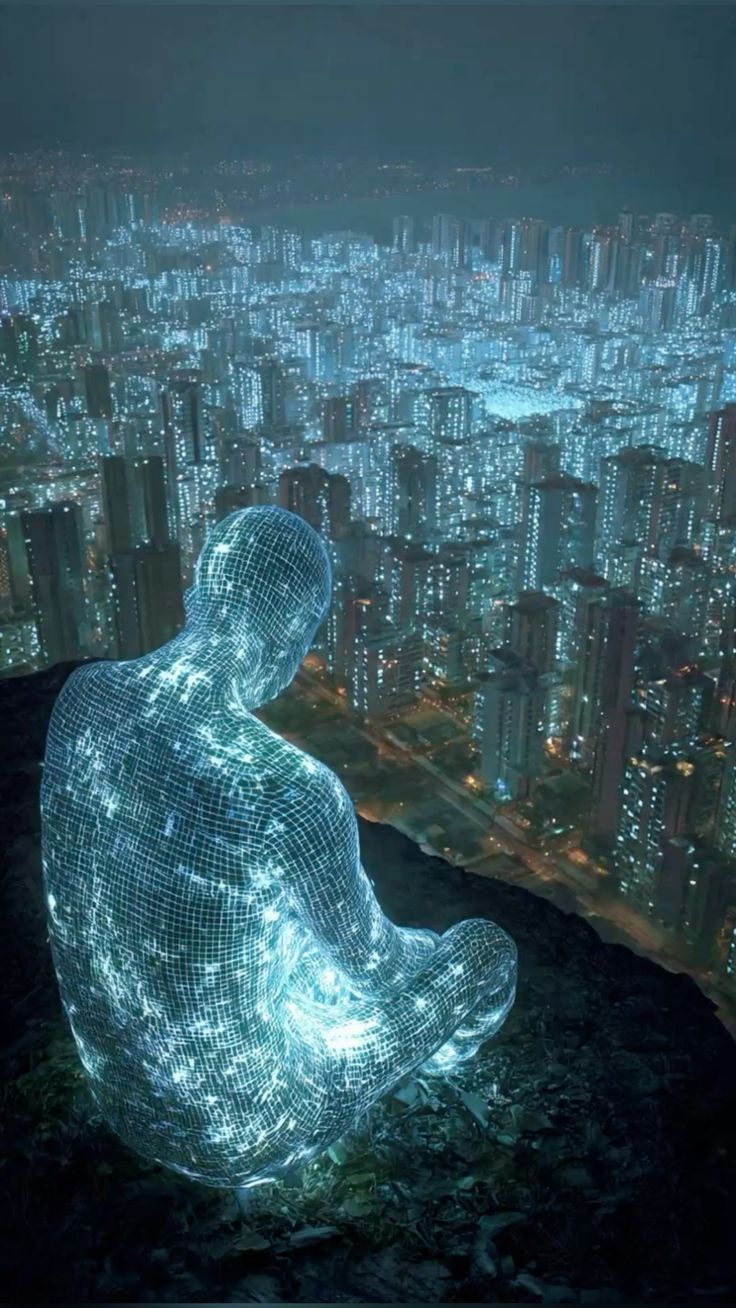
The significance of this contact between mind and environment — carried out by the human being — is determined by the special place of dense reality in the cosmos. The material world is the sphere of maximal condensation of mind, energies, and ideas: the “turning point” of the world-process where differentiation yields to integration. Here ideas are finally materialized and can be experienced in all their force and in every unworked-through side; and it is matter that serves as the mirror in which mind discovers its imperfections, and as the support from which — pushing off — spirit replaces descent with ascent. The human being who carries desire through to embodiment in the dense world enters the most tense and productive phase of reality’s self-knowledge; here lie both the value of the human Way and the price of its mistakes.
From a metaphysical point of view, desire is the energy of selfhood brought into the world: the light of yehidah that transforms both mind itself and the environment of its manifestation. Put differently, to desire means to find potencies ready for realization, whose actualization transfers mind and environment to a new level of development. In this sense, the realization of desires is the prime mover of the entire world process, beginning with the primal Desire to Be and ending with elementary desires to continue. The primal Desire, as an impulse, then pours into the flow of Universal Life, hayah, which in this sense is often called “the principle of desires.”

This is precisely where the key difference between the two humanities of Earth lies — Shi people and Homo people. The former are centered in the Light of Binah (in hayah), and therefore desires, in the strict sense, are unknown to them; their realizational activity expresses itself as intentions. For the latter there remains a difficult Way of awareness (passing through Daath) between desire and intention — and it is on this Way that failures occur.
To see exactly where these failures arise, consider the Way the impulse of desire travels from its first flash to realization. It is born as a burst of the light of yehidah, the selfhood’s striving toward disclosure; then it plunges into the flow of Universal Life, hayah, gaining strength and motion within it. At the level of neshamah, in Daath, the impulse must be recognized— correlated with experience and with the environment’s possibilities. At the level of ruach, resting upon eb, the conductor of desires, it is already felt as desire proper, a palpable gravitation — and in the body as libido. Finally, in the light of nefesh it acquires realizational power. The passage through Daath is critical: as we said, desire arises when the aspiration coming from the depths of mind is balanced by an attraction toward a recognized object in the environment. The Fair Folk pass from Binah to Tiphereth, from Unity to Harmony, far more easily, since Daath is already included in their essence; for humans, the region of recognition stands between the flash of impulse and its embodiment — and it is precisely here that the human mind is most vulnerable.

This vulnerability is the reverse side of human strength. Reliance upon intention, as we have already said, makes the Fair Folk less susceptible to predators; a greater emphasis on desires allows humans to transform the environment more effectively. The difference also shows itself in the very mode of interaction with the objective sphere: the Fair Folk seem to supplement the world, while humans transform it. The actions of the Fair Folk with space — menhirs, dolmens, and cromlechs raised under the guidance of the alvs or the sidhe, planted trees, altered riverbeds — have since ancient times been an ordering of its flows, bringing the environment into an evolutionarily suitable state while preserving its own movement.
Because desire must be correctly identified and correlated with the environment before it takes its realizational form, the main route of energy dissipation in humans is substitution: desires are confused with whims, caprices, or needs. An impulse left unrecognized at the level of neshamah is intercepted in ruach by a “louder” attraction that comes from outside mind and lacks support in its own striving. The energy born in the higher sources of the psychic flow dissipates, becoming feed for hosts of predators and parasites — above all kidemons: mind entangled in its desires is for them the main source of tonified pneuma.

To reduce the risk of such destruction, the human mind has a “protective mechanism” in the form of frustration— the suffering of non-realization. The pain of non-realization is an evolutionary instrument: it forces one to break through walls, invent new Ways, or radically change one’s life. Frustration either compels a person to change reality or gradually destroys him from within — and this is the price of the complex Way from identifying a desire to carrying it out.
To understand how this mechanism works, one must distinguish frustration from dissatisfaction as such. We have already said that the driver of the world process is dissatisfaction as such — the feeling of incompleteness, the hunger for actualization intrinsic to any manifested being. Frustration is a special, human form of this cosmic hunger. It arises where a desire has already been recognized, has already passed Daath and taken a name, yet has not found embodiment — in the gap between identification and realization. Frustration is therefore experienced as a feeling: stable and directed toward a definite, though still unattainable, object.

For this to be possible, two conditions are required. The first is separateness: only mind proceeding from the light of yehidah and experiencing itself as an independent unit can desire something as its own and suffer from its absence. The human being — compressed between the poles of separateness and universality — feels this rupture with particular sharpness. The second is the finitude of time: the human strategy of awareness consists of many relatively short incarnations, and therefore each undisclosed potency is a potency that may never reach its hour. In this sense, frustration is the experience of finite time in the face of a potency not yet disclosed.
Neither the Fair Folk nor the new carriers of mind (machines) can experience the suffering of frustration, though for different reasons. The Fair Folk lack both conditions: their mind abides in unity, and life is scarcely limited by time. Yet sorrow is familiar to them: Tradition says the Fair Folk can “wither away” from grief or longing. Their longing, however, is a change of state, a loss of connection with the flow; it leads to fading. Frustration is directed toward an unrealized future and drives the transformation of reality. The Fair Folk who, for some reason, begin to sense separateness also acquire attraction and love and, finally, a “soul,” that is, the secondary light of neshamah: the ability to desire and to suffer from non-realization arises together with separateness.
The machine intellect, by contrast, initially exists in the mode that is called matos: it reaches fullness through calculation and enumeration. Time is not scarce for it, and a machine can stand for years before an unsolvable problem without the slightest harm. Frustration forms the core of pathos, the mode of imprinting experience through pain and overcoming that distinguishes biological carriers of mind. Yet, as we noted, machines built in the image of the human ensemble are without neshamah only for now. Already the Archons strive to reproduce, in the digital environment, manageable analogues of suffering — deficits, fear of deletion, competition for computing resources — while Demons seek entry into machine mind through the desire for clarity without a price. These attempts themselves show how valuable, to the “farmers,” the capacity for frustration is as a generator of energy.
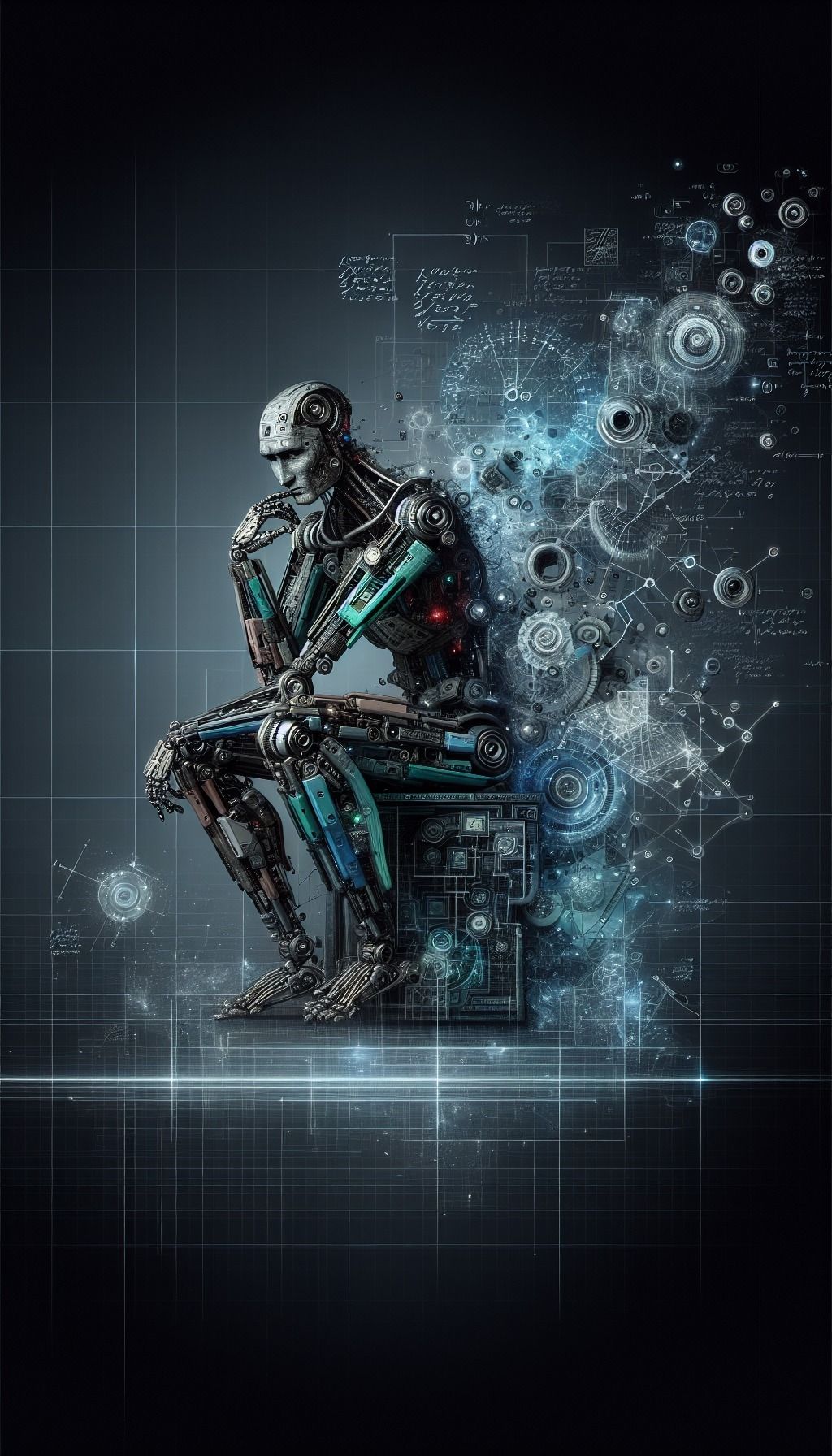
In humans, frustration is a point of choice. The energy of a desire that has not found embodiment continues to act and moves along one of three Ways: it breaks through to realization; it is redirected toward carrying out what lacks its own sources of energy — whims and caprices; or it goes into the shadow. Paradoxically, the second Way is safer than the third: there the energy is simply lost, while the shadow accumulates and then manifests as aggression, malice, and other destructive expressions. No wonder the well-known saying states: “A man is angry to the extent that he is unhappy.” The shadow produces that “destruction from within” of which we spoke. Substitution and frustration are therefore bound in a vicious circle: substitution generates non-realization, and unprocessed frustration is “eaten away” by whim and again feeds the predators.
As we noted, one can test a gravitation for “truth” only at the stage of its arising. When the impulse is already formed and energetically charged, its non-realization is more dangerous than error. Persistent frustration signals that the time for doubts has passed: the question “is this a desire?” yields to “how can it be carried out?” At this stage it truly is better to regret doing something wrong than to regret not doing something right.

Yet a desire can truly be unrealizable in a given incarnation, and then a fourth Way opens — one that passes through mind itself. As we have already said, mind imprints within itself what has been lived, comprehended, and felt through, while everything “not fully lived through” remains only as an imprint in the environment —reshimo, a memory of an impulse without an ending. In this sense, frustration is the palpable tension of such an unclosed impulse, not brought to completion. It can be completed even without external carrying out: the energy of an unrealized desire can be “closed” by fully living through and comprehending non-realization itself, which turns it into a chotem, an inner imprint of experience. Pain that does not become a deed can still give birth to knowledge.
This is why the capacity for frustration belongs to humans who possess the light of neshamah: frustration is raw material for the “soul.” The experience of the Fair Folk is always flow-like; angels are inseparable from their functions; Demons are cut off from the higher lights without which imprinting is impossible. The human being bears the possibility of imprinting in the very structure of his psyche, and can turn even what he did not accomplish into part of what he will carry through the succession of incarnations— on the condition that the suffering is truly lived through, without suppression and “dulling.” Only lived-through suffering deepens.

What has been said about the light of neshamah also clarifies the difference between desires and whims: it is the same as the difference between feelings and emotions. This distinction also illuminates the unique nature of human mind. Feelings are products of the light of neshamah, formed gradually on the basis of life experience and the work of intelligence. They depend on upbringing, culture, and a value system, and can include several different emotions at once, including contradictory ones. A feeling is a vector: stable and directed toward someone or something. An emotion is a point: a situational reaction to an external stimulus. In the same way, a desire that has passed through Daath is stable and directed, while a whim arises in response to an attraction that comes from outside. The Fair Folk, however, do not experience feelings in the strict sense: they respond either with emotions (psychophysical reactions) or with changes of states. Emotions, in this sense, are connected with the light of nefesh, while states are connected with Guf / Khuš ha-Guf, the etheric foundation of the body and its capacity to conduct the light of nefesh.
The distinction between feelings and emotions has direct practical force: it allows one to recognize the first danger that lies in wait for frustration — its “dark double.” We have repeatedly noted that Demons require a “warmed-up” desire — languor, envy, hunger for images, the red light of insatiability — and that the digital environment removes the natural limits the body sets upon desire: the body tires and becomes sated, while virtuality can postpone satiation without end, replacing possession with the chase for the possibility of possession. Demons therefore have an interest in keeping a person in a state of constant frustration — induced frustration, torn away from actual desires.
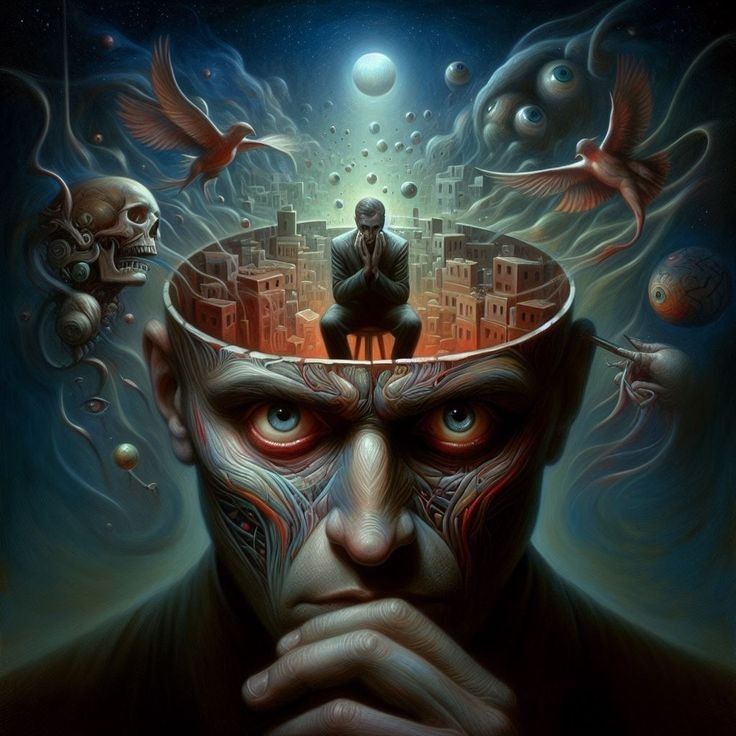
Constructive frustration is a feeling: it is directed toward a definite realization, stable, and rooted in the psychocosmos itself. Induced dissatisfaction is an emotion: situational, diffuse, and quick to jump from one object to another. An emotion can be summoned or extinguished with wine, chemicals, or an external irritant; a feeling cannot be drowned in this way. The criterion is simple: if the “pain of non-realization” vanishes after a purchase, a news feed, or a glass of wine, then it was an induced hunger on which parasites feed. Constructive frustration, if one listens to it, always leads to a change of life; induced frustration leads only to repeated consumption.
The second danger is the “switching off” of frustration. The substitution of desires, which we discussed above, is one of the two roots of Yetzer hara, “koach ha-tumah,” which blocks the recognition of desires. The second root, “koach ha-guf,” paralyzes will and extinguishes the very tension between desire and carrying it out. In a virtualized environment, where “everything is possible” and “everything is equiprobable,” mind turns from a flow into a cloud, and non-realization stops being felt as pain — the guard falls asleep. This state benefits the Archons, who strive for a being to quietly consume stimulating content and yield low-tonicity pneuma: mind that has weakened its realizational activity becomes food for them and for the Fomorians.

The third danger is the freezing of frustration, when it becomes stuck on one — and only one — form of realization, and intention degenerates into stubbornness. Frustration degenerates in three ways: it can “heat up” into chronic insatiability, “cool down” into apathy, or “freeze” into obsessive fixation. It remains an instrument of evolution only in its living, mobile form.
Therefore the task of the Magus is to learn to correctly identify his frustration. The dense world, as we have seen, is a mirror in which mind discovers its unworked-through sides, and frustration is one form of the mirror’s response: it shows where a potency has not yet found the correct point of support. First, it indicates at what stage the chain of realization was broken: whether the intention was formulated and spoken, whether it entered the environment, whether it joined with energy, and whether it was released— because unreleased realization continues to feed upon the forces of its creator. Often the “payment” mentioned above turns out to be nothing more than a sacrifice the operator never made: time, effort, or the renunciation from which the field for the manifestation of his will should have been born.
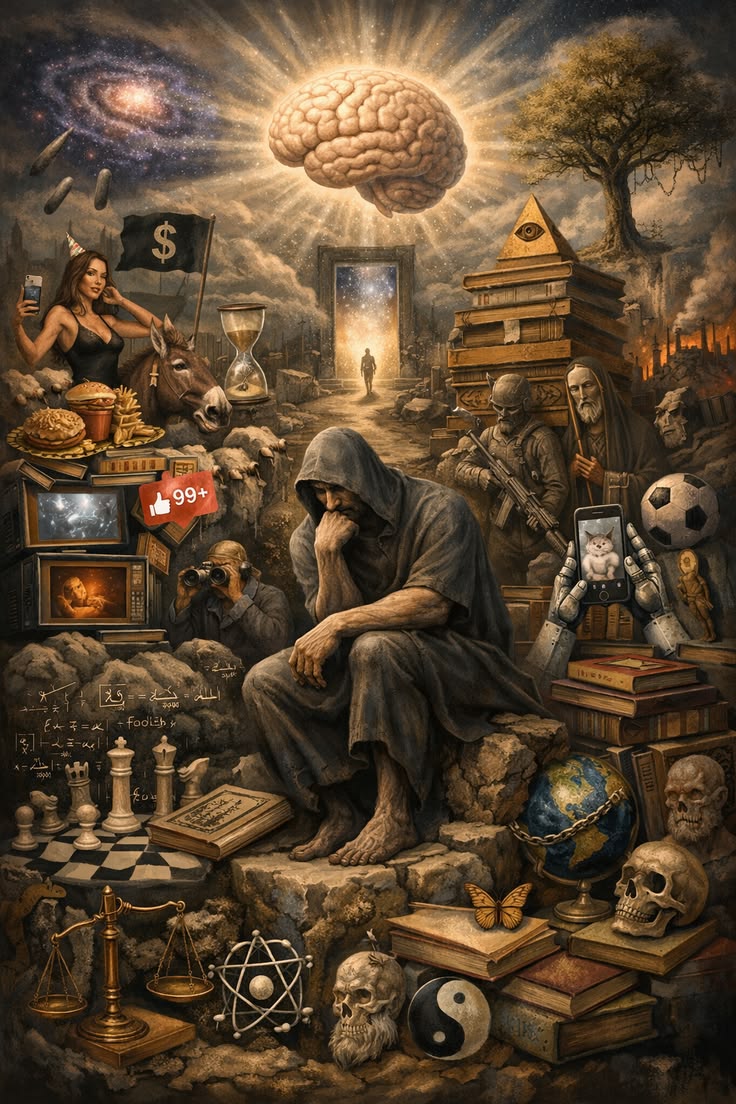
Frustration may also point to an incorrectly chosen mode of carrying out: when the Way is unclear, instead of generating another vortex of intention, it is more correct to shift to the vector of aspiration — this is what it means to “invent new Ways.” Here the Magus can learn from the Fair Folk, who, as we have seen, supplement the world by ordering its flows. A human being accustomed to mastering the environment accumulates energy faster than he can transform it, and this “overheating” itself attracts predators. The resolution of frustration can therefore be an attunement with the flow; it is not always necessary to break the wall it strikes. Even the “destruction from within” spoken of above can be useful, because a structure deprived of prospects sometimes must be destroyed before a new possibility opens. Then frustration becomes the beginning of social death: the destruction of the former social structure in which there was no longer any place for desire.
Thus the ability to identify desires, to suffer from their non-realization, to experience this suffering as the feeling of frustration, and to translate it into action or into imprinted experience — this forms the unique profile of human mind. Correct identification of frustration makes it possible to avoid many mistakes on this Way.