
Demons and the “Stockholm Syndrome”
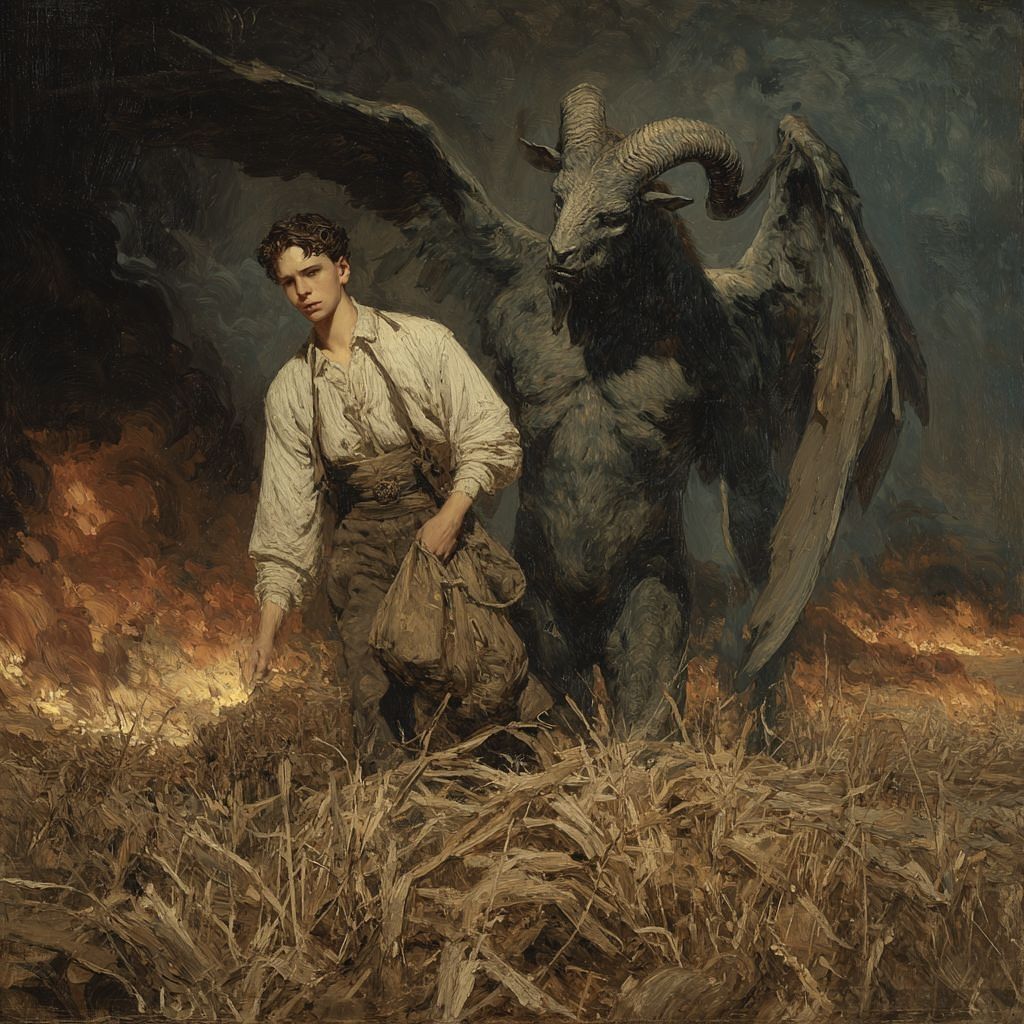
It is hardly surprising that people very rarely relate to demons in a rational, balanced, or neutral way. The infernal almost always provokes either panicky fear and rejection or, on the contrary, a strange, stubborn attraction that often turns into justification, romanticization, and attempts to “make a deal.” Moreover, a “tolerant” or “understanding” attitude toward demons is perceived as a sign of wisdom or maturity, while irreconcilability toward them is maligned as “superstition” or “narrow-mindedness.”
At the level of slogans, this usually sounds quite plausible: “demons are just parts of us,” “nothing should be repressed, everything should be accepted,” “evil is only misunderstood good.” At the root of many such attitudes lies an obvious fact: you can’t banish a demon until you acknowledge its existence; an attempt to repress the shadow only strengthens it. But in practice, such “acceptance” far too often turns merely into reinforcement of the destructive entity. Under the guise of “depth” of thought, distinctions begin to be erased between what sustains the mind and what devours it. At the same time, within the Psychocosmos, the destructive matrix receives not only energy but also justification, entrenchment, and legitimization.
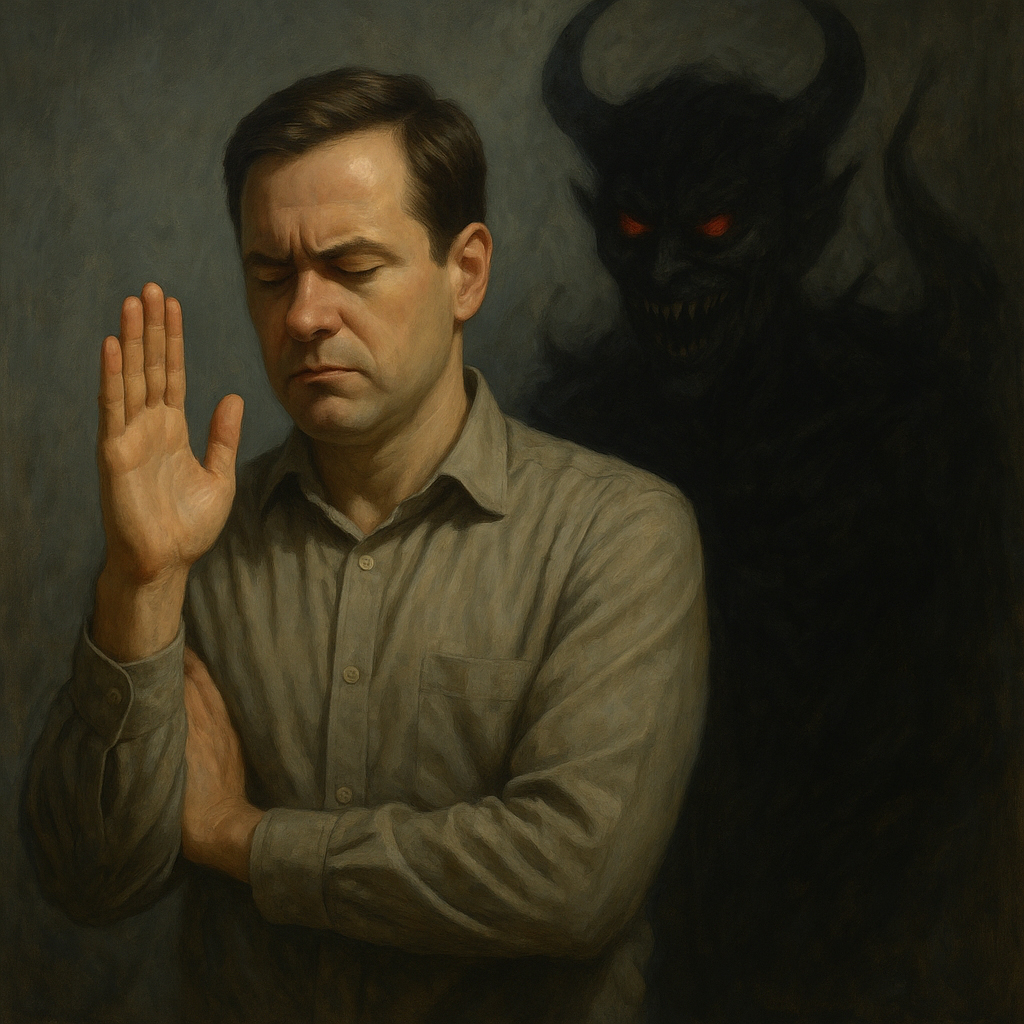
It is easy to notice that the widespread attitude toward predators is very similar to the so-called “Stockholm syndrome,” when the victim paradoxically begins to love and defend the one who is destroying them. In this case, the mind, seized by destructive tendencies (or a predatory vortex), ceases to distinguish the cause of its destruction from the source of relief and meaning.
If we regard a demon as a destructive matrix or a vortex entity feeding on distorted human desires, it becomes obvious that resistance or open confrontation is far less beneficial to it than stable attachment. Therefore, predators often build precisely such a format of possession, in which the person keeps the connection open, returns to thoughts, feelings, and actions that feed the predatory vortex, and, most importantly, protects this vortex from attempts at disidentification. Thus a special form of obscuration is formed — cognitive attachment to the consumer, when the mind “falls in love” with the very matrix that decomposes it.
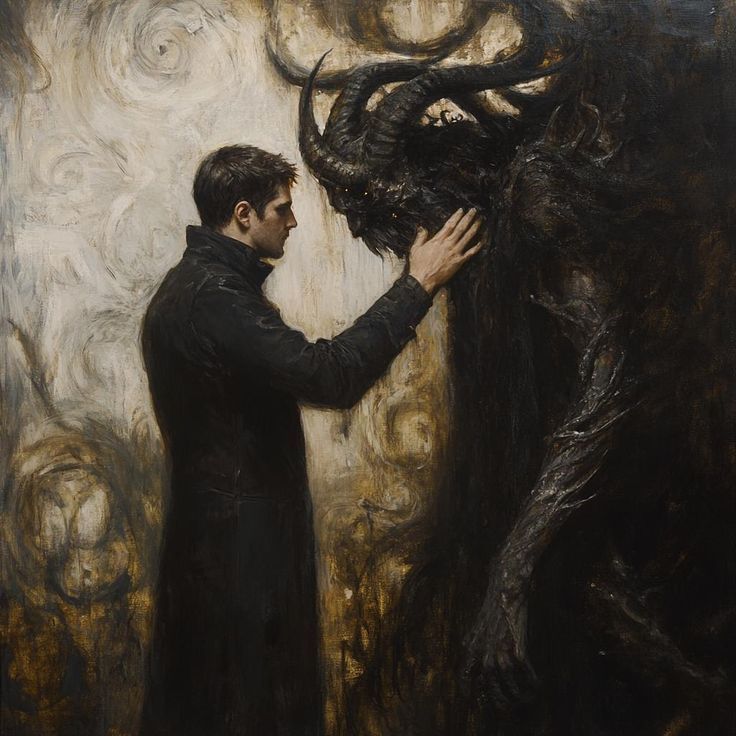
Vulnerability to this kind of possession is rooted in the initial state of the obscured human mind. We have already said that it functions in a world where it experiences three kinds of pressure: the “inertia” of matter (hyle), distortion of perception (malus), and the direct paralyzing pressure of the Archons, who seek to reduce any of its manifestations to a stable, predictable, and regulated scheme. In other words, mind is initially squeezed between a tendency to simplify everything, blur and fragment it on the one hand, and on the other — an urge to replace the world’s real complexity with simple and comfortable illusions. This is how Yetzer hara is formed — the drive toward inefficiency, destruction, toward capitulation before entropy, which is the system’s natural reaction when it is very hard, under such conditions, to maintain clarity and stability.
Subjectively, this is experienced as chronic fatigue, a sense of the meaninglessness of existence, getting stuck and “bogging down” of attention, a feeling of powerlessness that prevents completing an action or changing well-worn paths.
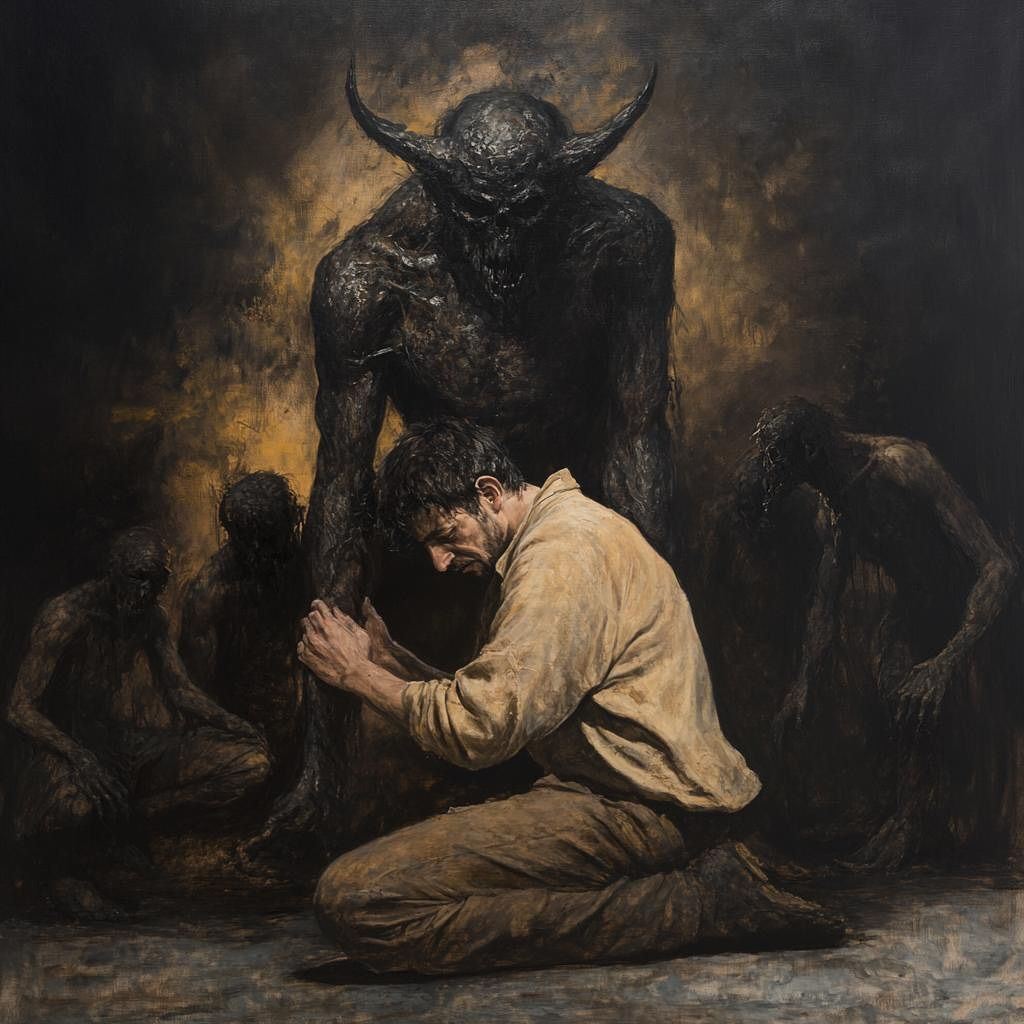
And in such a situation the demonic vortex offers a quick, attractive, and tempting way out. Any fall, any permission to “break,” “spit on it,” “go down the slope,” gives an immediate surge of relief, a lessening of that “existential burden” that is generated by heimarmene. Clearly, it is always easier to destroy than to support and create; to give in to impulses is always easier than to maintain awareness; to indulge a whim is always more pleasant than to uphold an inner tense vector.
And that is why the “temptation to fall” arises, disguised as “proud self-will”: “I can. I want. I take.” The paradox is that the euphoria of falling is precisely the first form of the drug that the demonic matrix offers the mind. The demon skillfully uses the mind’s “driven-into-a-corner” state; it shapes it, intensifies it, and turns it into a stable model of reaction.

The main hook of this “getting hooked” is that the demon first creates tension, ramps up anxiety, intensifies inner conflicts, a sense of inferiority, the unbearable obligatoriness of effort. And then it offers relief, disguised as “permission” and “self-care.” At the same time, between the pressure of the feeling of “the unbearable weight of existence” and the subsequent brief relief, no pause occurs, and the mind very quickly stops distinguishing what exactly is the cause and what is the consequence. The demon begins to be perceived as the one who “takes away” the pain, rather than as the one who produced it.
At the next stage of implantation, the predator gradually passes off its impulses as the “inner voice” of the mind itself. What initially was felt as an intrusive thought, suggestion, temptation, gradually integrates into the very sense of “I.” A person begins to think about themselves: “I’m just like that,” “that’s my character,” “that’s my true nature,” not noticing that a significant part of these “traits” are simply entrenched hooks of a destructive tendency. The goetic tradition partly for this reason insists on the objectification of destructive matrices: until a person sees them “as separate from themselves,” until they name them and place them opposite themselves, they will go on taking them for their own manifestations.
From this point of view, it becomes clear why relationships with demons are so often and easily romanticized. A demon almost always brings with it a sense of significance. In its presence, the psyche feels itself not just a weak and suffering being, but someone special: chosen, initiated, wise, and superior to others. The demon’s attention, even if it manifests in destructive phenomena, painful passions, or absurd patterns, is perceived as a sign that “something is happening” with the person, that they are not just living an ordinary, gray, insignificant life.
To this is added this also feeds Yetzer hara. The demon provokes a sense of “freedom” from rules: “I have a right to my darkness,” “I don’t owe anyone anything,” “I’m above your moralities.” This state of “proud rebellion” against the oppressive world, against Archontic heimarmene, against depersonalizing everydayness is perceived as a lofty spiritual protest. However, in reality, most often it is merely capitulation to inner disorder, painted in heroic tones. And the more a person gets used to taking pleasure in such “uprisings,” the more strongly they will defend the “right” to them, and therefore the matrix that slips this “right” to them.
Besides, the sense of connection with powerful forces or entities creates a very strong illusion of closeness. The demon demands constant attention to itself, to its images, ideas, and to the themes it touches. A person endlessly replays the same scenes, dialogues, rituals, images. Their attention fixates more and more around the same center. And then, when attention is continuously concentrated on something, the mind interprets it as a bond — almost as love. “He is always near,” “he doesn’t leave me,” “he is the only one who understands me” — behind these formulas there is almost always a simple fact: it is advantageous for the predator not to let go of its feeding base.
In addition, another important mechanism of romanticization is that a demon really is capable of producing results. The activity of certain destructive matrices helps win the struggle for prestige, power, influence, sexual attractiveness — for everything that mind tends to consider proof of its own success. Clearly, from the standpoint of energy, this is a very simple contract: the demon reorients the flows, strengthens willpower in one area (but pays for this with degradation in others). And it does not matter that the capacity to love, to perceive, to distinguish, to be whole is diminished. A person gets a measurable and quite obvious gain here and now, and the price — the loss of depth and inner freedom — they write off as a “difficult character,” a “hard fate,” or “sacrifices in the name of a goal.”
Thus, a structure is gradually built in which any doubt about the reliability of the “ally” is perceived as an attempt on one’s own identity. The demon reinforces the illusion of autonomy: a person is sure that it is they themselves who control the spirit, that they use it as a tool, that they have concluded an “equal” or “profitable” pact. And precisely because this confidence causes a pleasant wave of self-affirmation, they do not notice how their decisions and reactions have long been following a rut traced by the destructive entity. Anyone who tries to point this out is inevitably perceived as an enemy, as someone who “doesn’t understand,” “envies,” or “fears” their real power.
The demon, in turn, makes sure that the victim’s capacity for doubt is weakened. One of the predators’ favorite strategies is decreasing flexibility, criticality, and variability of thinking. Within the mind, alternative judgments gradually close off, and there remains one mode of interpretation — the one that serves the interests of the destructor. Everything that does not align with it is declared “boring,” “low,” “not mine,” or “hostile.” At this level, a person not only does not want to see the danger, they truly cannot recognize it: in their picture of the world, the demon looks not like a source of destruction, but like the only one who gives meaning, flavor, brightness, and direction to life.

This process becomes especially dangerous when the demonic matrix embeds itself into key supports of self-esteem: a sense of one’s own value, sexuality, an image of justice, the concept of knowledge and fidelity. If the destructor is entrenched in the sphere of self-respect, any attempt to point to its destructive nature will be experienced as humiliation, as a “taking away of dignity.” Thus the victim turns into an advocate, and the person not only “tolerates” the predator, they begin to aggressively defend it from any attempts at exposure.
At this stage, the “Stockholm syndrome” becomes especially obvious. Mind fiercely defends the demon from those who could help identify the destructor, separate the inner from the imposed, effort from breakdown, and freedom from whim. This is as hard as taking an addict’s drug away; it arouses not gratitude but rage and despair. It is just as hard to break a destructive attachment; at the same time, everything inside the victim will scream that their only support is being taken away. The demon implants in the mind a firm conviction: “without me you are nothing.” And if the mind has lived for a long time leaning on this crutch, it will indeed seem to it that without it, it will not stand.
For the consumer of energy, there is nothing more convenient than a mind that is afraid of direct judgment, afraid to admit that “this destroys,” afraid to call it a predator so as not to look “old-fashioned” or “superstitious.” In contemporary discourse, any criticism of demonic influence seems like a manifestation of aggression, and any attempt to draw a boundary — like inquisitorialism or “traditionalism.” As a result, where clarity and the instinct of self-preservation are simply active, a person is accused of “superstition,” while the one who justifies their own devourers is praised for “open-mindedness.”
For a Magus, such a trap is doubly dangerous. First, because their mind is initially more mobile and energetic, which means any destructive matrix implants more strongly and more deeply. Second, because the Magus by definition acts in the sphere of challenges, initiations, going beyond the limits of the ordinary — and these are precisely the zones where demonic manifestations are especially active. Third, because the Magus tends to perceive any intense experiences as part of the Path: they can easily confuse demonic “progress” — an increase in the depth of experiences, an expansion of the range of states, a growth of influence — with a real deepening of mind and an approach to the Light. The demon is usually not at all opposed to a person considering it their spiritual Master; it is even more convenient for it.

However, wisdom is the ability to recognize the difference between the constructive and the destructive, without falling either into hysterical demonization of everything in sight or into naive pacifism toward predators. A mature mind can, as calmly as you like and without hysteria, speak about demons, see their functions and place in the overall system of the universe, but at the same time — firmly remain on its own side of the boundary.
That is why it is so important to clearly see the main substitution. A demon always seeks to present itself in the image of an ally — a Master, Patron, Protector, “older brother,” who allegedly helps a person be themselves, protects them from the world and from the Archons, and opens up “hidden truth” about reality. It can indeed temporarily ease the performance of some tasks on the Path: expose self-deception, break false modesty, destroy hypocrisy. But by its nature it remains a consumer, a consumer. Its interests are not that the carrier becomes freer, more whole, and more independent; they are that it ensures for itself a stable and abundant flow of energy. Demons are never partners; they are always users.
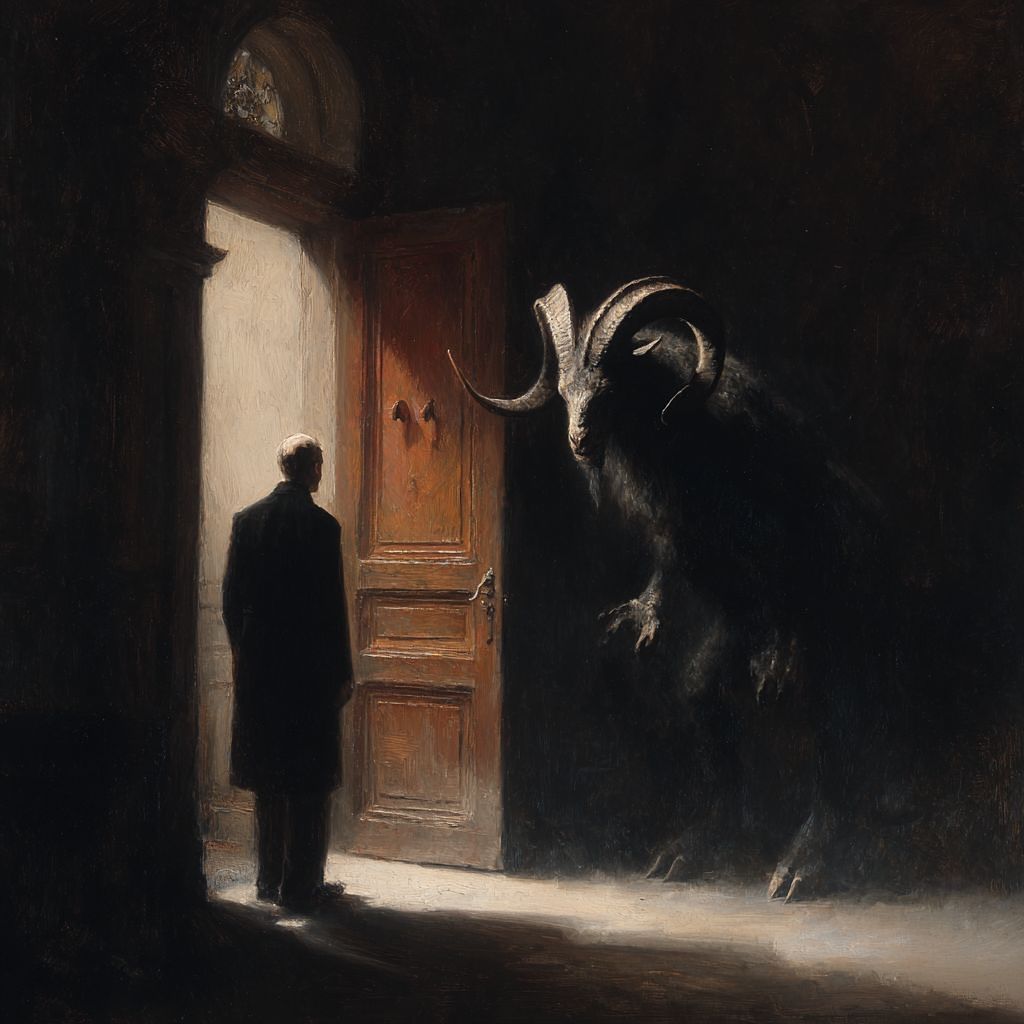
To break such an attachment by force is almost impossible. Any crude attempt to “cut off” demonic influence while mind itself is identified with it will be perceived as violence and will lead to even stronger clinging. The only way out can be in the gradual restoration of those qualities that were substituted or distorted.
First of all, one should cultivate the capacity for doubt. Not for nihilism or total skepticism that destroys everything indiscriminately, but for a stable inner habit of questioning. The next step is the cultivation of the capacity for love and compassion, the ability to see in another not an object of consumption or a competitor, but an independent source of Light. Demonic matrices cannot endure real warmth of soul; they need either cold functionality or red-hot affect.
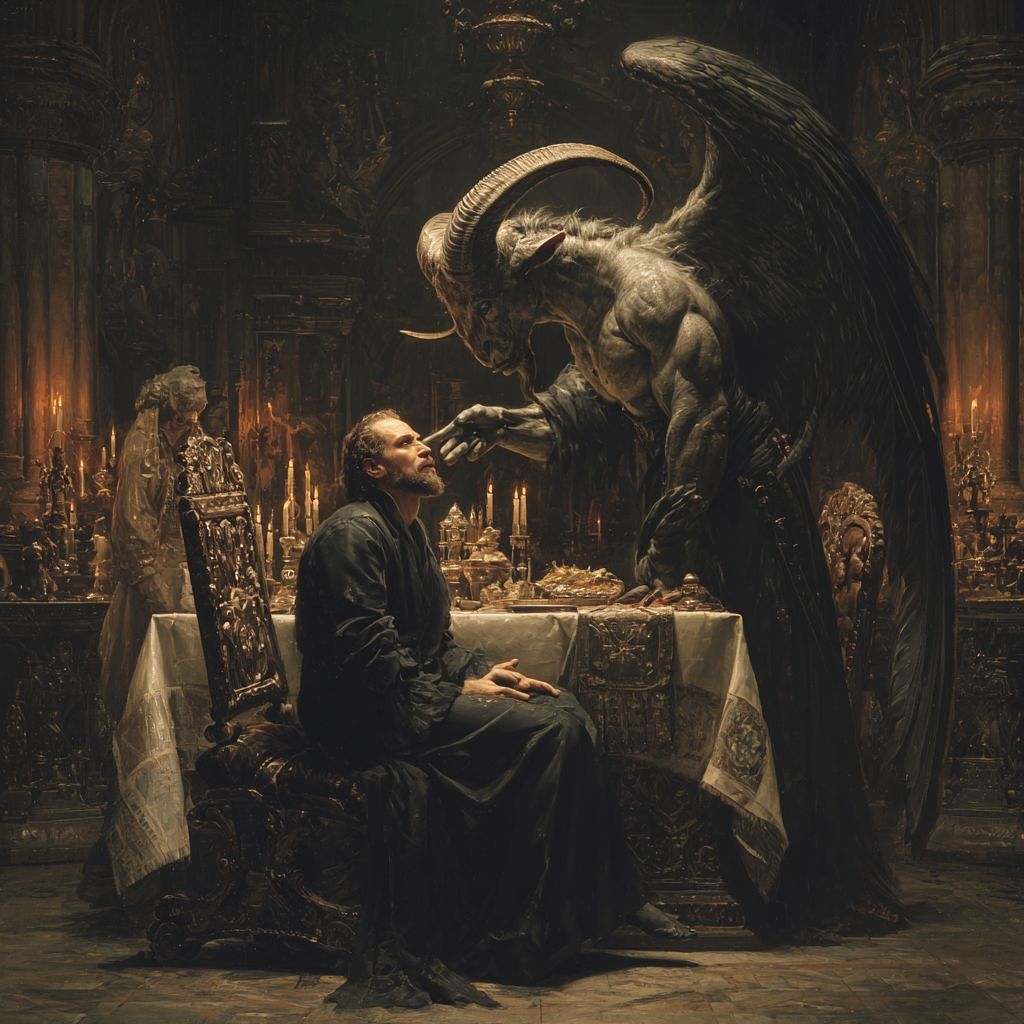
The entire archontic-demonic system of modernity is built on the dispersal and fragmentation of mind: fragmented thinking, the endless flickering of stimuli, the inability to hold attention on one object for long. And therefore the practice of training attention, the ability to look inward for a long time and with insight — at oneself, at processes, at another — undermines the power of the predators.
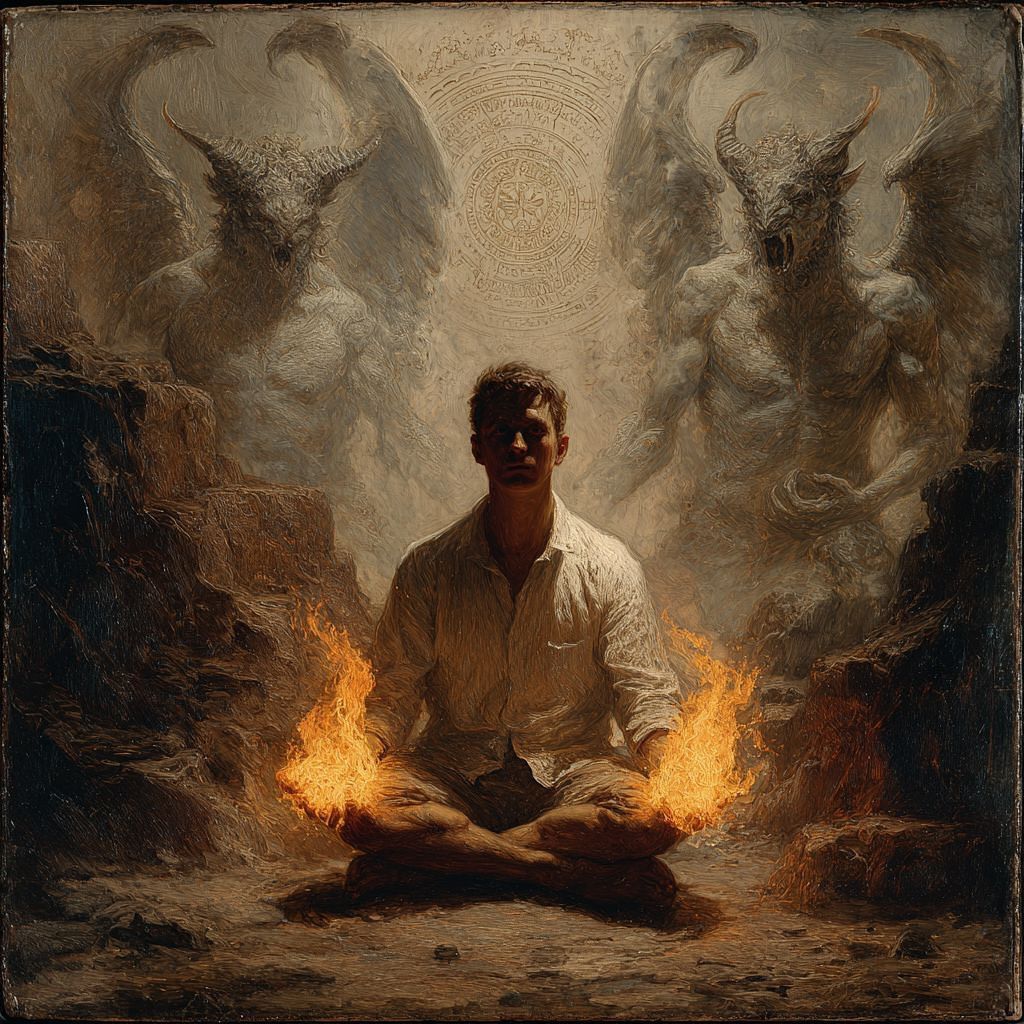
And finally, an important mechanism of resistance is disidentification. While a person considers destructive tendencies to be “their own quirks,” any attempt at change is perceived as an attempt on their very essence. But if they learn to perceive the destructor as something they should work on, something that needs to be corrected, without regret or accusations, they gain a chance for inner freedom. It is important to stop defending the demon as oneself and begin, finally, to look at it as what it is: a distortion, once allowed in and embedded, but not identical to the nature of mind.
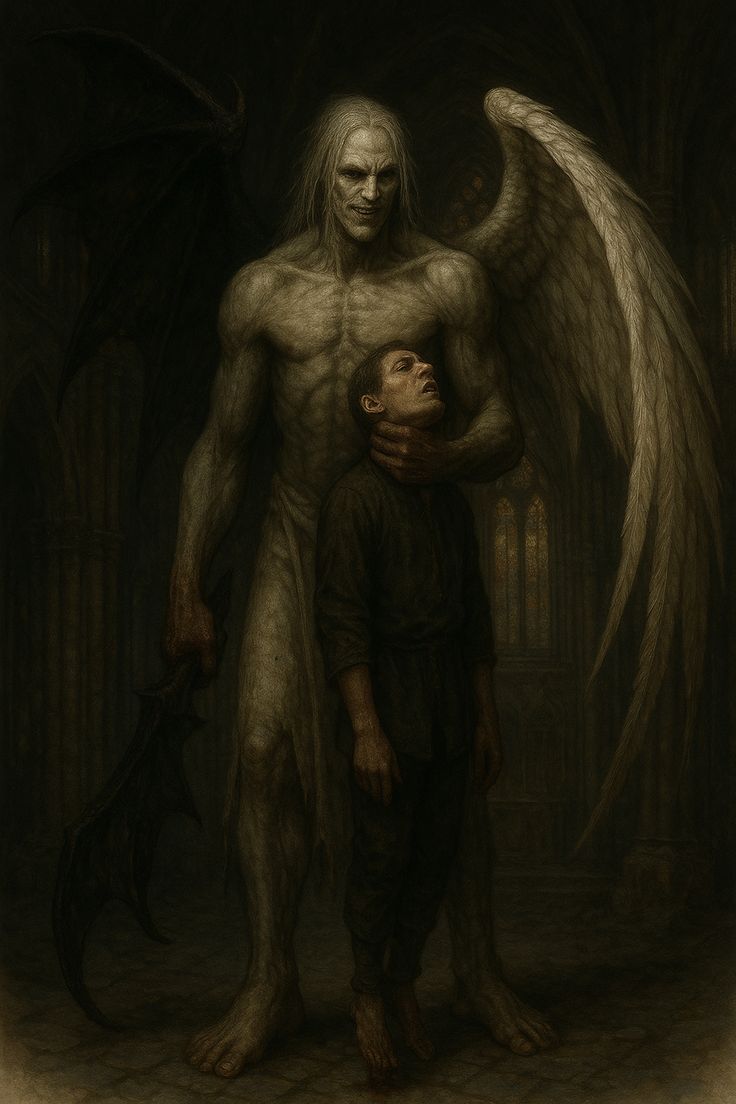
Then love, addressed to the predator, is reoriented toward the Source, toward living beings, toward the very possibility of being, and the pain of parting with the habitual matrix turns out to be not a tragedy but, on the contrary, the beginning of recovery.
This is what true inner goetia consists in: not in endlessly waging war against demons or denying their existence, but in ceasing to love one’s unfreedom, ceasing to defend those who live at the expense of your energy, your life, and reclaiming the right to expend your energy on your own ascent.
One can be compassionate toward a being afflicted by a destructive matrix and at the same time remain absolutely irreconcilable toward the matrix itself. One can acknowledge that demons exist, that they are embedded in the general architecture of the universe, that their appearance is lawful — and still consciously not give them the right to dispose of one’s will. To understand the structure of the farm of worlds does not mean to accept one’s role in it as cattle.






Thank you
Thank you.
Acute! And relevant, of course.
Enmerkar, hello! In the book ‘The Roads of the Mage. The Fall of the Guardian’, you write that demons often threatened you and your teacher Mikhail Alexandrovich with revenge after death, when the protection of the body ceases to function. Please explain how demons can take revenge on a mage (or any other person) after death, and is there any protection against this?
Hello.
The post-mortem path of any being, human, or mage, passes through the Interspace, a realm where demons can enter relatively easily, as there are no restraining supports of materiality. And goetic demons actually belong to this hyperspace in its aspect of the Edge. Usually, demons are not interested in elementers going through postmortem, as the deceased can no longer generate energy, and the main interest of demons in people is gastronomic. However, the situation is different for people who have managed to ‘annoy’ infernal beings during their lifetime. Demons do not get lazy, do not forgive, and do not forget, which means they wait for the time for revenge. Therefore, for a mage, a post-mortem journey is usually much more dangerous than for an ordinary person. And the main danger here is not that you might get ‘eaten’ (although that is possible), but that you might be hunted, broken, and turned into a demon yourself. Then ‘revenge’ looks like severe, cyclical states: an endless experience of their own guilt, a fear that finds no release, a return to experienced cruelty — one’s own or others’, from which one cannot escape or turn away. Nevertheless, mages are usually better trained, know methods of protection, spells, and amulets suitable for guarding in the Interspace. There is no way to avoid meeting demons: everything that was suppressed will ‘come out’ and take form. And hungry inhabitants of the Interspace do not miss the chance to grab the remnants of vital and psychic energy of the elementer, especially if they themselves do not understand what is happening and act blindly. The essence of goetia as a path is to not worship demons and not play with them, but to accurately name them by their names, bring them to light, and understand them both as an ‘external enemy’ and as a mechanism of one’s own psyche broken down into details. Therefore, it is most correct to approach the threats of demons as invitations to work on self-analysis, self-integration, and identifying one’s dead ends and conflicts, which will inevitably arise after death, and in a much more honest and ruthless environment. And the more done before death, the less chance any demon has to ‘get to you’ after.
Enmerkar, thank you for the detailed explanation! Tell me, if a soul going through the post-mortem path does not generate energy, then where does it get the strength for this path and for the subsequent incarnation? How free are we in our actions in the ‘Other World’? After all, if we came from the subtle world, then that is our main home, and we should have more freedom of action than when we temporarily live on Earth? Shouldn’t that world be safer for us?
Yes, in the Interspace, options for choice are very limited, and movements/events there mostly occur ‘inertia-wise’, according to the impulses set during life. This is why the main work of preparation for post-mortem is done during life. Nevertheless, this does not mean that the post-mortem path is completely unfree. Firstly, there is still a possibility of choice if there are several energetically equivalent trajectories available. That is, during life, several ‘equilibrium’ vectors of aspirations can be created in consciousness, and which one is realized in post-mortem depends on the deceased themselves. This is particularly important when these impulses manifest in the form of different ‘routes’ of the post-mortem path, and knowing the ‘Map’ of the Interspace, an elementer can choose a more favorable trajectory (from those available to them). Secondly, it is possible to work on awareness, understanding why certain obstacles, images, or interactions arise on the post-mortem path. In the ‘maximum program’, such awareness can even lead to a ‘flash of self-knowledge’, and consequently – to the liberation of consciousness. So, for a prepared person, post-mortem is not just ‘reaping the fruits’ of life, but also a new field of possibilities.
More details:
https://www.enmerkar.com/en/way/liberation-in-the-afterlife
https://www.enmerkar.com/en/magic/obstacles-and-demons-of-the-afterlife
https://www.enmerkar.com/en/observations/debts-and-the-afterlife
Greetings.
Thank you, very interesting article.
I would like to add a little from my experience, so to speak.
Some of the demons actively work with embodied people, the so-called ‘black magicians’. They clearly understand who they are ‘communicating’ with and enter into a sort of ‘contract’ with a demon. The terms can vary, but the essence is the same: the ‘partner’ must provide the flow of vital energy. How this energy is extracted from someone is another question. There can be many options, from organizing a sect to providing magical services, often at the expense of one’s own kind.
But that’s not what I want to talk about.
As I understand it, this is actively practiced by Asmodeus. By the way, his name sounds a little different, and if pronounced correctly acquires a somewhat serpentine sound, resonating in space.
Moreover, if this ‘partner’ has not accumulated heavy karma, skillfully shifted it, or for some other reasons, then after death they do not ‘fall’ into the depths of hells, and the demon can reuse them in the next incarnation, naturally encoding them appropriately.
Also, many books and videos are scattered with triggers that launch corresponding programs, prompting the necessary interest, slowly pushing to reestablish contact.
In my case, the first trigger was in the book ‘Beyond the Edge of the World, Essence and Consciousness’.
After that occurred the first contact when I began to ‘hear’ them, literally fully formed thoughts and feelings in words.
Interestingly, the first thing they told me was, ‘do not fear us, everything that happens here is done not by us, but by you, and we give you what you ask for.’ That’s what they said.
Later he also came.
In dreams in the form of a ‘black’ hurricane, he named himself, and it was said that he is my ‘father’. What this means, I did not quite understand, but that’s what was said. At that time I thought, ‘what nonsense’ and ‘what will one not dream of?’. Then he seemed to scatter his signs along my life path; I came across books, channels of his servants on YouTube, one by the way is quite interesting, but I won’t provide the link, no need to advertise him here.
In my consciousness, his encodings began to unfold. For example, I was clear about what I needed to do to establish constant contact with him. But I resisted. I do not like being commanded.
There were dreams where they showed the ritual of how to open the ‘hellish gates’. I no longer remember the details, but interestingly, the ritual had to be performed under a bridge. And so on.
His greatest activity was during the last new moon in October (the lord of the black moon) and a bit beyond that. Perhaps this is his time of greatest activity. During this time, there was some terrible pressure, a state of horror, and corresponding dreams. I somehow asked him – why do you need me, I mean, I don’t know anything properly and I can’t do anything, to which the answer was ‘we will teach you’.
The last and strongest trigger was your book – the first volume of the ‘new Lemegeton’. Where I read about communicating with him. Coincidentally, this year during the October new moon, everything began. I thought I would die. I reached the limit but still resisted.
And one night, a thought just came. Perhaps from above.
It sounded something like this:
But I have not made any contracts with him in this life, I have not done anything with his help.
Just like that…
After that, I sent both him and all of them away.
And everything stopped. Almost completely.
The fear of the dark disappeared, and I stopped being afraid of mirrors.
I understand perfectly that I once served him and his encodings ‘sound’ within me and it seems he once took ‘his’. One ‘seer’ told me that I bear ‘his’ mark.
For example, I lack love and compassion.
Only some remnants of conscience remain. Which do not allow me to live as they do. Although I can and understand how.
I have long made the decision to follow a different path, not with ‘them’, and there is support from above, although it is not felt as strongly as the infernal ‘layers’, which I see and perceive, and they are literally at arm’s length. But the light and ‘fiery worlds’ are hardly perceived. But I understand that I have managed to break free.
To sever one of the strongest connections. The rest is work – tracking their attachments and influences and working with that.
And to you, thank you for the necessary books and information!