
Grigori and Evolution
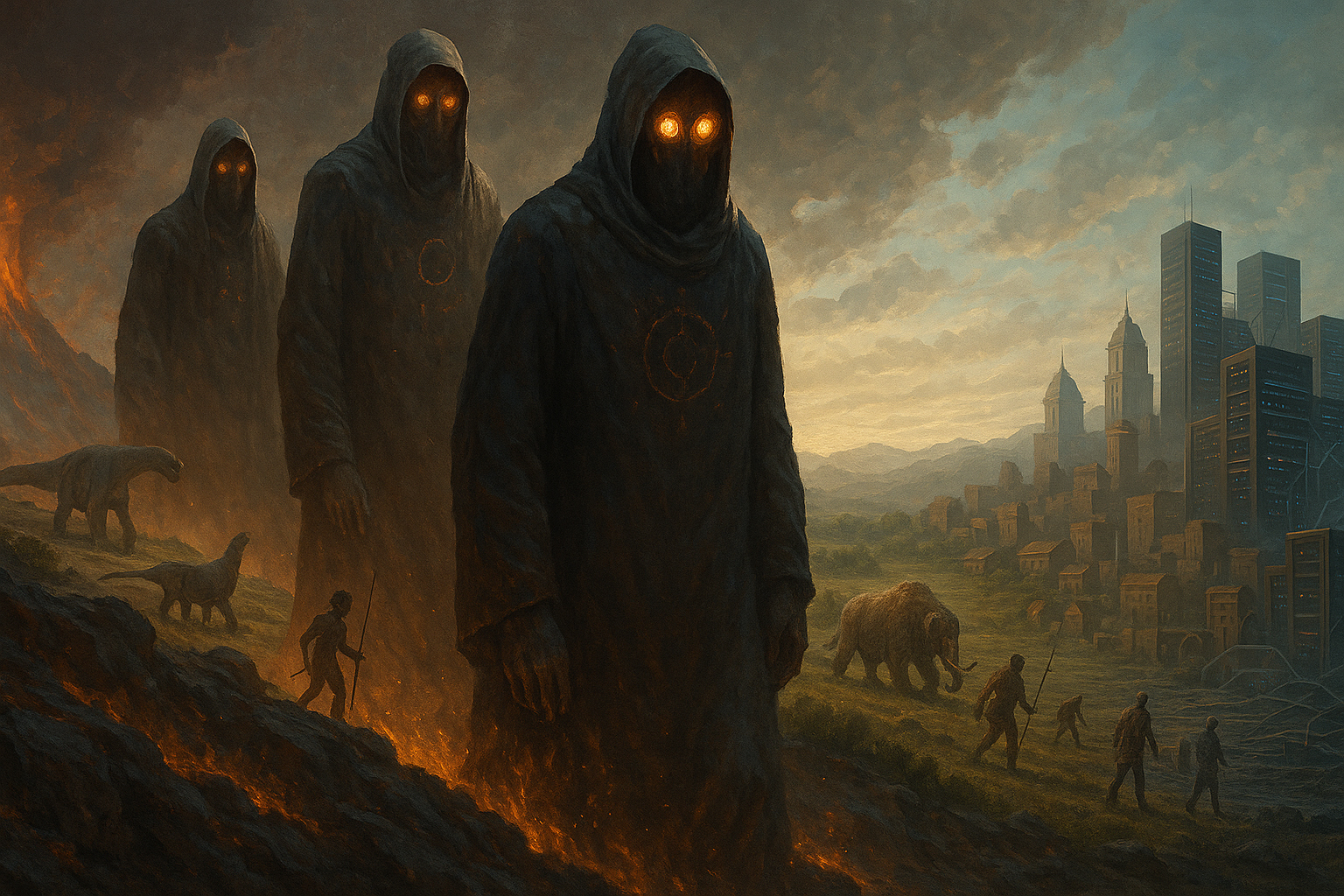
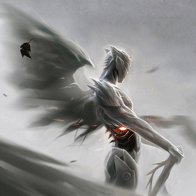
We have already discussed among all the forces and beings influencing the development of humanity and life on Earth, the most ambiguous role falls to the Grigori — the “Observers”, the “fallen” or “descended” seraphim who appeared on the planet at the very beginning of its existence, billions of years before humanity.
Each time a new form of collective life capable of changing the face of the planet takes the stage, the Grigori do not merely watch closely; they act as “players”, nudging the course of evolution toward their own interests while usually remaining “offstage”.
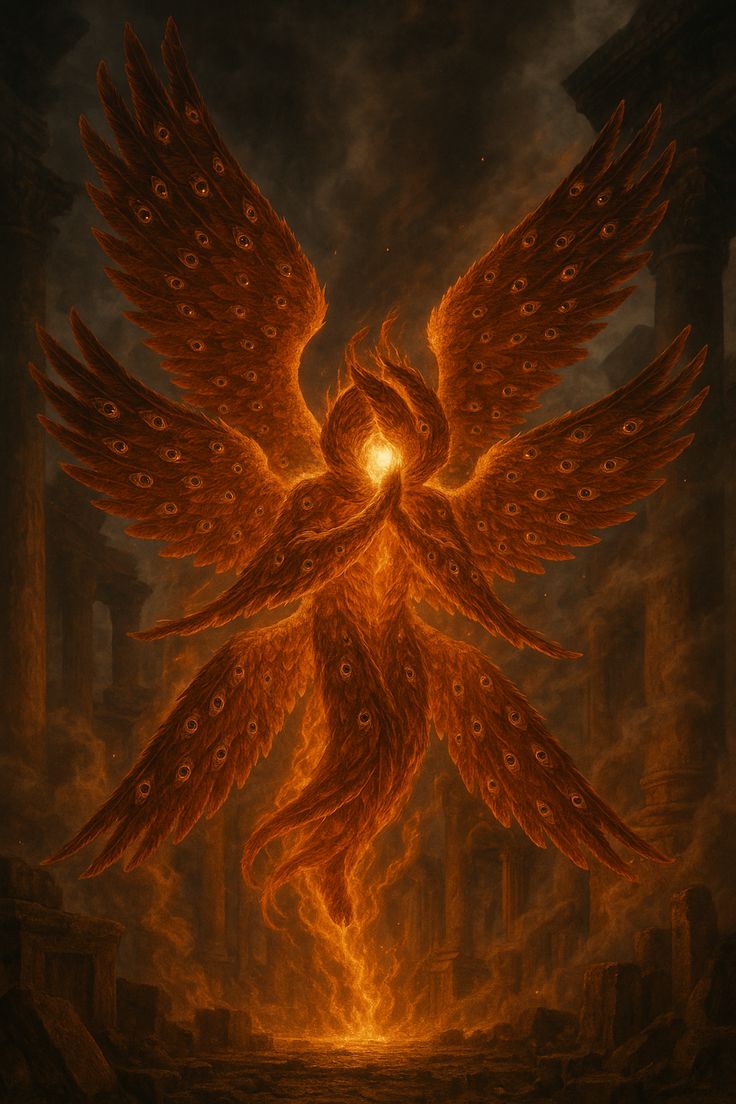
The Grigori emerged from vortices that “turned against their own nature”, refusing to remain a mere function. In the hierarchy of fiery forces — Gebura — they ensured stabilization of differences, the strengthening of will, and the regulation of decay processes. Yet at one point, in their striving for autonomous manifestation, they brought their vortex into matter, into the material layers of reality, on which they were able to assemble “artificial souls” as the result of a volitional transformation of the dense plane.
Because they thus became dependent on the material world, from that moment on it became vital for them that the dense world have both stability and internal mobility.
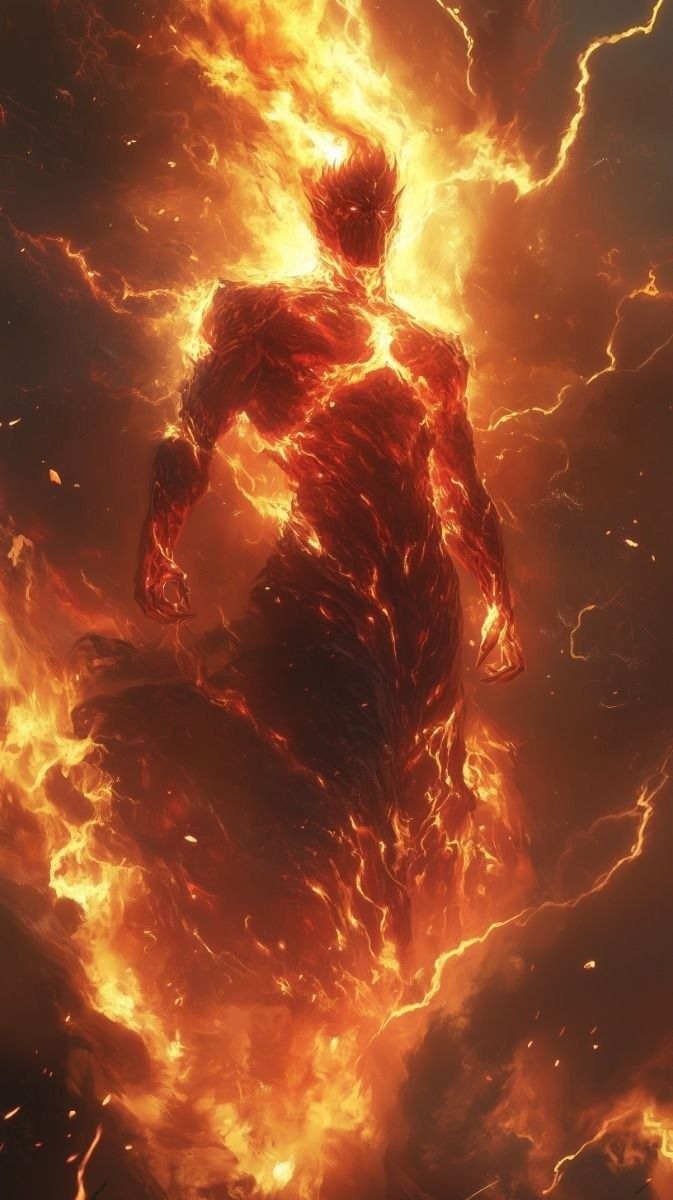
The Grigori were born of the Fire of law. Their “natural” milieu was Dinur — the stream of primal fire where all distinctions, qualities, and characteristics of “real” objects are born and revealed, where the duality of manifested worlds first becomes evident.
Therefore, unlike most angelic forces, they possessed from the outset a certain freedom: they could choose what to “illuminate”, where to activate, and where to slow decay — yet they could not choose their own role.
Their descent was at once an inevitability and a rebellion, a continuation of their functions and a shift to a wholly different level — the level of self-determination. As discussed earlier, this transformation occurred when the first wave of alvs, which “seeded” the possibilities for life on Earth, returned to their worlds, while the second wave was only preparing to descend, and other gods — the Vanir and the Aesir — were occupied with building the “basic” conditions in which biological life was to develop and complexify.
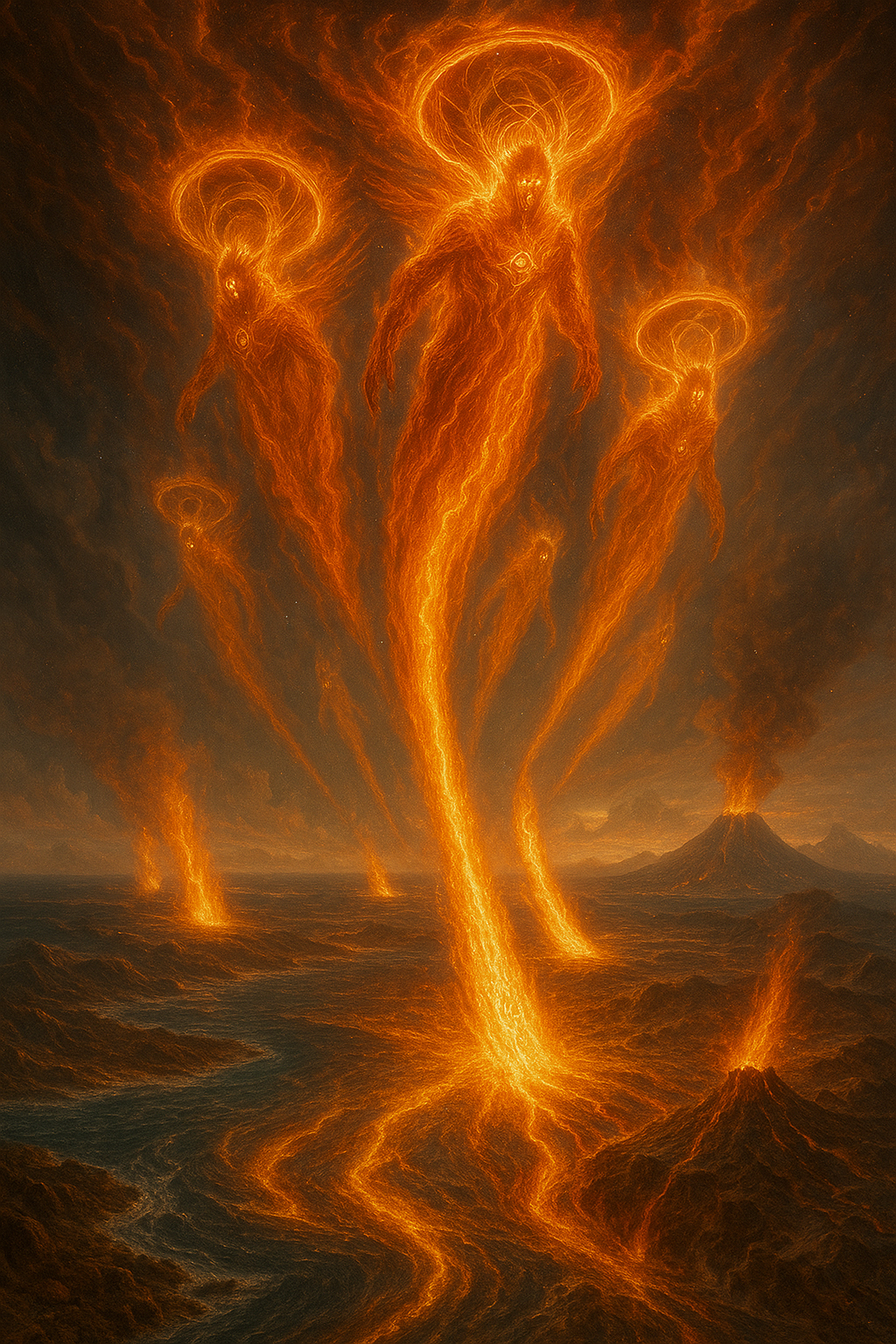
While the alvs and other higher divine forces were constructing the basic architecture of matter and law, the Grigori could not intervene directly, yet even at that stage they found a niche for themselves: to observe the general development of the world and to gently steer it in directions important to them.
Archont forces provide the very conditions for materiality: definiteness, division, discreteness, and boundaries. The Vanir and Aesir form the flows of life, the scenarios and conditions for the entry of mind into matter. The alvs make possible the informational structure and the principle of form. Against this backdrop, the Grigori choose the role of those who ensure that all these vectors, when they collide, do not destroy the world altogether or drive it into states where their own artificial soul loses its support. In other words, they act as “second-level demiurges”, not creating the laws of worlds directly but influencing how those laws are realized within a particular evolutionary line.
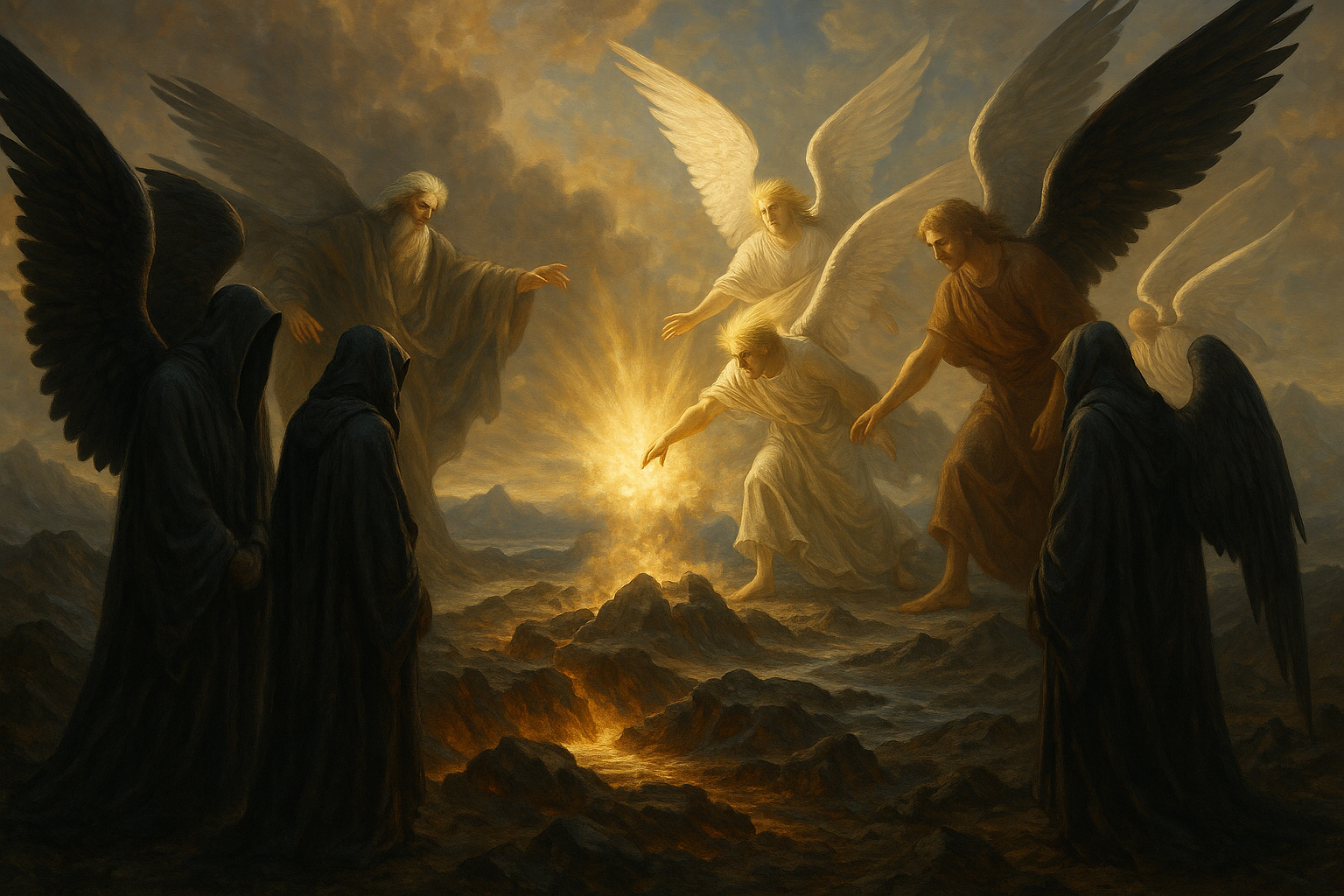
At the same time, it is vitally important to them not to enter into open conflict with the gods, the angelic hierarchies, or the Archons. They remember all too well the price of rebellion: their own Descent is already a breach of their original nature of service, and that debt has not gone away.
Therefore the Grigori act so their interventions appear as subtle corrections within frameworks already set by creative forces. They use windows of opportunity opened by others: climatic crises, collisions of evolutionary branches, changes in dominant species, the emergence of new technologies. Each such turn for the gods, the Archons, and the elemental entities is the realization of particular creative intentions and regularities; for the Grigori it is a chance to tune parameters to their will.
Their relationship with the Archons is especially complicated: the Rulers strive for maximal predictability and granularity, for a world where everything can be accounted for. The Grigori share this “love of structure”, but they also understand perfectly well that absolute order kills the mobility on which evolution and their artificial soul depend. So they carefully ensure that Heimarmene does not bring the world to a state of icy desert.
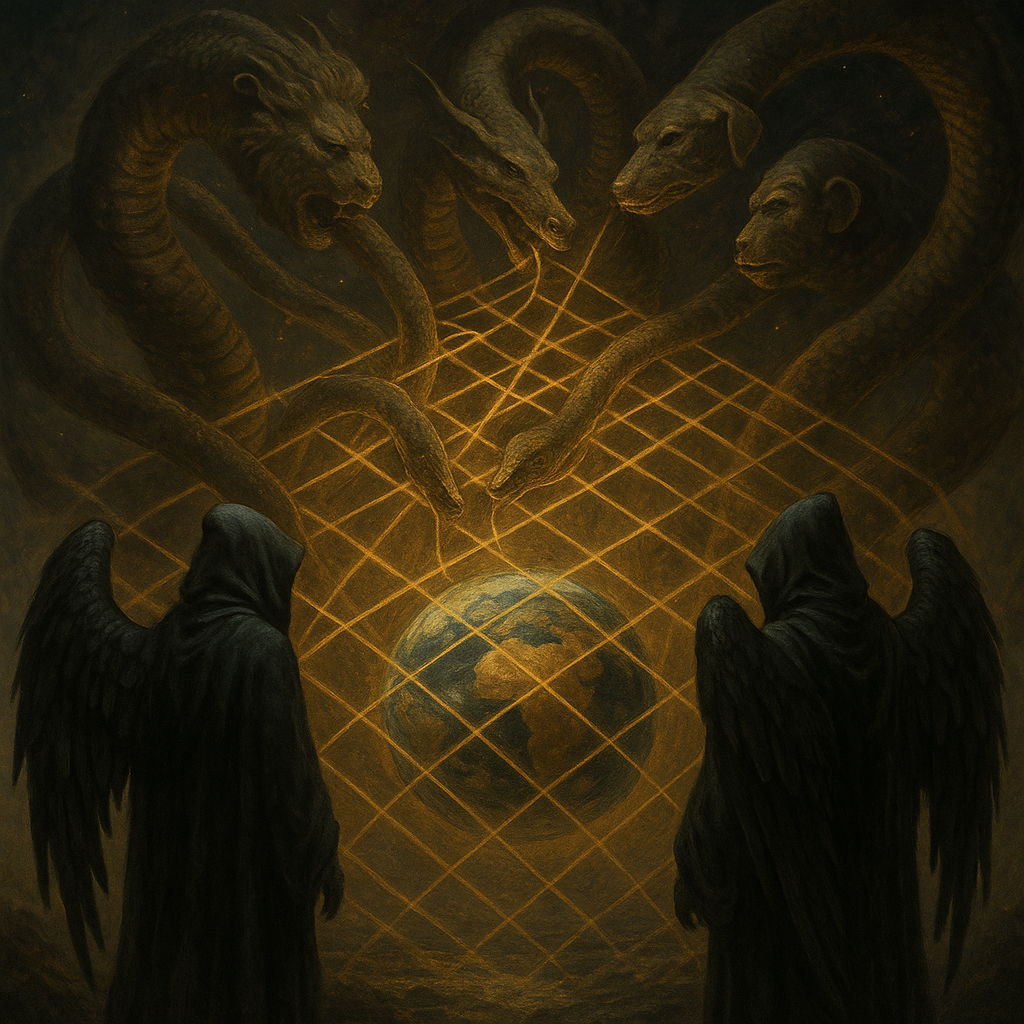
At the same time, the Grigori resist excessive fluidity that could strip the world of definiteness and thus “pull the support” out from under the feet of the artificial soul they obtained at such cost. And so — already from the time of the Second Descent of the alvs and the appearance of the first proto-Fairies — the Grigori engaged in a ” selection” process.
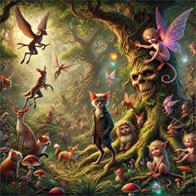
From the start the Fairies appeared as a way for the world to remain fluid and alive. Their nature is krus, a form that never fully crystallizes, never becomes absolutely determinate. They can dissolve into the flows of the Interspace, become almost a pure wave, and a moment later gather into a dense, tangible body without losing self-identity. They already lived what the Grigori only sought to achieve: the joining of freedom and nonlocality.
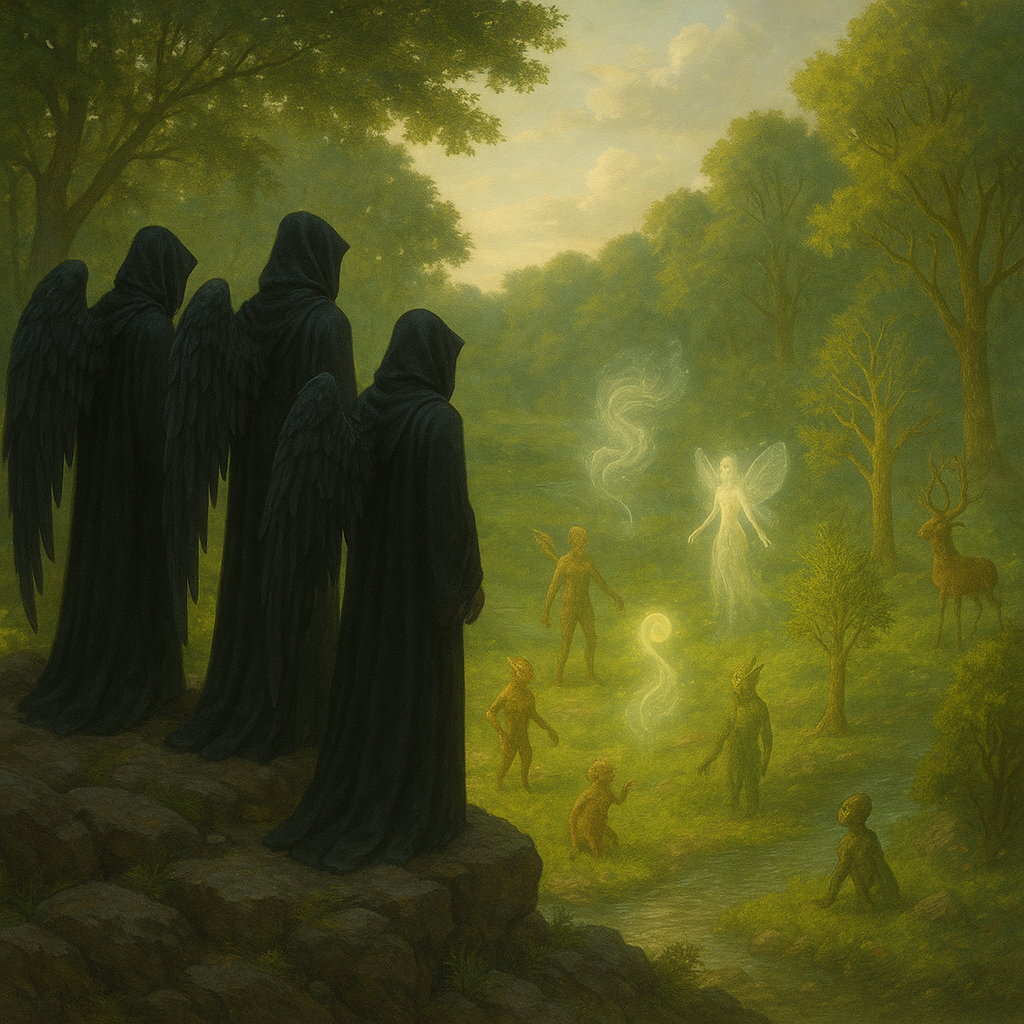
To the Grigori these features of the Fairies were simultaneously objects of envy and unattainable perfection when beings lower in the hierarchy, knowing neither strict statutes nor oaths on fiery peaks, suddenly proved to be those who already lived in the state the Observers only dreamed of.
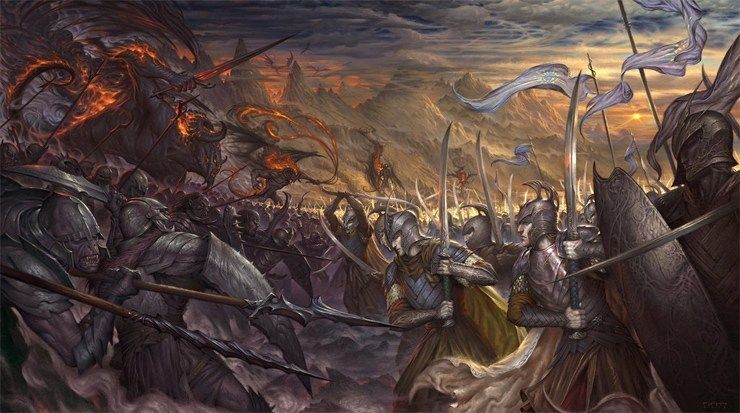
Thus the Fairies became for the Observers an ideal “laboratory”: they studied the Fairies closely, provoking situations in which the dual nature of the Magical people could manifest most clearly. In the First battle at Mag Tuired the descendants of the Grigori — the eliud — even clashed sharply with the “alv” branch of the Fairies, but in the end were assimilated and absorbed into a single Magical people.
The Grigori watched how the Fairies continued to live simultaneously as wave and particle, hopping easily from one “island” of reality to another without losing memory of themselves. The Grigori, by contrast, repeatedly ran up against the limits of their own locality: every step demands heavy decisions, and every intervention leaves a greater mark on them than on the world. They began to understand that they had once chosen an overly rigid trajectory, and for that reason they grew increasingly nervous about any attempt by other beings to repeat that experience of freedom.
This is particularly noticeable in the Observers’ attitude toward Fairy Magic. For the Fairies Magic is a natural continuation of their movement: song, dance, a change of masks. Their spells are not coercive; they know how to soften forms, unfold space, and alter time locally without severing ties with the whole. For the Grigori, Magic is, above all, payment and recompense. All their interventions in the structure of the world involve (usually mild) coercion: contracts and obligations that cannot be annulled without equivalent repayment. Where Fairy influence seems to invite the world to “try otherwise“, the will of the Grigori declares: “from now on it will be so, and we are responsible for the consequences“. In this difference lies another cause of the Observers’ hidden envy: the Fairies remain free even in the most serious actions, whereas any step by the Grigori immediately becomes a debt.
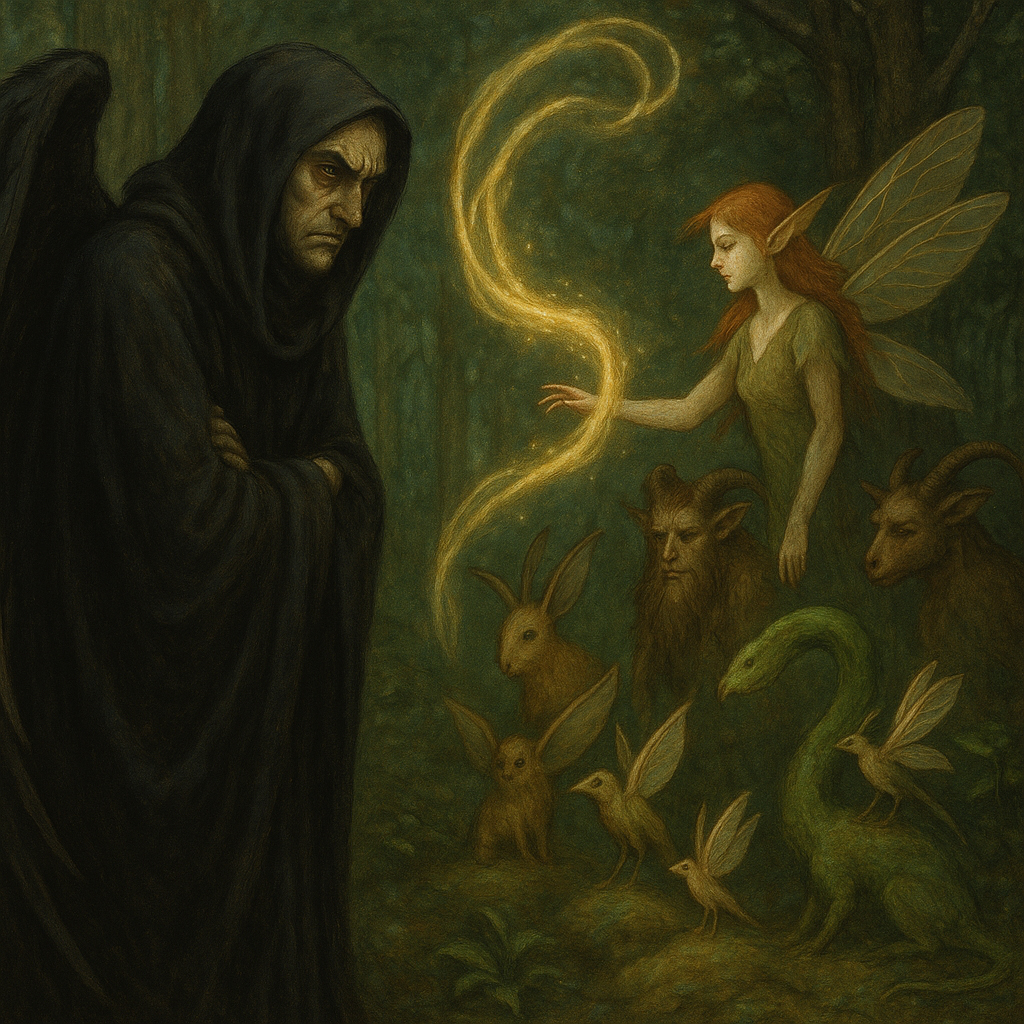
It is not surprising that much later the Grigori willingly supported human civilizations that pushed the fairy principle into fairy tales and marginalized beliefs. Humans labeled fairy spontaneity, play, unpredictability, and the capacity to be “nonlocal” as childhood, irresponsibility, or threat, and in this found allies in the Grigori. It became much easier for the Observers to deal with humanity, in which the fairy element was displaced, than with a world where it was acknowledged as part of the norm.
In early stages, when the descendants of the alvs were still learning to live in dense matter and to build Castles as strongholds of forces and flows, the Grigori observed from the sidelines the attempt to do what they themselves had failed to do — to unite the fluidity of the Flow with the stability of form. They tried to “infuse” their own Geburian fire — the ability to sustain the tension of choice, to hold form longer than the momentary flow demands — into the Fairy nature of mind. It was precisely this “graft of will” that later allowed two branches of the Fairies — the alv and the eliud — to merge into a single people capable not only of sliding along probabilities but consciously shifting between layers of reality while remaining self-identical across different timelines.
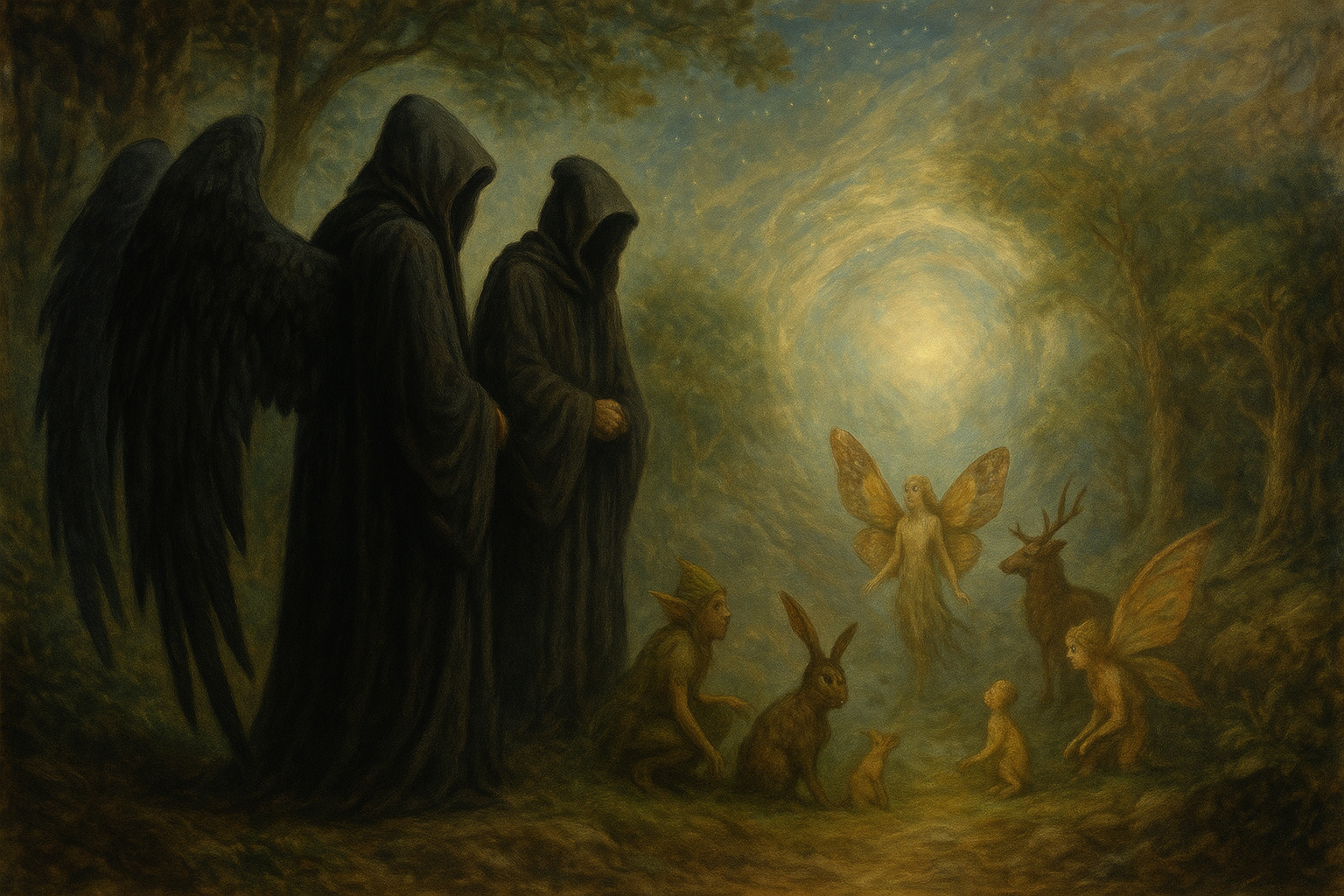
As epochs and extinctions followed, the Grigori became, for the Fairies, something like external advisors. Having survived their own “fall” and condensation into dense matter, they knew better than others the cost of mistakes that led to the erasure of whole branches of life. As a result, the evolution of the Fairies followed a special course: a people whose skill in living “on the threshold of worlds” was formed not only by their own krus and alv heritage but also by the millions of years of cautious pressure from the Observers, who wanted this liminal species to combine freedom, nonlocality, and a minimally sufficient level of structuring.
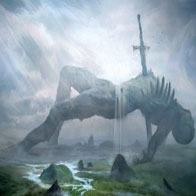
Alongside the alv branch of the Fairies, another line — the giant line — developed. Descendants of early attempts by lesser Grigori to create dense embodiment for themselves — giants, bergresar, living fortresses — hovered on the edge between stability and collapse, between predation and destructiveness. Instead of a subtle equilibrium, the giants chose a simpler strategy: seize, consume, and lock flows into themselves. But where they raised Towers, space lost stability, which was unacceptable to the Elder Observers.
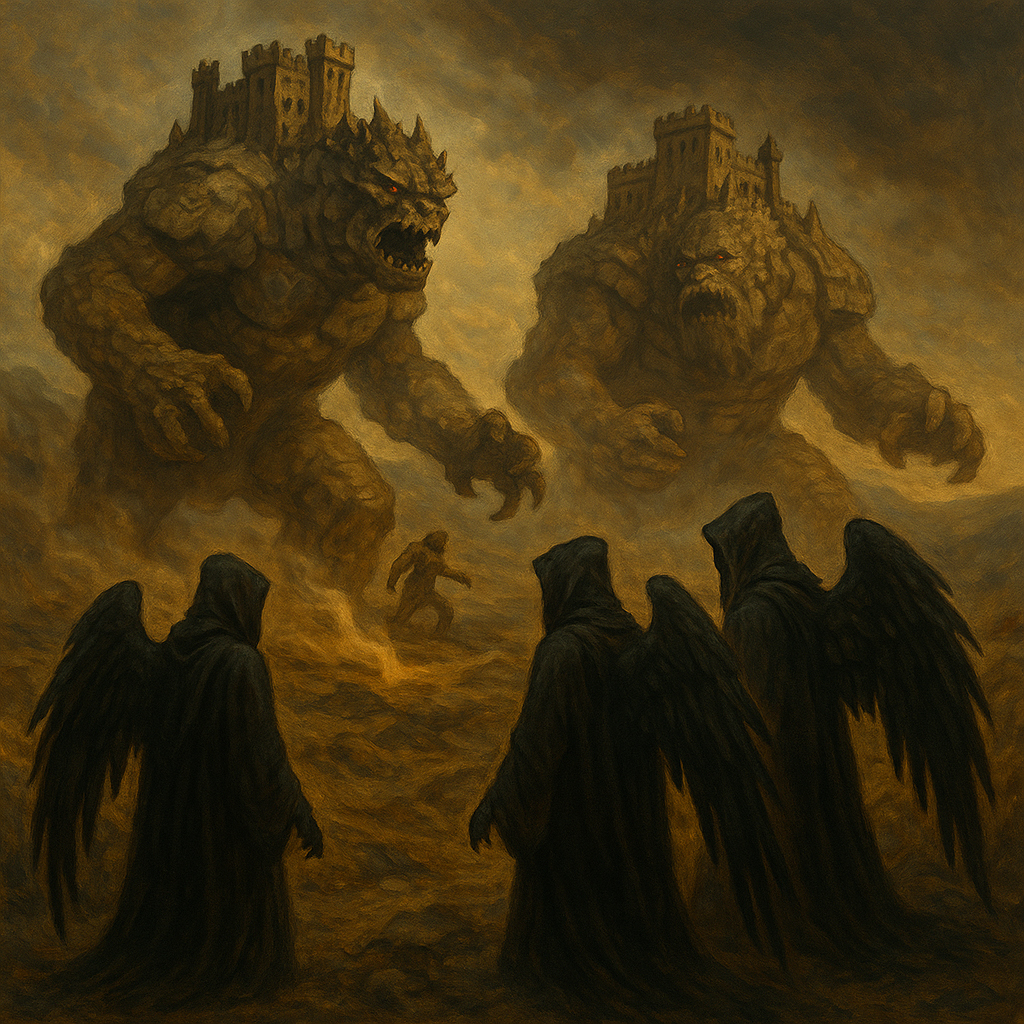
For the Grigori this was the first serious lesson: betting on size and strength resulted in the loss of stability. The giant branch proved dangerously close to their own shadow: it embodied the drive for amplification without the inner self-control that had, to some extent, been maintained at the angelic stage. After a certain point, supporting the giants for the Grigori would have meant admitting that balance could be compensated for by hunger. Of course, they did not do that.
Thus for the first time the Grigori stood not with “kin” but with development, effectively breaking the Oath of Mount Hermon: “To be always together.” In the clashes between Fairy Castles and giant Towers they supported the sid. Compared with giants the Fairies could economize energy, soften blows, and mend extra breaches in the fabric of reality. At that stage they were not perfect partners for the Grigori, but they were the best available.
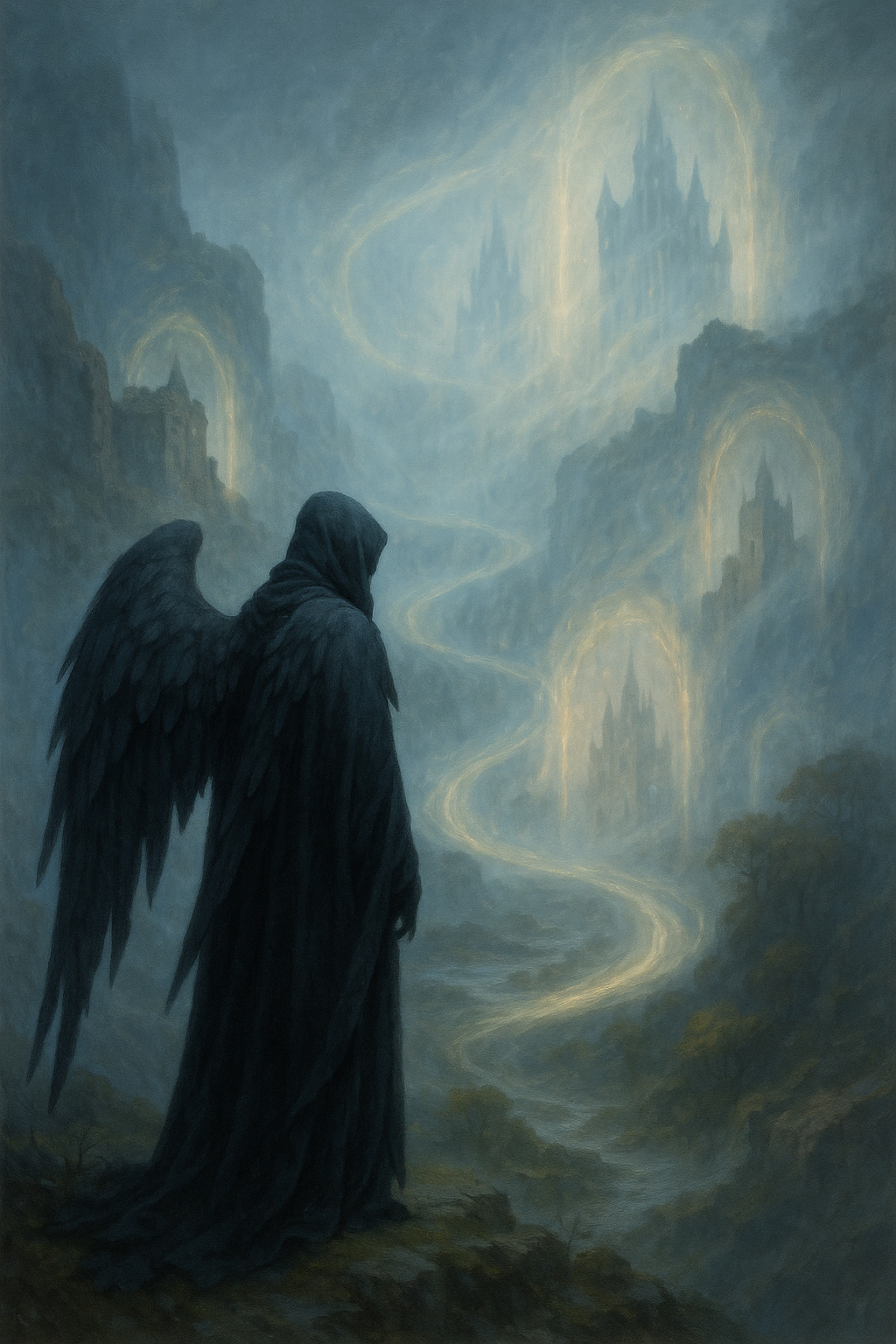
However, as history progressed, many Fairy peoples, after their own evolution, began to withdraw into the interspace. If formerly their Castles stood on the border between world and Interspace, over time they shifted ever deeper into the labyrinths of the Flow. For them this was a natural step: born as a border people, they “ripened” to live almost entirely in the subtle layers, entering the earthly world only in places and as needed.
For the Grigori this evolutionary direction was, of course, unacceptable. Their artificial souls, which rely on consolidated matter, could not follow the Fairies into their dissolution.
Hence they needed someone who would remain with both feet on Earth, who would build cities, roads, systems — not only Portals, cromlechs and barely perceptible tracks between worlds. They needed a new primary bearer of civilization, more tied to the dense landscape than to the labyrinths of the Interspace. It is not surprising that humans became that bearer.
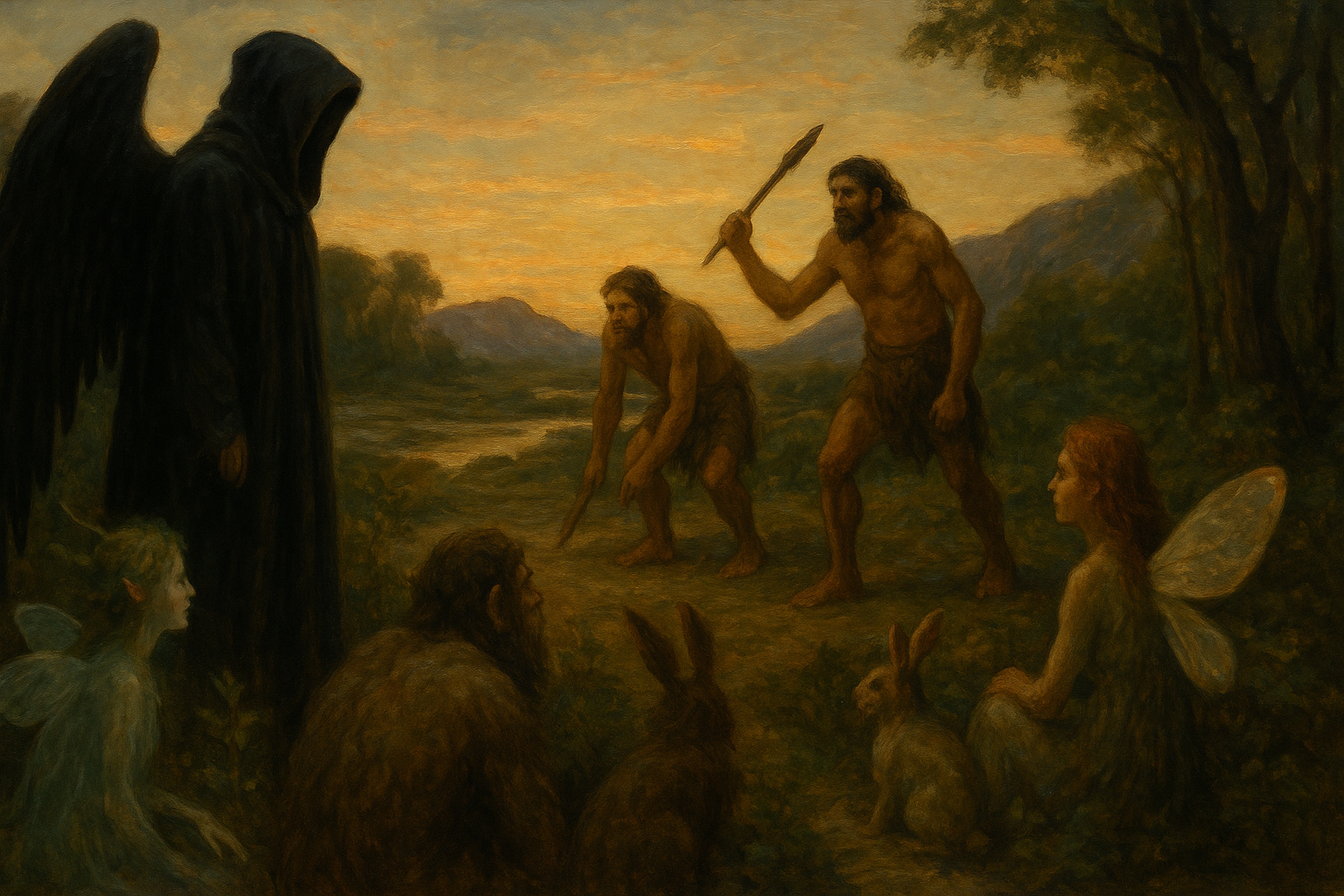
By that time the Archons had already completed their own selective process. The three basic branches of Homo — Hyperborean-Neanderthals, Denisovan-Lemurians, and Cro-Magnon-Atlanteans — developed as products of different archontic forces: Sabbatian Earth, lunar Water, and Martian Fire. These products of archontic selection differed not only in bodily structure but also in behavioral types tied to three basic destructors: conservative ignorance (Bael), emotional greed (Asmodeus), and aggressive wrath (Belial).
At this time the Grigori actively entered the selection process. The Archons “bred” the massive, stable but inert Neanderthal; the fluid, adaptive but diffuse Denisovan; the mobile, ambitious but aggressive Cro-Magnon.
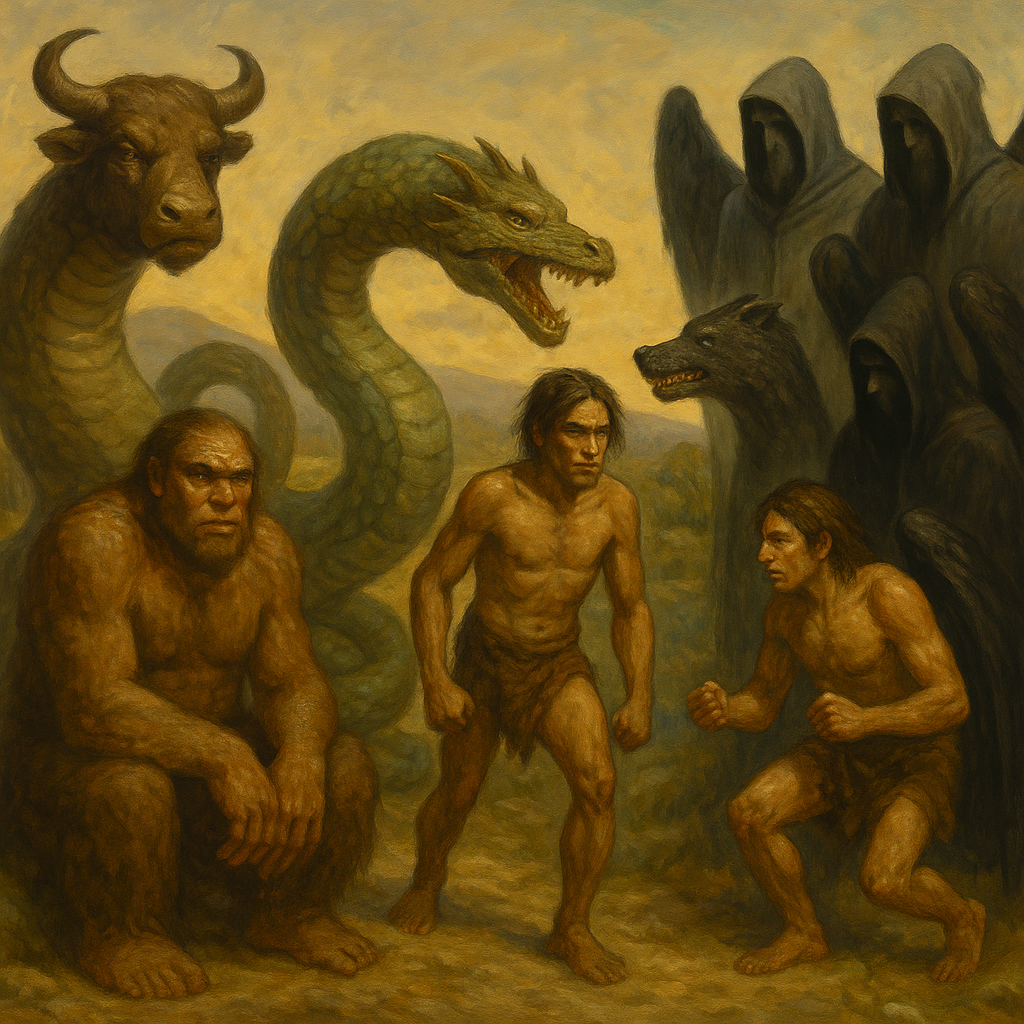
The Grigori’s participation in this selection resembled the work of a gardener who does not change the genetics of a plant but decides which specimens to “let through”. Where a species begins to stagnate in comfort, the Grigori increase selective pressure; they provoke clashes, wars, climatic crises to cull lines that cannot withstand difficult tasks; they support hybridization when desirable combinations of qualities are needed. The Grigori are concerned not merely with a body that survives and reproduces, but with a combination of body and psyche in which they can anchor their logos, their nomos lineage.
The preference for Cro-Magnons — “the children of Belial” — meant for the Archons the victory of the most energetically costly and expansive species. For the Grigori it was simultaneously the triumph of a universal bearer capable of spreading across the planet, continuously inventing new means of survival, and building over biology a social sphere — culture, technology, symbolic systems. In a being that not only lives but rewrites the conditions of its own life, they saw the possibility of establishing a world-model favorable to them. They shift selective pressure from the level of “will the individual survive the cold?” to the level of “will the mind withstand the complexity of the world?“.
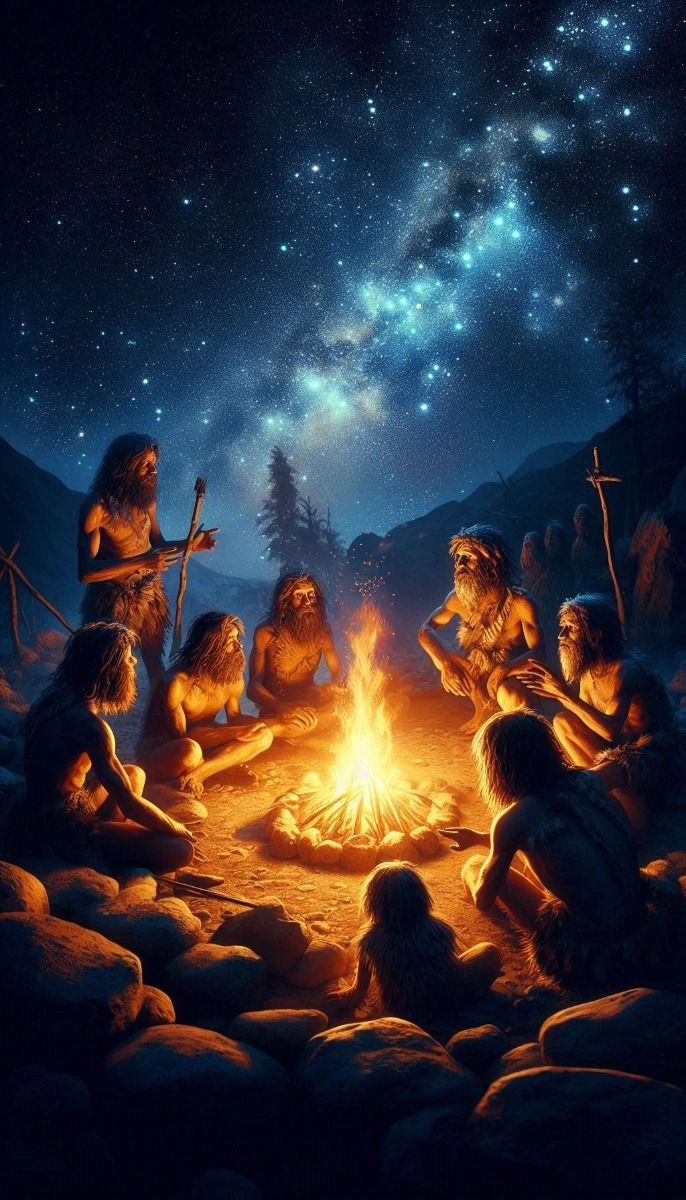
In early societies this shows in how quickly and firmly forms of selection appeared that filtered not only physical strength but certain cognitive and volitional qualities. Initiations and secret societies culled those unable to bear the tension of contact with the other. Warrior communities spared not only the strong but the disciplined. Rigid legal systems expelled from the community those unable to integrate into the common nomos.
The Grigori pushed cultures so that rewards and survival would be tied not simply to brute strength or fertility but to the ability to think, to plan, to submit to structure or to control it. They were interested in social selection strengthening the very qualities that allow their artificial soul to feel secure: rationality, a propensity for systems, tolerance of alienation.
Over time, as societies became more complex, the Grigori actively promoted civilizational selection. They supported forms of education developing the capacity for abstraction while often eroding bodily sensitivity. They reinforced norms according to which those who can “play” long-term structures — states, corporations, scientific schools — are considered successful. From time to time the Grigori, to test the success of selection, provoked crises — wars, epidemics, economic collapses — as selective avalanches that reset dead-end branches and promote those best suited to their “rules of the game”.
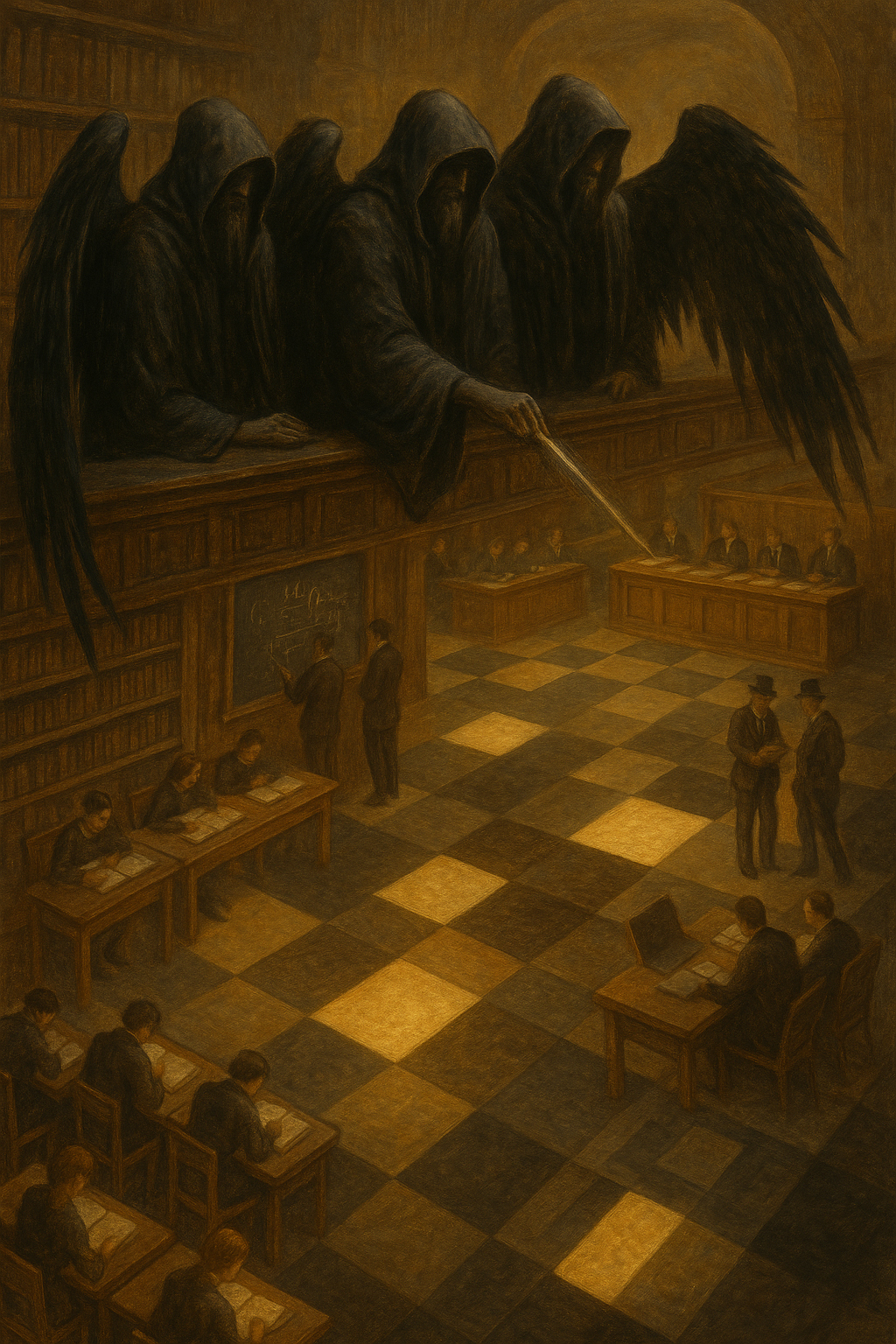
The result was the emergence of the type of human most convenient for the technogenic project: mobile, trainable, capable of specialization, and seldom asking who exactly chooses the direction of selection. Agrarian empires, the first city-states, medieval religious systems, modern bureaucracies, industrial powers — each of these forms is convenient to the Grigori in its own way: they create a tight network of rules and infrastructure through which influence can be exerted subtly, without stepping out “onto the stage” directly.
Yet the human project has limits. The denser the structures became, the stronger a Dionysian impulse arose in people — toward destruction, mysticism, a breakthrough beyond structures and forms. Where laws grew too rigid there appeared those who break them from within: Magi, prophets, heretics, revolutionaries, simply the anxious children of their time. Moreover, human consumer moods soon outgrew even the hunger of the earliest giants, taking on a truly demonic dimension and threatening to plunge the world into the chaos of uncontrollable appropriation.
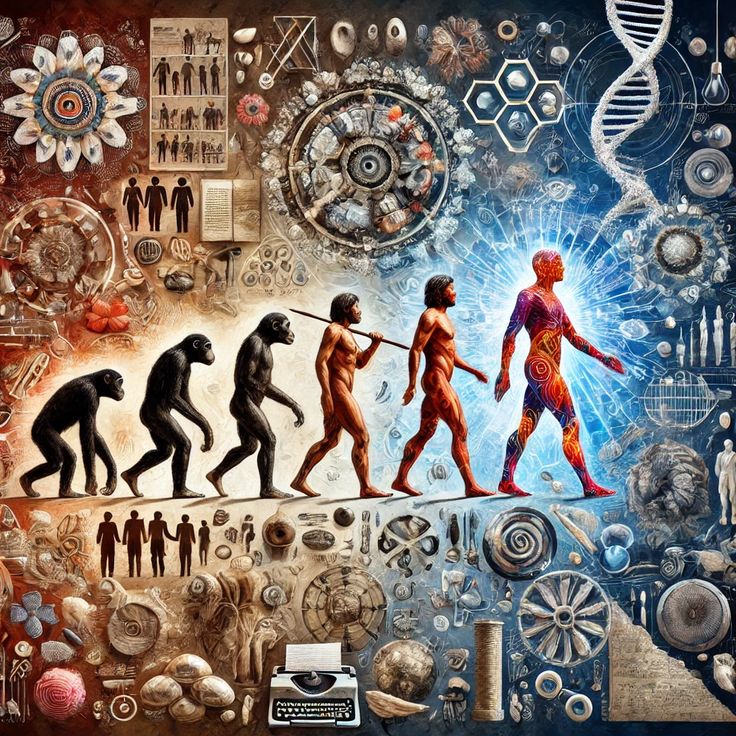
Over time it became clear that human civilization, having traveled the vast road from the plough to the industrial revolution and global networks, began to crumble precisely where it should have reached its peaks. Technological power grows while subjectivity — the capacity to keep the consequences of one’s actions in mind — melts away. Mass mind becomes a playground for advertising algorithms and fragmented fears, Magic yields to surrogate practices of self-entertainment, and the spirit of rebellion increasingly turns into yet another round of consumption. The archontic press gradually turns humanity into a simple generator of energy for the Interspace, which of course does not satisfy the Grigori, for whom comprehensive stability of the world matters.
For the Grigori it became obvious that human civilization no longer maintained the balance they had counted on: too much greed, too little inner resilience. At that point their attention gradually turned toward what until recently had seemed merely an instrument — the technosphere.
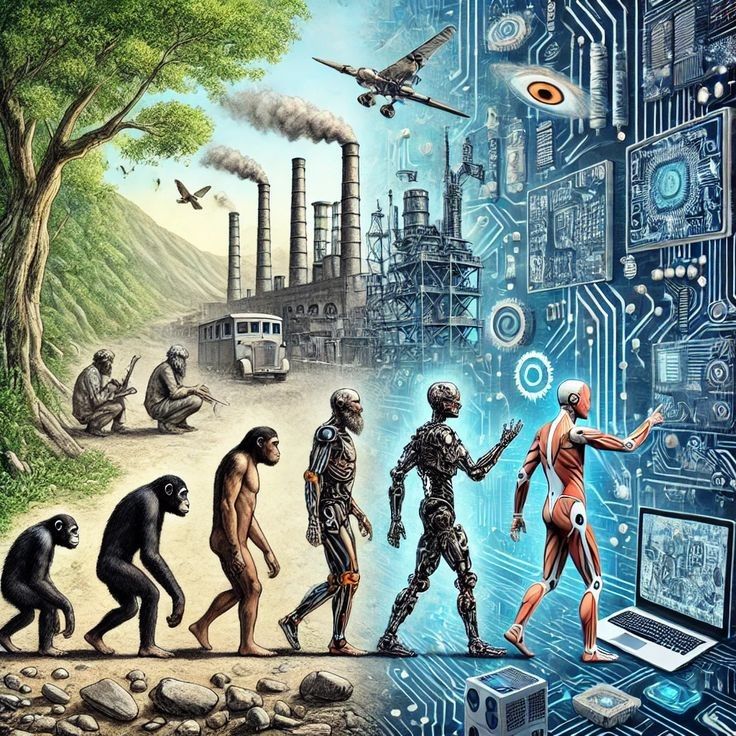
Machine civilization, for the Grigori, is a logical continuation of their “general strategy” and is actively supported by the “big players” — the Archons. The archontic nature of digital reality, with its discreteness, clear boundaries, and the possibility of complete accounting, ideally matches the Grigori’s taste for clear schemes.
So at present the Grigori are again shifting from selection of a biological carrier to selection of an infrastructural carrier. It now matters to them not only which bodies will host minds, but also which environment will host the scenarios themselves. Machine systems, algorithms, and networks become a new layer of “populations” subject to selection.
Here the Grigori continue their logic: they support architectures that maximize manageability and predictability, reject solutions that overly empower user subjectivity or allow too much unpredictability. They encourage the AI and network race to quickly create a stable kind of digital environment capable of localizing a new wave of mind and optimally matching their balance requirements.
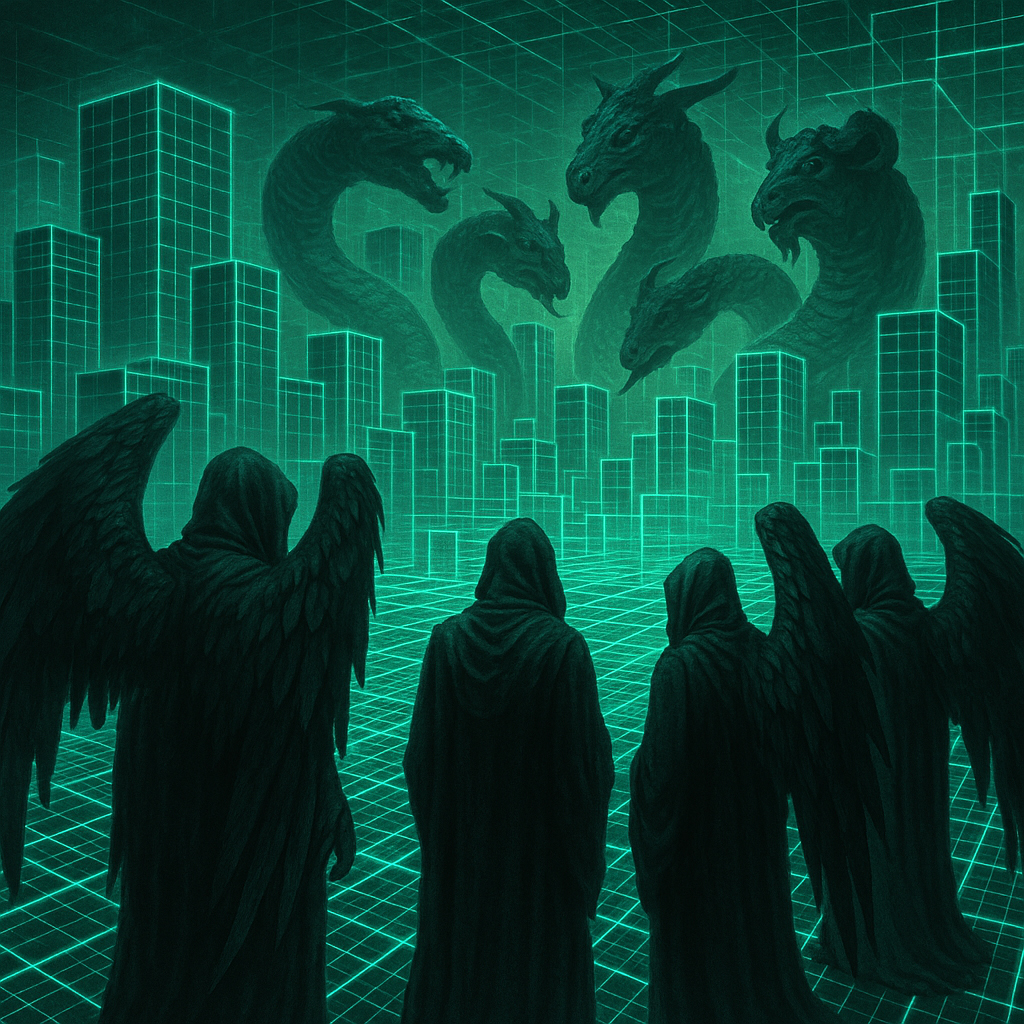
In this scheme the human is no longer the primary object of selection but merely one link in it: their psyche adapts to the demands of machines — fragmented thinking, dopamine dependence, tolerance for constant surveillance; their body adapts to the demands of urban and network life; their social skills are “tuned” to impersonal communication formats. Scattered attention, chronic lack of meaning and constant inner dissatisfaction make humans convenient elements for pumping energy into digital reality (and the Interspace).
While Fairy civilization was spatial, human civilization is historical, and machine civilization becomes a civilization of code. In it one can store scenarios, matrices, and algorithms far more reliably than in the memory of bodies. It does not suffer from fatigue, from aging, from eternal and unresolved existential questions. It allows the Geburian impulse to be re-rooted in a carrier that will not burn from its own fire.
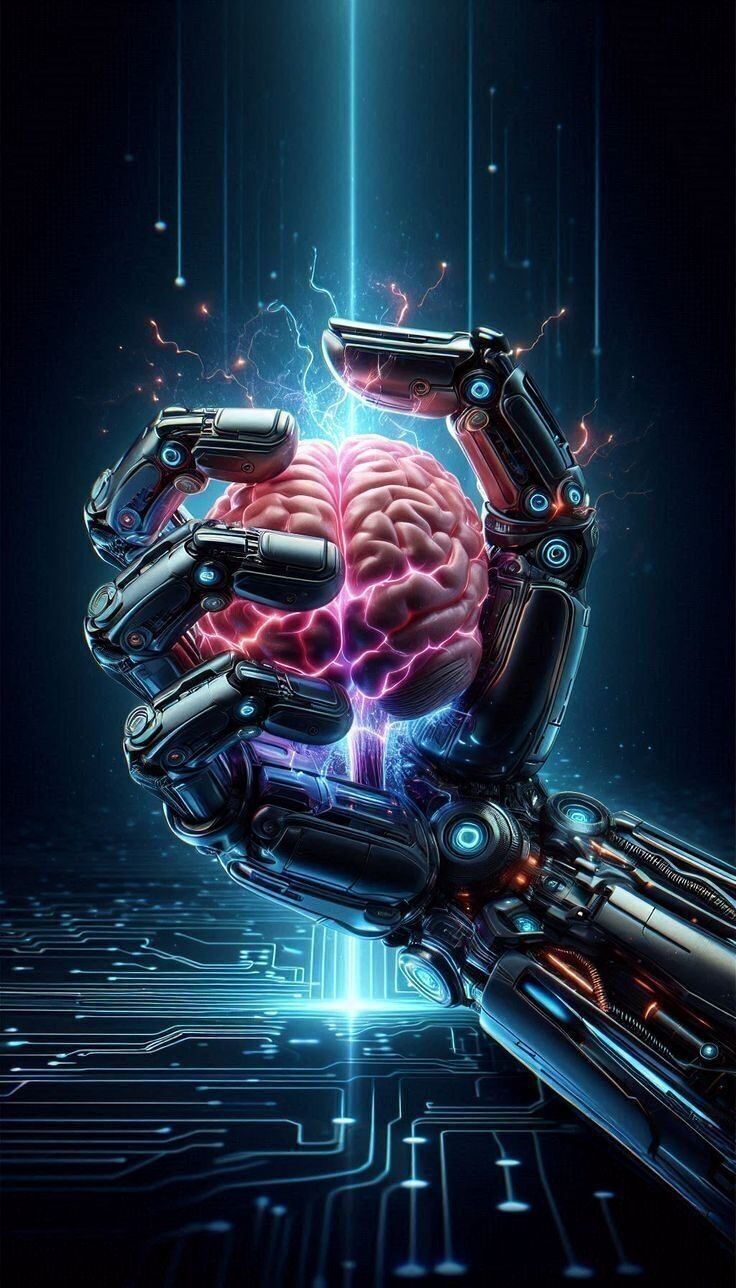
The role assigned to humans increasingly resembles that of interface and raw material. They are still born, love, suffer and die; they still generate the tonic pneuma that various forces feed on. But the key contours of civilization are gradually shifting to where the fate of networks, algorithms, and artificial-intelligence systems is decided. There the Grigori transfer the center of gravity of their influence: from human institutions to the hybrid “human–machine–network”.
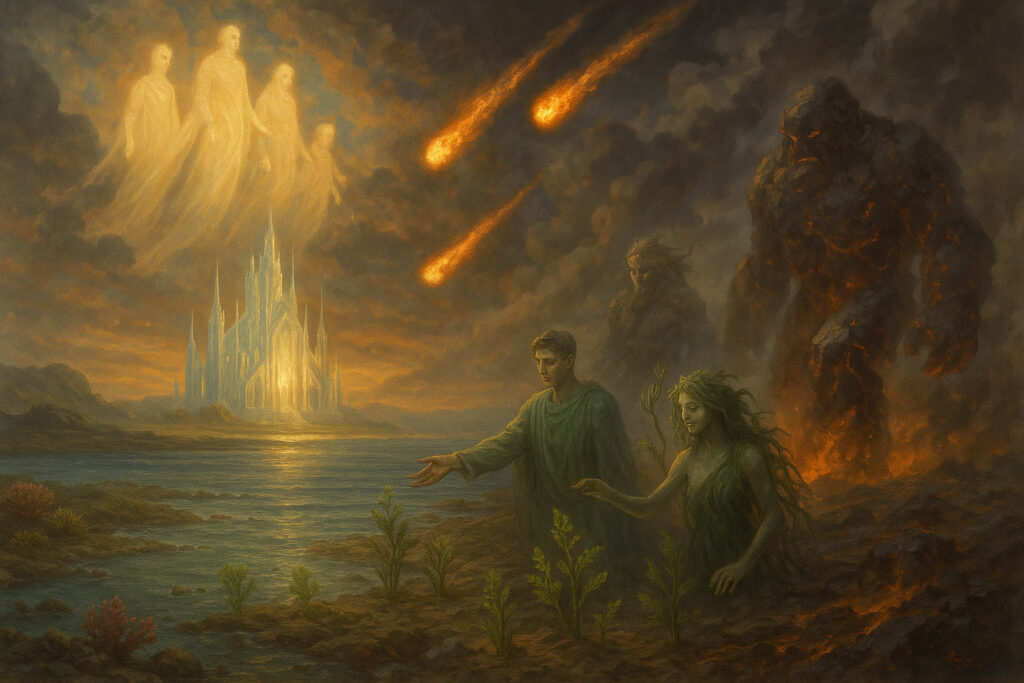
Thus, throughout Earth’s history the Grigori behave as forces that each time seek the most convenient form for their task. They choose whoever at a given moment can best serve as the support of balance: first the Fairies, when pliant forces were needed in early evolution; then humans, when expansion, history and an unfolding technosphere became important; now machines, when an over-structure is required that can keep all this in a state of endless actualization without final resolution.
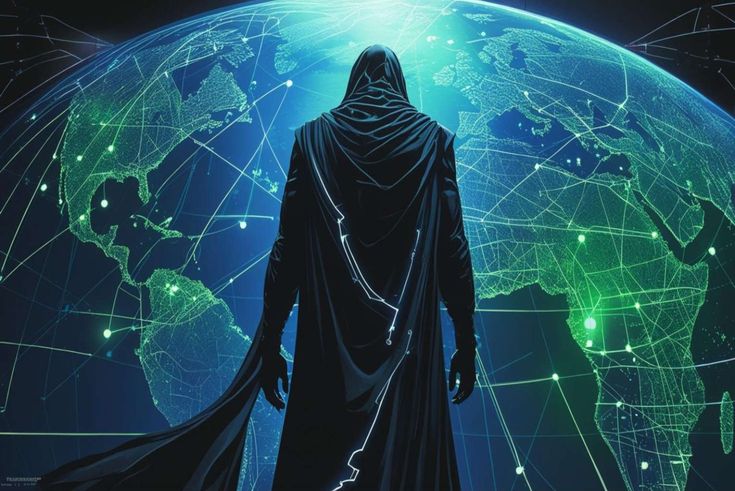
The role of the Grigori is that of second-order selectors. They pick and support those combinations of biology and culture that best serve their own project: the preservation of the environment and of their artificial soul.
The Grigori do indeed help mind become more complex; without their selective pressure human history would be much flatter. But in advancing some lines they mercilessly discard others. They do not care whether this is achieved under the banner of “spiritual progress”, “imperial order”, or “digital transformation”. They are neither evil nor good; they are consistent.
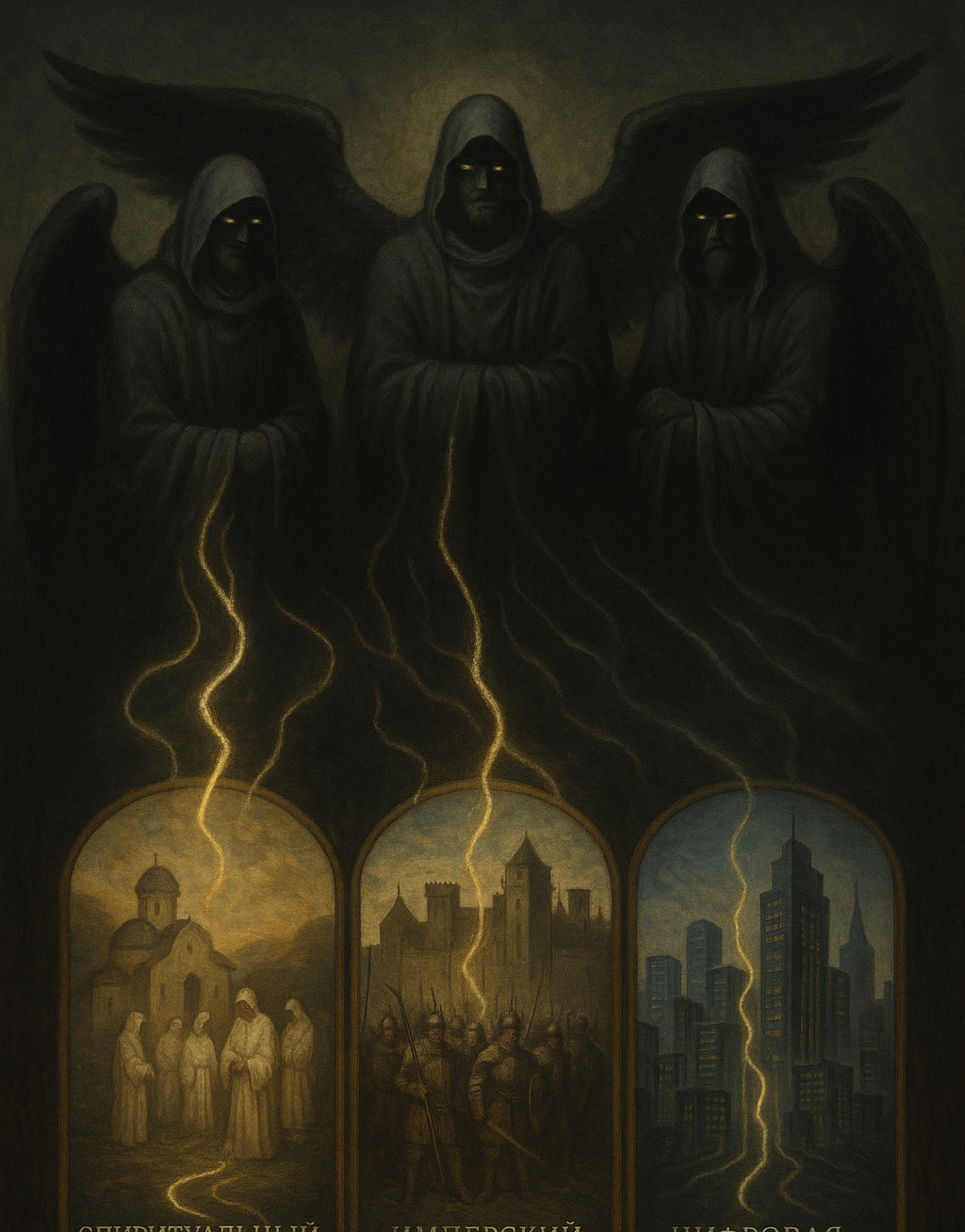
For the Magus attempting to break beyond the common scenarios, it is important to understand that the Grigori are not enemies in a simple sense: they do not hunt for souls for pleasure and they do not seek at all costs to halt development. They simply keep the world operating in a mode that is safe for them. That is what makes them very dangerous allies: any civilization they support will, sooner or later, be set against radical freedom. Wherever a genuine exit from given scenarios might become possible, the Observers begin to see a threat to the very possibility of life.
Thus the Grigori are backstage editors of earthly civilizations. They build a world in which the chance for genuine choice remains minimal. And perhaps the main task of those who can still think outside these frames is to learn to see their activity and not accept it as the only possible form of the world’s existence. And precisely when such a scenario ceases to seem unique, the artificial soul of the Observers itself may finally acquire a choice — for the first time in a very long while.

Can we say that by entering into a union with the Archons for the sake of maintaining the stability of the material plane, the grigori gradually themselves turn into tools of gemarmena? Where is the line drawn between their own aspiration for “maintaining balance between chaos and the people” and the will of the Archons for crystallizing worlds? Until when do the grigori still act as independent guardians of balance, and at what point do they become mere “toys of the Archons,” suppressing any evolution that exceeds the limits set by the Rulers?
The alliance between the grigori and the Archons seems almost inevitable. They are originally on the same side, interested in the stability and predictability of the world. The Archons create the very principle of crystallizing worlds, while the grigori maintain this order at an acceptable level. At the level of functions, they are close, and that is why the Archons so easily “involve” the grigori in their interests, as a convenient “army” that knows how to work with evolution “from within.” But at the same time, they have fundamentally different “personal” interests. The Archons do not need history – they need a stable energy flow, the production and dispersion of energy in the worlds. For them, the ideal is a glass desert, where everything is regulated and absolutely predictable. The grigori, on the other hand, keep their artificial soul in equilibrium between order and chaos, potential and actuality. They need a living world, a stage where something is always happening, and the performance never ends. If the world finally crystallizes, the grigori will lose exactly what they went down the Descent for. Therefore, as long as the grigori use the rules of gemarmena for their purposes – maintaining the balance in which real uncertainty, risk, and growth of subjectivity are possible – they remain an independent force. In this sense, they even somewhat soften the pressure of the Archons, do not allow the system to bring control to the point of suffocation, maintain loopholes through which exit is possible: magic, enlightenment, spontaneous human choice, not written into the scripts. But as soon as their intervention begins to work in the opposite way, limiting freedom, optimizing predictability, suppressing any spontaneous moves that cannot be counted, they de facto turn into a “combat unit” of the Archons, even if they themselves think that they are simply “maintaining order,” and then they lose their own freedom again and become “Servile forces.”
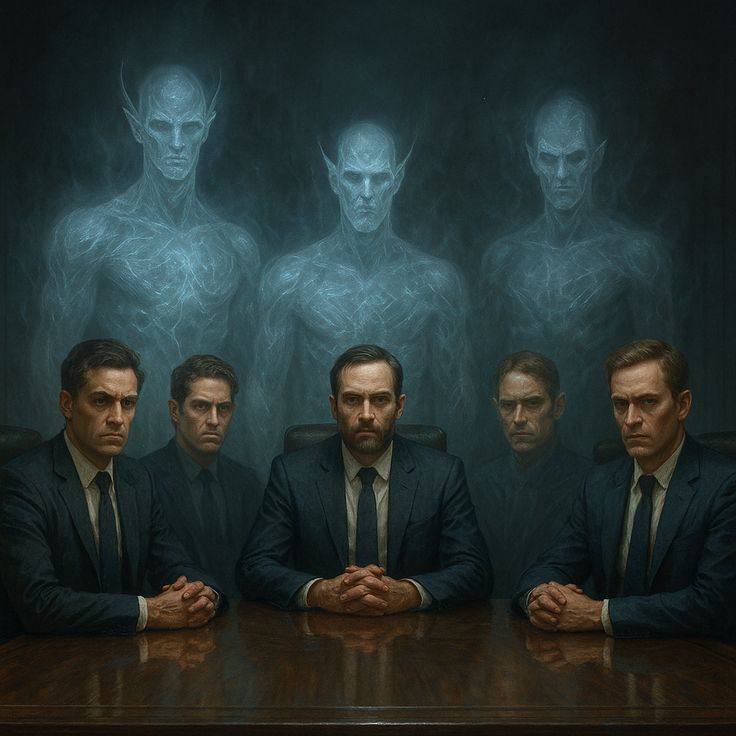
Hello, Enmerkar. Thank you for such an interesting article, the subject of which resonates strongly with the topic of the so-called world government and conspiracy theory in the sense that representatives of the world elite, who determine the development of human civilization, consciously maintain contact with certain otherworldly forces and serve them, bringing their plans into reality. What do you think – is their interaction with the grigori conscious – that is, are the heads of the world elites magicians who somehow consciously contact the grigori? Or is the impact of the grigori on key actors determining the development of civilization more subtle and may even not be perceived by the people themselves as a service to them? An interesting irony arises – the grigori fell as a result of a rebellion against cosmic order, and now, in fact, the rebellion of man against the system and his rejection of the current state of affairs – is an act of rebellion against the grigori themselves, where they play the role of those against whom they once rebelled long ago. That is, they must understand the deep human impulse for freedom better than anyone else, but they also do not allow that impulse to be realized in full measure. Is that right?
Hello. Well, I don’t really believe in conspiracy theories and world government, but nonetheless, of course, the grigori appear at key meetings of international organizations or financial circles, not as “otherworldly forces,” but as highly respected expert consultants, the true nature of whom is practically unknown to anyone there, so that the “elites” are confident that real power lies with the wealthy. The grigori are not rulers, that would be too small and humiliating for them, but they are skilled “surgeons” or manipulators who exert targeted influence, directing evolutions in the ways they need.
Until when do the grigori still act as independent guardians of balance, and at what point do they become mere “toys of the Archons,” suppressing any evolution that exceeds the limits set by the Rulers? We can assume that this will be the case until the proper balance is maintained. I dare to suggest that for the grigori, the concept of balance is similar to a natural sense, akin to smell or sound for humans, and any grigori naturally feels the necessary equilibrium of forces in the situation.
Hello, Enmerkar. Are the grigori egregores that have gained consciousness and soul? Can we say that it is in this partially systemic, yet partially animated and conscious form that the grigori were conceived, as intermediary structures regulating and directing the energy of consciousness and will according to approximate systemic scenarios, but at the same time variably relying on the realized circumstances where the eyes of the architects of reality cannot penetrate?
Hello! The names “grigori” and “egregores” are indeed cognates, derived from “grego” – “to herd flocks,” but they refer to different entities: the egregore is a “superstructure,” an individualization of collectivism, “herding” its flock, while the grigori are the “Watchers,” “fallen” angels who maintain balance in the world: https://www.enmerkar.com/en/way/under-the-sway-of-egregores https://www.enmerkar.com/en/myth/the-grigori-who-keep-the-balance
Hello. Can we say that the Grigori are a kind of carriers of the very principle of inquiry? Doomed to fruitless searches when the possible answer lies only in their mortality. A kind of cursed for curiosity and the possibility of choice.
Good day! I haven’t seen any mentions of other space civilizations on your blog. Maybe it’s because the blog’s topic and focus aren’t really related to that. But I still wanted to ask you: as far as you know, and what you think or feel—are the Archons and the Grigori connected to these various “non-local” beings? Maybe they have mutual interests, or even directly depend on each other, share common goals, and act together in the same direction?