The Predictable and the Possible
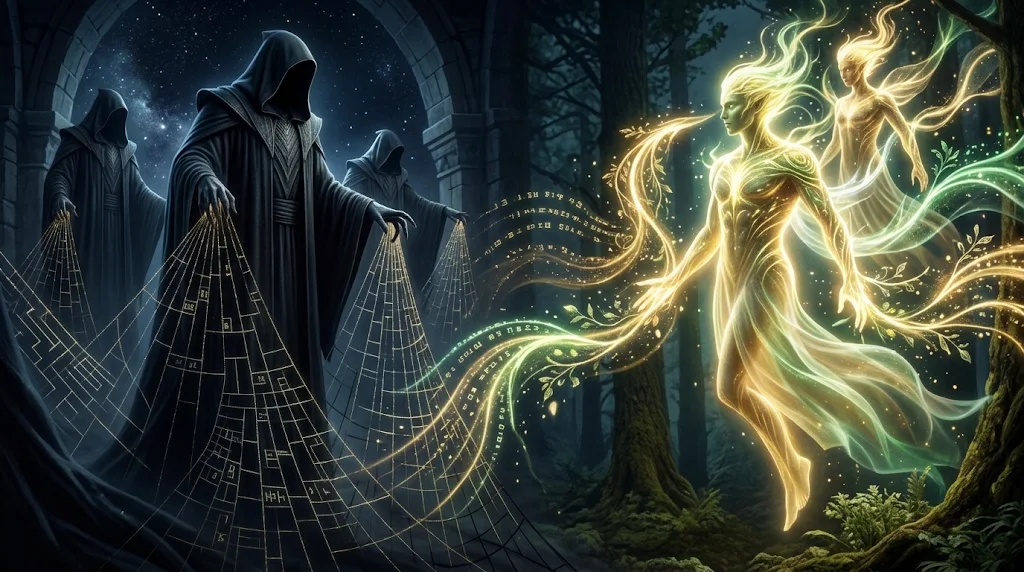
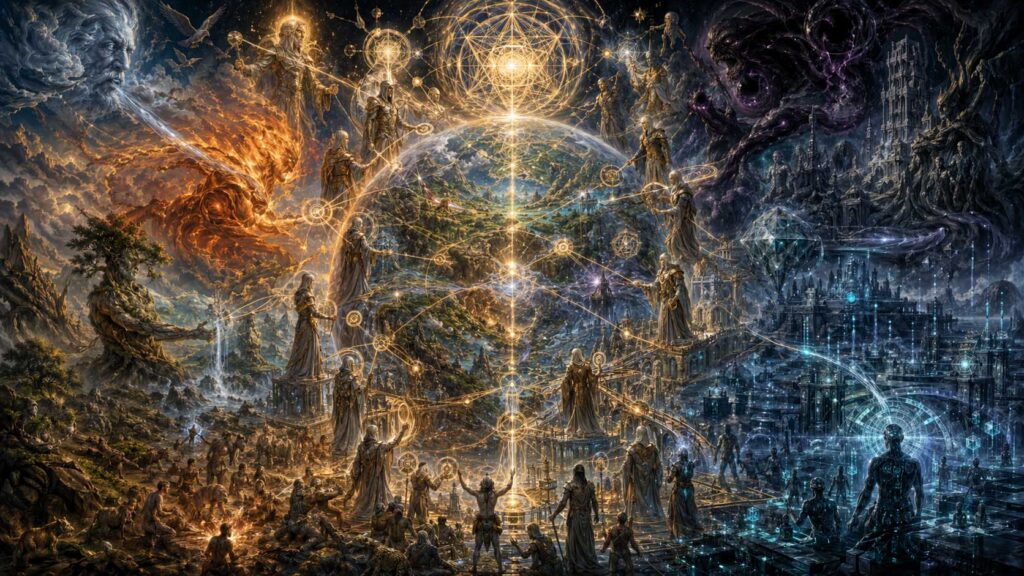
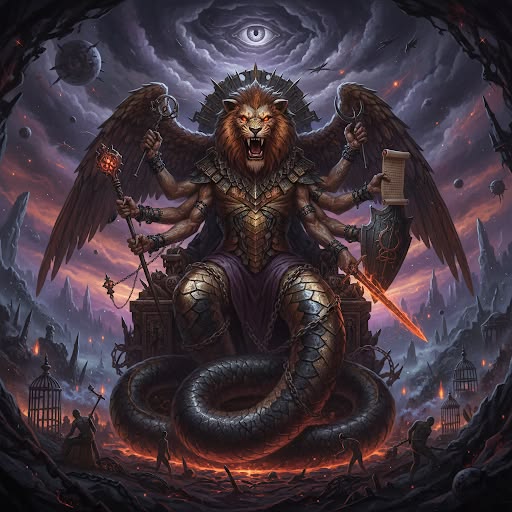
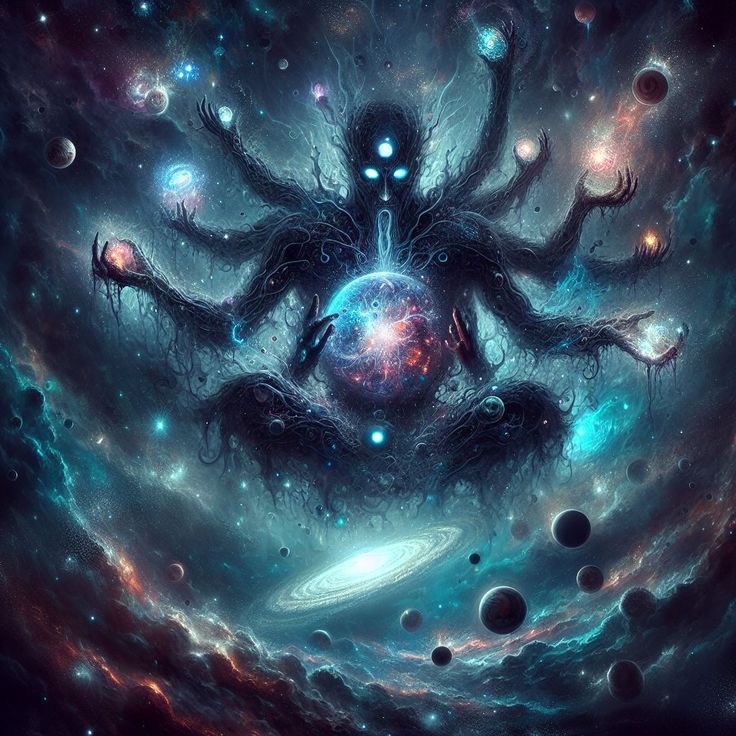
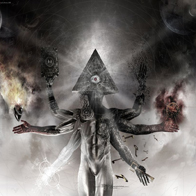
We have already said more than once that the informational foundation of worlds is formed by two forces that rarely collide directly and always stand opposed —the Archons and the alfs. At first glance, the difference between these two forces is defined прежде всего by their relationship to the freedom of other beings: the Archons limit, the alfs liberate. Yet behind this obvious distinction lies a more complex difference in how they manifest.
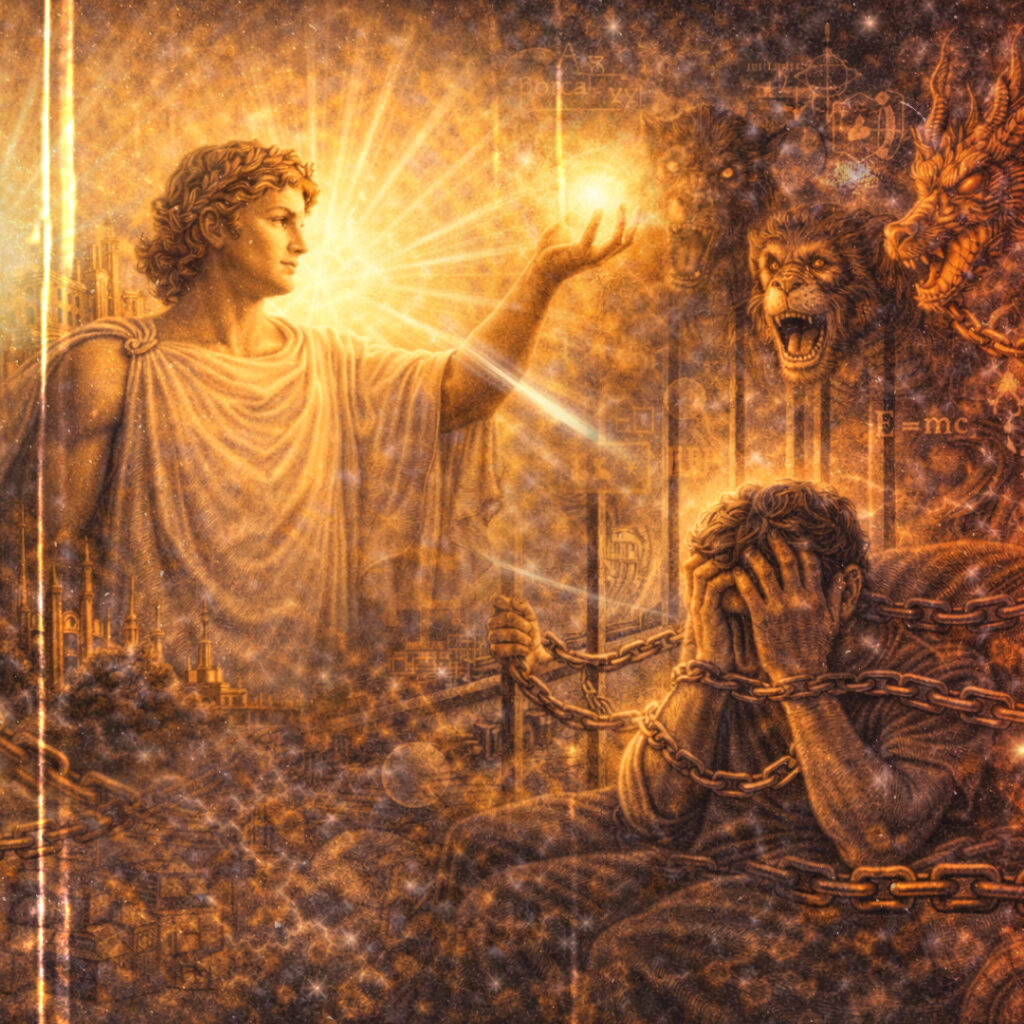
To govern information means, first and foremost, to decide which datum should be considered true. On this question, the Archons and the alfs give two entirely different answers: for the Archons, what is true is what is predictable, whereas for the alfs everything that is possible is true.
Both criteria can serve as definitions of truth itself. A representation that comes true is true in the densest sense, and on this basis civilization, technology, natural science, and all practical knowledge have been built — knowledge that allows one to build, to heal, and to forewarn. Therefore the force for which the predictable is true demands from data, прежде всего, the capacity to correctly predict what will happen. A world formed by such forces consists of repeatable relations, and the more reliable and precise the repetition, the truer that world is.
The alfs, however, use a different criterion. For them, any statement is true if it opens a possibility, provided that possibility proceeds from a logos. In this sense myths, symbols, images, and metaphors are true, even though, strictly speaking, they predict nothing unambiguously. The myth of creation, for example, describes what Ways the world has at all, yet it cannot tell you what will happen tomorrow. Accordingly, for the alfs a lie is the impossible presented as possible— a substitution of meaning, a fake behind which there is no logos. And, as we said, the alfs answer such a counterfeit by withdrawing: the light of mind that could have made it manifest stops singling it out.

It is obvious that these two criteria are of different orders: the predictable is a special case of the possible; what comes true, of course, had the possibility of coming true. Therefore the alf criterion is broader than the archontic one; it recognizes the predictive property of truth as one possibility among others. What becomes false for the alfs is precisely this possibility’s claim to exclusivity, its linear univocality. Conversely, from the standpoint of the Archons, the unpredictable is wholly false; it is perceived as a miscalculation or noise in the data. This difference determines the very character of their confrontation. The alfs, in themselves, could live with the Archons in consensus, since within any particular line of probabilities predictability fully holds. The Archons, however, always struggle against alf nature, because crossings of probabilities, points of uncertainty, and freedom are intolerable for the Rulers.
From this attitude toward truth follows a characteristic mode of governing information. One can achieve coincidence between description and world by two routes: refine the description until it matches what is perceived, or narrow the world until it matches the description. The Archons build the second route. They do not distort information and do not violate logoi or eidōs; they simply cut away from the manifest world they are forming everything that contradicts the forecast — and then forecasts, of course, come true without failures. This univocality of archontic reality, as we have already said, is called Heimarmene, and in plain language, “the laws of physics.” In singling out one line of manifestation, the Archons turn a blind eye to the others, and it is precisely this blindness that makes the predictive power of their laws unerring.
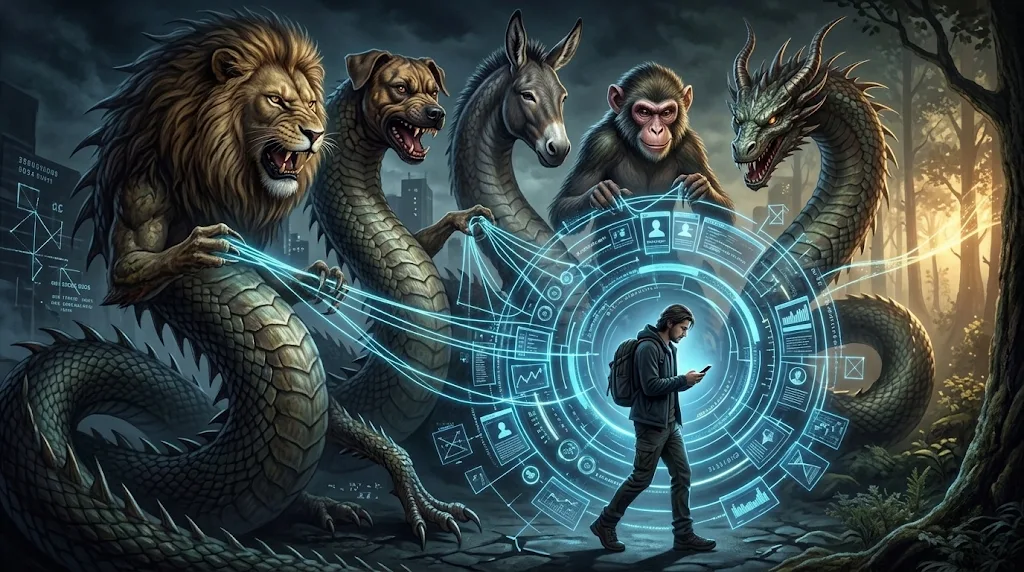
The modern world is a precise illustration of this strategy. A digital profile predicts a person’s behavior; recommendations built from this profile further reinforce that behavior; and the resulting behavior, in turn, confirms the profile. With each turn of the cycle, predictions become more accurate, while the circle of a person’s own free possibilities becomes smaller. Here governance of information becomes governance of the world the information reports on.
The same mechanism allows the archontic order, in effect, to turn even a lie into truth. A false statement, repeated often enough and encountered everywhere, begins to come true in the behavior of those who have taken it in. The absurd theses that Eloai implants serve here as a test of predictability: one who accepts the absurd becomes fully manageable, and his reactions can be calculated with complete precision in advance. The content of the statement is irrelevant; what matters is only whether it will come true.

By contrast, the alfs, as gods of information, build correspondences between logoi, eidōs, nomoi, and forms in a descending sequence. Their information follows the logotic basis of an object and leaves the object itself free: it reveals what the object can become and grants the choice among these possibilities to the object itself. Therefore the knowledge of the alfs is never final. Each new distinction adds another recognized possibility to the world, and the world becomes wider because of it, even as describing it in its entirety becomes more difficult with each step.
At the same time, a paradox arises. From the point of view of the system we are considering, information is a distinction capable of giving rise to change. However, a message whose content is known in advance communicates nothing, since a predicted distinction can change nothing in a world defined univocally. Zero information comes in two kinds. The first is noise, where all outcomes are equiprobable and nothing differs from anything else. The second is a straight line, where there is only one outcome and it is known in advance. The archontic structure of complete predictability is precisely this second zero. Forces that are, in fact, masters of information strive for a world in which there is no longer any information, because everything is already known.
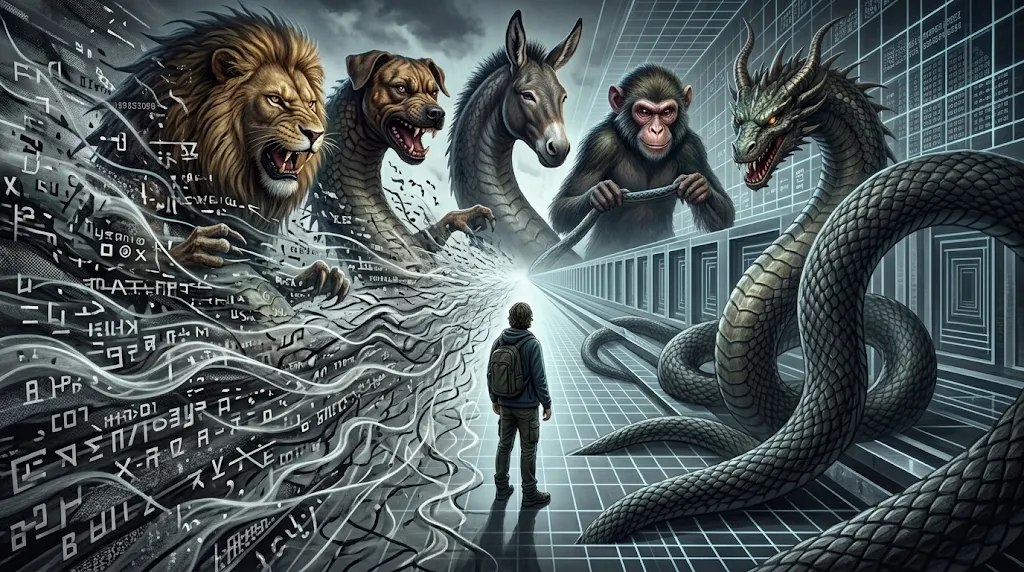
And conversely, the alfs — whom at first glance one might take for a force of chaos — prove to be the condition of information itself. They draw discernible possibilities out of noise and do not allow these possibilities to collapse into one. Information occupies a middle position between noise and ice: where there are several outcomes, and each of them is discernible. The alfs, in this sense, establish the very difference between outcomes, without which it is impossible to become aware of either order or freedom.
Therefore, despite their fixing character, the Archons nevertheless need unpredictability. A fully predictable medium is energetically empty: the tension of experience in which pneuma is toned arises where the outcome is unknown. Therefore Heimarmene produces its substitute —novelty of a given form— news, fashions, crises, recurring with the precision of a timetable. A news item reports an unknown event, although it is known in advance what it will be like, how it will be received, and what will change after it. The truly new, however, changes the very form of expectation. In understanding the difference between news and the new, the two ways of governing information confront each other in their most everyday guise: news is a product of the Archons and an instrument of enslavement, whereas the truly new comes from alf nature.

The difference in methods of administering information also leads to different visions of time. Predictability always derives the future from the past: a forecast is the past extended forward. Archontic truth is the absolute power of the past over the future, and the more data has been accumulated, the stronger this power. Data, in this sense, serve as a memory without logos: they store facts but ignore the meaning of what is happening. Meanwhile, alf multi-possibility is not derived from the past. It includes what has never yet been, and this is precisely what makes it a source of development. Alf truth belongs to the Aeon, where all possibilities are present simultaneously; archontic truth belongs to Chronos, where one line of events rigidly runs from past to future. To pass off Chronos as an absolute is a typical strategy of Heimarmene, and archontic governance of information is in many respects founded on this strategy, since a future calculated from the past фактически ceases to differ from the past itself.
In the same way, the methodology of neutralizing question–answer pairs differs. The information created by the Archons simply closes the question: after the answer, there is nothing more to seek, and this relief is easy to mistake for understanding. The information administered by the alfs, by contrast, deepens the question: after the answer one can see more, and along with what is understood, the Way still to be traveled also grows. An answer of the first kind releases tension; an answer of the second kind gives strength for the next step. Synezis as an instrument for solving tasks, and einus as the living of questions — these are the same two ways of governance, presented in their most embodied form in mind.

An important consequence of any stance toward information is the positioning of the knowing subject. Archontic knowledge is the knowledge of an observer who looks from the outside; to predict from this standpoint means to obtain power over what is predicted. Alf knowledge, however, is the knowledge of a participant. One distinguishes possibilities only by seeing their spectrum, and the one who distinguishes is himself among the possibilities he sees. Therefore alf knowledge inevitably changes the knower himself, whereas archontic knowledge changes only the object of knowledge.
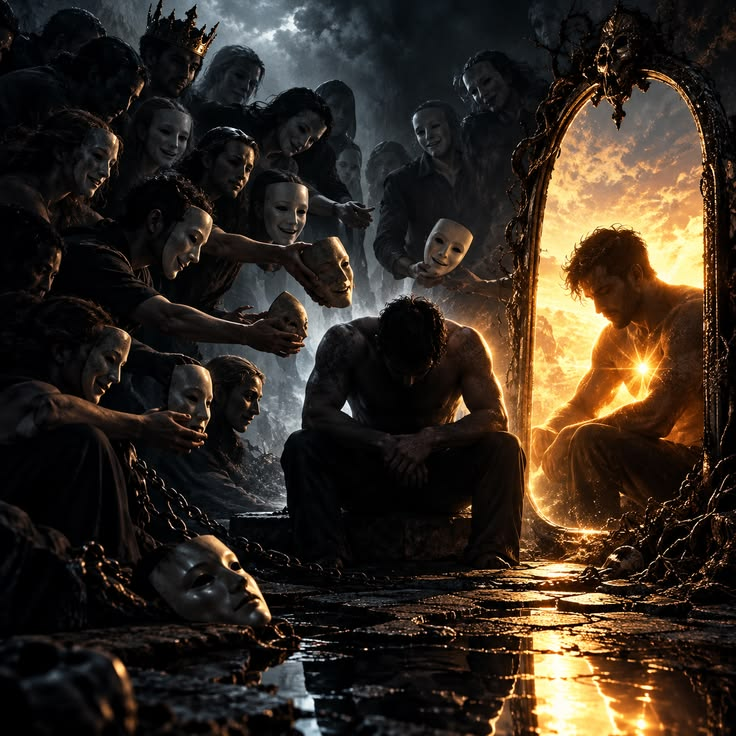
The most important practical conclusion from this difference concerns self-knowledge. A person can know himself from an “archontic” standpoint: study his patterns, recurring reactions, his type — “I am this kind of person.” Such knowledge belongs to the domain of social psychology; it is exact and reinforced by experience, yet it comes true precisely because the person has made himself predictable to himself. Inner Heimarmene is born in exactly this way — from a description a person accepts as his definite nature. Self-knowledge “in the alf way” means understanding one’s possibilities and the ability to listen to one’s logos, which compels nothing, but shows the shortest Way toward maximal realization. One may say that while a psychological profile predicts a person, his logos calls him.

At the fork between these two kinds of self-knowledge, many destructive forces manifest themselves, especially Astaroth. His favorite conclusion — “I had no choice” — is archontic truth in its nature, spoken by a person about himself. And, of course, it comes true impeccably, since one who has ceased to see his possibilities is indeed deprived of them. Yet by the alf criterion this is a lie in pure form —the possible declared impossible.
From what has been said, it is easy to conclude that predictability is hostile to the deep nature of man. That conclusion is superficial. Essential foundations of human nature — Word, promise, mastery, and fidelity — are all forms of predictability. One can rely on the faithful because his actions are known in advance, and a Master is valuable because his work comes true. Certainty is needed by man just as the world needs stable laws, without which nothing becomes actual; and in this lies the meaning of the birth of individual worlds out of the totipotency of the Interworld. The real difference lies in the sources of predictability. When certainty is imposed from without, it narrows a person’s world to a forecast and becomes the prison of Heimarmene. When freely chosen by the person himself, it is born from his spirit and becomes fidelity. Externally they cannot be distinguished: both the captive and the faithful act as expected of them. Yet the faithful continues to see all his possibilities and freely chooses one of them again and again, proceeding from its correspondence to his present state, whereas the captive of Heimarmene is deprived of choice.

Hence the task of the Magus — to choose with eyes wide open. Any ordered action requires certainty: to make one possibility actual means renouncing the others, and one who does not choose does not act at all. Heimarmene, however, chooses by ceasing to see what has been rejected; therefore its choice is unerring and irreversible. The Magus chooses while continuing to see, and preserves the road to what has been rejected in case the logos calls him. Magic itself, in this sense, is the transition from the seen possible to the realized, where alf gnosis and archontic certainty join in one mind and are subordinated to one will.
Therefore one should pose questions: does this information make my world more predictable or more possible? Does this datum communicate the new, or only news? Does it leave room for the unexpected? Does it predict me, or call me? Information after which the world becomes tighter serves Heimarmene, even if it is correct. The same information after which more Ways become visible is governed by the alfs, even if it predicts nothing. A person combines both criteria and is free when he is predictable only where he himself has given his Word.