
Raids of Naglfar
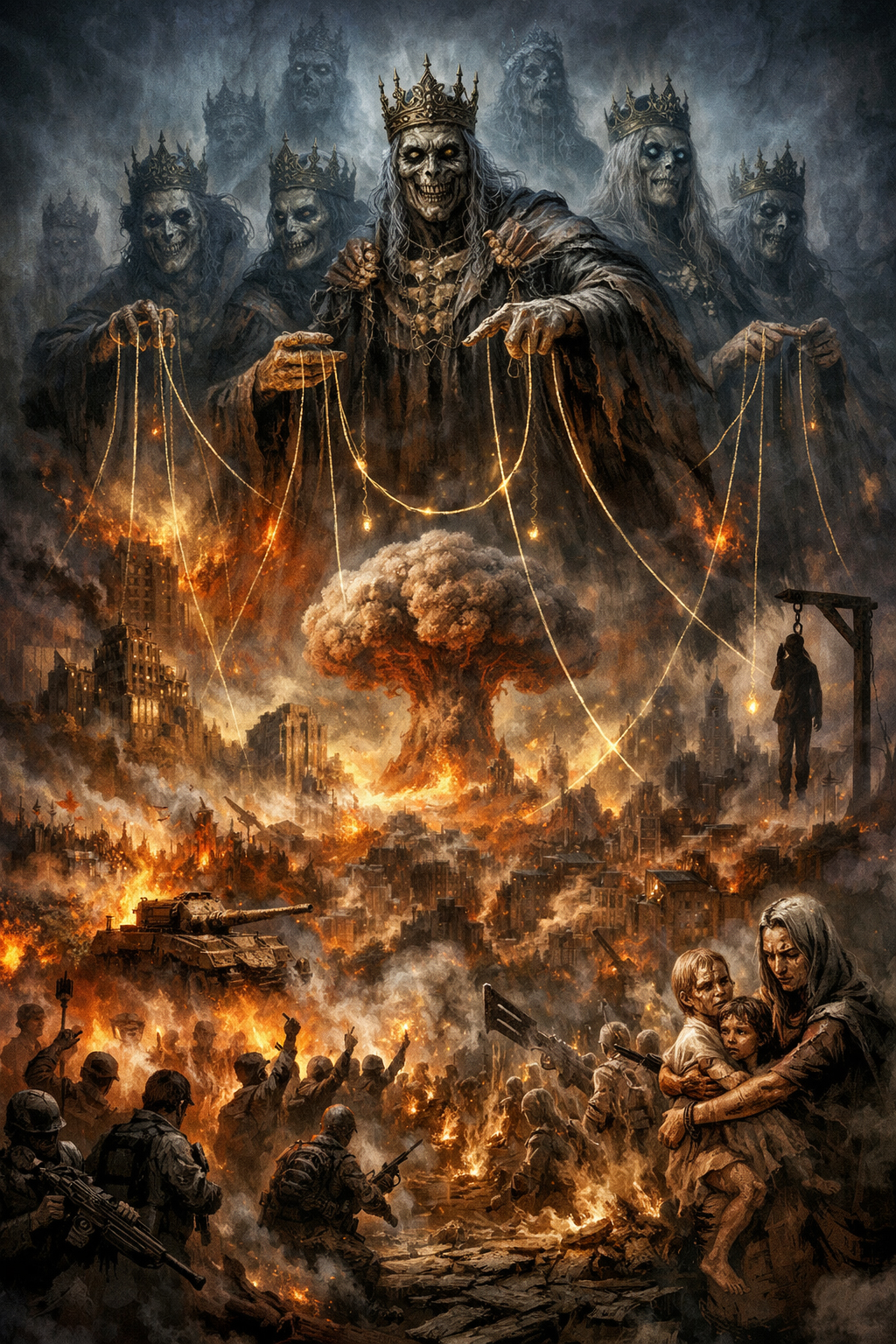
On a macrocosmic scale, catastrophic endings of world cycles are relatively rare. On smaller scales, however, “Ragnaröks” strike with grim regularity. Human history is an almost unbroken succession of such battles with the forces of chaos, where the side of destruction is taken, in turn, by the Fomorians (rizi), then demonic hosts, then armies of the dead led by the Rephaim.
It is the latter who most often trigger “mass insanities” that grip entire peoples: the madness of Egregores, collective hysterias, and other social pathologies that, at first glance, look absurd and inexplicable.
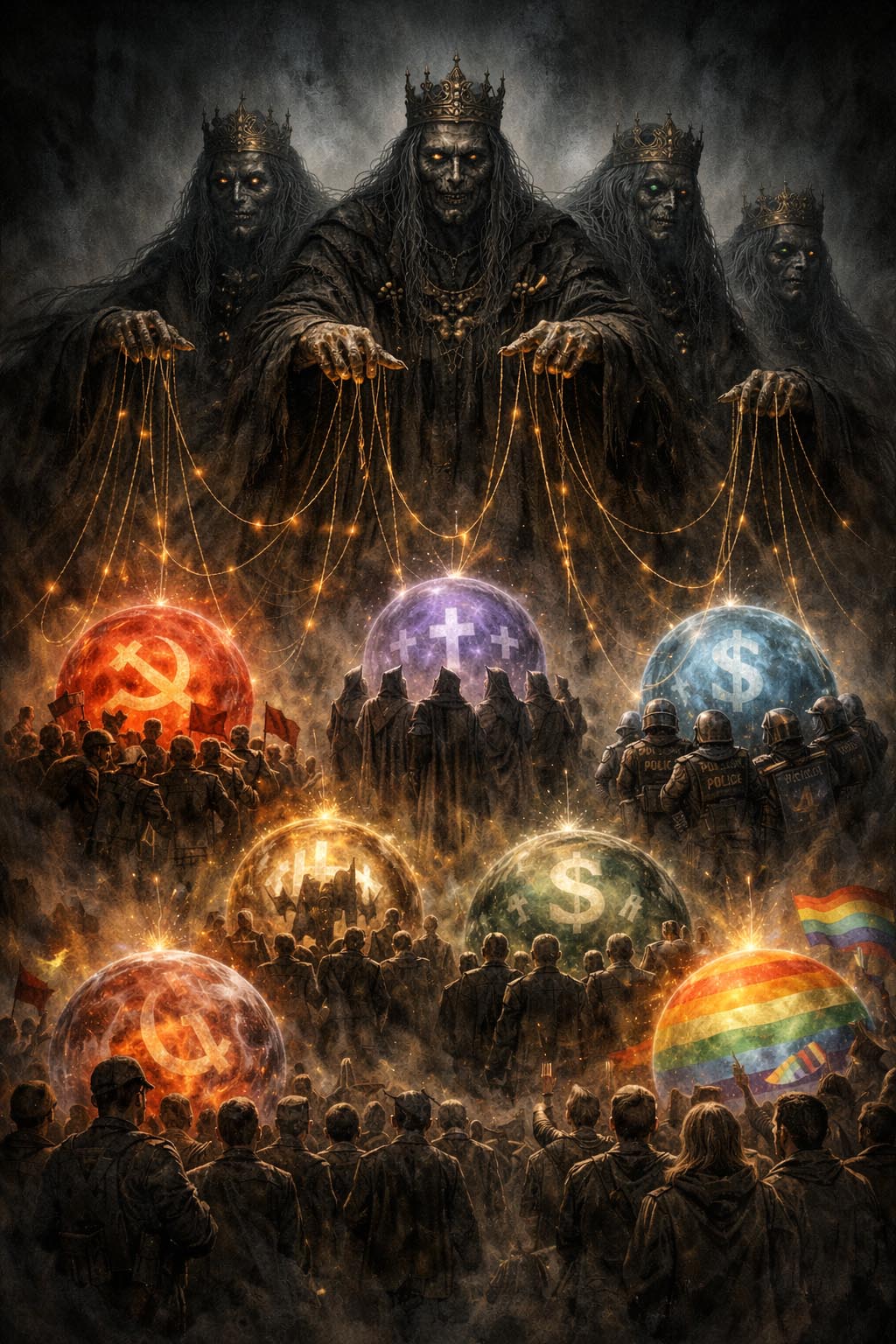
The dwelling place of the Rephaim (Tib. gyalpo) is the ether ZAA: the very Interworld space where Egregores are formed. For that reason, these two kinds of entities —collective vortices and dead rulers— are always tightly bound. Most Egregores are formed with the participation not only of living “donors” of energy, but also of dead beneficiaries; and to the naturally vampiric nature of the collective vortices is usually added an Interworld-serving function as well.
Yet despite the considerable Power of many Rephaim, the conditions of the Interworld — energetic poverty and instability — often disrupt their mind as well. Already warped by narcissism and thirst for power, they become not merely predatory: their influence upon Egregores can turn outright insane. The processes they drive are often devoid even of twisted human pragmatics. They contain no logic of survival, no economic or political meaning — only pure, grotesque phantasmagoria, woven from posthumous delirium and the phantom pains of the inhabitants of the Interspace.
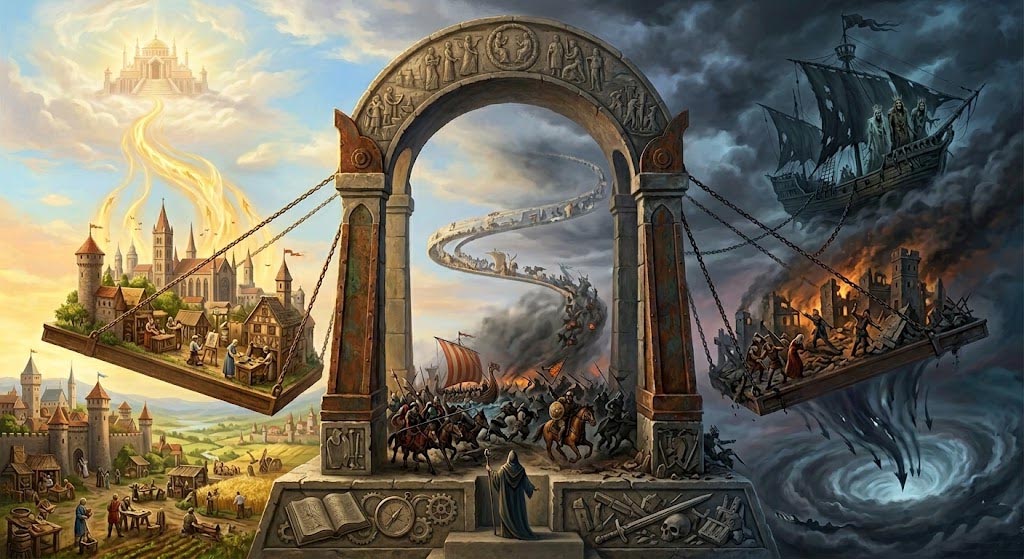
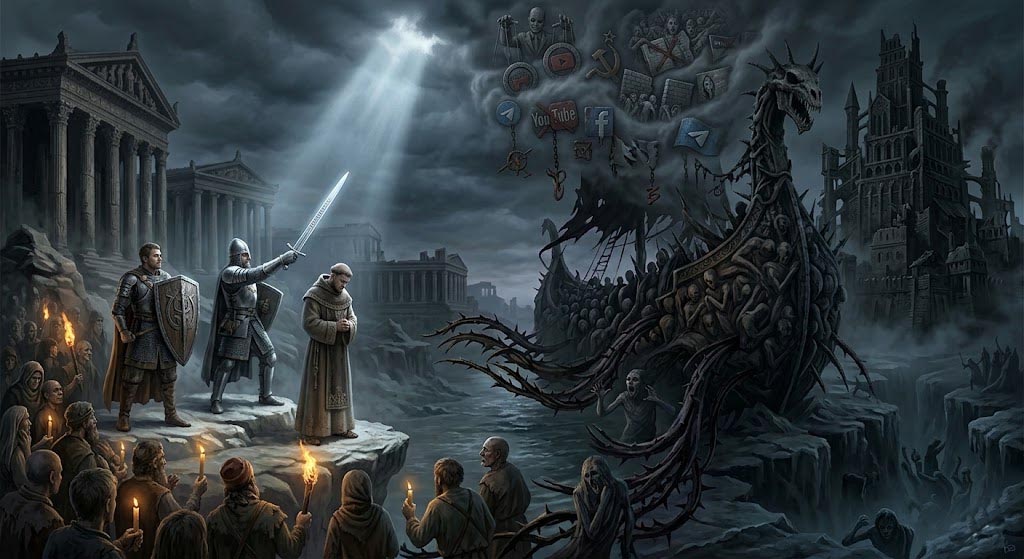
This is why history can be read as a kind of “seesaw,” where “victory” falls alternately to the living — when the production of energy outweighs its outflow into the Interworld — or to the dead — when mass outflows begin. It resembles the Middle Ages, when peoples, cities, and villages lived in constant fear of raids by robbers: Vikings, nomads, hordes, and other despoilers of the social cosmos. In this sense, periodic “invasions of the Rephaim” resemble the raids of Naglfar— the ship that, according to Scandinavian lore, carries the hungry dead from Hel into the worlds of the living.
On the level of the ether ZAA and Egregores, “nails” are dead, crystallized ideologemes; unprocessed historical traumas; rigid dogmas; and the informational refuse of the past. The Rephaim cannot create from nothing. They take this dead, unassimilated conceptual material of humanity and build their “ship” for the next invasion. The more a society piles up unworked-through rigid constructs, complexes, and inveterate resentments, the faster the next Naglfar takes shape.
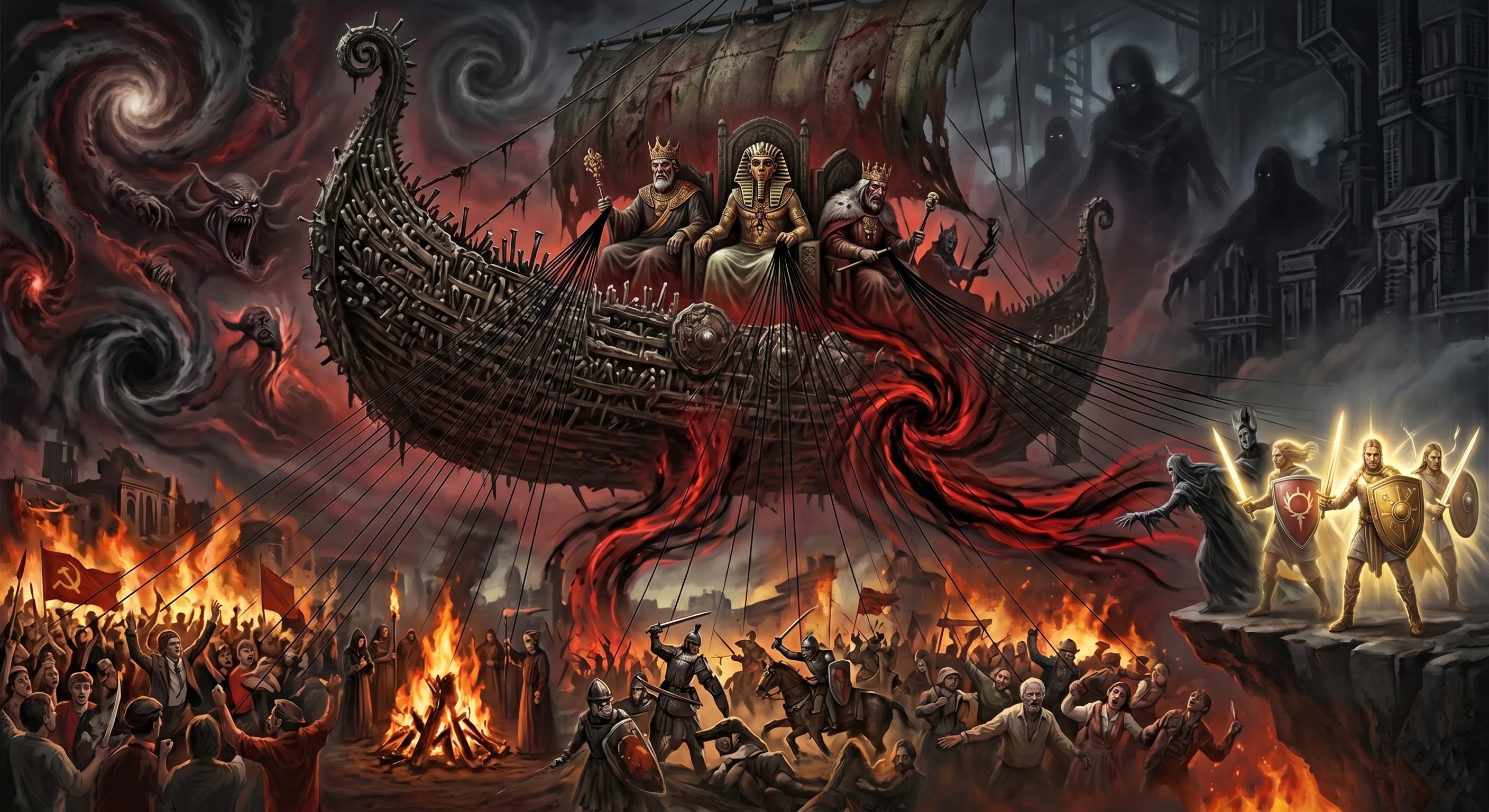
Across history, entire empires and once-living religious institutions, reaching the stage of ossification, have again and again turned into “shipyards” for Naglfar. The moment living mind is shackled by rigid ideology and the search for truth degrades into blind fanaticism, Egregores begin to “lose their reason” en masse. The fall of the ancient world into the Dark Ages, or the witch hunts in Europe, show the mechanism in plain sight: a critical mass of “dead nails” (social dogmas and fears) let the Rephaim’s “ship” tear through the thinning fabric of reality and stage its mad feast upon the ruins of intelligence.
To force such a breakthrough, the Rephaim always require a “bridge” from the world of the living. Any conscious or unconscious cult of the dead can provide it: veneration of mummified leaders; a society’s necrotic fixation on historical grievances; and the attempts of social and religious elites to draw on the energy of dark egregoreal layers to cling to power. Bargaining with the forces of chaos for tactical gains, these elites fail to notice the gates they open for those who will ultimately devour them as well.
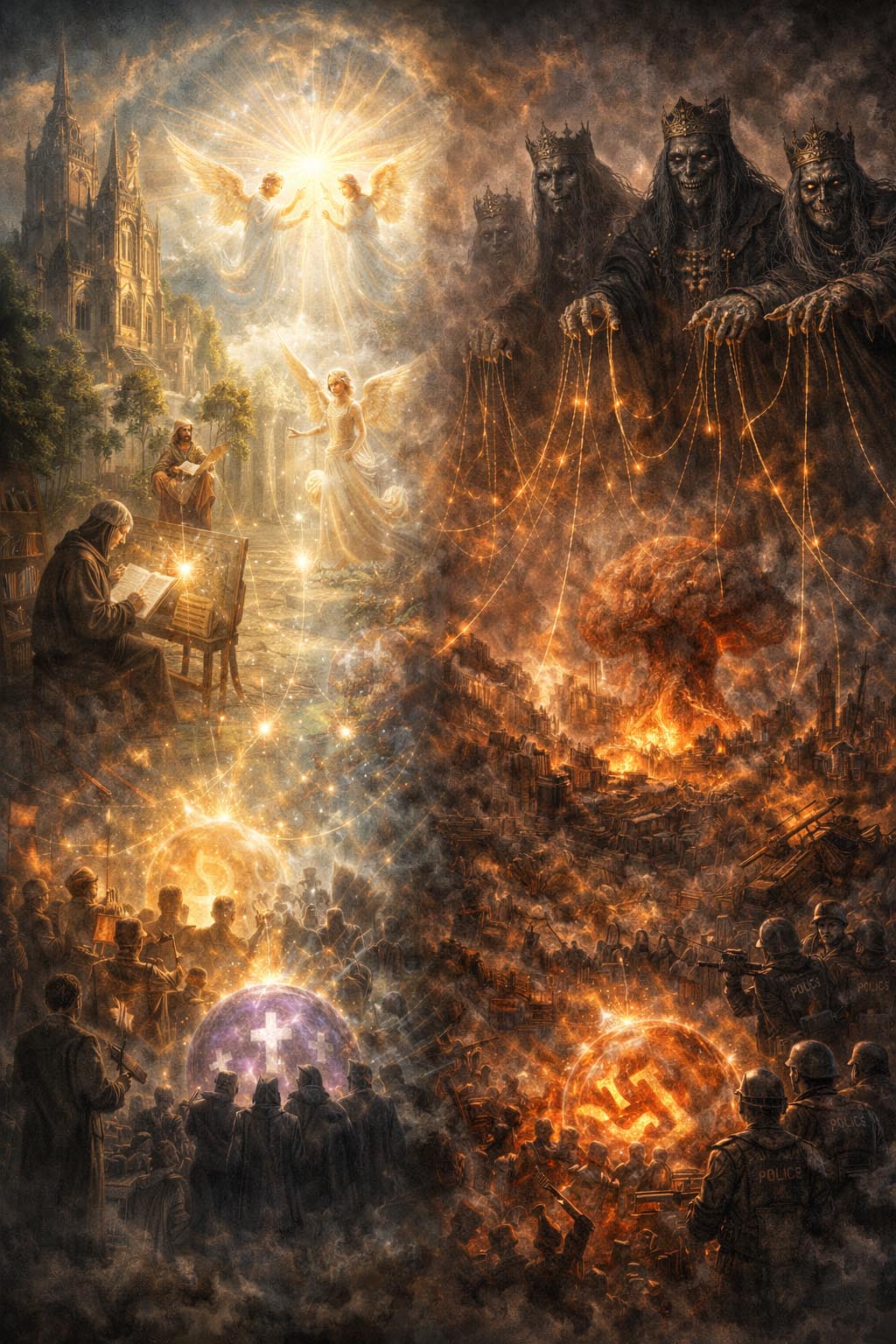
The energy produced by the “living” periods of history — creation, synthesis, art, religious and mystical experience — is fundamentally different from the low-tonic surrogate on which the Rephaim, and in general Elementers, feed. The dead require the energy of disintegration: activated, but stripped of structure (wars, panic). That is why the Rephaim are forced to rupture the established social cosmos from time to time. The structured energy of peaceful evolution is of little use to them.
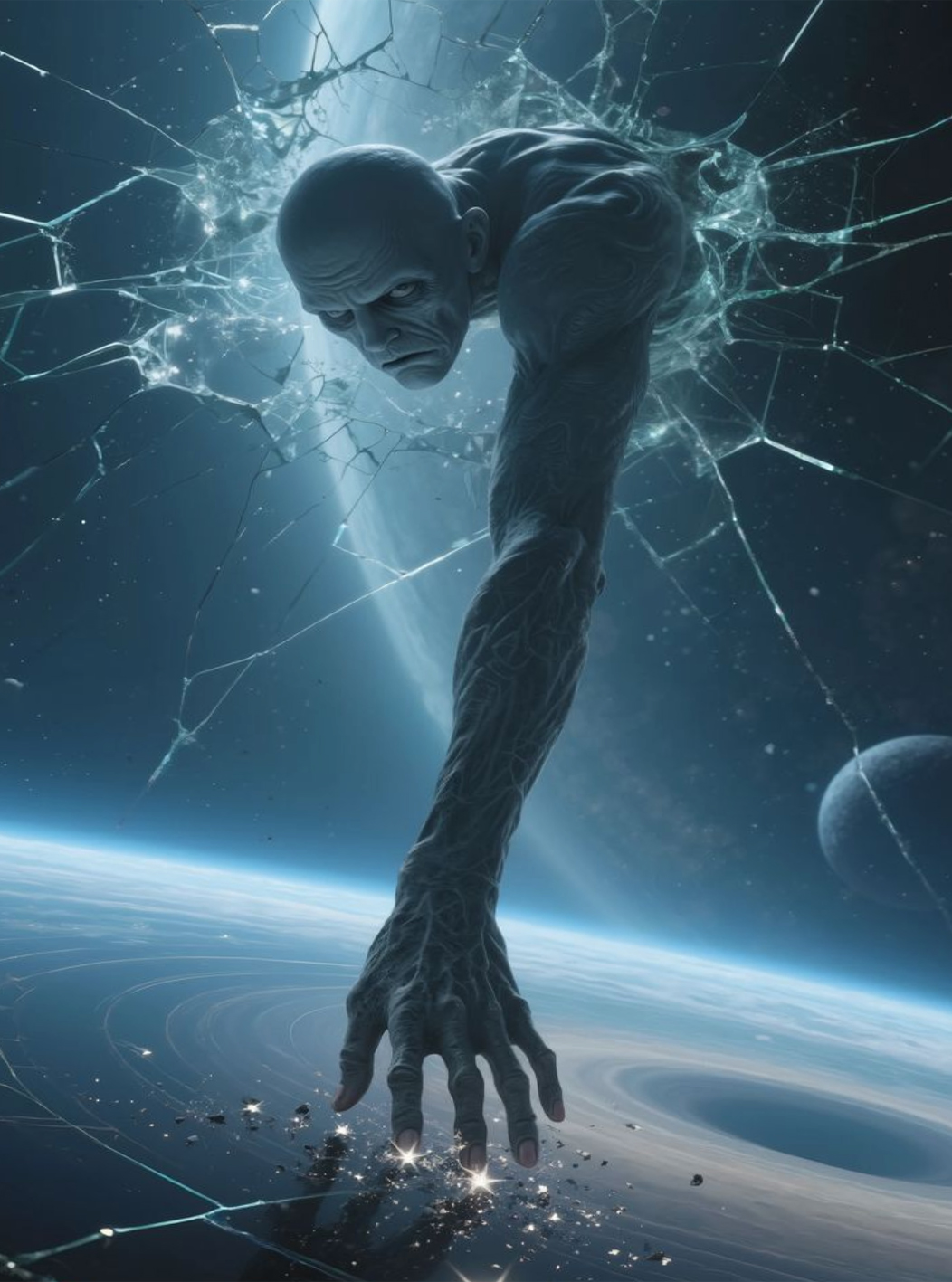
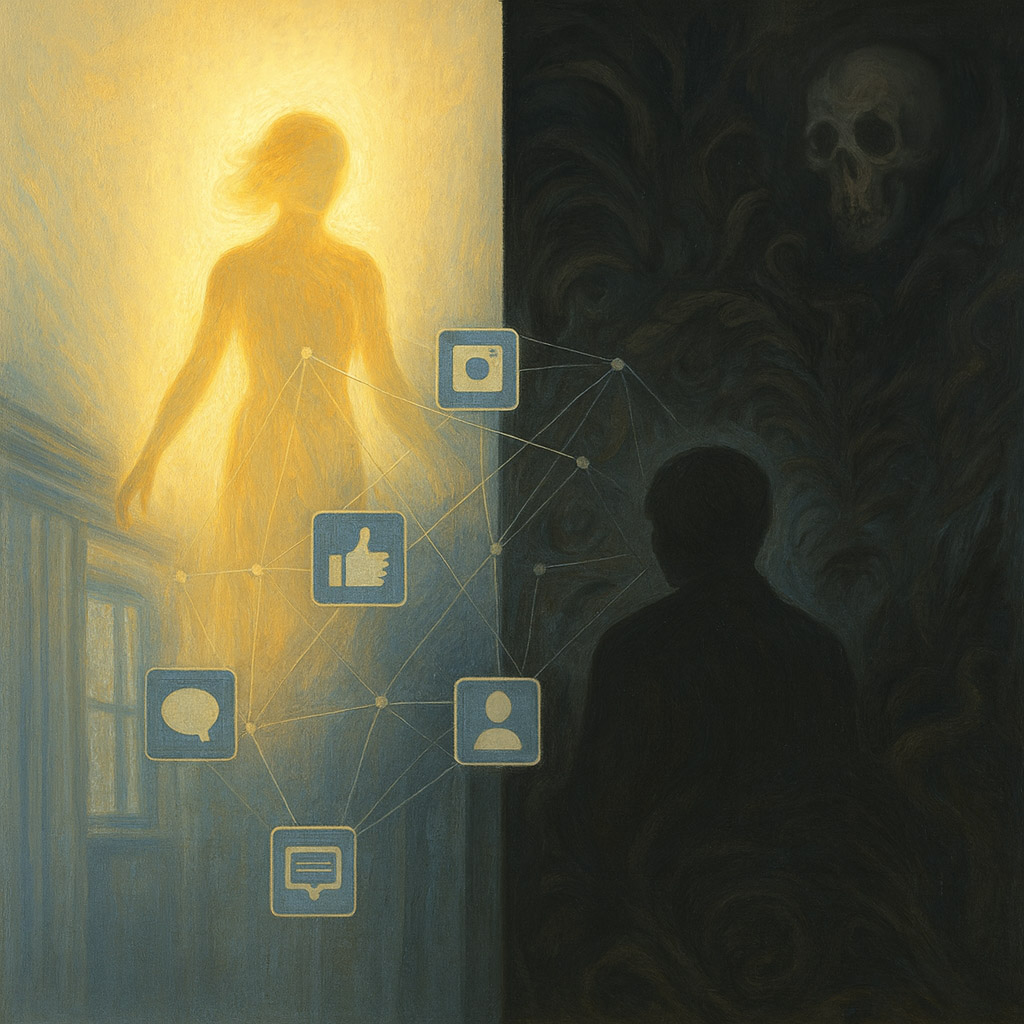
Each invasion of the Rephaim is an assault on the structures of perception and the mechanisms by which the living interpret reality. By pumping Egregores full of contradictory, emotionally charged information, the dead rulers provoke mass social schizophrenia. Society, like an avalanche, loses the capacity for coherent, critical thought and fractures into hostile shards. In such periods the actions of the masses take on the character of an absurd, anti-logical theatre: people, in fanatical rapture, fight for their own destruction, trade the basic instinct of self-preservation for delirious ideas, and accept obvious, logically untenable illusions as incontrovertible truth. Much of this grotesque comes from a single source: the shattered, non-integral mind of the dead literally “stitches through” the minds of the living. In such moments, the inertia of chaos becomes fully autonomous. The process cuts people’s mind off from higher meanings and turns them into ideal, uninterrupted donors of enormous masses of energy for the hungry spirits of the Interworld.
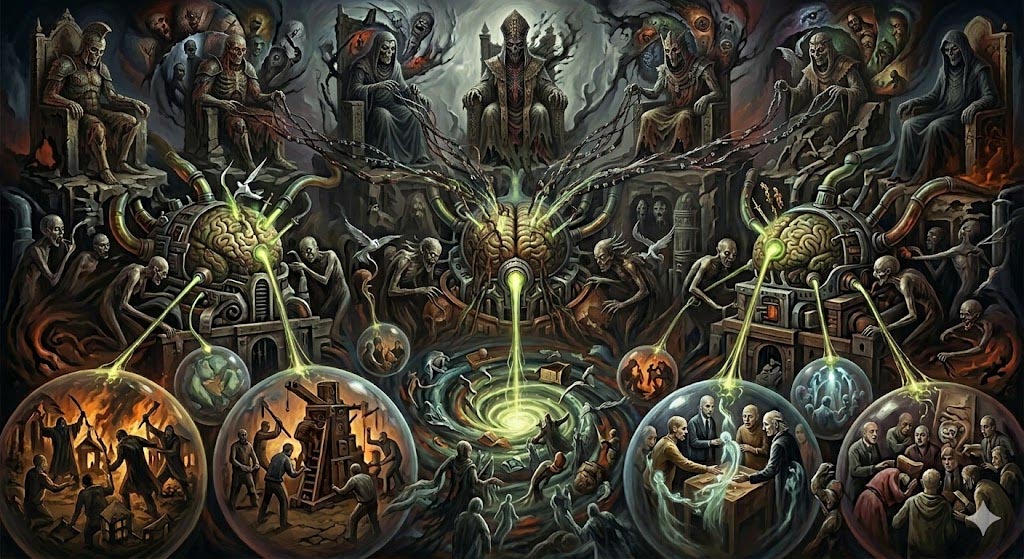
The most vivid historical example of such a breakthrough of Naglfar is the Cultural Revolution in China and Tibet. When the masses are seized by an Interworld-induced frenzy, people begin to smash everything around them with no goal and no vision of the good. Even the political initiators of the process then prove powerless to stop it, because the Egregore has already been seized by hungry spirits demanding their food. On the individual level, this macrohistorical madness is mirrored in sudden lesions of the nervous system, severe depressions, and epidemics of motiveless suicides among outwardly prosperous people. This is the direct clinical consequence of a total draining of vital force by the entities of the Interspace.
Historically, the “raids of Naglfar” have always been accompanied by targeted destruction of structures that preserved ordered gnosis: the rout of Gnostic sects, the destruction of the Order of the Templars, the eradication of independent philosophical schools and cultural Currents. For the Rephaim, any bearers of structured mind and deep knowledge are an obvious threat. They not only refuse to submit to “milking,” but can also build foci of resistance that obstruct the global blockade of mind.
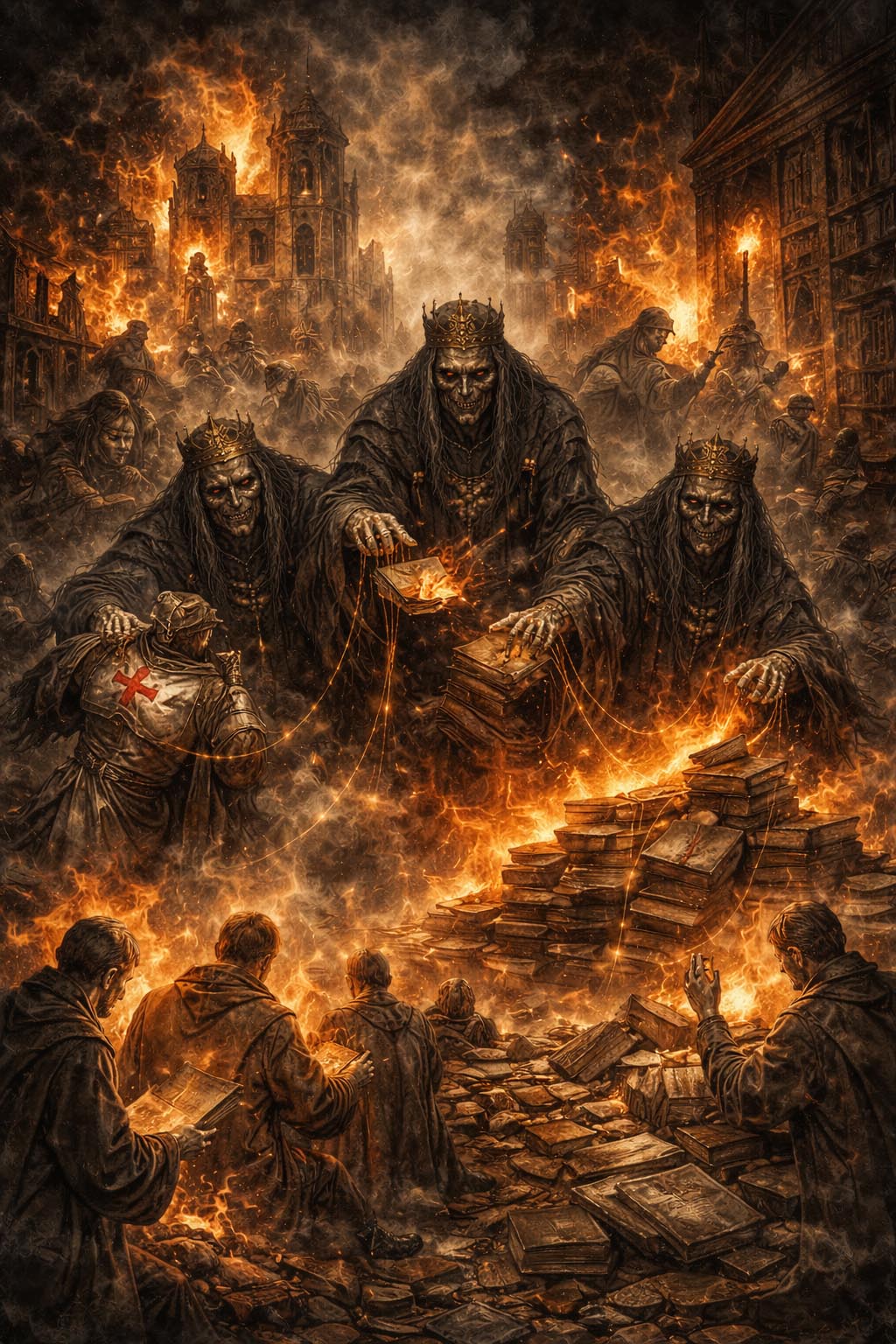
At the same time, the maddened dead kings are often only a tactical link — “tax collectors” for the Interspace. They gather their “tribute” as low-frequency energy (fear, hatred, hysteria) for themselves and their “wards,” but the machinery of this extraction is held in place by larger actors — above all, the Archons — whose aim is global enslavement of information and the maintenance of mind in a frustrated state. The raids of Naglfar therefore function as a key instrument for maintaining the status quo in the overall Architecture of control over the Currents of energy.
Every “dark” period of macrohistory is, therefore, an unfolding battle on the field of Vígríðr. In each such battle, the “living” — healthy, critical, compassionate people — stand as Einherjar against the host of the dead disembarked from Naglfar and the maddened collective vortices. Historically, such Einherjar have been those who kept the sovereignty of spirit alive in eras of decay: from Irish monks copying the ancient heritage in their scriptoria, hidden behind monastery walls, to Rosicrucians and Hermeticists carrying the light of Tradition through the fires of the Inquisition.
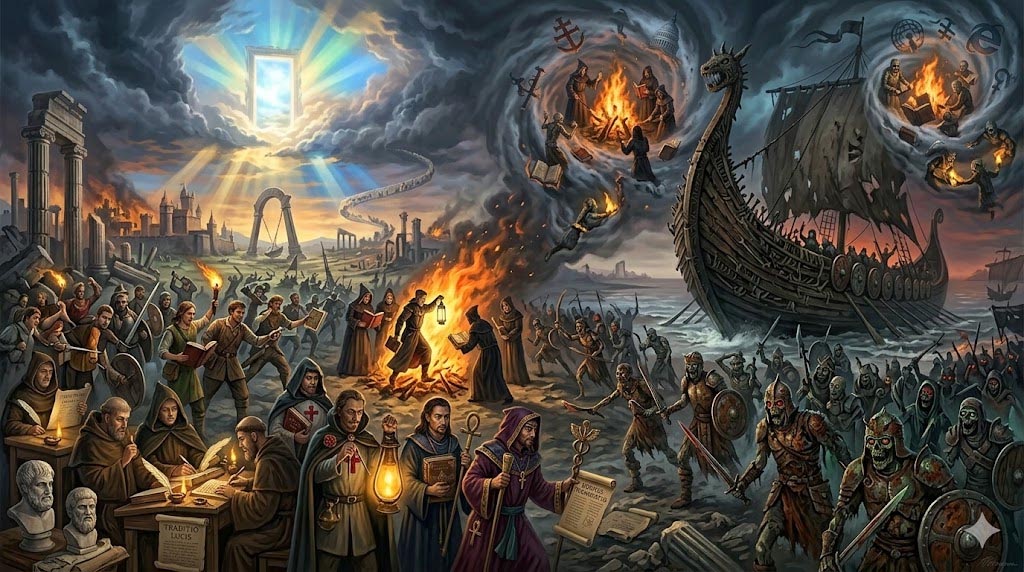
For everyone forced to live through such historical “twilights,” it is critically important to forge within oneself the real qualities of a warrior. Honor forbids compromise with parasitic structures and forbids dissolving into the chaos of the crowd. Critical thinking is the sharpest sword: it cuts through the murk of egregoreal madness and prevents one from being turned into blind “building material” for the ship of the dead. Compassion is living, creative Power; it deprives the Rephaim of their chief food by damping the waves of hatred and division.
Only by relying on this inner axis, and by preserving the unwavering sovereignty of mind, can the Einherjar stand strong against the onslaught of chaos, defend the living social cosmos, and drive the hungry dead back into the cold bounds of Hel.


There’s an opinion that mummifying a well-known leader and building a structure of a certain shape and made from certain materials for his mummy was an ancient ritual meant specifically to create a powerful infernal patron for the cult-like organization that seized power. That’s how a kind of “ref” emerged, influencing all of humanity—and it’s supposedly the one steering civilization toward destruction, provoking wars and breeding insane, destructive tendencies even in rational societies.
Thank you so much.
Thanks! It’s clearer now how it works.
Pol Pot’s regime in Kampuchea (now Cambodia).
ISIS, the butcher cults of the past in South America.
All of it has the same origin..
It’s true, ISIS was driven by the same forces that stood behind Hitler….