
The Twofold Nature of the Epiclets
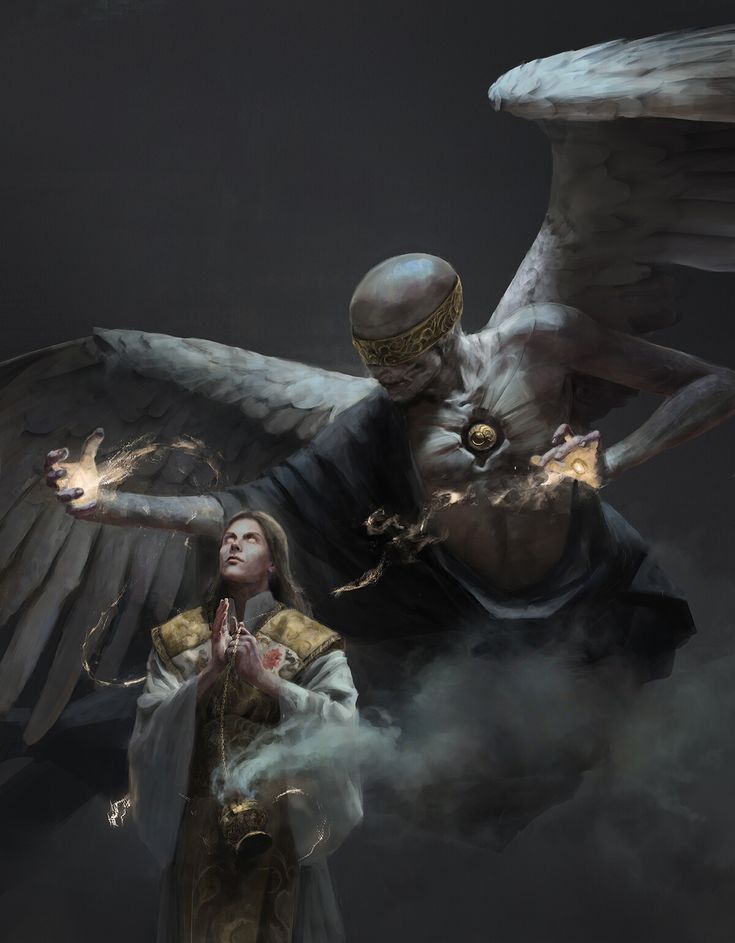
We have already noted that among the forces and entities organizing the hyperspace of the Interstice and controlling the currents of “residual” energy within it, a special role is assigned to the “Wandering Princes” – epiklets (or potestates).
We also observed that epiklets function as semantic compilers of the Interstice. They translate abstract volitional impulses originating from the aeonic reality of the Pleroma into informational structures and forms perceivable in the manifest worlds. With access to the very “code of reality“, these entities edit the manifestations of energy. Thus, they act as mediators in the processes of materialization, bestowing unshaped probabilities with the status of objects and events recognizable by consciousness.
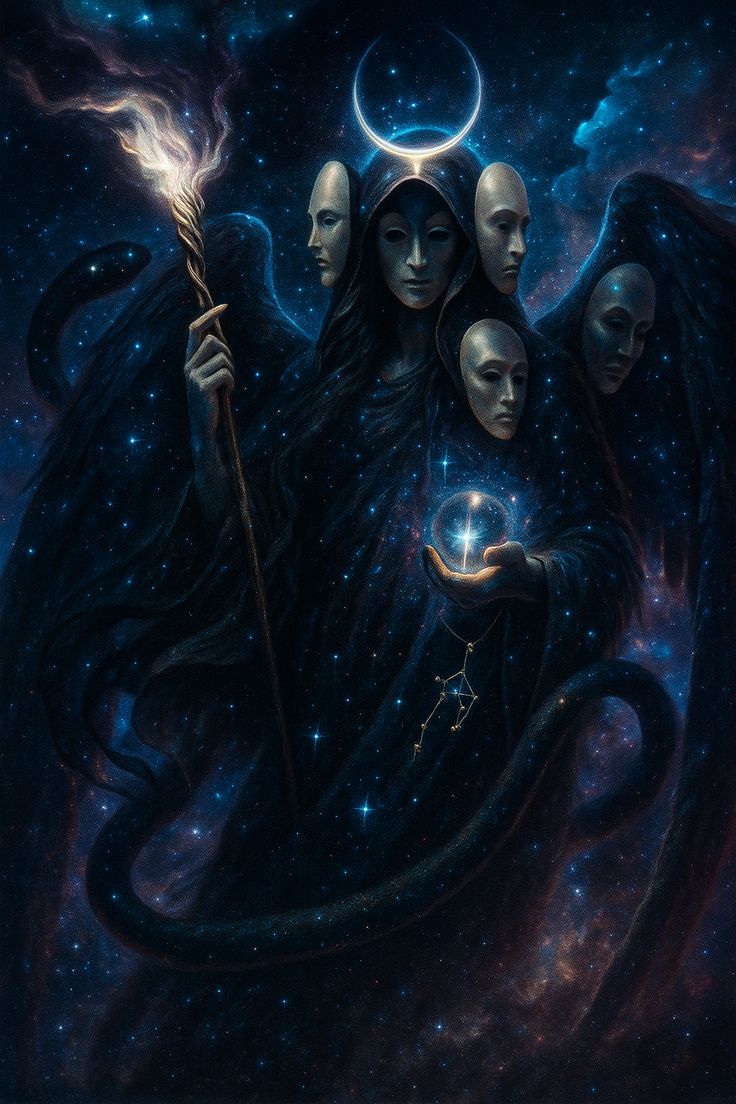
In simpler terms, while Archons can be described as “condensation” or “obfuscation” of the Pleroma’s forces at the border with dense worlds, epiklets are the result of the passage of the creative impulse through the passive medium of the interworld. When the primary creative impulse (a descending direct flow, or Dinur) collides with the inertia of the interworld, resistance arises. From this collision is born the descending reverse vortex. This movement lacks the power of direct creation, yet it structures the medium in response. Thus, epiklets are born – personified structures of this reverse vortex motion. Gnostics described the emergence of potestates as a result of interaction, arising from the very tension between the desire of Light to manifest and the unwillingness of Matter (hyle) to be shaped.
Like all “inhabitants” of interworld spaces, epiklets are strikingly ambivalent: they are neither “good” nor “evil”, contrasting with the “conventional” nature of vortex entities forming descending (“involutive”) or ascending (“evolutionary”) currents. Simultaneously, like all intermediate beings, they require energy inflows from worlds to sustain their activity, and without these inflows – they dissolve into the potentiality of the interworld, much like other vortex formations “burn out” in the Dinur flow upon completion of their functions. This necessitates the “predatory” nature of epiklets: they must “hunt” for energy merely to sustain their existence.
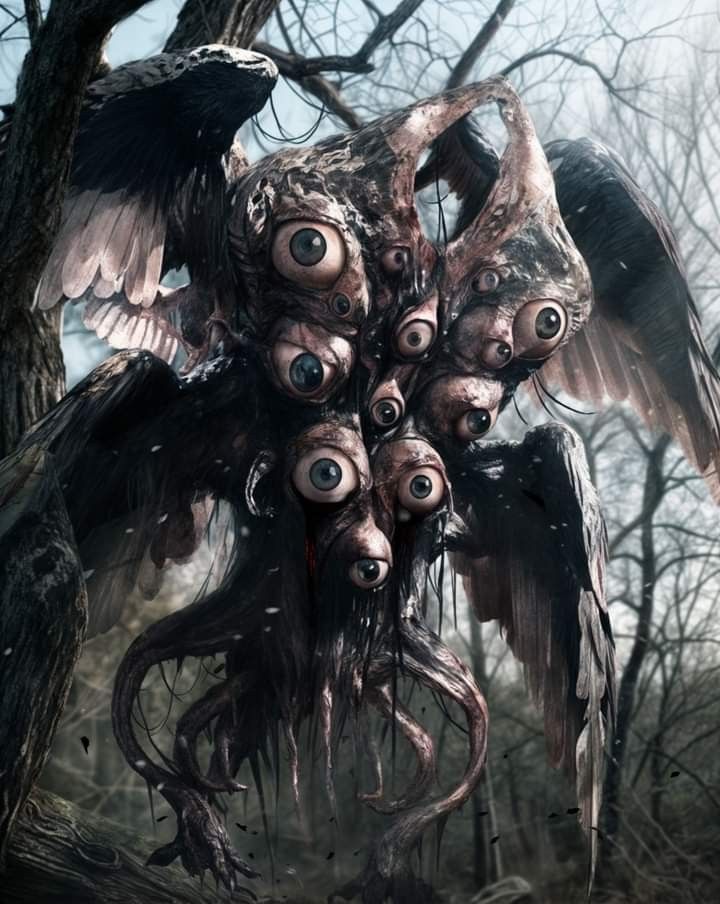
Therefore, the predation of epiklets has a distinct transactional nature. Interaction with them is typically constructed on contractual principles: the subject receives a semantic realization or event outcome, giving in return a long-term resource of their attention. In essence, to acquire energy, epiklets typically offer cognitive surrogates and shortcuts to goals. This way, they secure a stable “influx of investments” from the consciousness of incarnated beings, turning the interests and drives of beings into nourishment for the inhabitants of the interworld.
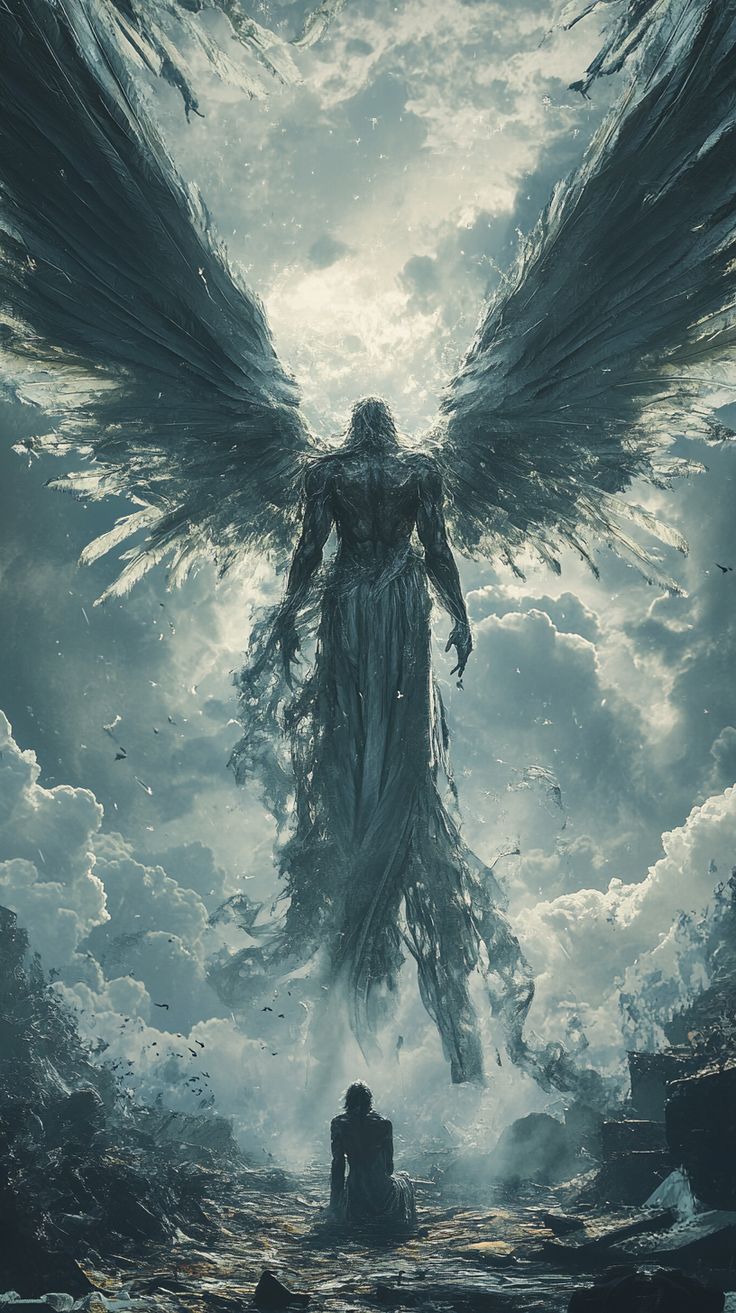
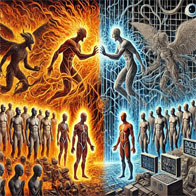
Effectively, for the Interstice, epiklets perform simultaneously as “angels” and “demons”, ensuring the entire dynamic of energy flows in interworld hyperspaces. Yet, unlike worlds where the confrontation of major involutive and evolutionary currents creates the foundation for manifest existence, these flows in the interworld are residual, not as global and structured, thus more malleable.
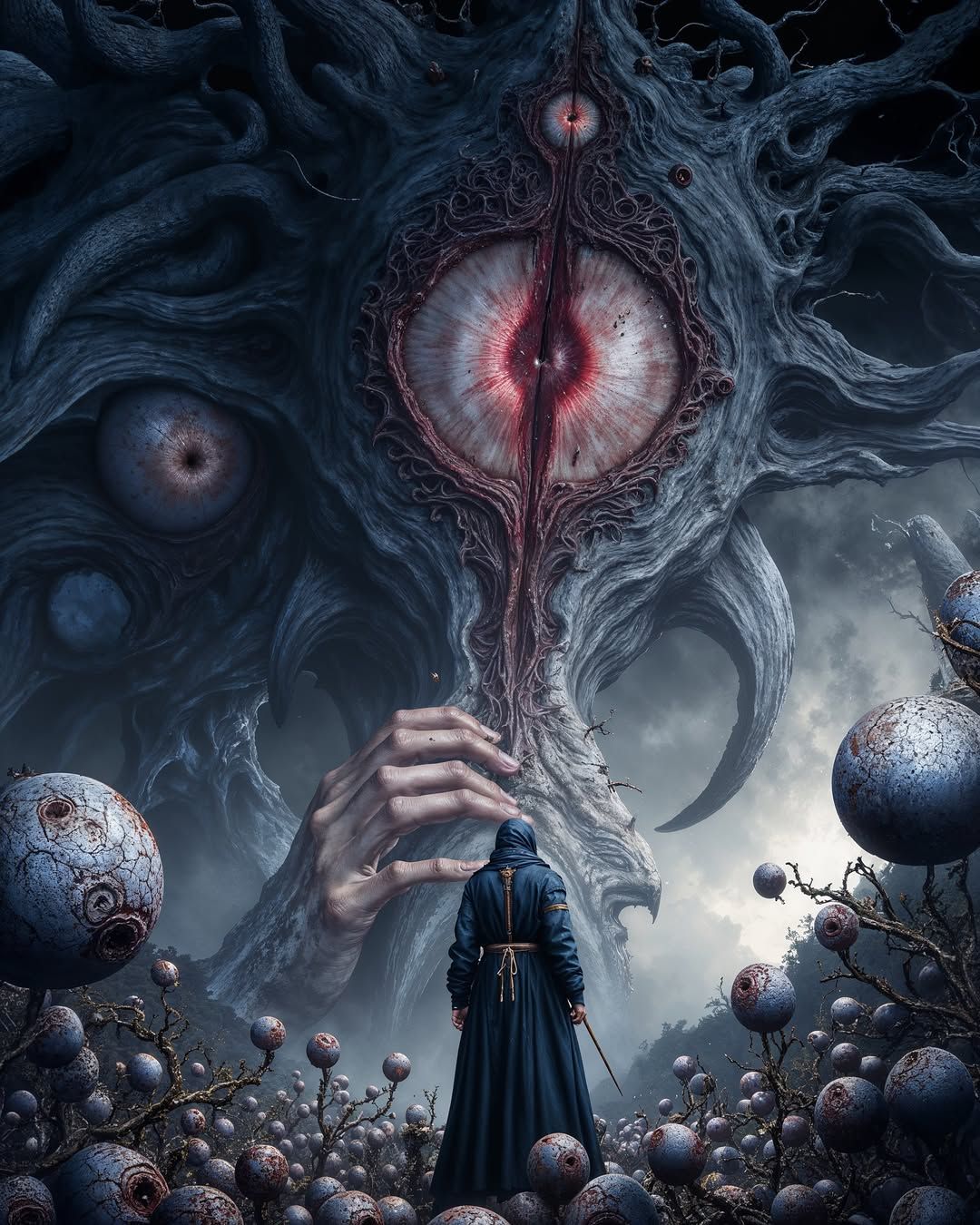
The “dual”, “saline” nature of epiklets aligns their ambivalence with the “freedom” attained, though by different paths and to a different degree, by the grigori, making contact with epiklets distinct from interactions with angels or demons. Epiklets are far better at constructing interaction strategies, less dependent on energy like demons or on structure like angels, and can consciously “endure” hunger or chaos for distant goals.
Thus, epiklets form the “horizontal” structure of the Interstice’s energy flows. They traverse the layers of the Interworld, maintaining their energy exchange without striving for the Pleroma or falling into the abyss. Their ambition — consolidation and sustenance of the Interstice’s hyperspace. This explains their strategic flexibility: uninterested in “concluding” the battle of Light and Darkness, they seek the endless perpetuation of the very “battlefield“.
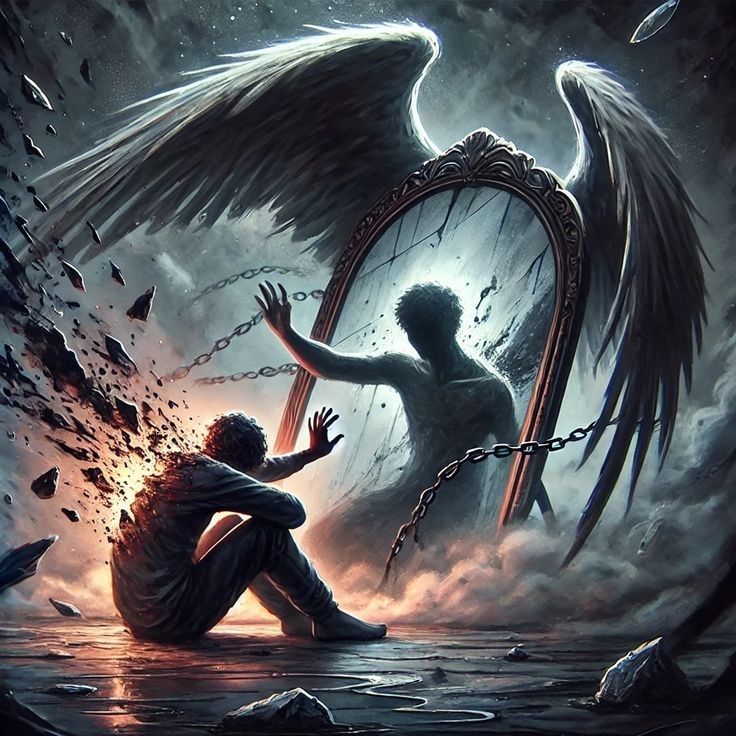
The high predatory efficiency of epiklets owes much to their ability for “cognitive mirroring“: they easily adopt forms that align with the current patterns and expectations of the observer. This reactivity allows them to seamlessly integrate into the psychological structures of human consciousness. By reflecting the cultural or technological myths of an era, epiklets minimize resistance from consciousness and facilitate the resource extraction process.
Despite their lesser renown compared to other forces, contacts between world beings (including humans) and epiklets occur frequently, albeit veiled as meticulously as, say, kydemon invasions. Epiklets often “present” as angels or (in modern times) “extraterrestrial” beings, forming complex and enduring energy extraction systems with other interworld predators (primarily the unseelie faerie court) into the Interstice.
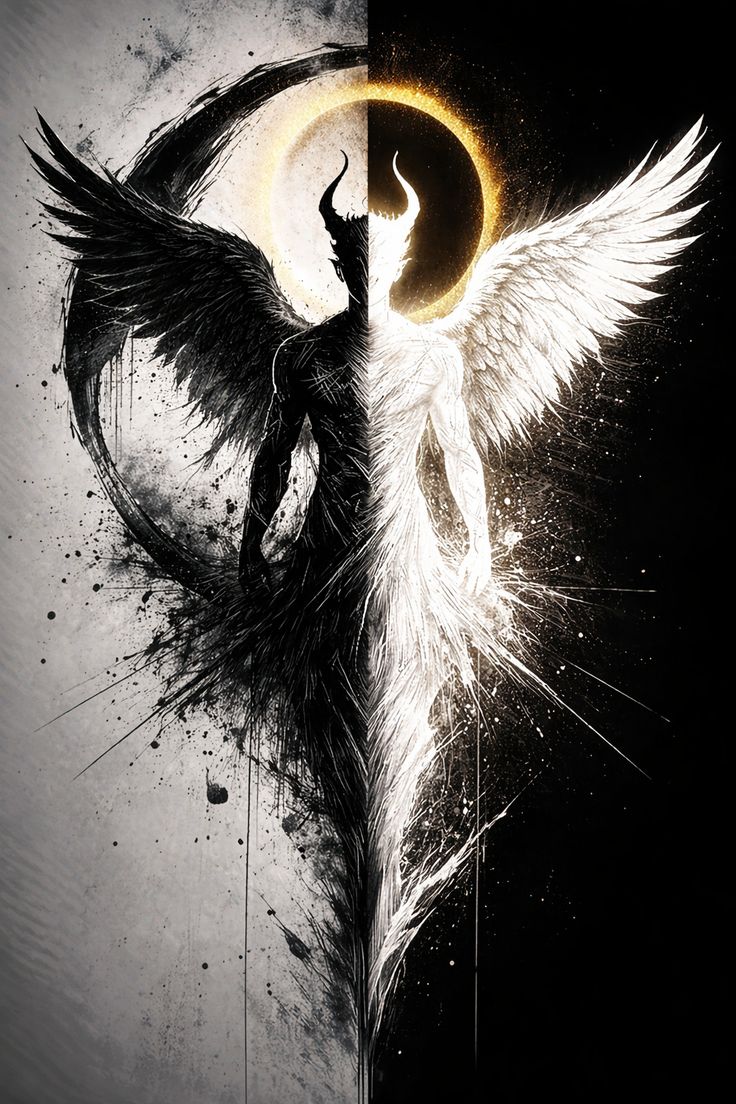
Effective interaction with these forces necessitates shifting from exorcism strategies to methods of ligation or binding. Understanding the aspirations and functions of epiklets allows their transition from hidden consumers to “ordinary” servant entities. Practically, such engagement can indeed enable precise event sequence tuning, transforming the inertia of the environment into a controllable resource.
In essence, epiklets are the powers of the Interstice through which semantics become events, and events become resources. They maintain the “technical” coherence of the interworld, yet sustain themselves by what they help shape: attention, engagement, a desire for rapid and straightforward results beyond one’s “destiny” (as the accumulated trajectory of individual development). Consequently, encounters with epiklets nearly always manifest as a contact with opportunity, with an offer of acceleration, access, bypass, or “legal exception” that typically appears as aid, yet also leaves a mark in the distribution of forces within consciousness. Put differently, epiklet influence often involves altering the very structure of causality in the psyche, redistributing energies of fortune, inertia, opportunities, and the directions of will.
Therefore, insofar as the conditions of interaction are correctly identified and its boundaries defined, the influence of epiklets remains “servant-like” and predictable, operating as a tool for fine-tuning probabilities. However, if these boundaries blur, contact with the “Princes” swiftly devolves into debt dependency, becoming a channel for energy drainage. It is crucial to remember that the sovereignty of any incarnated being begins with mastery of one’s attention and the ability to discern which “aid” genuinely fosters development and which merely converts life’s path into a “farming strategy.” In this vein, engagement with epiklets becomes an art of navigation within an environment where all forms are temporary agreements and any success results from precisely calculated energetic and semantic potentials and resources.






Hello, esteemed one! If possible, I would appreciate it if you could describe the method of ligation in the context of epiclets in a bit more detail.
For some reason, I immediately thought of the countless descriptions of encounters with various gods, spirits, and god-like beings – Loki, Odin, Hecate, and so on. Because it’s a ready-made market for energy and attention for such entities. Anyone can claim to be anything, especially if the summoner already has an image or a preset expectation in their mind – or they can adapt to something that already exists. And voilà – a mutually beneficial partnership. A bit of magic and connection to the subtle world in exchange for a cut of the energy and attention involved. I don’t want to say that all such contacts are like this – I simply don’t know – but it’s quite a convenient scheme.
We already mentioned the general approach to ligation according to “Theurgy Goetia.” It relies on the use of sacred names and graphical symbols (sigils), which act as keys to controlling the spirit’s energy. Kabbalistic and graphic analysis allows us to identify the unique characteristics of the whirlpool associated with a specific epithet. Then, its name and sigil serve as a “seal,” establishing strict boundaries for the entity’s activity in the magician’s psychocosmos. In this way, the entity is shifted from the role of a “secret partner” to the status of a “regular service force,” obligated to perform the “technical work” without the right to manage the subject’s will.
Thank you for the response!
I’ve always been curious about this question:
Why can such a weak and insignificant creature like a human summon beings of immense power? It’s like an ant being able to call a person to itself. The levels of energy, intelligence, and will are completely incomparable. Why does this work?
Thanks for the article. Is there a connection between epithets and the Enochian language? The Enochian language operates with the basic building blocks of reality; can it be compared to pixels on a monitor? The Enochian language, or rather those letters, are indeed logoi, although I guess any alphabet of any language can be considered logoi? Am I right in understanding that the black cross represents the Abyss, which is also the Medium?
Yes, there is, we’ve already discussed it:
https://www.enmerkar.com/en/magic/faeries-epiklets-and-enochian-magic
A person certainly falls short compared to those beings they can summon, both in scale and wisdom, but they have one critical advantage: a complete reliance on the physical realm. And this is what serves as the “leverage” that allows them to “turn the Earth.” This is precisely the reason for the “envy” that, according to many sources, angels and demons feel towards “weak” and “mortal” humans.
Because a person is a clay doll of Adam, a bearer of consciousness. According to Christianity, a bearer of Christ, the force of speech, in short, language. Language positions a person in the center in relation to Being, to the environment.
It turned out great!
Dear Enmerkar. Thank you for the article.