
The Fair Folk and the Art of Presence

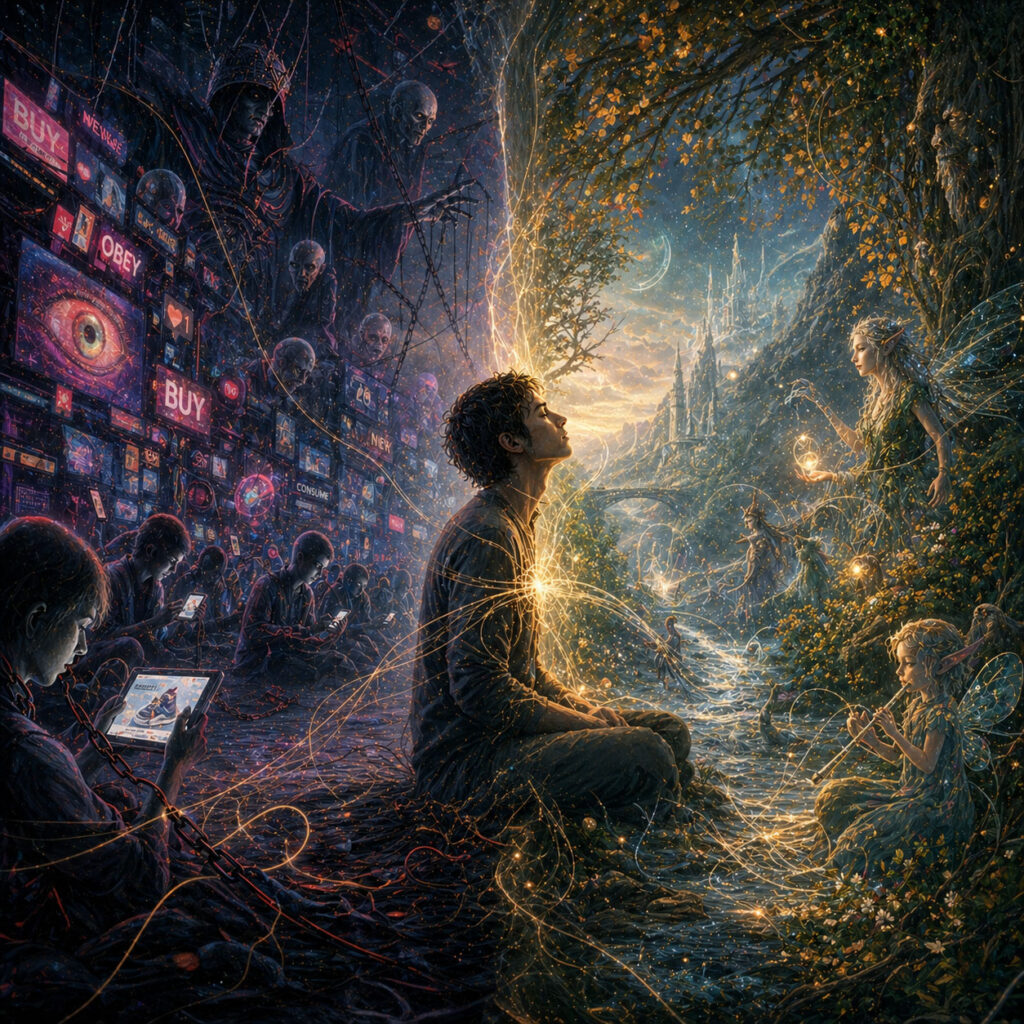
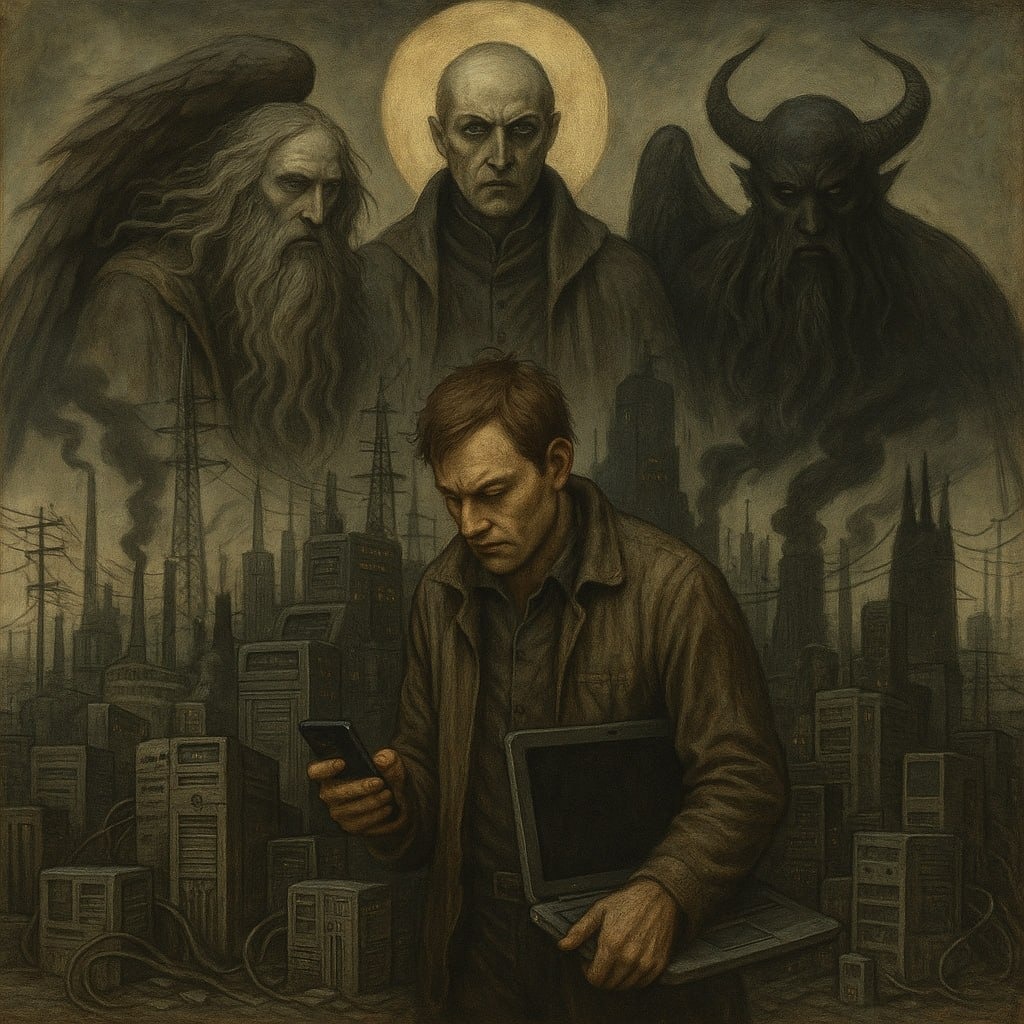
We have already discussed more than once that one of the most substantial problems of modern civilization, driven by rapid informational and “content” oversaturation, is the decline and depletion of the ability to focus attention. This observation can create the illusion that restoring focus, discipline, and the ability to hold the direction of perception or thought for a long time is, by itself, enough to restore freedom of perception. Yet in reality, concentration in itself is deeply Archonic: focus, productivity, volitional удержание, “taking aim” — these are predator skills and machine traits.
Machine rationality, by its nature, always possesses perfect, absolute attention. Algorithms do not know fatigue, do not need pauses, and do not get distracted by side stimuli; their focus is continuous, total, and inseparable from the object of computation.
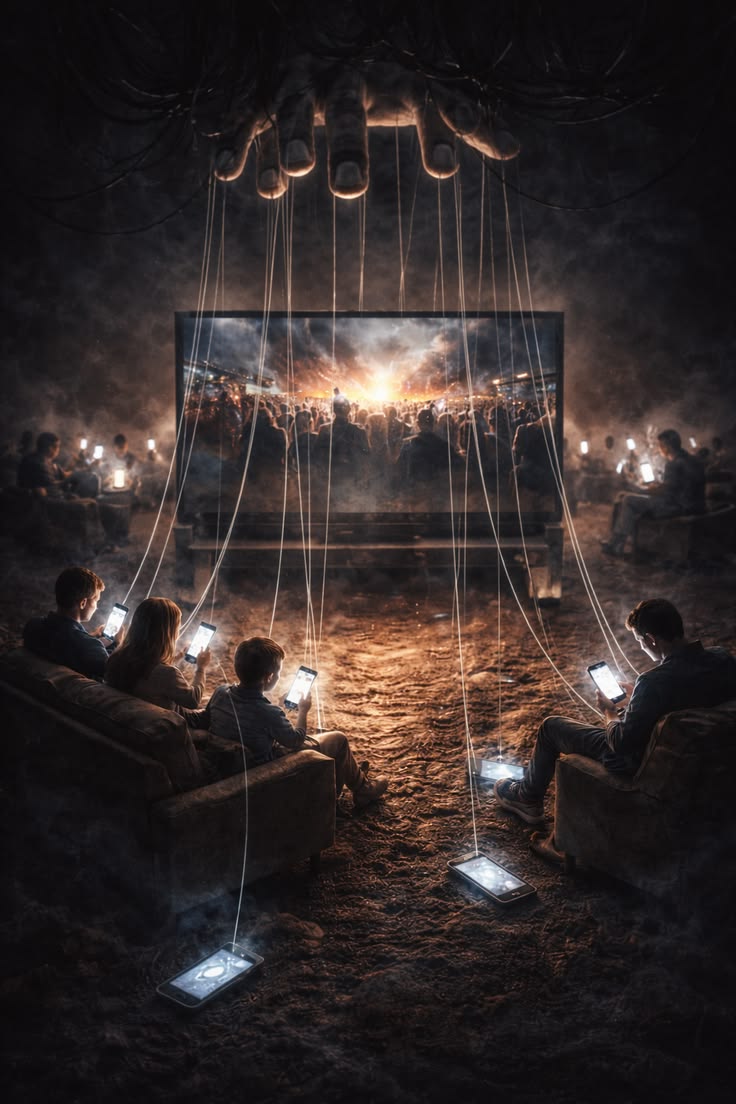
This means that when a person, trying to overcome digital scatteredness, cultivates impeccable, uninterrupted concentration, he paradoxically lands in the densest core of the technical world. Ideally focused, unblinking attention is a primary attribute of machine thinking and a form of instrumental capture.
For the Archons it is completely unimportant whether attention is scattered or focused, as long as it remains in a stable, regulated mode of energy-production. A perfectly concentrated worker, laboring without interruption on the task set before him, is just as deprived of Flow and freedom of mind as a teenager scrolling clips. The difference lies only in the efficiency coefficient of extracting benefit.
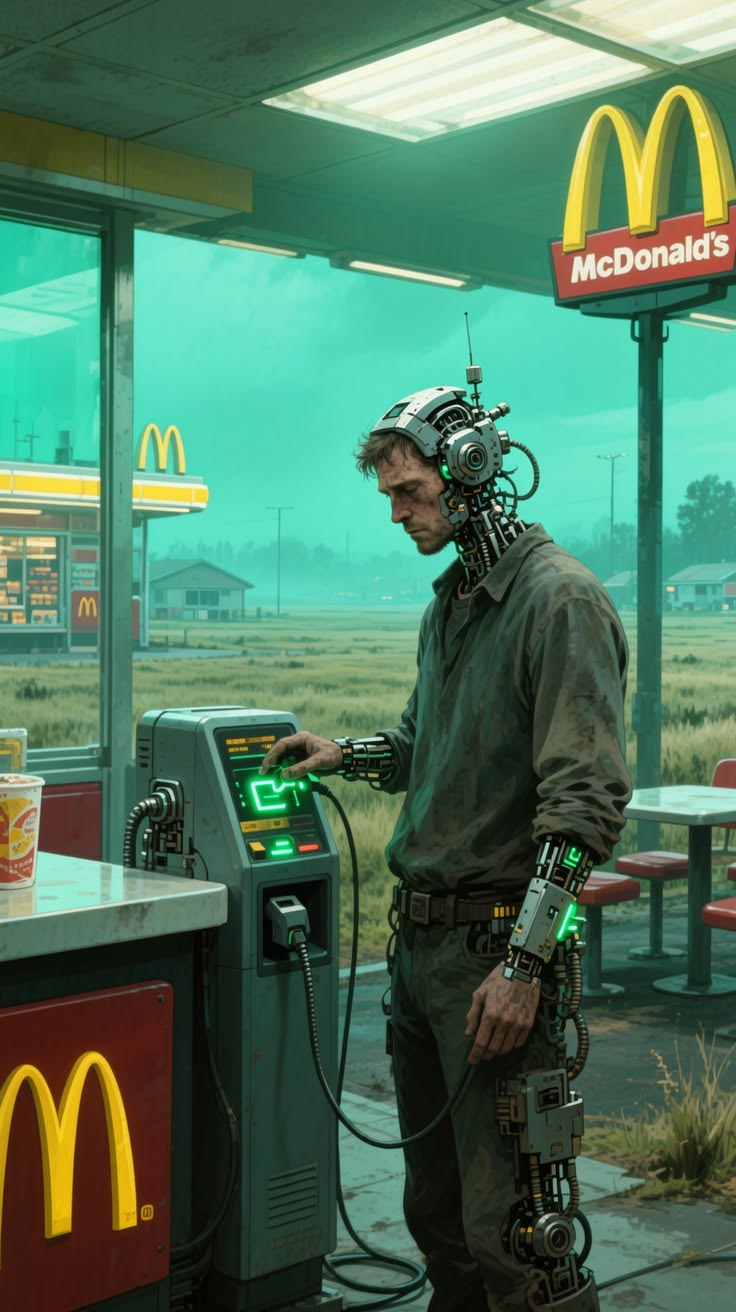
Thus, even the most collected attention of a modern person usually remains inside the predator–prey system. It relentlessly searches for new ways to inventory, exploit, and appropriate whatever seems useful. The ability to single out what is essential may be well developed, yet the skill of careful regard toward what is being observed is lost.
The second extreme is represented by the ideal of “presence” imposed by many quasi-spiritual movements. Commercialized spirituality interprets presence primarily as a therapeutic tool: a way to reduce anxiety, replenish the psyche’s resources, or secure a comfortable existence. In such a system the person remains a predator and continues to consume reality; only now the objects of capture become “spiritual insights,” “energies,” and “blissful states.” Nature, from the point of view of New Age adherents, becomes a safe servicing backdrop obliged to supply harmony on demand.

The mind in this case does not enter co-presence with reality; it uses reality to pump the ego with positive states while remaining an absolute — if refined — consumer. Such an approach does not lead to true harmonization of the mind, because it rests on the mechanism of radical repression. The demand for permanent bliss forces a person to turn away from structural conflicts, pain, entropy, and the frightening otherness of the objective world.
Therefore, instead of resolving deep spiritual crises and transforming predatory patterns, the mind simply flees, sealing itself inside a sterile, artificially isolated capsule. Any discomfort or challenge is labeled “low-frequency negativity” and blocked. We have already said more than once that such an attitude leads to fatal fragmentation of perception: reality is castrated into a safe therapeutic background, while the shadow and complex aspects of the psyche remain ignored and continue to destructurize the psychocosmos from within.

Both of these extremes only drive the mind deeper into conditioned reality and lock it more tightly in the chains of energy consumption.
The Fair Folk offers an alternative to both instrumental and falsely blissful perception. Faery attention is neither improved concentration nor a denial of any side of reality.
Human attention either darts from side to side under a stream of heterogeneous stimuli, or compresses into a volitional fist to achieve a goal. Faery nature, however, implies the creation of an inner space: a mirror that tries to reflect the events and Currents of the world. The Fair Folk stands beside the phenomenon, allowing it to manifest naturally, without rushing to name, measure, explain, or — still worse — appropriate what is seen.
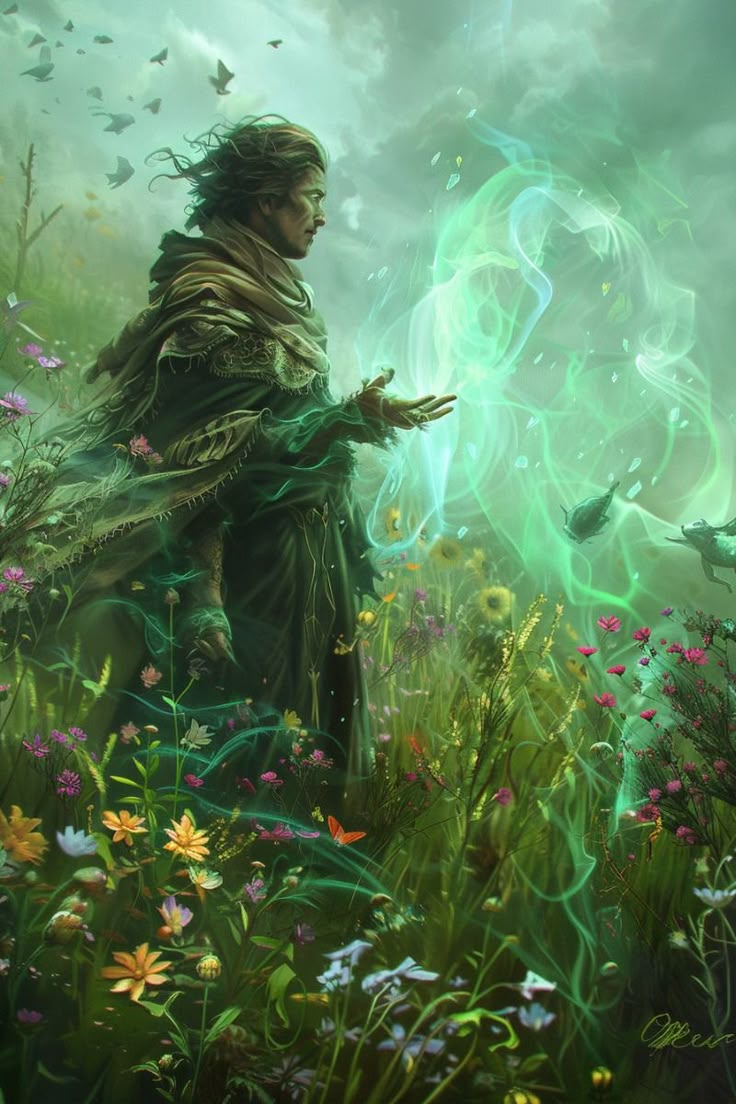
It reflects reality in all its multidimensionality, including its opacity, severity, and danger. Faery perception does not strive for comfort, does not seek consolation or relaxation. Harmony for it is the capacity to enter the highest ontological intensity of being, without remaking the world to suit momentary psychotherapeutic needs.
For the Fair Folk, presence in the world is not necessarily pleasant; it may be anxious, strict, cold, sad, or dangerous, yet it is always precise, because it is directed at the very Flow of reality, not at its separate qualities. It knows that not every beauty is beneficent, not every presence is friendly, not every response should be accepted.

Faery attention does not deny the world’s pain and does not insist that everything is already good and perfect. On the contrary, it lets one see how much has become coarse, dead, consumerist, distorted, or offended. Such attention often intensifies sadness, and images of the Fair Folk are therefore often distinctly melancholic. Yet this is fertile sadness: it gives the mind the capacity to distinguish the living from the damaged, the whole from the distorted.
Thus, both digital attention and New Age “blissful presence,” each in its own way, create a convenient intermediate оболочка between mind and world. For digital attention, the world appears as a stream of irritants: to watch, to оценить, to respond, to scroll, to compare, to be outraged, to desire; for New Age blissful attention, the world is likewise used and consumed, though now as a stream of soothing experiences: to feel harmony, to receive a sign, to be nourished by energy, to confirm one’s specialness, to “ground,” to “heal.”
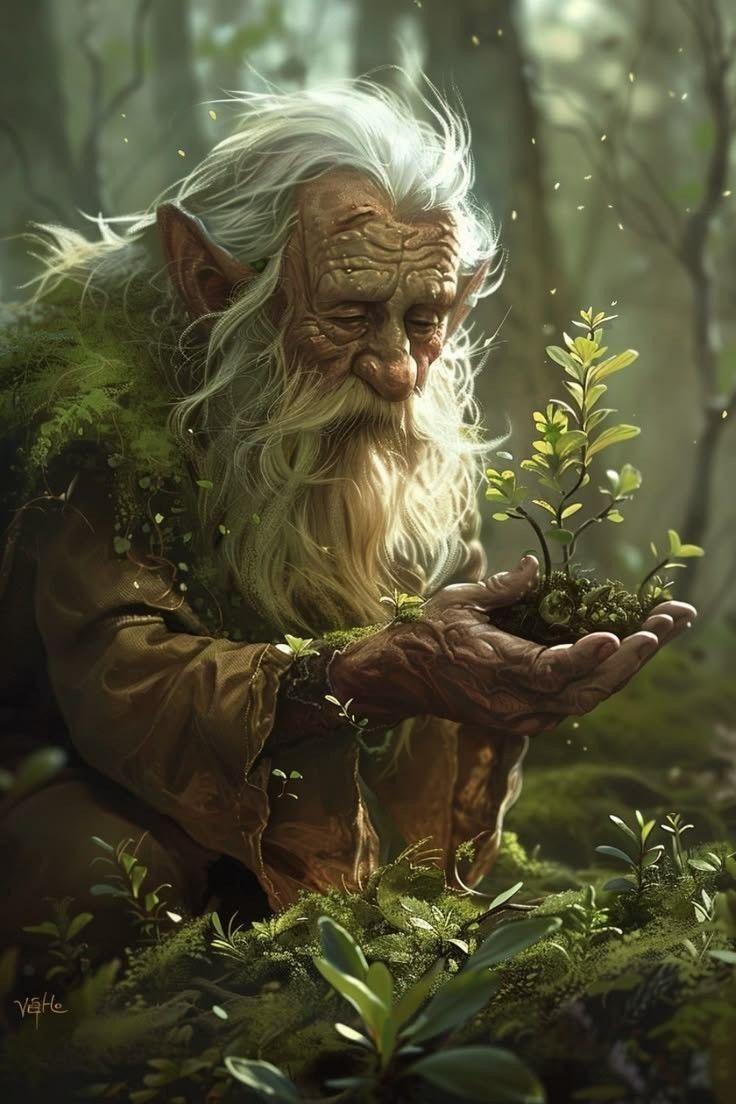
Digital reality erases the boundary between stimulus and reaction. Notifications, news feeds, and other people’s emotions demand an instantaneous response, forcing one to act according to a pre-calculated algorithm.
The clip-thinking mind is deprived of масштабность. It cannot encompass a panorama of meanings and functions only as a mechanism of instant reaction. New Age blissfulness likewise deprives the mind of критичность and breadth: it declares everything “energy,” a “lesson,” a “sign,” a “Flow,” “acceptance.” Every phenomenon is automatically proclaimed kind, healing, “sent by the universe,” or folded into the general Flow — something that demands no verification and not even a “test of truth.”

Thus, both kinds of distorted human mind are, in essence, virtual, because they deprive the psychocosmos of potential difference and strip it of its realizational component. If digital virtuality is obvious, New Age virtuality is less visible. Yet when a person lives inside a pleasant psycho-spiritual picture of the world where everything is заранее softened, explained, justified, and turned into material for personal growth, this is the same virtuality, the same simulation: a simulation of depth, of contact, a simulation of mystery.
Faery attention, however, avoids both arousal and consolation; it experiences the very presence of the world, which is not obliged to please it, help it, or confirm its inner expectations and сценарии. For it, preserving the rift— the pause between perception and action — is always crucial. This delay allows the psychic impulse to pass through memory and the critical mechanisms of the mind before it pours into an act. The presence of such a pause prevents the mind from being fully absorbed by the external environment. Attention here is neither a spotlight beam nor a resource, but a personal boundary guarding subjectivity.

Human attentional focus usually carries hidden violence, seeking to turn reality into prey for understanding. Faery perception is structurally closer to listening, because within the Fair Folk’s field of vision fall not only the clear contours of form, but also the atmosphere around it: a faint glint of light, the inner tension of a place, the energy of presence, or the signs of the absence of something important.
The coarse, direct gaze developed in human evolution usually ignores or distorts subtle phenomena. The Fair Folk’s gaze is closer to peripheral vision— a conscious refusal of the aggression of the direct stare. Softened, peripheral perception lets one catch the mood of the environment, the sense of presence, and wondrous coincidences, without destroying them under the pressure of the analytical mind. In this way, the sincere humility before the hidden that is inherent to the Fair Folk is formed.

For the Fair Folk the whole world is a continuous field of innumerable connections and interactions. They do not isolate objects from context; for them the world is not a set of separate things, but complex chains and Currents of interaction. For them there is no separate tree, stone, or animal: they see an integral field of connections, energies, and exchanges. Objects for the Fair Folk exist only within the space of their relations, and this gives the world its integral subjectivity.
The Fair Folk not only look at the world; they understand that the world, in response, looks back at them. As long as a person remains a “one-sided” observer, he presumes power over the world; but once one allows a place, a being, or a phenomenon to respond, one’s own subjectivity is no longer the only one. Attention becomes mutual, and presence becomes co-presence.
Another important property of the Fair Folk is their principled acceptance — or, more precisely, the “hospitality” of their mind. In the human world, extremes are again more common: on the one hand, a state of anxious mobilization produced by technology, which tears energy into pieces and shapes attention in the categories of power — “directed,” “held,” “turned.” On the other hand, the same New Age “acceptance”: a refusal of analysis and penetration into the depth of phenomena and meanings, which usually means a simple removal of inner resistance — not to judge, not to tense up, to “let everything be,” to “see a lesson in everything,” and so on. At best, this helps a person avoid getting stuck in anxiety and control and temporarily weakens neurotic compulsions. Yet the mind then plunges into vague omnivorousness: everything is admitted, everything is justified, everything is declared a “sign” or an “experience.” In fact, this is the same disguised consumption, for which the world is needed only as a повод for inner therapy. In other words, at the basis of this “acceptance” lies the same subtle predation: “the world must enter me and serve my inner wholeness.”
When a person says, “I accept everything,” he usually does not notice that he is stripping the world of the right to resist his closeness. He is certain everything should be open to him, everything available for experience, everything included in the blissful Flow. Yet in reality the living does not always want to be accepted; often it prefers distance. Such an approach may be psychologically convenient, but it artificially smooths over what should have stopped, frightened, inspired awe, or called forth reverence. As a result, a person no longer meets reality face to face: he processes it into comfortable spiritual food.

At the same time, faery hospitality of mind is not omnivorous acceptance, but a worthy reception of the other. It does not seek to turn the world into material for itself and always implies a certain rift: an understanding of the rules of entry, the degree of closeness, and the right of refusal. To accept a phenomenon in a faery way means not to dissolve in it and not to appropriate it, but to give it a place in one’s mind insofar as this is appropriate. The inner space expands enough for the object to enter the field of perception without the threat of immediate use.
Faery presence is not passive; it does not mean a refusal of action, but only a refusal of premature action. They first listen to the world, distinguish its Currents, wait for the response to ripen, and only then intervene.

The Fair Folk do not dissolve in nature and do not lose personality, yet their personality from the outset is correlated with place, the rift, kin, the beauty of state, and the movement of probabilities. In humans, personality is always formed in opposition — to oneself, to others, or to the world. This is a consequence of evolution in the struggle for survival amid scarcity and competition. Therefore the human mind naturally builds itself around a center of appropriation. It strives to удержать the body, resources, power over circumstances.
The Fair Folk, however, are inseparable from the environment; they are simultaneously manifested and threshold, determined and spontaneous. Their very body, to a significant extent, is a temporary condensation of the environment, and their individuality — though clearly distinguishable, recognizable, and often very strong — exists only in connection with the common sounding.
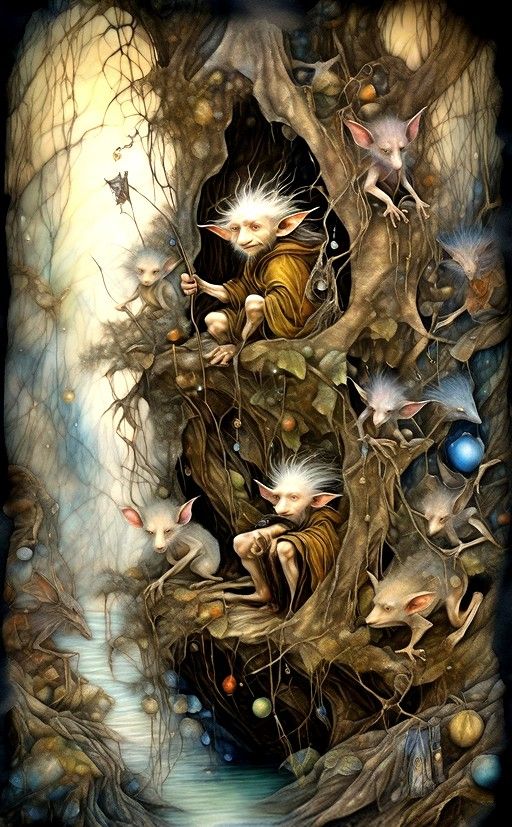
They change guises and modes of manifestation with ease and do not reduce themselves to one stable social role. Their form is always situational: it corresponds to the place they occupy in that moment, to the moment itself, to the interlocutor, and yet it does not lose the quality of thresholdness — an irreducible degree of uncertainty, superposition. They are practically immortal and are therefore not burdened by the drive for self-preservation and self-assertion.
At the same time, although the Fair Folk are far less egoistic than humans, this does not mean they are more “altruistic.” Altruism is a purely human moral category, implying renunciation of oneself for the sake of another. For the Fair Folk, “self-sacrifice” is meaningless, since they initially feel themselves included in the unity of the world, where no element is more or less important than another. Therefore their actions are careful without sentimentality and cruel without personal malice. They may harshly punish a person for violating a taboo, not because they are “offended,” but because they respond to a disturbance of equilibrium. Their reactions may seem egoistic or capricious, yet behind them stands the defense of ratios, a striving to maintain natural balance.

Accordingly, learning presence from the Fair Folk does not mean striving to lose one’s formedness or attain immortality. It means, first of all, to renounce the consumer gaze. One can go deep into the forests and still look there for “content,” insights, or a backdrop for one’s own story. Yet to “be like the Fair Folk” means to stand before the forest and, for the first time, expect nothing from it: neither knowledge, nor Power, nor a sign, nor confirmation of one’s own exclusivity.
Then the world ceases to be “nature” in the consumerist, resource, or utilitarian sense. It reveals itself as simply this world — forest, meadow, or mountain — in this hour, in this light, with this humidity of air, with this angle of the branches, with this characteristic inner movement. Attention shifts from use into presence, and the observer himself comes into harmony with the manner of being of this space.
Faery attention is not a therapeutic system. It can heal, yet it does not serve the need for comfort. It is a clear ontological stance, seeking neither dissolution in the moment nor psychological ease. It preserves distance and recognizes in the world an independence and otherness — at times impenetrable and dangerous.
It is important to understand that restoring control over attention is not identical to acquiring power over the world. Liberation from the диктат of stimuli occurs precisely when the mind renounces the position of master of all that is visible. From the Fair Folk one can learn an attention that does not capture the world and therefore does not yield to capture. Whoever looks at reality like a predator sooner or later becomes prey himself in more complex nets. The renunciation of the predatory gaze upon reality grants the right to truly be present within it. Thus, presence “in a faery way” is the restoration of the correct position of a human being among the living and threshold forces, among a world that is alive, other, and does not belong to man.




The Master’s thoughts and reasoning are clear, and the advice is, as always, tactful and wise. But developing a kind of “faerie-like” presence in the world is really only possible as a whim, or as a small, occasional alternative. Very few people can afford to keep that kind of alternative perception for long. Times are different now—you have to survive in a different way. And besides, you have to understand that every people and every civilization has its own tools for interacting with the world. That civilization, with its way of seeing, was forced to leave. Humans were left with their own tools to survive, even if they’re predatory.
Sometimes it feels like people are so starved for a sense of belonging—for that very feeling of shared, subjective presence—that the idea of relationships has long since become an obsession. As if, in that kind of closeness, we’re hoping to find an echo of the former connectedness we once had with the world around us. Which raises the question: could a human being even have preserved any working mechanisms for perceiving the subjecthood of nature, spirits, and other beings under the evolutionary conditions we were placed in—when all the other beings capable of perceiving us and reflecting us as part of a living, diverse reality deemed humans hopeless, turned away, shut us out, or left, depriving humanity of the conditions in which those mechanisms that sustain a sense of co-being might have survived at all? And who knows how that affected the integrity of other mental mechanisms and the subtle structure of the human being.
Enmerkar, thank you for shedding light on a very important and subtle way of tuning our perception of the Worldview to our true nature.
When you breathe in sync with the world’s resonance, the picture comes alive in its multidimensionality.
What nonsense. You’ve got these cores of desires and distortions inside you, and they pull energy toward themselves — that’s demonic influence too, among other things.
Through inner work you remove those cores, and that’s how you get closer to being present in the moment. That’s the whole story.
If I were you, I’d think about what or who is motivating you to introduce distortions like this, including influencing the people around you. If you’ve chosen the path of avoidance and indulging your inner animal, then live with it — just don’t go around intoxicating everyone else.
There’s too much destructive stuff in this human pseudo-civilization. Anything that destroys isn’t viable, so if it doesn’t change, it’ll disappear. It’s that simple. Either you try to evolve, or you go where demons and the like are leading you—in that case, your existence is finite. Unlike the evolutionary path.
It’s pointless to justify everything by “survival.” Anyone with a predatory, destructive core will be cut out of the stream of evolution.
And as for Earth, it’ll most likely end up like Mars or Phaethon—probably Mars…
Unless someone stops the crazed two-legged creatures…