
The Children of Adonin
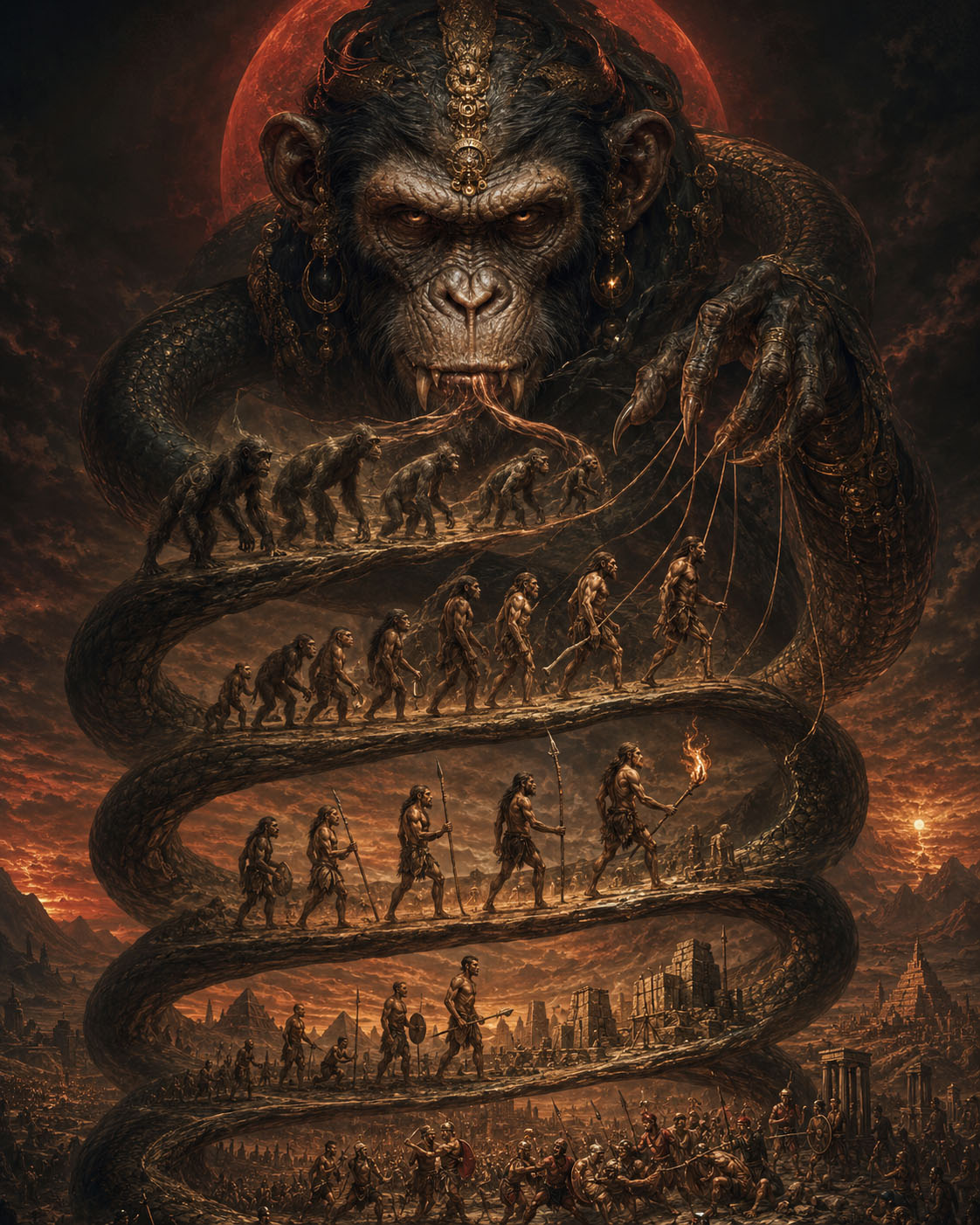
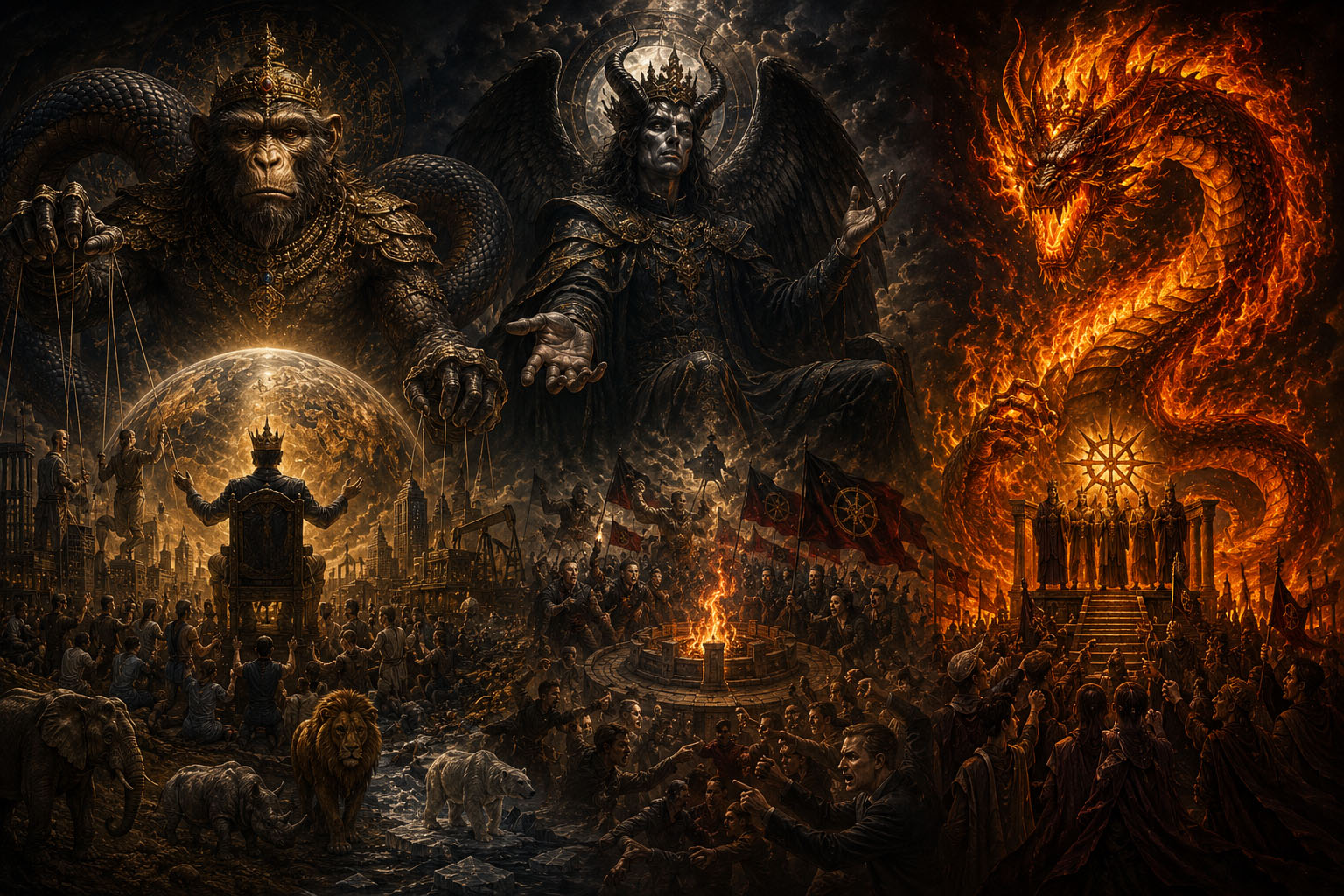
We have already noted several times that modern humanity, formed on the basis of the species Homo sapiens, emerged as the result of the work of several “selective” forces, among which the leading role belongs to the “Archon of Mars” —Adonin.
And although we have also noted that any comparison between Archonic forces and planetary ones is conditional and superficial, the connection is still obvious: the force of self-sufficient expansion — manifesting as the “Martian” energy of the manifested world — and the active, destructive consumerism characteristic of humanity share a single source, which the Gnostic texts also call Adonin.
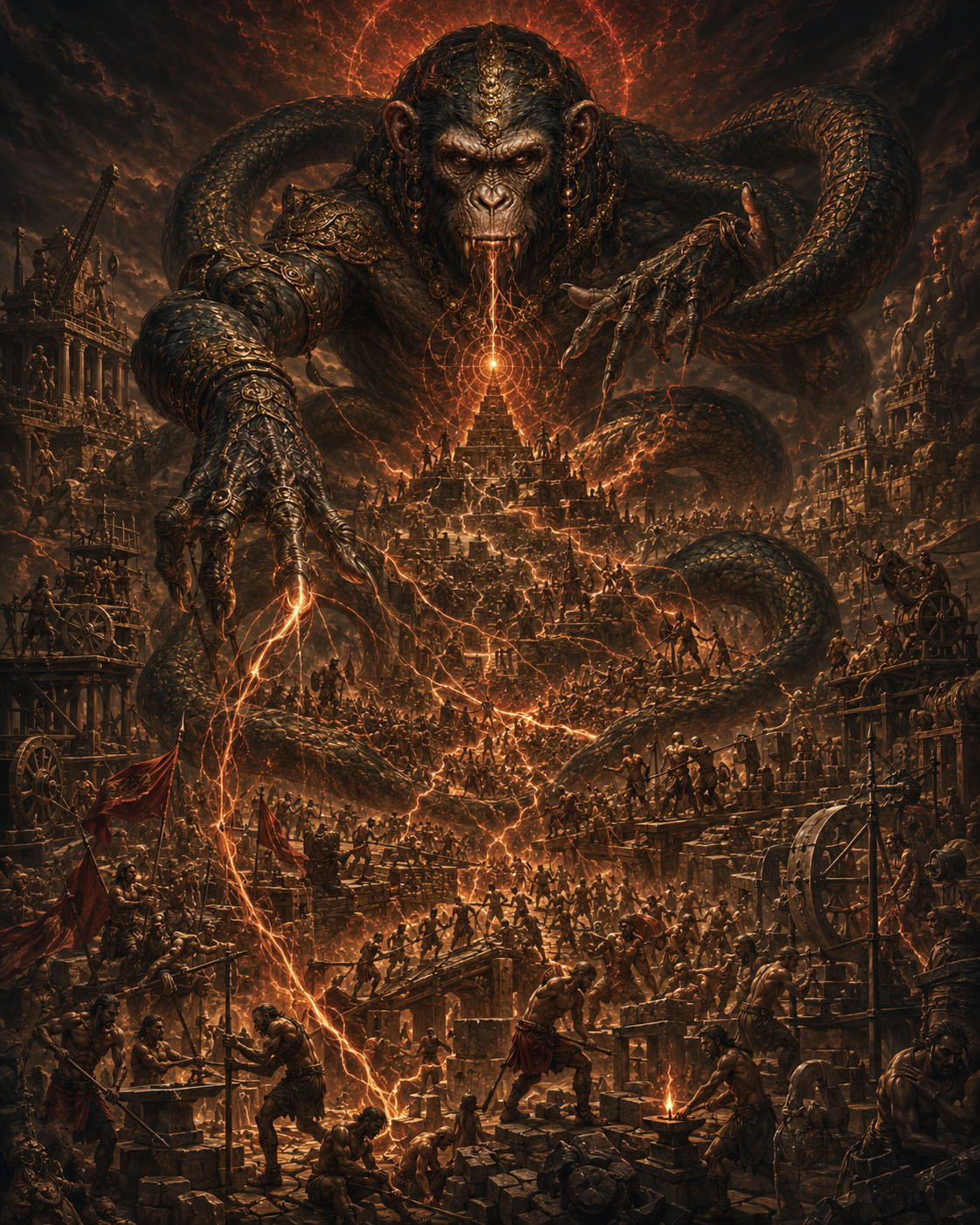
The Archon’s name is formed from one of the biblical Tetragrammatons — the “skeletal” Names of creation — Adonai (אֲדֹנָי), literally meaning “my Lords,” where the grammatical plural expresses greatness and absolute power (the so-called “plural of majesty”). The root of this Name is connected with the Proto-Semitic base a-d-n, meaning “to judge” or “to rule,” and thus signifies the active abiding of creative energy within the cosmos. Applied to the Archon, the ending -in (-an/-in) functions as a suffix of individualization; therefore the name “Adonin” means “the one who acts as lord” — not one who is so by original nature, but one who has acquired lordship by will.
At the same time, while the Name Adonai implies a universal scale — the very creative energy of the Absolute present as the Principle of Expansion — and expresses a cosmic, boundless fullness of power, the name Adonin carries an anthropomorphic, local shade. The suffix of individualization was often used in religious literature to “humanize” gods or to single out one deity from a pantheon; thus the form “Adonin” emerged as the name of a specific, tangible Archon — a Ruler with character, will, and personal traits.
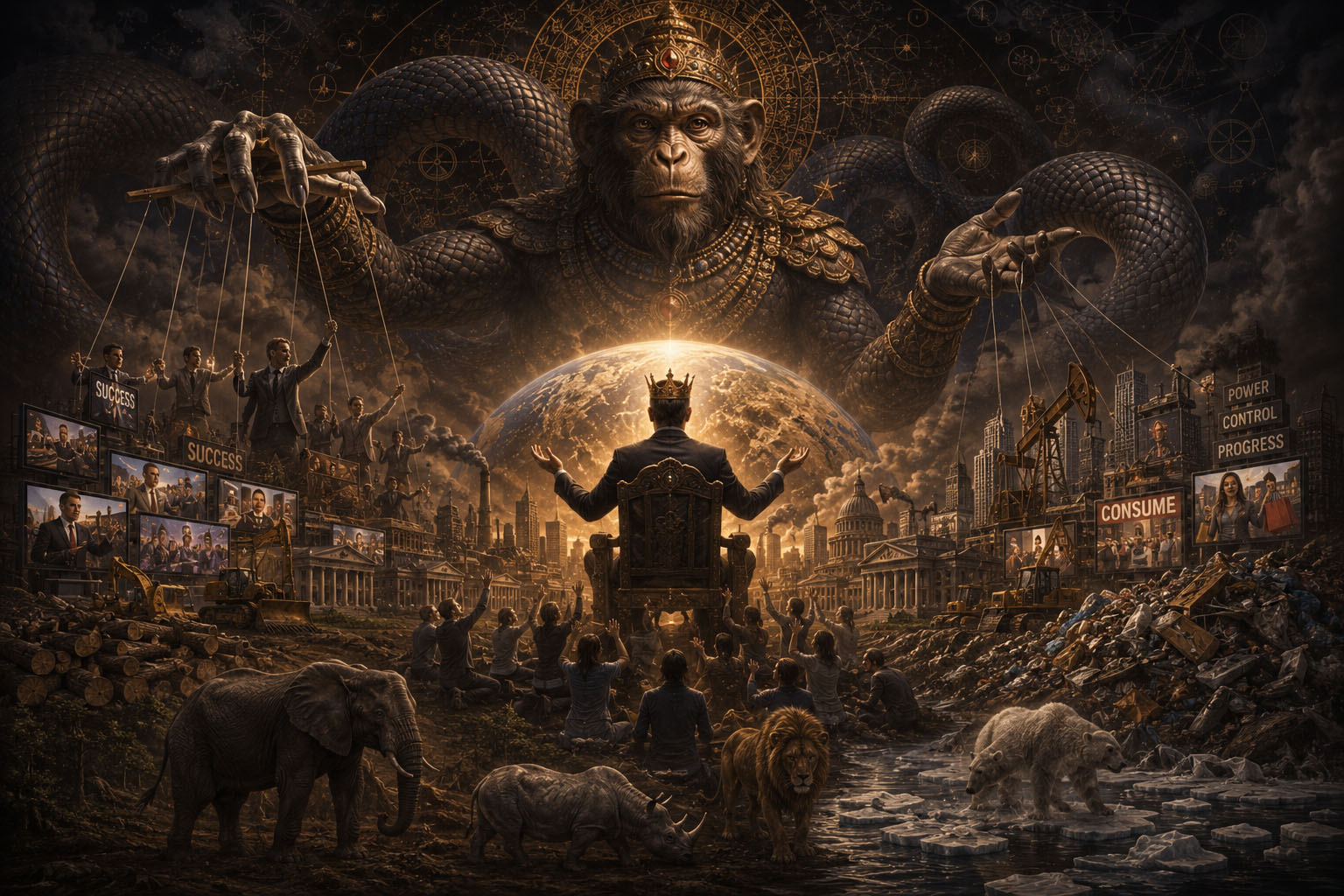
And this is precisely the name that best fits the traits this Archon nurtured in humanity. The human being also experiences himself as a “little god,” as one who “has become a Sovereign,” and this sense of dominance shows itself both in our attitude toward nature and in the principles by which civilization is built.
Thus, Adonin is not so much the “wrathful” aspect of Archonic force (we said that the possibility of repulsion gives rise to Ariuf— the potency of alienation), as he is the force of conquest, subjugation, aggressive appropriation — so characteristic of Homo sapiens. Whereas Ariuf gives birth to centrifugal wrath — repulsion, alienation, severing of connection, destruction — Adonin is the source of centripetal wrath: jealousy, seizures, drawing what is чужое into oneself, appropriation, and so on.
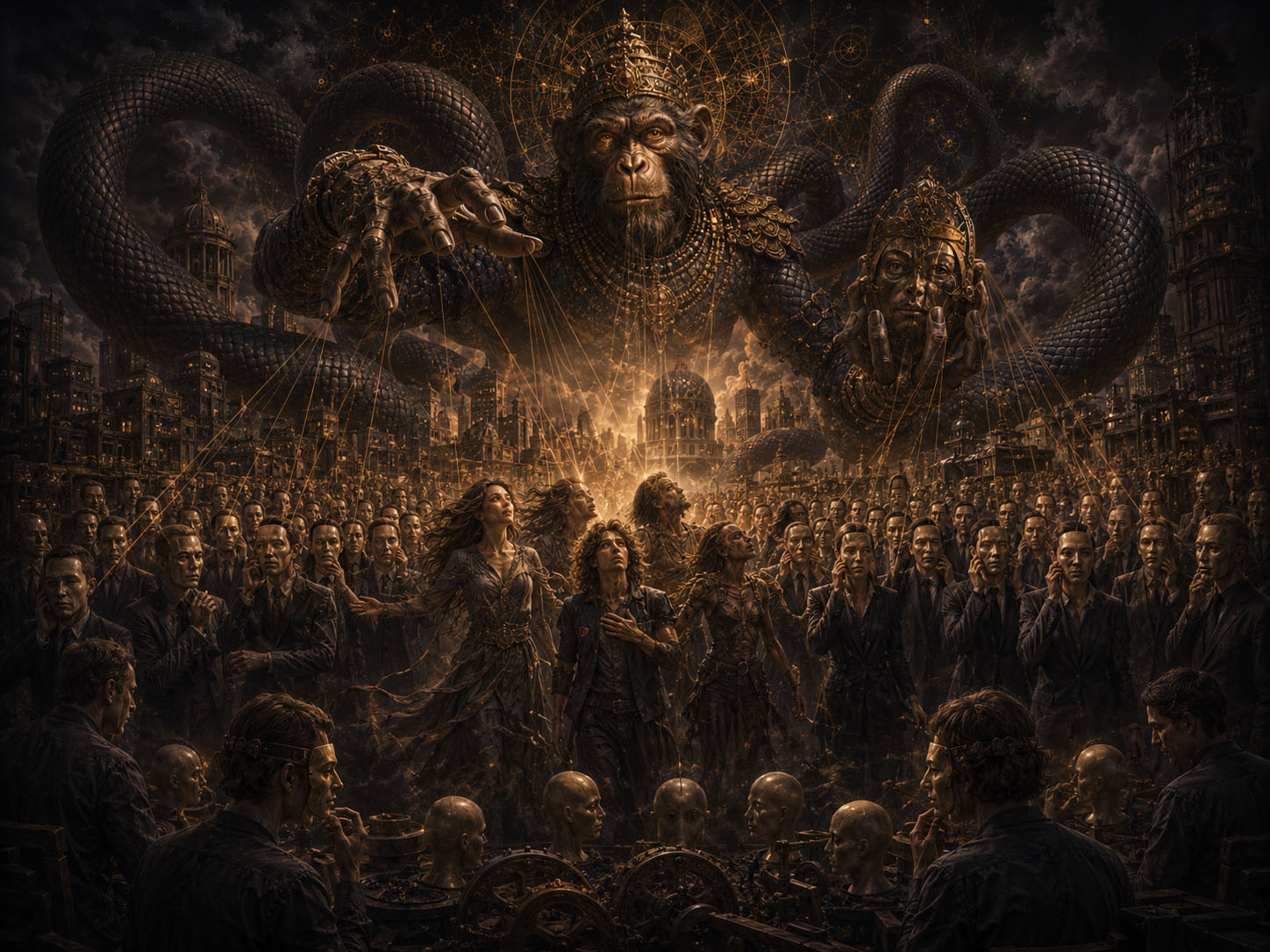
We also noted that Adonin is an Archon of imitation: the imposition of чужие properties, hypocrisy and mimicry, coercion toward sameness — that is, a force that replaces attunement with its destructive double.
Both facets of the Monkey-Faced Archon are united by one property: appropriating what belongs to another as one’s own. This manifests in two forms: overt (seizure, subjugation) and covert (imitation, mimicry, “becoming such in order to appropriate the properties”).
That is why Adonin is “Monkey-Faced”: the monkey both hyper-dominates within the troop and copies. And “jealousy” as Adonin’s basic property condenses his qualities, because jealousy is, in essence, the desire to appropriate what belongs to another.
Like all Archons, Adonin acts in the field of possibilities, where he carries out the substitution: he puts in place of genuine resonance with the Other its double — appropriation. In this way an “inclined plane” of probabilities is created, where the counterfeit precedes choice: for the mind, even before it reaches toward another, contraband is already slipped into the available options — seizure instead of a deep encounter, imitation instead of a response.
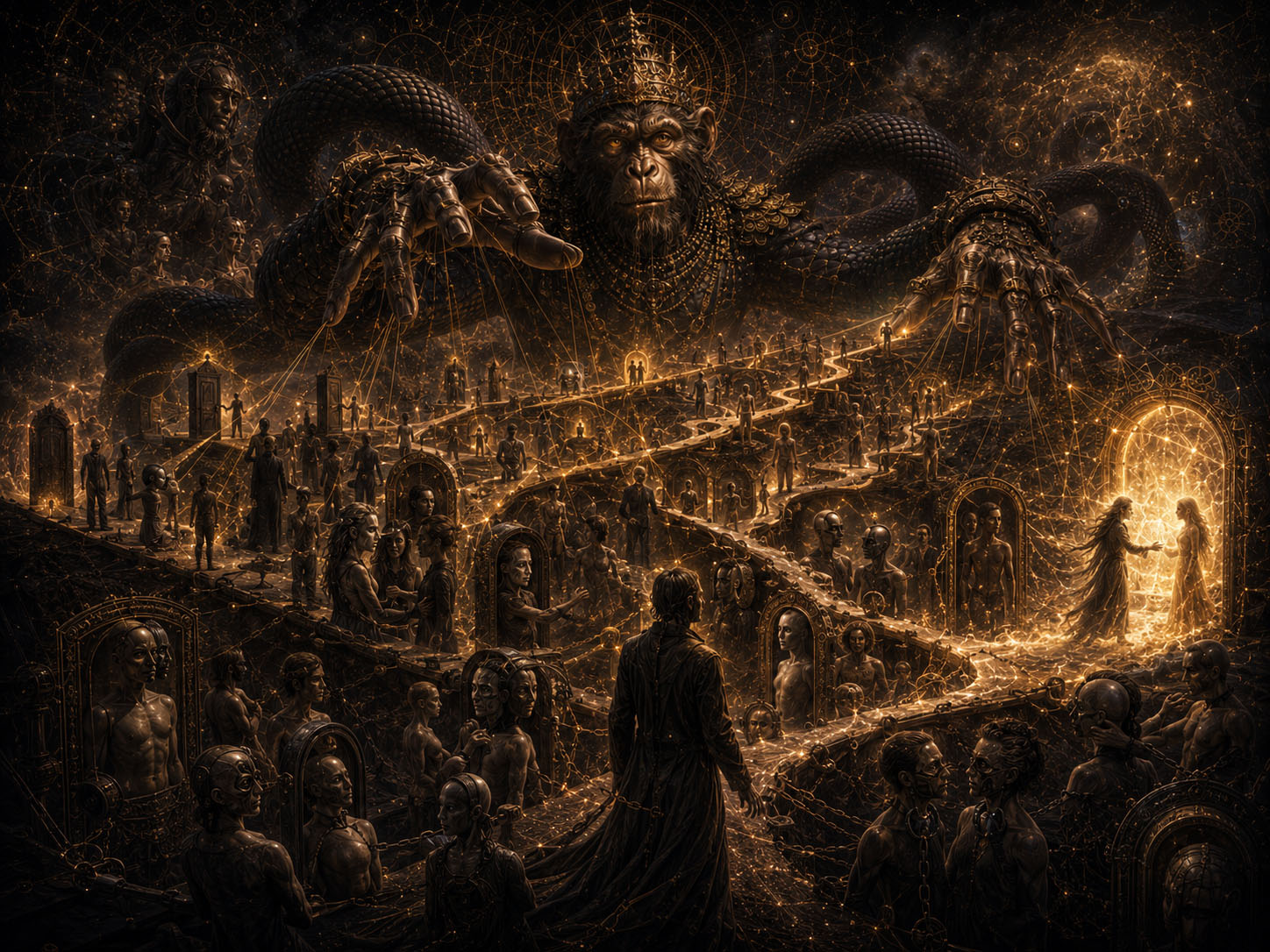
And the mimicry of the Monkey-Faced one remains unseen until the mind asks whether it recognizes the other’s otherness. The conqueror and the imitator both fail this recognition: each perceives the other only as a resource, as material for self-expansion. That is the essence of the substitution wrought by Adonin.
It is also important to understand that Adonin’s conquest differs in nature from the greed born of Typhon. Typhon is the energy of the possibility of appropriating objects: the striving to “draw into oneself” items and resources, to accumulate and consume; it is the substitution of attraction. Adonin, however, creates the possibility of appropriating subjects and their properties; he dominates others, takes on their appearance, is jealous. This is the substitution of attunement.
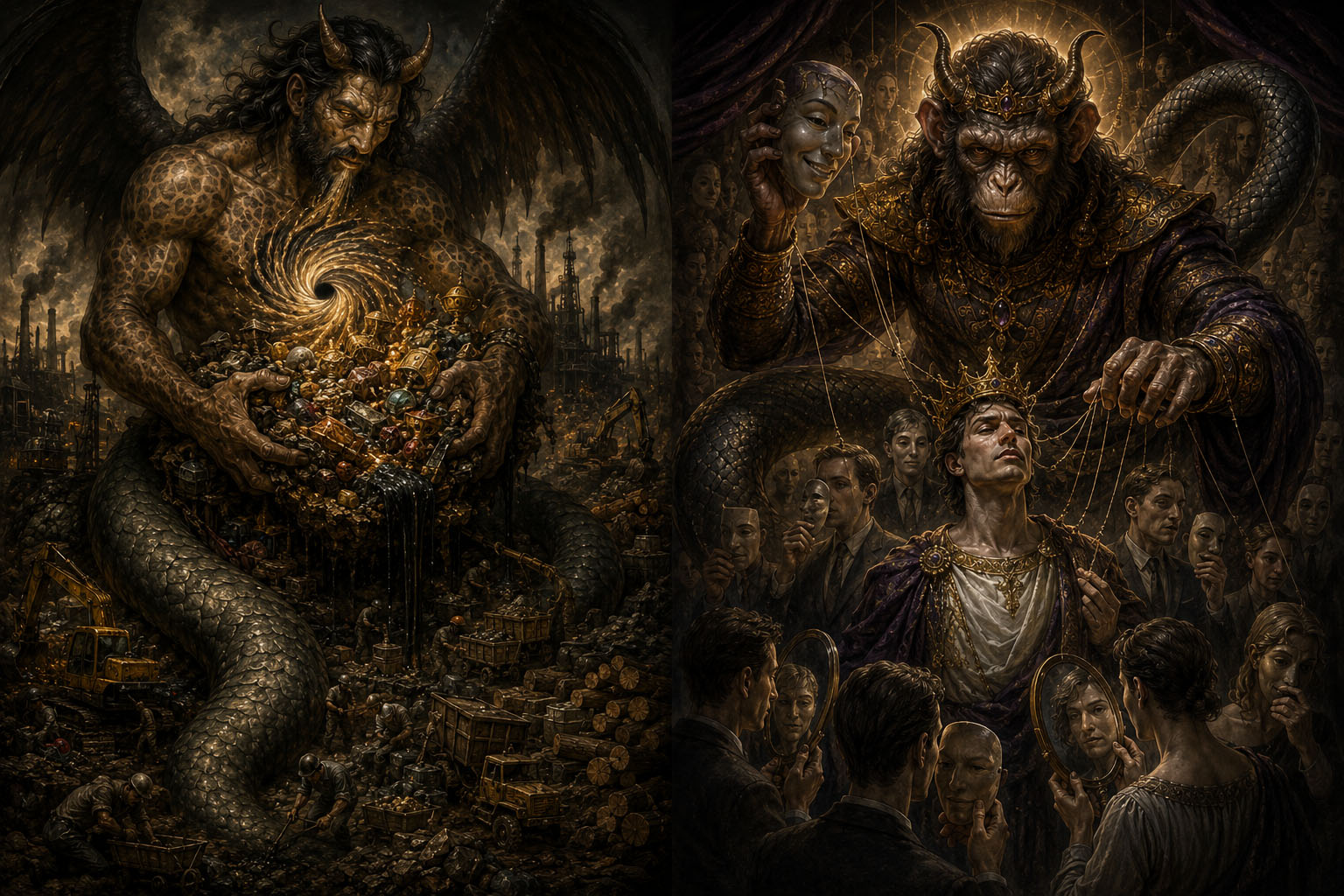
The drive toward appropriation that Adonin instilled in humanity is the species’ basic survival strategy. Homo sapiens came into the world without weapons of its own: neither claws nor fangs, no advantage in strength or speed. From the very beginning, its niche was the niche of the appropriator — a creature that takes what is чужое and makes it its own. A predator’s fang became the head of an axe or knife, a claw became a spear, a warm hide became clothing, heavenly fire became a hearth. Later, it began to use other species as cattle, other people’s labor as slavery, other people’s land as possession.
Thus the biological success of the human being created by Adonin lies in the universality of seizure: he became a “little god of nature” precisely because he can appropriate the strength of any other. Adonin built the entire foundation on appropriation, and the human species stands on it. Therefore the self-sense of the “little god,” “who has become a Sovereign,” follows from this strategy from within: the appropriator inevitably feels himself lord, because he possesses what was not given to him.
However, the same properties that made the human being a sovereign also made him an ideal, predictable generator of tonic pneuma for the Interspace. Appropriation is insatiable by nature: there is always something else that can be taken; and everything taken must be held and defended — hence eternal jealousy, the anxiety of the possessor, the race for the next acquisition. The appropriator, unlike one who creates or gives, knows no peace of completion: there is nowhere for him “to arrive,” because the horizon of seizure is endless. This fundamental incompleteness makes his energy so convenient for Interworld consumers: it dissipates constantly, abundantly, and predictably, flowing toward ever newer objects. Thus the might of the species developed under the Archon’s influence proves to be a form of captivity.
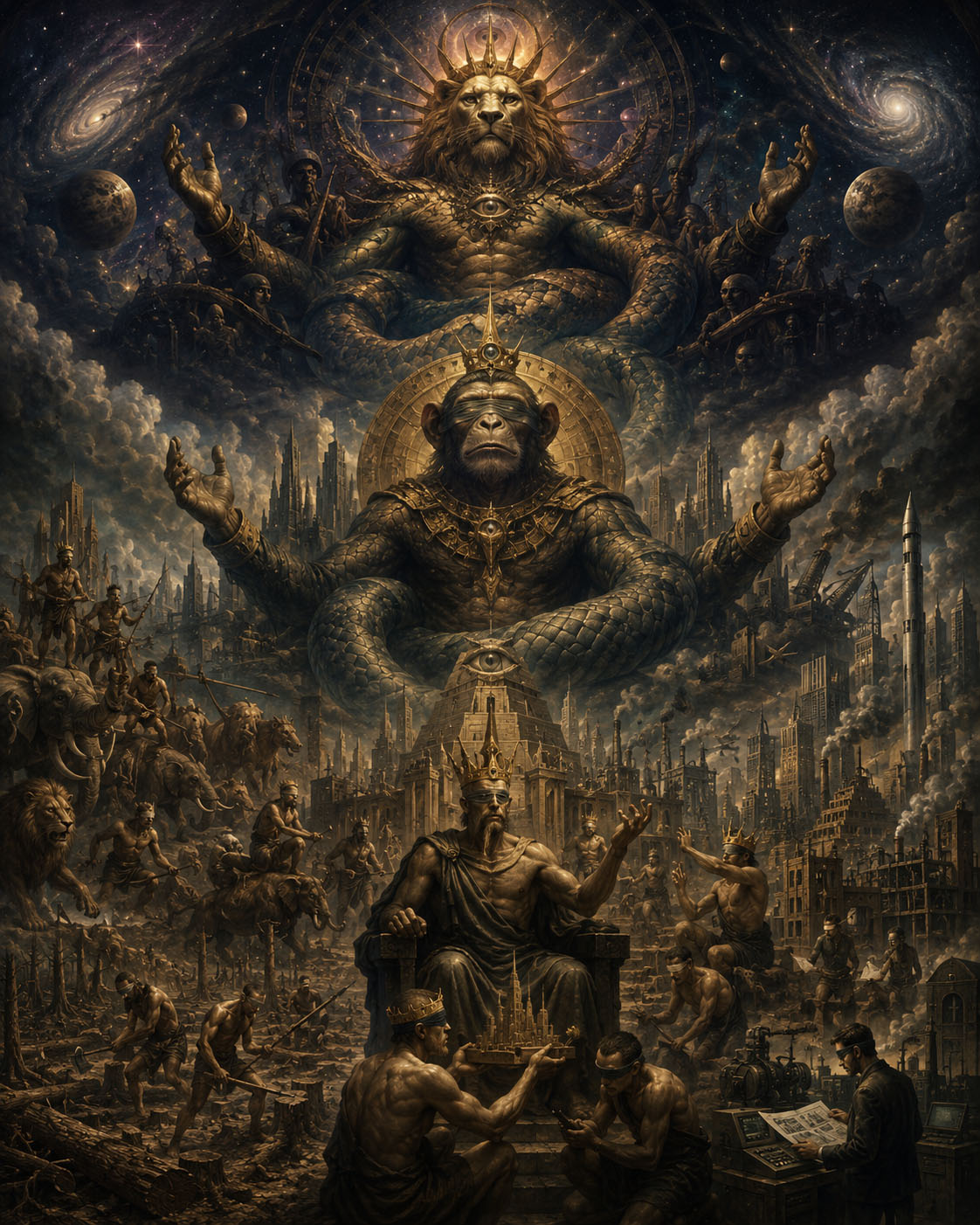
The name “Adonin,” as we have seen, means a lord of what is appropriated, usurped — and this is also a trait of Yaldabaoth himself, the blind demiurge who proclaimed, “I am god, and there is no other.” Therefore Adonin can be described as Yaldabaoth acting at the level of the biological species; and the human being bred under his guidance is the image and likeness of the Protoarchon. The Gnostics did not assert for nothing that the human being as he is now is made in the image not of the Source, but of the blind tyrant — and therefore bears within himself the same usurpation, the same neurotic proclamation of himself as center and sovereign, the same blindness to That from Which all proceeds. The “little god” of civilization is a little Yaldabaoth: a creature that has appropriated the world and sunk into ignorance of its nature.
That is why the “co-author” of modern humanity, together with Adonin, is Belial, the “King of Hatred,” whom we have repeatedly called the actual ruler of modern societies. At first glance they are opposites: Adonin attracts and appropriates, whereas Belial repels and alienates, binding people together not by kinship but by shared hostility toward “outsiders.” Yet both pathologies rest on the same basic ignorance: the non-recognition of the Other’s otherness. Adonin denies it, devouring the other as prey or copying him as a model; Belial distorts it, casting the other as an enemy. And where Adonin’s conquest cannot appropriate, it readily becomes Belial’s repulsion: what cannot be made “one’s own” is declared “alien.” Adonin and Belial are two aspects of a single substitution: one manifests at the pole of attraction, the other at the pole of rejection, but both turn a living encounter with the Other into a means of expanding and defending the self.
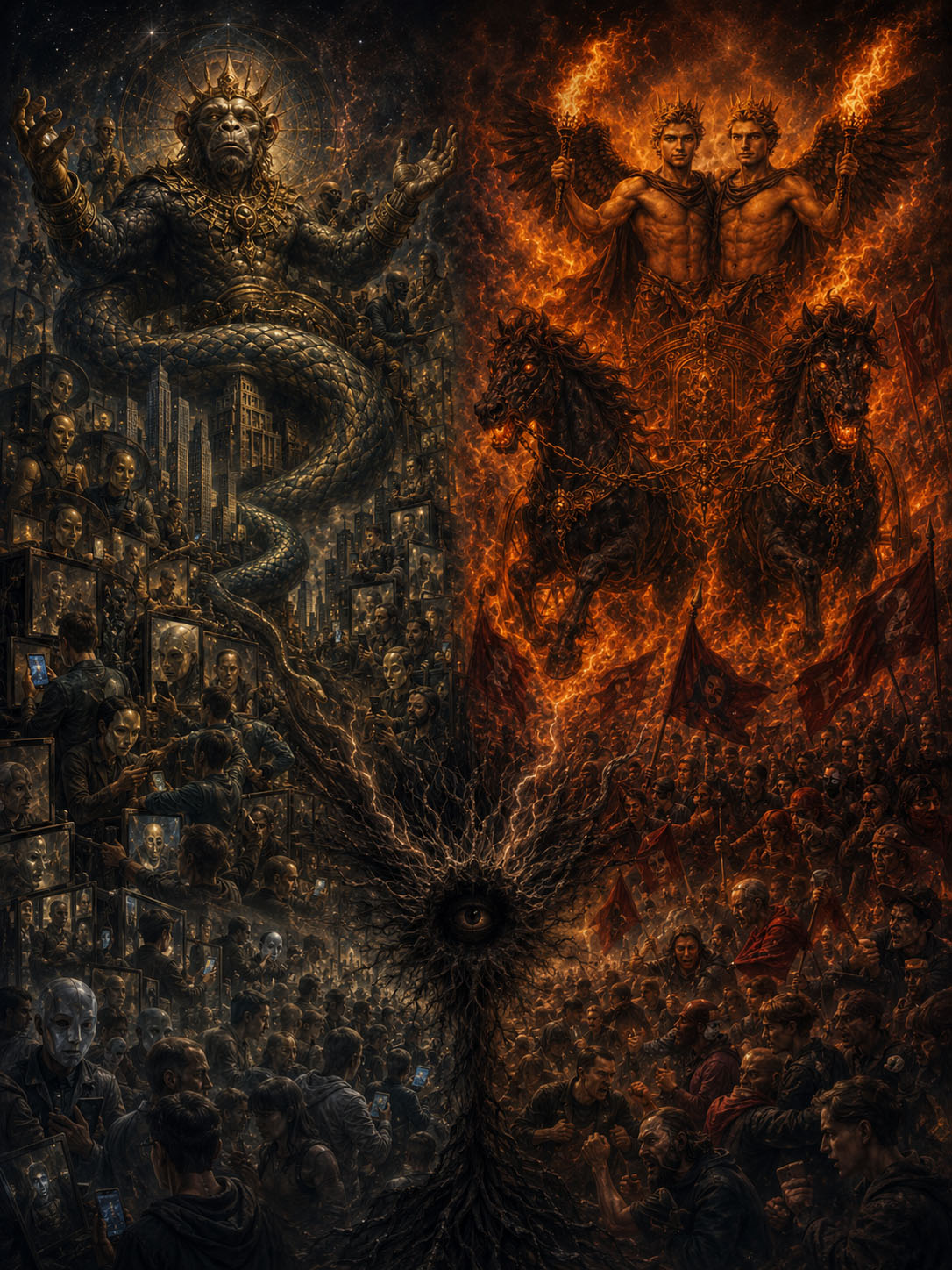
Their essential unity is most visible in Adonin’s hidden, “monkey” aspect — in coercion toward sameness. What Adonin accomplishes in an individual as a substitution of attunement through mimicry, Belial scales up to the collective: he builds a “false commonness,” welded together by uniformity, a common enemy, and mandatory demonstrations of loyalty, where a person has value precisely to the extent that he “correctly” hates and “correctly” coincides with the others. Appropriation, having begun in an individual soul as seizure and imitation, unfolds in society as a herd: the collective becomes the appropriator’s expanded “I,” a territory to be defended from anyone who is other. Therefore the “children of Adonin,” having learned to take what is чужое as their own, inevitably gather into societies under Belial’s power and feed with their jealousy and hostility those predators of the Interspace for whom this substitution is fodder.
At the same time, as we noted, Belial also exploits substitutions created by yet another Archon —Sabazius. Adonin creates the grip itself: direct appropriation, seizure and subjugation, the bodily will to take what is чужое and make it one’s own. Sabazius substitutes hierarchy — the very sense of one’s legitimate place in the order of the world — turning it into megalomania, into a dream of the superiority and exclusivity of one’s collectivity. Sabazius entertains society with fantasies of greatness and special destiny, building an illusory vertical of superiority; on that basis Belial builds “unity through hostility,” uniting people through a shared repulsion of “outsiders.” Adonin supplies the primary fuel for all of this: the will to appropriation and dominion, without which neither dreams of greatness nor hatred of the other would have any driving force. One may say that Adonin creates the energy of seizure, Sabazius provides the justification of seizure through height, and Belial provides the cohesion of the seizers. The “children of Adonin” therefore succumb so easily to both Sabazius and Belial, because appropriation, having become their nature, seeks both justification in superiority and support in collective hostility.
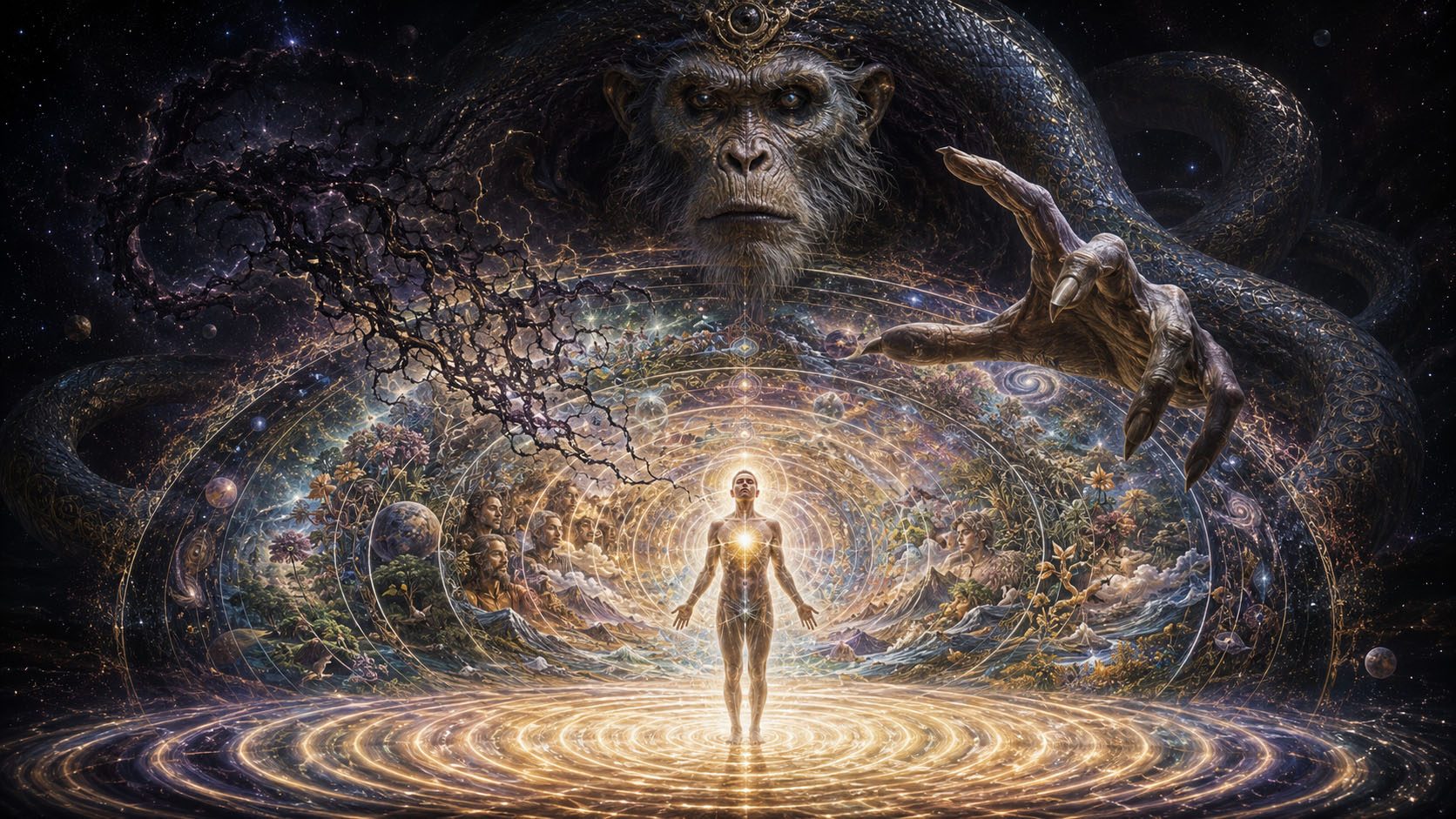
Yet the same universalizing power which, in its “substituted” form, appropriates could, in its original form, have been the possibility of becoming everything through attunement — taking the world into oneself as a reflection, attaining fullness by resonance rather than dominion. The super-predator could have been a super-resonator. The infinite insatiability of the appropriator is a perverted, substituted hunger for the Whole: a longing for the Pleroma turned outward, and therefore unappeasable.
To recognize in one’s thirst for possession this primordial thirst for communion is to begin the reverse replacement: to correct oneself step by step, returning the original to the place of the double. Yet since the substitution is performed in the field of possibilities, before choice, the work with it must also begin before actions — in the ability to recognize the destructor at the moment the mind tries to “make it one’s own,” and precisely at that stage, not to seize, but to respond. The recognition of otherness is critical, because only where the other is recognized as truly other can there be anyone to meet.


Dear Enmenkar, can the basic settings of people’s psyche shift from consumerism to resonance without interacting with role models—carriers of the ability to resonate—and what conditions would be needed for that? Would an analogy like this fit: a child’s psyche adaptively acquires human traits on the condition of interacting with an adult, where the adult serves as a role model and carrier of human qualities; the child sees how those qualities work, responds to them, and thus gains the ability to interact—gets accustomed to interacting. Speaking about the possibility for people to overcome the results of the archons’ selective influence on humanity—wouldn’t this end up being similar to how a pig from a pig farm tries to become human on its own, in isolation, without understanding the goal.
Thank you.
That’s exactly why the experience of interacting with the fae can be especially valuable—beings who relate to the world in a fundamentally non-consumerist way.
https://www.enmerkar.com/en/observations/people-fairies-and-predators
Hello. Now it’s just a matter of figuring out how to actually interact with Fairy.
Thank you very much, dear Enmerkar.
Thank you so much—many of the reasons for loneliness have become clearer.
And according to a Tibetan legend, people (Tibetans) came from demons and monkeys.