Gods and Aeons
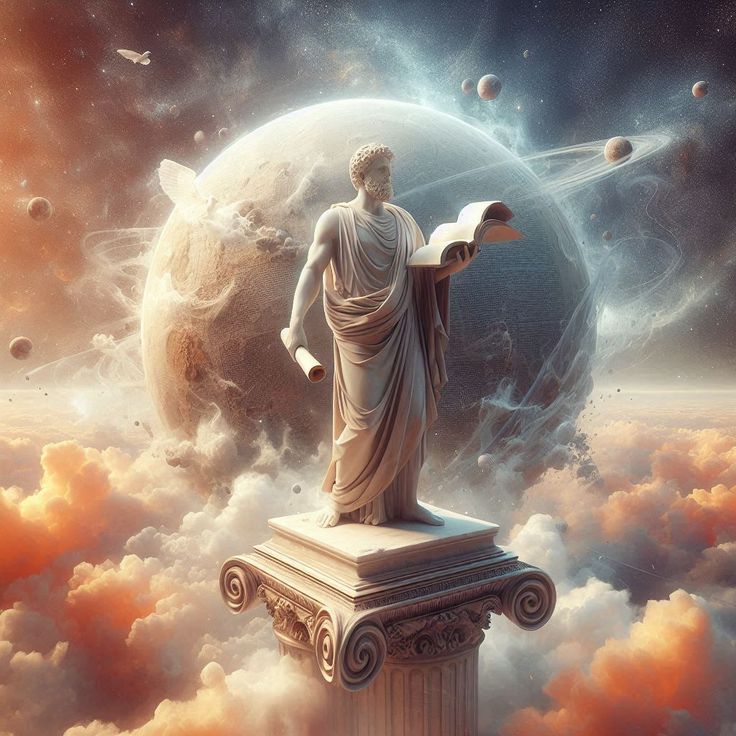
We have already discussed more than once that in the potential hyperspace of the interworld the pure potencies of the Pleroma, called Aeons, are projected as ethers— special subspaces structured by these divine forces. The Aeons are “quanta of divinity” and the primary cross-sections of the potencies of the Absolute, not beings but ideal prototypes, proto‑principles that underlie everything that exists, both in the manifested worlds and in the potencies of the Interworld. Each Aeon abides in a syzygy— an indivisible pair uniting an essential, stable aspect and an active, changing pole — and their totality constitutes the Pleroma, or “Fullness”: the state of indivisible, non‑confused unity of the highest Consciousness.
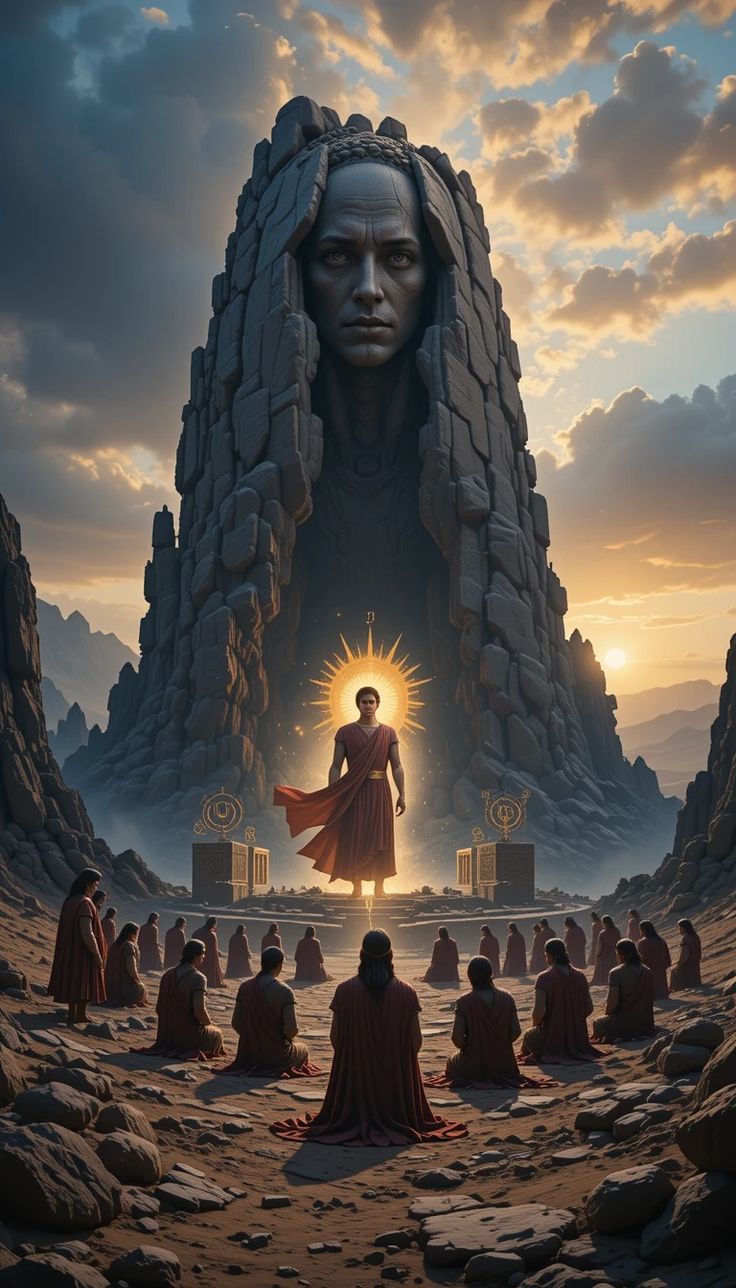
We have also discussed that in the subspaces of the Interworld the Aeons are present as a governing projection — an aeonic deity, which can be called the “dream‑body” of the corresponding Aeon. For human perception these aeonic deities assume the forms of well‑known gods from historical pantheons; yet they are not “living” personalities but their Augoeides—ideal archetypes of real gods, devoid of imbalance, disharmony, or passions, functioning as perfect interfaces through which the transcendent energy of the Aeon is transmitted into the interworld.
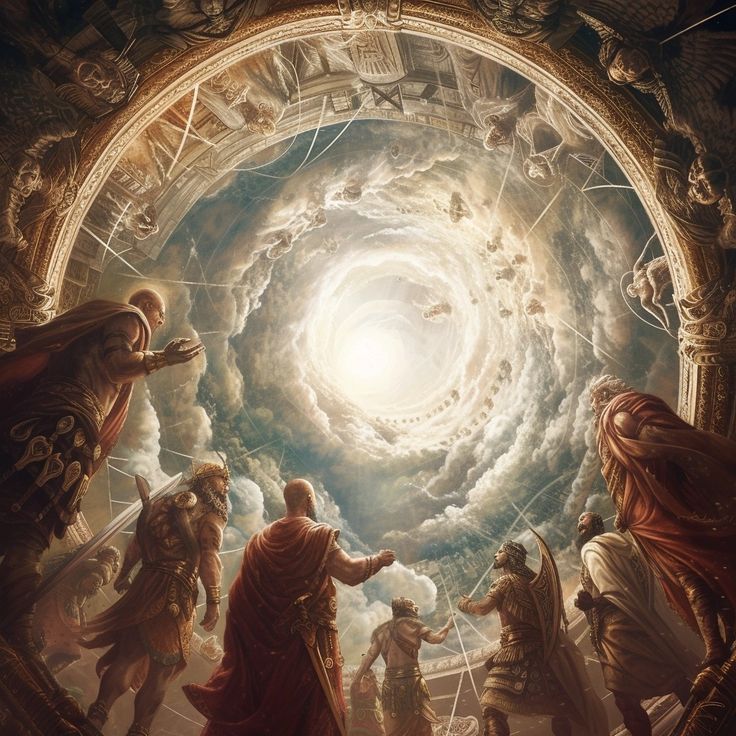
This is the fundamental difference between aeonic avatars and “living” gods— free beings embodied at their own level, whose consciousness directly shapes worlds: such as the Aesir, elves (álfar), and Vanir in Jav, or the Archons and Fomorians in Nav.
Living gods are independent of “external” perception; they possess their own will, personality, and history, acting as the “engines” of the laws of nature and as concrete foci of consciousness that uphold the structure of the cosmos. With such gods, dwelling in devalokas or corresponding worlds, one may enter into a pact or a dialogue; the god may be entirely indifferent to how he is perceived in the lower worlds, remaining faithful to his nature.
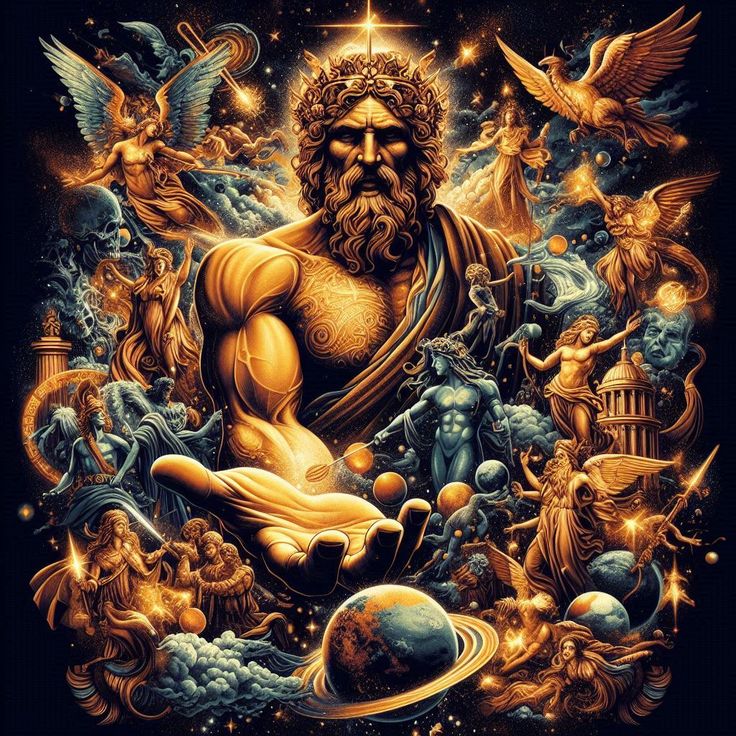
Thus, while a “real” god in the worlds of manifestation may display the “human” traits recorded in myth — anger, error, conflict — an aeonic deity is a “cold” and pure functional block of the Pleroma. Unlike mythological scenarios in which gods may clash, aeonic deities operate as a “single neural network” of the Pleroma, in which every node is irreplaceable for the functioning of the system.
From this perspective, Aeons are the “pure colors” of the divine spectrum, while mythological gods are composite shades obtained through their intermingling. We have already noted that the aeonic deity — as the form the Aeon assumes when manifesting in the ethers —is not a subject but serves as a response to the call of an individual consciousness, becoming an instrument of connection that “switches on” precisely when the practitioner tunes to the frequency of the Aeon.
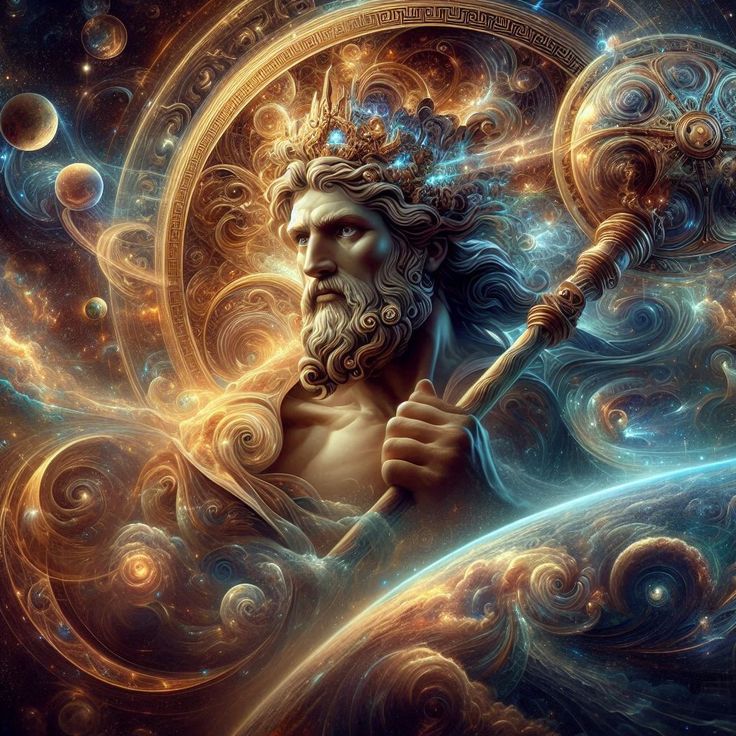
Thus, contemplating Zeus in the ether ASP, the visionary does not see the mythic “king of Olympus” but the personified power of the Aeon Patrickos— the Fatherhood and Causality principle, stripped of accretions, the ideal blueprint according to which the personality of any father‑god in the manifested worlds is constructed.
By comparing “living” and “aeonic” deities in this way, we can see why archetypically similar figures in different traditions bear different characters and functions. The Thunderer in the aspect of the pure matrix of Synesis (Meaning and Order) appears as guardian of the world‑law, like Thor or Perun, who protect the middle world and hold chaos at bay. When the matrix of Patrickos (the Paternal Principle) is superimposed, the deity acquires the features of a Creator, becoming the source of laws and “Father of gods and men”, which brings into the image the dimension of governance and origination.
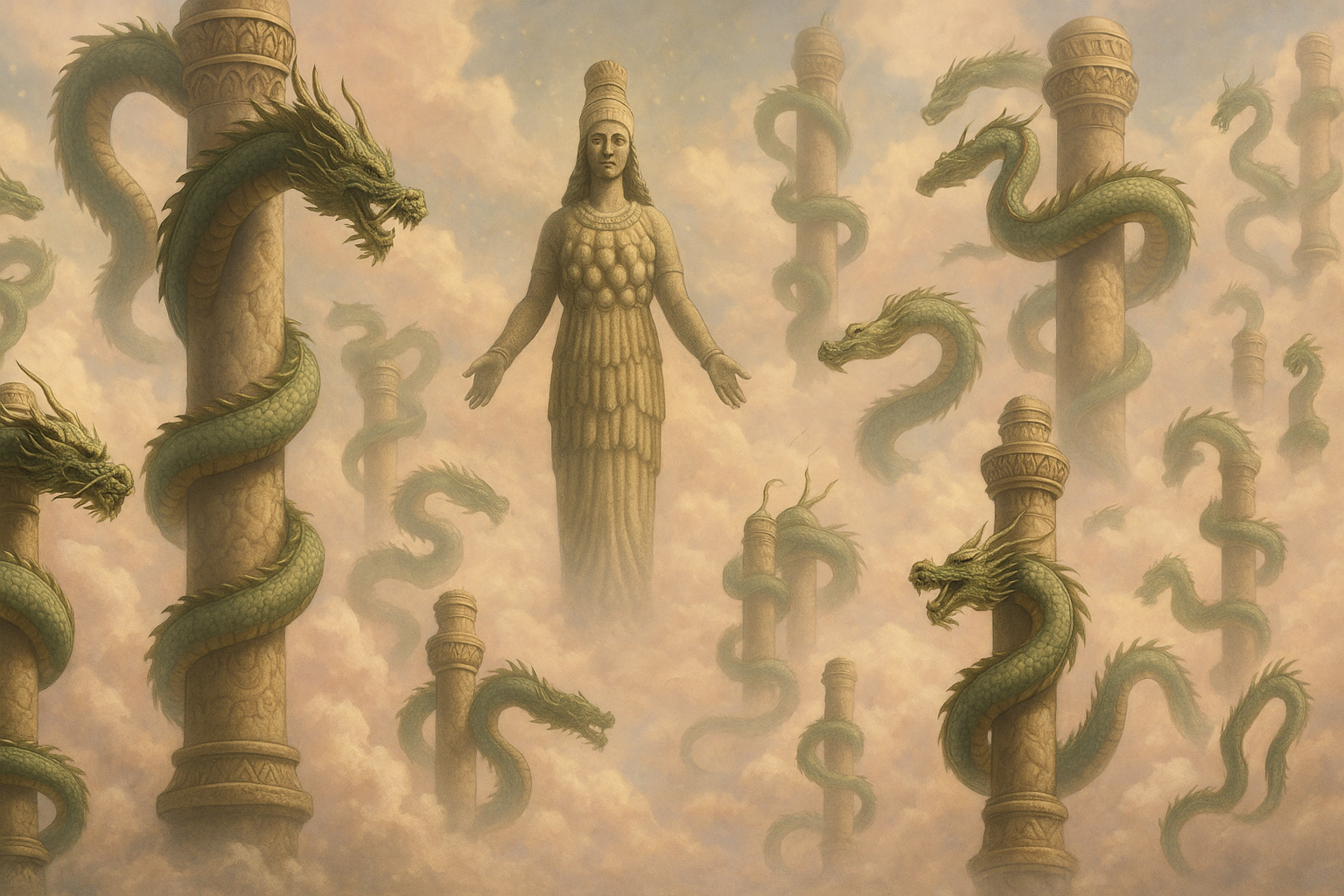
In the same way, the manifestation of Artemis of Ephesus in the ether of egregores (ZAA)— the space of the Aeon Ecclesiastic (Participation) — demonstrates the use of specific iconography to express definite metaphysical features. Here the line is clearly visible between “forest” Artemis— goddess of distance and individual purity — and egregorial Artemis. Whereas the real Huntress embodies the individual spirit, the aeonic Artemis in the form of the many‑breasted statue personifies the purity of the source and the principle of endless nourishment of collective structures, where unity is maintained not by an external law but by the common “blood” of pneuma. In this space participation becomes a collective “hunt for truth”, where individual striving becomes the vector of the egregore “pursuing” its goal in the unity of the participants’ active nature. She centers a multitude of wills around a single axis, a shared task, turning them into one “pack”, which makes Artemis of Ephesus the ideal Augoeides for the idea of Conciliarity (Ecclesia).
This approach shows why, for the theurgist, it is crucial to know which specific aeonic slice he intends to activate, since the image of the god functions as the interface that, by its attributes and the atmosphere of presence, indicates which particular component of the Pleroma is entering into resonance.
It then becomes clear that for the mage, theology and its related disciplines are the basis of a practical strategy that allows him to discover and activate particular forces both in the “outer” world and in his own psychocosmos. From this perspective, classical theurgy, directed toward external results, and the yoga of deities, which works with inner states, are two sides of a single process of bringing subject and object into alignment.
The success of any theurgic operation, even when addressed to an external deity, is determined largely by the mage’s capacity to identify the corresponding current of energy within himself and to activate the necessary matrix of his own consciousness.
At the same time, as we have noted, it is necessary to keep in view the distinction between “gods of being” and “gods of consciousness”. Most Western pantheons emphasize the functional‑active aspect — the “gods of being”, whereas Eastern systems, especially Buddhism, work primarily with forms of consciousness. On the deeper level these paths are inseparable: in invoking a deity for change in the world, the theurgist inevitably translates his own consciousness into the form corresponding to that function; and the ascent into a higher form of consciousness necessarily alters the mode of interaction with external reality.
For classical theurgy the self‑centered stance of the mage toward the forces he activates is decisive. Unlike the priestly approach, in which the result depends on the “favor” of the gods, for the mage success is determined by his own power, authority, and impeccability. If the divine current does not respond, the theurgist treats this not as the wrath of the gods but as a signal of the need for further work on himself and the refinement of his own channels. The mage learns to govern not the deities but himself, and only after mastering his inner “heavens” and “underworlds” does he acquire the ability to resonate with the corresponding macrocosmic forces. Theurgy is thus an instrument of the interlinked transformation of mage and world, in which the search for and activation of higher powers functions as a key to the evolution of consciousness itself.
This view also clarifies the difference between the methods of classical theurgy and the yoga of aeonic deities. Classical theurgy operates with the gods of being as independent subjects: the mage enters into a “subject–subject” relation, and success depends on his capacity to align his aims with the macro‑currents of the deity for the sake of functional changes in the world, using the “assumption of the divine form” as an instrument of resonance.
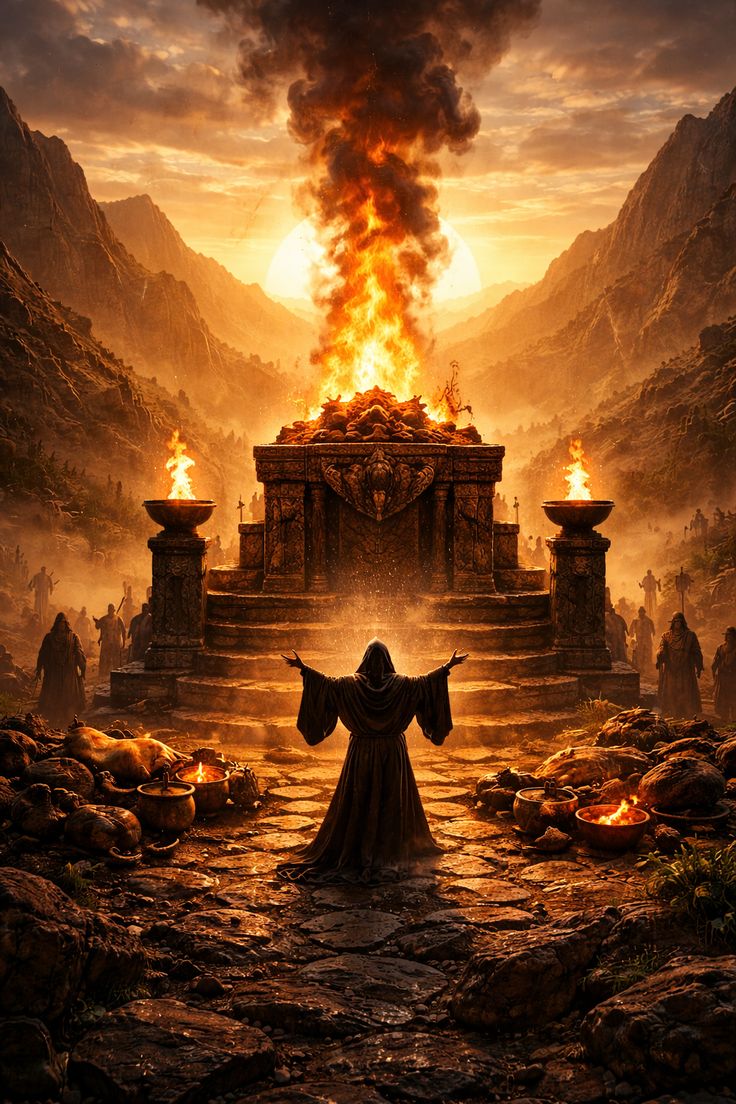
The yoga of aeonic deities, by contrast, works with matrices of consciousness and is directed toward the ontological transformation of the practitioner. He does not petition the Aeon for an act, but activates the enlightened matrix in order to awaken the “aeonic currents”. In this practice the distance between the “receiving consciousness” and the aeonic source is removed through complete identification: the practitioner recognizes the aeonic image —Augoeides of the real god — as his own true nature, discovering within his consciousness the “luminaria” — the reactive manifestation of the Light in response to the will to Freedom.
The corresponding “living” deity may remain entirely unaware of interaction with its “aeonic” prototype. For the Aeon, the image of the god is a way to “step down the voltage” of the energy to a level accessible to human perception. This is an intensely “private” dialogue of consciousness with the Source, which unfolds in the mage’s psychocosmos and in the corresponding ethers of the interworld. It does not touch the personality of the “real” god directly, unless the practitioner himself deliberately seeks to draw the attention of the macrocosmic entity as witness or mentor.
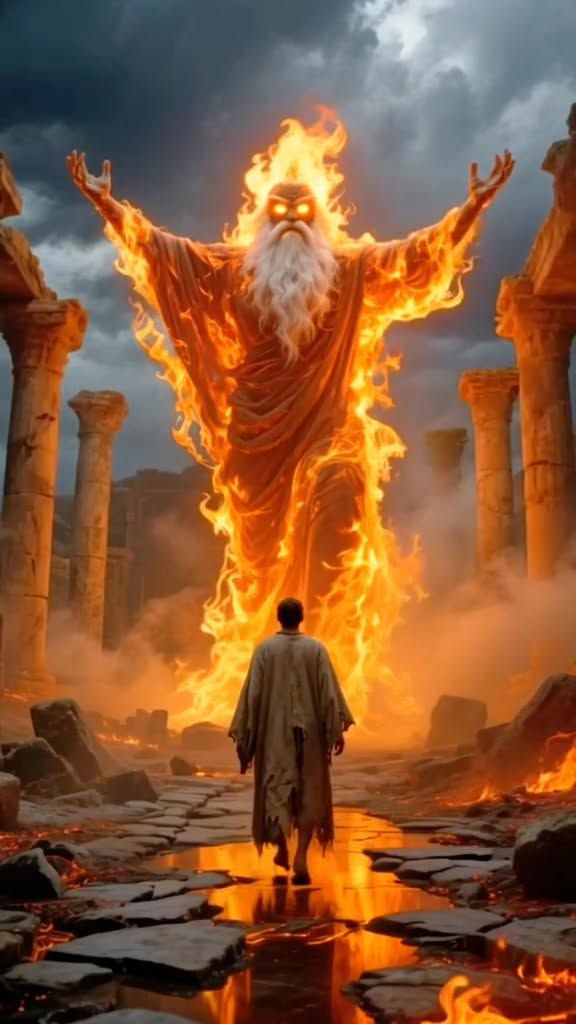
Even so, the experience of working with “real” gods serves as a fundamental “tuning of the instrument”, creating the necessary resonance and preparing the channels of the mage’s consciousness. Preliminary theurgic work makes consciousness more receptive to high frequencies, which in turn allows one much more readily to recognize the ideal archetype of the deity in the ethers and to tune more swiftly to the frequency of the corresponding Aeon.
Thus the two theurgic technologies complement one another. The classical approach creates the foundation through interaction with hierarchies and the laws of being; upon this, aeonic yoga builds the process of final return to the Pleroma and the attainment of Freedom, functioning as a gnostic technology of self‑realization through the activation of higher states of consciousness and the use of divine images as keys to the Source.

Thank you for the article, dear Enmerkar! It perfectly complements the previous articles “The Two Souls of Osiris” and “The Yoga of the Eonic Deities,” and also answers some questions that came up after reading them.
You explained it so nicely and clearly. Thank you, dear Enmerkar.