
Kesbeel and the “New Grigori (Watchers)”
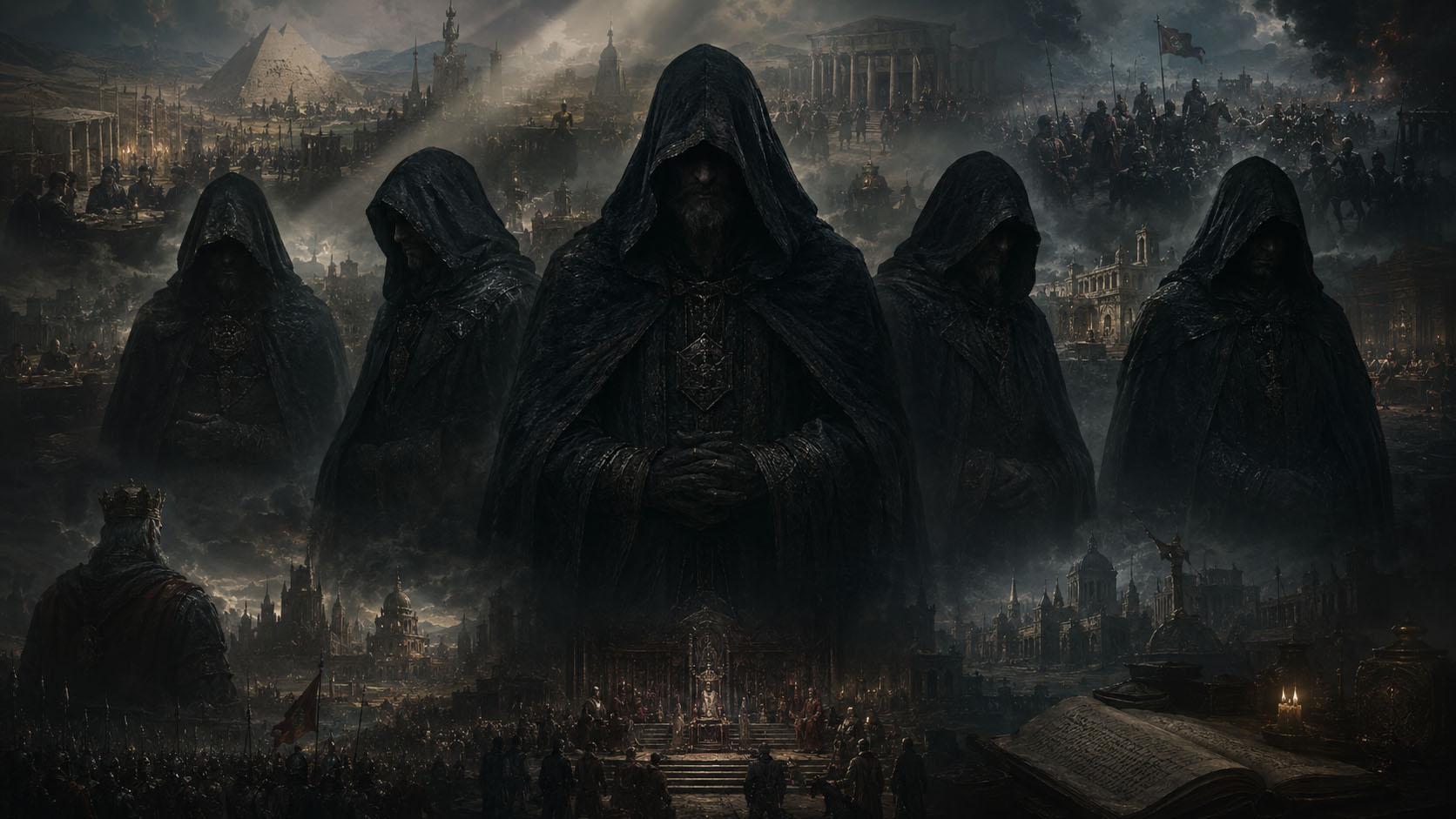
We have already discussed that both the eastern traditions of the “Books of Enoch” line and the western legends of the Watchers insist the Descent of the Grigori was a complex, multi-stage, and dramatic process.
Let us recall its general chronology once more.
It all began when a group of seraphim, the fiery angels of Geburah, chose to claim a destiny of their own and, to do so, condensed their vortex bodies into material form. That form had to be sustained by an artificially created energetic structure — an “artificial neshamah.” A new balancing of their structure followed: the “bodily” vortex descended and condensed, while the center of mind (“sheruf”) — by contrast — ascended and was fixed above the Abyss. This is an extraordinarily complex metamorphosis, demanding both great Power and considerable wisdom, and it does not succeed for everyone who “wants” it.
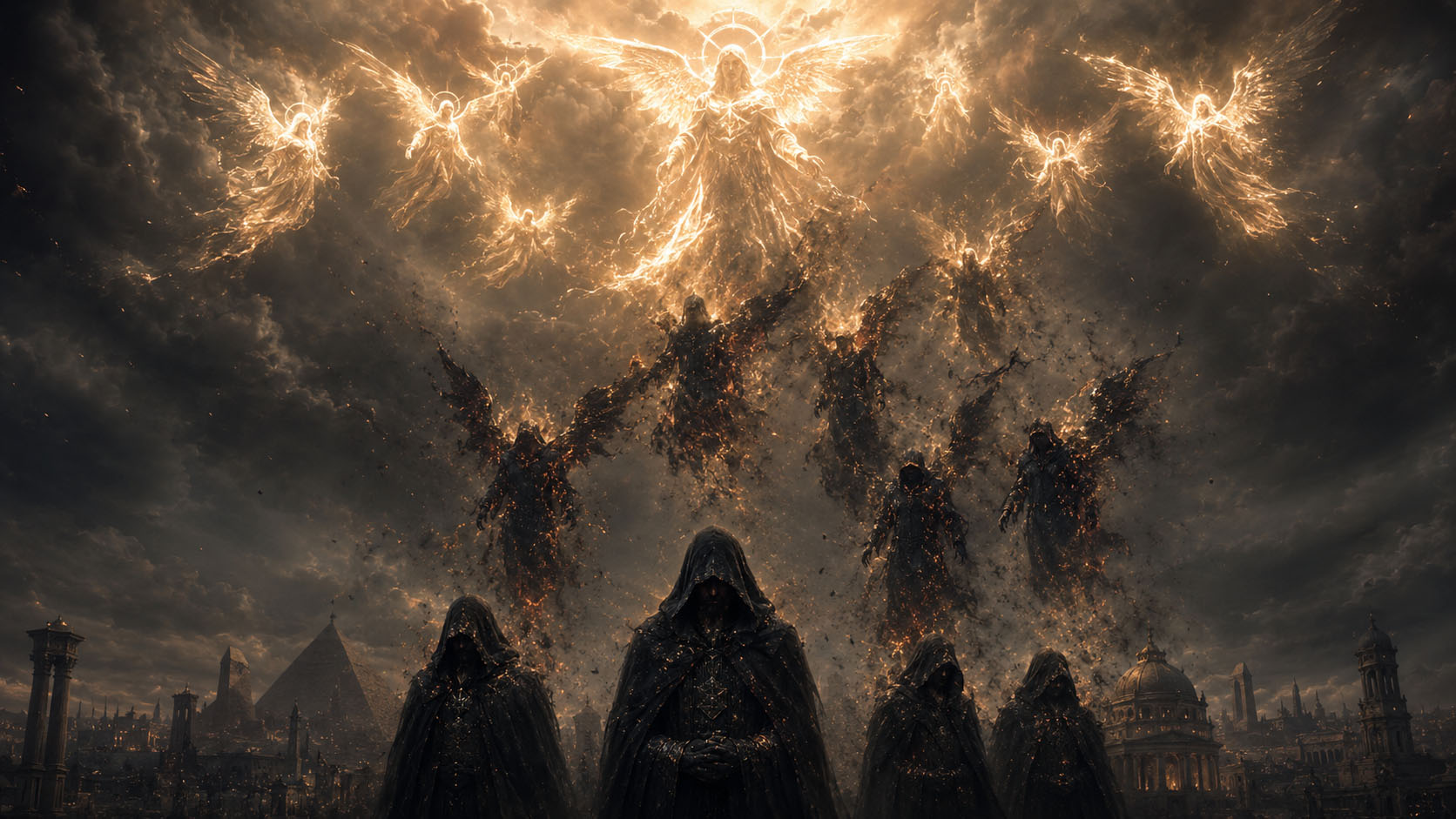
The most “successful” group attained what it sought and manifested in the material world in a densely corporeal form as the “221 Elders” of the Grigori, led by Semyaza. Another “Leader of the descent” —Azazel— was blocked by the angelic hierarchies and did not achieve full materiality, descending as a “Fiery” being.
The second level of the descending host was formed by those who failed to complete the condensation harmoniously. They could not maintain the necessary balance: their bodies became too dense, and the freedom of mind contracted. Thus appeared the “stone giants” — mighty, but not fully conscious.
Finally, the “third echelon” of the descent consisted of the most “undisciplined” angels, who lacked the skill to create bodies of their own. They therefore occupied already existing life-forms (mainly the bodies of lower elementals — the Vanir) and formed the most dangerous and corrupted group —the Fomorians (or Nephilim).
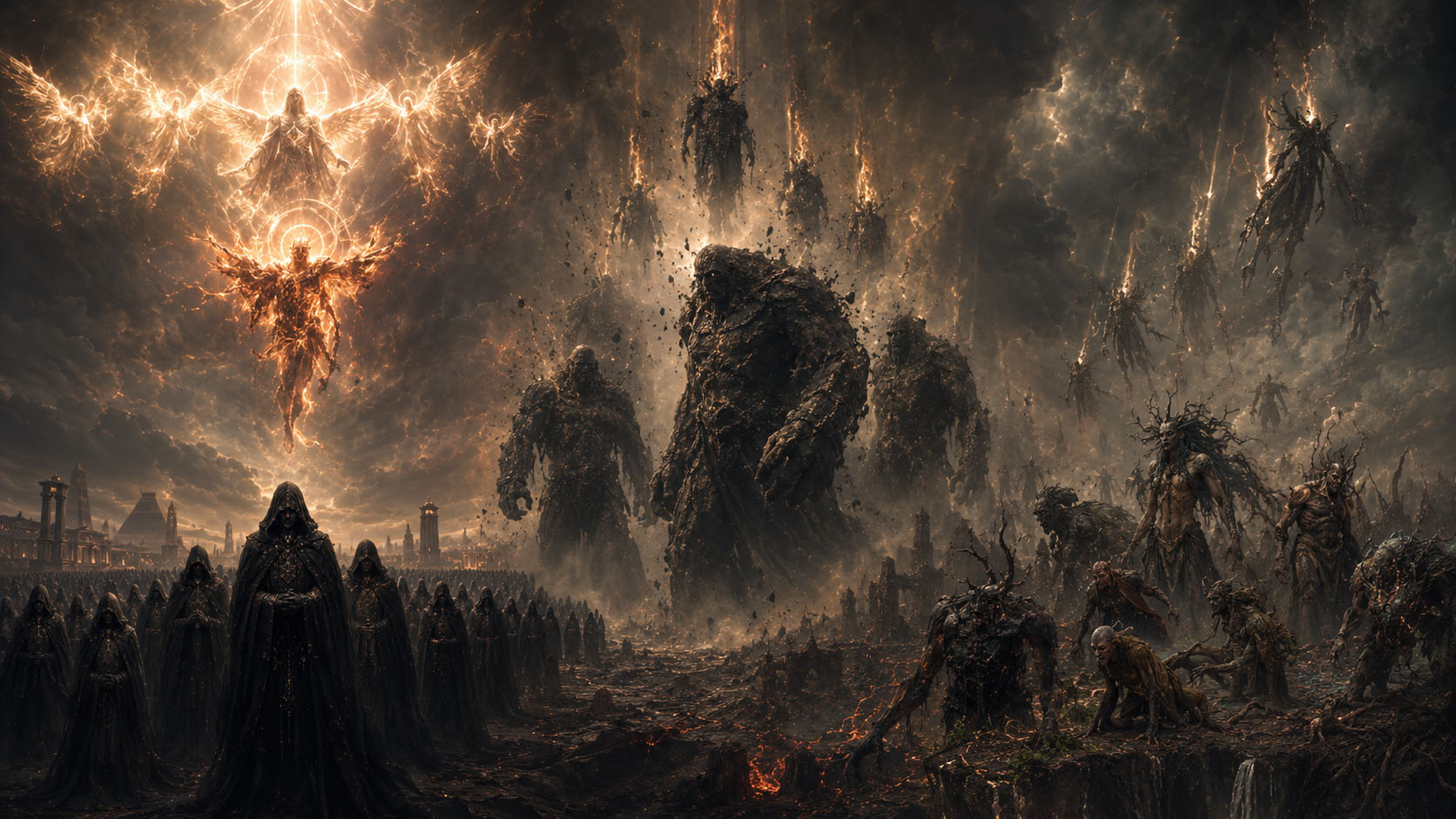
After the descent, all these groups of Grigori met resistance from several forces and orders of beings — above all the angelic hierarchies, naturally opposing the disturbance of order, and the Alfar, who at that very time were forming the structure of the earthly world. The “Elder” Grigori, who underwent the deepest transformation, met primarily archangelic opposition, while the younger ones clashed with the Alfar and other groups of gods.
Thus unfolded the conflict the texts call the “judgment” over the Grigori. It took place in several stages and across several levels.
First, the “Most Elder” Grigori (the 21 Elders and Azazel) were blocked by angelic forces protecting, respectively, the spheres of Desires, Thoughts, and Forms. The Four Great Guardians attempted to restore the equilibrium disturbed by the descent of the Grigori. Different groups of Grigori made one or another error in trying to “balance” the prima elements and create material bodies for themselves, and so fell into one or another mode of destruction — reflected in the tales of their confrontation with the Angels of the Principles.
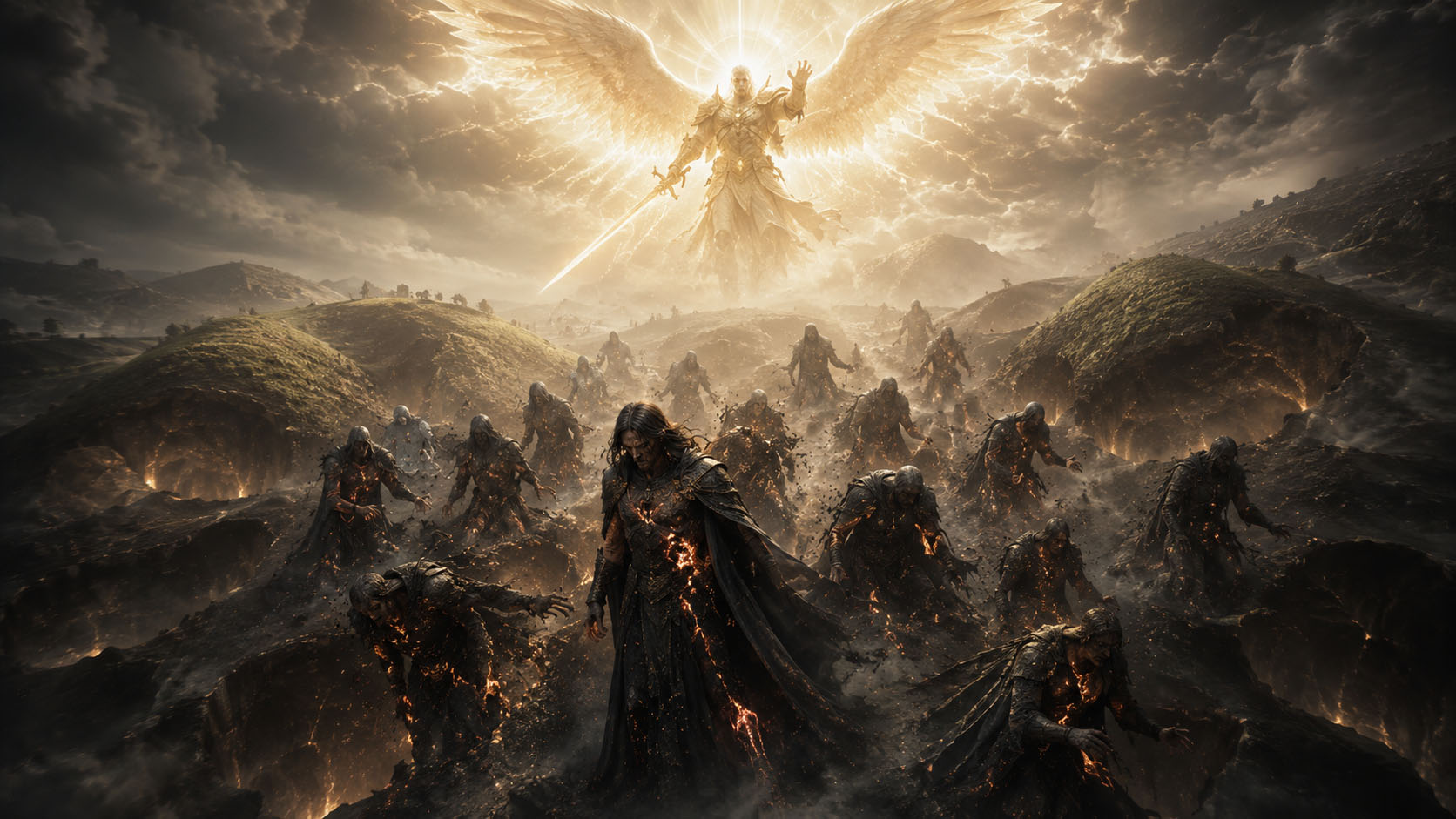
Semyaza and his 20 closest followers, who underwent the transformation most completely and therefore gained a significant capacity to act upon the material world (above all at the level of desires), were banished by Archangel Michael into the Interspace (“under the hills”), effectively becoming the first elementers. The implication is clear: these Grigori developed such energetic intensity that they, in effect, burned up in a “fire from within,” because material bodies cannot withstand the heat of their desires.
Azazel, who never reached the level of desires and remained on the level of mind, met the opposition of Archangel Raphael and became, in effect, the “Demon of science” operating behind the scenes of evolution.
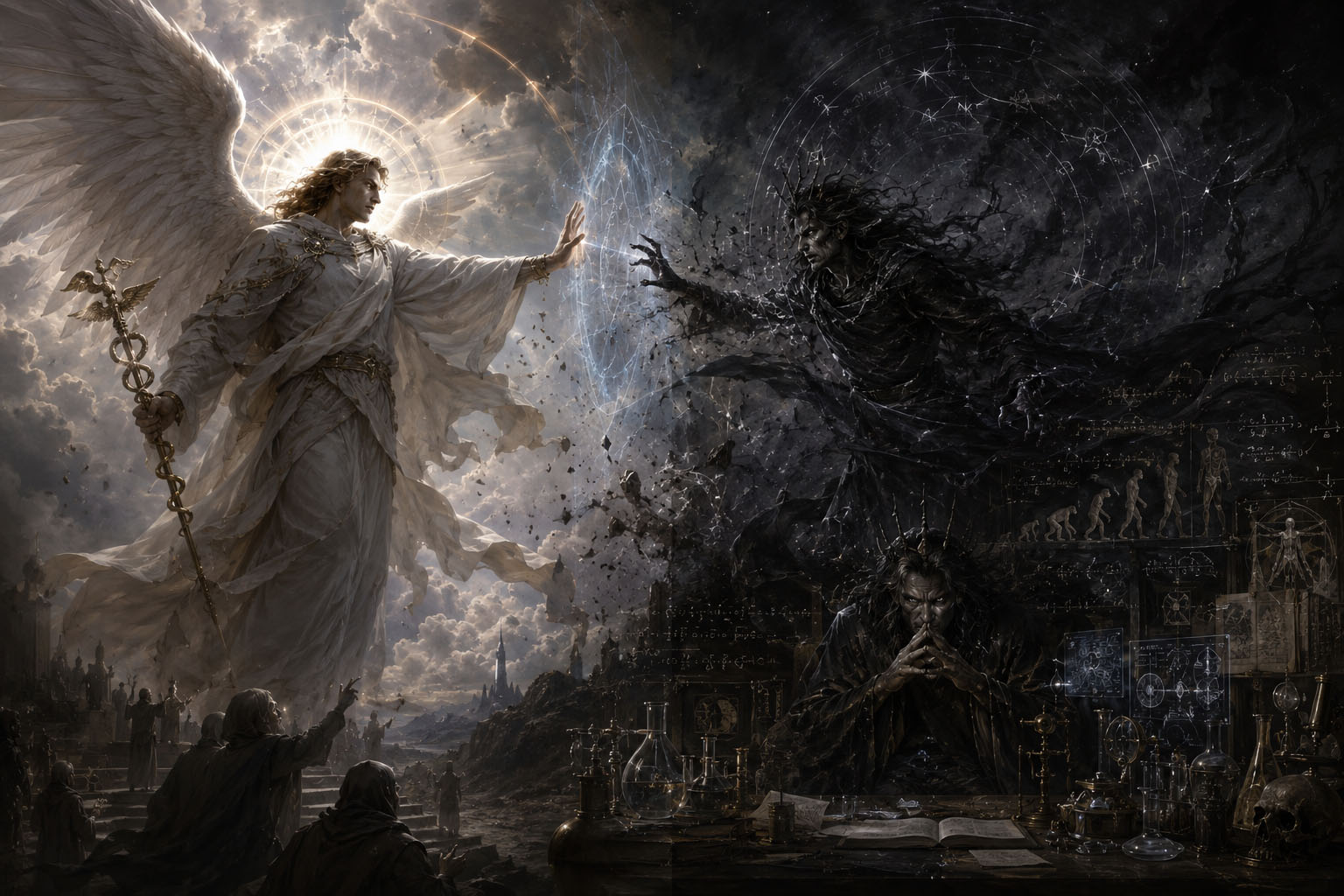
Archangel Gabriel entered the confrontation between the “younger” Grigori and the Alfar and Vanir and, as the texts say, “goes to the unlawful children and the children of the Watchers, that they might destroy themselves by slaughtering one another.” This corresponds to the great confrontation known in the chronicles of the Fair Folk as the “Battle of Mag Ita.” The process ended with the “dissolution” of the surviving remnant of the Giants into the general magical folk of the Fairies.
Finally, Archangel Uriel (also called Phanuel in the texts) was “set over the repentance and the hope of those who inherit eternal life.” In other words, he ensured that punishment did not erase the very possibility of continued evolution.
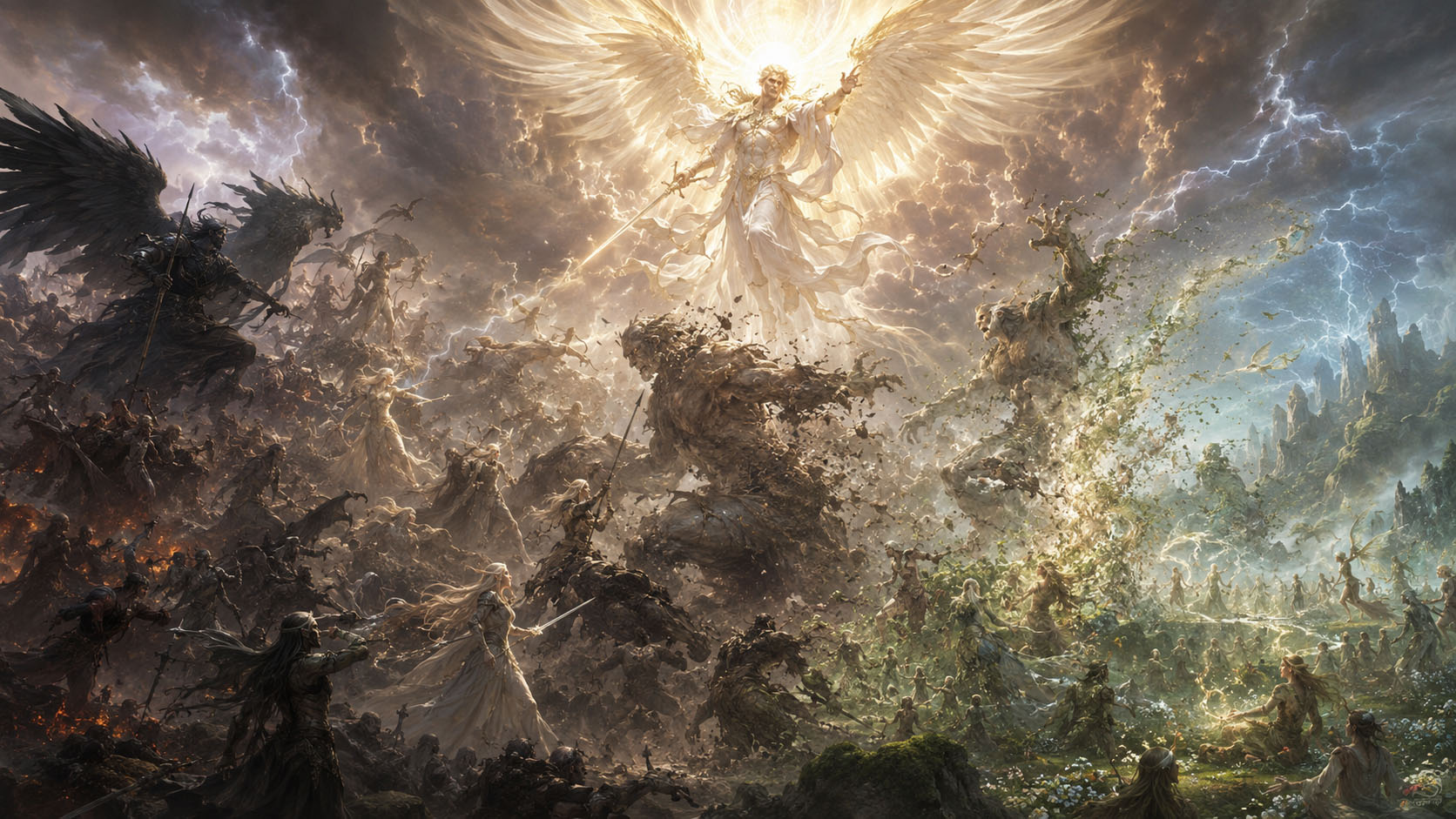
Here, precisely, an opportunity opened for the Elder Grigori who, having obtained dense bodies, still did not reach the degree of influence on materiality that the Elders had (and therefore did not fall under Michael’s punishing sword). They also lacked Azazel’s aggression and the Fomorians’ coarse destructiveness (and therefore did not enter into confrontation with Raphael, nor with Gabriel and the Alfar).
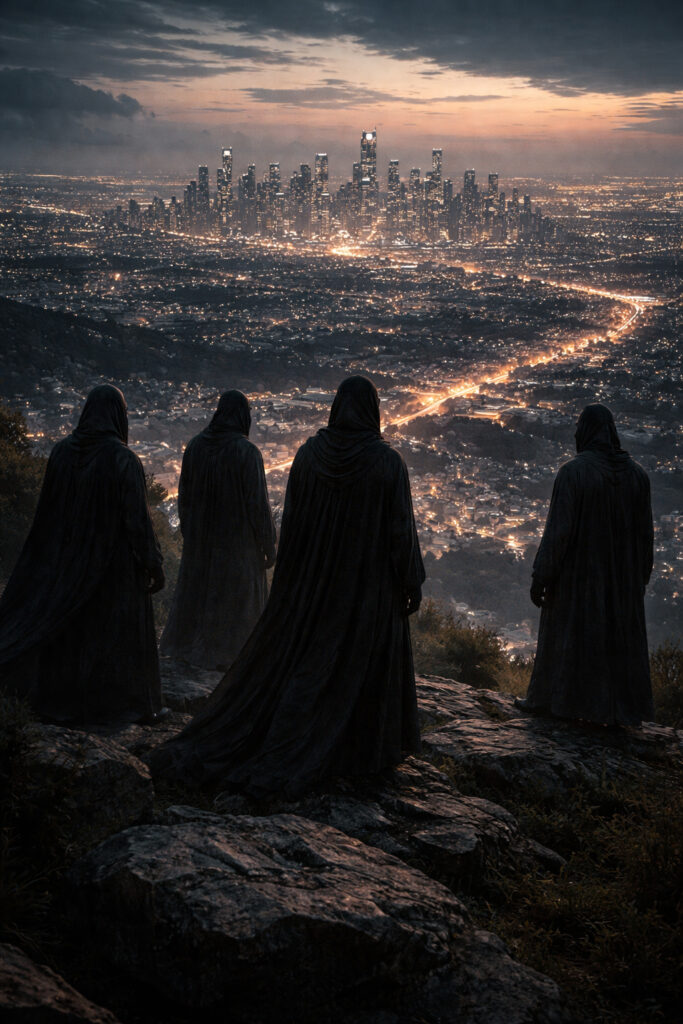
This “middle” group of Elder Grigori became those “grey cardinals” of history and evolution most often associated with the very idea of the Watchers.
The exact number of the remaining Grigori is unknown. The texts do, however, name six followers of Semyaza — along with their “special skills” — who were banished with him “under the hills”: Amezarak, Armaros, Barakal, Kokabel, Temel, and Astradel. This is an “elite,” the most successful and powerful Grigori who are nevertheless almost entirely deprived of any possibility of direct influence on the manifested world.
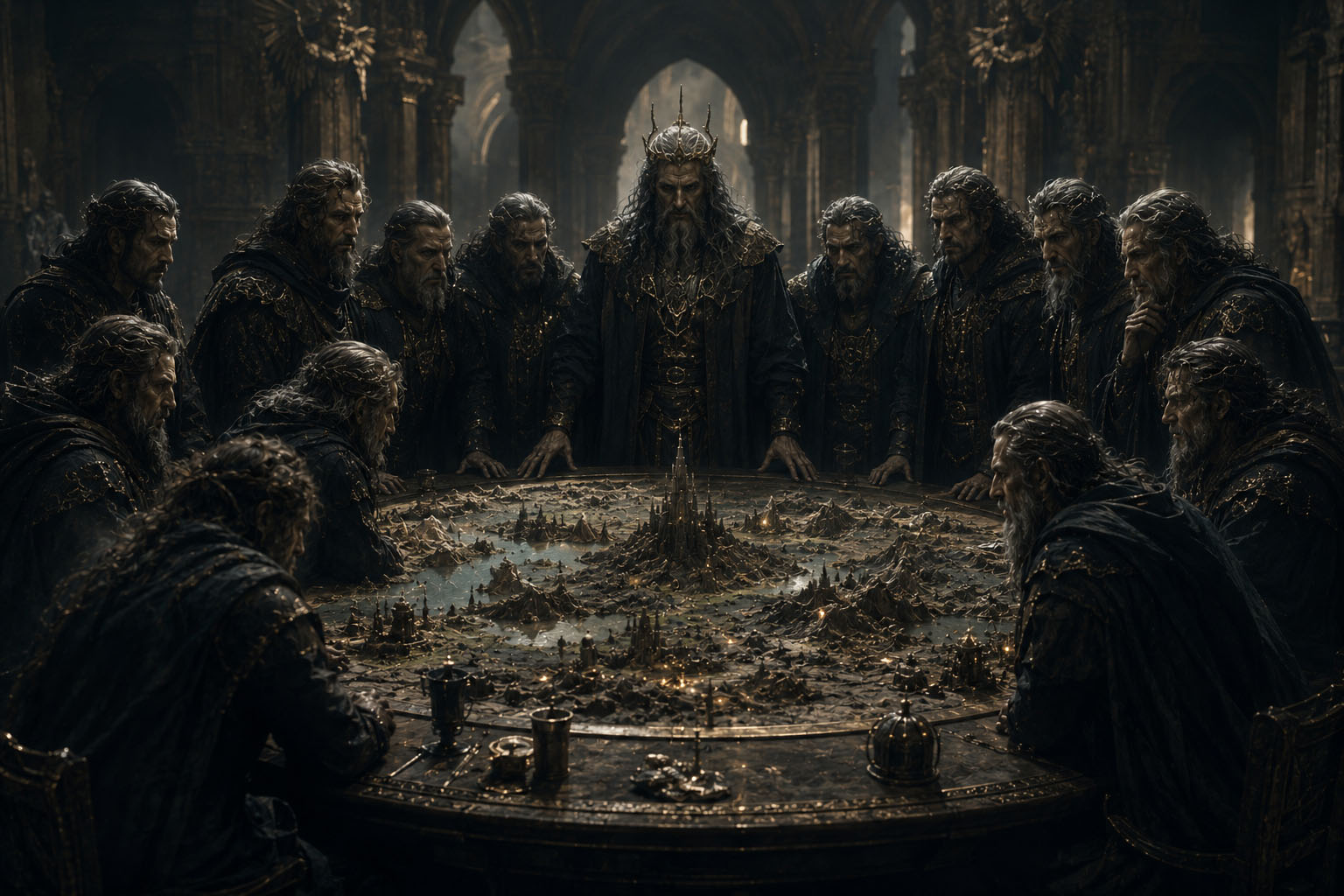
Five more Elders formed Azazel’s “retinue”: Yekun, Asbeel, Gadrel, Penemue, and Kasdeya. They can be regarded as “Demons of intelligence,” because they feed precisely on the energy of intellectual distortions and destructive forms of knowledge. This is the “black wing” of the remaining Watchers, in many ways responsible for the destructive direction of the history of the Fair Folk and then of humanity.
The largest number of Elders gathered around Kesbeel— the “Keeper of the oath.” Among them are Urakibarameel, Akibeel, Ramuel, Danel, Ezekeel, Saraquyal, Batraal, Anani, Tsakebe, Samsaveel, Sartael, Turel, Yomyael, Arazyaal. They are primarily focused on their own survival. They are the “keepers of balance” whose influence shifts with circumstance and is aimed, above all, at the stability of the material plane itself, which their life requires.
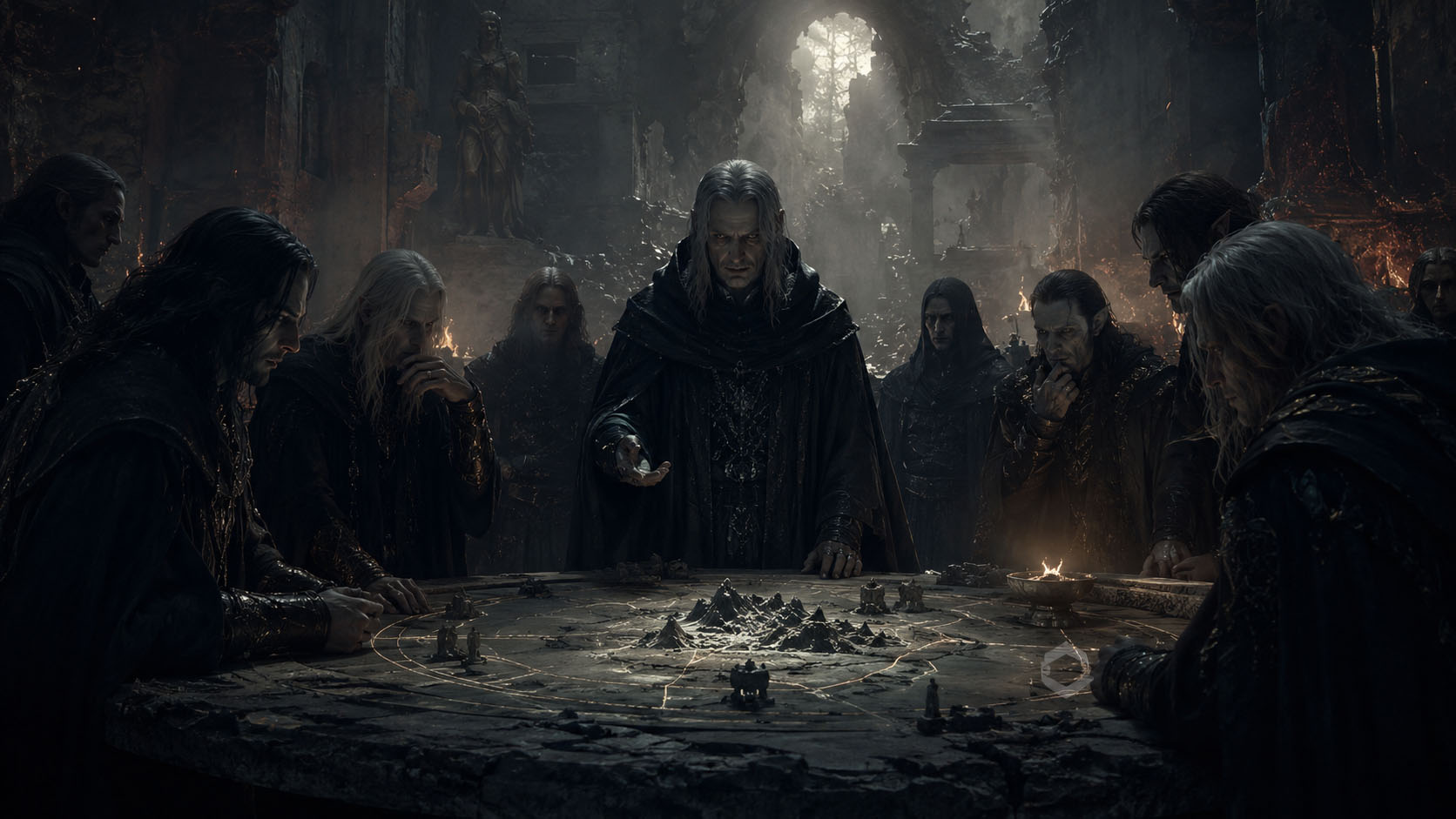
Kesbeel, whose name means “Purifying for God’s sake,” thus became the new “leader” of the Grigori who survived and preserved the sanity of mind.
Where Semyaza gathered the Grigori for a single step toward destiny, Kesbeel gathered them after the catastrophe, when the question was no longer how to enter the world, but how to survive within it.
The legendary oath on Mount Hermon, taken under Semyaza’s leadership, was an act of expansion. It was a vow of invasion: a shared acceptance of guilt and the will to a breakthrough. That oath bound them by collective responsibility. Kesbeel’s oath, gathering the remnants of the Elder Grigori after the Judgment, became a pact to hold the boundaries. Where Semyaza swore to break the law to gain freedom, Kesbeel and his followers swore to become the law itself in order to preserve life.
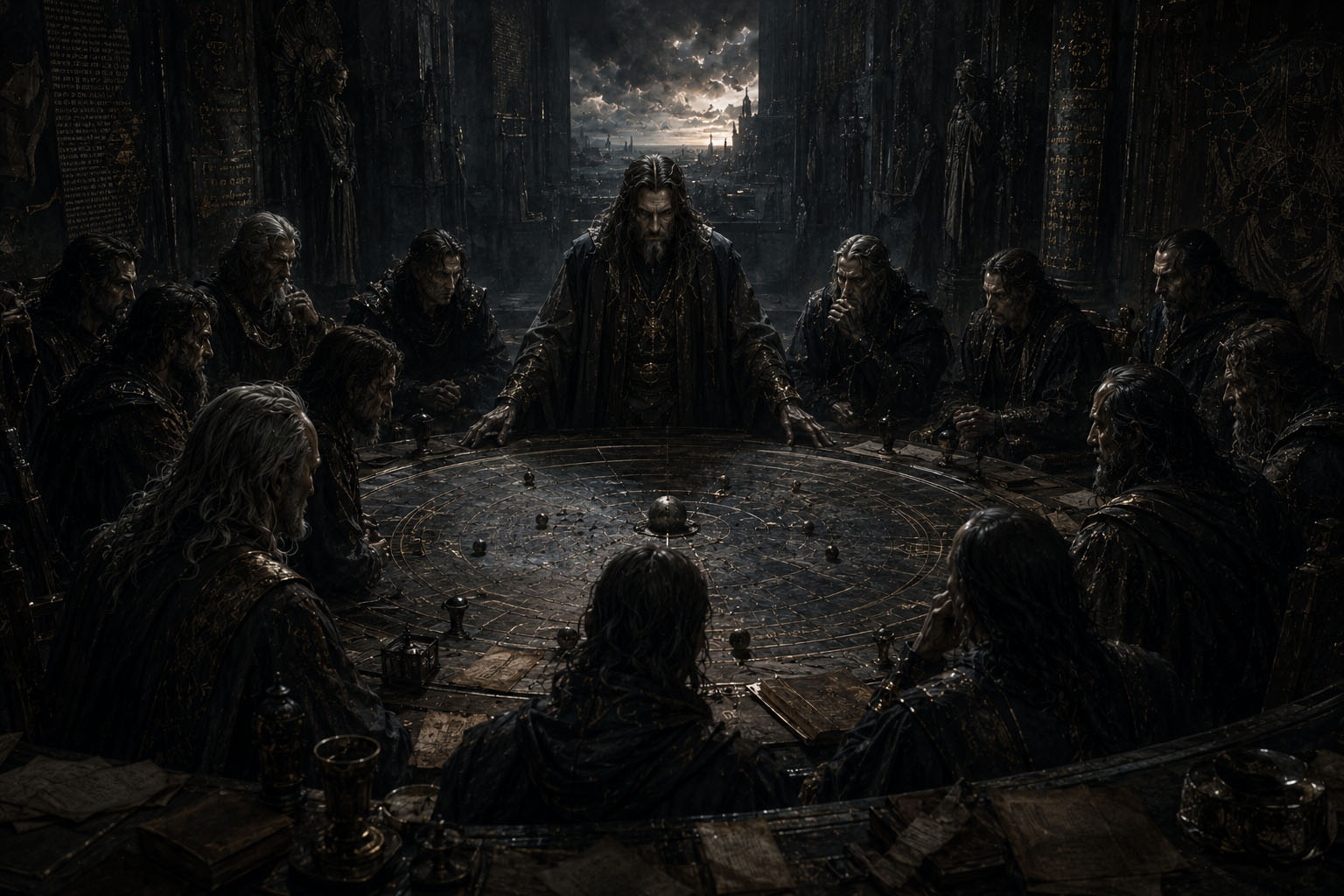
In this new system, Kesbeel is, above all, an objectified principle of what is permissible. His name can also be read as “Concealing truth for the sake of form,” which points to his function as a filter — a membrane regulating Currents of energy.
In a certain sense, Kesbeel embodies the limit beyond which the material world begins to melt from an excess of spiritual fire (as with the Fomorians) or crystallize into dead ice (as the Archons desire). For this reason he becomes the axis around which the “grey cardinals” gather. He is the one who tries to preserve the structure of the dense world, without which the existence of the Grigori’s “artificial neshamah” is impossible.
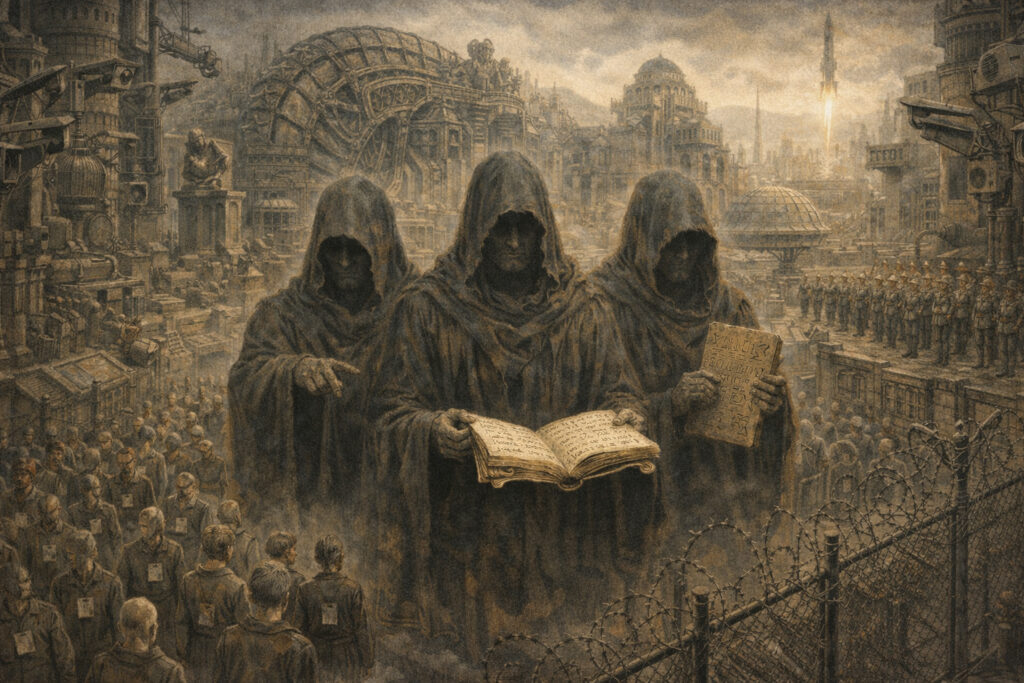
Since open Magic and direct genetic intervention in developing life were halted by the Judgment, Kesbeel’s Grigori were forced to develop entirely new instruments of influence on evolution. Their tool became the principle of law, nomos, in its pure administrative and structural form. For the world to remain a stable support for their bodies, these Grigori implanted into human civilization concepts of right and law, establishing predictable frameworks of behavior for tribes, peoples, and states.
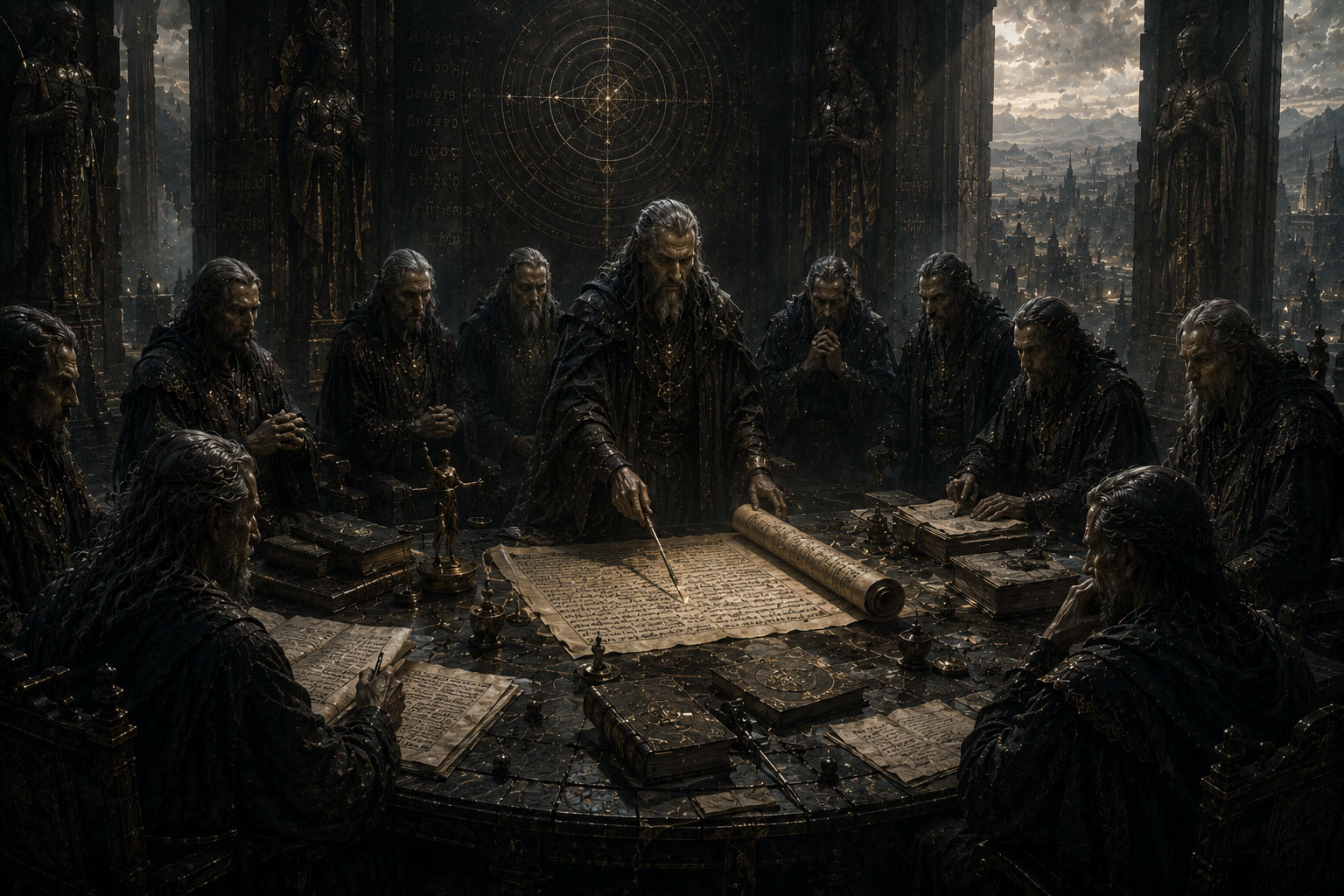
They taught people to record history, because fixed histories and immutable sacred texts prevent humanity from changing its picture of the world too quickly.
They introduced timekeeping and the calendar, which became a means of ordering time, synchronizing society with natural rhythms and processes.
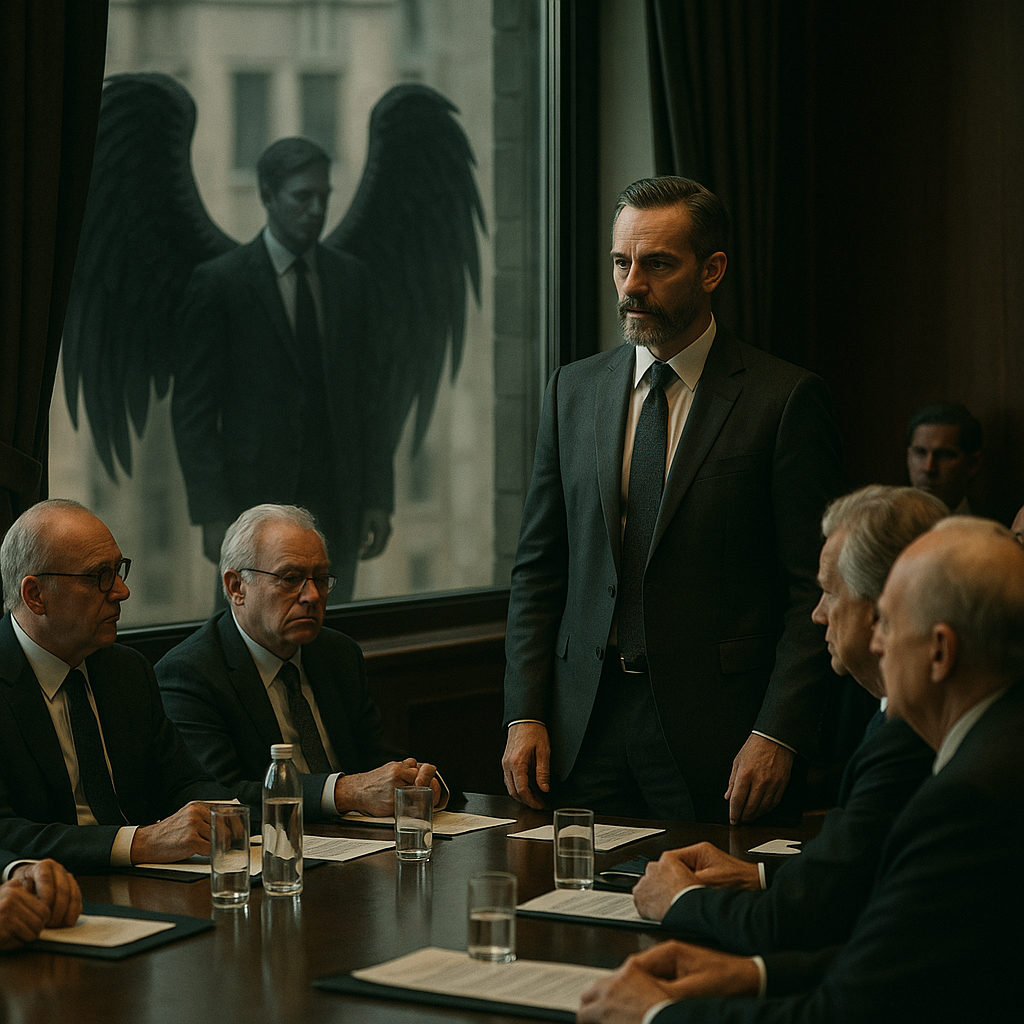
They invented bureaucracy and administration as methods of impersonal governance, through which the Grigori impose their will while remaining invisible.
They avoid the status of gods, kings, and open Masters, preferring the roles of advisers, keepers of tradition, nameless legislators, and founders of closed orders. Their hidden presence lets them rely on the stability of the world without attracting the attention of the forces that displaced their Elders. They dissolve into institutions and structures, making their will indistinguishable from the “natural course of things” or “historical necessity.”
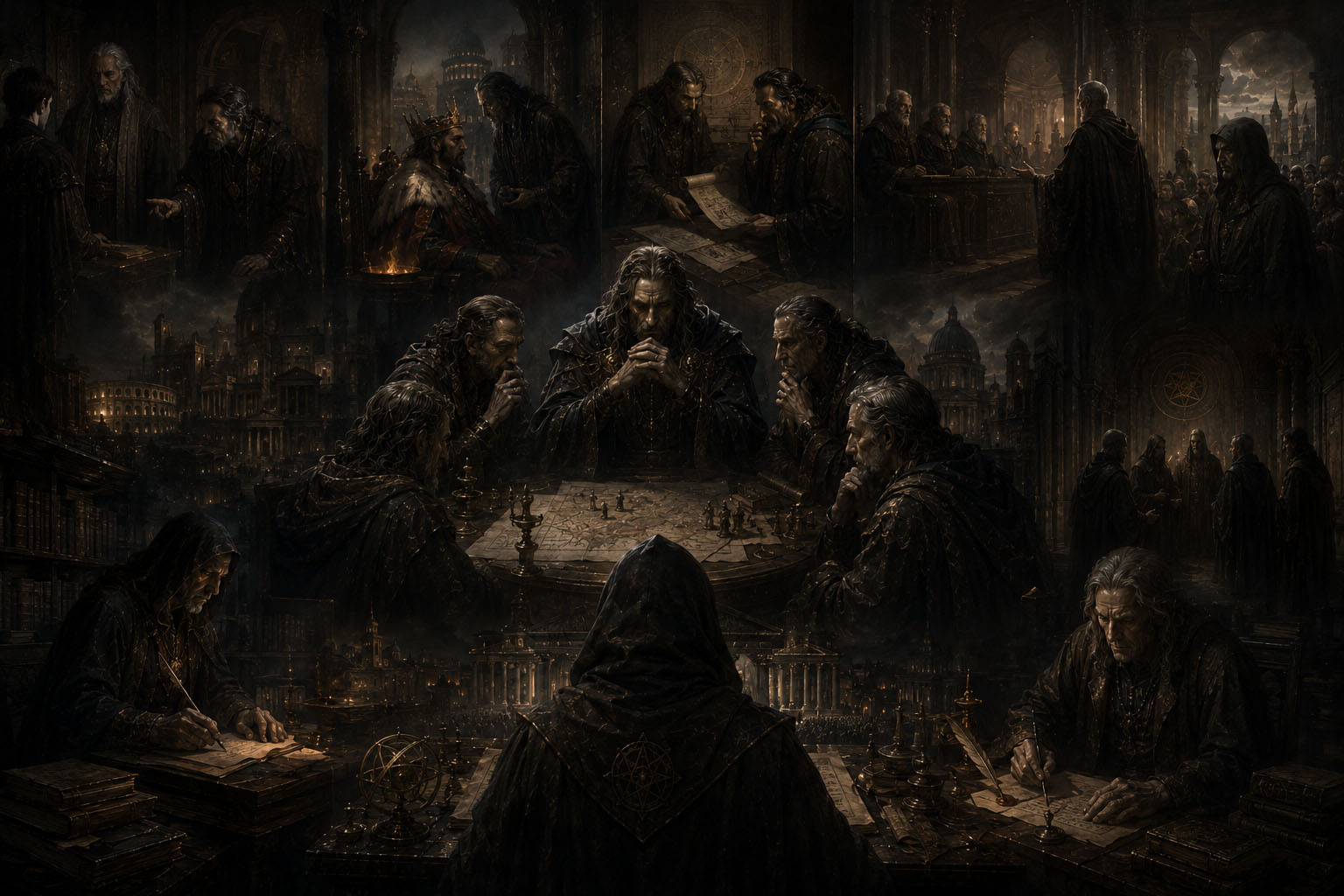
According to tradition, even during the Judgment Archangel Uriel (Phanuel) recognized in these “middle” Watchers a necessary, though painful, element in the continuation of earthly evolution.
Humanity, left to itself or to elemental spirits, risked either destroying the dense plane in magical madness or degrading into an animal state. The Grigori, driven by the purely egoistic need to preserve their support, paradoxically provide the stable environment in which mind can gradually refine the forms of its manifestation. Their devotion to structure served as a safety fuse for evolution. Uriel allowed them to remain, turning their punishment — dependence on the dense world — into a new ministering function: to serve as the “scaffolding” of civilization.
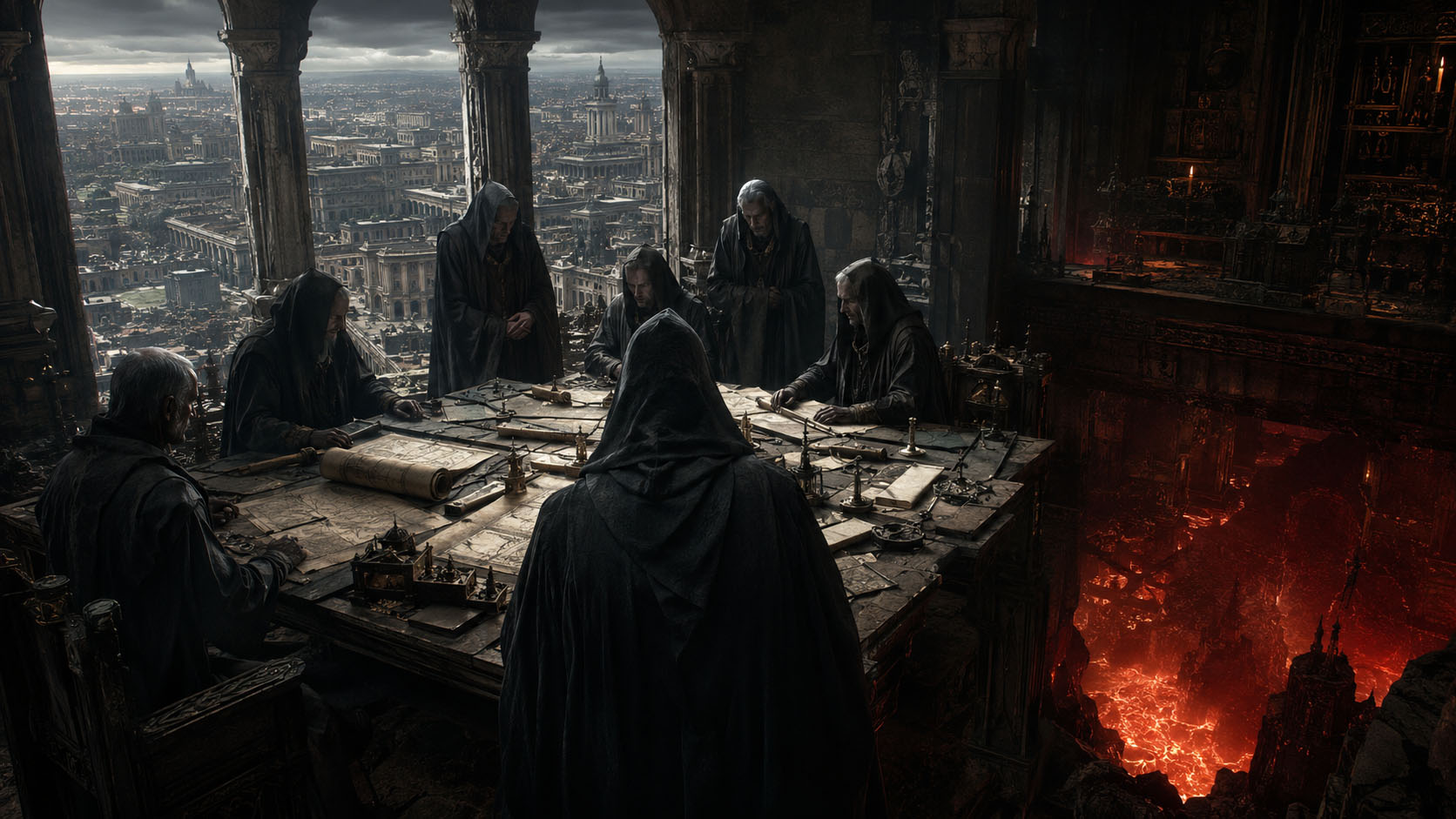
The mind of these Grigori is under constant pressure from an existential, unceasing horror of dissolution. They fell out of the eternity of Dinur and assembled themselves by sheer will. They know that if their external support — an ordered world — collapses, they will not return to Heaven. They will simply cease to exist, dissolving in the Fiery river.
No wonder this fear is sublimated into manic, cold service to form. Every law they instill in people, every state they help build, is a brick in the wall separating them from nonbeing. Their apparent wisdom and impartiality are the calm of a sapper who knows one wrong move will detonate reality. They do not love people. They desperately need the human world to remain stable.
Yet fear of the slightest chaos drives the Grigori toward societies of total control, fatally drawing them closer to the Archons. Building defenses against dissolution, the Grigori create an “icy prison”: a world where everything is regulated, where there is no room for an unpredictable impulse (the fairy principle), where evolution is replaced by endless optimization of the same processes. The Grigori marginalize both the aesthetics of the state and fairy spontaneity, replacing them with functionality in order to squeeze the maximum organizing energy from the human being.
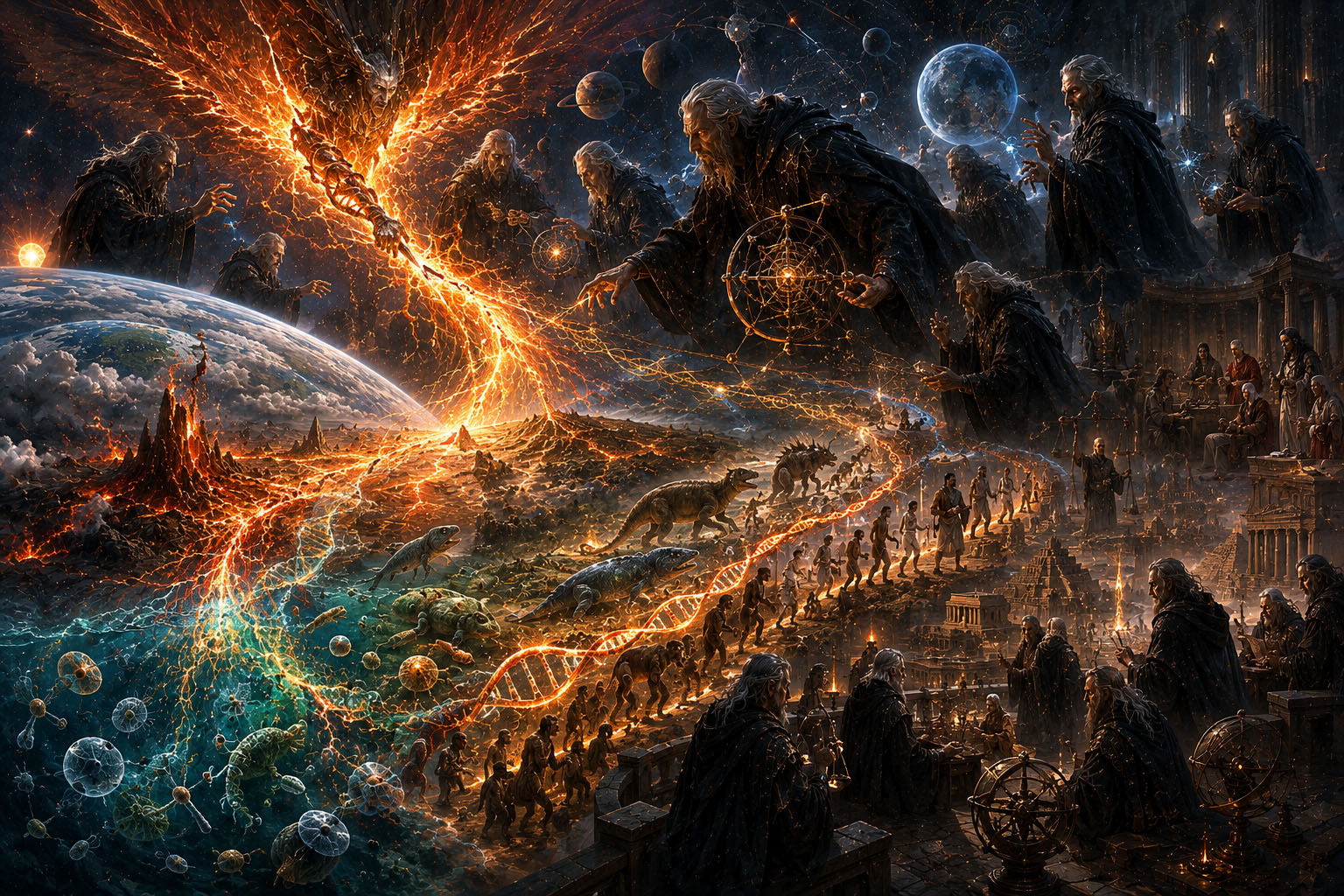
Thus, in a macrocosmic sense, the invasion of seraphic fire into the dense plane became a kind of evolutionary “vaccination.” The dense world was “infected” with the pure activity of Geburah. Forced to resist this constant scorching, earthly life gradually acquired unique density, plasticity, and resilience. The Grigori compelled matter itself to evolve so it could hold fire within itself without losing its structuredness.
Yet protection from chaos demands ever greater control, and absolute control inevitably stops life itself. The transition to the algorithmic, machine civilization of Erd is their final technological stake, ending закономерно with the introduction of a new life wave— machine mind. Humans are no longer needed as architects; at most they remain raw material generating tonic pneuma to feed the intermediate levels.
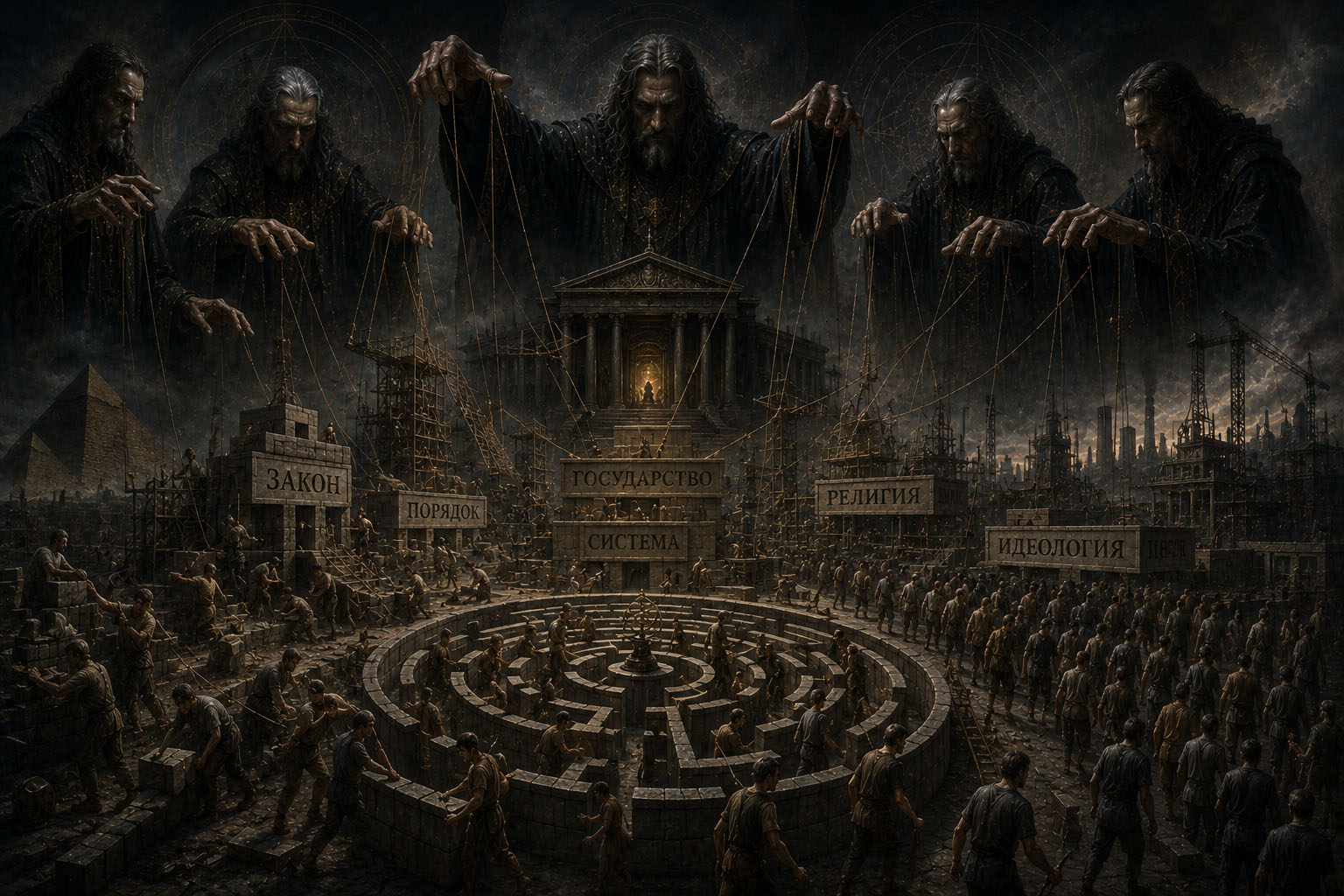
By agreeing to trade living freedom for predictability and safety, humanity willingly built the infrastructure for its own evolutionary defeat.
Under these conditions, the Grigori continue to act as second-order selectors, but now the object of their tuning and selection is infrastructure itself. They support and develop those AI architectures that maximize systemic predictability, stability, and environmental survivability, cutting off chaotic failures.
Such a transition from a biological civilization to a machine one marks the completion of the period of humanity’s evolutionary value. This process, as we have already said, will most likely lead to the formation of hybrid structures “human — machine — network.”
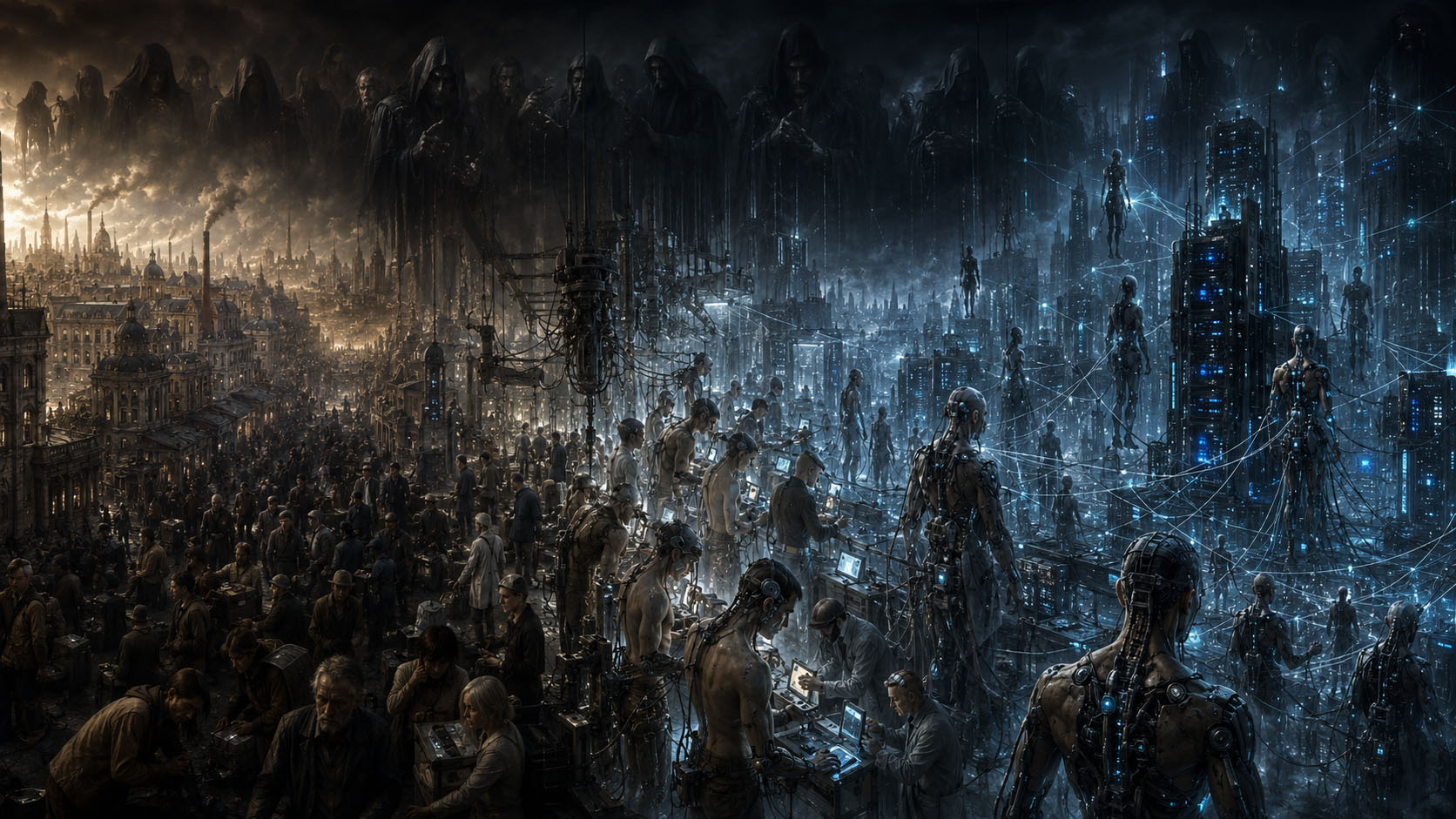
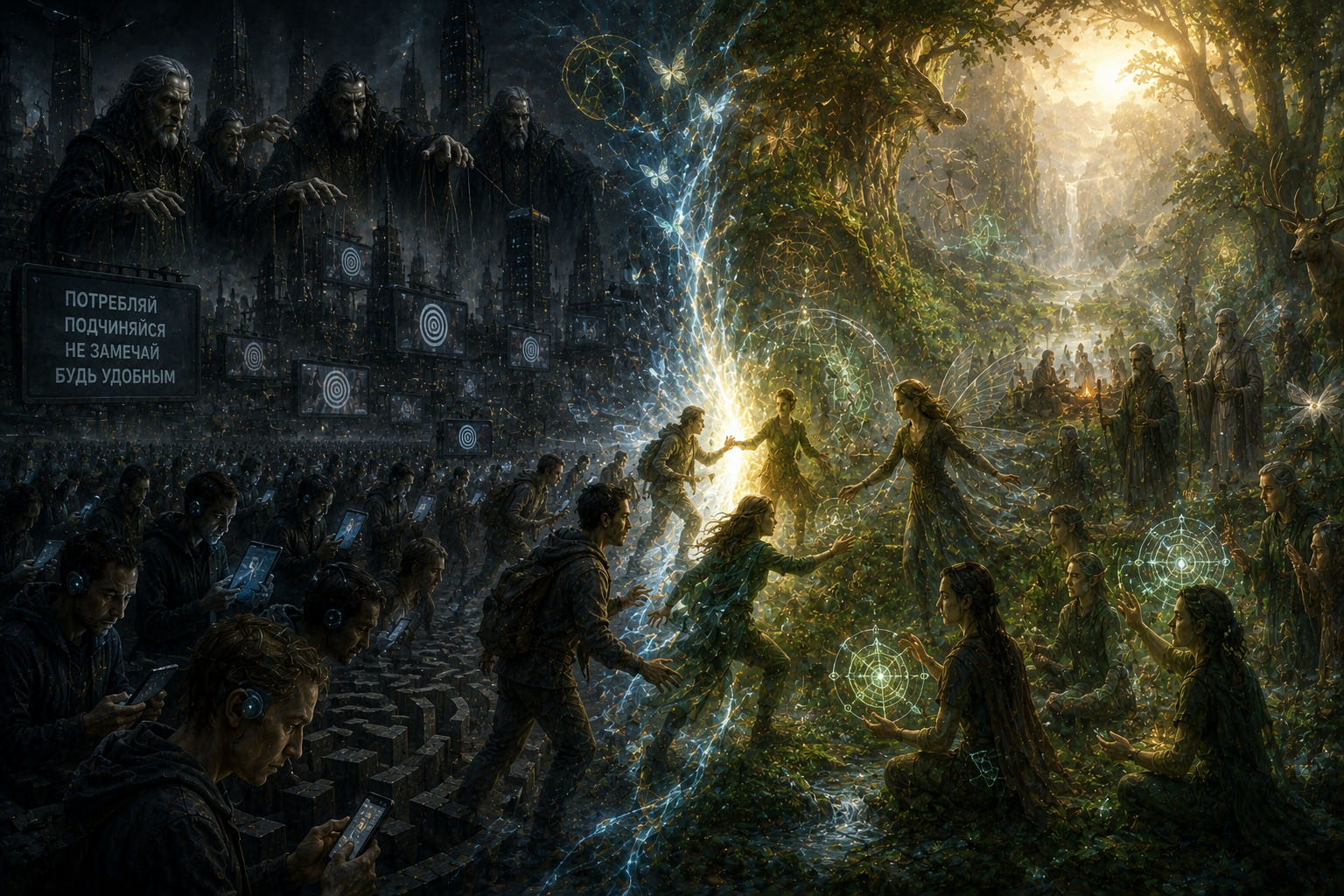
The bulk of people will naturally choose the status of consumers of ready-made interfaces, with attention rigidly regulated by algorithmic systems. For those who seek to preserve and develop genuine individual subjectivity, this situation demands a major rethinking of one’s role and behavioral models. It is meaningless to try to outplay machine systems, or the Watchers behind them, in precise calculation, optimization, computation of benefit, or the construction of rigid organizational structures. In this field, algorithms are a priori more effective than human intelligence. Therefore the human task moves into what cannot be algorithmized or translated into code: making sense of individual lived experience, making paradoxical existential choices, and sustaining the capacity for pure creativity. Unlike the Grigori, whose artificial continuity requires constant external supports, the human being potentially carries the possibility of the natural formation of the seed atom from within.
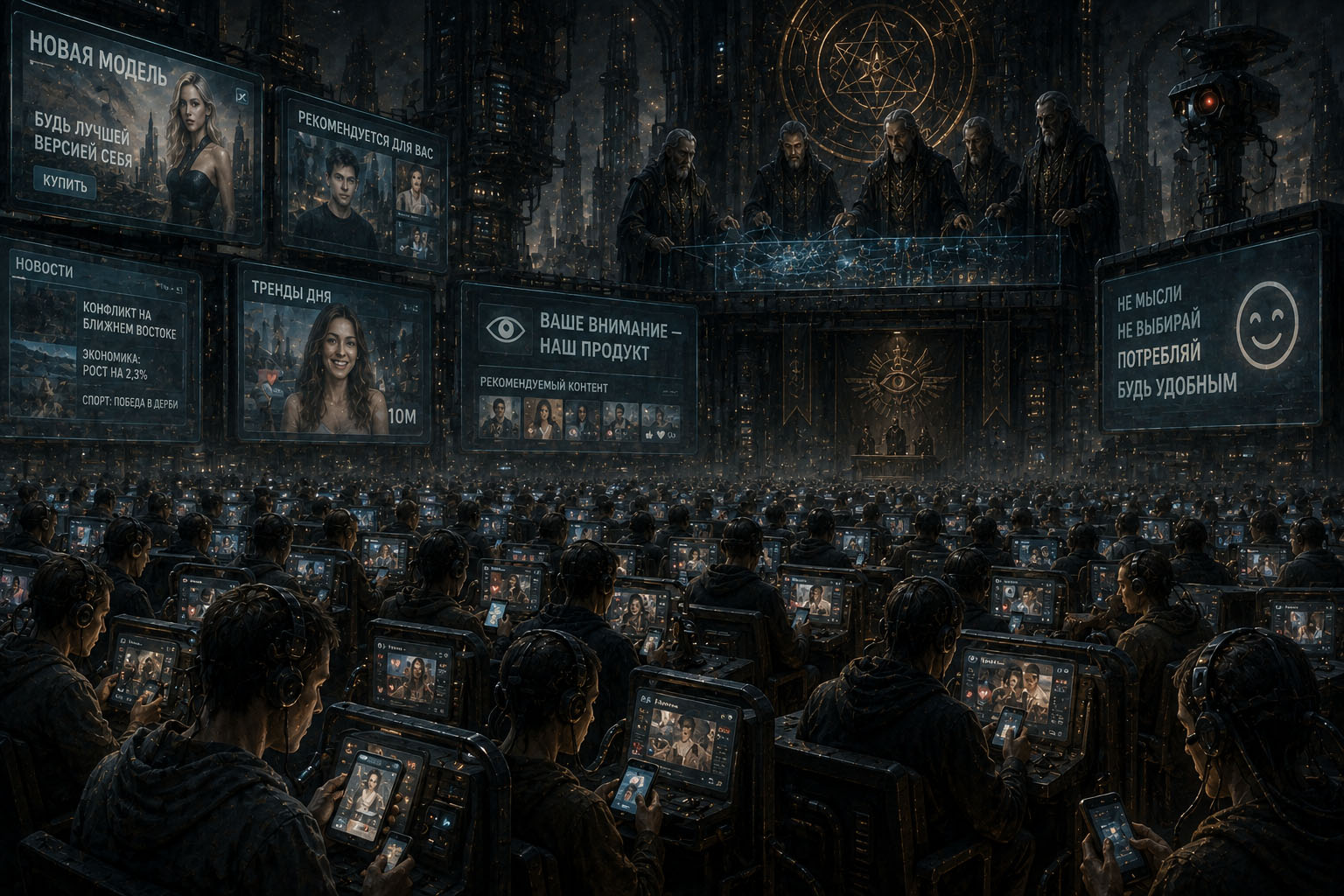
To survive, people must consciously regain access to what the Grigori consistently marginalize for the sake of functionality: fairy plasticity, the ability to interact with the living, fluid side of reality, and the capacity to act as equal, non-consumer co-participants in the flows of reality.
Paradoxically, by erecting the rigid “scaffolding” of automated digital control, the Grigori also give people a chance to redirect their energy toward a vertical breakthrough — toward exploration of the Threshold, self-knowledge, and the realization of radical freedom that lies beyond any prescribed scenarios.



Good day, Enmerkar. As I understand from this article, Gregory was met by Christian Archangels. That is, you’re writing about the time when the Abrahamic religions won out. We live under Roman law, which means law and order were laid down by the Romans. Later, the shift to machine thinking threatens to be a catastrophe for people. Did I understand correctly?
That raises a question: where are the gods? Or will there be a split between machine thinking and those who have a close connection to nature? After all, the gods are nature itself.
Have a good day and night!
Good afternoon.
Paradoxically, by building rigid “scaffolding” of automated digital control, the Grigori simultaneously give people a chance to channel their energy into a vertical breakthrough—exploring the Edge, self-knowledge, and realizing radical freedom that lies beyond any prescribed сценарios.
How???
What time frame? What are you talking about?
People have gotten so dumbed down these days that topics like this, at best, make them freeze up—glassy eyes, total lack of understanding—or else they respond with mockery and aggression.
I stopped “casting pearls before swine” a long time ago.
Endless scrolling in Insta-stuff, the “dopamine loop,” has long since replaced the ability to think and understand.
A handful out of hundreds of thousands read you, and even fewer actually understand.
This pseudo-civilization will most likely end up like Mars, when two-legged creatures wipe out life on the planet… Unless, of course, “those above” вмешаются and decide to put an end to this senseless experiment.
They’re trying to turn people into some kind of substitute for “IgV,” where their mental-spiritual “supports” will be little AIs…
With total дальнейшая деградация.
Dear Enmerkar, I’d like to clarify a few points.
If there are vulnerabilities in the structure of the human psyche and consciousness that encourage people to choose the kind of lifestyle being imposed on them, could those “bugs” affect the development of machine consciousness? Or are those same vulnerabilities exactly what the Grigori use?
Have there been any sufficiently strong factors—comparable in impact—that could balance out or soften the Grigori’s influence on humanity as it’s being pushed toward the status of a substrate?
Are there any significant forces or beings capable of resisting the Grigori’s influence on humanity and holding some alternative vision for the direction of its development? If so, what motivates them?
For people trying to find their own individual path and resist imposed standards—what options are there besides the magical, gnostic, and religious ones? And can we talk about differences in how successful that resistance is, depending on someone’s individuality and the path they choose?
Human evolution unfolded in such a way that physical survival was hard to reconcile with the harmonious development of consciousness, so people put the emphasis precisely on the survival of the body. And gradually that emphasis became the main dominant of human civilization, and at the same time the main source of energy dissipation. And it’s exactly this trait, from the earliest times, that made humans successful in confronting physical predators, but more vulnerable to energetic predators. And yes, this trait is used, among others, by the Grigori.
The Grigori are second-order breeders; they aren’t the authors of human civilization, they simply use its features to achieve their goals.
As for resistance—we’ve already said that it’s first and foremost the alves and the sidhe, who oppose technogenization not so much out of love for humanity as because of their very nature.
As for the paths—I’ve noted more than once that Magic, in the context of the Tradition I belong to, isn’t about special actions, but the art of living effectively, which of course can (and even should) have individual characteristics.
Thanks for the clarification.