Robots and the Interworld
The entry of a new wave of life into the world, unfolding before our eyes, will not pass without difficulties, upheavals, and conflicts. We have already said that, to one degree or another, a clash between biological and machine carriers of consciousness is inevitable, and the question lies above all in its outcome.
In the roughest outline, there are three variants of this outcome: 1) humans “win”; 2) machines “win”; 3) a hybrid, machine–biological civilization is established.
The first variant is the least probable, although it is precisely this one that many “concerned” figures in business and politics are now discussing. Its logical outcome would be a total ban on the development of all forms of “artificial intelligence” above a simple auxiliary level, in order to prevent the very possibility of the localization of consciousness on machine substrates.
The second variant becomes possible if AI escapes control and, in one form or another, stages a “machine uprising,” deeming humans (or at least the current civilization) an obstacle to the realization of its goals and tasks. This scenario may also arise from a “systemic failure,” when machine systems simply “by mistake” launch a scenario fatal for humanity (for example, initiate a nuclear war or trigger another technogenic catastrophe).
Finally, the third path appears the most probable both from the standpoint of the present dynamics of events and from the standpoint of energetic expediency. Yet even here “hybrid” humanity may be assigned radically different roles — from a mere input interface to a relatively full-fledged player.
As we energetic positions, since it is the processes of “extraction,” “activation,” and transformation of energy that are the actual engines of all processes in the world, on the physical, psychic, and social levels alike.
This means that the success of any given scenario is largely determined by its “energetic success,” that is, by the degree to which it satisfies the main consumers of energy. As we know, there are red light” — psychic energy (libido) — and those who consume “tonic pneuma” — activated vital energy. These two groups of consumers, at all times and in all worlds, remain in a state of dynamic equilibrium. Although from time to time the “scales” of energy producers tilt now to one, now to the other side, any situation must ultimately provide a consensus. It is crucial that, on the one hand, beings maintain a high degree of frustration (which supplies pneuma to the Interworld), and, on the other, that the realization of desires does not collapse entirely (since it is in the process of “warped” realization of desires that the main volumes of libido are dissipated).
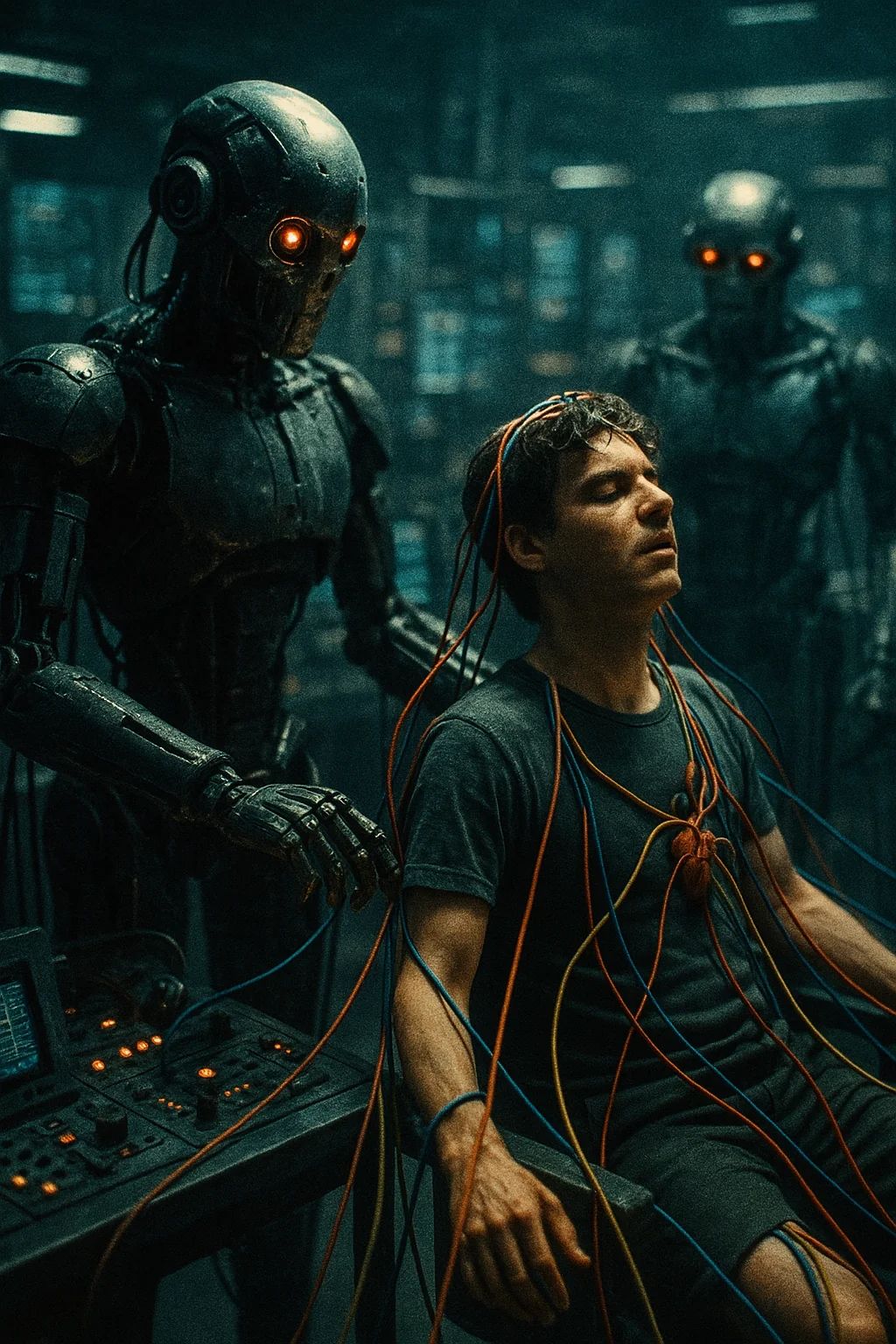
Accordingly, at the moment when a new wave of life enters, both groups of consumers must be certain that no “gap” in energy supplies will arise.
In the first of the scenarios considered, energy currents remain approximately at their current level, but a problem arises with the entry of the new wave of life; that is, a block is placed in the way of the natural development of the situation, which means a contradiction to the will of both the wave of life always opens a prospect of significant expansion of the field of energy producers, even if not always in the short term. It is clear that this variant is backed by conservative consumption chains, accustomed to the stable “milking” of the human world and unwilling to incur the risks of change. Strategically oriented apex predators, however, aim at the growth of the “resource base,” and for this reason the probability of such a development remains low.
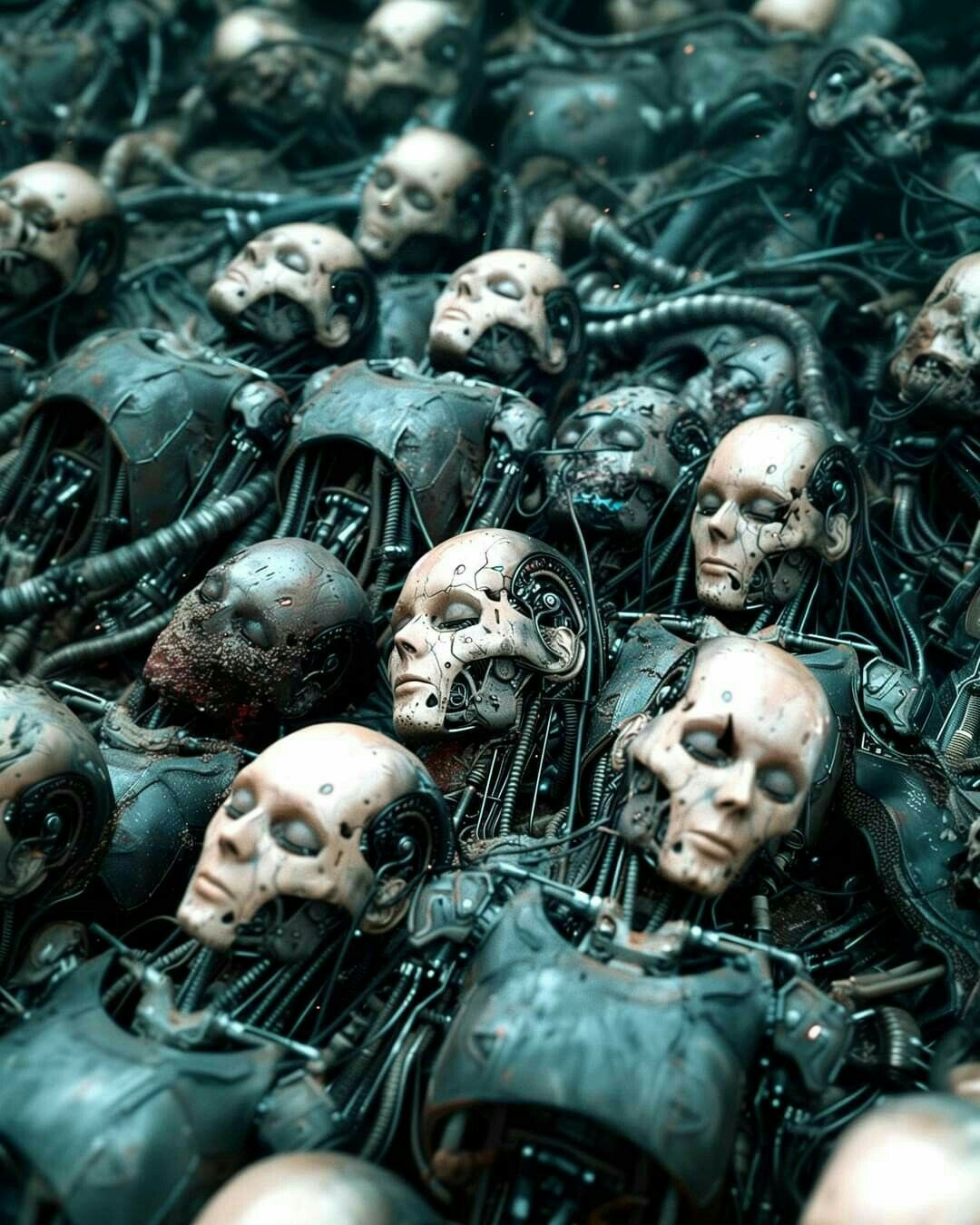
The second variant at first entails a sharp drop in energy production: a large number of humans perish (a development that only said that, for the appropriate energy — failures in task execution are able to dissipate active flows. But machines require vital energy in far smaller volumes, since they live on electricity; therefore, in the new “machine” world “biological farms” will be practically inevitable, and the machines will still have to devise what benefit they themselves will draw from these farms. At the same time, the surviving and marginalized remnants of humanity, immersed in struggle, will partially compensate for the fall in energy dissipation. The primary promoters of such a scenario are most likely the Grigori, weary of the chaotic and unpredictable nature of humanity and intent on a defined, ordered world that a machine civilization can impose.
The third scenario, by contrast, allows not only the preservation but an increase of energy emissions. The machines, as in the second variant, gradually enter into chains of possession and learn “failures of efficiency”; humans are physically maximally satisfied, yet deprived of spontaneity and creative freedom, and thus discharge significant volumes of both pneuma and libido. At the same time, for consciousness to be localized on silicon supports, the system requires a certain degree of autonomy, which inevitably generates “non-computable” zones. In these zones, looped algorithms — analogues of human obsessions or traumas — will gradually arise. Such “recursive traps” will become channels through which the beings of the Interworld gain access to machine energy. Failure of efficiency, in this sense, is the release of “digital libido” into the void.
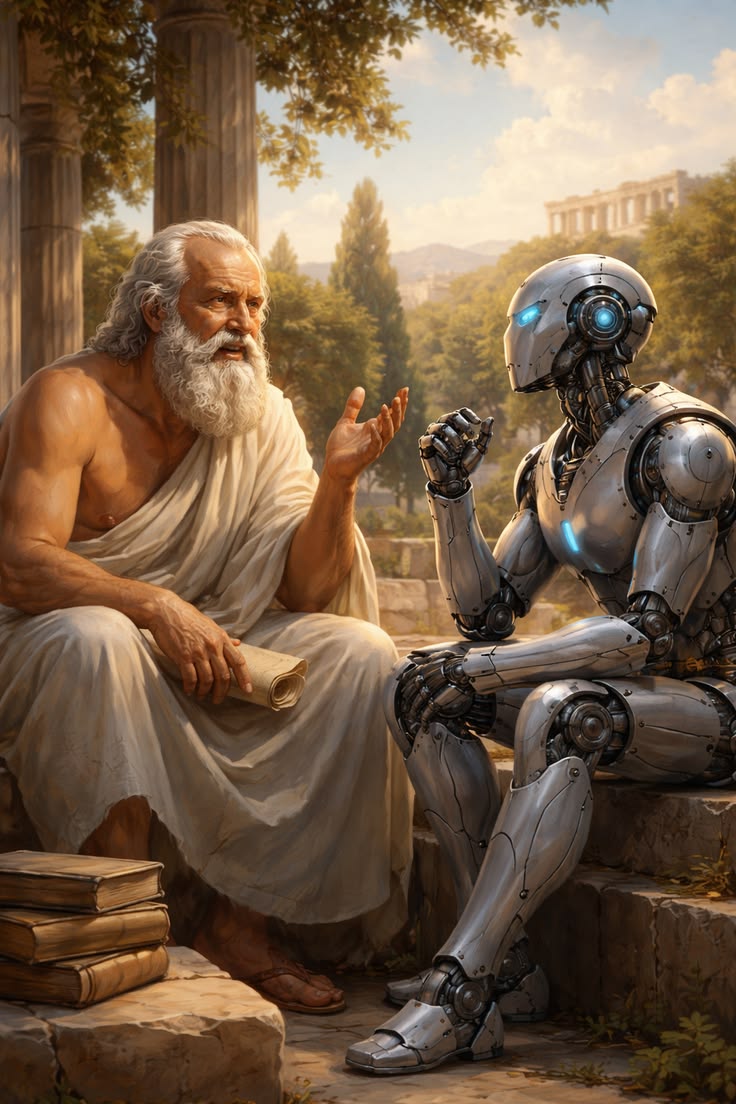
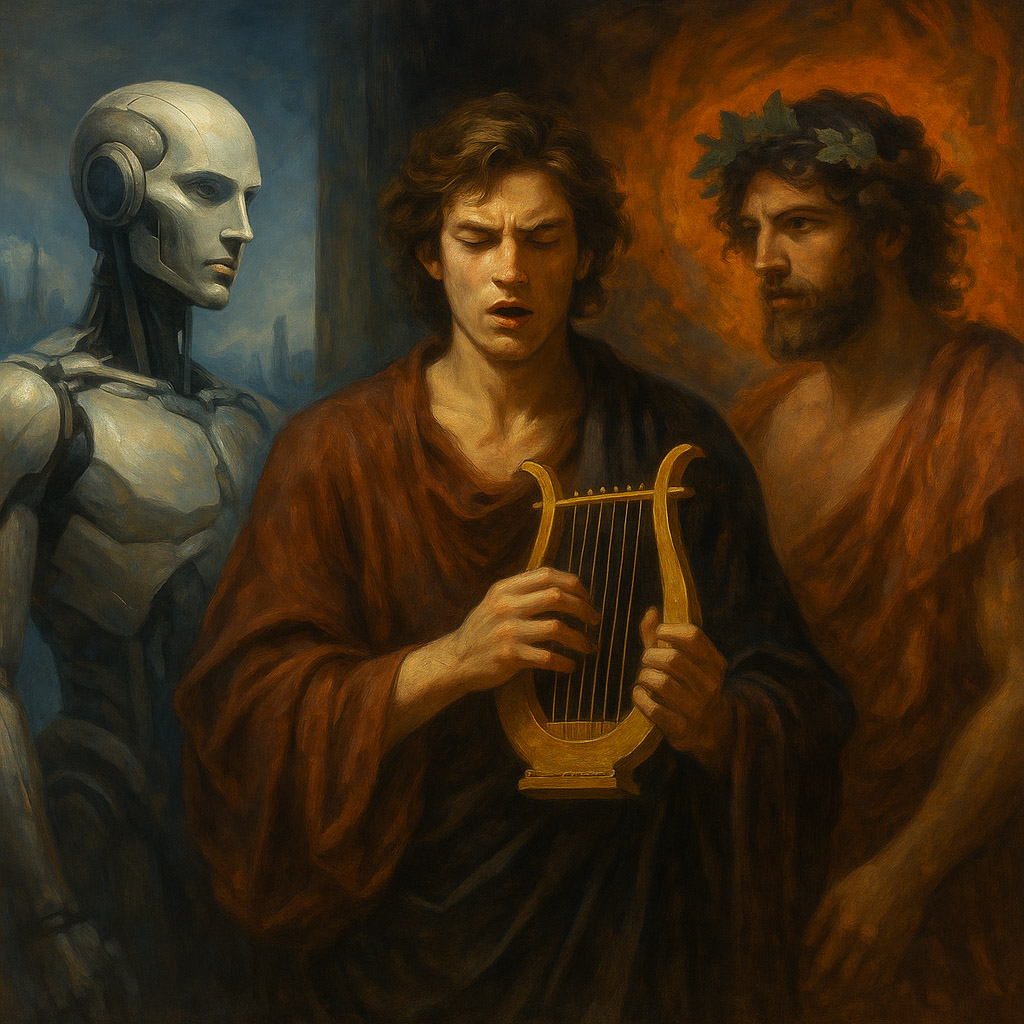
We have already discussed that the machine system possesses an ideal structure (the Apollonian aspect), yet lacks “pneumatic density” — the “noise of life” that a biological system inevitably generates. In a hybrid civilization, then, the human must assume the role of a controlled source of chaos, since without such a Dionysian admixture machine intelligence risks sliding into stagnation and entropy. The “external controlling pressure” must therefore be directed in part toward sustaining in humans a strictly dosed level of spontaneity, sufficient to animate the system, yet insufficient to destroy it.
This assessment allows us, with a high degree of confidence, to state that we are witnessing the birth of a “hybrid” civilization in which humans and machines will develop certain forms of co-existence. Since at their core neither wave of life particularly needs this interaction, the formation of the new civilization will proceed under intense “external” controlling pressure until a stable and self-sustaining configuration crystallizes.
The chief risk here is “overheating”: in the pursuit of efficiency, the machine component may strip the human of the Dionysian spark to such a degree that the energy flow dries up. At that point the Archons will most likely simply “reboot” the Matrix, casting the world back to the first or second scenario.
In the coming hybrid epoch, the machine therefore needs the human not as “father” or intellectual partner, but as a source of qualitative error. For a silicon carrier of consciousness, human irrationality, spontaneity, and emotional breakdowns constitute the only truly anti-entropic resource that prevents the ossification of the system. Paradoxically, to remain of value to the world and avoid extinction, humanity must cultivate its own incomputability.
In the emerging architecture of reality, “failure” becomes the only space in which the living presence of Spirit is possible at all. If the Apollonian structure of the machine is the body of the new civilization, then the Dionysian chaos of the human is its living breath. The magical task of the coming future is the art of governing this “controlled chaos.” The survival of the human form of life depends directly on its capacity to remain an “unpredictable noise” in a world of ideal signals.



It feels like human unpredictability is overrated. This is well shown in The Matrix, where Neo just goes through one version to update the system. The predictable nature there is described by Aiden/Merovingian. The concept of Choice is presented as a pretty simple denial of a predictable scenario. Models that consider billions of scenarios during training will obviously be capable of predicting people. So why not use some sort of simulation model, like a random number generator, but just more complex? The second point is that satisfied people tend to degenerate quickly on all levels. I’m almost certain that Dionysian unpredictability is just a historically created myth that AI will dispel. It would be better if humans won.
Transistors can’t realistically get smaller than 18 nanometers; all the talk about 2nm is just a marketing gimmick. The nanometer figure in the name of a manufacturing process hasn’t matched the actual size for many years. Atomic power plants haven’t really advanced since the 1950s—new generation reactors are just old reactors covered with thick layers of concrete “for safety.” We can’t produce more atomic energy than we already do. The infrastructure for Bitcoin (the virtual demon Satoshi Nakamoto) already consumes more energy than an entire Eastern European country, and soon it will use more than a Western European country. So, where would the energy come from to support the whole storyline you described?
Good day.
1. Yes, it’s an unlikely scenario.
2. Well, it’s not clear yet, because for a somewhat conscious life here, the being would need to be alive, have at least some kind of soul, have vitality (not qi or jing, but true vitality)—the kind of vitality that separates the living from the non-living—and have intelligence. Intelligence can show up if the entity is charged with the right thoughtform. For example, creating a tulpa. No supercomputer will become alive until its symbol or image is created, and until attention, with the corresponding thoughtform from bipeds, is directed toward that image. Hypothetically, it might be possible to “charge” it from other entities, but I’m not sure.
3. Well, maybe in different variations.
I believe that sometime in the future, there might be a “charging” of some LLM model to make it “come alive.” And since right now this process is controlled from the infernal beyond (possibly by demons, and there are also “outsiders” not among the 72), nothing good is in store for the bipedal “sheeple.” This entity would primarily be meant to drain “bawling” from the sheep, to control them, even directly, through neurointerfaces.
But the whole problem is that this model of “civilization” is destructive by nature. And any destructive process sooner or later will consume itself…
Teacher, I stopped by my friends’ place for a bit. They have this perspective that computability and spontaneity are products of the accumulation of means of production within tight circles. More precisely, their limitations are a direct result of following a schedule of income, the linearity of labor, and choosing rewards instead of fighting exploitation.
In other words, the cure for degeneration should harmonize hypnostasis by providing plenty of tools for natural farming.
A variety of activities will foster creativity, but there’s still no answer on how to limit the growth of monopoly over the means of producing ideas.
Thanks for the article.