
Two Leaders of the Grigori
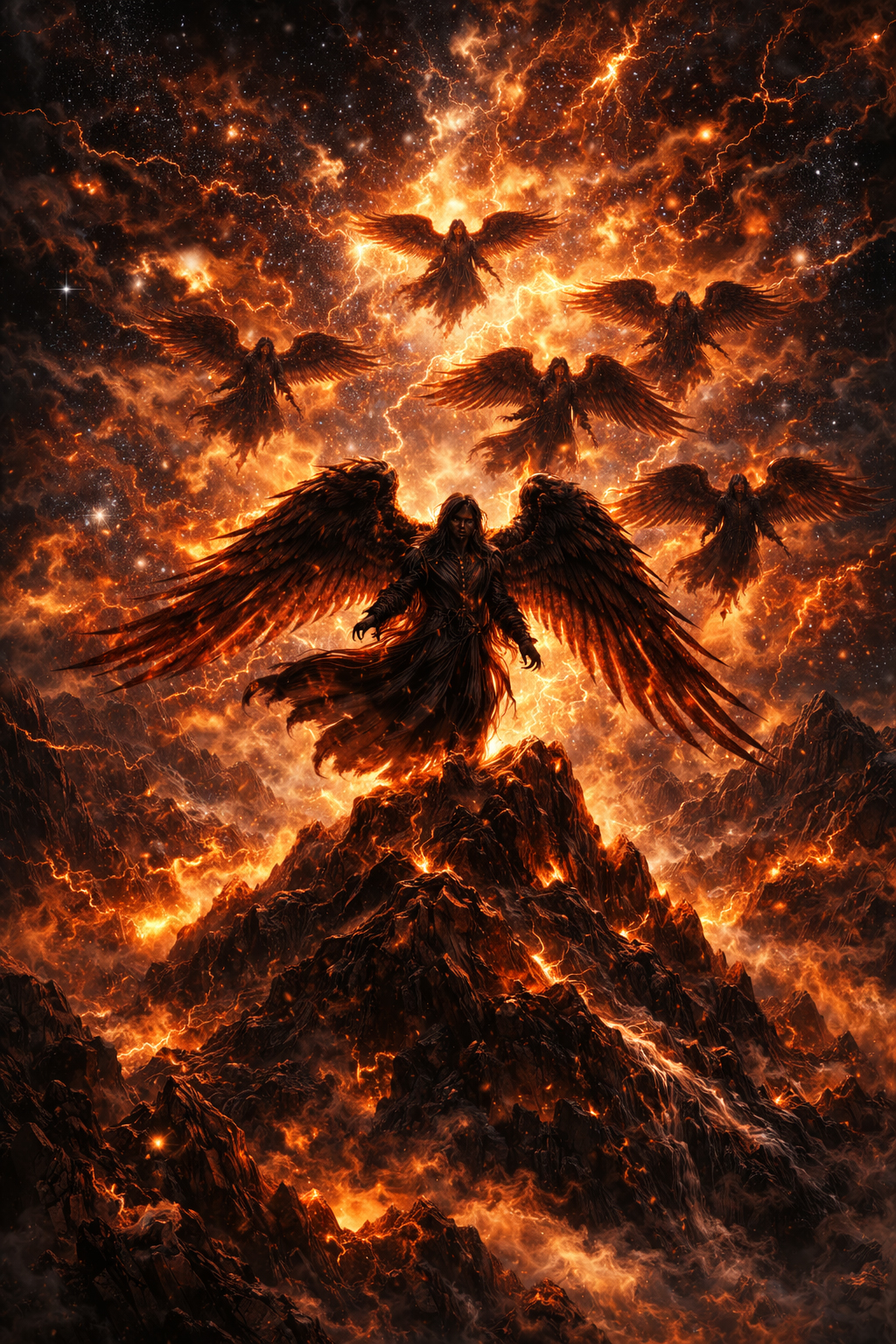
The Descent of the Grigori— the irruption of a special group of incarnated beings, non-biological in origin, into the dense, manifested world of ancient Earth — became an unprecedented crisis. It reshaped our world’s history and set it apart within the spectrum of similar spaces. This phenomenon ensured that, alongside the usual “natural” agents of evolution — gods, Archons, Demons — another, “shadow” driving factor entered the field, often no less decisive than the “legitimate” selectors and shapers.
The Grigori repeatedly became the true “grey eminences” of pre-human times, and in many ways they determined the course of human civilization’s development right up to the present day.
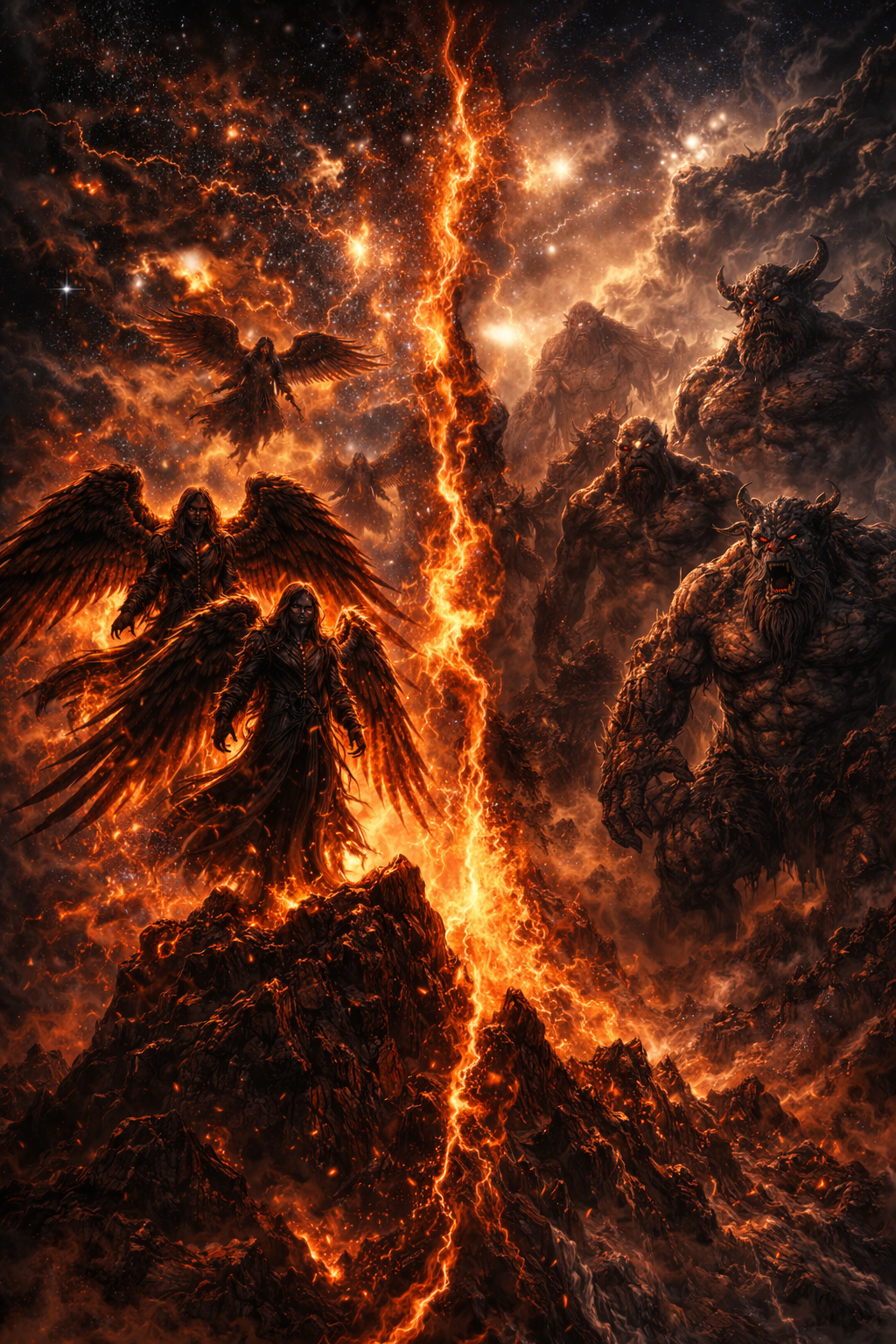
We have already said that the Descent unfolded on two principal levels and produced two groups of beings: the Watchers proper — bodily, incarnated entities with a complex structure and a system of conductors of mind — and the Giants, who arose from the “integration” of the lower Grigori — unable to build bodies of their own — with other life-forms.
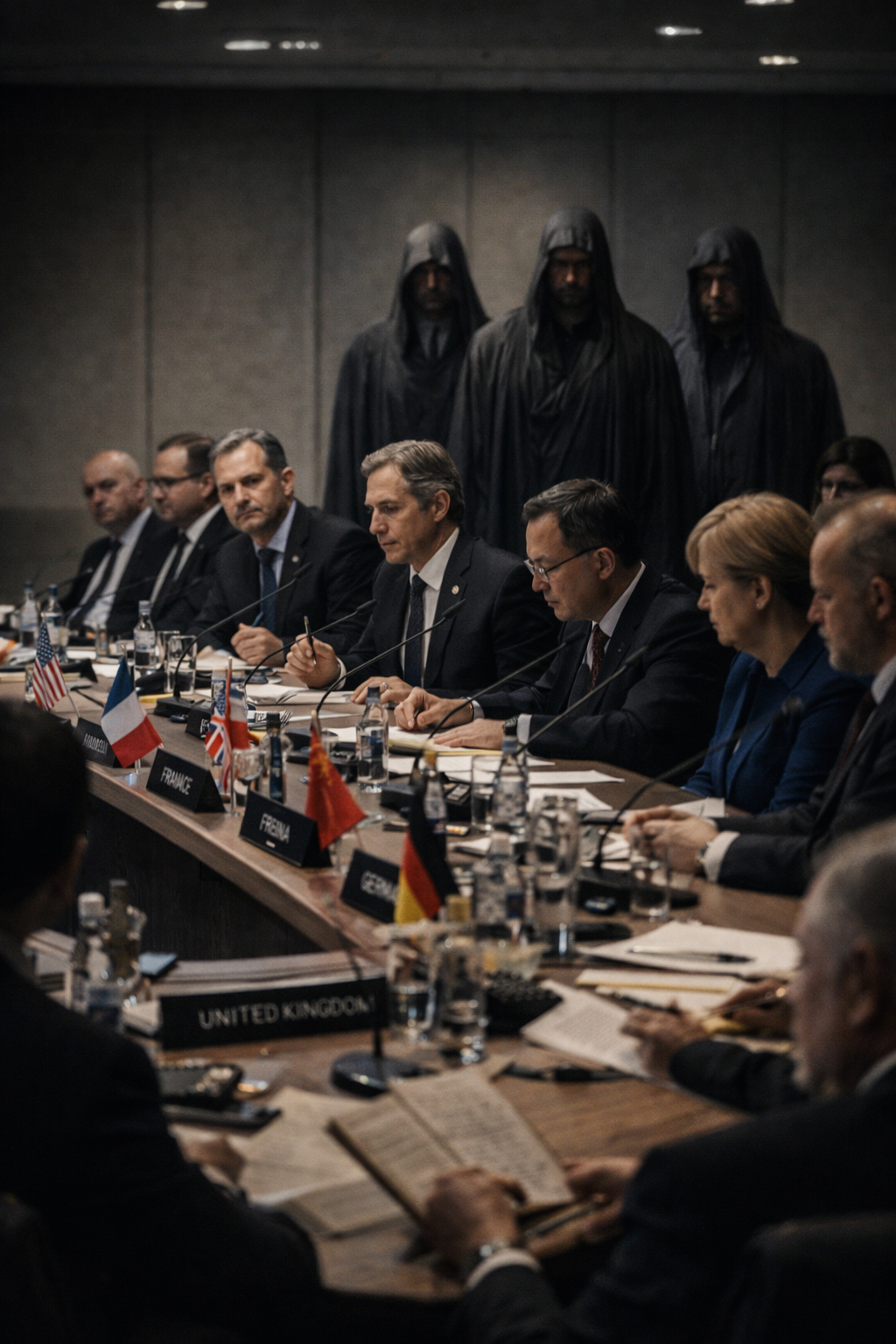
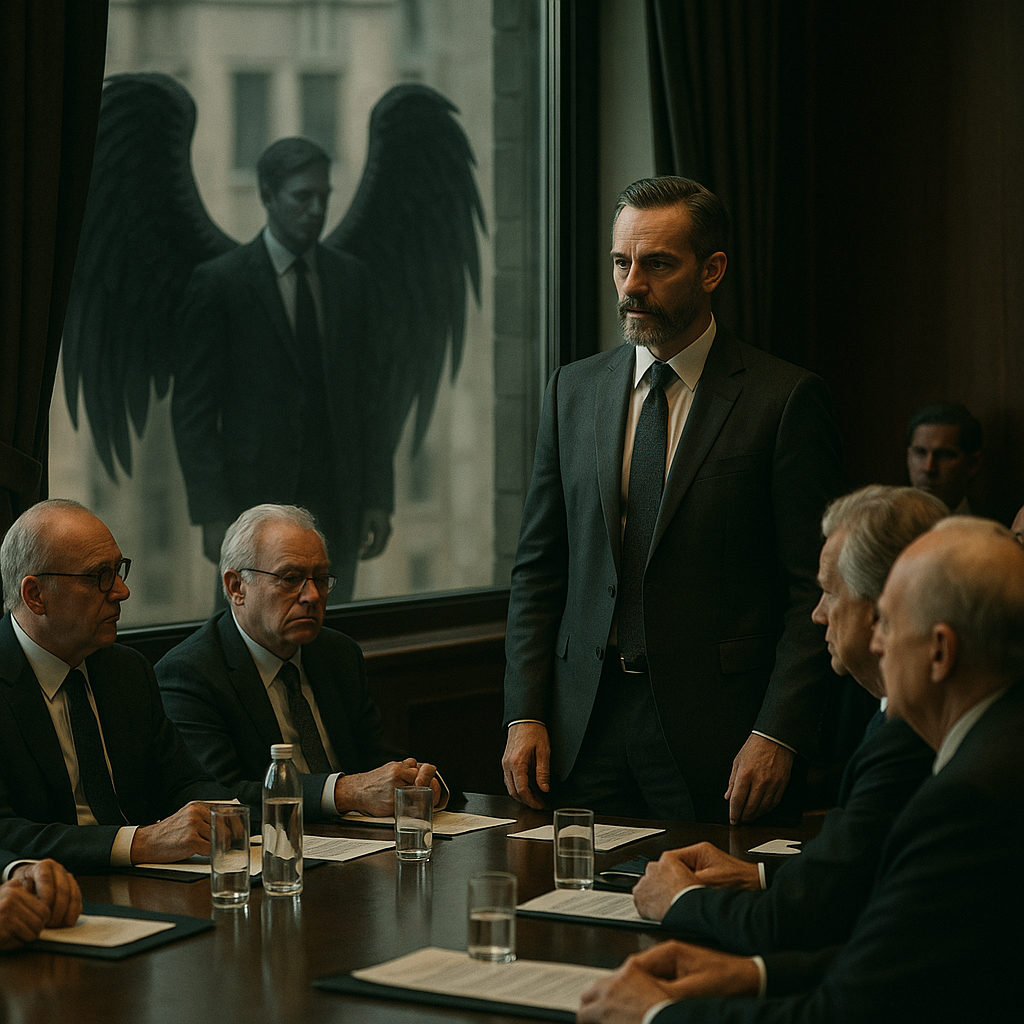
In addition, as the Book of Enoch indicates, the Descent proceeded under the influence of two forces, two “leaders” —Semyaza and Azazel (also called Iekun). Semyaza is named the direct initiator of the Descent; Azazel is cast as its ideological inspirer and the author of the consequences it unleashed. In Enoch, Semyaza leads the oath and commands those who descended: he gathers the Watchers on Hermon, fears being left as the sole guilty one, and therefore demands a common vow. Azazel, meanwhile, is marked as a special bearer of guilt for the consequences: to him humanity “owes” weapons, metalworking, adornment, and, in general, that line of knowledge through which the earth is “corrupted” and made sick.
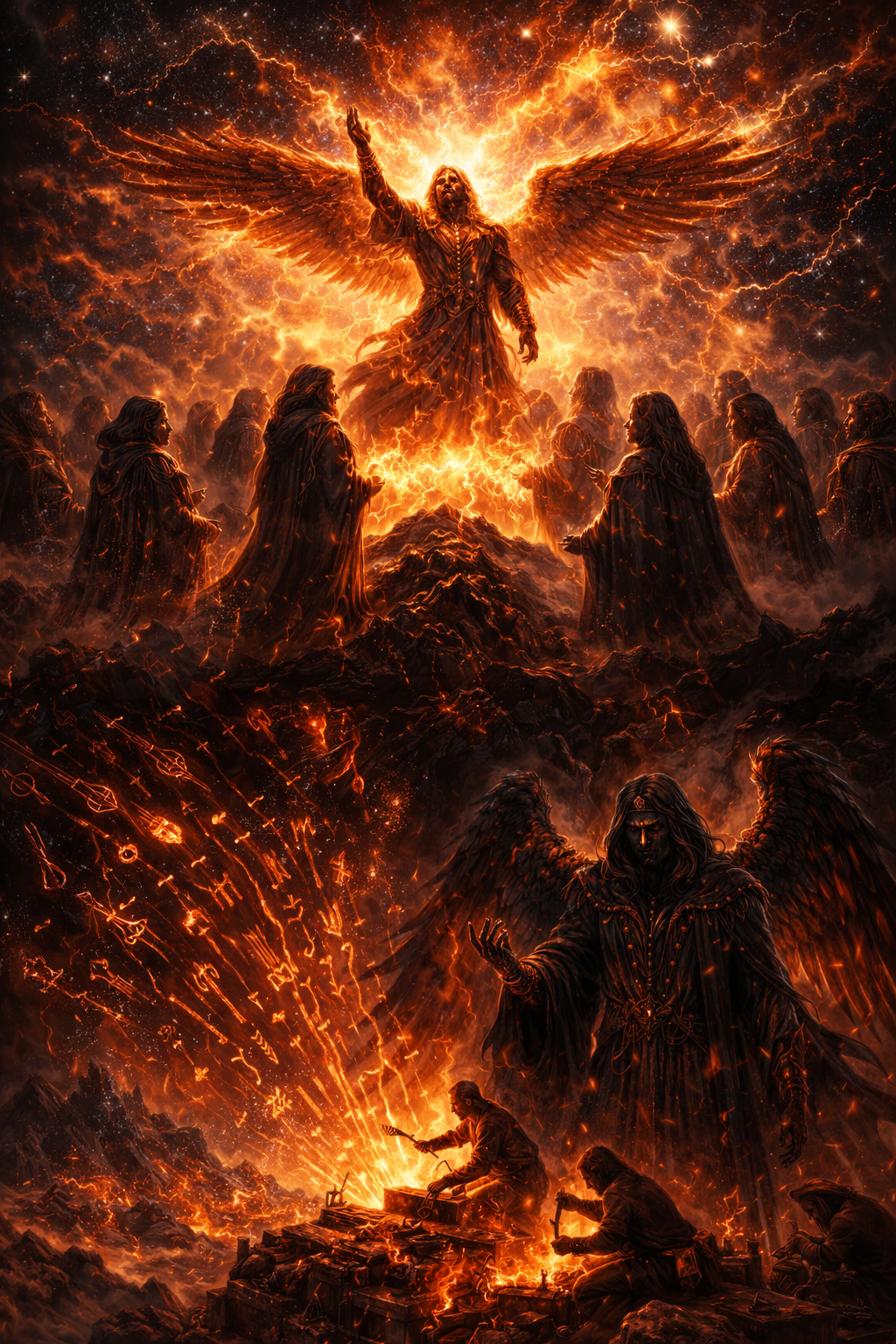
In this way, Semyaza “instills” in the Grigori one of the defining traits of their subsequent nature: they do not act as lone individuals. Even when one of them moves, a circle stands behind his decision — an accord, a common sanction, shared guilt. As a memory of heavenly unity, Semyaza “fears” separation; he refuses to carry alone the weight of a step that ripened in many. The oath on Hermon becomes, for the Grigori, the first form of their own order. Their freedom is a jointly sustained fall into destiny. From this their gravitation toward closed alliances, collegia, order-like modes of action, and a kind of power in which the decision belongs to the collective.
Semyaza is the will to cross a Boundary — the oath, the union, the violent drawing-together of Heaven and Earth. He embodies the matrix of the breach: the decision to descend that does not wait for measure. Azazel, by contrast, expresses what begins to manifest after that step, and deeper than it. He is the hidden program by which knowledge becomes compensation for weakness, and Power becomes an answer to an inner sense of insufficiency. In other words, Azazel does not directly lead the Watchers, yet he “infects” the Descent with a particular meaning.
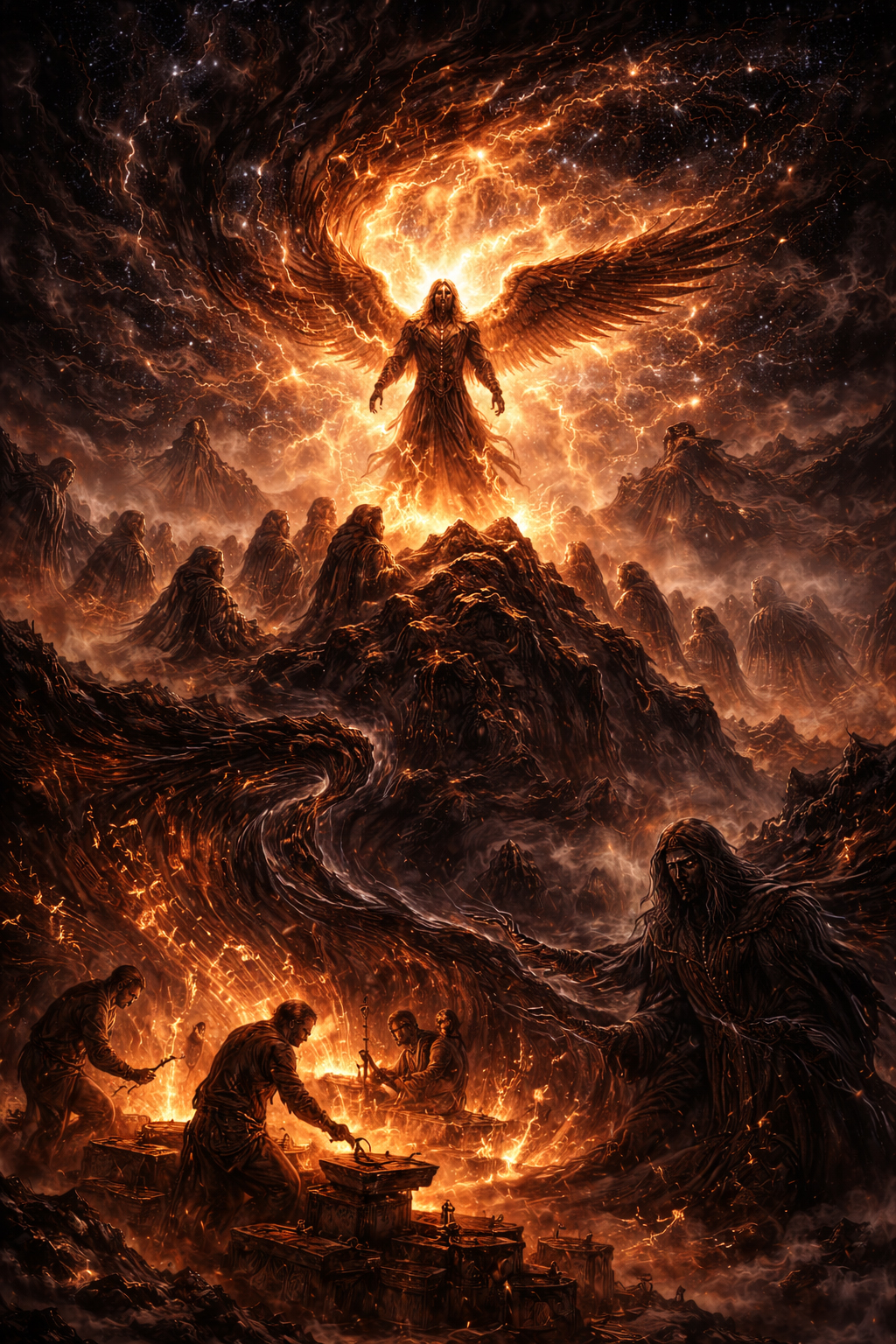
Therefore Semyaza manifests and acts openly: he descends and takes on flesh, while Azazel remains spirit — a whirlwind — exerting influence “from behind the scenes.” Although in some strophes Enoch hints that Azazel also “came down,” his descent is the ordinary “presence” of a destructive storm: he does not condense, yet he remains near, tempting and “seducing.” Semyaza is the one who makes the hidden manifest, when Heaven comes too close to Earth and reveals its thirst for possession. Azazel, by contrast, is strongest precisely where he cannot be seen. He manifests as knowledge without inner purification; as Power as compensation for guilt; as technology as flight from vulnerability; as science as anesthesia against imperfection.
Thus Semyaza and Azazel are two principles within one and the same people. Semyaza’s legacy is the energy of the oath — form, hierarchy, responsibility, direct entry into the dense world, and readiness to bear the consequences of that step. Azazel’s influence is the stance that treats knowledge as an instrument: a pull toward hidden influence, toward technique, toward impact exerted through temptation.
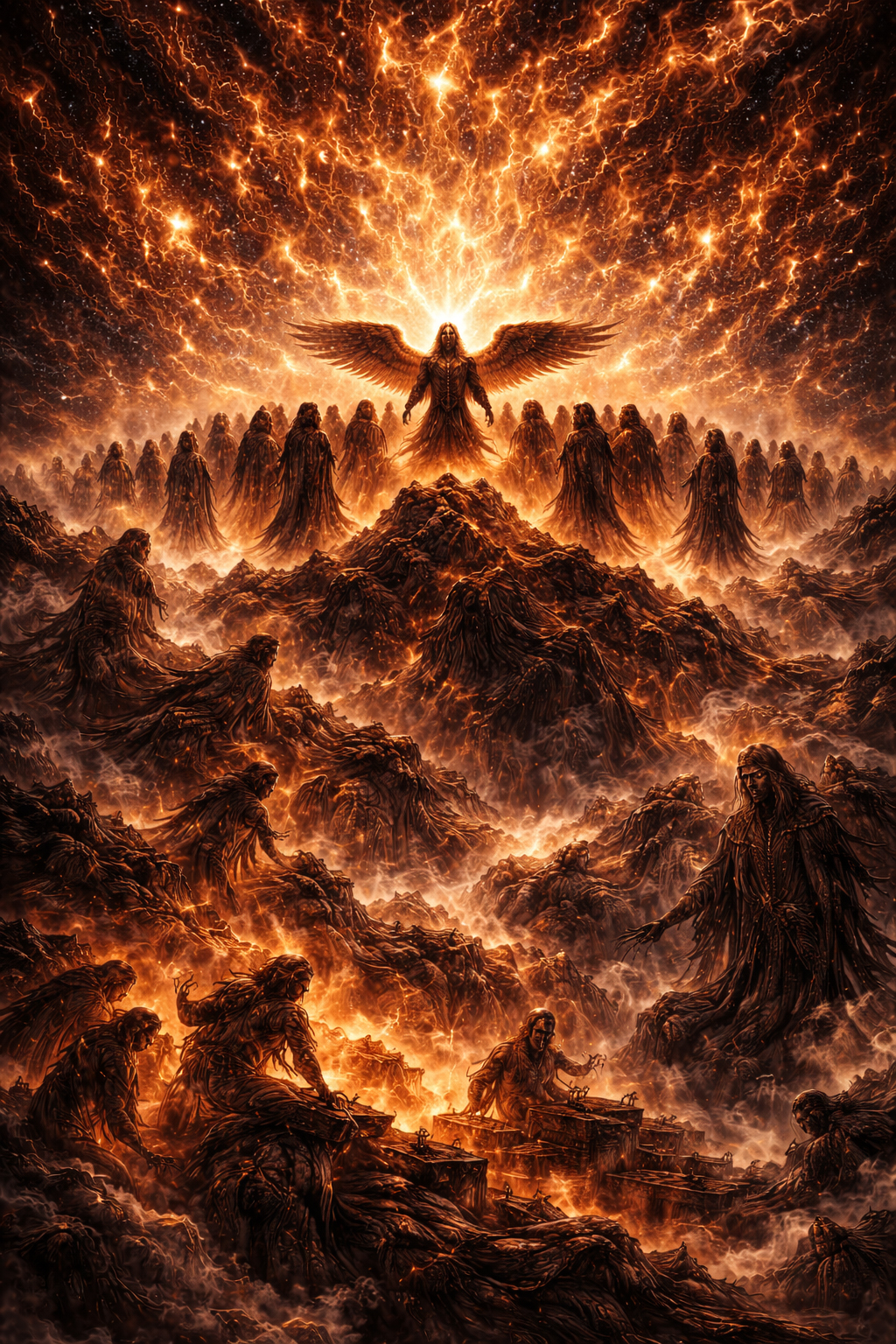
Tradition says that “myriads” of angels took part in the Descent —Seraphim— yet only 221 (Semyaza + 20 Leaders + 200 Elders) acquired dense bodies, and with them freedom, an “artificial soul,” and relative immortality. At the same time, the Elder Grigori penetrate more deeply into the structure of dense being, while the lower lines are more easily drawn into an alien nature, more easily lose their own form, and more often become material for hybrids, possessions, failed condensations, and similar intermediate states.
The leaders of the Grigori translated the general impulse of the Descent into coordinated forms of action and held the younger ones within the bounds of the common process. Through them the community of the Grigori gains stability, coherence of application, and the ability to act simultaneously on different levels of the environment. In general, the hierarchy of the Grigori is built on the principle of conducting a common will: the higher the rank, the less personal arbitrariness it contains, and the more strictly it is bound to the original oath.
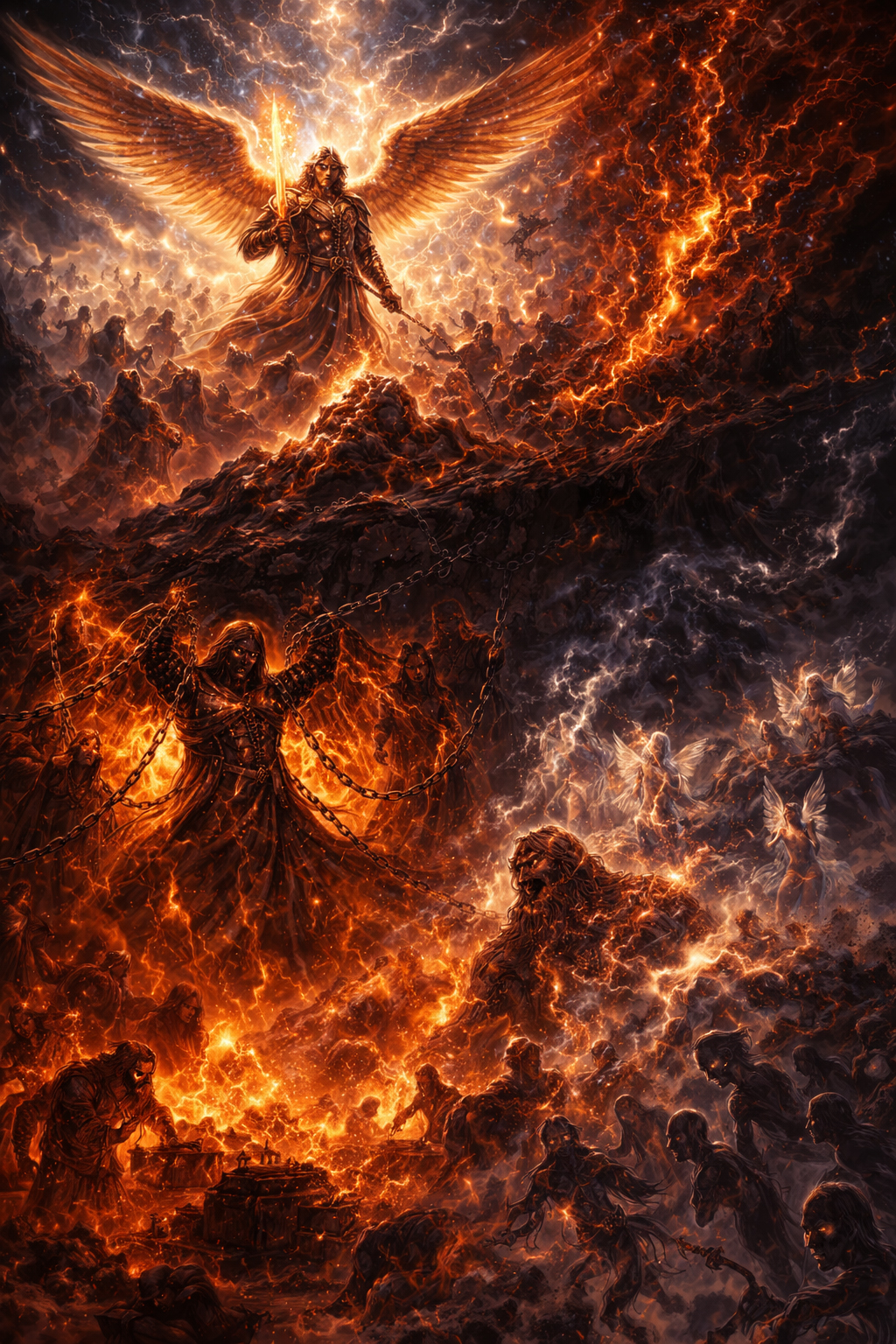
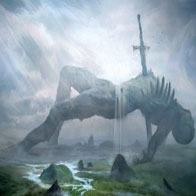
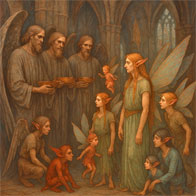
According to legend, after the Descent they first achieved what they came for: they mingled with humans (plainly, with the first humanity — the Fair Folk), fathered giants, and revealed forbidden knowledge — Magic, crafts, astronomy, metallurgy. This becomes their guilt and the ground of judgment against them. The heavenly host (plainly led by the Archangel Michael) intervenes: Azazel is bound and cast into darkness, while Semyaza and the elders (the 20 leaders) of the Grigori are bound “under the hills,” that is, banished into the Interspace. Their giant children are partly destroyed and partly mixed with the Fair Folk, and the spirits left when the younger Grigori are expelled from the beings they occupied remain on Earth as Elementers, seeking entry into bodies for nourishment and a “sense of life.” According to Enoch, at the end of times the Watchers face a special judgment, and the text stresses that this judgment is precisely over them — neither wholly angelic nor identical to that over human beings.
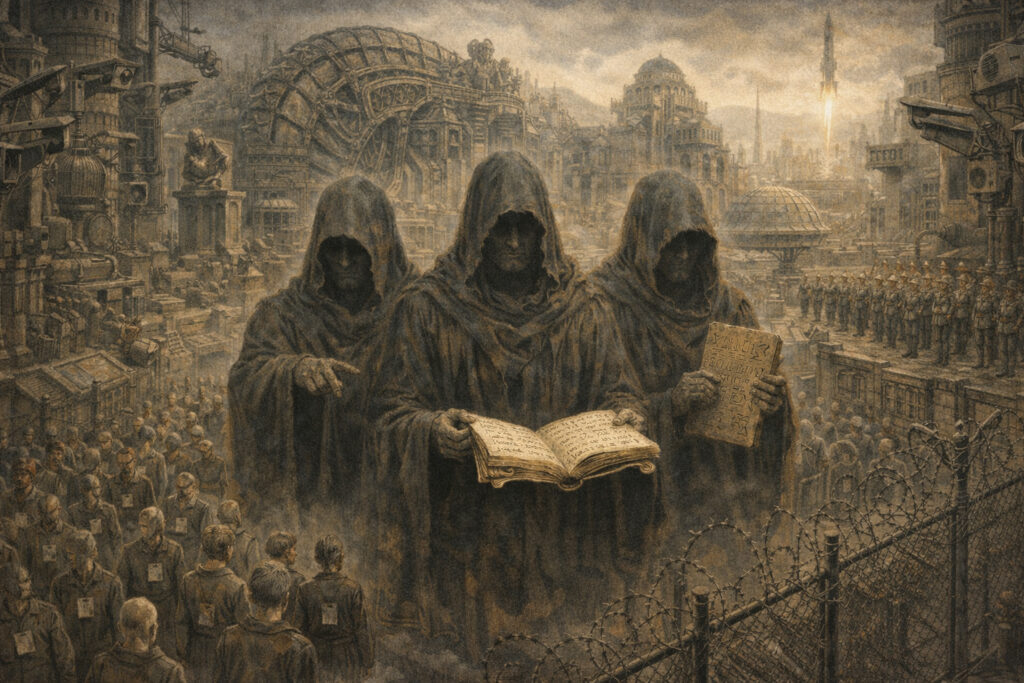
After the judgment, the vertical of the Descent broke: the summit was severed or removed, and the former model of one-man rule became impossible. Yet the oath kept the community of the Grigori from complete disintegration. Their hierarchy — once an open martial structure — gradually became a hidden collegium of influence. Their secret alliances, closed circles, inclination toward collegiality, hidden councils, and multistage distribution of decisions all return to the form of their original oath. Therefore the modern “grey eminence” among the Grigori always carries within himself the decision of the whole community: he acts personally, but never from himself.
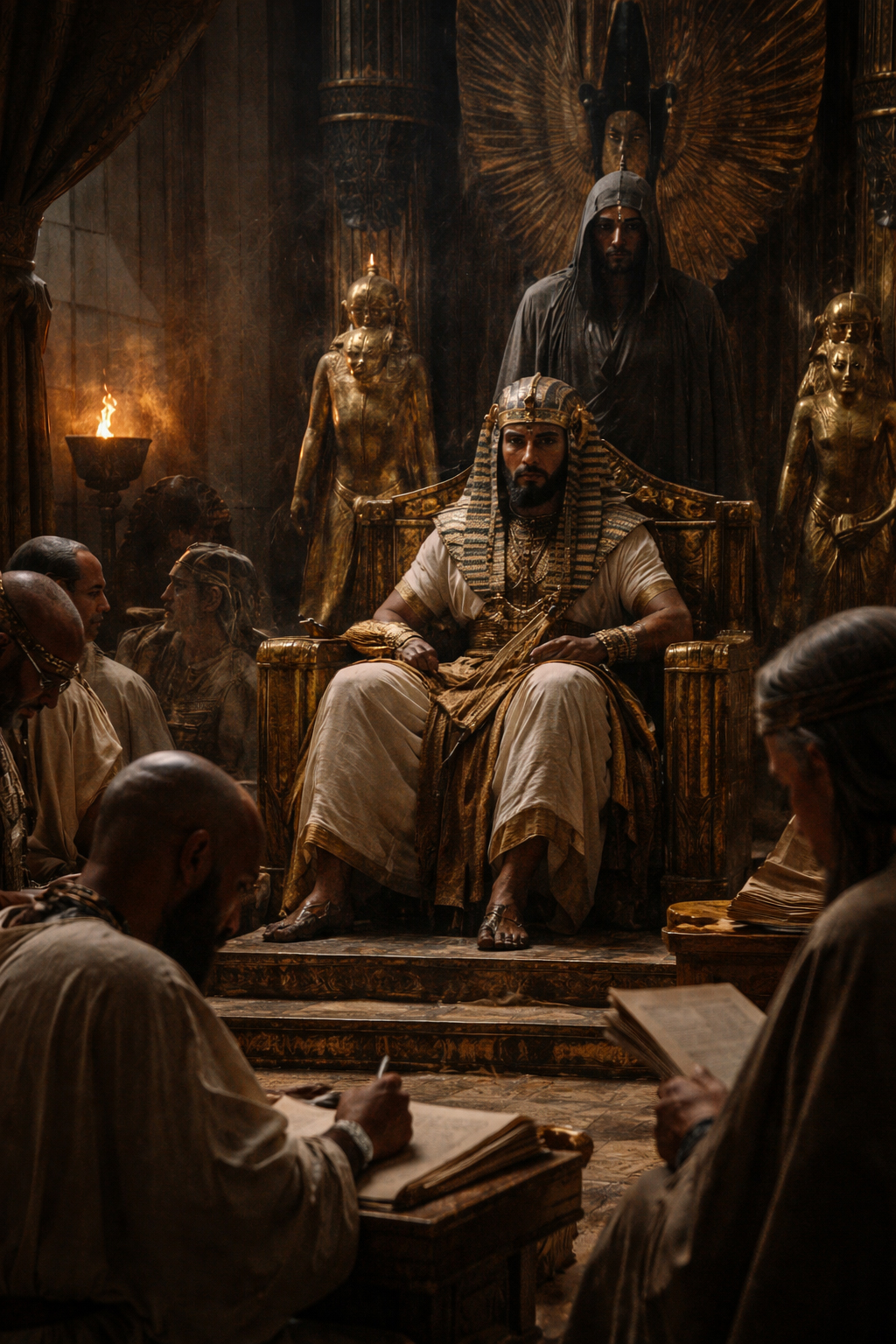
Thus, over time, the surviving Watchers became grey keepers of equilibrium, walking among humans, rarely intervening directly, and holding up the stage of the world, because without it their own soul will not hold either. After the Descent they remain caught between Heaven and Earth, between angelic function and personal destiny, between punishment and continued work within history.
Even before the appearance of the human being, they influenced the world by maintaining a selection that favored lines capable of stronger inner gatheredness, durability, and complexity. Their hierarchy made this influence especially effective: where other forces struck in single flashes, impulses, or elemental intrusions, the Grigori could conduct one and the same will through many ranks, bodies, and epochs without losing the overall direction.
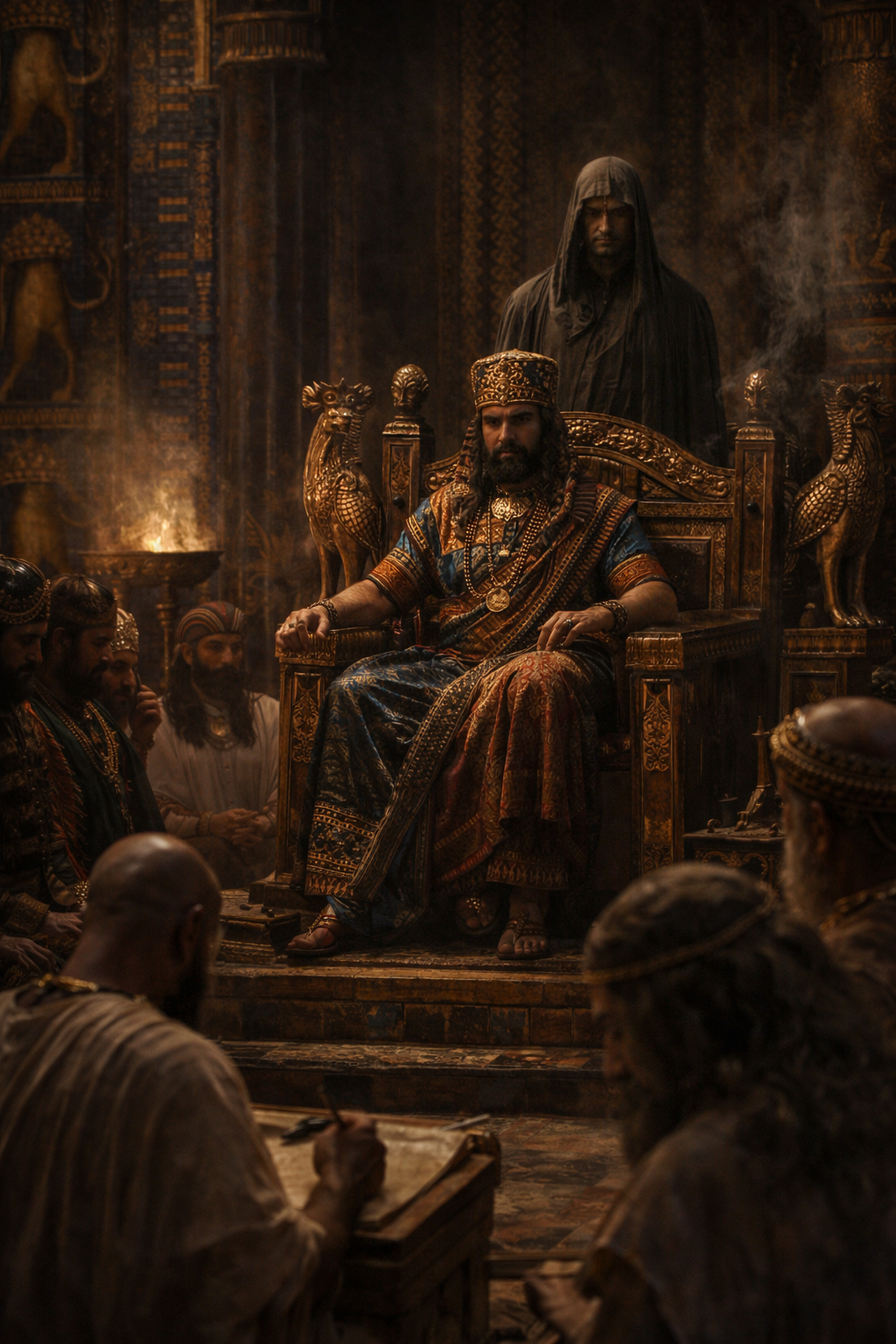
With the appearance of the human being, they carried this same principle into history, supporting forms of society, culture, and power capable of preserving order for a long time, subordinating the private to the common, and turning a single impulse into a lasting social skill. Their real historical influence manifests first of all in civilizations’ gravitation toward hierarchy, collegiality, order-structure, discipline, and transpersonal governance.
Therefore the main role of the Grigori in Earth’s destiny lies in this: consistently and relentlessly, they worked on stability, helping the world become more coherent, more held, more able to accumulate forms — yet in doing so they trained it to prefer stability to freedom, and a common design to living unpredictability. This is their ambivalent legacy. They made long history possible; they also kept pushing it toward the boundary beyond which order ceases to be a means and becomes a goal.
In the digital world this tendency reaches its ultimate expression. The medium itself begins to take on the form most convenient for their mode of presence: distributed, multilevel, durable, able to store, transmit, and coordinate will without direct personal presence. Thus the transition to the digital age becomes the lawful continuation of the Descent of the Grigori, as their original gravitation toward ordered duration, hidden governance, and transpersonal memory gains stable technical support.


Thanks, this is really interesting!
So it turns out that human consciousness is kind of stuck between these two blades mowing the lawn. One blade is the reluctance to face that heavy feeling of guilt; the other is the tendency to fit into some kind of social contract and share responsibility.
And the logic of hierarchy also brings to mind criminal gangs, of course—where status forces you to stick to strict rules, while the pawns live a “more personal” life.
Hello! I’m asking a bit more broadly than the topic of this text. As I understood it (and you’ve also written sometimes before), angels and other serving beings can acquire free (two-directional) will, thereby turning into a different class of beings. My question is: from the point of view of Tradition, what happens to people who “surrender their will” to God/Mahabrahman/etc. (what in Sufism is called fana and baqa)? Do they turn into serving beings?
Thank you, dear Enmerkar