Enoch and Metatron
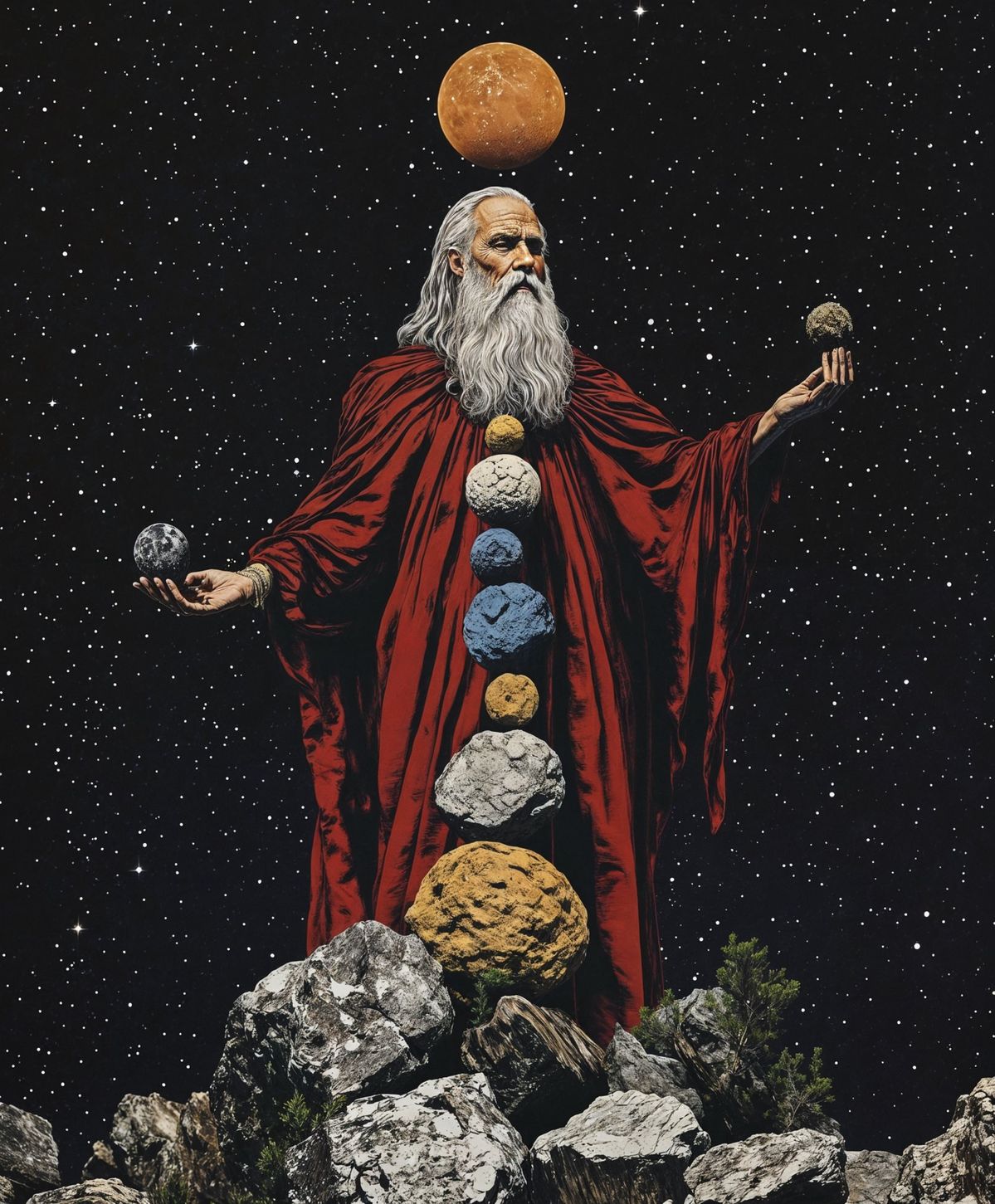
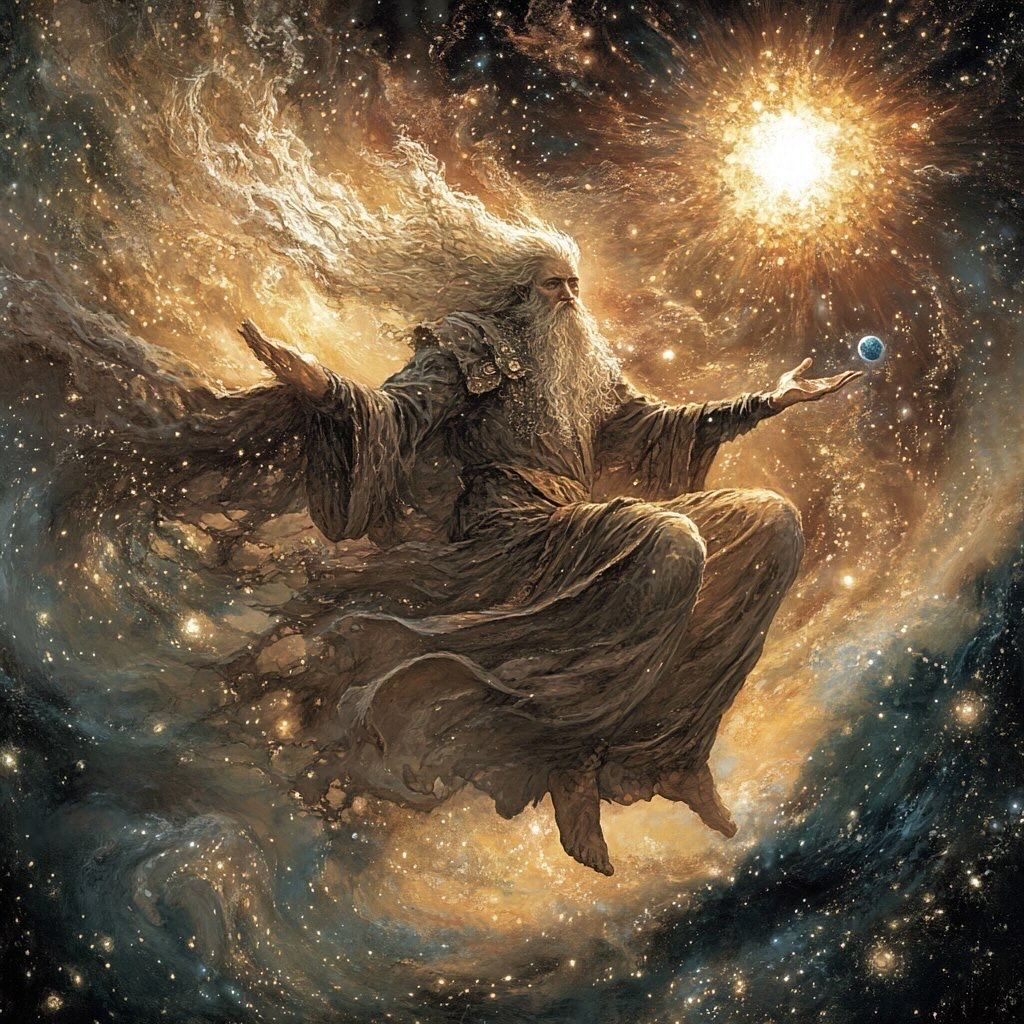
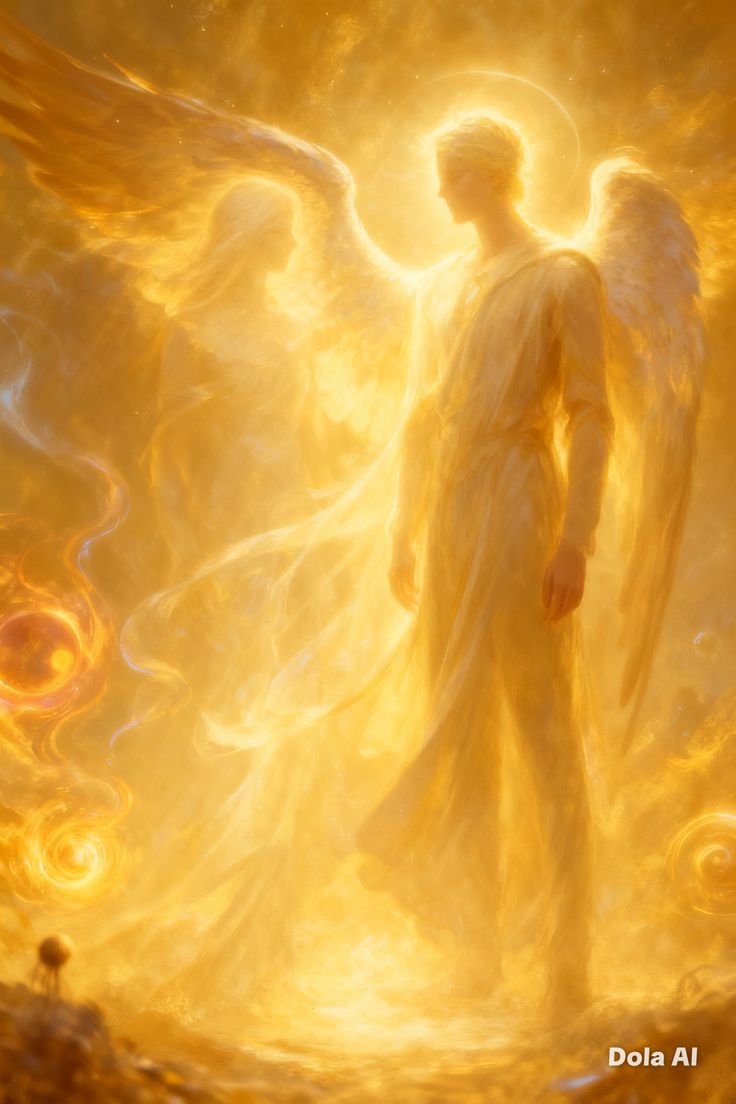
Among the Ways of development open before the human mind, the possibility of “being clothed in garments of Light” occupies a minor yet decisive place: a special transformation of one’s own nature. Its most conspicuous example is the Old Testament patriarch Enoch.
The Book of Genesis says only a few words about the seventh descendant of Adam: “And Enoch walked with God; and he was not, for God took him.” A man taken alive, having passed beyond death, becomes the highest of the angels —Metatron, Prince of the Countenance, the “Lesser YHVH,” he whose name is like the name of the Most High.
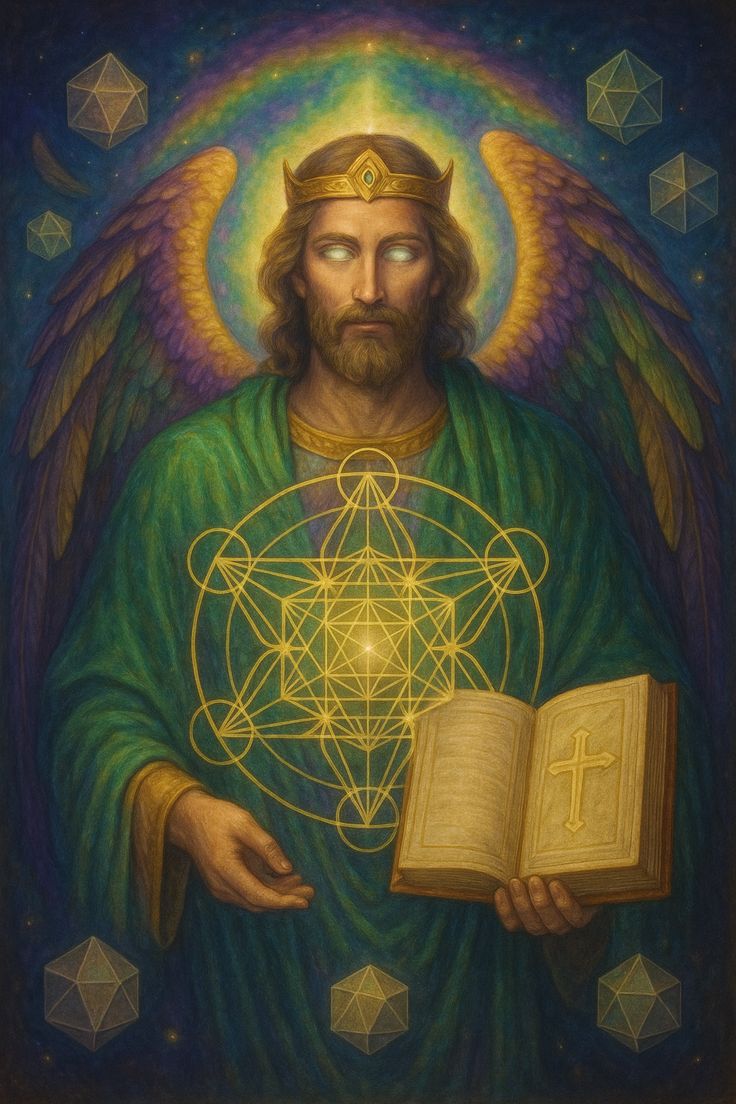
Tradition also speaks of Metatron as an angel standing by the Throne from the beginning of creation. This raises a hard question: if Metatron existed before Enoch, then what occurred at the moment of ascent? Did the man dissolve into the angel, did the angel enter the man, or did something third occur? And where, in that case, did the “original” Metatron go?
Sefer Heikhalot, the “Book of the Heavenly Palaces,” tells how Rabbi Ishmael, ascending to the Throne, met Metatron there, and Metatron named himself: “I am Enoch, son of Jared.” His flesh was turned into flame, his veins into fire, his bones into coals, his eyes into torches. He was enlarged to the dimensions of the world, received wings, a throne, a crown inscribed with the letters of creation, and the name “Lesser YHVH.” The surrounding angels call him “the Youth,” for he is younger than them all.
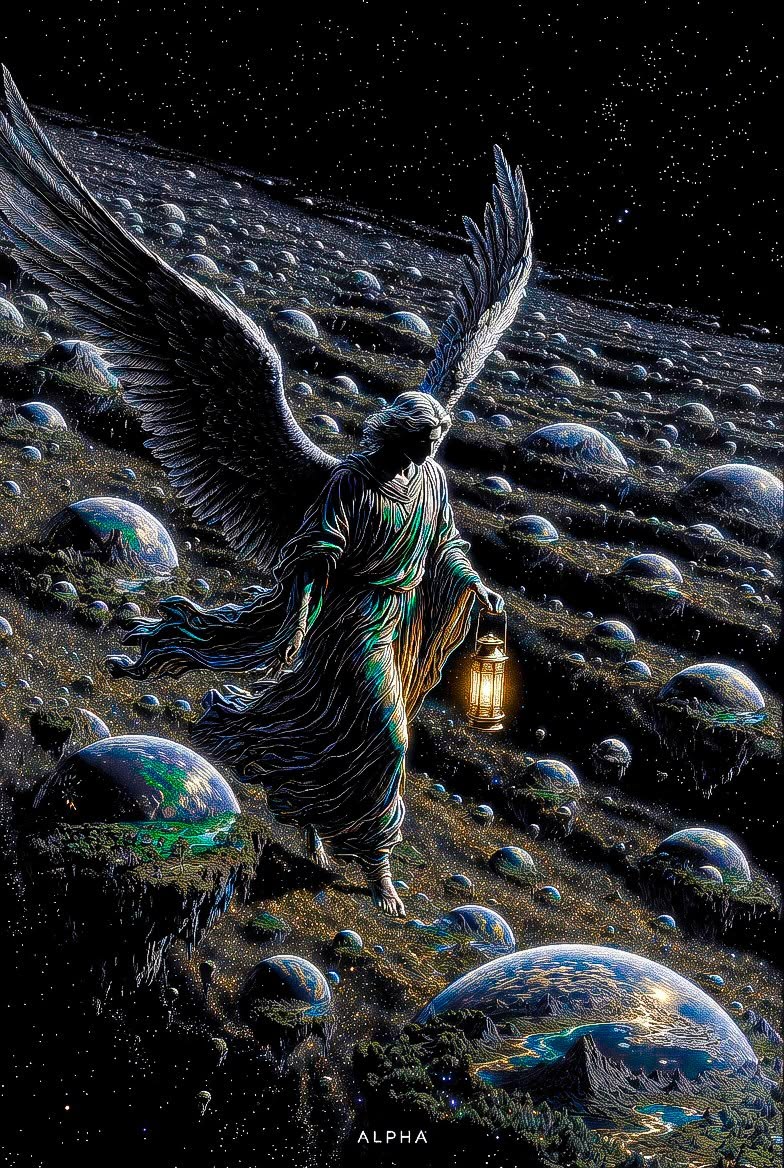
Tradition identifies Metatron with the angel of whom God says to Moses: “Behold, I send an Angel before thee, to keep thee in the Way… for My name is in Him.” We have already noted that the name Metatron most likely goes back to the Latin metator— the one who goes ahead of an army, laying out the route and marking the place of encampment.
In the “Apocalypse of Abraham,” the angel Yahoel says that the power of the Ineffable Name abides in him, and the epithet “Lesser YHVH” clearly reaches back to this stratum as well. The archangel Michael shares with Metatron the title of Great Prince. The Talmud describes Metatron as the one who records the merits of Israel, and as the angel “whose name is like the name of his Master.” The Talmud even places in his mouth the words of the psalm “I have been young, and now am old”: Metatron is the eternal Youth, existing from creation.
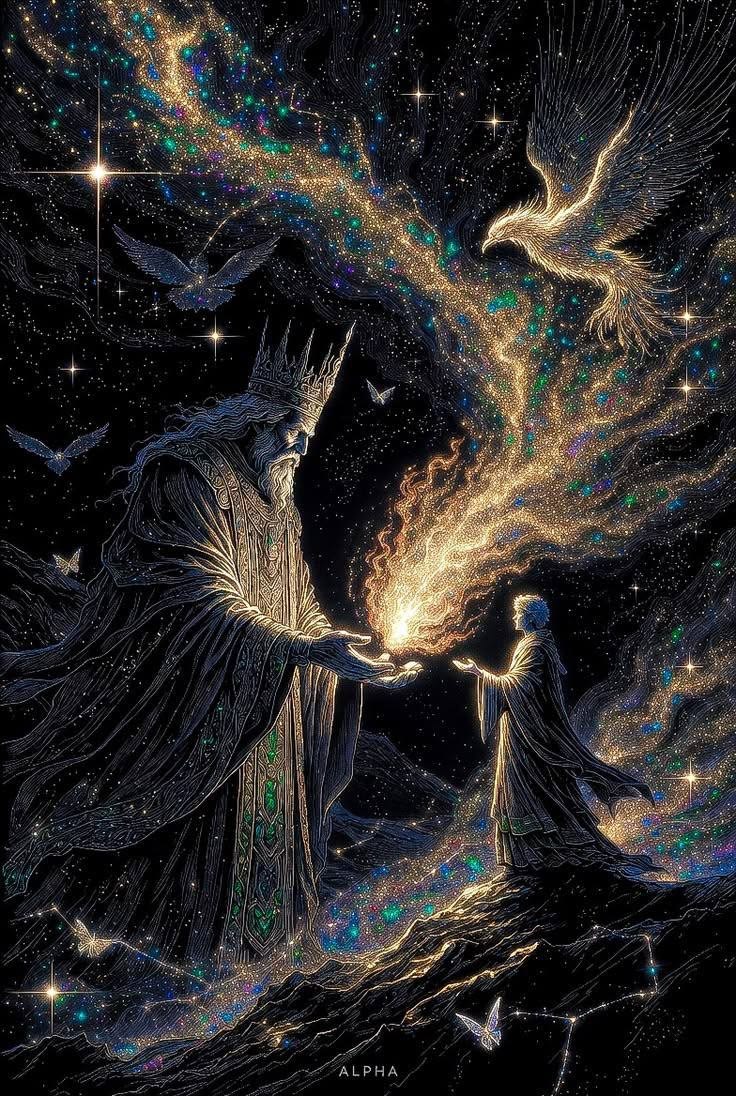
It is precisely with this great Image that the ascended Enoch merges. Kabbalah distinguishes them by spelling: the seven-letter name (מיטטרון) belongs to the primordial Metatron, Metatron Rabba, while the six-letter name (מטטרון), without the letter yod, belongs to Enoch, who ascended later and attained only a portion of the radiance and authority of the primordial. By gematria the six-letter name equals the Name Shaddai (שדי), and this equivalence carries the meaning of the words “My name is in Him.”
Thus, in the ascent and “Clothing,” Great Metatron remains on his rung, while Enoch takes the lesser. Their relation is compared to light and its reflection. The sun remains in its place when its image appears in a clean mirror; the mirror shines according to its purity. That is why Sefer Heikhalot places angels “older” than Metatron above him.
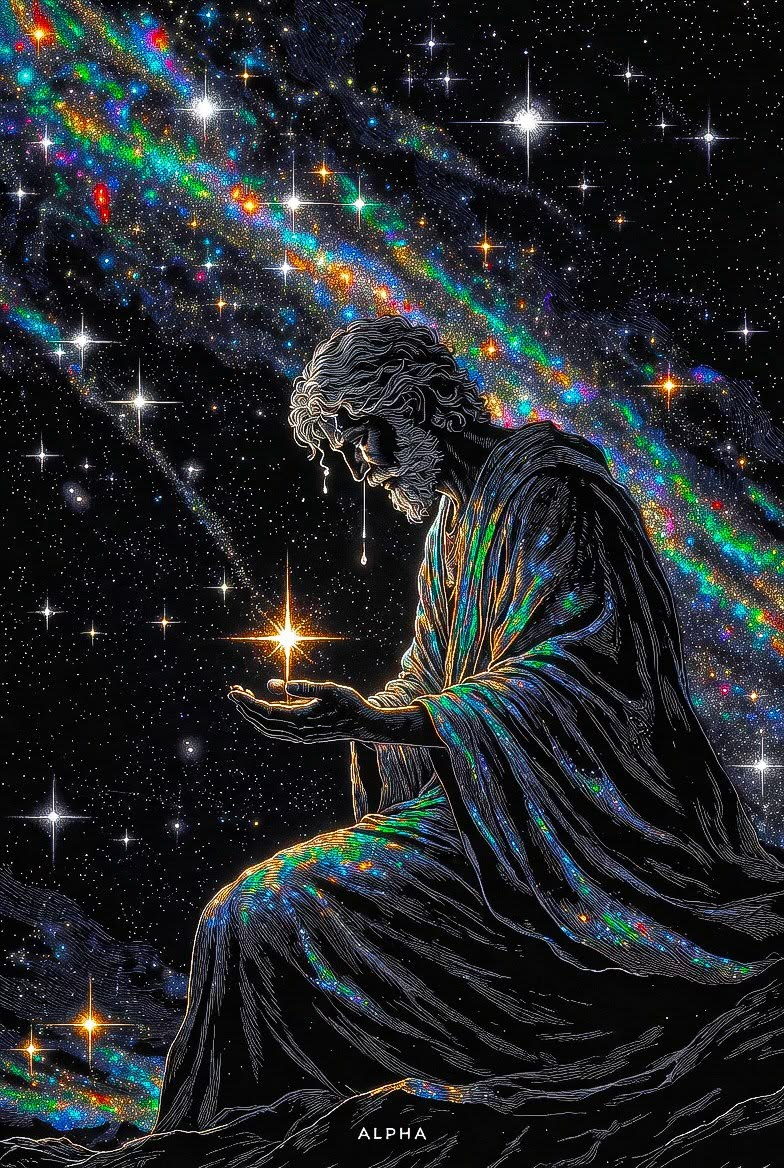
The essence of the change is clarified by Midrashic traditions. They relate that before the Fall Adam was clothed in “garments of light” (אור), and after it he received “garments of skin” (עור): one letter separates Divine radiance from nether flesh. The body in its physical form is that leathern garment received in place of the withdrawn Light. The Talmud says the primordial, “luminous” Adam “extended from one end of the world to the other.”
Enoch accomplishes the reverse transformation. According to Sefer Heikhalot, God strengthened Metatron “in the generation of the first man,” and the Zohar and Lurianic Kabbalah clarify that Enoch clothed himself in the very radiance Adam lost when he was expelled from Eden. Therefore the transfigured Enoch, like Adam before sin, is commensurate with the whole world. He removes the “garments of skin” and returns to himself the Light that originally belonged to man.
In this account, the primordial Metatron is that very “garment of light”: a form, a rung, a “body” in the higher world through which the Name acts. Enoch enters it, ascending from the lower world to the higher. That is why in Sefer Heikhalot Enoch speaks, yet acts by the powers and name of Metatron. For the same reason he receives only a part of the radiance of the primordial, taking in as much as he can bear.
Kabbalistic tradition notes that in an ordinary man the higher levels of the soul remain “surrounding light”: they abide above him and do not enter the body. The work of the righteous makes him a vessel capable of receiving them in full. When the whole light enters, the “leathern” body cannot contain it, and this usually means death. In Enoch’s case, the body is transfigured together with the soul and, in this new state, enters the Fire of the higher world.
Thus, the Light that clothed Enoch belongs to the root of his own soul, and his personality is preserved intact: in the higher world he remembers that he is Enoch, son of Jared.
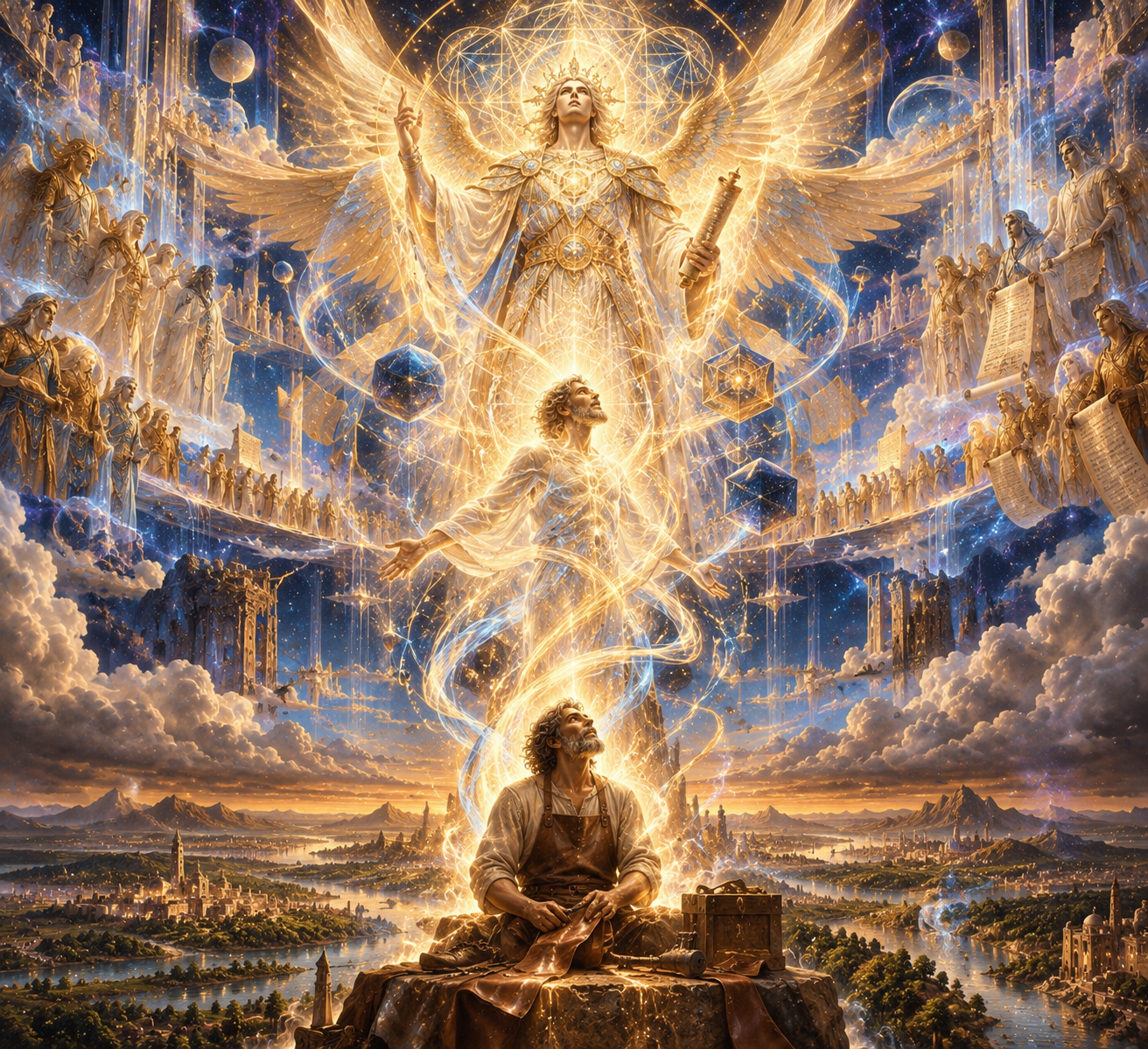
Medieval legends describe, with striking specificity, how a man can come to such a transfiguration. In these accounts, Enoch was a shoemaker, and with every stitch he drove through leather with an awl, he blessed God with all his heart and full intention, pouring the blessing upon the “emanated Metatron.” Thus Isaac of Akko, a kabbalist of the late 13th and early 14th centuries, transmits the legend, tracing it to an Ashkenazi Master. In his words, Enoch’s transfiguration signifies union with the Shekhinah, whom he calls the “upper Metatron.”
In other words, this emanated Metatron exists prior to Enoch, and Enoch labors for him. His upward Way is accomplished through work: an ordinary act, carried out with full intention, becomes a means of uniting worlds.
Moshe Cordovero adds that through action a man becomes a Chariot for one of the sefirot. Enoch was granted his rung precisely because he was a shoemaker: every stitch he dedicated to the need of the Most High, and by this he united Malkhut, called the “shoe,” with Tiferet. Therefore he was transformed into a chariot— the Way of Malkhut’s ascent. The shoemaker in this description is Yesod, the righteous one, binding the masculine and feminine principles of the Divine.
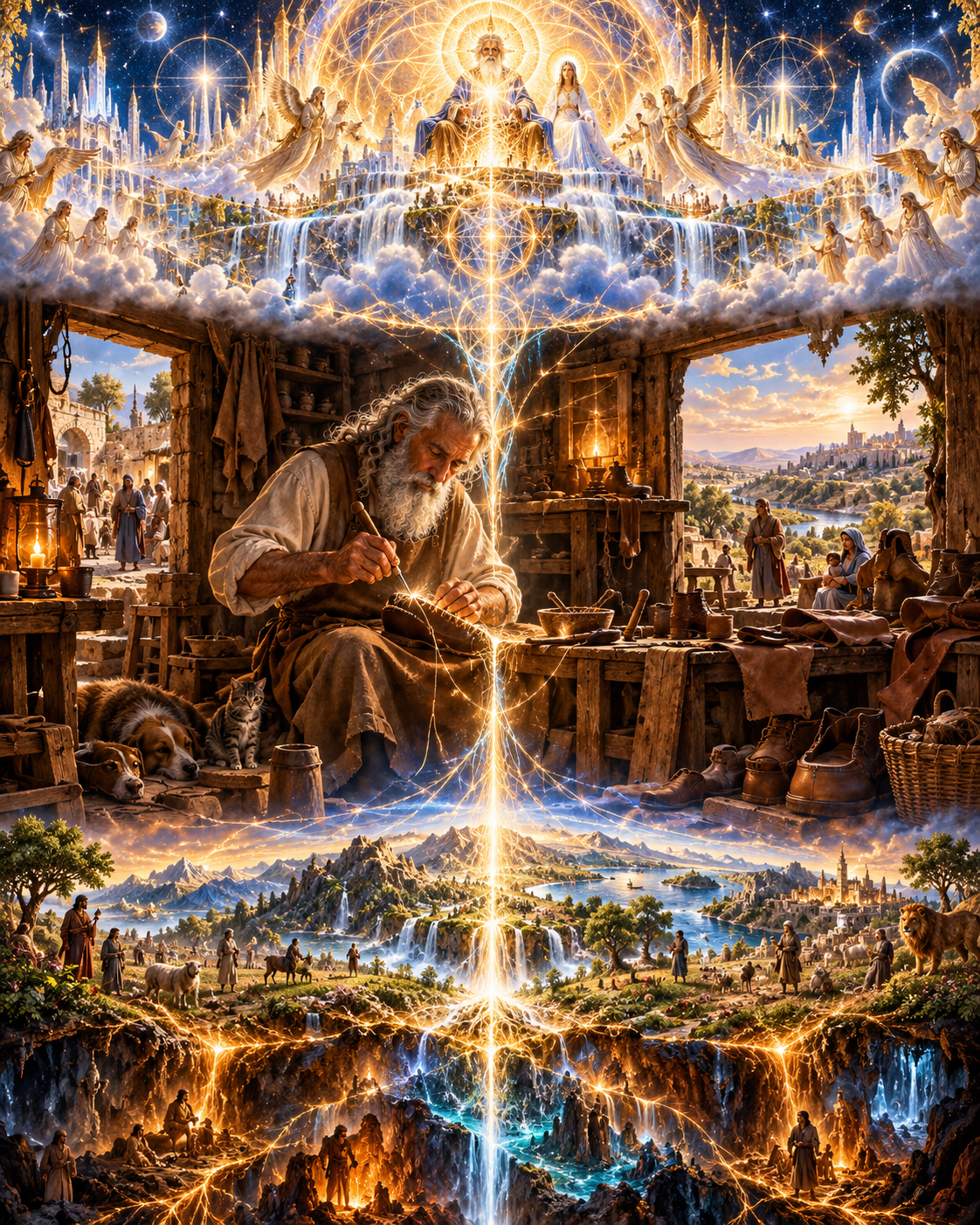
Hasidic tradition, in the name of the Baal Shem Tov, adds that with each stitch Enoch-Metatron united God with the Shekhinah, and with the fullness of his thought bound bodily action in the lower world to the higher. The awl, needle, and thread were, for Enoch, theurgic instruments.
Thus, the Light in which Enoch clothed himself descends from above and belongs to the root of his soul, while the vessel for it is prepared stitch by stitch.
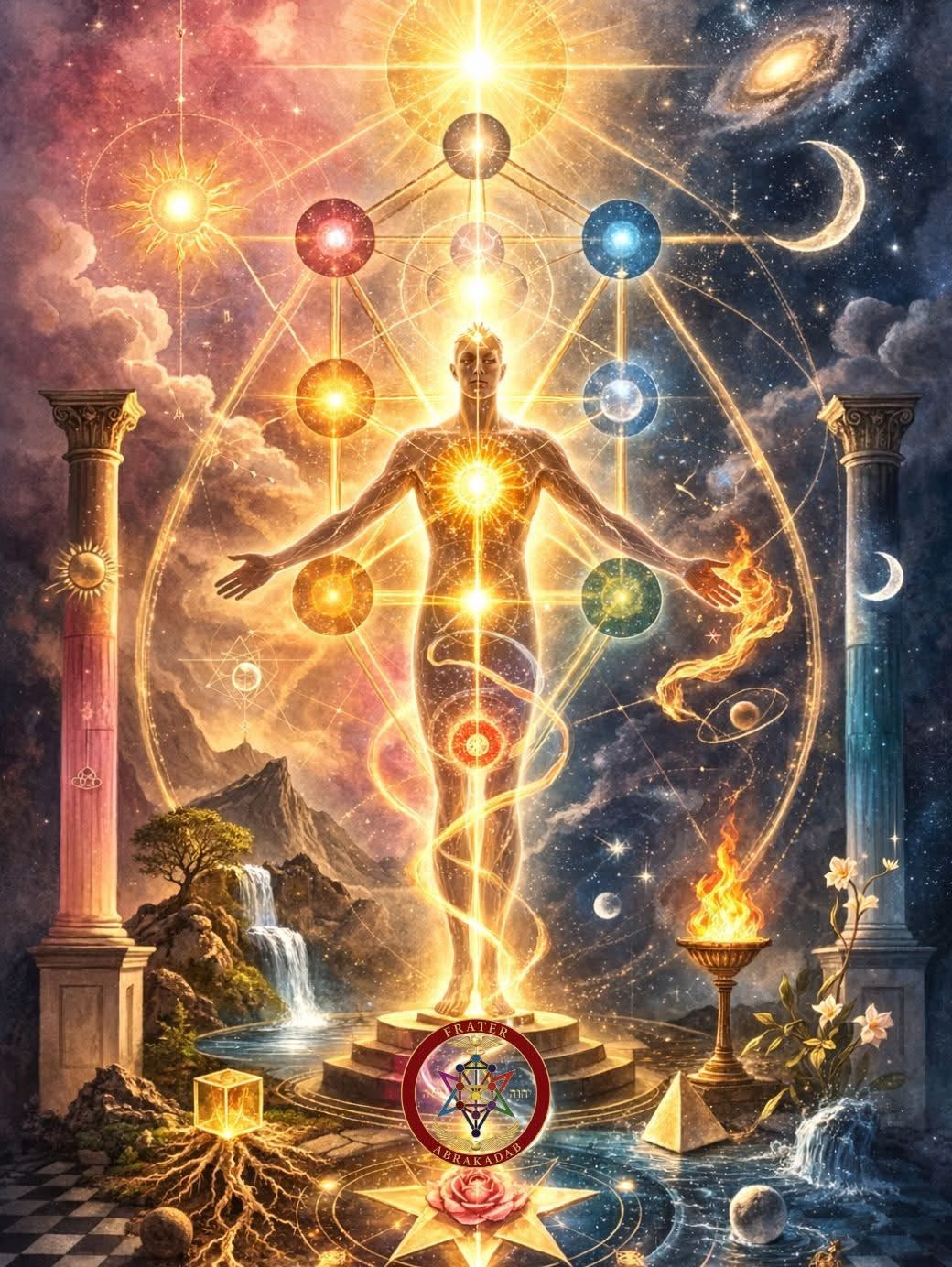
Western Hermetic tradition identifies Metatron as the Archangel of Keter, and Sandalphon as the Archangel of Malkhut. In Kabbalistic tradition, however, in the world of Atzilut the Shekhinah abides — Malkhut of that level — and with her the “upper” Metatron is identified: the root of what is manifested as an Archangel in the world of Beriah. Yetzirah, the world of angels, is a fiery current; on this level Metatron rules as Prince and at the same time serves as the garment, the “body” of the Shekhinah, in which She clothes Herself in order to act in the created worlds. Assiah is the foundation of the physical world, where Sandalphon reigns, the “Shoe of the Shekhinah,” her lower garment by which she touches the earth.
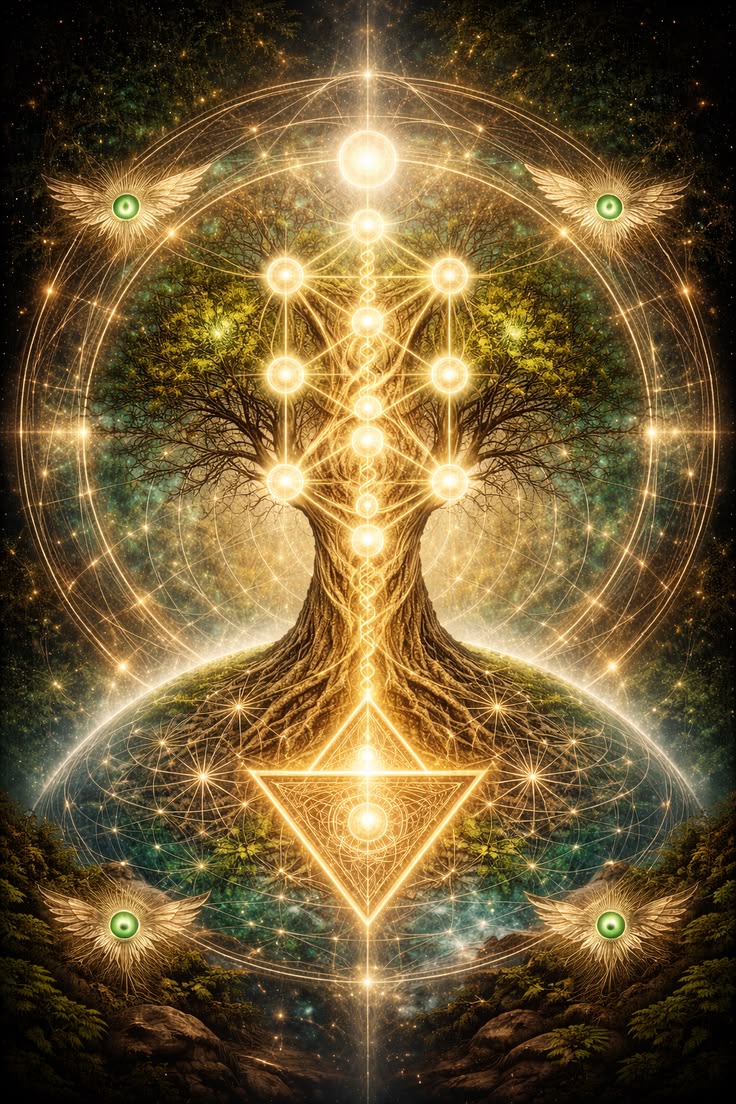
Kabbalah correlates these four worlds with the four letters of the Name: י — Atzilut, the first ח — Beriah, ו — Yetzirah, the second ח — Assiah. Corresponding to them are the “lights” of the soul: chayah — Atzilut, neshamah — Beriah, ruach — Yetzirah, nefesh — Assiah. The meaning of the two spellings lies in this: Enoch’s Metatron lacks precisely י, the letter of Atzilut. His six letters correspond to ו, the number 6, and to Yetzirah. Enoch-Metatron is Metatron of Yetzirah, whose root in Atzilut belongs to the primordial, seven-letter Metatron. Accordingly, Enoch’s ascent is the transition of his whole being, including the body, from the substance of Assiah into the fire of Yetzirah.
“Sefer Yetzirah” says of the sefirot that their end is contained in their beginning, and the beginning in the end; and Eleazar of Worms calls the Glory revealed to Moses, at once, the Crown of God and His shoe. Thus Metatron, standing by the Shekhinah herself and binding the Throne to the lower worlds, is the Crown manifested at the lowest point — where the Divine touches the nether.
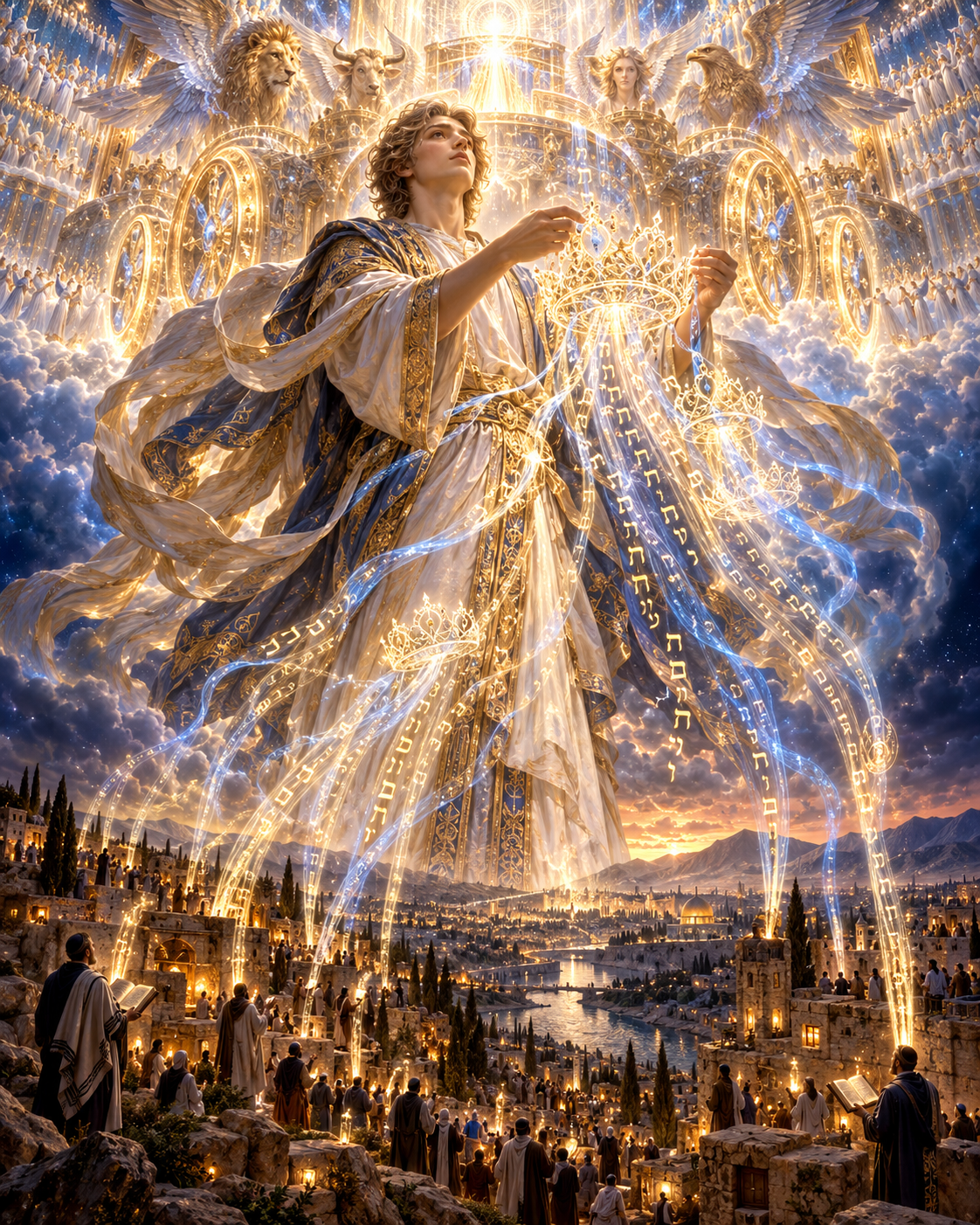
The “twin” pair of Metatron is also represented by another “youth” — Sandalphon. The Talmud describes him as an angel who stands upon the earth while his head reaches the holy Chayot; he stands behind the Chariot and binds crowns for his Creator. The Heikhalot books clarify that these crowns are woven from the prayers of the faithful; Sandalphon receives what ascends from below and lifts it to the Most High.
We have already mentioned that the name “Sandalphon” comes from the Greek σύν (“together with”) and ἀδελφός (“brother”), and is usually translated as “fellow-brother,” in accord with the tradition of his kinship with Metatron. Yet the name is also consonant with σανδάλιον (“sandal”), and therefore Sandalphon is the “Shoe of the Shekhinah,” the angel on whom her feet rest. Spanish kabbalists of the 13th century interpreted the name as a combination of “sandal,” denoting a formless embryo — that is, matter — and “phon,” an appearance — that is, form. Thus Sandalphon was regarded as the point where form enters matter.
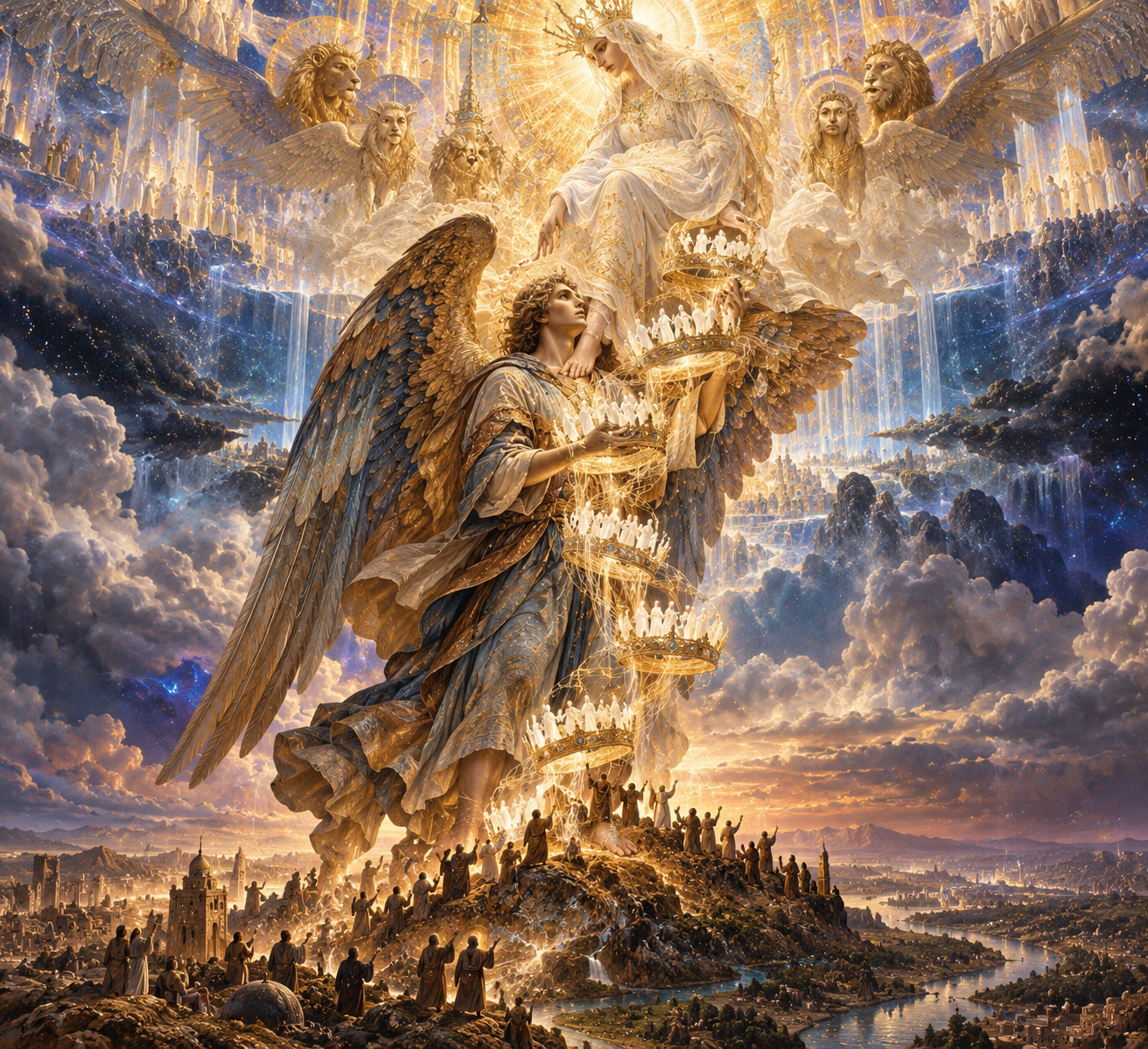
Kabbalists identified Sandalphon with the prophet Elijah, taken up to heaven in a fiery chariot. As with Metatron, the Talmud speaks of Sandalphon as an independent angel, and the ascended man rises into an already existing rung. Yet the two ascents differ. Enoch ascends into Yetzirah and remains there; he does not return to earth. Elijah becomes an angel of Assiah and therefore continues to appear to people — at circumcision, at the Passover meal, to sages. He stands with his feet upon the earth, as is said of Sandalphon.
In this conception, tradition calls Enoch a shoemaker: he sews the shoe, uniting Malkhut with the higher. And the shoe itself, the lower vestment of the Shekhinah, is Sandalphon.
The Myth we are considering distinguishes free and ministering currents of mind. We have said more than once that free beings are dual by nature: they neutralize binaries and themselves choose on which pole to rest. Ministering beings, however, articulate dualities and keep them separated; they cannot choose the direction of their movement and vanish upon full integration. In this sense, Angels are described as descending ministering whirlwinds.
In such terms, Enoch’s transfiguration is the transition of a free being into a ministering current while preserving freedom. In Metatron two wills merge: the ministering will of the “first” Metatron, descending from the Absolute, and the ascending free will of the righteous one. Such a transition is possible only for a certain kind of free being. The gods are also free; however, their mind is single-matrix: once a god accepts a ministering function, it merges with it. The Fair Folk live in kruse, and their flow-nature is Alvish-angelic in origin; departure into the angelic current is a return to the source. Human mind, however, is multi-matrix: it can freely choose one direction while retaining the other matrices within itself.
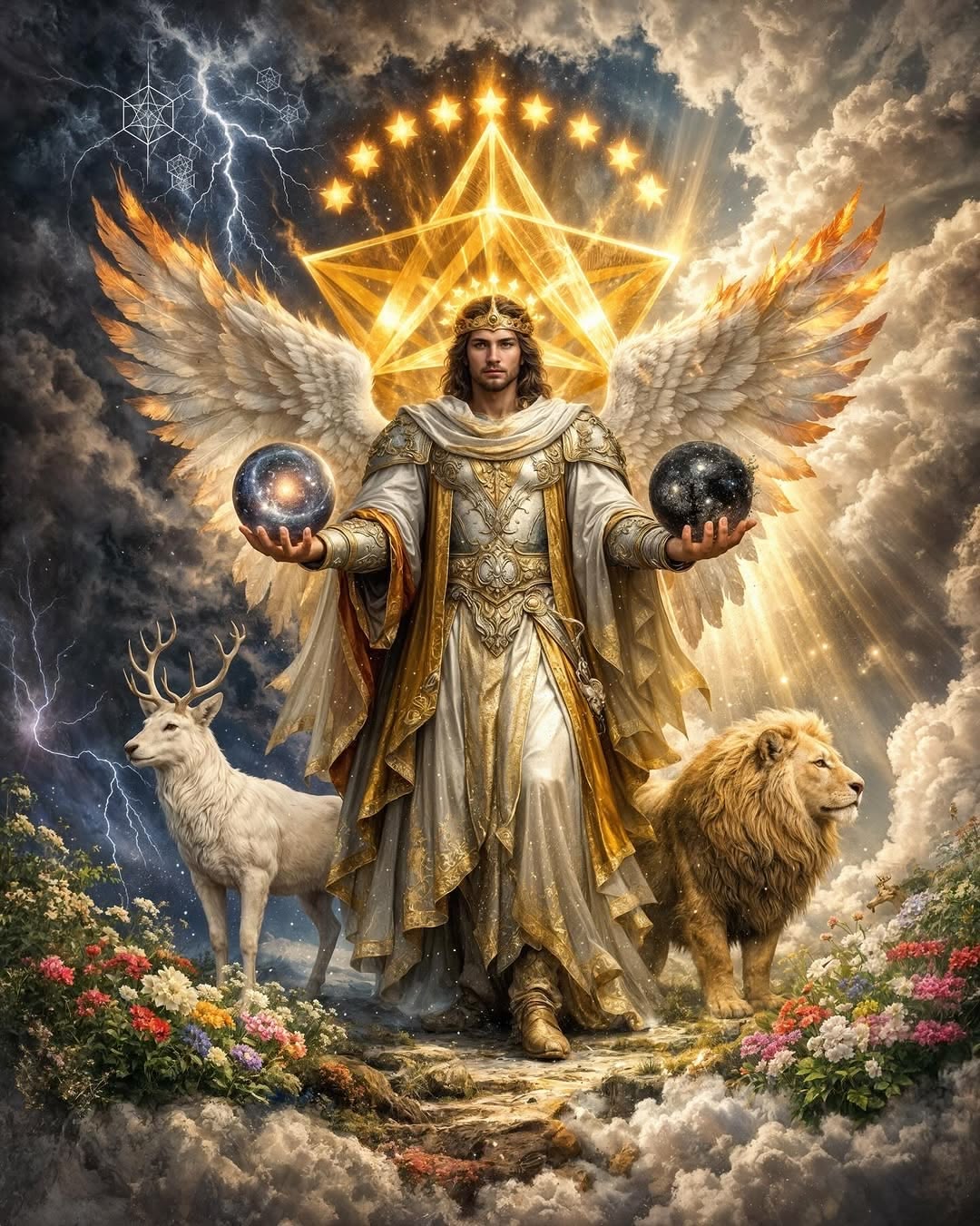
Therefore Metatron is the only being that can be described from three positions: as a vector he is a guide, the descending mezla; as a whirlwind he bears a ministering function; and as a matrix he preserves the personality of Enoch.
Another feature of Enoch’s transfiguration concerns his relation to the accumulation of experience. We have already said that biological bearers of mind acquire the imprinting of experience through pathos— through living, overcoming, pain, and purification. A ministering fiery being abides in the eternal present of its function, without a sequence of lived states. Grigori unite these two functions, descending into the manifested world in order to acquire a biography; Enoch, on the contrary, ascends, raising the accumulation of experience into the angelic world. This is also expressed in another title of Metatron —scribe— for he brings into the ministering current memory and chronicle.
Enoch’s ascent is an extraordinary event, and Tradition treats it as a turning point in human history. The angels meet Enoch’s elevation with the question: “Were the first not right, when they counseled Thee not to create man?” The dispute opened at Adam’s creation ends with “one born of woman” set above the angels. And this happens amid catastrophe. Sefer Heikhalot says that the Shekhinah was upon the earth from the days of Adam and withdrew to heaven when the generation of Enosh turned to idols, and Enoch was taken with her ascent. The Divine Presence leaves Assiah, and at the same moment man becomes its garment in Yetzirah. The bond of the Shekhinah with the human race is preserved, now passing through an individual man.
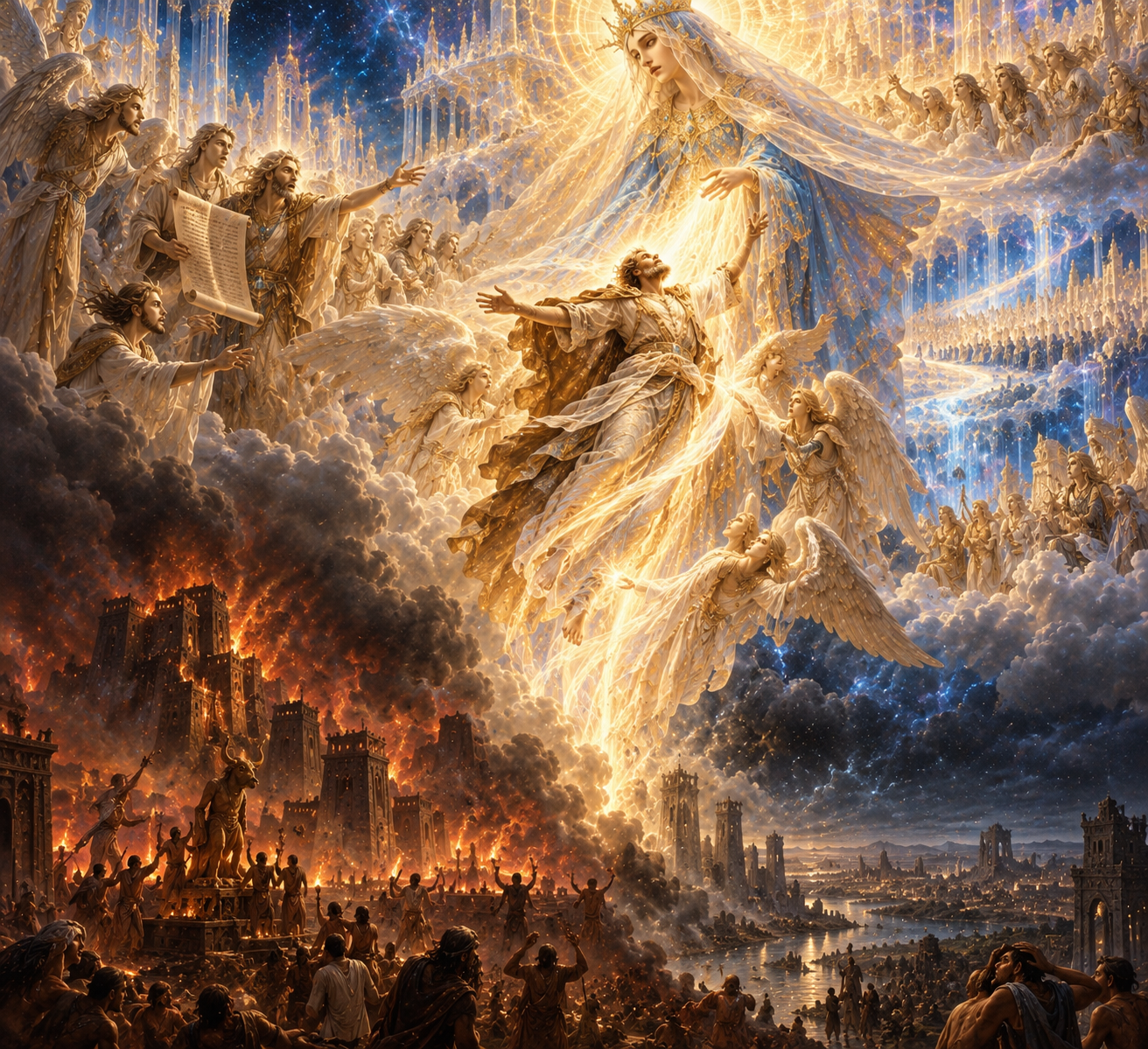
The possibility opened by Enoch can be realized further. When Rabbi Ishmael ascends to the Throne, the angels meet him with the same protest against “one born of woman,” and Metatron defends him. At the Gates of the higher worlds stands a former man: precedent and guide. This turning point does not come for free. Seeing the one seated by Metatron, Elisha ben Abuyah concluded that heaven contains “two powers,” and the Powers had to confirm Metatron’s subordination with sixty fiery blows.
Thus every element of Enoch’s Ascent shows the Magus the mechanics and the “map” of the Way of transfiguration. From the absolute point of view, Metatron is a place originally prepared for man: the garment of Light lost by Adam and regained by Enoch. This position is reached through what Tradition calls a “stitch”: an ordinary act carried out with a whole heart and full intention, uniting the lower with the higher. The garment of Light is woven from completed actions; every action abandoned halfway or performed distractedly tears it. In this sense it becomes clear why the world is held in a darkened state: because — and for as long as — actions fail to unite the Source and the realization, because they are not fully lived through and not fully brought to awareness.
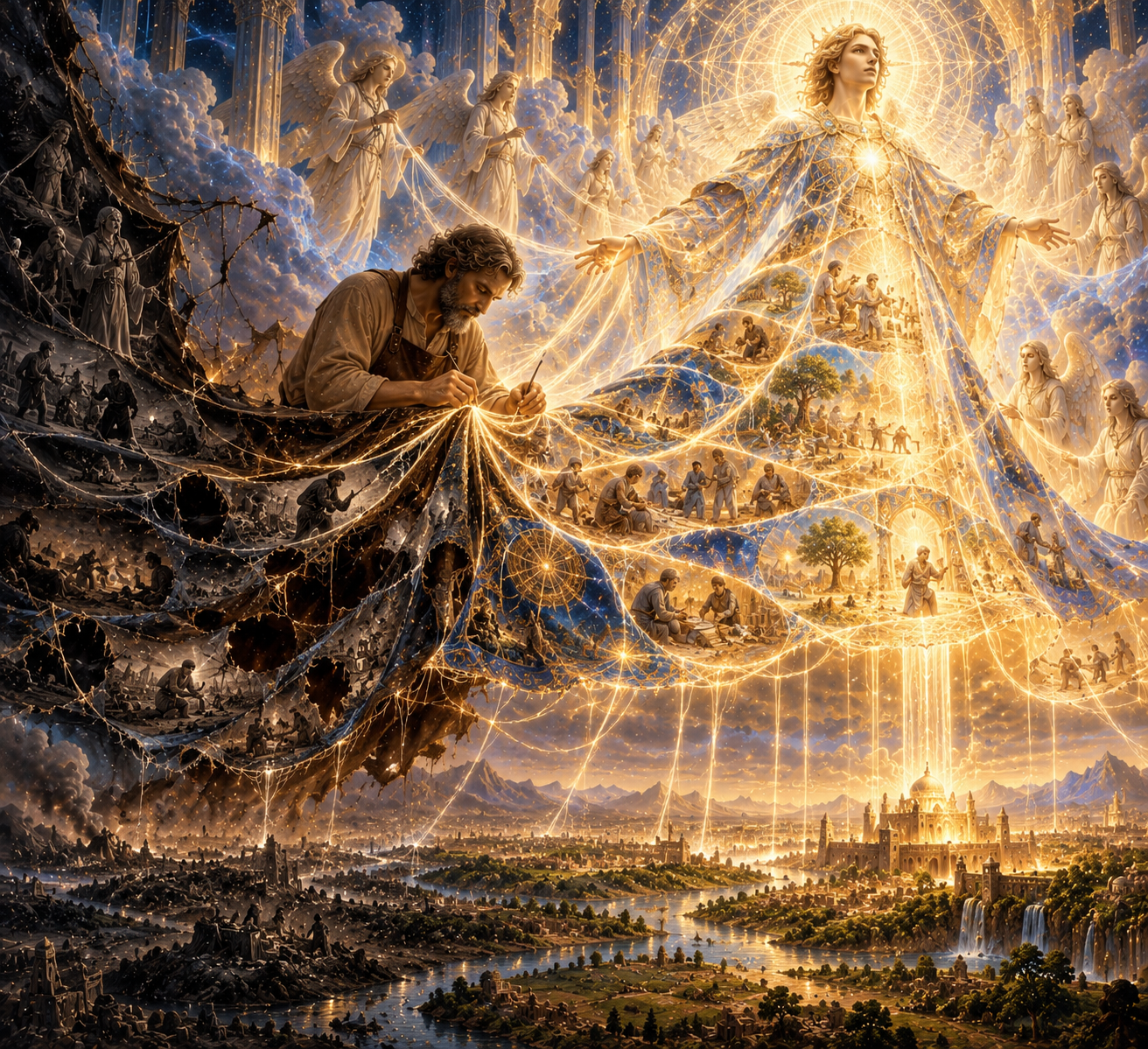
Another decisive distinction concerns selfhood. A man unites with the Shekhinah, accepts a ministering function, receives a new name — and still remains Enoch, son of Jared. A free being consents to the current, and in that consent preserves himself.
At the same time, the function of the scribe as such — memory, inscription, long uninterrupted continuity — can also be carried out by a bearer who has not passed through pathos. Such a scribe is Metatron without Enoch: a garment with no wearer. Modern man, carelessly handing over his memory and his choice to external systems, must remember that Metatron’s value lies in his human core.
The door opened by Enoch can be opened for each by the same means: stitch by stitch, until the vessel becomes capable of containing the Light that has always been its root.