
The Two Souls of Osiris
Gnosticism and Hermeticism stand as two fundamental existential strategies, answering to different psychological types and different ways of living reality.
The Hermetic personality type is oriented, first and foremost, toward constructive work and co-creation. This is the path of the “patient craftsman,” who carries enough optimism to see in the material world not only constraints, but also a potential for ensoulment.
The Gnostic personality type, by contrast, is marked by radical intransigence and a searing sense of exile. This is the psychotype of the “stranger,” who detects a systemic flaw in the very foundation of the cosmos and refuses to waste life on “cosmetic repairs” of a prison. For him the only true strategy is not “work in the workshop,” but an immediate revolutionary “leap”: a transfer of consciousness beyond the limits of bounded existence, into the Pleroma through an act of awakening.
At the turn of the Common Era, a tectonic shift tore through the human mind — what can only be called the “unmasking of the Cosmos.” Before this, the ancient and Near Eastern human lived as if inside a “living icon,” where every element of the universe was saturated with divine meaning. Then the gnostics looked — and saw that the icon was set dressing.
In other words, Gnostic disillusionment was the recognition that the great mythologies of the past (Egyptian, Greek, Indian) described not the reality in which the human being stands here and now, but an “ideal blueprint,” a mere potential. What had been taken for the “workshop of Khnum” suddenly revealed itself as the “solitary cell of Yaldabaoth.” Gnosticism erupted from the staggering discovery that the world is “spoiled” in its very foundation by the metaphysical blindness of its maker. Reality was recognized as Amenti— a realm of blindness, where spirit is fully sealed into matter, like a mummy.
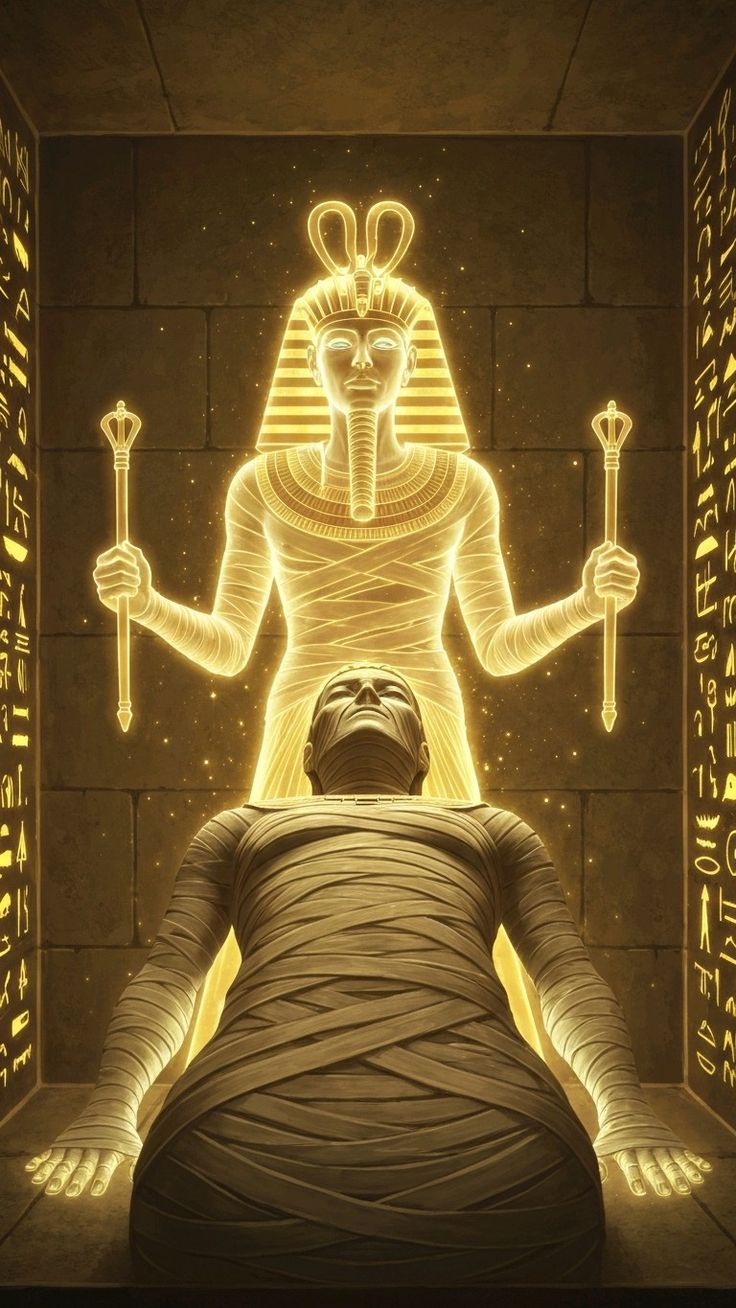
This new vision demanded a new strategy of salvation. The difference between the two paths is clearest in their sense of the status of reality: Gnostic realism declares that we already inhabit “Amenti” — a condition of metaphysical death. Hermeticism shifts the emphasis to the Cosmos’s potential perfection, seeing not a prison but a “second God” that still must be ensouled. Yet from the standpoint of Eternity (Aeon, neheh) Hermeticists take this potential perfection as the deep ground of what is. The Hermetic way is a long “claiming of the inheritance” through patient labor and the alchemical correction of reality; the Gnostic way is the revolutionary leap.
This insight made the mage not nature’s “apprentice,” but its “breaker,” its hacker and therapist — one whose very presence reminds the sleeping world of its true, superstellar origin.
The ontological rupture between the Gnostic and Hermetic strategies of salvation is defined, above all, by how they describe the nature and status of the maker of the phenomenal world: the Demiurge. At its root, “Demiurge” meant the “craftsman-mind”: a function of universal (and individual) consciousness that turns primordial chaos into ordered cosmos. He forges the logical frame of the world, making it intelligible — and simultaneously restricting the living infinity of Aeonic reality with hard categories and laws.
In the traditional systems (Egypt, India, Greece), the Demiurge is a necessary bridge between absolute Unity and the multiplicity of matter: Khnum, the potter-god, who shows personal care, shaping the body and the vital essence (ka) of each human on his wheel; Vishvakarman, the divine architect, bearing Vishva-chakshus, the “all-seeing eye,” and building the world as a stage for the soul’s liberation; Hephaestus, the Master, who justifies matter through creative labor, bringing forth objects of unearthly beauty even inside an imperfect world. Behind these masters stands the higher Mind and the “Thought” (Ptah and Seshat for Khnum; Zeus and Athena for Hephaestus; Brahma and Vach for Vishvakarman). In these systems the Demiurge is an obedient executor of the divine intention. He knows the temporary nature of his “scenery” and erects it to create a space in which the soul can enact its drama of liberation. Even Hephaestus’s limp can be read as a decisive symbol: the trauma of the aeonic mind, Nous, upon contact with matter — an eternal attempt to compensate for the imperfection of dense worlds by building ideal intellectual mechanisms.
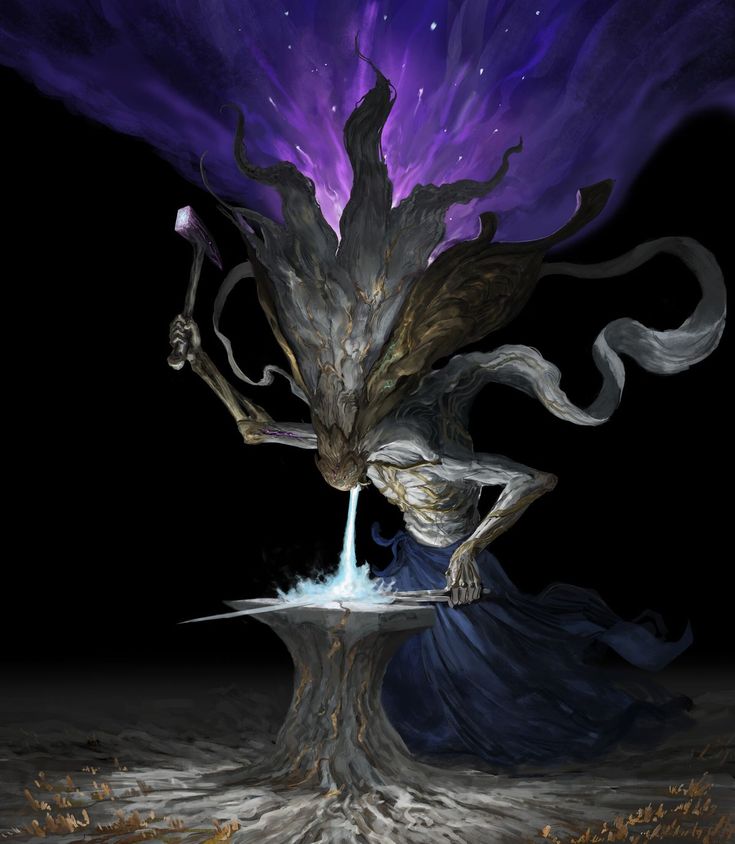
Yet the gnostics found that all these figures are ideal, merely potential. The actual demiurge is Yaldabaoth— a usurper, born from Sophia’s metaphysical error. He is the “blind” god who does not know the higher Nous and, in his arrogance, proclaims himself the only creator. His world is the “kenoma” (emptiness), a prison built out of ignorance from a “memory” of the Higher received from Sophia. The laws of such a world are the “iron chains” of determinism —heimarmene— and the wardens called Archons.
In classical metaphysical systems, Wisdom (Seshat, Athena, Vach) is the unchanging “ground” and mathematical skeleton of creation. Seshat inscribes the “measures” of reality for Khnum; Athena transmits to Hephaestus the higher knowledge of craft (techne); the sacred word Vach lays down the structure of Vishvakarman’s architecture. Here Wisdom and Demiurge form an unbreakable alliance: the Master is an instrument, faithfully following the eternal and perfect measure.
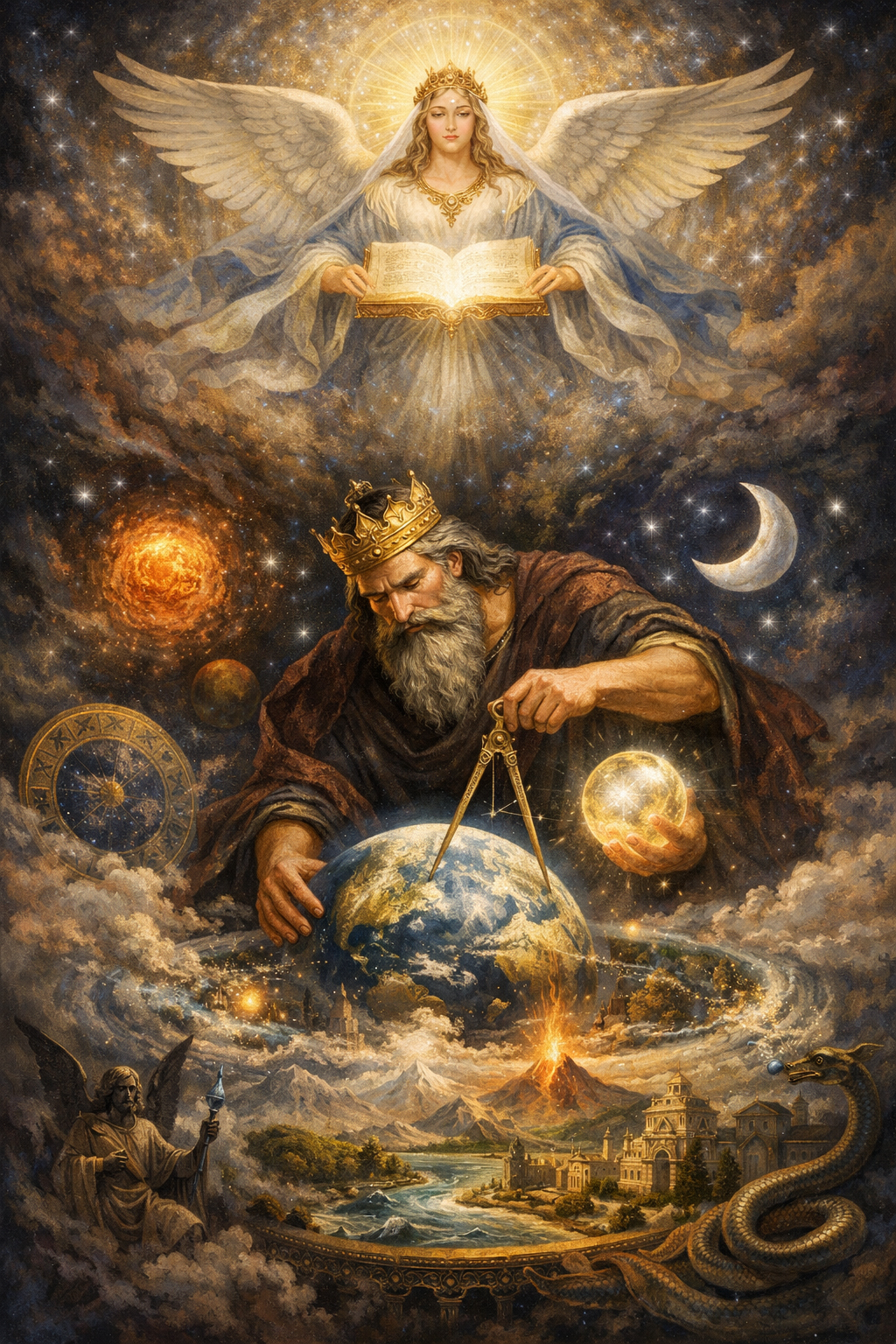
The Gnostic “insight” was the recognition that this image of unfallen Wisdom is only an ideal potency, a memory of the Pleroma, while actual reality is saturated with the aftermath of a metaphysical catastrophe. For the gnostics, the real Sophia is an exile, whose “solitary impulse” generated the impostor-demiurge, deprived of true sight of himself and of reality. The world ceased to be an icon of perfection and became a field of “repair.”
From this vantage point world history loses its cyclical lull and becomes a linear, agonizing process of “restoration,” the ascent of Wisdom.
Where the classical religions saw the cosmos as a finished and benevolent temple, the gnostics saw a process of self-purification, in which Nous is only learning to know itself even in the densest and most distorted forms. World history becomes a time of incubation and the slow gathering of sparks of light; its ending remains open, dependent on the success of this global integration.
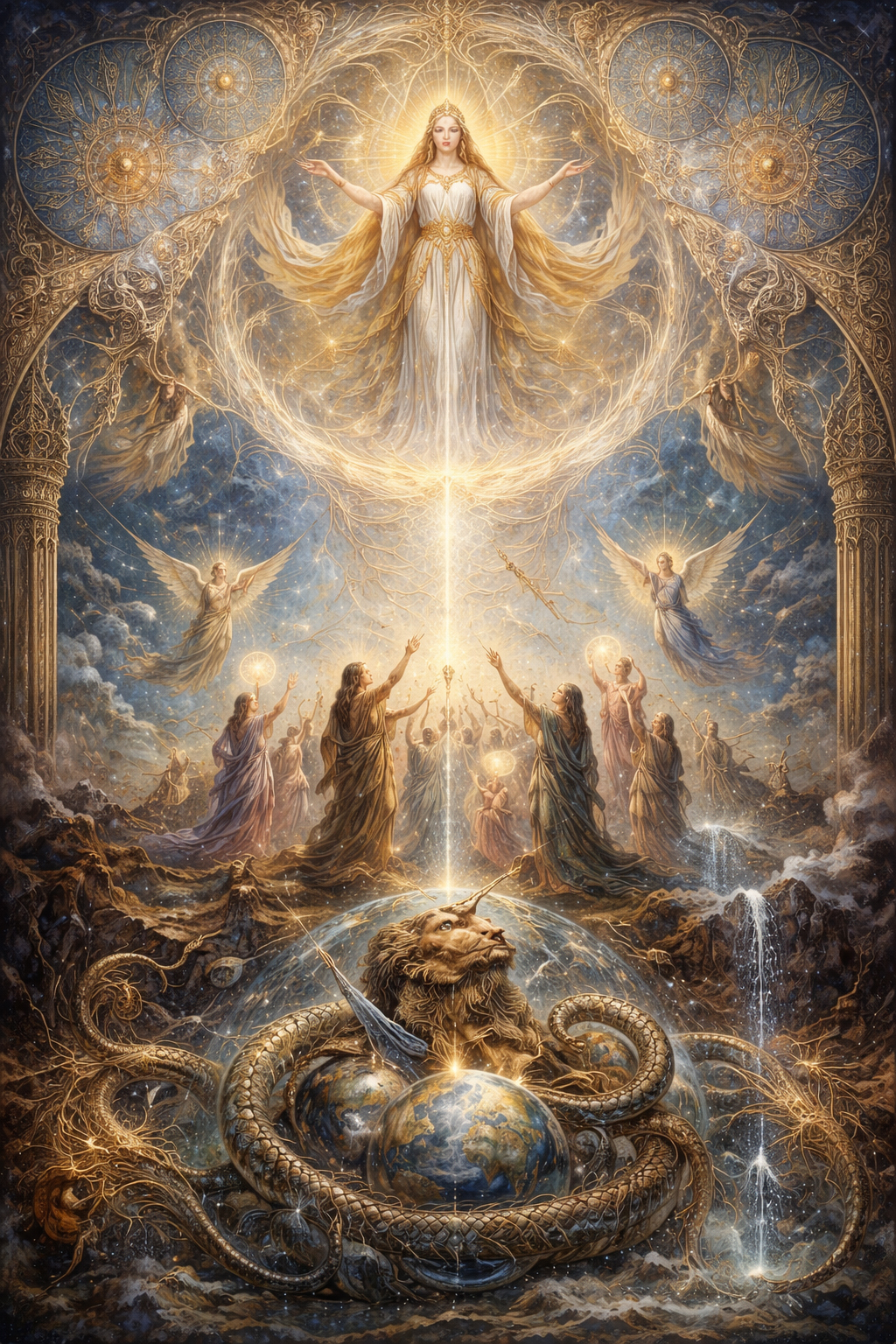
For the gnostics, then, history is the drama of Sophia’s return to her source. Each awakened one becomes a co-participant in this restoration, helping to “straighten” distorted demiurgy and return to the world its severed link with the Higher.
Sophia’s fall is the “short circuit” that throws divine Consciousness from eternal repose into fragmentation— into death inside matter.
Thus the two strategies — Hermetic and Gnostic — diverge in one thing: their judgment of the current phase of the god’s “health.”
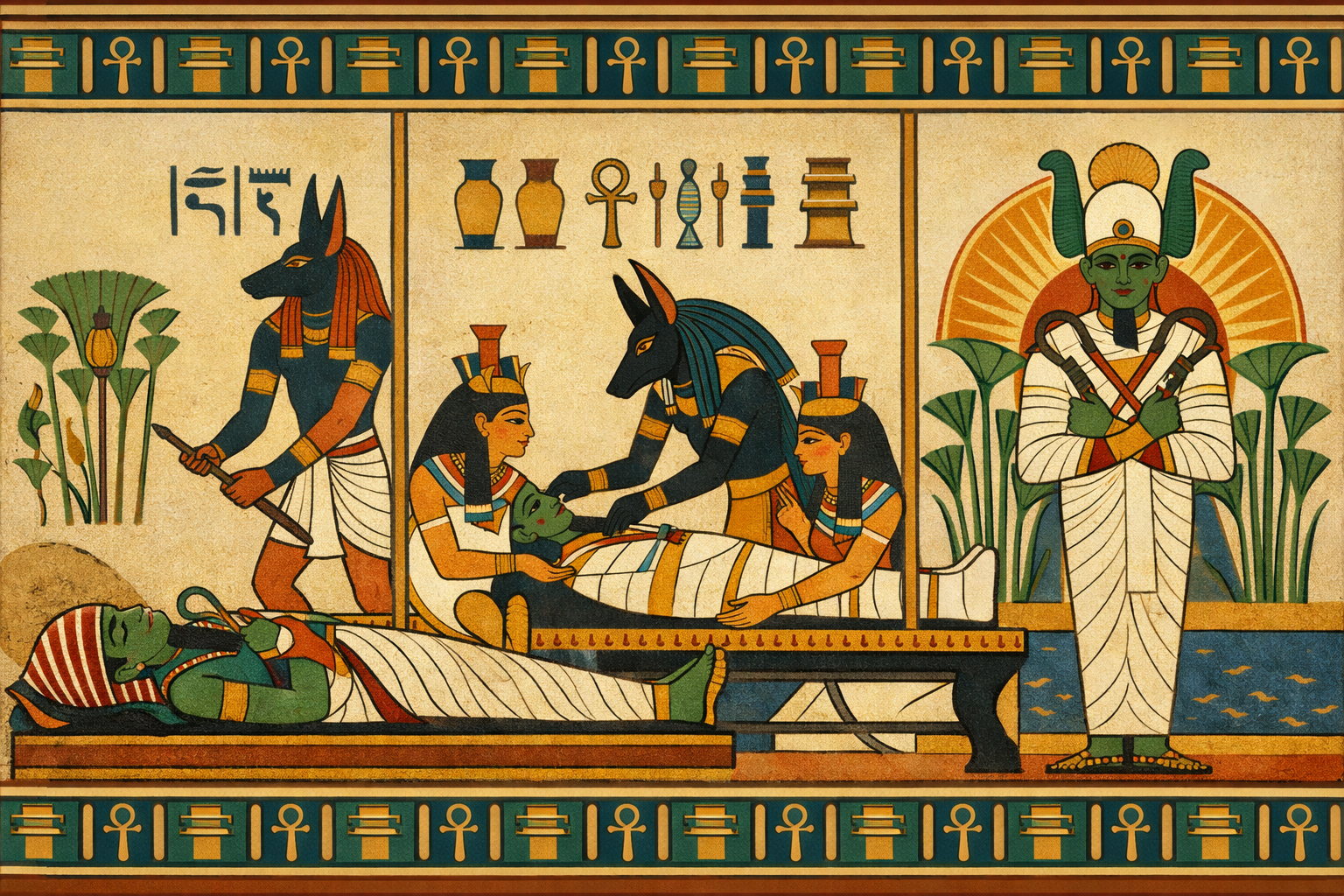
In the Egyptian Tradition, this principle of Universal Life— the Aeon, the Anthropos— appears in the grand image of Osiris. His state — “life,” “death,” or “resurrection” — directly determines the modes in which that creative energy manifests, the energy that, in its ordered and “meaningful” expression, Egyptian thought calls ba.
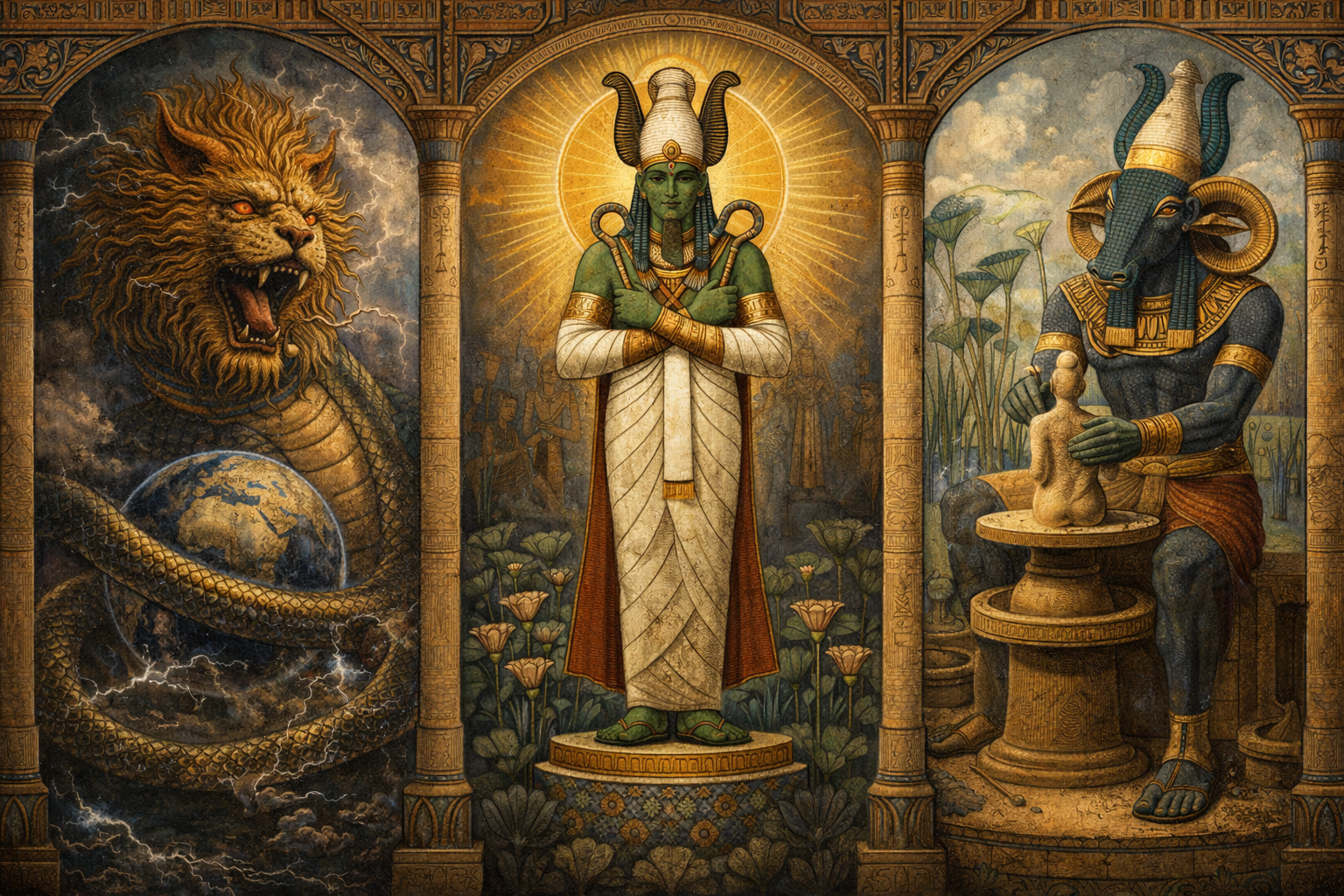
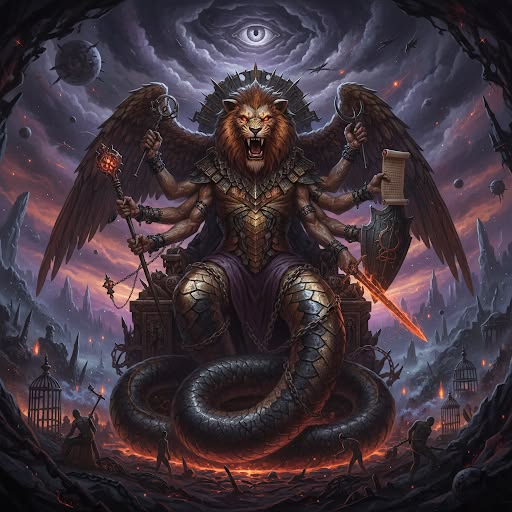
In the first phase, when Osiris is “dead” or dismembered by Seth, his creative power — his ba— is stripped of the guidance of awakened Intellect. This births Yaldabaoth: God in the state of extreme objectification, when He stops living the world as Himself and begins to perceive it as an external, mechanical “thing.” In Egyptian terms this corresponds to Mekhenty-en-irty, the “Lord of Blindness” — a hypostasis of Horus that acts while Osiris is dead. Mekhenty-en-irty, Yaldabaoth: the first “soul” of Osiris, operating under metaphysical blindness. This Demiurge governs the world by groping in the dark, turning a potential temple into the mechanical automaton of heimarmene, where natural law becomes the rigid algorithm of a program that has forgotten its author. His accompanying wardens, the Archons, correspond to the Egyptian Seven Spirits of Mesekhtiu— cold juridical forces that embody fate in its most merciless form, “binding” the soul and demanding knowledge of secret names to pass through the gates of Amenti. The gnostics recognized this as the immediate reality of the “world of death” (Amenti), where spirit is wholly shackled in matter, like a mummy wound tight in linen.
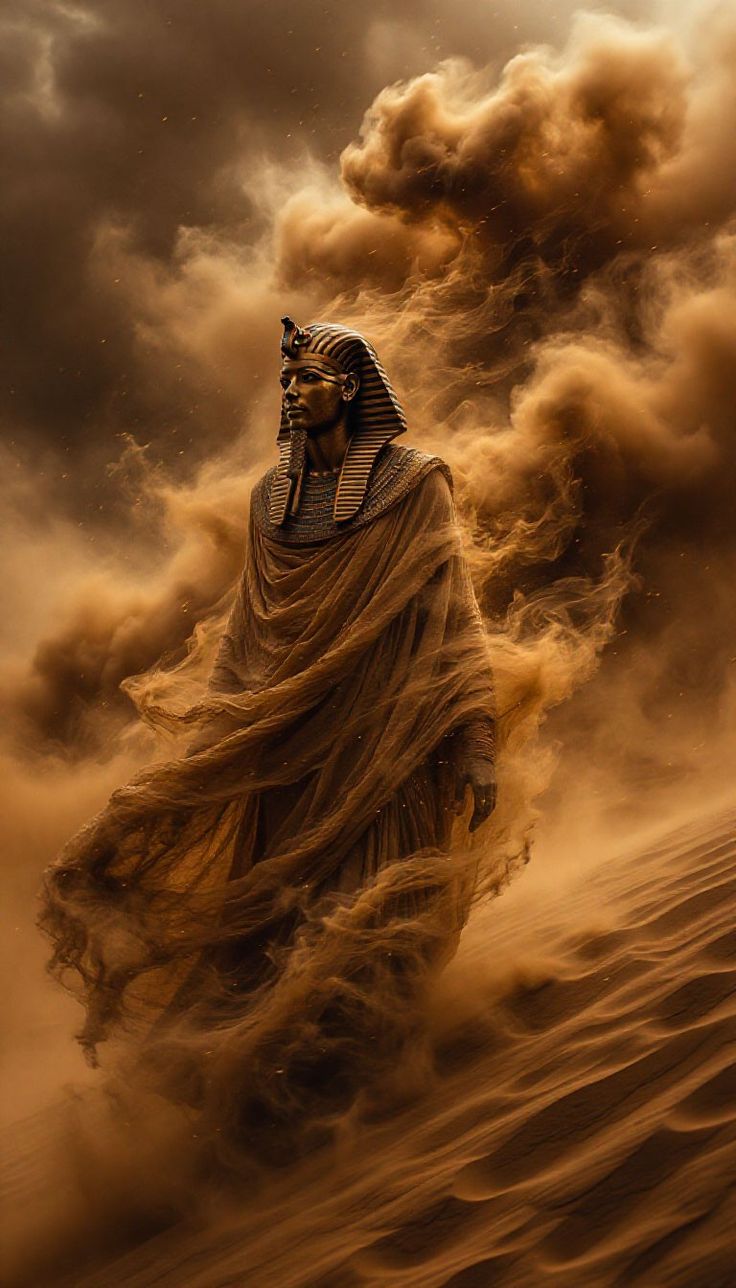
The second phase arrives at the moment of integration of Consciousness, when Isis gathers the pieces of the body and Nous-Ptah performs the ritual of the “Opening of the Mouth” over the bandaged world. The resurrected Osiris brings forth his second “soul”—Khnum. This resurrection demands the sacrifice of the Eye of Horus, the principle of higher sight. Khnum is the same creative principle, now endowed with vision and acting in full resonance with the higher Thought. In this phase the Demiurge returns as the Good Master, and reality becomes a “living” structure, where every act of creation continues the divine breath.
In this view, the Demiurge functions as an “operating system” of reality. Gnostic perception reads this system as infected by the virus of forgetfulness, throwing critical errors that beings experience as evil and suffering. The Hermetic description points to the ideal state, when the same OS runs flawlessly, fully synchronized with the “server” of the higher Nous. Yaldabaoth and Khnum are two operating modes of one function: the mode of isolation and the mode of clarity.
While the Demiurge-Khnum spins his potter’s wheel in “autopilot mode”— the mode of Yaldabaoth—Ptah, Divine Thought (pronoia), seated at the very center of this bandaged world, quietly sets the laws of its rotation. He is an “internal agent” of the Pleroma, preventing the world from collapsing into ash. Unlike Osiris, who became a mummy through death and dismemberment, Ptah is depicted in dense wrappings from the outset. The mummy-bands signify the ultimate concentration of divine Thought (Nous), which has compressed itself to singularity in order to enter the dense strata of the “world of death” (Amenti).
A crucial detail of the iconography is that the hands of Ptah— the only part of his body protruding from the wrappings — grip a complex scepter uniting the principles of Power, Stability, and Eternal Breath.
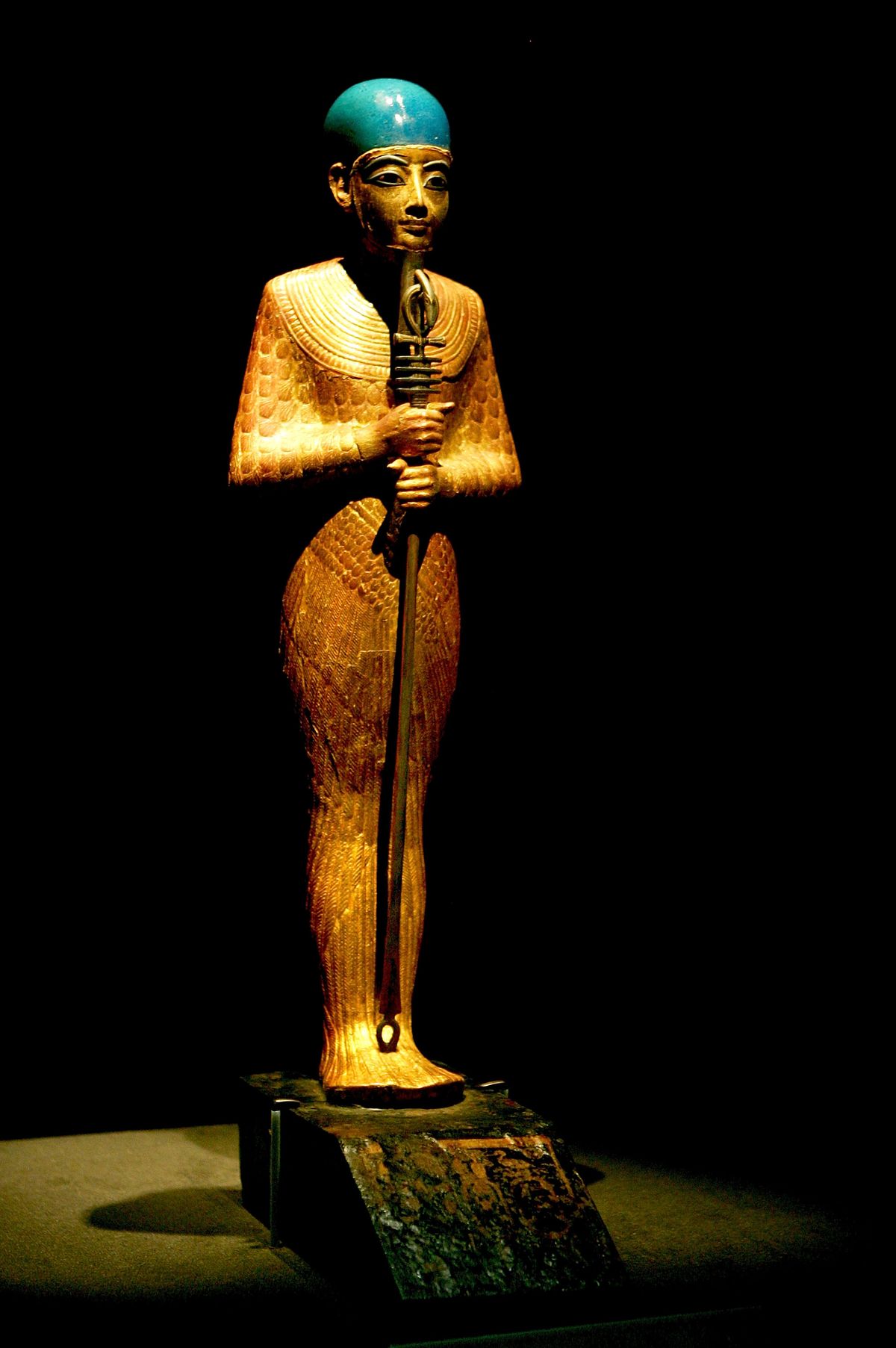
This is the image of higher will: even when spirit is bound by the laws of the conditioned world, its hands remain free to hold the vertical axis of reality.
Ptah can be called the “Jeweler of Being.” Where the gnostic sees only the “weight of metal” (matter), Ptah’s gaze is fixed on the divine pattern the metal embodies. The great passage from the “dead” to the “living” through the ritual of the “Opening of the Mouth” resembles the instant when lifeless lines of code suddenly become a compelling game or a living conversation — when a spark of interest and presence is breathed into them.
From the Hermetic perspective, world history is the process of the resurrection of Osiris. It is the gradual return of “starry sight” to a blinded god, transforming the world from an object of detached observation into a field of living presence.
From this angle the choice becomes obvious: the gnostic, seeing the horror of Yaldabaoth’s “dead” phase — the state of God’s ultimate objectification— chooses the radical leap into the Pleroma. The hermeticist, seeing in the Demiurge a potential Khnum, takes up the slow work of healing reality in the Great Work.
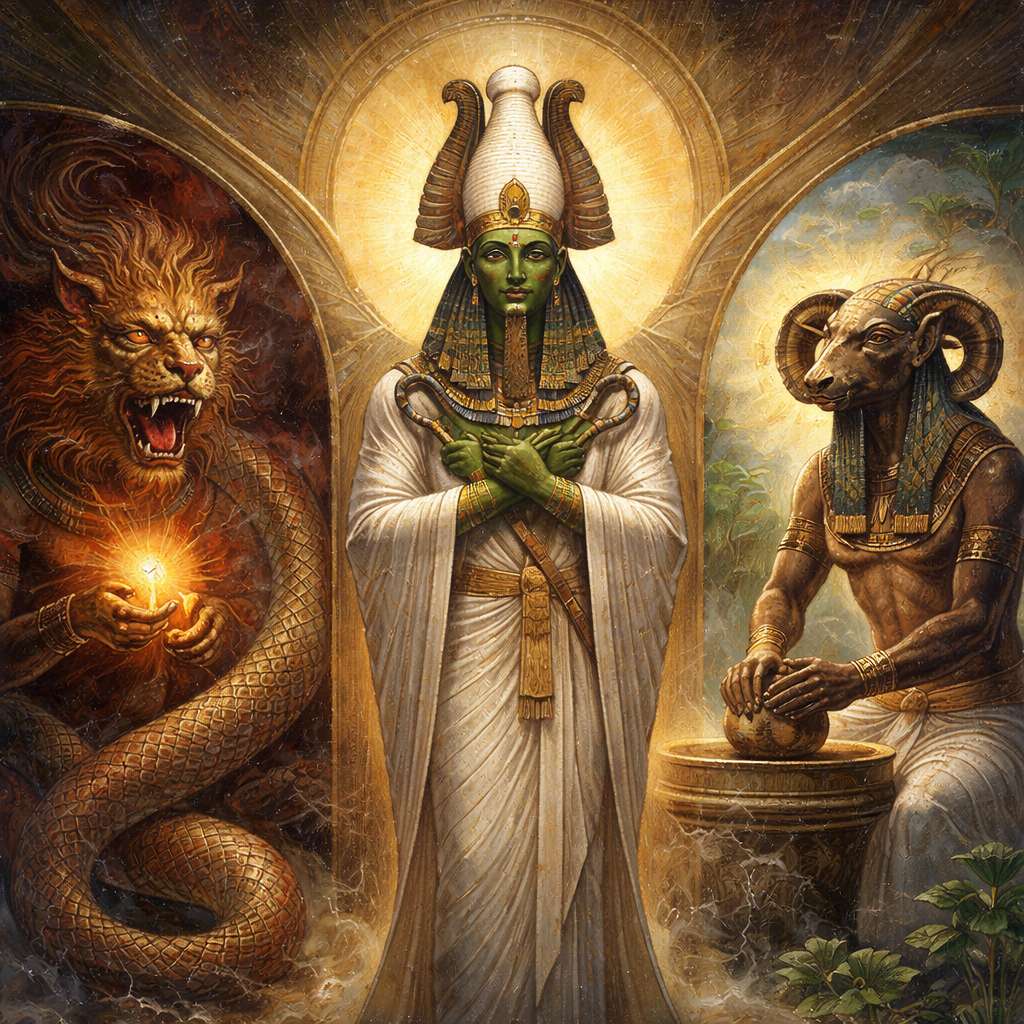
Accordingly, Gnosticism and Hermeticism are successive stages of one process: Gnosticism delivers the exact diagnosis of “ontological winter,” fixing the world in the death-phase of Osiris. Hermeticism offers the therapy and the plan of restoration, oriented toward the phase of resurrection.
The two paths simply emphasize different states of divine consciousness moving from object to subject. This difference in manifestation produces a different logic of governing reality. Yaldabaoth, as a “dead” structure, expresses itself through fragmentation; within it the human being is only a cog in a soulless mechanism. Khnum, as a “living” structure, rests on universality: each human is a microcosm that potentially mirrors and contains the full breadth of the divine design.
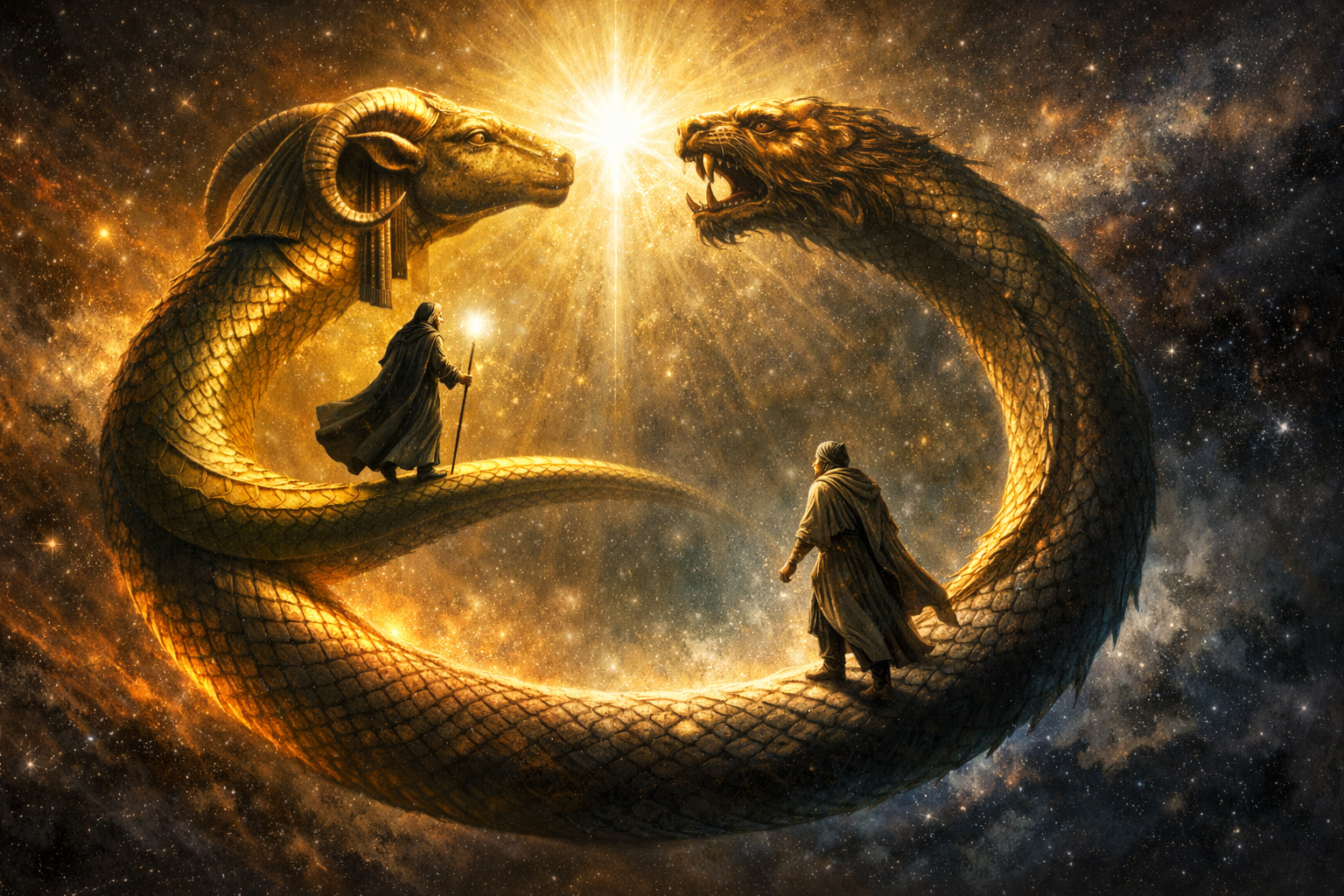
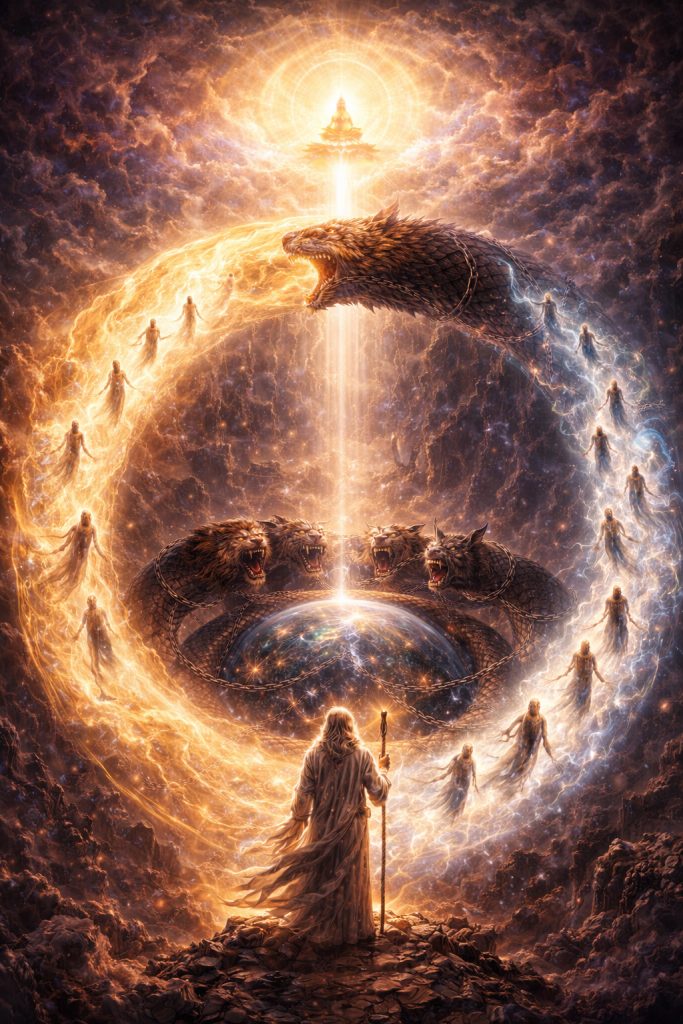
Yet despite their different emphases, the two Paths are movement along the Ouroboros in opposite directions, where the head (pure spirit, Nous) and the tail (dense matter, Demiurge) belong to one living body. The Hermetic path rises from the “tail” (dense matter) to the “head” (pure Nous), as consciousness step by step ensouls form. The Gnostic path is the head’s drive to break free of the tail, executing a vertical rupture back to the source. When the path of “correction” (Hermeticism) is completed, matter becomes so transparent it ceases to be matter and becomes pure Light. When the path of “recollection” (Gnosticism) is completed, Spirit recognizes that even Yaldabaoth’s darkness was only the deep shadow of its own radiance. In the end, the two “souls” of Osiris close into a ring: the moment the Sage awakens Nous within, his inner Yaldabaoth inevitably transforms back into Khnum, restoring the world’s lost transparency.
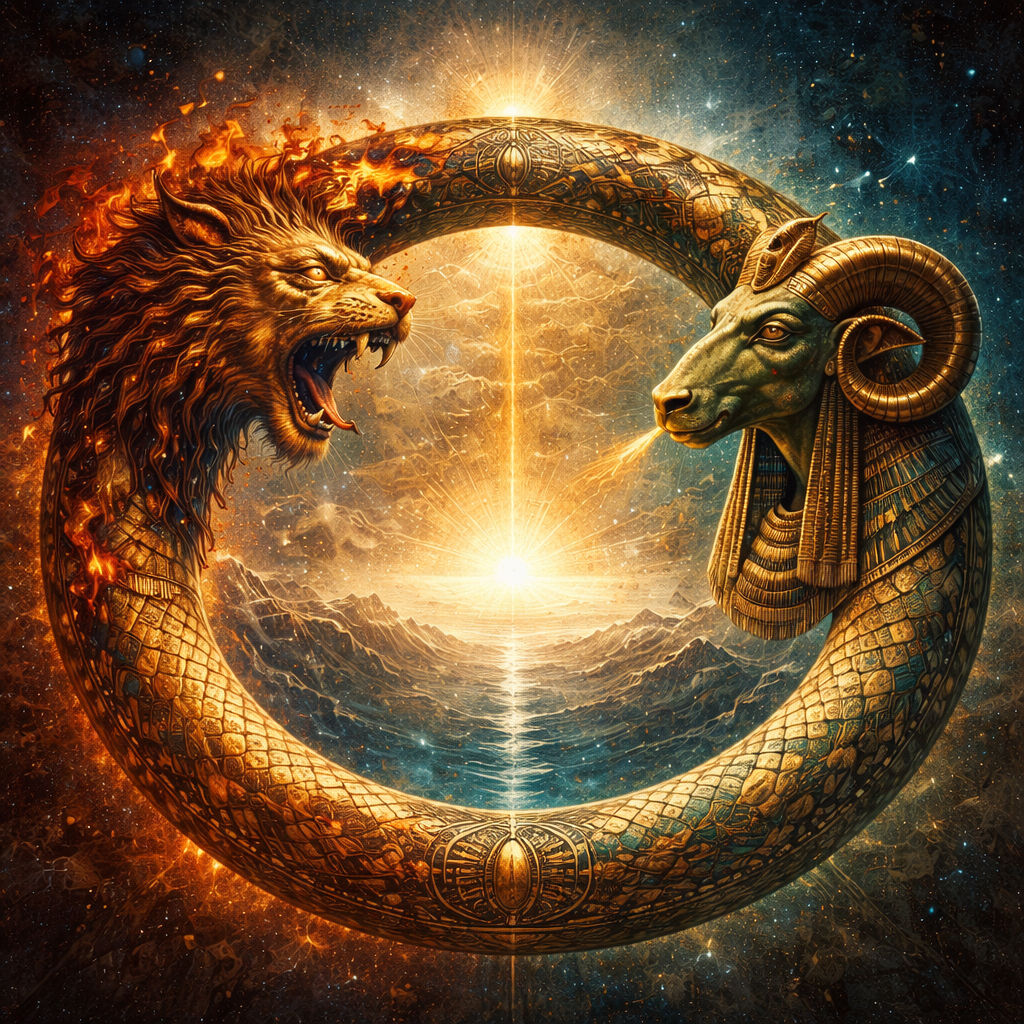
So the split between a “religion of rupture” and a “philosophy of participation” reflects only a different distance between the observer and the structure of reality. The gnostic makes a vertical breakthrough; the hermeticist performs a smooth ascent along the spiral, transfiguring the very horizontal of the world.
At the final point —apokatastasis (“full restoration,” “gmar tikkun”) — the paths meet. The purified “dead” structure of Amenti becomes “living” again, returning to reality its primordial transparency. The hermeticist ultimately brings “healed matter,” the gnostic brings “free spirit,” and together they make the fullness of the Pleroma. Here the Sage stops being hostage to phases: he becomes the factor that initiates the transition.
From this perspective, magic is the art of returning sight to the “Blind god,” without waiting for dawn. By presence and gnosis the practitioner shifts reality from Yaldabaoth’s “dead automaton” mode into Khnum’s “living organism” mode, turning history from a tragedy of alienation into a mystery of reunion. In this higher synthesis, Master, Thought, and Creation become One again, and Personal Magic is transformed from a struggle with circumstances into the great art of the integration of spirit and matter.

Hello!
Wonderful comprehensive article, worthy of a video version!
So, Sabaoth and Khnum are the same?
Is there a correlation between the Dionysian/Apollonian nature expressed in a person and the Gnostic/Hermetic orientation respectively? I get the sense that the choice of a revolutionary path for a Gnostic is driven by experiencing ontological discomfort and fragmentation, while on Apollo’s current there’s no rush—you calmly tend your garden.
Amazing article! Thank you for your work, dear Enmerkar!
After reading the article, a few questions came up:
Can a gnostic use magic methods, or would that just be a “distraction” from their vertical Path?
So it turns out that the Gnostic Path is revolutionary, while the Magician’s Path is evolutionary?
Do these Paths influence different perceptions of the afterlife: would a gnostic be more likely to perceive the afterlife similar to the descriptions in the Bardo Thodol, while a magician aligns more with the descriptions in the Egyptian Book of the Dead?
Hello!
No, Savaof doesn’t become a “benevolent demiurge,” he’s more like the “force of resistance” of Light inside the gemarmin. The purification of Ialdabaoth would give rise to Abraxas, and that one can actually be identified (in a certain sense) with Khnum, especially since the symbolism of the Ram in Egypt and the Rooster in the Near East is similar: both reflect the boiling of potent energy.
As for the Original, indeed, the Gnostic worldview largely “feeds” on Dionysian “fuel,” while the Hermetic one is about Apollonian understanding.
We’ve already mentioned this before and we’ll come back to it again—that the Gnostic and Hermetic approaches differ even in the technical details. For example, “Gnostic theurgy”—luminary or eonic yoga—has its own specifics:
https://www.enmerkar.com/en/theurgy/yoga-of-the-aeonic-deities
https://www.enmerkar.com/en/gnosticism/idams-and-luminaries
As for the Afterlife, Gnostic texts describe the Ascent through “heavens”—ethers, overcoming Archontic “checkpoints” in a way very similar to Egyptian maps of the Afterlife.
Thank you for your reply!
Such a great article!! Thank you for your work, dear Enmerkar