
“The Evil God” in the Mythology of Europe
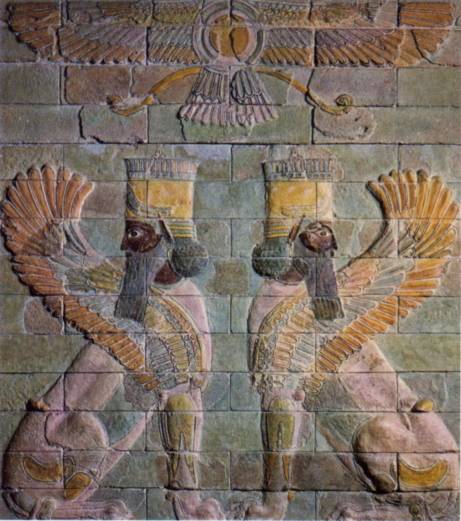
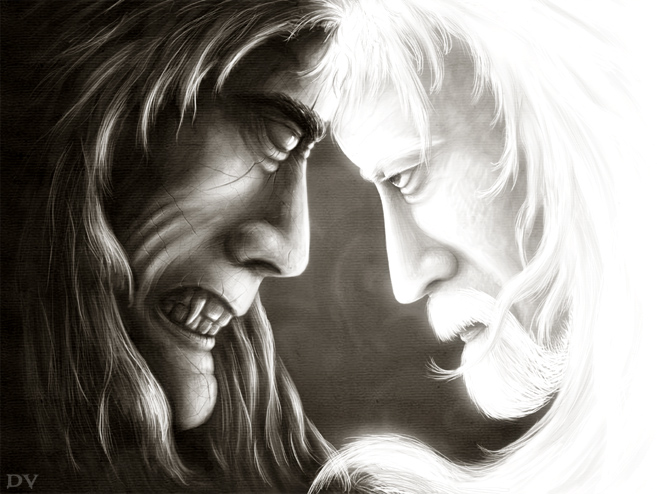
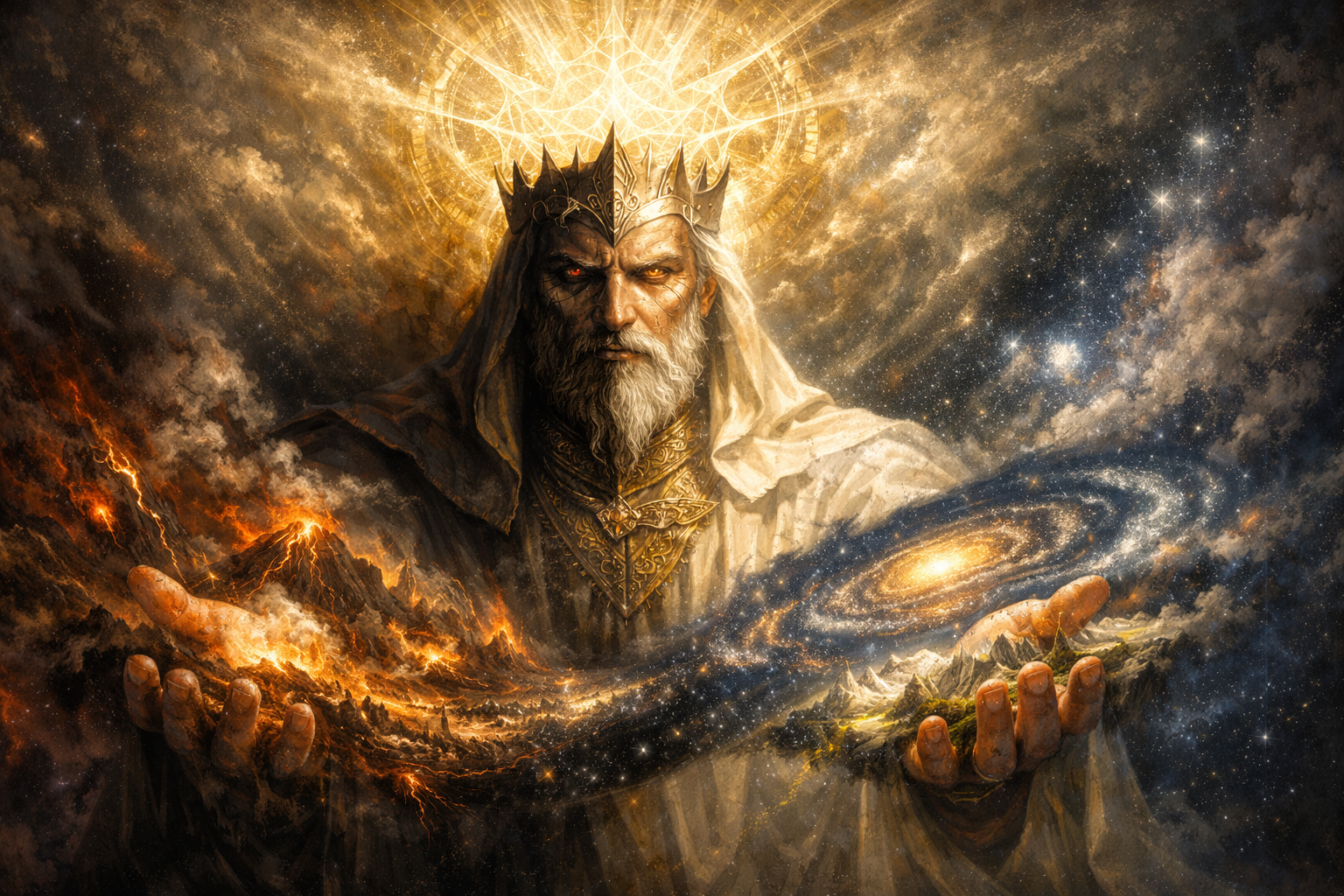
In ancient Iran, the mythic image of the world was already shaped by the opposition of Good and Light — embodied in the ethical law Arta and personified by the great Ahura Mazda, “Lord Wisdom,” “Wise Lord” (Greek: Ormuzd) — and Darkness and Evil, embodied in falsehood and personified by Angra Mainyu (Ahriman).
This dualism spread widely across the East and later entered the ancient and medieval world. Mazdaism did not become Iran’s state religion at once. When Cyrus the Achaemenid (558–529) founded his empire, he practiced religious tolerance; yet over time the older gods of Iran were displaced by the cult of Ahura Mazda.
According to ancient Iranian notions, on the cosmological level the first creation belonged to a principle higher than this duality of light and darkness: Zervan Aion (Infinite Time). Symbolically, he embodies the cycles of time — applied not only to the historical epochs of the world’s existence, but also to the life–death transformations to which all living beings are subject. As Zervan-Akarana (Infinite Time), he represents Time as Fate, Law, and Inevitability.
In some Iranian schools, dualism was developed so radically that Zervan’s role as the supreme deity was revised and expanded. The result was the magical concept of Azrvan Akarana: a fusion that stands “beyond good and evil,” yet still joins the strictly creative God of Time, Zervan, with the feminine but destructive energy of Az — later echoed among the ancient Arameans, who adopted the legend as Ru’ha or, in anthropomorphic form, Lilith.
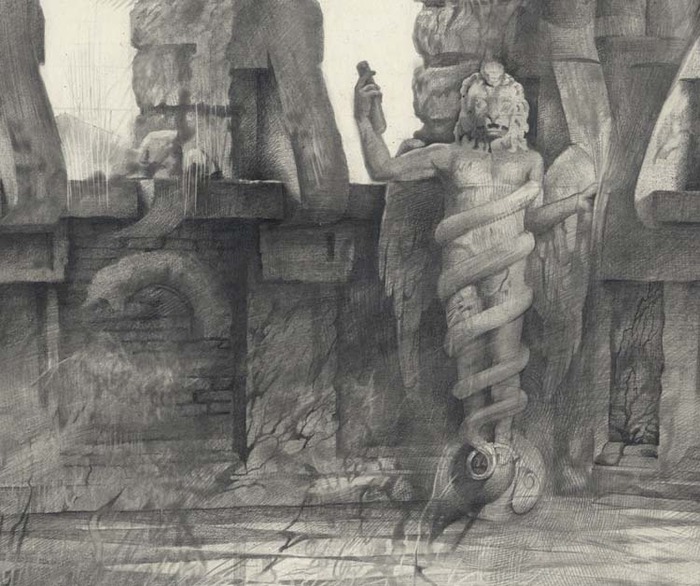
The most esoteric Iranian traditions state that evil appeared even before the creation of the world. Zervan, as the Supreme God, performed sacrifices for 1,000 years to obtain offspring; when he had already lost hope, two sons were born — Ahriman, the fruit of his doubts, and Ormuzd, the fruit of his faith. Ahriman came to the light before Ormuzd, yet the second was destined to win, though never without struggle.
The second stage of Creation — the creation of the human world — had one aim: victory over evil. The world process was understood as the struggle of eternal good and evil, or Truth (Arta) and its antipode, Falsehood (Drauga, Drudj). The beneficent part of the earthly world was created by the good principle; the evil spirit answered with a counter-creation — death, winter, heat, harmful animals, and more. The unending conflict of the two principles determines the entire existence of the world.
The primordial divine duality became a corresponding duality within humanity. Even before creation, two twin spirits chose between good and evil, determining their being — one as a holy spirit, the other as a hostile one. The same choice was then made by the Amarta Spentas, who took the side of good, and by the daevas, who chose evil; by the cattle (“the soul of the bull”), who chose good; and so on. That same choice is offered to the human being.
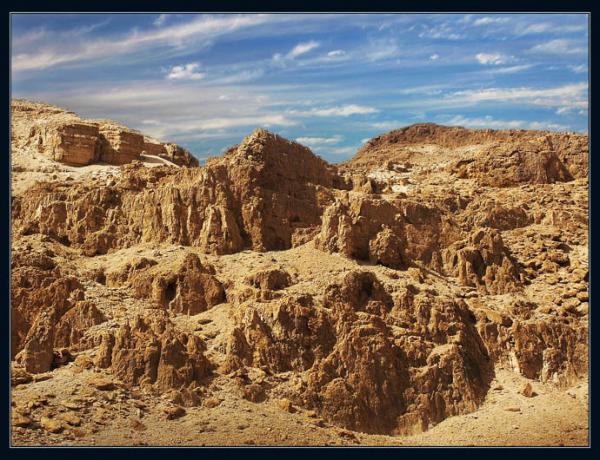
In the middle of the 1st century CE, on the northwestern shores of the Dead Sea near Engedi, a secluded sect lived withdrawn from the world. They rejected marriage and family life, “knew no money,” and evidently supported themselves through communal labor: the Essenes. The name they chose for themselves, “Essenes,” derives from the Syriac Asaya, meaning “physicians,” and in Greek “therapeutae,” because their public work among the people consisted of healing physical and moral ailments. They lived as a commune, on collectivist principles.
Pliny’s remark is also telling: “life-weary newcomers” entered the Essene community. In seeking the social roots of the Essenes’ emergence and long historical existence, Pliny finds them in the urge to separate from a society that had disappointed people in life, in the social order, and in its spiritual values. At the same time, he expresses astonishment at the size of this group and at the very possibility that it could continually replenish itself with new generations.
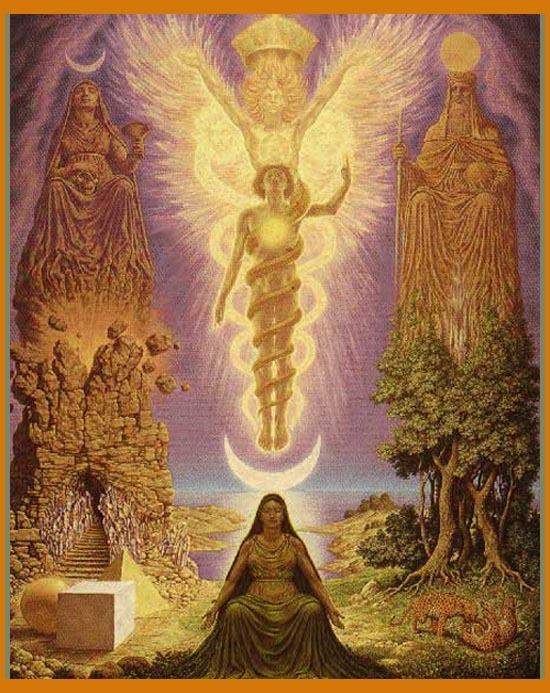
The Essenes practiced communal ownership of property, were distinguished by exceptional piety and moral purity, and placed celibacy above marriage. Moral values held the central place in Essene life; they avoided oaths and assigned no special importance to sacrifices. Although they zealously observed rituals, their aim was spiritual perfection.
They devoted great attention to preaching, bodily and spiritual purity, ablutions, and other hygienic practices they regarded as bound to spiritual life.
The Essenes’ “creed” begins with these words: “From the God who knows all that exists and has existed… He created man for dominion over the world and placed in him two spirits, so that he might be guided by them until the term appointed by Him. These are the spirits of Truth and of Perversity. In the abode of light is the lineage of Truth, and from the sources of darkness is the lineage of Perversity” (3,15 el.). Their views, therefore, were also dualistic.
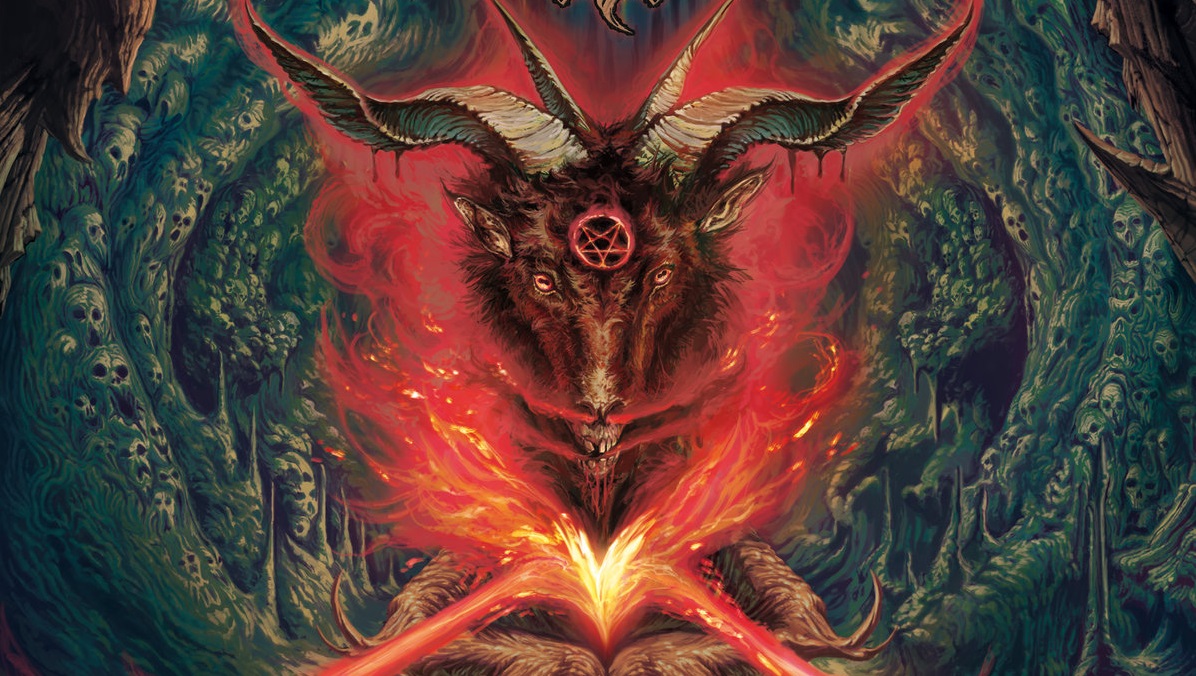
Three pillars of Perversity, or Belial, are named: intemperance, wealth, and impiety. The servants of Perversity are violent men and oppressors — people depraved and greedy, unlawfully trampling their brethren. Truth, by contrast, rests on asceticism, non-acquisitiveness, and reverence before the One Who Is. Its spirit is the “spirit of humility, long-suffering, great mercy, eternal good, intelligence, understanding, and mighty wisdom, which instills faith in all the deeds of God.”
The Way of the human being, the Essenes believed, is predetermined before his creation. The “servants of Perversity” remain such forever, while only the “elect” are saved; they must joyfully await the destruction of the “sons of darkness.” The Essenes also believed they were destined to take part in the world battle that angels would wage against pagans and against Jews who did not accept Essene doctrine.
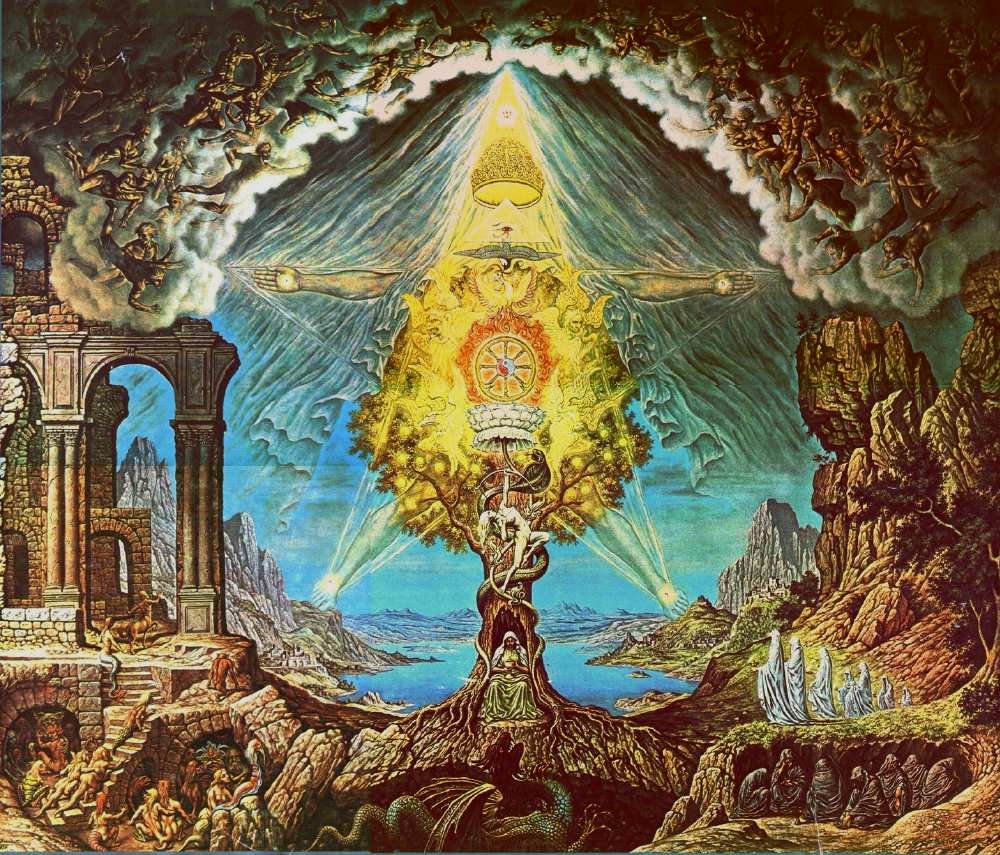
After the spread of Christianity, at the dawn of the Christian era — in the 1st century CE — in the Near East or in Alexandria, a complex of religious-philosophical schools emerged called the “Gnostics” (from “gnosis” — knowledge). The Gnostic movement arose in the pagan world earlier than Christianity, yet it also existed alongside Christianity, coming into contact with it — absorbing its influence and exerting its own — giving rise to a distinct Christian Gnosticism.
Gnosticism is marked by two myths that in most cases correspond to dualism and revolve around a Demiurge (a “craftsman-god” who made the world, unlike the Creator). The first is the myth of a female trickster, the heavenly goddess Sophia, whose act brought about a catastrophe that resulted in the creation of the world. The second is the myth of a male trickster, the illegitimate offspring of Sophia, who created the world either from impure matter called water, or from refuse, or from thoughts that descended to him from above from the true god. As a rule, in Gnosticism the Demiurge is identified with the God of the Old Testament. The Gnostic Demiurge has nothing in common with the Demiurge of Plato’s Timaeus, who is conceived as unconditionally good and who shapes the visible world according to the divine paradigm. According to the Gnostics, the Higher God dwells in the transcelestial region; out of compassion for humankind, he sends his messenger — or messengers — to teach people how to free themselves from the power of the Demiurge.
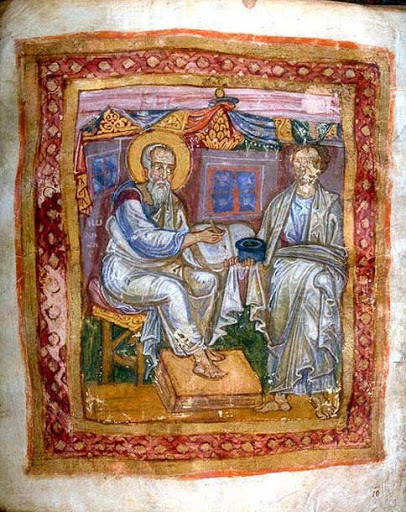
With this vision, the world itself — material existence in all its forms — is, at best, a lower state and, at worst, evil; the same judgment falls on the god who made this world. In Gnostic thought, the sensory world is the result of a tragic mistake within the Absolute, or of a dark invasion into the worlds of light. The Unbegotten Father manifests in special entities — Aeons (sefirot in Kabbalah), often forming pairs. The completion of these Aeons forms the divine fullness: the Pleroma. The pride of one Aeon leads to its falling away from the Pleroma and to the beginning of cosmogony; the lowest of the worlds thus formed is our material world. The universe is the domain of the Archons, who are often called by Old Testament divine names (Sabaoth, Adonai, and others). Around the world lie cosmic spheres like concentric оболочки, their number ranging from 7 (most often) to 365 in Basilides. The religious meaning of this architecture is the infinite remoteness of man from God, expressed by the multitude of Aeons inhabited by demonic archons, whose tyrannical rule is called “Heimarmene” (universal fate). As the guardian of his sphere, each archon blocks the way of souls returning to God after death. The chief role in the creation of the world, however, belongs to the head of the archons: the Demiurge.
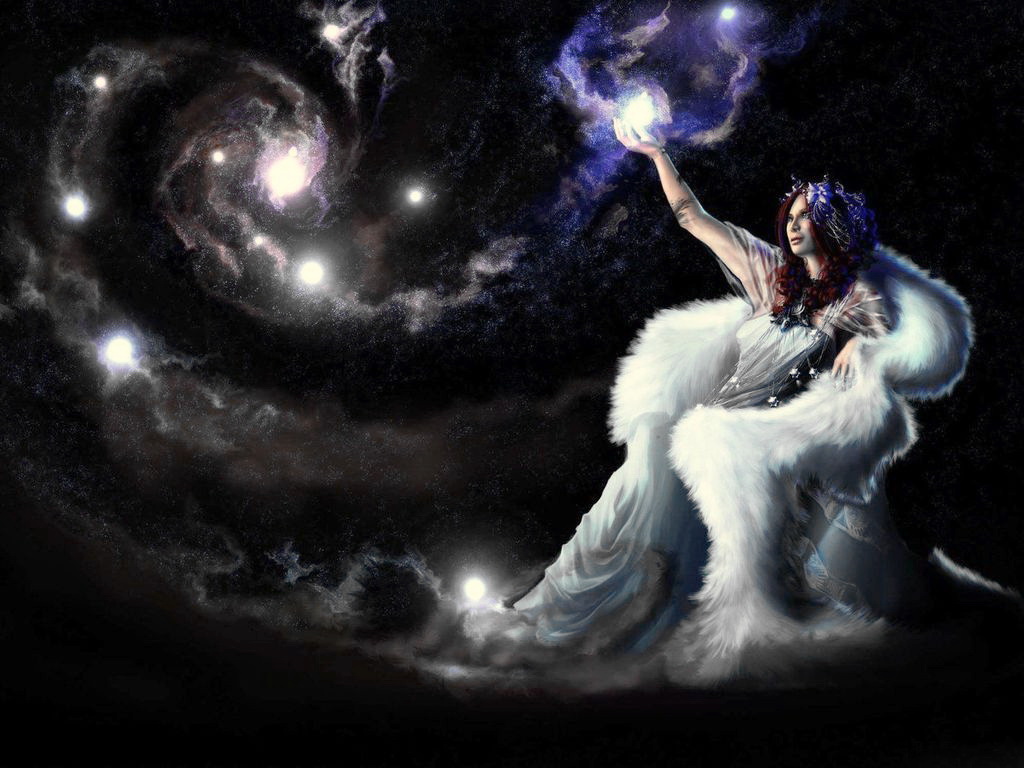
The teachings of various Gnostic schools found expression in an extraordinarily vast corpus of writings; most of these works, however, were destroyed as heretical. The most famous founders of Gnostic sects were Simon Magus, Menander, Saturninus, Cerinthus (1st century CE), Basilides (d. ca. 140), Valentinus (mid-2nd century), and Marcion (2nd century). Each developed his own Gnostic system.
In the 4th century, within the Roman Empire, the movement of the Manichaeans appeared — grounded in a dualistic worldview and close to Gnostic teaching. The name comes from its founder, the semi-legendary Mani (ca. 216–276). He was born in Ctesiphon (Persia), into a family of sectarians — “baptizers” — connected to the Gnostic communities of the Mandaeans. Through this milieu, Mani encountered esoteric doctrines. For a time he served as a Christian presbyter. Drawing from several sources, he forged his Christian-Gnostic doctrine.
Manichaeism is a syncretic religion, as Mani himself states. It includes Zoroastrian elements (first principles), Christian elements (Jesus as savior), and Buddhist elements (ascetic morality and the teaching of reincarnation). “The foundation of Mani’s teaching is the infinity of the first principles (Light and Darkness); the middle part concerns itself with their mixing, and the end — with the separation of Light from Darkness.”
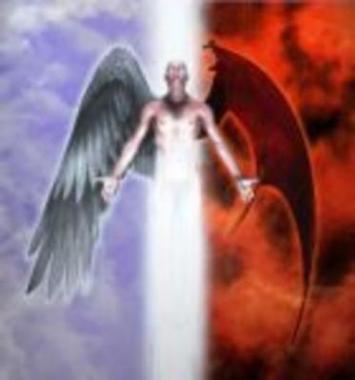
Mani’s doctrine is pessimistic: it asserts the primordiality and insuperability of evil, a principle as independent and primordial as good. Linking evil with matter, and good with light and spirit, Mani nevertheless did not treat darkness or matter as the consequence of extinguished light; in Manichaeism, the kingdom of darkness stands against the kingdom of light as an equal. World history is the struggle of light and darkness, good and evil, God and the devil. Man is dual: a creation of the devil, yet formed according to the paradigm of the heavenly “luminous first man.” In Mani’s teaching, the Gospel Christ was a false Christ. The true Christ did not incarnate and did not unite in himself the natures of God and man. After Christ, Mani was sent — the Paraclete (Comforter) — chief of the messengers of the Kingdom of Light.
The fundamental principles of Manichaeism are the protection of the soul from any bodily defilement; self-denial and abstinence; the gradual overcoming of the bonds of matter; and the final liberation of the Divine essence imprisoned in man.
The Manichaeans were expelled from Ctesiphon and scattered across the surrounding lands. The Manichaean “patriarch” Sisinnius, recognized after a brief internal struggle, settled in Babylon — forgotten by gods and authorities. Some Manichaeans fled beyond the Oxus (Amu Darya) and in the 5th century proclaimed autonomy from the Babylonian patriarch. This autonomy endured until the 8th century, when the Manichaean communities of Central Asia recognized Babylon’s supreme authority.
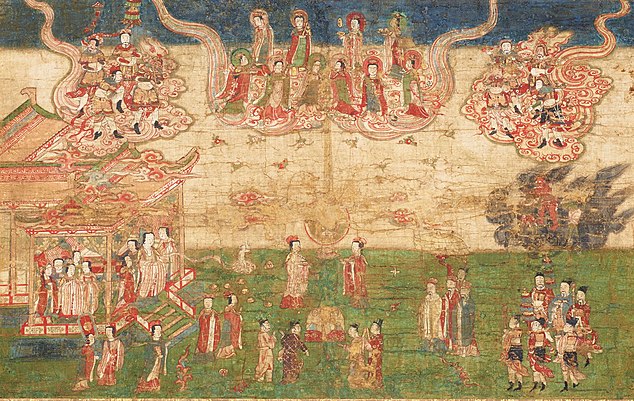
The further spread of Manichaeism proceeded through disciples who transmitted the founder’s teaching along a long hereditary chain. Centers of Manichaeism arose in the most diverse states; many remained cut off from the ancestral homeland and existed as autonomous cults. Yet Mani’s ideas, laid down at the moment of his doctrine’s formation and refined in its early development, were balanced so precisely that they changed little over time and could displace many indigenous religions.
During the 4th century, Manichaeism spread across the Roman Empire — from Egypt to Rome, southern Gaul, and Spain. Both the Christian Church and the Roman state subjected Manichaean communities to brutal persecution. In 296, Emperor Diocletian ordered the proconsul of Africa to persecute the Manichaeans in order to “tear out with branches and roots” the “abominable and impious teaching” that had come from Persia. Their leaders and preachers were to be burned together with their books; the clergy beheaded; and the followers sent to hard labor with confiscation of property. This edict was provoked by the proconsul’s complaint that the Manichaeans were stirring unrest and disorder in the cities.
By an edict of 381, Theodosius I deprived the Manichaeans of civil rights, and the following year imposed the death penalty for professing this religion. Valentinian II sent the remaining Manichaeans into exile, with confiscation of property. In 405, Honorius confirmed all his predecessors’ decrees and again declared the Manichaeans outside the law. Valentinian III, Anastasius, Justin, and Justinian did the same; Justinian extended these measures not only to the Manichaeans but also to those who renounced the faith yet continued to maintain contact with their former coreligionists.
Thus, by the end of the 5th century, pure Manichaeism disappeared entirely from Western Europe, and by the 6th century it vanished from Eastern Europe as well.
Movements that followed the Manichaeans included the Paulicians and the Bogomils. The Paulicians distinguished between the Good God, or the Heavenly Father revealed in Christianity, and the Demiurge who created the visible world and human bodies. The fall of the first man was understood as disobedience to the Demiurge and as the resulting deliverance from his power and the revelation of the Heavenly Father. The Paulicians interpreted Christ docetically, insisting he was not a man but a phantom who passed through the Virgin Mary as through a channel, in order to destroy the cult of Satan. The Holy Spirit, however, is invisibly transmitted only to true believers — that is, to the Paulicians.
The Paulicians preached radical dualism, denying ritualism, ceremonies, cult buildings, icons, the cross and the sign of the cross, saints, sacraments, church hierarchy, fasts, asceticism, and monasticism. Of all the sacraments, they retained only baptism and the Eucharist, and even these were performed immaterially, in spirit. Worship consisted exclusively of teaching and prayer. The leaders of the school assumed the title “Apostolic Disciples” and took the names of real apostolic disciples.
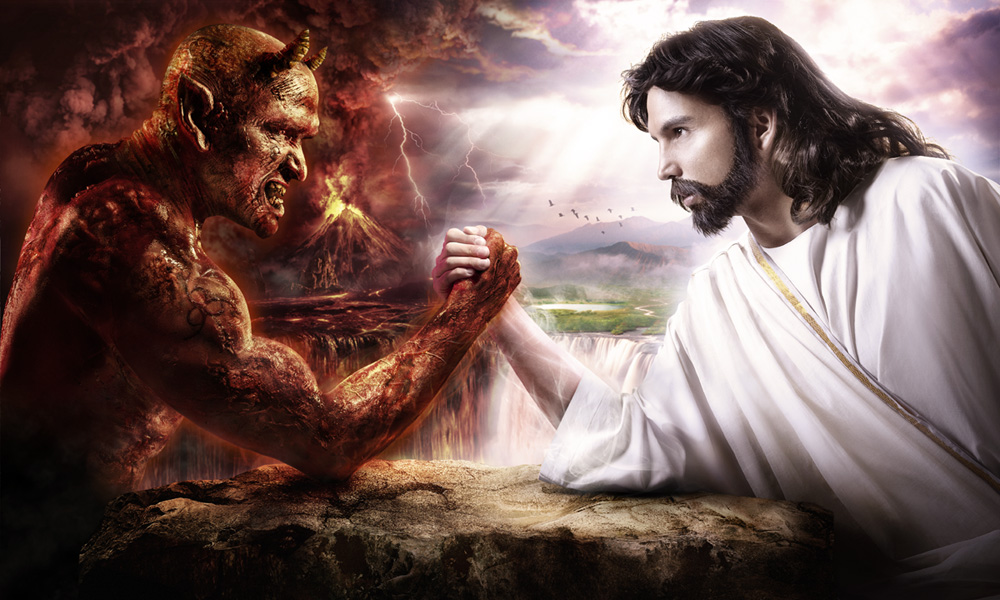
In Bogomilism, the two principles — good and evil — are not treated as independent but as subordinate to a higher good being. According to Bogomil teaching, God originally had a firstborn son, Satanail, second after God and commander of all angels. Proud in the mind of his might, Satanail decided to become independent of the Father and was cast down from heaven. There, too, he chose to build an independent kingdom. Since he retained divine creative power, he created a new heaven and earth from chaos, as well as Adam, into whom he tried — unsuccessfully — to instill a living soul. Turning to God the Father, Satanail asked him to breathe a soul into the first man and animate him. Satanail assumed that afterward he would rule over the bodily part of man, while the Father would rule over the spiritual — and that human spirituality would replace, for God, the angels cast down with Satanail. Eve was created in the same way.
Yet Satanail envied people, who were to replace the apostate angels, and decided to subdue the human race. Entering the serpent, he seduced Eve and begot from her Cain and his sister Kalomena, calculating that his offspring would prevail over the offspring of Adam. Thus Satanail subjected the entire human race to himself, and only a few remembered man’s original назначение: to replace the fallen angels. In this oblivion, people took Satanail himself for the Supreme God, and Moses — an instrument of Satanail — spread this belief with particular zeal.
In the year 5500 from the creation of the world, God decided to free people from Satanail’s power and brought forth a second son, Jesus, or the Word — also called Michael by the Bogomils. The Bogomils understood the incarnation, life, and death of Jesus docetically. Jesus came into the world in an etheric body with the appearance of a human one and passed through the Virgin Mary unnoticed, so that she did not understand how she found him as an infant in a cave. Satanail, striving to break Jesus’ influence over people, brought him to death — also illusory. Yet three days after death, Jesus appeared to Satanail in his divine form, bound him in chains, and took from his name the last, divine syllable “il,” after which he became simply Satan. Jesus then ascended to heaven and became second after God, the head of all Angels.
To complete his work on earth, God the Father brought forth yet another power: the Holy Spirit, which acts directly upon human souls. The souls of the Bogomils, sensing the Holy Spirit’s action and transmitting that action to other souls, are true Theotokoi. Such people do not die; they cast off the bodily оболочку and migrate to the kingdom of God. When the Holy Spirit completes its work and all souls migrate to the Kingdom of God, all matter will return to chaos, and Jesus and the Holy Spirit will return to the Father from whom they came.
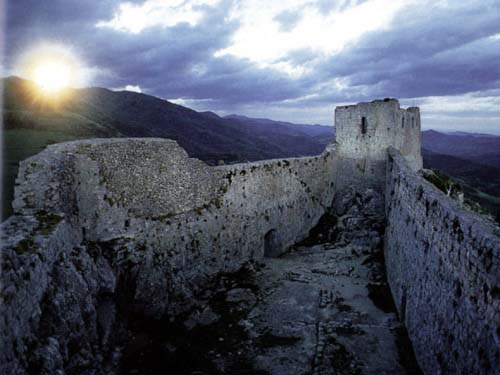
The Cathars (from the Greek “pure”), or Albigensians (from “albus” — “white”), arose in Occitania (southern France) on the basis of a broad “heretical” movement among commoners and nobility. They spread in the 11th–14th centuries across northern Italy and France. They held that the earthly world, the Catholic Church, and secular power were created by Satan, and they declared the Pope the vicar of the devil.
The Cathars followed a dualistic doctrine akin to the Manichaean one, positing two principles: a good one as God and an evil one as the devil. They denied the dogmas of Christ’s death and resurrection and rejected the cross, churches, and icons. They declared the seven Christian sacraments a diabolical deception and practiced public confession once a month at a community gathering. The Eucharist was replaced by the blessing of bread, performed daily at a common table. Water baptism was replaced by a spiritual one, performed through the laying on of hands and the apocryphal Gospel of John upon the one being baptized. For fear that the clergyman’s hands were defiled by sin, baptism was often performed twice or three times.
The Cathars rejected marriage and procreation. Cohabitation was regarded as a lesser evil than marriage, and the departure of a husband or wife was considered worthy of praise. Although angelic souls, as the Albigensians believed, were created by the good deity, their fall led to Satan imprisoning them in the dungeon of the body. That is why earthly life is punishment and the only existing hell. Suffering, however, is temporary: all souls will ultimately be saved. Like the Arians, the Albigensians asserted that Christ is merely a created being who never possessed human corporeality and therefore could not truly die on the cross; otherwise he would have fallen under the power of the evil principle. His redemption offers an example of noble life and high morality; yet, in truth, he did not defeat sin.
Following their dualism to its conclusion, the Albigensians encouraged liberation from the body, including through suicide. Since the birth of children was treated as the imprisonment of souls in the body’s dungeon, the Albigensians insisted on complete abstinence. They believed in metempsychosis, the reincarnation of souls, and therefore consumed neither meat, milk, nor other foods of animal origin. Denying the authority of Church and state, they appealed to Holy Scripture — chiefly the New Testament — since the Old Law (Old Testament) was regarded, in general, as a creation of the devil. Oaths, participation in wars, and the death penalty were forbidden.
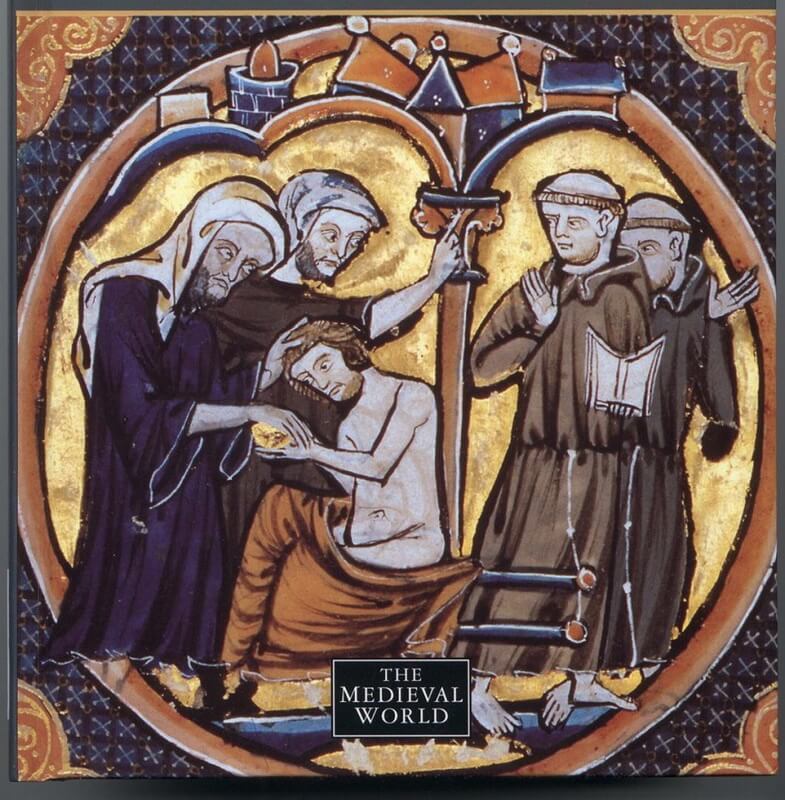
The Cathars asserted the coexistence of two fundamental principles: the good deity (the God of the New Testament), who created spirit and light, and the evil deity (the God of the Old Testament), who created matter and darkness. Accordingly, they rejected marriage and childbearing. At the same time, cohabitation was regarded as a lesser evil than marriage, and the departure of a husband or wife was considered praiseworthy. Although angelic souls, as the Albigensians believed, were created by the good deity, their fall led to Satan imprisoning them in the dungeon of the body. That is why earthly life is punishment and the only existing hell. Suffering, however, is temporary: all souls will ultimately be saved. Like the Arians, the Albigensians asserted that Christ is merely a created being who never possessed human corporeality and therefore could not truly die on the cross; otherwise he would have fallen under the power of the evil principle. His redemption offers an example of noble life and high morality; yet, in truth, he did not defeat sin.
Following their dualism to its conclusion, the Albigensians encouraged liberation from the body, including through suicide. Since the birth of children was treated as the imprisonment of souls in the body’s dungeon, the Albigensians insisted on complete abstinence. They believed in metempsychosis, the reincarnation of souls, and therefore consumed neither meat, milk, nor other foods of animal origin. Denying the authority of Church and state, they appealed to Holy Scripture — chiefly the New Testament — since the Old Law (Old Testament) was regarded, in general, as a creation of the devil. Oaths, participation in wars, and the death penalty were forbidden.
The last — and bloodiest — stage in Cathar history was a series of battles (1209–1228), often called the Albigensian wars or the crusades against the Albigensians. The fiercest fighting erupted at Béziers, Carcassonne, Lavaur, and Muret. The armies were led by the Count of Toulouse (for the sectarians) and Simon de Montfort (for the crusaders). Earlier, in 1208, Pope Innocent III called for a crusade after the sectarians killed the papal legate. Under the peace of 1229 at Meaux (the Treaty of Paris), most Albigensian lands passed to the King of France. The scattered remnants of the sect, however, survived until the end of the 14th century.
For more than 30 years, popes and French kings waged a fierce struggle against the Cathar “heresy.” Yet, strikingly, the most powerful and militant organization of crusader knights — the Order of the Temple (the Templars) — remained on the sidelines throughout the Languedoc campaigns. In response to the pope’s call to join the war against the Cathars, Templar leaders stated outright that they did not consider the invasion of French troops into the County of Toulouse a “real” crusade and did not intend to take part.
The Albigensian campaigns and the persecution of the Cathars strengthened Cathar influence among the Templars. As early as 1139, Pope Innocent II, who patronized the crusaders, granted the Order of the Temple numerous freedoms and privileges, including the right to accept into the brotherhood knights excommunicated for sacrilege, heresy, blasphemy, and murder. This privilege allowed the Templars to save excommunicated knight-heretics from persecution by taking them into their ranks. After 1244, especially, many Cathars entered the Order, when the Albigensians suffered their final defeat and agents of the Holy Inquisition and the French Crown combed southern France in search of heretics.
Always and everywhere, the Gnostics were anathematized, tortured, and burned. Yet the enchantment of these views proved stronger than the pyre; in the form of countless schools and movements, they have survived into our own day.

Ermenkar, does it turn out that all kinds of movements like Jehovah’s Witnesses, Pentecostals, Baptists, etc. are all echoes of Gnostic movements and just a mosaic of positions they liked the most?