Yoga of the Aeonic Deities
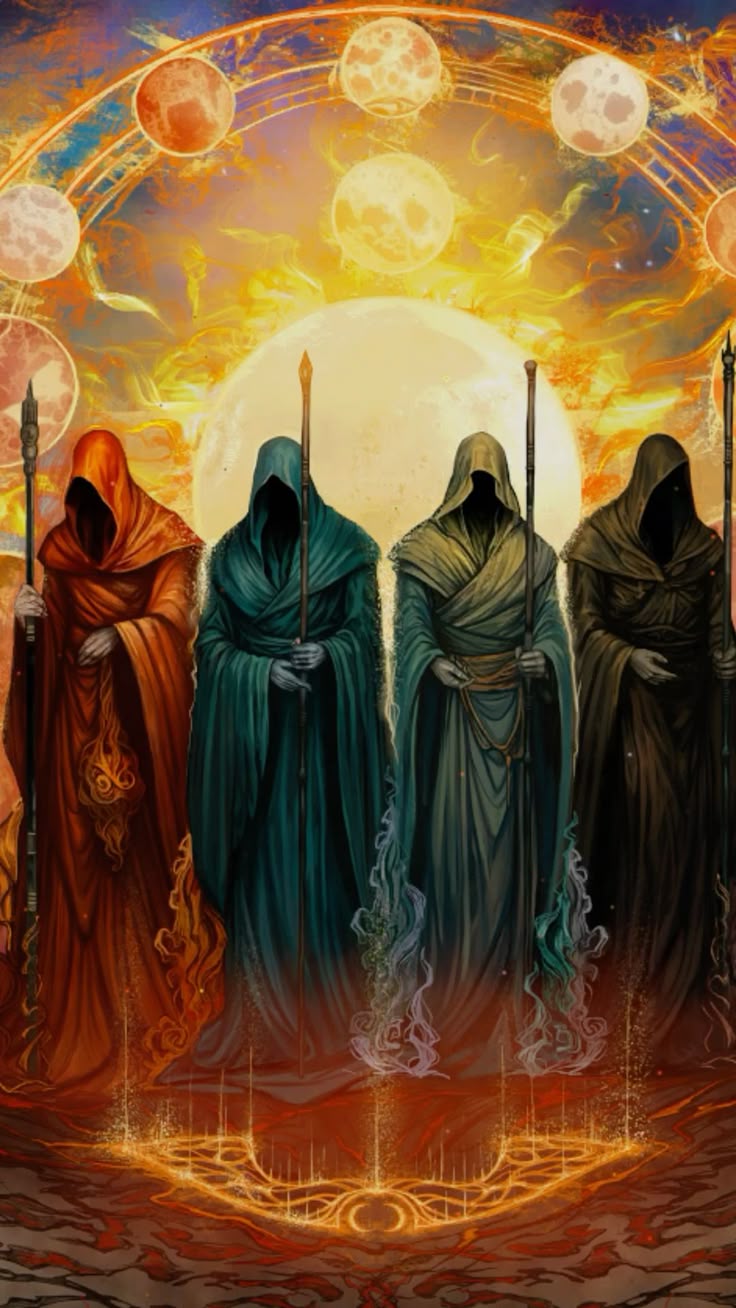
Yoga of the Aeonic deities is a gnostic, magico-philosophical practice and system of views based on working with the so-called Aeons (primordial aspects of divine potency) and their manifestations in the Intermediate – Aeonic deities. This tradition views mind as a microcosm, reflecting all levels by analogy of the universe.
We have already discussed that Aeons in gnostic-esoteric terminology are considered primordial spiritual entities — emanations of the Divine, a kind of “eternities” or fundamental forces filling the “intermediate” between the Absolute and the created world. The totality of all Aeons is called the Pleroma, the “fullness,” and represents an indivisible aspect of the manifestation of divine potencies and forces. In other words, the Pleroma is an all-embracing fullness of being, where, in a supra-dimensional unity, all first principles of being and mind coexist. Each Aeon is a distinct “section” or aspect of divine potency, a certain quality or principle from which concrete manifestations of reality are further unfold. At the same time, the Aeons themselves are not gods in the usual polytheistic sense; they are special principles or ideas, eternal archetypes on which all that exists — both manifested and potential — rests. They possess a hypostatic reality (that is, they are independent spiritual entities-ideas) and exist in an ideal, intelligible dimension. One can say that each Aeon contains a certain cosmic law or potency from which corresponding phenomena in worlds and timelines arise.
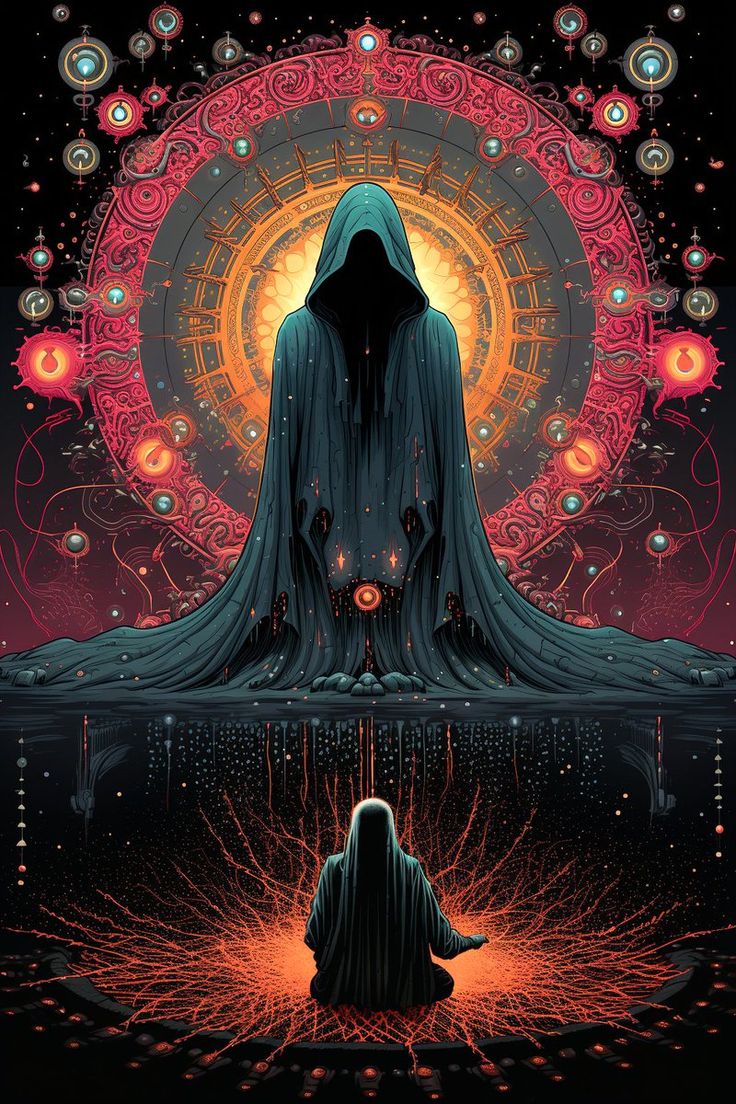
In the metaphysical geography of the universe, the Aeons are regarded as the basis for the formation of special layers of reality called ethers. These ethers can be described as quasi-spaces — layers of subtle being, each of which corresponds to a certain level of vibrations or a principle. Thus, each Aeon corresponds to its own etheric “layer” of the Intermediate, in which this divine potency unfolds. Accordingly, the Aeons serve as the framework, the basis by which the intermediate space between the manifested worlds of phenomena and the transcendent Pleroma is structured.
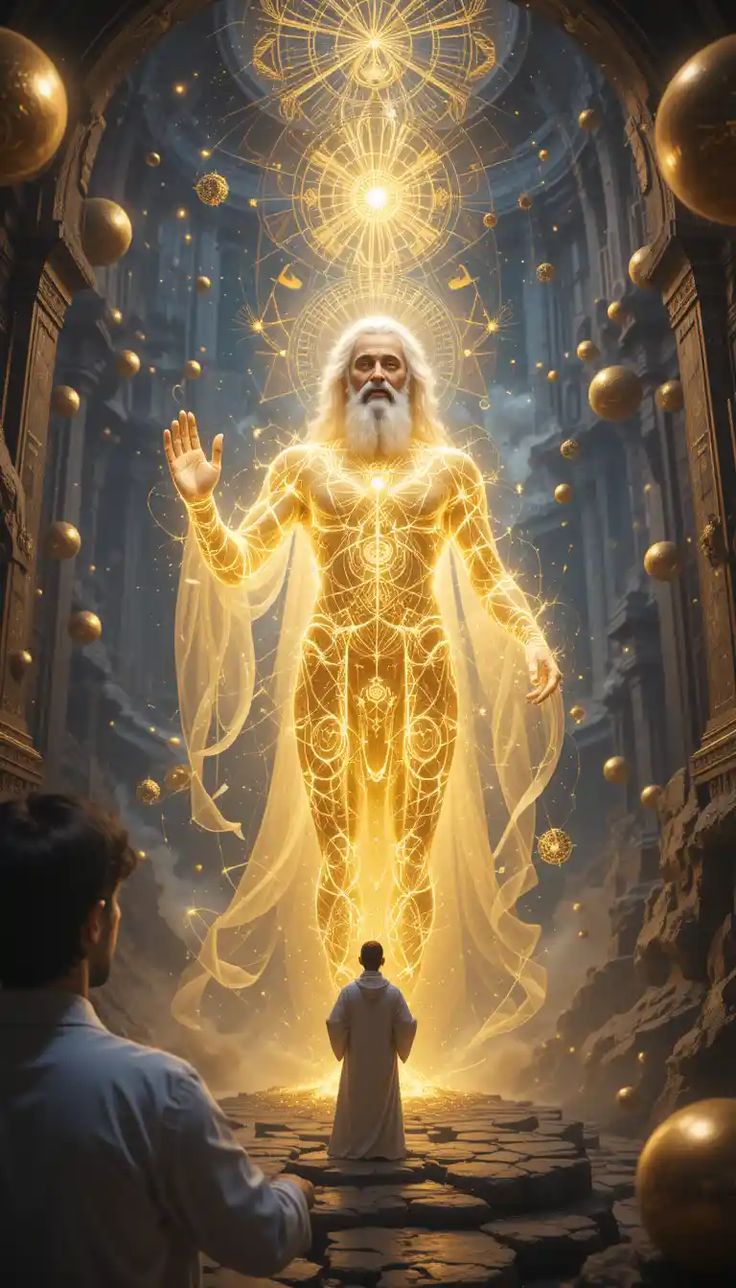
At the same time, the Aeons themselves are transcendent potencies abiding in the Pleromic state of Great Perfection, and therefore in interworld space, their images and active manifestations are perceived as the so-called “Aeonic deities.” In other words, in the Intermediate the Aeons are “reflected” as such images, accessible to the perception of the inhabitants of etheric spaces, as well as mystics and practitioners traveling there. Figuratively speaking, Aeonic deities are the “dream-bodies” of the corresponding Aeons. One can say that each Aeon “dreams” in the Intermediate, and in this dream it appears as a deity endowed with a certain appearance and traits. This comparison indicates that between the transcendent Aeon and its deity-image there exists the same connection as between a “daytime” person and their image in a dream: the deity is not real in the ontological sense, but is real as an image through which the mind of the Aeon manifests. Each such Aeonic god serves as a living center of consciousness in its layer of the Intermediate. It is simultaneously the cause, source, and personification of the properties of that ether.
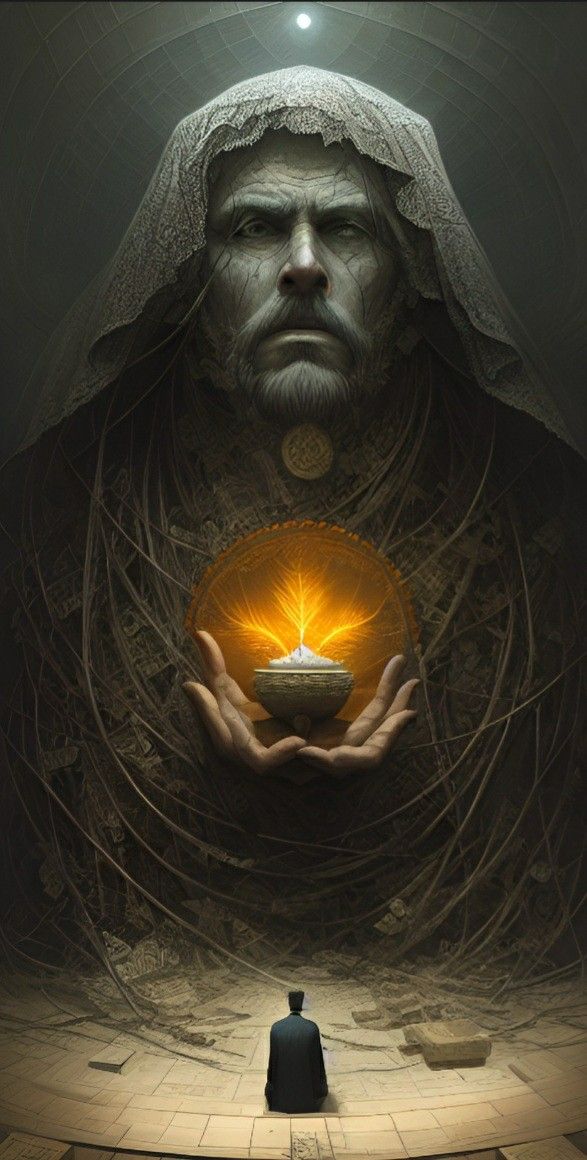
Thus, such an Aeonic deity “organizes” its etheric space, giving it characteristic features. The role of Aeonic gods is to serve as bridges between the transcendent sphere of potencies and perceiving beings. Thanks to them, the abstract energies of the Aeons acquire an image, name, and character with which a concrete mind can interact. In this sense, they can be called a kind of “avatars” of the Aeons: they “lower” the vibration to a level accessible to perception, while preserving the inner essence of their divine power.
At the same time, Aeonic deities are not identical to traditional mythological gods, although to an external observer they may look very similar. As researchers of the Interworld note, to many visionaries such deities appear in a familiar form — for example, as figures from pantheons known to them — however, their connection with a specific mythological being is only indirect, based on the similarity of energies.
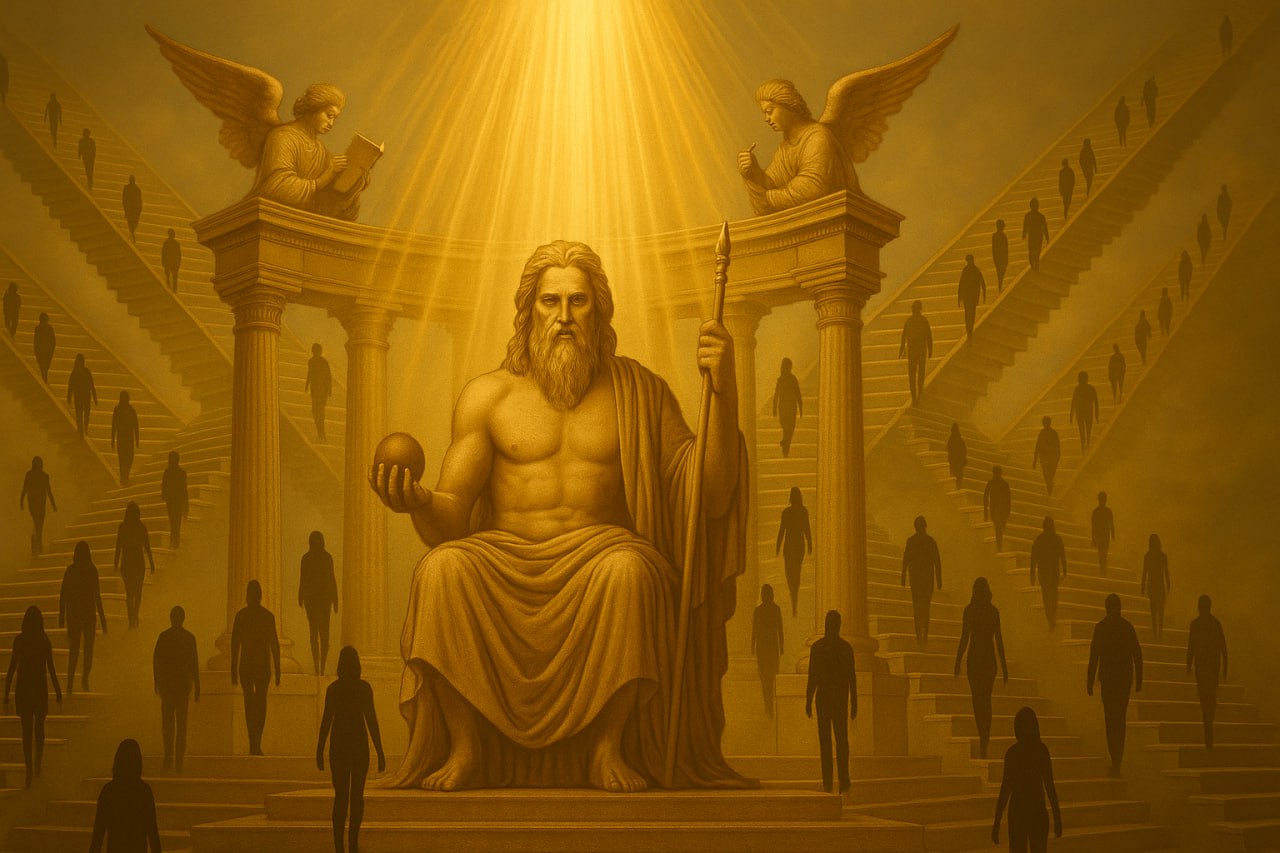
This happens because the human mind, encountering a new energy, unconsciously selects a “code” image that is closest in its manifestation to that energy. As a result, the visionary may see in the Intermediate, say, the goddess Ishtar or the goddess Tara — although in reality they have come into contact with some transcendental Aeonic force, simply “clothed” by his mind in a familiar image. Thus, an Aeonic deity is not a specific god dwelling in devaloka, on Olympus, or in some other world, but a universal divine force that has taken on a form understandable to an individual mind. This force is a projection of an Aeon, and at the same time a channel through which mind can ascend to the Aeon itself. Another feature is that, since the space of the Intermediate includes all possibilities, it contains both creative and destructive potencies, and therefore Aeonic gods of different etheric layers can have a very different nature — from luminous and ordering to formidable or chaotic.
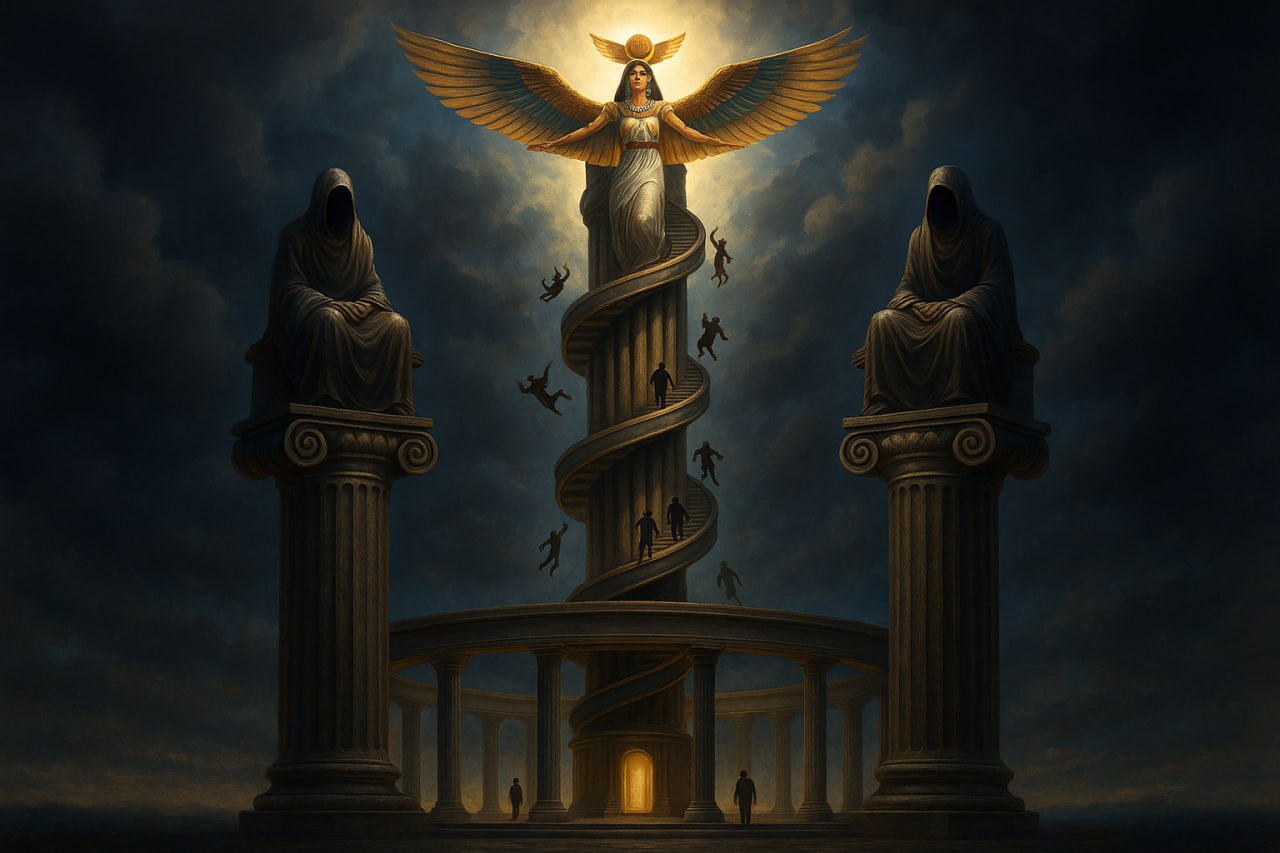
As we noted earlier, ethers (or etheric layers) are levels or “regions” of the Intermediate hyperspace, each of which is generated by a specific Aeon and reflects its properties. Strictly speaking, they are not physical locations with coordinates, but are formed as field states, sets of potential forms and ideas. Each ether can be viewed as a separate dream or plot unfolding in the Intermediate. All ethers together form the total space of the Interworld, which has infinite extent and multidimensionality. At the same time, the mind doesn’t move physically; it merely switches between different aspects of a single hyperspace.
The corresponding Aeonic principle gives each ether its unique quality: thus, the ether of Sophia is the Crossroads between worlds, wisdom and creative design, the ether of Teletos (Divine Desire) is the space of the Afterlife and the primary impulse toward being, etc.
However, all ethers are mutually permeable; they are like layers of a single onion or spheres of a single cosmos nested within one another. The Pleroma permeates them all, and each point of the Intermediate potentially contains access to all etheric spaces and Aeonic forces.
Therefore, one can say that ethers are the “dreams” of the Pleroma, where the plots are set by specific Aeons. In them, Aeonic deities manifest actively — creating images, maintaining structures, interacting with beings and minds that come into these spheres. For a person entering an altered state of mind (meditation, scrying, astral projection, dreaming, etc.), it is precisely the spaces of the ethers that are the landscape of inner experiences.
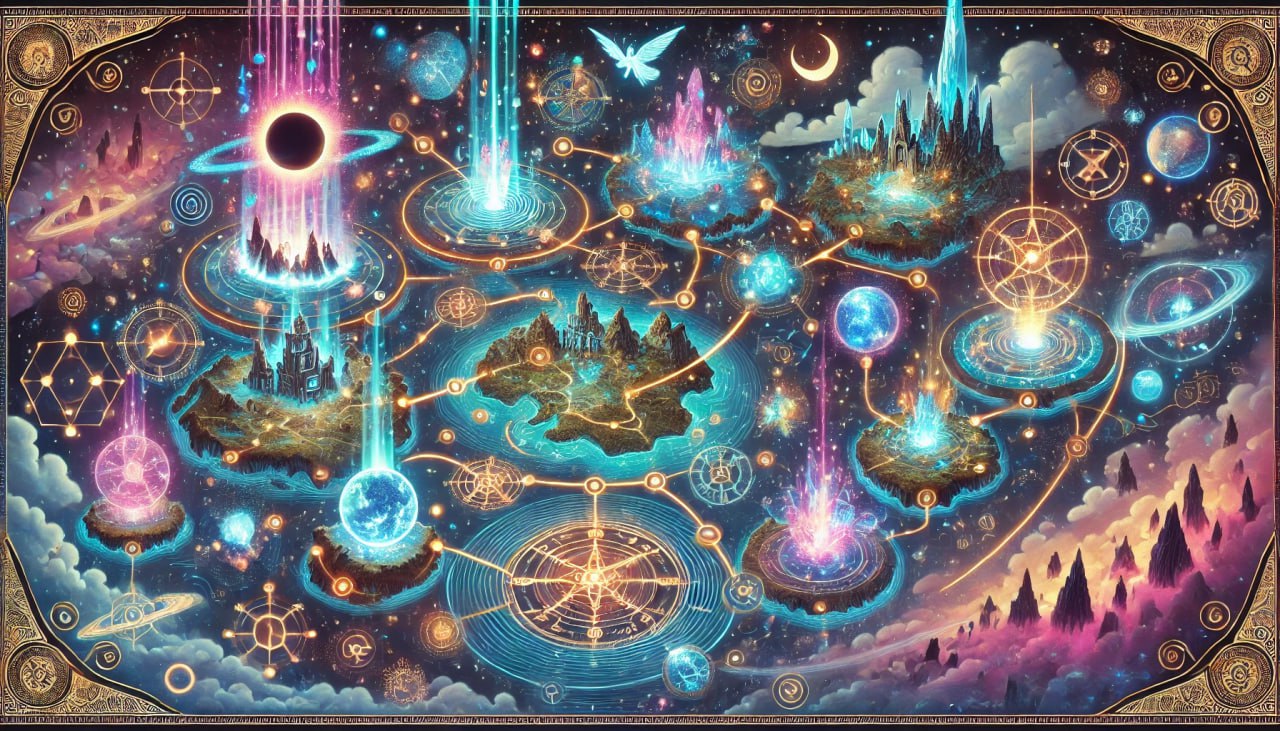
And the practice of Aeonic yoga entails the conscious mastering of these layers, the study of the “geography” of the Interworld, in order to understand which forces the mind is dealing with. Understanding which Aeon and which ether are involved, the visionary can comprehend their experience more deeply and direct it. Thus, having met in a dream or vision one or another image of a deity, one can determine by its characteristics and attributes to which Aeon-layer it belongs, and accordingly understand the meaning of the occurring “message” or lesson for mind.
Thus, ethers are the medium for the active manifestation of Aeonic deities, which here act as independent entities — they can enter into dialogue with the practitioner, convey knowledge, test them, or help. However, it is important to remember that all their “independence” is relative: they are projections of Aeons, and all Aeons are one in the Pleroma. Therefore, interacting even with the most formidable or wondrous manifestations of the fabric of the interworld, one should maintain a philosophical understanding of their nature — as a refraction of aspects of the One through the prism of the perceiving mind. And herein lies the difference of Aeonic deities, as principles, from other “real” inhabitants of the Intermediate subspaces, including the “true” gods of the interworld, possessing their own will and personal aims.
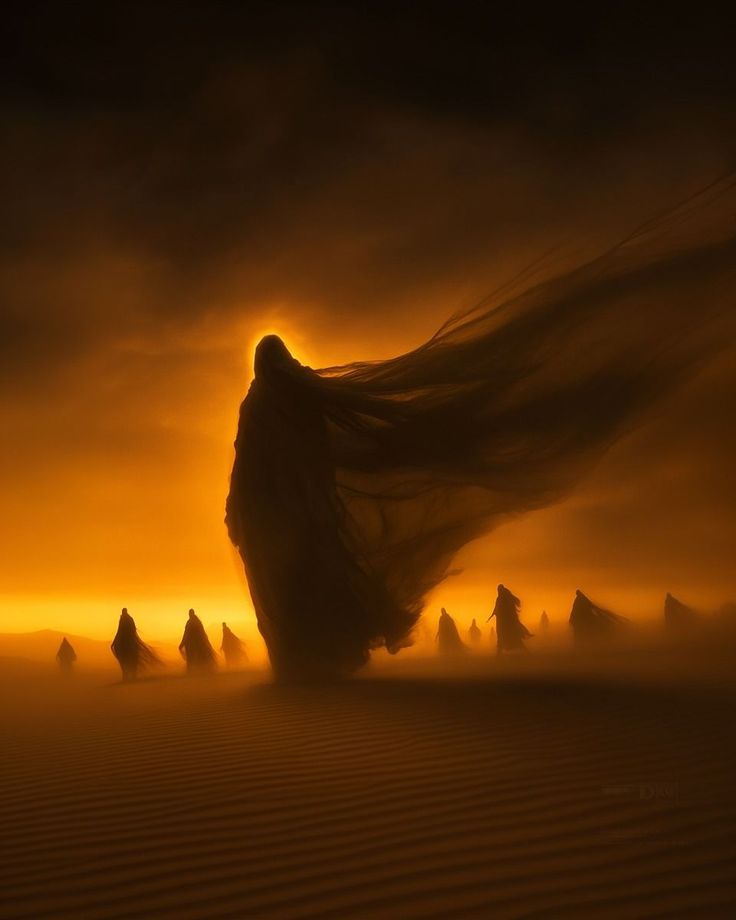
The central tool in yoga of the Aeonic deities is working with the image — a visual or mental representation of a deity through which the corresponding matrix of the mind is activated. The practitioner learns to relate to them “as to dream-images,” that is, as to a visual code behind which certain meanings are hidden.
This fundamentally distinguishes Aeonic yoga from popular spiritualism: here images are not an end in themselves and not a dogma, but only keys to energies and states. When in contemplation or vision an image of an Aeonic deity arises before the practitioner, this image awakens a linked matrix in their psyche. For example, visualizing a formidable god with lightning (the personification of order, power, and will), the practitioner thereby awakens in his mind the matrix of volitional striving — what in the Pleroma corresponds to the Aeon of Causes (Patrikos). In this, the image acts as a trigger mechanism: it concentrates scattered elements of the psyche into a certain configuration, aligned with the Higher principle.
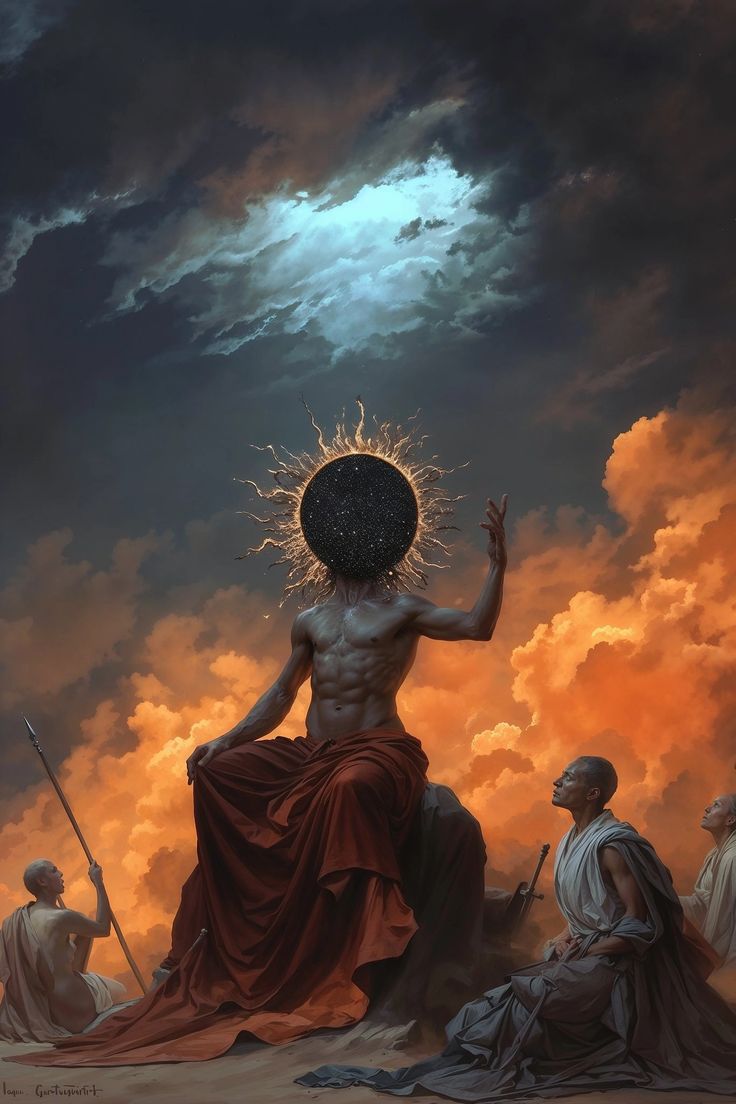
With prolonged and persistent practice, such an image can deeply transform the mind — essentially “reflash” inner structures, tuning them to a higher order (the order of the divine Aeon).
That is why all theurgic and yogic systems attach great importance to visualization — a mind that can hold a divine image gradually becomes similar to it. At the same time, one should consider that the images of Aeonic deities are products of the mind itself that arise on contact with an Aeon’s energy. Outwardly, they may correspond to well-known gods, but from the point of view of practice it is important not to “fall for” the outer appearance, but to penetrate into the essence. We have already said that such an image is only a mask, not the true face of the Aeon. Therefore, in the practice of yoga of the Aeonic deities it is not required to fanatically fixate on a single image or believe in the literal reality of the deity. On the contrary, it is recommended to maintain flexibility of perception: divine forms may change, transform in the course of vision, and this is normal. The psychocosmos is capable of offering many forms for the same energy — today it may appear as the Egyptian Isis, tomorrow as the Greek Sophia, the day after tomorrow as the Buddhist Prajnaparamita, and then as an abstract Radiant Light without anthropomorphic traits. But in all cases the essence will be one, if behind the image stands one and the same Aeon. The task of the practitioner is to recognize this essence and attune to it, using the image only as a means.
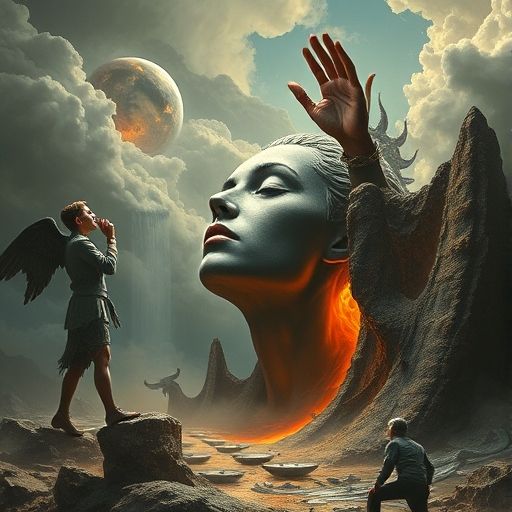
In practice, work with the image involves corresponding exercises in visualization, scrying, and inner contemplation. Entering a special Intermediate state, the adept waits for the image to manifest of the chosen deity, without imposing their expectations or interpretations on it. Then they identify their mind with the image — “enters” the role of the deity. This technique is close to Eastern deity yoga: it allows one to “try on” the matrix of a higher mind. At the same time, it is important to remember clearly that Aeonic yoga regards such images as inner energies of the adept themselves (ultimately — as manifestations of his own divine logos). Thanks to such an approach, psychological dependence on the “mercy of an external deity” is eliminated: the practitioner takes responsibility for the unfolding of the corresponding quality in his mind.
Thus, the figure of an Aeonic deity acts as a bridge between the psychocosmos and the Pleroma. Practicing attunement to such images and penetrating into the energies behind them, mind gradually awakens in itself “Aeonic currents” — streams of power, wisdom, love, and other higher states that emanate from the Pleroma. Interpretation of images and analysis of visions are also part of the work, allowing one to come closer to understanding the Aeons.
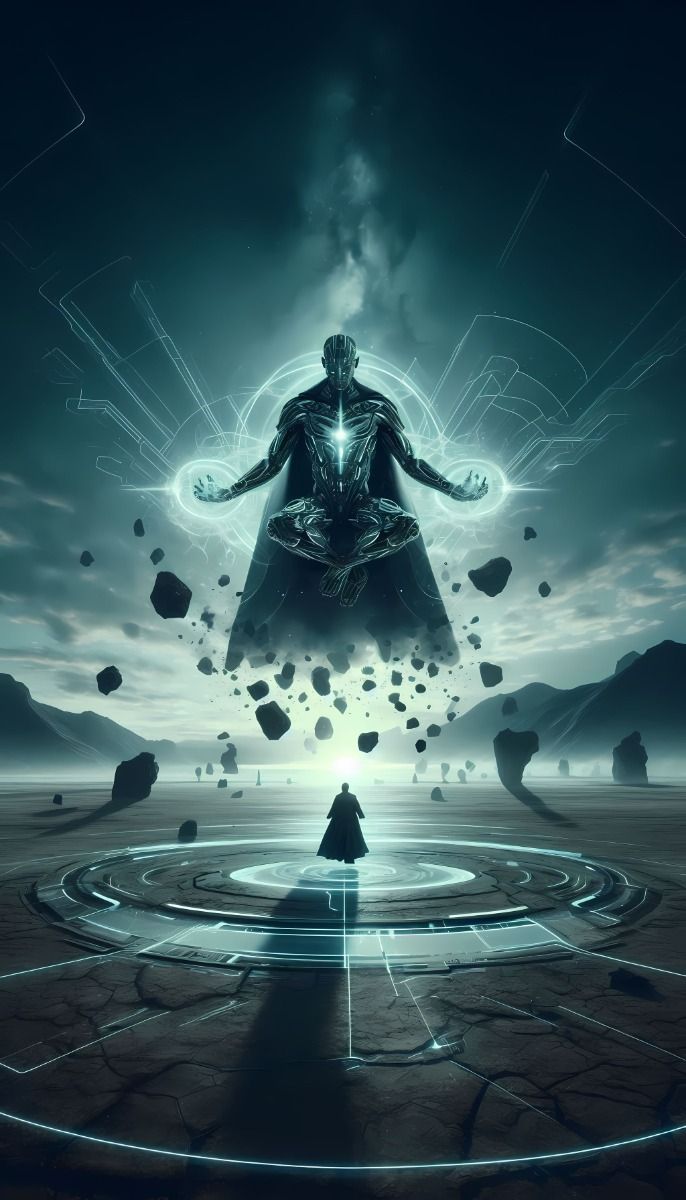
In this sense, Aeonic yoga is close both to classical theurgic approaches to the development of the mind and to methods of Eastern deity yoga. In all these systems, a common aspiration is traced — to establish a connection with higher levels of mind and being, using symbols, images, or visualizations to transform an “imperfect” nature. However, there are also important differences in the way of addressing, the nature of the “deities,” and the role that images play in practice.
Theurgy, deity yoga, and Aeonic practice are similar in that they are aimed at the activation of matrices of higher states of mind. In all these systems it is implied that one can find and awaken certain ideal images or essences, contact with which has an enlightening effect. In addition, in theurgy, deity yoga, and the Aeonic approach, signs and symbols are actively used — sacred Names, mandalas, sigils, visualized attributes of deities that correspond to the features of their nature and energy.
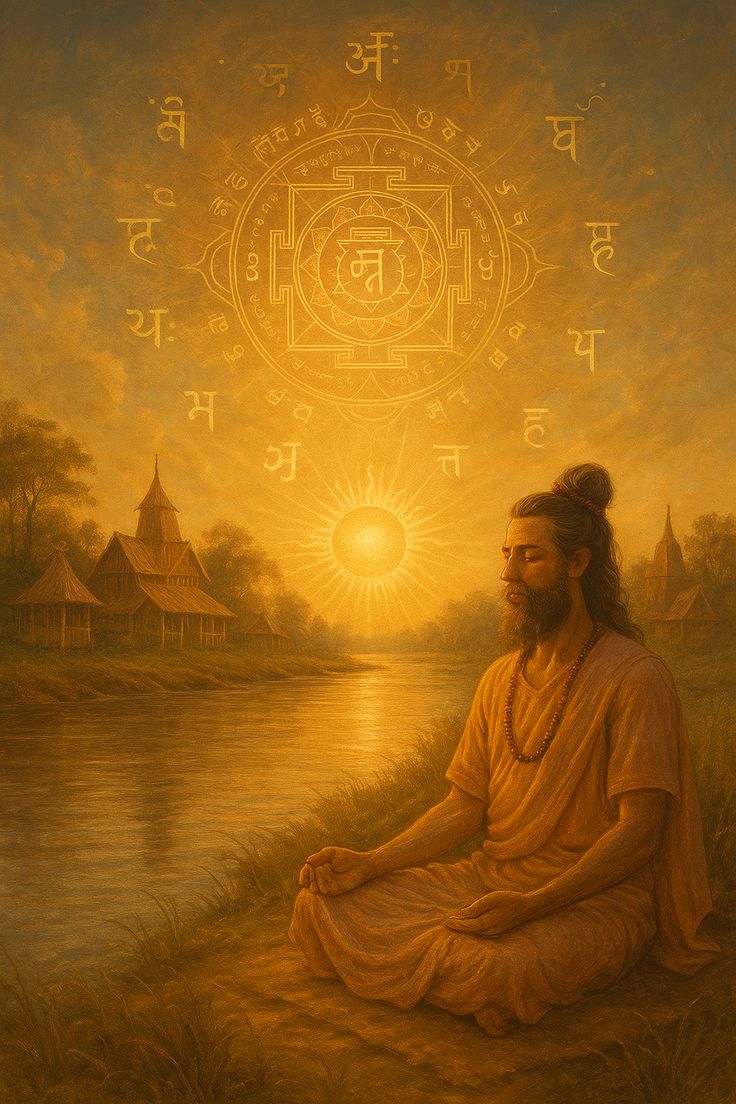
At the same time, classical theurgy operates in the paradigm “I am lower, the god is higher,” where the personality bows and asks, and the gods are thought of as objectively existing personalities (whether pagan deities, angels, archangels, or Christian saints). Also, theurgy is usually tied to a specific religious-mythological system — for example, to the Egyptian-Greek pantheon, the angels of the planets, etc. Aeonic practice, on the contrary, is universal and non-denominational: it does not require belief in a specific pantheon or a strict ritual protocol, relying more on inner states. Moreover, unlike classical theurgy, where the image serves only as an invitation for an external spirit, in Aeonic practice the image is primarily an inner guide to one’s own Logos through resonance with an Aeon.
In the Vajrayana tradition, meditative deities — yidams or ishtadevatas — are perceived as merely manifestations of mind, having no independent reality (their true nature is empty), and therefore visualization is considered as a method of psychological transformation by which inner experience is translated into visible forms.
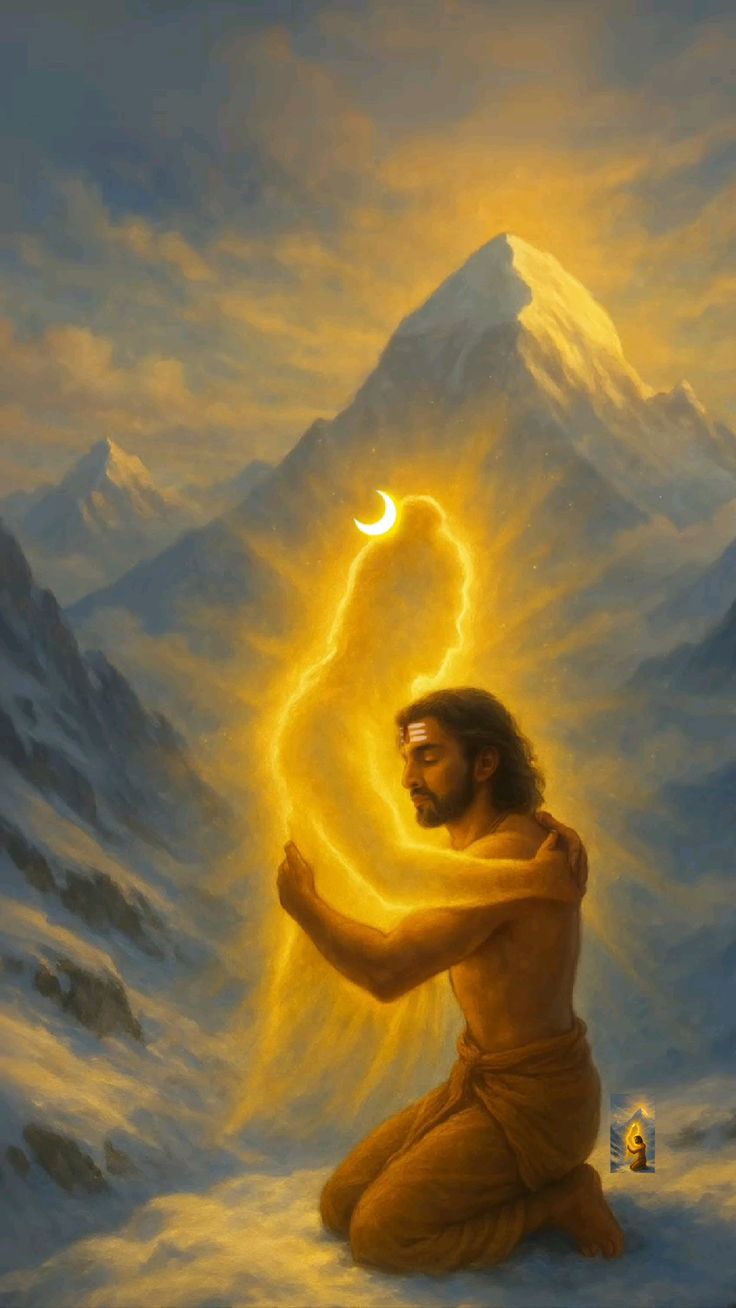
In this, deity yoga is very similar to Aeonic yoga, although at the same time Aeonic yoga does not deny the reality of the deities themselves; it only insists that deities as beings, deities as matrices and deities as manifestations of Aeonic energies are three outwardly similar, situated on the same axis of analogy, but inwardly and essentially different phenomena. Aeonic practice, like theurgy, recognizes the existence of many levels of being and principles, but addresses not specific “living” gods but directly “pure” divine forces (Aeons), bypassing cultural-religious forms. Like Buddhist tantra, it considers Aeonic deities to be phenomena of mind, yet is not limited to the doctrine of emptiness — its views explicitly contain a metaphysics of emanations, a hierarchy of Pleromic principles. In addition, in Aeonic practice there is no requirement to follow a strict sadhana ritual tied to a specific devata — the practitioner can build creative work with symbols, relying on general principles of resonance.
Thus, one can say that Aeonic yoga is situated between theistic magic and psychological meditation: it regards the divine as one with mind (the micro-pleroma of the psychocosmos), but at the same time implies the reality of objective forces and agents with which one can interact. Such an approach provides greater freedom and universality.
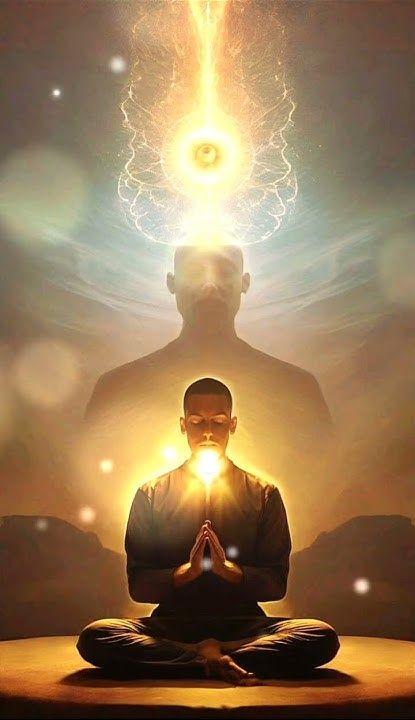
For this practice, the most important thing is to gain an inner sense of resonance with an Aeon. For this, it is very convenient to shift the mind into the corresponding etheric aspect. In addition, one can also use mantras and symbols that are chosen not only according to tradition, but also based on correspondence to the required energy (for example, Sanskrit mantras, Enochian “Keys,” planetary sigils — anything may be used if it helps evoke resonance with the sought principle).
Thus, Aeonic yoga relies on a holistic worldview, according to which the mind is viewed as a micro-pleroma that contains the divine potencies of all Aeons. Therefore, interaction with the Aeons occurs through the unfolding of their reflections within the psychocosmos. The practitioner understands that the external and the internal are only conventions: in reality there is no fundamental division between the Divine and the “lower,” they are connected by a continuous spectrum of Aeonic energies. Such a view also implies evolutionary development: each being is capable of rising up the Aeonic “ladder” of ethers, because these steps are originally laid within it as well.
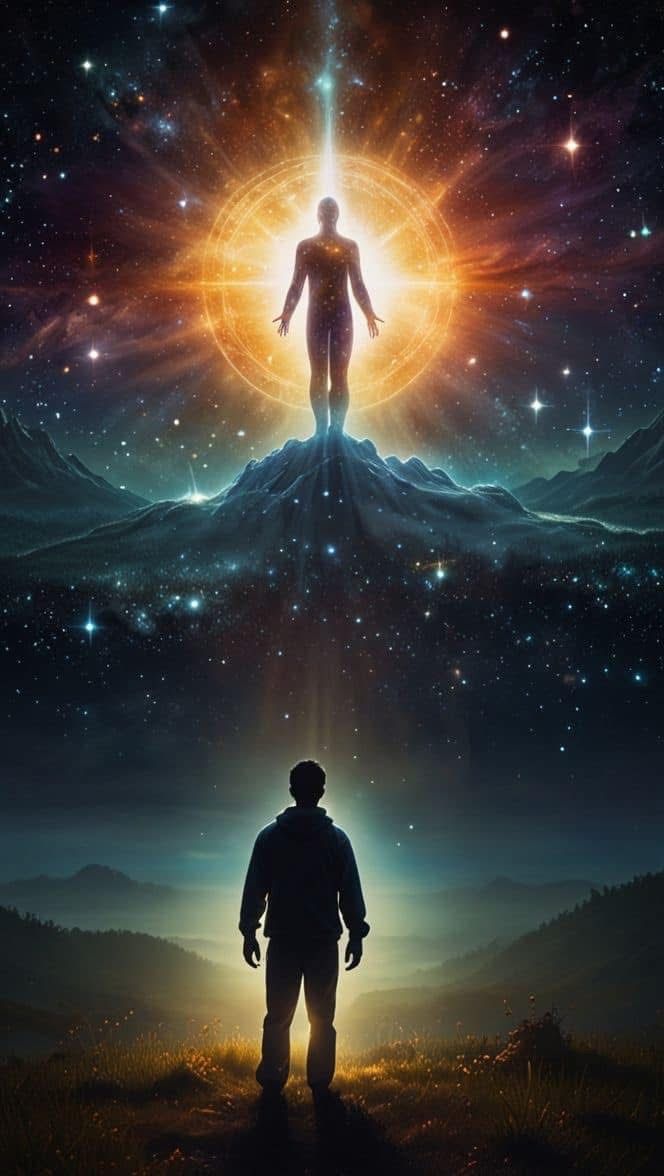
As we have mentioned several times already, resonant structures play a special role of the Intermediate — knowledge of which symbols, images, names correspond to which Aeons and etheric spaces. At the same time, the Aeonic tradition relies both on personal experience and on accumulated occult correspondences. However, the fundamental principle is that no literal belief in specific “mythic figures” or attachment to historical cults is required. Aeonic yoga is eclectic and pragmatic: it takes what is most suitable for a specific practitioner from different systems, but serves no egregore. Its practitioner is a free explorer of the psychocosmos, worlds and intermediate spaces, and the deities for them are primarily masters and forces, not objects of cult or worship.
It is clear that such a practice requires a high degree of self-awareness and responsibility, since there is no one “above” to control the process — neither a guru nor a religious canon or authority. However, this also frees one from limitations: the whole world of myths and symbols becomes a field of work. The main thing is to follow the logic of the Pleroma, strive for wholeness, and not to barter it away for egoistic goals. In this sense, Aeonic yoga is essentially a form of theurgy of a special type, where “god-action” is understood as action through one’s own divine principle, and not only external supports (without denying the importance of the supports themselves).
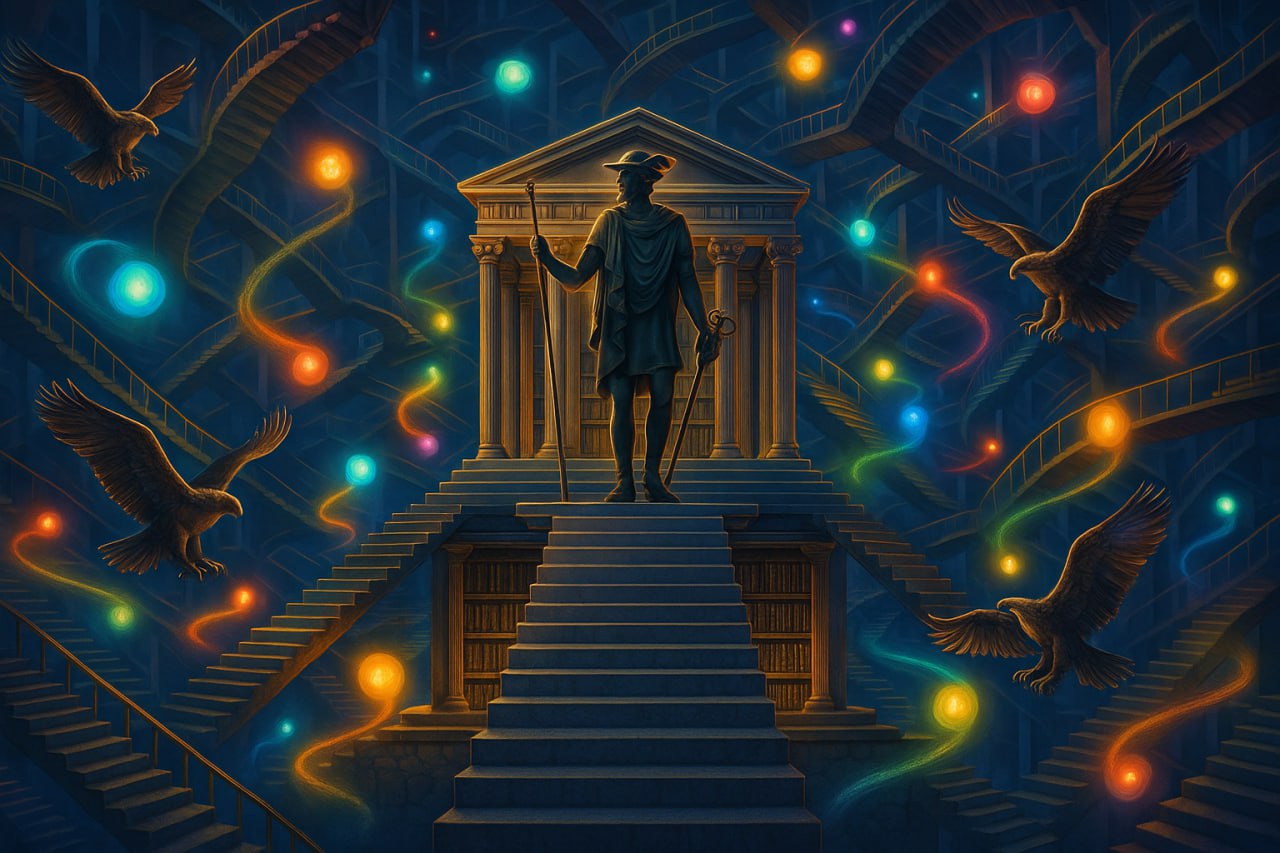
Considering the Aeonic foundations of all phenomena, such a system teaches one to see the universal behind the particular, and a hidden meaning behind the chaos. The practitioner gradually discovers with full clarity that all higher forces are present right here, at each point of the world, as “calls to perfection,” aspirations to freedom and full realization.
Awakening Aeonic currents within himself as energetic and semantic primary principles of being, the practitioner not only transforms their individuality, but also harmonizes the surrounding reality, because inner order also generates outer order.
Thus, reason, intuition, will, and feelings all develop — all aspects of mind are involved in a single evolutionary process. The practitioner learns to respect each god, each tradition, but not to be captivated by them, to see behind the images the single Source. Such inner freedom is combined with the discipline of working on oneself, necessary for ordering the mind, since the awakened energies still need to be integrated, arranged into a hierarchy headed by the highest aspiration to the Pleroma.
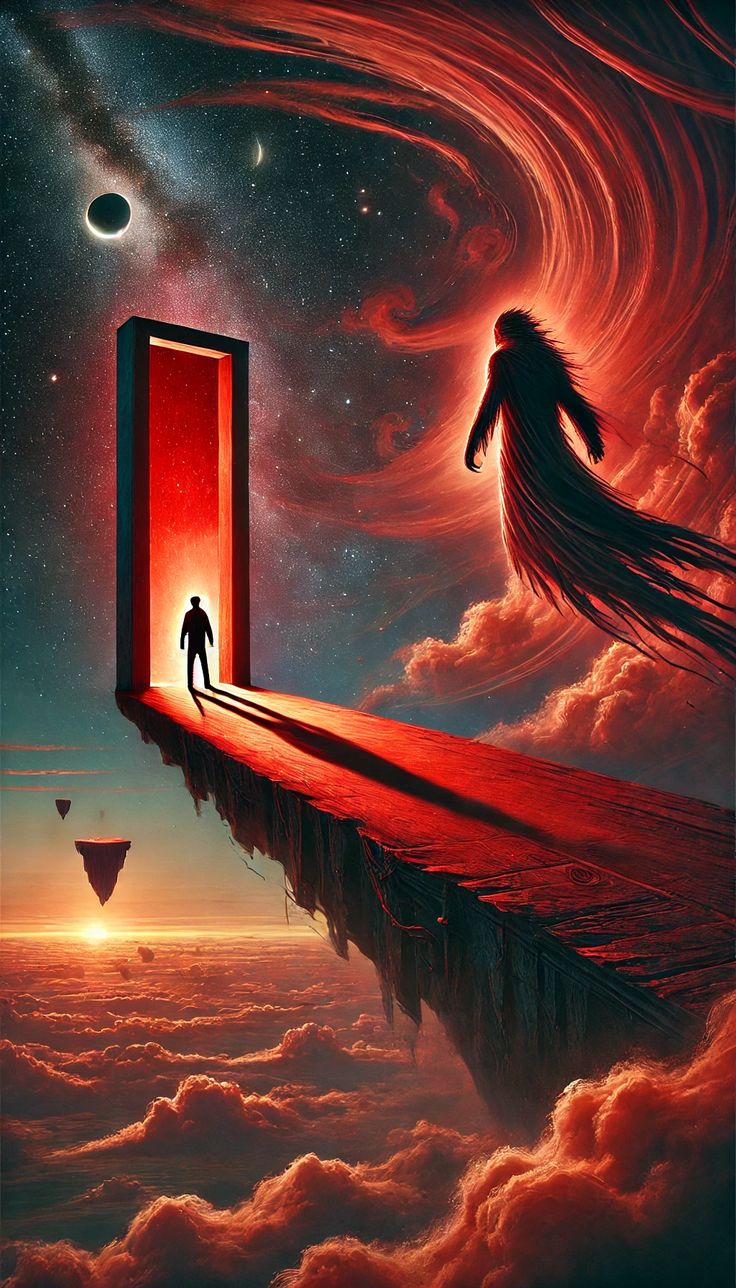
And Aeonic yoga provides the necessary tools for this: from a map of the interworld (descriptions of Aeons and ethers), which can be studied and applied, to practical skills of scrying, lucid dreaming, and visualization.
Ultimately, it is aimed at awakening the mind to its divine potential. And the special path it proposes consists in realizing oneself as a “hypostasis” of the Pleroma, a bearer of all Aeons in one’s unique aspect, and through such a vision finding an unprecedented inner support and clarity.
This is a path for seekers ready to think broadly, plunge into the depths of their own psychocosm, and interact with universal forces on familiar terms. Just as alchemists create their philosopher’s stone, the Aeonic yogi seeks within themselves the philosophical sun of the Pleroma, a center radiating the Light of all qualities. And step by step, passing through journeys and visions, through images of gods and etheric spaces, they draw closer to this center.

Hello! But how is the awakening and realization of the aeonic matrix in consciousness possible if the Aeons are transcendental principles that manifest only through images that arise in a mind already spoiled and distorted by archontic and demonic influence?
Practice with a bija mantra?
Hello! Contact with the aeonic matrix, like any ascent to the super-potential, always occurs in the space of the Interworld, where consciousness exists in the mode of dreaming, superposition, and uncertainty. The Aeons themselves are non-processual principles; they are not beings, but potential slices of absolute consciousness. Interaction with them is only possible through reflected forms, that is – the images of aeonic deities arising in the Pleroma and expressed in etheric spaces.
However, any consciousness manifesting in layers structured by Archons is in a state of structural conditioning – hemarmen. And of course, this conditioning affects perception, thoughts, feelings, and will. Thus, the image of an aeonic deity arising in the consciousness of a mage may be either induced by the true aeonic matrix or a simulation, where a false image, constructed from elements of memory, psychic templates, attractions, and shadow structures, imitates the enlightened form.
These images can primarily be distinguished by their ‘aftertaste’, by the transformation they evoke. Activating the aeonic matrix does not strengthen the ego but dissolves it, leading to the quieting of duality, bringing the state of clear incompleteness into consciousness – the understanding that the path is still far off. Simultaneously, a state corresponding to this divine matrix unfolds in consciousness. Therefore, for the mage, it is not so much important to ‘see’ the aeonic god as to enter into its image. Aeonic yoga implies not contemplation of forms but tuning into the deity’s energy, to the frequency of the corresponding matrix. Thus, the criterion of authenticity is not the grandeur of the vision but the sustainable change in the structure of consciousness: deepening, centering, clarity, the increase of love and compassion, the ability to see all objects and processes as manifestations of the One.
Thus, tuning into the aeonic deity is not a dialogue with a personal being, but the ignition of a principle within oneself that resonates with the transcendent nature of the Pleroma. Therefore, aeonic yoga requires not faith and imagination but deep honesty, inner silence, and selflessness. And only then, from this emptiness, does the aeon arise – as a call, as a form without form, as an image that leads beyond any images.
Thank you for this stunning pearl of Knowledge, dear Enmerkar! While reading, I felt an extraordinary resonance with this approach on the Path, and the article became an open response to my long-standing question about practices with aeonic deities. Were these (or similar) practices used by ancient Gnostics to gain gnosis and achieve Liberation? What are the dangerous places and ‘snags’ in practicing this approach?
The historical roots of yoga of aeonic deities, despite the novelty of the term itself, go back to the very depths of gnostic, hermetic, and Egyptian theurgical traditions, where the experience of interaction with the divine has always been not merely veneration but ascent, ‘deification’ (θέωσις), achieved through inner transformation. Valentinians, Sifians, Ophites and other gnostic schools taught that the soul could ‘remember’ its divine nature, cleanse itself from earthly shells, and ‘return’ to the Pleroma through contemplation of the Aeons, ascending through their ‘hierarchies’, including – with the help of symbolic passwords, sounds, signs, and names.
Gnostic appeals to aeonic Forces were viewed precisely as awakening the corresponding aspect within oneself, as ensuring harmony with the lost in the darkness of the kenoma Divine Spark. In the Hermetic corpus, the ideas of initiatory ascent passing through sequential ‘spheres’ (analogous to ethers) are also widespread, in each of which the practitioner liberates consciousness from various attachments and ‘takes on the form’ of the corresponding deity. Initiation in the mysteries of Isis, Osiris, Serapis, and Thoth implied ‘becoming like them’, transformation of the myst under the influence and likeness of their energy.
For gnostics, true liberation (ἀνάστασις – resurrection, ascension) was achieved precisely by knowledge (gnosis) – a direct, living experience of the Divine within oneself, while the Aeons were seen as steps of this knowledge in the sense that each activation of the aeonic matrix in consciousness brings one closer to the Pleroma, restoring lost or ‘forgotten’ levels of light.
Therefore, the ascent through the ethers of the Enochian system or the radiances in the gnostic school of petrovs can be viewed as a practice of aeonic yoga: from the world of Archons to the spheres of Sophia, Telethos, and finally – Bitos.
It is clear that Aeonic yoga, like any technique for working with transcendent matrices, carries high risks and demands great inner maturity. Among possible dangers, as we have already discussed, is false contact with an archontic simulation, where an imagined force imitates a deity but in reality activates energies of dependency, self-adoration, and separateness.
Another threat can be so-called ‘Strikes of Light’: if a practitioner tries too quickly to ‘let in’ a Force that their vessel is not ready to contain, they risk experiencing psychological instability, disorientation in perception, depersonalization, or even physical problems up to fatal outcomes.
Furthermore, due to the very nature of the Interworld, Aeonic forms are close to dreams; thus, without the development of the discernment gnosis (diakrisis), consciousness may not understand where the truth lies and where projection is, leading to the trap of false illuminations and ending up dependent on them.
Therefore, working with aeonic deities requires not only will and imagination but also sincere striving for truth, selflessness, and freedom from the desire for power for its own sake. As in Vajrayana, the transition to high yoga is possible only after purification, stabilization, and accumulation of good energy (punya).
Thank you for the detailed response, dear Enmerkar!
Greetings and thank you for the article. Is the Interworld/Kenoma the same thing? If so, then it’s strange; I thought that the pleromatic aeonic reality does not intersect with the kenoma, as they are separated from each other by Christ, Stavros. Have you had experience contacting an aeonic deity? What criteria are there to distinguish one from another (devaloku)? Was it perceived as an alien external energy? When one has contact with demons, one immediately feels when an alien energy enters their energies, which is unrelated to their own.
The Kenoma is the sum of manifested worlds, while the Interworld is the sum of potentialities, the ‘soil’ or ‘womb’ for their formation. To speak in gnostic terms, the kenoma is the medium created in the space of Ahamot, that is – the imperfect world that is subject to correction and spiritualization to become (or awaken within itself) the Pleroma.
And the physical cosmos studied by astronomers. Is this the Kenoma? And Ahamot would be what goes beyond the physical cosmos. In physics, this is even called a Bran. The idea that the entire Universe is contained in the brane is associated with string theory and M-theory. 13
According to this theory, our three-dimensional world is located on a multidimensional surface – a brane (from the word ‘membrane’). At the same time, other dimensions stretch around the brane which may have large and even infinite sizes. It’s somewhat clear, but then where does the same Interworld fit in (for the profane – the astral). And the pleroma is a clear matter that extends beyond any space. It is the center. Well, it’s difficult to talk at all here. I still don’t see the transition.
In these terms, “kenoma” is “space-time,” that is, not the cosmos itself, but its basis. And the Interworld is the “vacuum” in its “virtual boiling,” constantly generating pairs of particles-antiparticles.
And what is between them? If we revert back to the language of myth, then the Interworld is the original Abyss (chaos in Greco), and the world is the cosmos – a harmonious plastic whole. So it turns out the kenoma is what is between them. It is the substantial thread, which is ‘pulled out from the space of the interworld, and from this thread, the cosmos is woven. In mythology, there is the archetype of the weaver, the weaver mother (spider), Slavic Mokosh, who weaves worlds. It creates such a triad Chaos, Theos, and Cosmos. Theos is the ridge that organizes the boiling chaos into a thread. And the thread can then be used to create cosmological structures. And the archons are this ridge?
So it turns out that if the kenoma is space-time, then this is essentially these very timelines that the archons create. Can a person control such a force? Or at least a part of it, to set their own timeline and maintain it?
Yes, we have already spoken of this earlier:
https://www.enmerkar.com/en/way/archons-and-the-lines-of-probability
https://www.enmerkar.com/en/observations/games-of-probability
Angels, the creations of Dinura, the ‘place’ of the Empyrean. Does this also relate to the pleroma? I know you do not engage in philosophy. Is it the case that the One Many is the pleroma? Or is the pleroma the world soul i.e., the one and many? I just want to correlate the coordinates; I have studied philosophy for a long time.
No, the Pleroma is potential perfection; it does not take part in the formation and functioning of worlds but serves merely as an exponential ideal goal, the endpoint that shapes the vector of their development.
What can you advise as maps of the interworld (descriptions of Aeons and ethers) for practice? Do you plan to compose them yourself? Personally, I don’t like Alistair Crowley’s description, and the standard scheme of aeons and syzygies is also not particularly substantial. A different approach is clearly needed to awaken understanding and logic.
I have attempted to convey my vision and experience of this issue in my book “The Geography of the Interworld.”
Are electronic versions planned for release?
This is handled by the publishing house; you need to inquire there. As far as I know, some electronic versions are available.
Cool! Thank you for the article.