Symphony of Wills
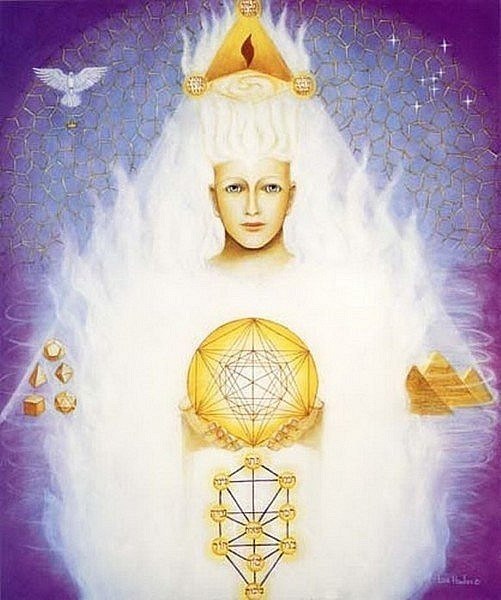
The ultimate extra-real reality — the Absolute— manifests in potential reality as the Great Spirit, and in actual reality as the striving toward being and toward awareness.
This striving, appearing as the world-principle of Will, finds its concrete manifestation in active differential agents, whose interaction carries out the world-process.
All these bearers of will are divided into two principled groups: the so-called Free beings and ministering beings.
This binary arises from the most primordial duality of being and mind.
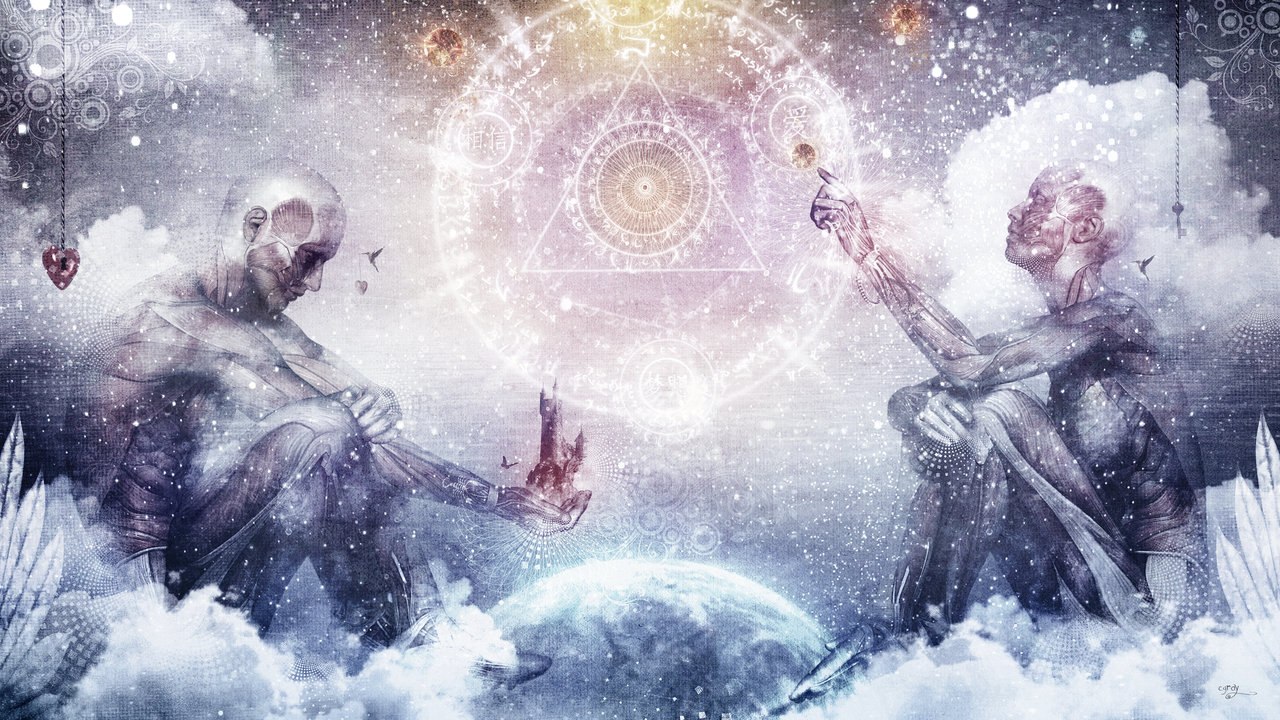
On the one hand, “pure” being — the totality of energies— requires a formative influence. This is provided by the hierarchy of logoi and is directed by Free spirits — gods, alfs, humans, and so forth. The freedom of spirit proceeds from its source — the Monad— a differential aspect of the self-knowing Absolute.
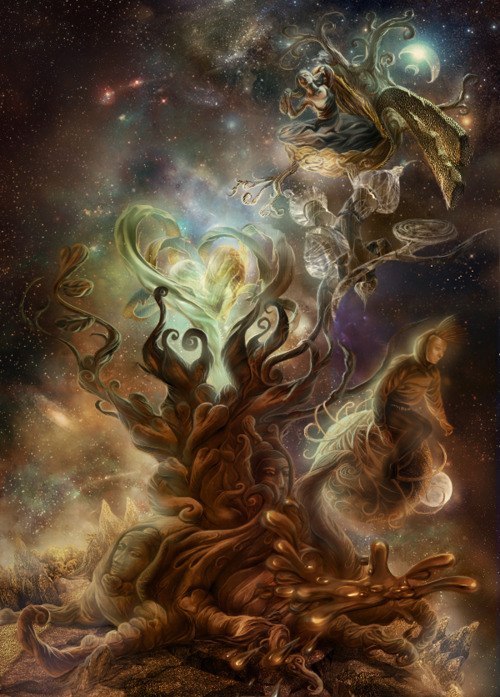
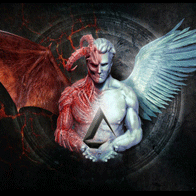
On the other hand, the inner nature of energies — rooted in the primordial will of the Great Spirit — manifests as their “inertia”: their own gravitations; their striving toward actualization, or conversely toward disintegration. This is expressed in the totality of “ministering” spirits — angels and Demons — whose source of will is precisely the homogeneous Will of the Great Spirit itself. Here, the formative, specifying, revealing, and creative aspect of this Will — “Providence” — finds expression in the Hierarchy of Angels, while the destructive, de-actualizing aspect — the “Spirit of Darkness” — is expressed in the pseudo-hierarchy of Demons.
Note that the very degree of freedom of the Free spirits can also vary greatly depending on their station. Gods are not free in the strict sense, since they bear a certain circle of functional obligations from which they have no right to deviate. Yet the principled independence of their will, grounded in their Monadic nature, allows them to err, to choose incorrectly, and in general to find within themselves that difference of potentials which saves the world from a monotonous, mechanistic mode of manifestation. In other words, the duality of Free spirits is contained in their very being. Within themselves they find the possibility of creation; within themselves they find support and the meaning of existence.
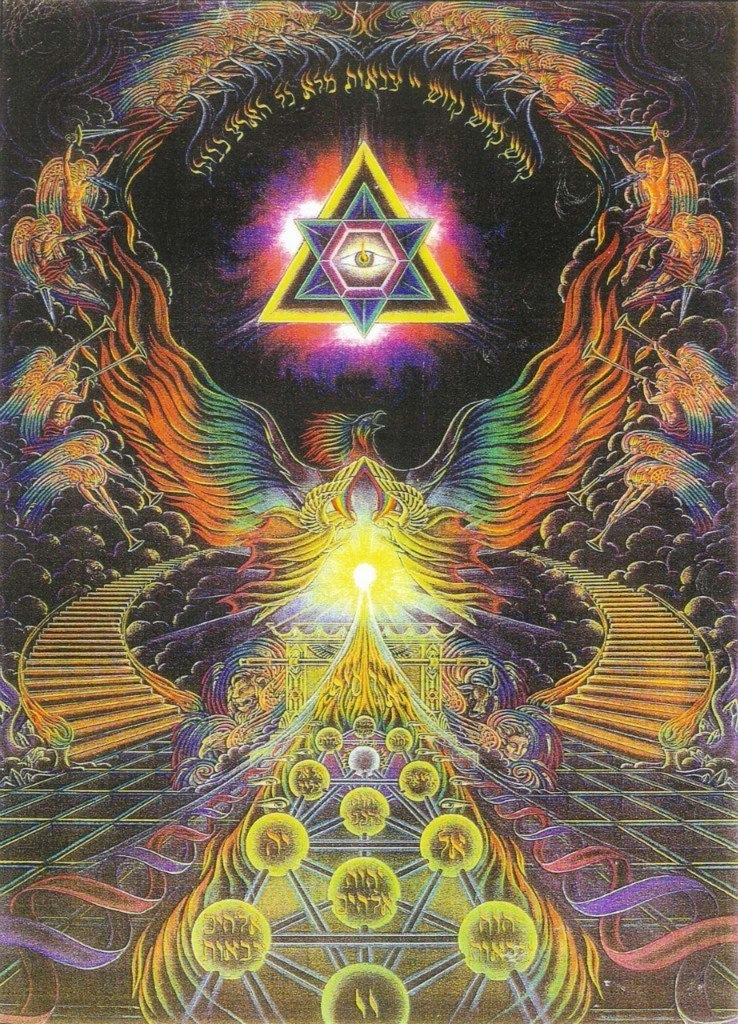
Angels and Demons are deprived of the possibility of choice. They realize the Flows of which they are a part, emerging from the Fiery River and dissolving within it as well. However, the absence of freedom of their will does not mean the absence of will itself. Any angel or Demon possesses a mighty will — one that knows no doubts, unyielding and irrepressible. Yet the source of this will lies not in its own individuality, but in the common striving of the Great Flow— accordingly, of its descending or ascending part. In other words, the duality of ministering spirits lies outside their own being, and the difference of potentials necessary for action manifests only in the interaction of heterogeneous Currents. Angels, as the positive pole of this binary, act only in order to restrain Demons; and Demons, as the negative pole, act only insofar as they succeed in de-actualizing what has been created by the angels.
If a human, a god, an ase, or an alf is a self-sufficient system, then an angel and a Demon are only a part of the common Flow.
For the Magus, understanding these features is extraordinarily important, both in general ideological terms and in practical work.
We have already said that, historically, it was precisely the absence of such understanding that led to the expansion of the power of Demons over the human mind.
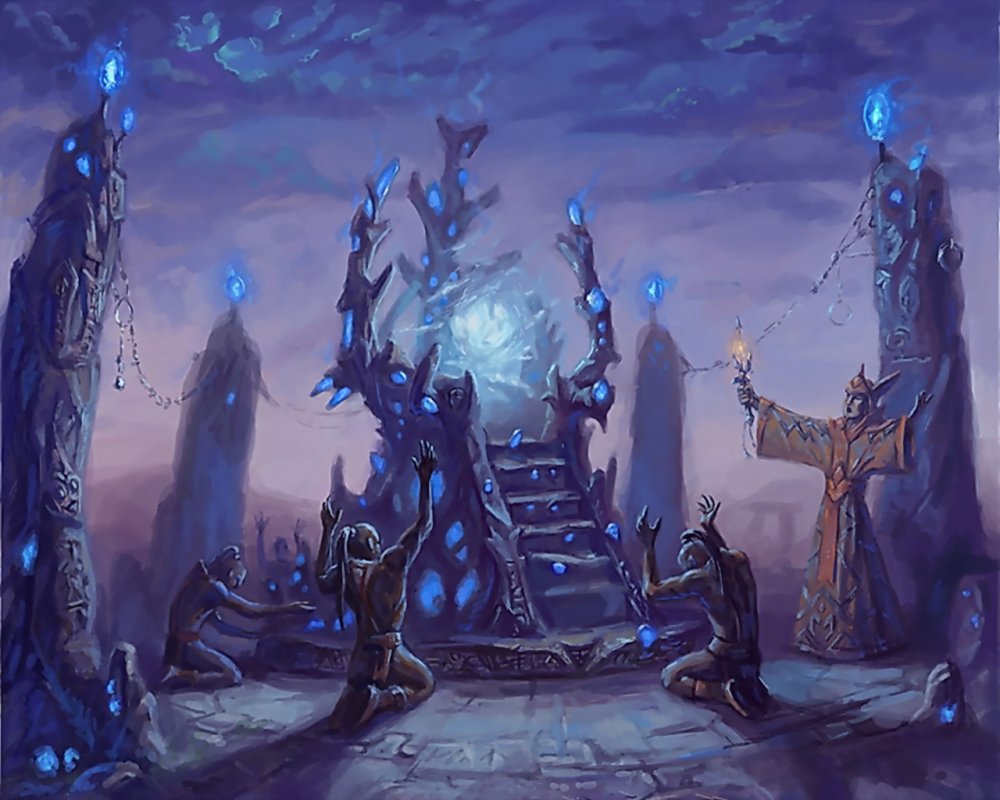
The bringing together of heterogeneous Powers within a single Ritual or spell must be done with the greatest attentiveness and with scrupulous discrimination of their influences.
First, the dual or homogeneous nature of spirits dictates different modes of interaction — appeal/summons; theurgy/goetia. These become clearer, and less liable to error, when such understanding — and the conclusions that follow from it — are taken into account.
Second, the peculiarity of the spirits’ own interaction often escapes notice. For example, few Magi can satisfactorily explain the character of interaction between the planetary god, its angel, and its Demon. And yet an understanding of this interaction allows one to substantially increase the effectiveness of working with the corresponding energies.
For instance, the Solar god and Archangel Michael (in the solar aspect), although they “administer” different elements of the “solar” principle, stand in complex — and at times antagonistic — relations with one another. The Solar god, as a synthetic agent, carries out illumination and the disclosure of all aspects of being, including negative ones. This manifests in his duality of warming and scorching countenances. The Archangel, by contrast, stands guard over the stable manifestation of separate aspects in their accord, not permitting contradictions. Their interaction may therefore be described, for example, as that between a king and a cardinal in a medieval country: for the king, the flourishing of the country as a whole is paramount; for the cardinal, its spiritual homogeneity. Thus, in different situations the general planetary principle, manifesting in a given object or process, is governed predominantly by a god or an angel, a Genius or a spirit, and sometimes — even by a Demon. It is incorrect to think that any influence of Michael is necessarily coordinated with the activity of Sorath, Nakiel, Och, or Apollo.
To examine “who stands” behind a given influence of the Principle, and how its entire inner hierarchy is structured in that influence, may be extraordinarily — and at times vitally — important for the Magus.