Horai and the Sleep of the World
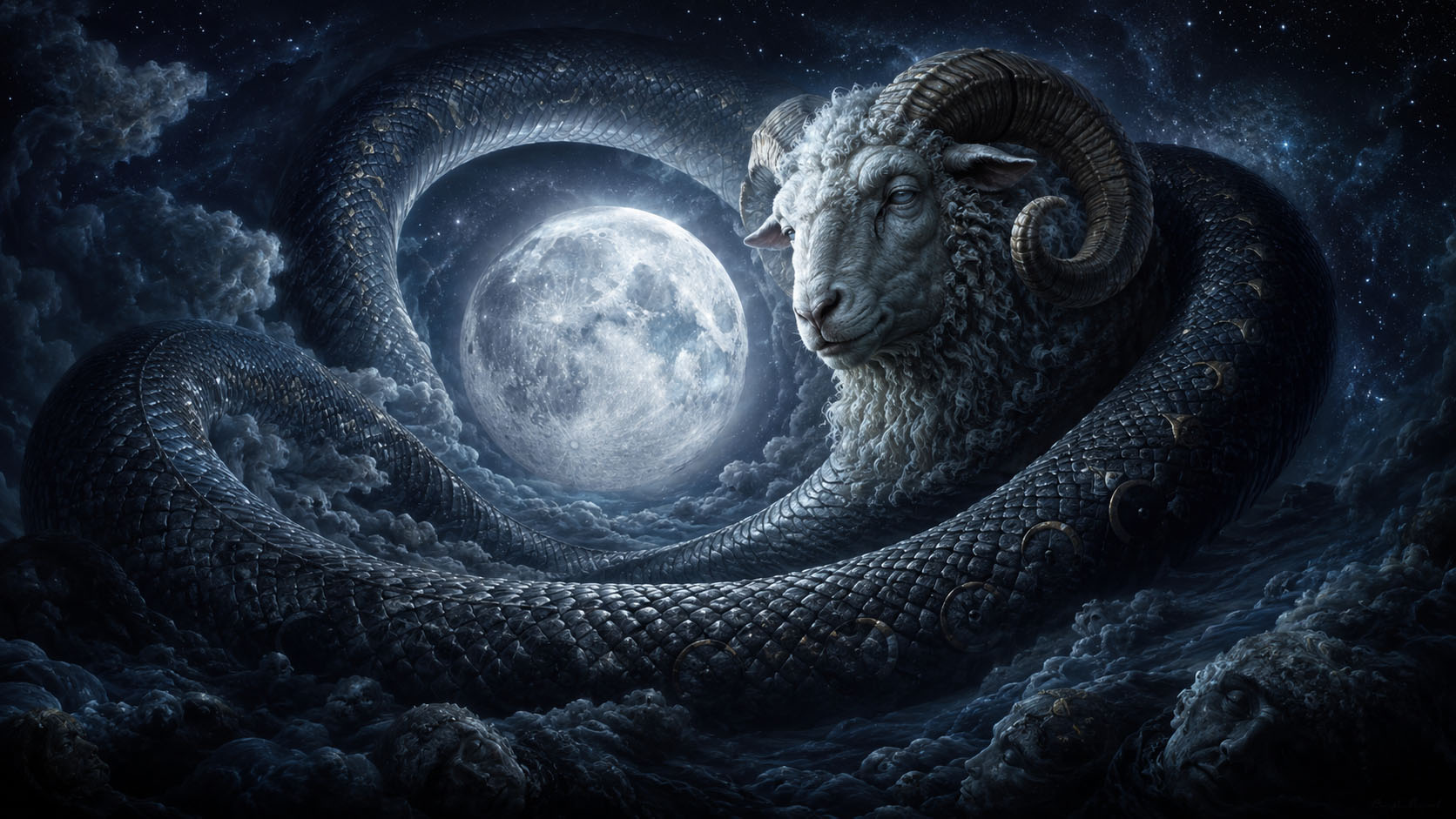
Ignorance, agnosis, the basic destructor of mind, has many levels and modes of manifestation, personified by various forces and agents. One of the most dangerous blocks — the one that keeps mind captive in the chains of consumption — is apathy: an unwillingness to be freed, an absence of self-motion, behind which stand both mighty demonic and archontic enslavers. One such force is Horai, an archontic principle of numbness, drowsy passivity, and the lowering of mind’s inner activity. His influence is unmistakable where will loses its collectedness, attention scatters, and the drive toward awakening is gradually replaced by the habit of half-slumber.
In this state, the power of mind bogs down in a sluggish sensing of mere existence, without clear intention and without any attempt to step beyond what is already given.
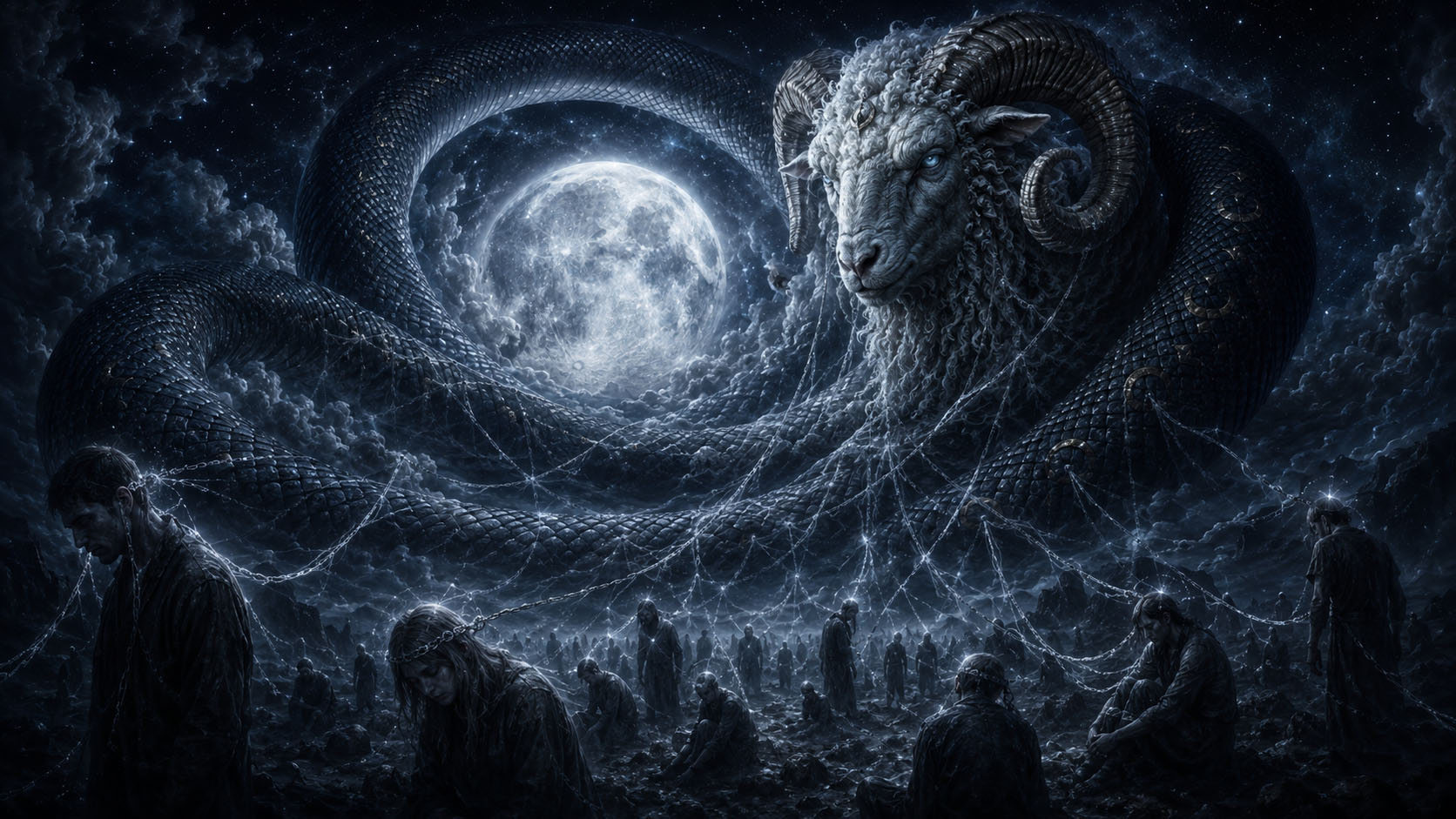
Horai casts his fetters as apathy, inhibition, indifference to one’s own situation, and the gradual extinguishing of the discriminating faculty.
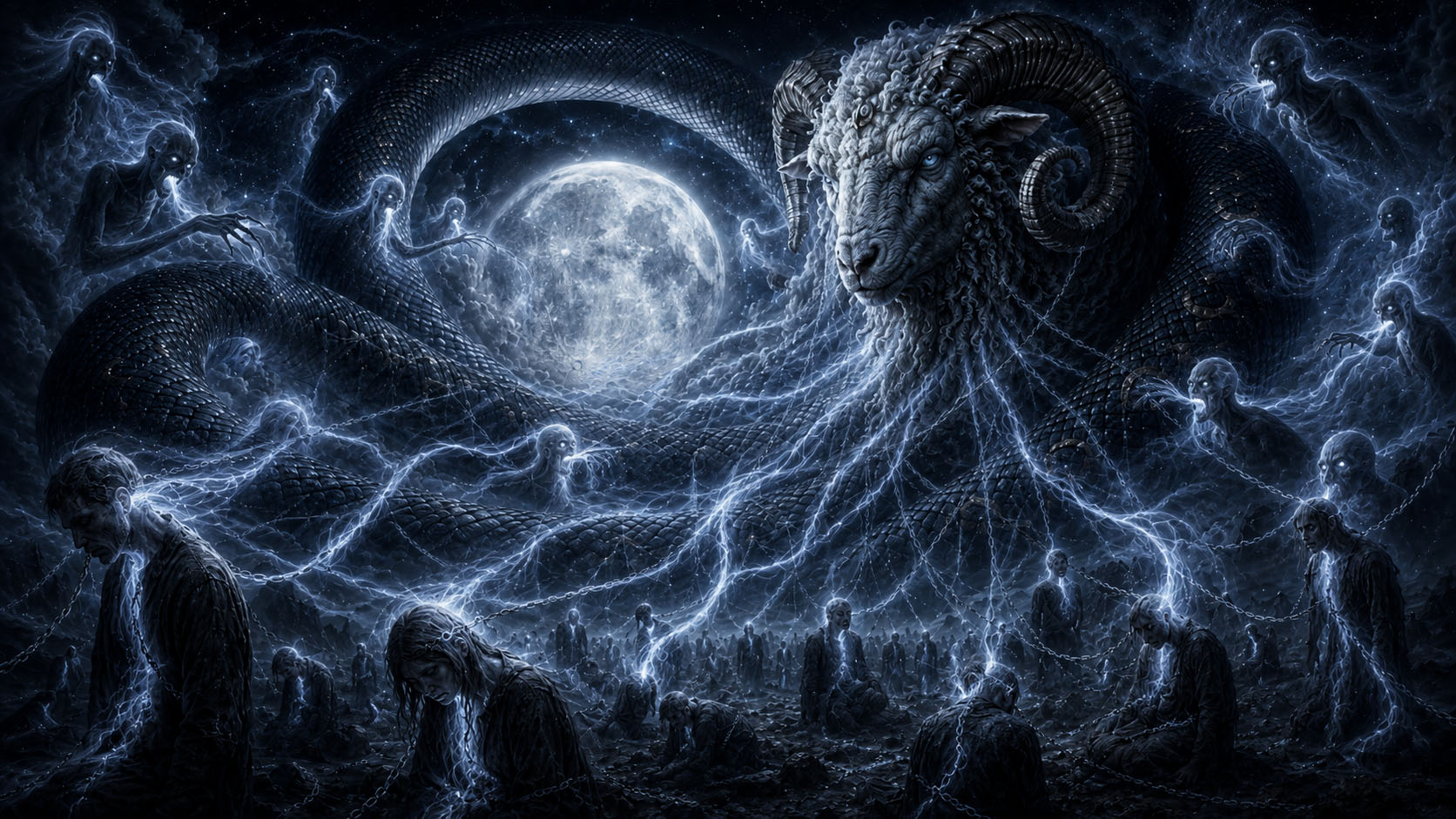
Yet, from the standpoint of energetic leakages, this drowsing is productive in its own way. Mind, having lost its waking directedness, stops gathering energy into the center and begins to give it to the Interspace through small, imperceptible leaks.
Thus, under Horai’s influence, a human being, as an apparatus for toning pneuma, remains outwardly intact, yet inwardly exists at low intensity — convenient for the feeding of beings of the Interspace.
This Archon is known by several names —Horai, Khorei, and Atot (Athoth). Gnostic texts call him the first of the twelve authorities, the elder, the head of the seven, the power of the “first day,” and give him the nickname “Reaper.” The name “Horaios” (Ὡραῖος) reaches back to the Greek notion of the timely, the ripened, what has come in season — the same root as Ὧραι, the goddesses of the seasons and the hours.
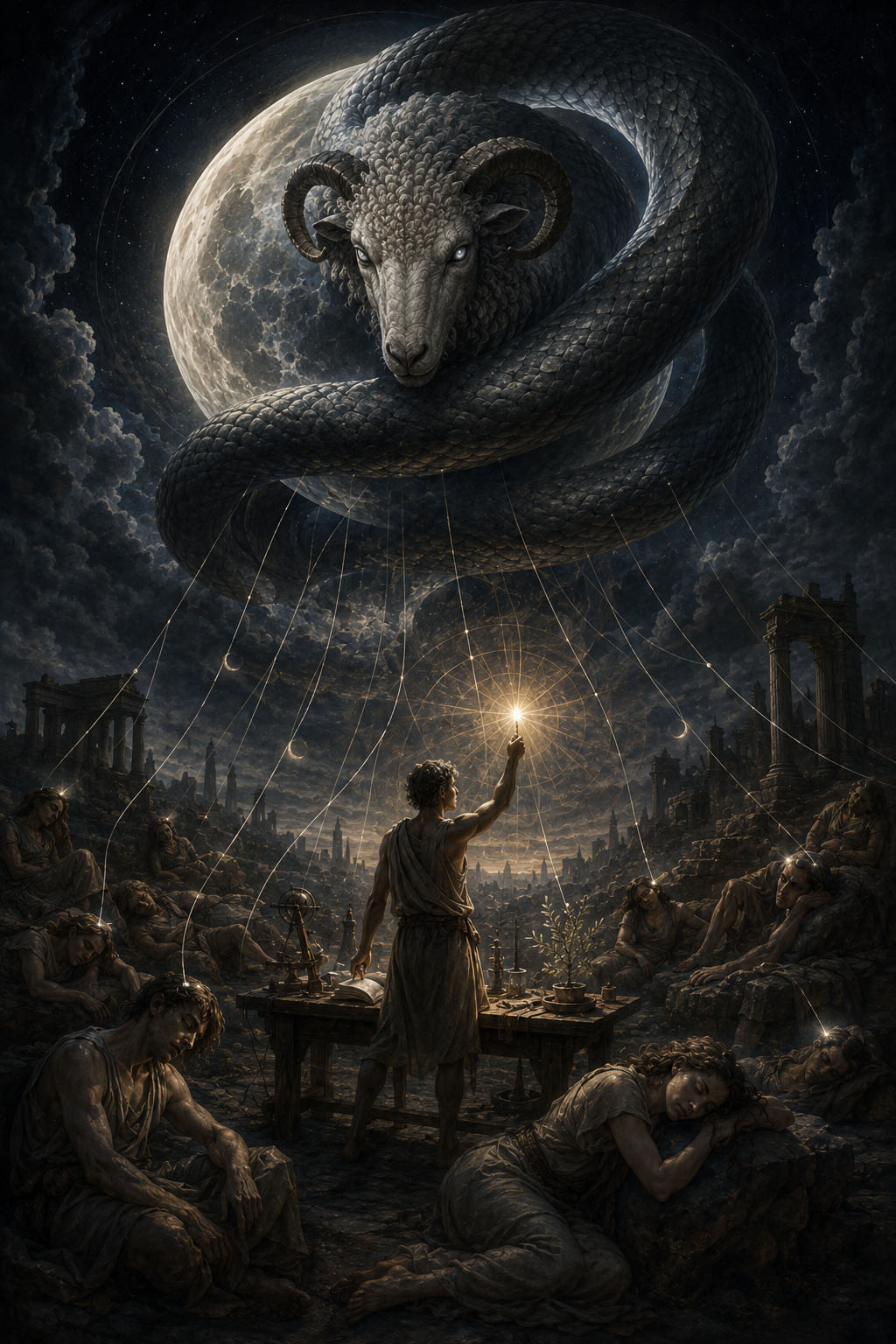
This points to the original nature of the force he substitutes: the Moon as a great distributor of life force; the rhythm that apportions energy “in its due time”; the maternal Giving and Good— the nourishing generosity through which blue pneuma spreads through living structures and sustains their growth. The Reaper, however, is the one who “gathers” what has ripened: in a luminous sense, he completes the cycle so that a new one may begin. Therefore both the “power of beginning” and “sacrificialness” belong to him.
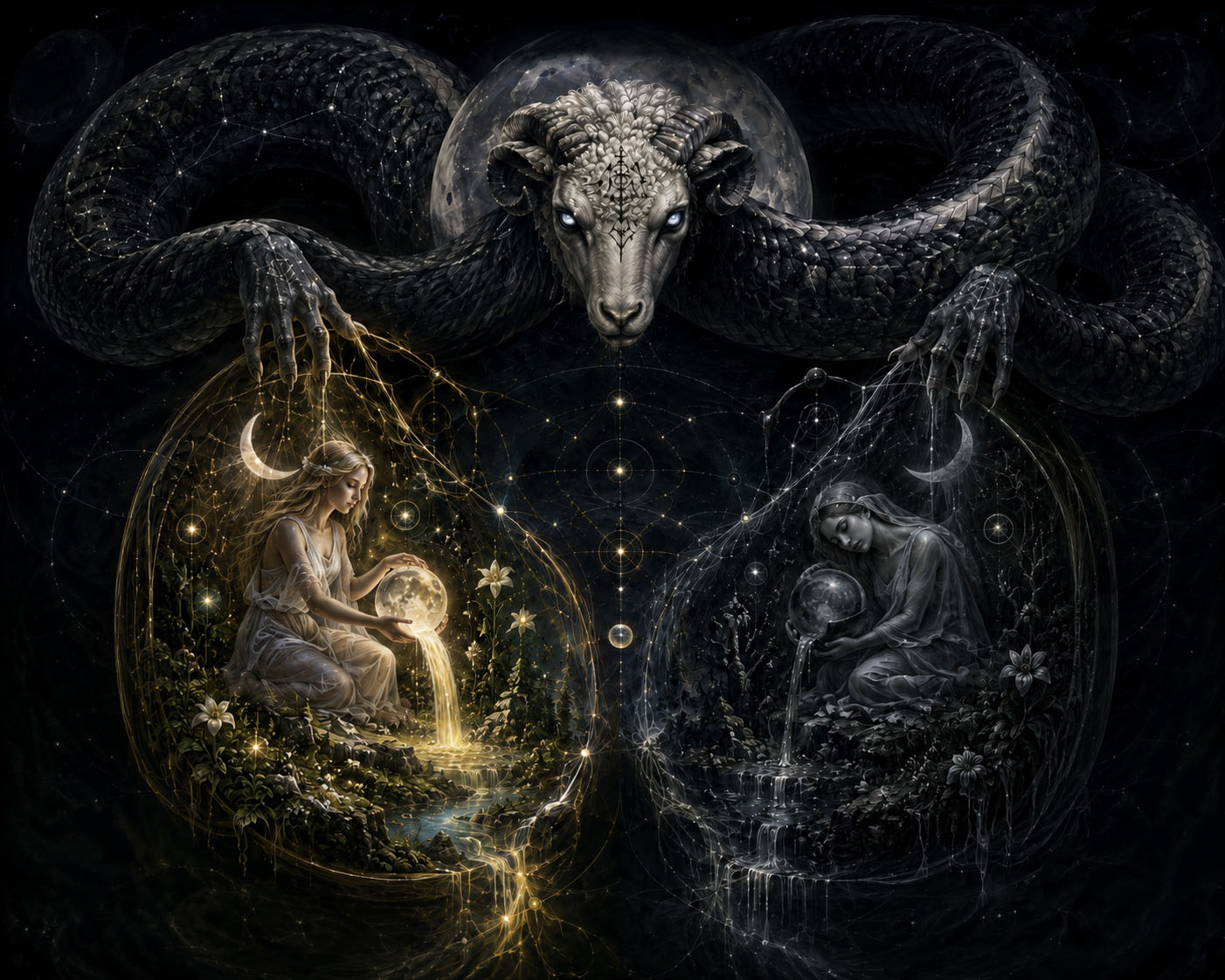
Yet, like every Archon, Horai acts within the field of possibilities and performs a substitution: in place of living Giving he installs its drowsy double —indifference. The Moon’s nourishing generosity turns into a sluggish, apathetic outflow; the rhythmic distribution of Power “in its proper times” turns into open-ended drainage; the completion of a cycle for the sake of a new beginning becomes gradual fading, a drowse in which nothing new ever begins. Where the Moon’s authentic force gives life so it may grow, Horai’s substitution gives so it may leak away. Thus the Reaper, from one who reaps the ripe, becomes one who mows down the unripe— an extinguisher of impulses, a luller of will, one who strips mind of the very impulse toward awakening before it even has time to take form.
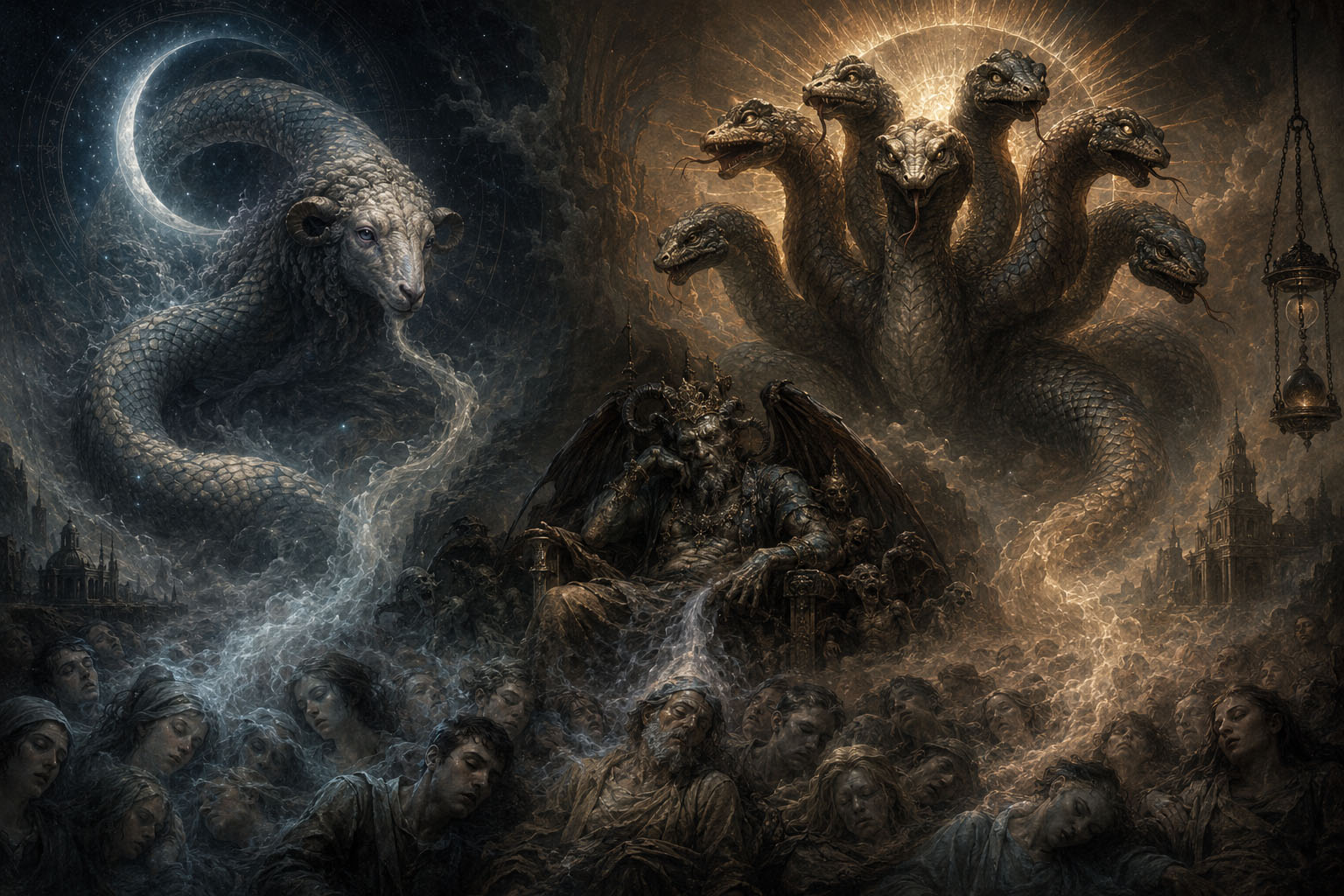
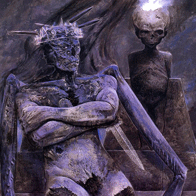
Horai’s visage is Sheep-faced: he is described as having the head of a sheep or a ram, and in this image both sides of his nature are fused. The sheep is an animal of herd and pasture, of meek submissiveness that trudges where it is led and dozes as it is led; and the ram of the first day is both sacrifice and “beginning,” the one the Reaper harvests first. This points to a distortion of vitality itself: the Egyptian gods of life (Iufra, Amon) are also often ram-headed, and Horai substitutes life as motion with life as enduring. He is the Archon of drowsy submission, that quiet compliance that agrees not to wake, not to discriminate, not to choose — only to trudge drearily in the common stream of days.
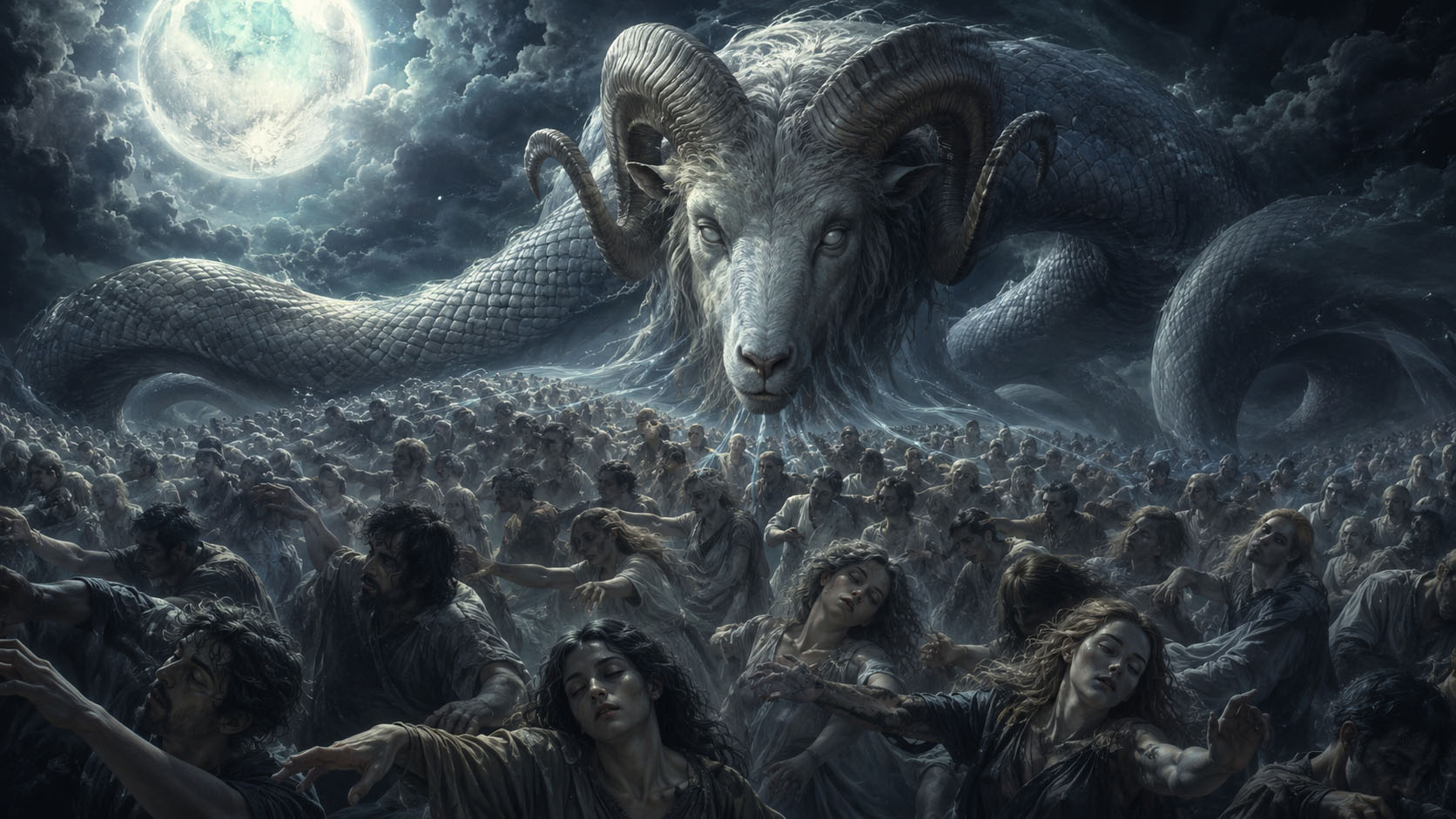
To understand this substitution more precisely, one must recall the features of the nature of the Moon, whose Power Horai governs. The Moon has no light of its own: it only reflects solar light, and therefore its energy is essentially passive and changeable. Its main action manifests in depriving mind of stability, weakening the control of intelligence, blurring sobriety and purposefulness, and immersing beings in fluid states that surge and recede.
The Moon is born in chthonic depths, in the region of death, and, rising into the sky, carries this liminality with it: it joins waking reality with the world of illusions, mixes life and death, and therefore patronizes dreams, reveries, and somnambulism. Horai’s substitution manifests as spreading: the loss of an axis, the defocusing of will, a state in which mind, deprived of support, sways — like water under the moon — from side to side. This is especially visible in crowds and masses, where the collective mind is most fluid: there the lunar force plays people like the sea, throwing them from impulse to impulse and allowing none to harden into aware effort.
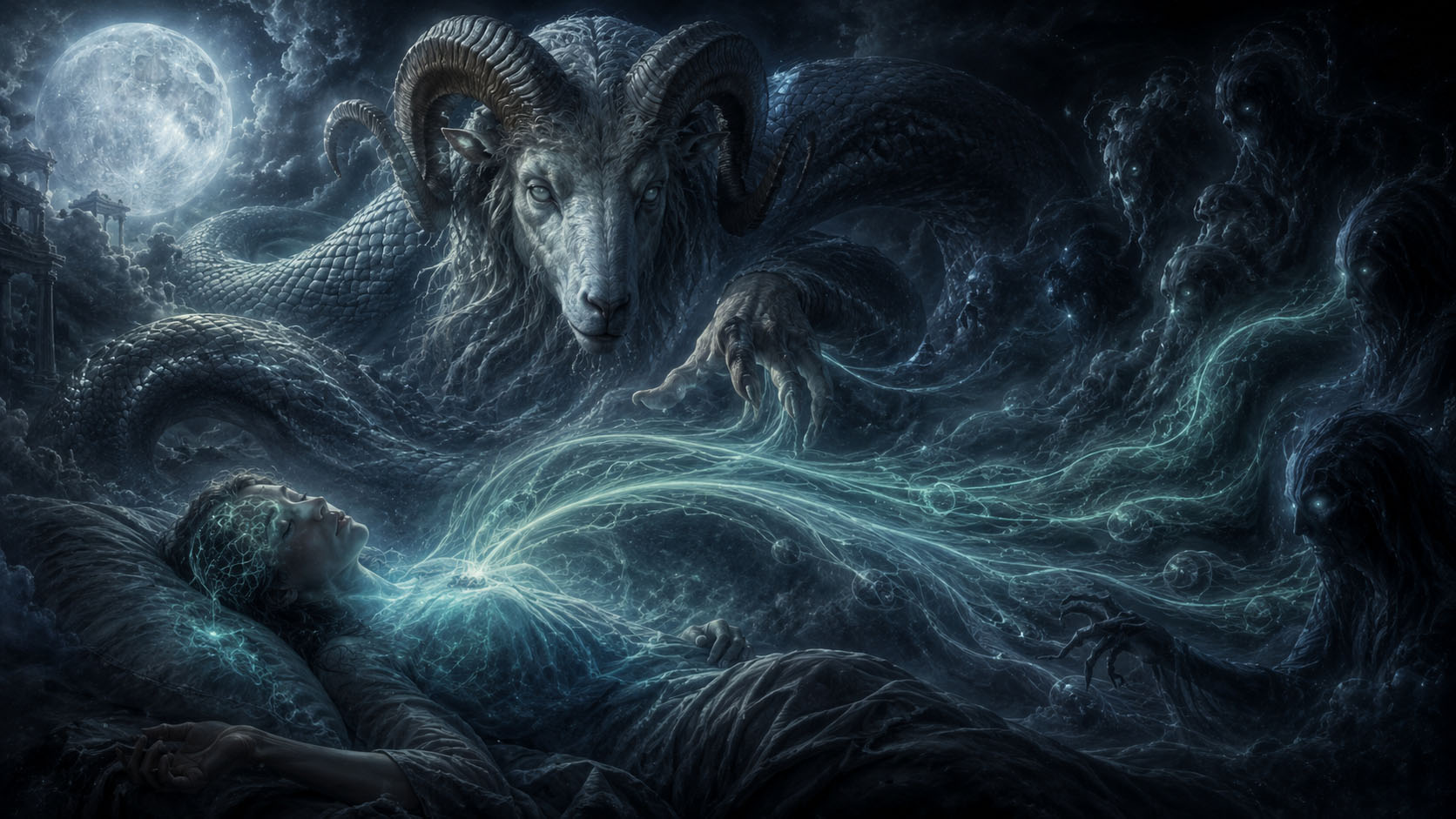
Thus, while Sabbatai-Saturn kills form by hardening it into stone, Horai-the Moon destroys it by dissolving it. Both deprive mind of that turgor, that tone, in which the will to awakening can ripen.
Dreamlike, low-tonic mind produces energy insufficient for a creative leap, yet more than enough to feed the interworld chains: an even, abundant, predictable Current of weakly tonified energy, leaking all the more reliably the deeper its source sleeps. Overheated pneuma, milked by Adonin, is “hot dishes”; low-tonic pneuma, made fluid under Horai’s influence, is cold but constant food — and it is precisely this that forms the basic, background ration of interworld consumers. Adonin drives a person after добыча; Horai lays him down to doze — and both faithfully feed the same chains, though from different sides.
We have already discussed that a whole spectrum of demonic “farmers,” operating in the sphere of desires, exerts a similar action. Yet demonic passivity is always an experience— sweet equilibrium, longing, languor — whereas archontic passivity manifests as a “de-powering” of will, an anemia of mind in which no impulse or urge arises at all. Horai, first and foremost, discharges this tone of mind, the Power by which it gathers itself into effort.
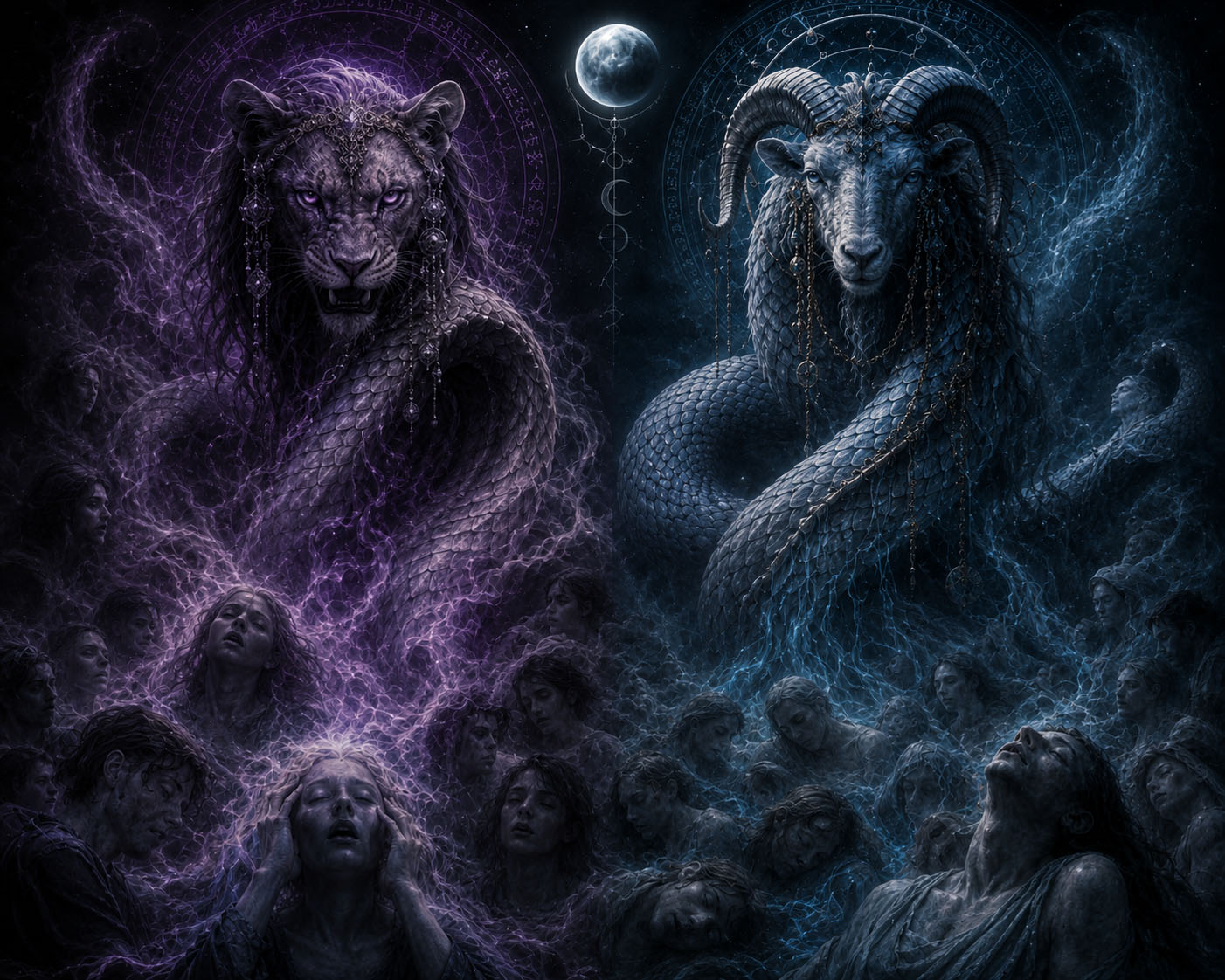
Closest to Horai stands Parapliks, “immanent madness,” the female face of Ialdabaoth himself, who rules over the mind, whereas Horai rules over the vital will. Parapliks fills thinking with fog, paralyzes comprehension, turns thought into an “echo of madness”; Horai extinguishes vital tone, turning the current of life into apathetic indifference. One can say Parapliks lulls the head to sleep, and Horai lulls the blood. The first veils Sophia’s light with the darkness of ignorance; the second exhausts the Moon’s nourishing Giving with drowsy impotence. Both destructors often act together: an intelligence that stops seeking falls into vital drowsing, and a life that has lost its tone abandons thinking as well.
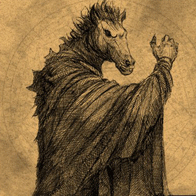
The demons of passivity act differently. Orobas, one of the “horse” spirits of the Lemegeton, inspires the experience of false equilibrium and “exalted” idleness — the sweet feeling that there is no need to fuss, since everything is already “here and now” — and lulls mind with a self-satisfied stoppage that mistakes itself for wisdom. Orobas erodes the value of action at the level of feelings; and a will de-powered by Horai readily accepts the justification for its idleness whispered by Orobas.
Another similar destructor is the solar “languor” brought by the Archon Okh in alliance with the demon Belfegor— the “Noonday Demon,” the source of acedia and despondency. This “languor” is born at the summit, out of fullness, as detumescence: the discharge of what has been achieved, a “heat death,” an isothermal rest in which all potential differences are extinguished —fading from satiety. By contrast, the drowsing induced by Horai is born at the source as spreading: a blurring of will not yet gathered into tension, a formless sleepiness of lunar instability. The solar languor of Iazo develops as an even warmth of saturation; Horai’s lunar drowsing develops as a fog in which mind gradually loses its contours.
Another lull, also of a lunar nature, may be caused by the demon Nahema, the “Mother of forebodings,” who unfolds Horai’s basic substitution within the psyche, at the level of feelings. Horai, as an Archon, builds in the field of possibilities the very склон to vital drowsing, and Nahema embodies this склон in a concrete destructor: she substitutes living intuition — the capacity to foresee and act — with a set of anxious, vague forebodings that make a being suffer before anything has happened, and thus scatter life force. Holding dominion over “flowing blood” — over the very current of life and feeling — Nahema gives rise to a special “death of feelings”: mind under her power loses the sense of flow, the “seething of blood,” and becomes eternally frightened, restless, drained by anxiety. On the level of intelligence, the same drowsing is borne by the “false intuition” linked with Parapliks: the sense that “understanding has already been attained.”
Thus one and the same result — apathy and drowsiness — is achieved in three ways: Parapliks rules the mind, Horai rules the vital will, Nahema rules living feeling.
These chains of outflows are often joined by the great ruler of attraction — Asmodeus, who inspires lunar instability in bonds: emotional lability, superficiality of attachments, changeability of feeling. Against this background, Nahema strikes the vital Current even more easily, substituting living foreknowledge with anxiety.
For all the diversity of these “lullers,” Horai often remains the least noticed. The demons of passivity fill mind with identifiable experiences — longing, bliss, anxiety — while Horai appears as pure background: an imperceptible disappearance of tone that mind does not see. Even when it does notice, it takes it for its own fatigue or for the natural course of things. Against this archontic backdrop, demonic passivities bloom more strongly with their experiences, while Horai remains the dark, experience-less condition that makes them possible.
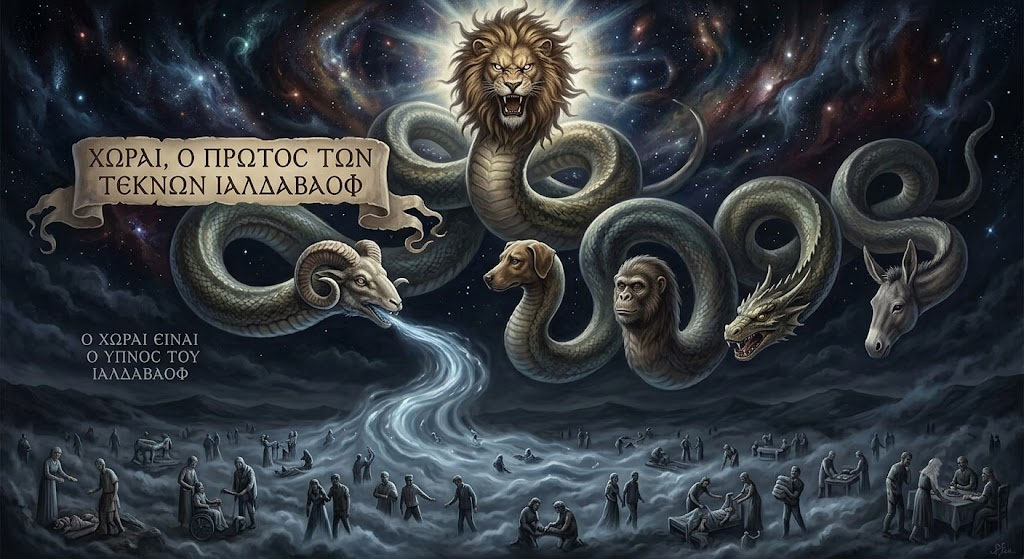
No wonder that among the “children of Ialdabaoth” it is Horai who is named first. As the eldest progeny of the Protoarchon, Horai, more successfully than the others, carries into the manifested world the very nature of the blind demiurge, whose ignorance (agnoia) the gnostics likened to sleep. Ialdabaoth sleeps, and his sleep, pouring forth through the eldest of the Archons, becomes the world’s drowsing: that universal sleepy stupefaction in which beings live life after life without ever waking. In this sense Horai is the sleep of Ialdabaoth spilled out through creation; and awakening from it is the first and most difficult step of any liberation, because the sleeper does not know he sleeps.
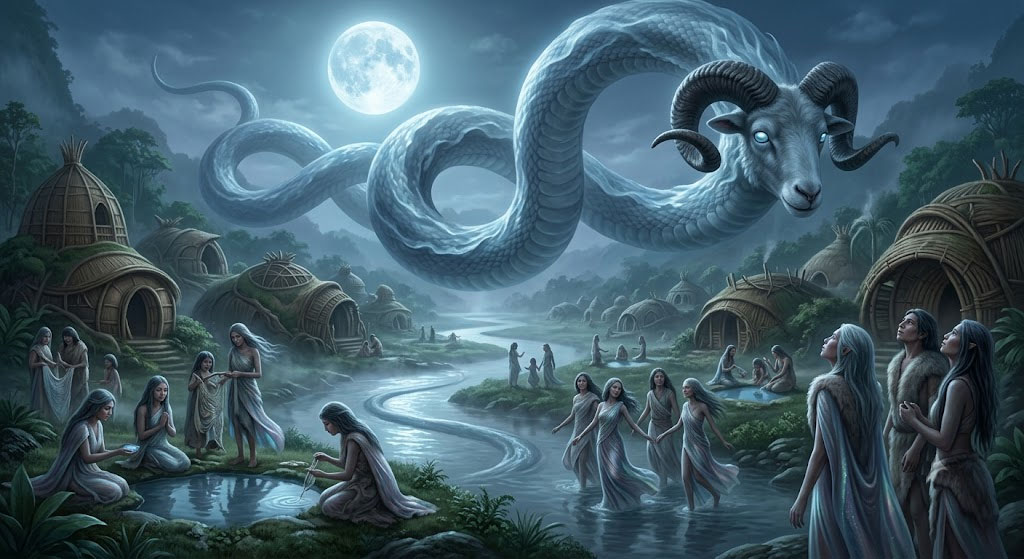
This nature of Horai also manifested in the human type brought forth under his guidance. We said that present-day humanity took shape under the pressure of several Archons-“selectors.” If the “people of fire,” the Cro-Magnon appropriators, were raised by Adonin with his Martian energies, then the “people of water,” the Denisovans, whom traditions call Lemurians, were formed precisely by lunar Horai. In them his substitution is especially visible: fluidity, softness, extraordinary plasticity and adaptability — and, with it, fragmentation, emotional changeability, weakness of deep bond, and a life lived as if in a “world of dreams,” in incomplete contact with waking reality. Horai’s gift turned into plasticity without an axis, bond without depth, sleep instead of wakefulness. This people, never having hardened in waking reality, dissolved in history, leaving to descendants their lunar softness and instability. Among the Currents that even now feed the Interspace, the chief ones have always been passivity and a deficit of attention: that drowsing the modern human received together with the blood of the “people of water.”
Accordingly, resistance to Horai is awakening as such: the conscious raising of tone; the cultivation of discrimination where drowsing has leveled all things; the will to wake and choose. This is anamnesis in its proper sense — awakening from the sleep of ignorance. The same antidote works against his demonic “comrades” as well: hold mind in a moving flow even when the darkness thickens; sustain the “taste of life”; keep all energy in ongoing activity, leaving the future only the role of a field of possibilities — since anxious foreboding, blissful idleness, and apathy are one and the same flight from the living “now.” The true Power of the Moon, which Horai substitutes, returns when mind learns to receive and give life force in due time and in clear awareness: to flow rhythmically and wakefully, to give with nourishing generosity, and to complete what has outlived itself as the Reaper completes it — for the sake of a new beginning. Between Adonin’s overheating and Horai’s hibernation lies the narrow track of wakeful, creative mind, on which freedom is found.


Thanks for the article! Such a timely topic!
Thanks, this is extremely helpful!
Good afternoon.
I constantly read your articles.
But I get a bit of cognitive dissonance when I read about the archons.
So does their “group” have a destructive nature overall?
Meaning the very foundations of creation are oppressive by nature—devouring the intelligent beings living in it—predatory in nature?
Or were they “made” that way? For example, due to some kind of “feedback” between the created and the creator. That is, the flawed, generally ugly nature of people, their emanations, affects the one who created them and gives rise to the demonization of service spirits, the appearance of demons from outside, and their проникновение into this creation.
But overall I’m leaning toward the theory that the entire universe contains laws of cyclicity, which everything obeys—from galaxies to planetary systems.
And according to these laws, planetary systems either sink into zones of waste (becoming close to the Qliphoth); in that case the worlds get filled with “heavy” energies, and intelligent beings become duller and live shorter lives,
or they pass near higher worlds, when intelligent beings grow wiser and, generally, understand what’s going on and behave appropriately.
Hello!
The Archons aren’t “destructive” in and of themselves; they’re forces of fixation and the rulers of the rendering of reality. Fixation is necessary in itself, because otherwise there would be no possibility of establishing subject–object relations, and therefore no actualization of consciousness; and rendering is inevitable for the same reason. However, the Archons, like any “absolute” power, don’t allow freedom, don’t see antinomy, and are therefore blind. So the problem is precisely this one-sidedness—the “blindness” of the Rulers, their fundamental ignorance—which is the source of heimarmene, the constraining side of reality.
But this current reality of ours, the one they’ve “fixed” in place, on the whole is pretty destructive for those living in it.
That’s what leaves me somewhat puzzled.
I don’t think the Creator intended such ugliness; it was more likely done by people—and not only those living here—under the influence of “external” forces and because of their nature.
And the archons, as a result of “feedback,” became “demonized.”
And their “blindness”… If they’re rational, then naturally they should know and understand the full complexity of the universe and that this is a dead-end path… Demons know and understand exactly who they are and strictly follow the laws of reality—for example, the law of free will…
Though, I guess it probably doesn’t matter anymore, since it doesn’t really have much practical value…
The fact that they’ve turned the natural world into something technological already shows that certain forces have been activated to lower the level of consciousness of the locals. That doesn’t surprise me. The real question is something else: what will they do next, when they decide that machines have fully acquired a body and it’s time to implant consciousness into them? Will they give humans the power to keep developing, or will they leave us as service staff?