
Furcas and Sabbatai: Fractured Empathy
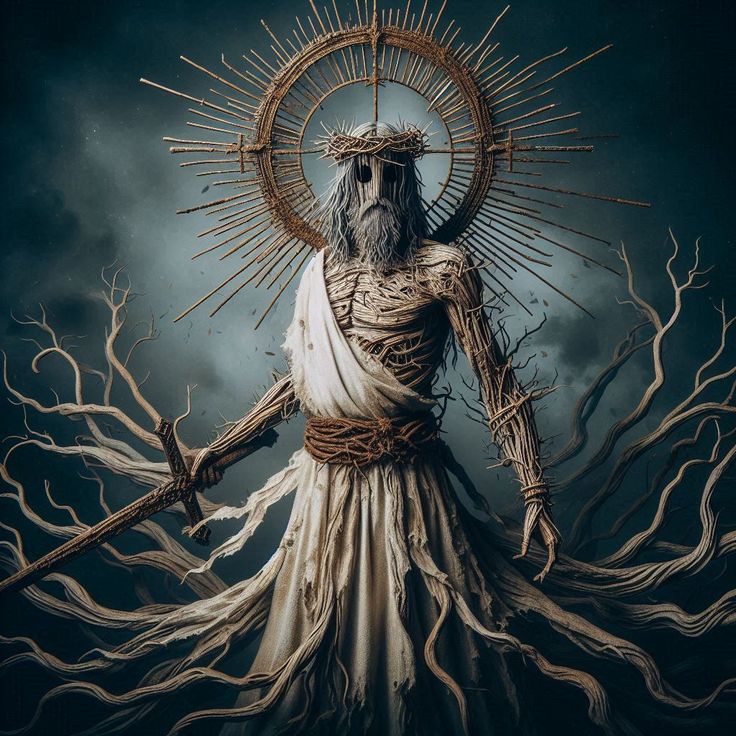
One of the most important, and at the same time often underestimated destructors, inherent in humanity virtually since the moment of its emergence, is the distortion of the natural impulse to project one’s feelings and experiences onto others. It is well known that a happy person strives to make their surroundings more prosperous, whereas an unhappy or suffering one often wants to see others suffering too. The human psyche works like tuning strings — a person, being in a certain vibration, naturally seeks to “awaken” that same vibration in others.
Such “reverse empathy,” projective tendency, is a basic property of the human psyche; however, normally it should “work” in a positive direction — that is, for a successful person it is normal and evolutionarily progressive to wish others well, and the distortion consists precisely in extending this impulse to negative experiences and states as well. When a person is not aware of what they are sharing, and does not control their state, their happiness turns into forced positivity that triggers envy or rejection, and suffering — into toxic contagion. Then what forms is not free transmission but imposition of one’s state on others.

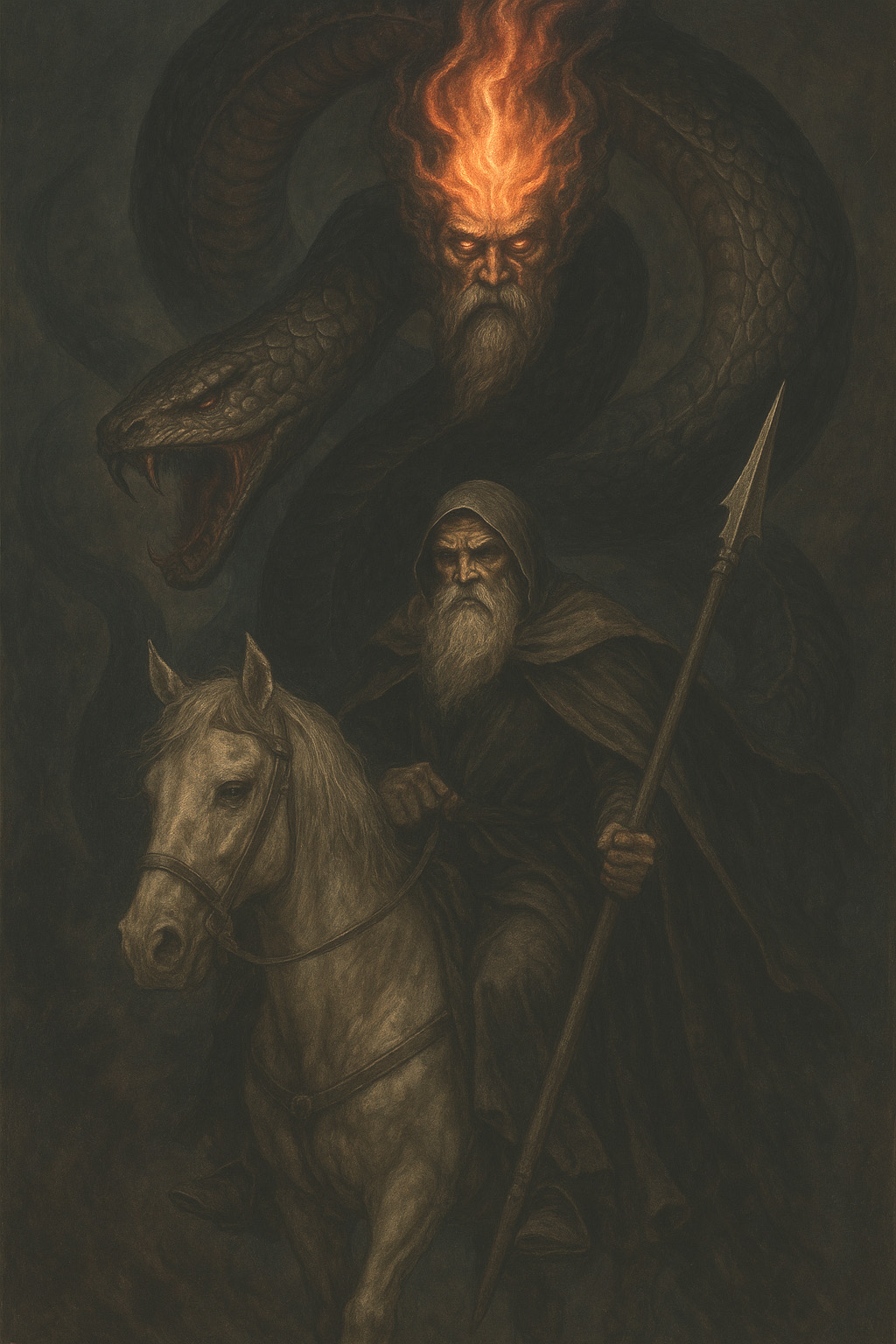
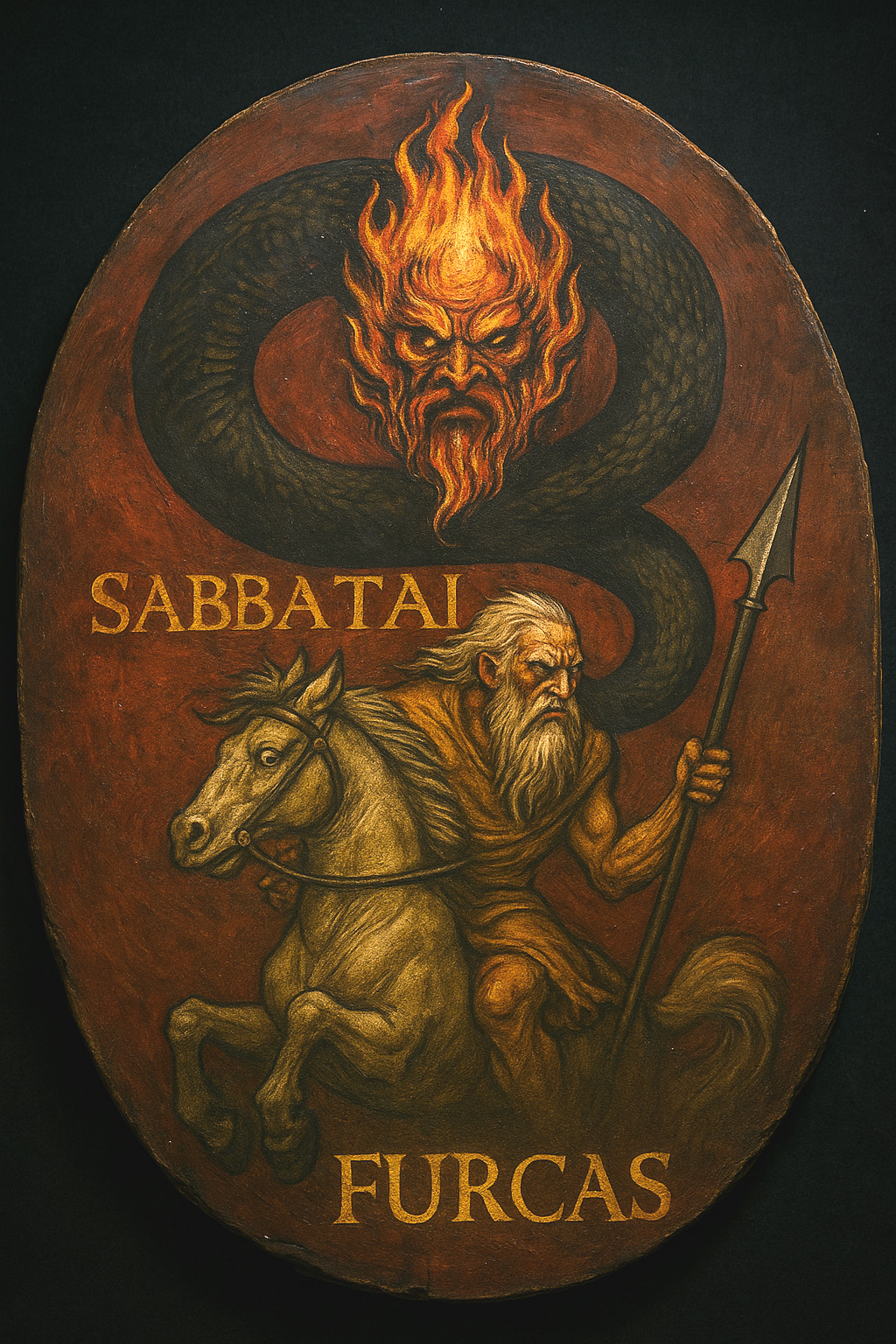
The modern human inherited this trait from the Neanderthals, for whom such “mutual attunement” was a critical condition for the survival of scattered groups in a harsh climate. The collective mind of Neanderthal groups was shaped in such a way that safety directly depended on submission to the alpha leader and suppressing individual outbursts. Suffering and anxiety in such communities were “calls to unite.” However, transferred into more complex societies, they turned into pathology: fear of being oneself, being different, or disrupting the order. We have already discussed that from a metaphysical point of view this psychological makeup was formed under the influence of the archon Sambatai (or Sabbatai), who was the main “author” of Hyperborean humanity. And the specified distortion was formed under the influence of the destroyer of clan and patriarchal communities — Furcas.
As a result of activation of this pattern, a suffering person does not seek relief or healing; they spread their suffering around, instinctively wishing that others suffer too. Thus develops a kind of consolation in shared suffering, the idea that “it’s easier for me if you suffer too,” “if I can’t be happy — then no one should.” This lays the curse of stressed societies, the foundation of the “perverse solidarity” of clan suffering, of generations maimed by fate, who taught children not to “live” but to “survive.”
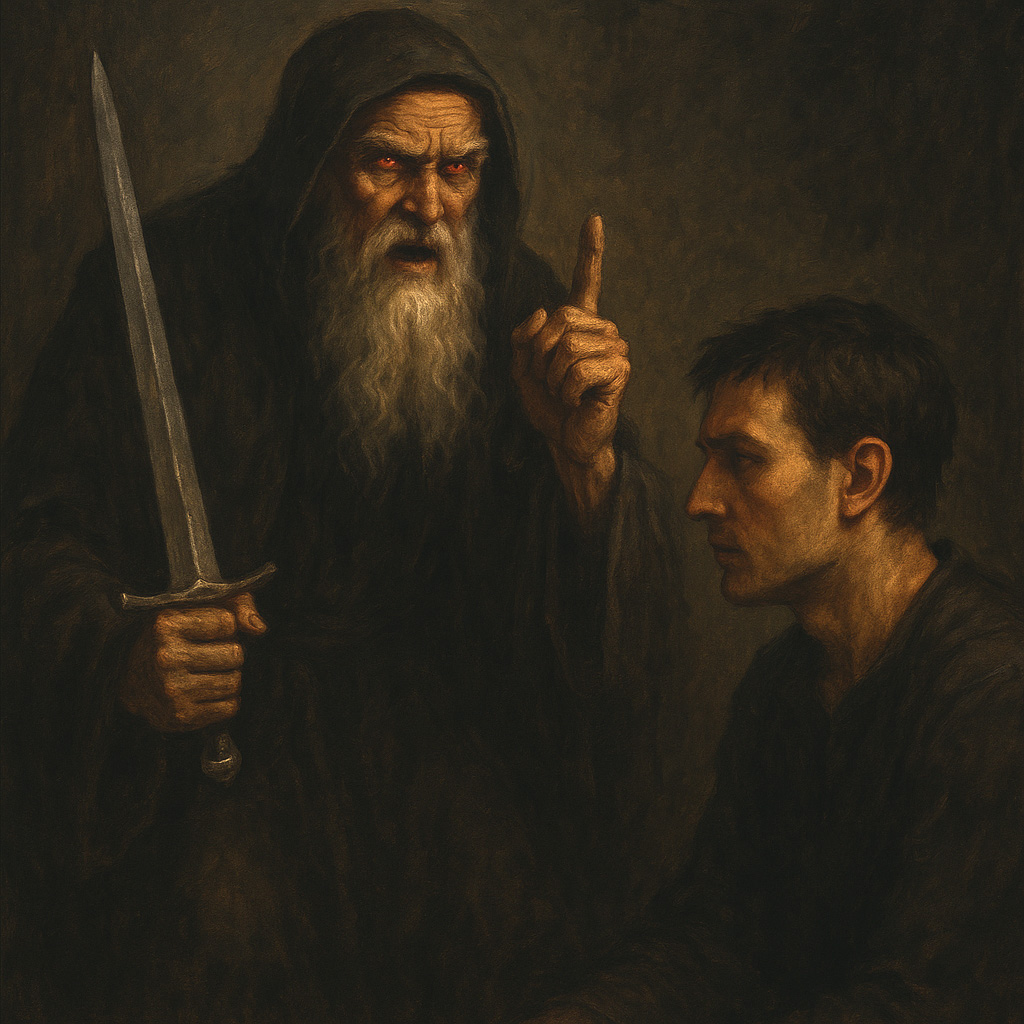
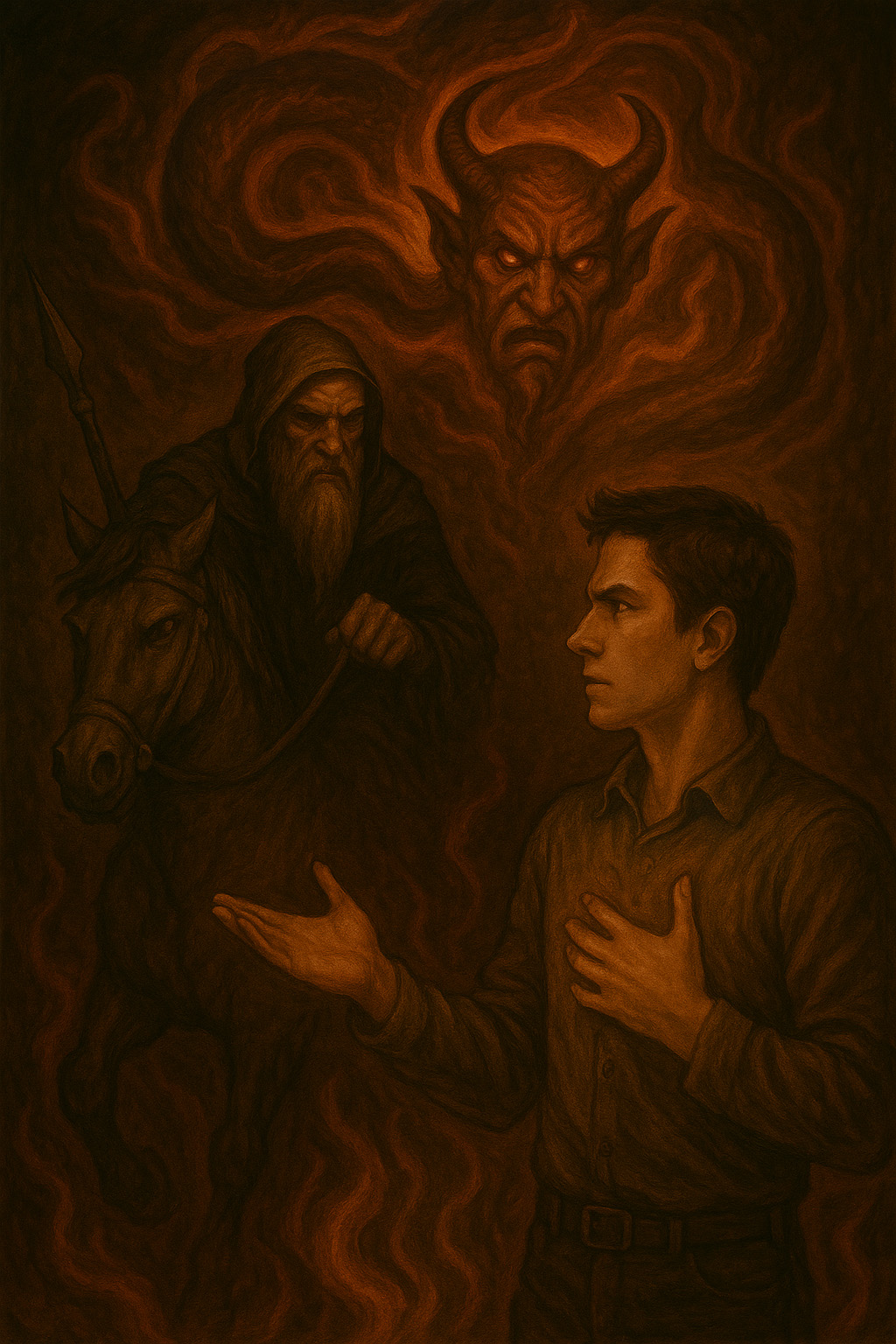
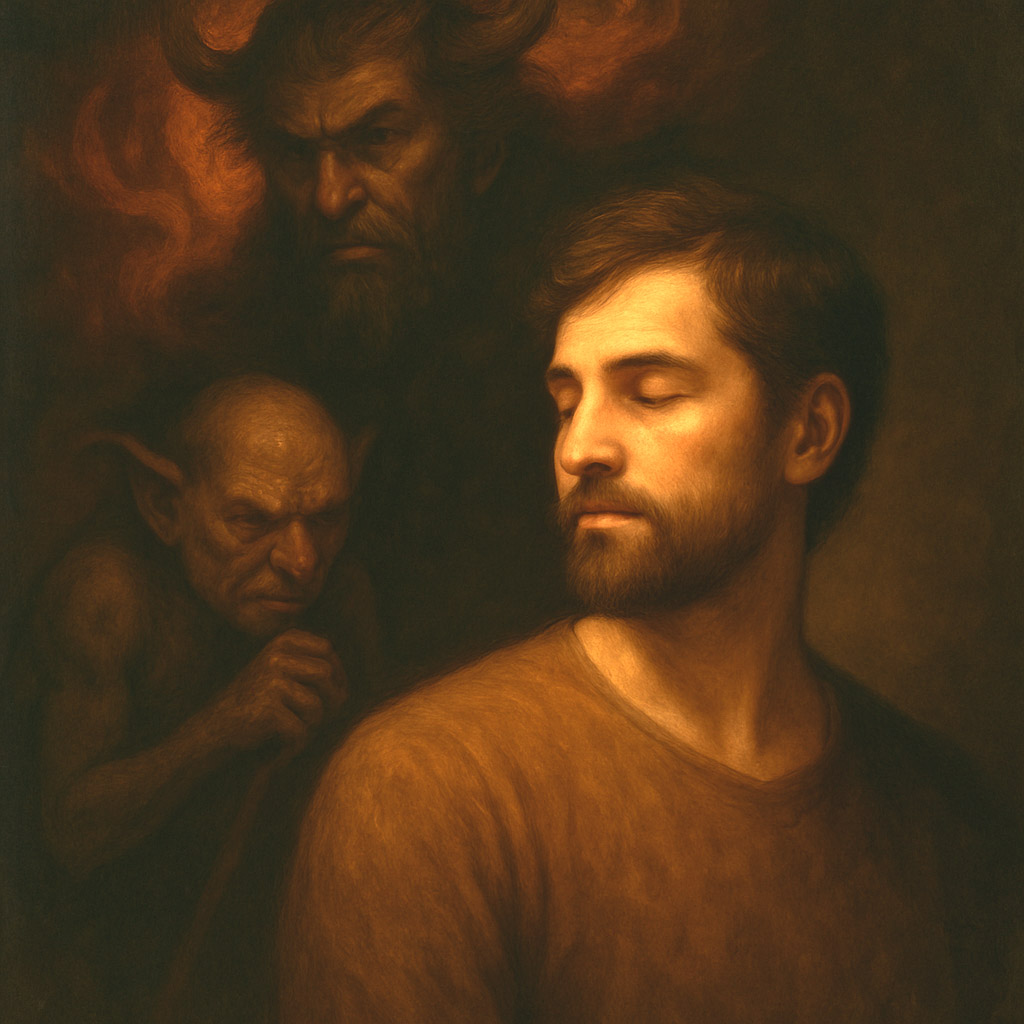
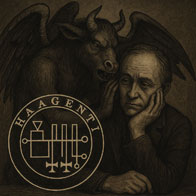
The influence of Furcas in the mind forms as an inner judge clothed in a harsh paternal voice, which grumbles, restrains, devalues, and whose actions destroy any striving for independence. Any initiative, any creativity, any inner movement is immediately compared with some “proper image,” a “natural order of things.” “Who are you to change the world?” — this is the hoarse refrain of the Demonic Knight.
Such influence forms the character of a “good boy” or a “good girl”: modest, compliant, polite, deprived of will and brightness, and saturated with suppressed envy toward those who are freer, happier, more prosperous. In adulthood they easily become prey to charismatic leaders, cult manipulators, cruel partners. They choose not the one who loves, but the one who “is entitled.”
One of the most insidious manifestations of Furcas is the imposed feeling that everything you have, you received from others, and therefore you are obliged — forever. A Master, a parent, the state, a husband — all turn into “moneylenders” to whom you now “serve.” A person ceases to distinguish where gratitude is and where servility is, where passing the baton is and where eternal standing in the shadow is. Thus forms a “vicious debt”: living someone else’s life, carrying someone else’s karma, suffering to justify someone else’s expectations.
In the Sabbatai–Furcas system, suffering becomes social capital. The more you have suffered — the more “honest,” “righteous,” “worthy” you are. This is a distortion of the basic Gnostic idea that suffering purifies. However, in Furcas’s interpretation it is not a path, it does not lead to catharsis, but turns one into a martyr, into a “victim of fate” proud of their helplessness. Its core assertion is that suffering is valuable in and of itself, obedience is a good, and punishment is the path to perfection. This matrix dominates in cultures where suffering for an idea is valued, martyrdom for a symbol, punishment as correction. It is precisely the matrix of Furcas that cultivates pseudo-identities like: “suffering mother,” “slave of God,” “warrior of duty” — images in which there is no longer a human being, only the role of a “victim of fate.” This is envy in the mask of virtue, the desire to deprive another of what you yourself were once deprived of, instead of helping them preserve and develop it.
The image of Furcas is a Knight who did not become a Hero, who did not rise above his suzerain, who did not become aware that an oath does not absolve one of responsibility. This is a typical Saturnian deformation: inner power is directed not toward growth but toward restraint, not toward ascent but toward maintaining the existing position, not toward understanding but toward limiting others for the sake of an apparent order.
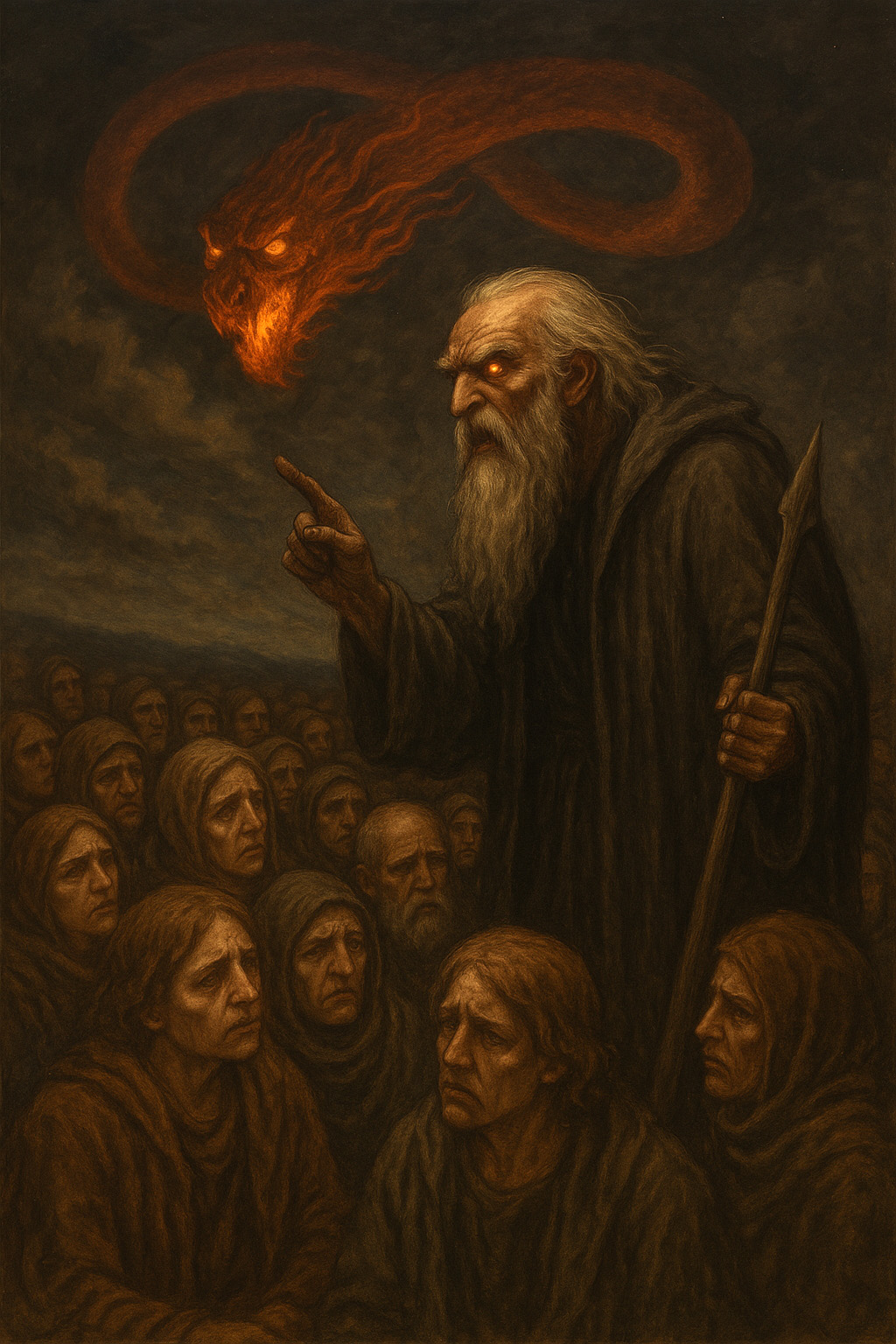
Saturn, as the energy of deep Knowledge, in its shadow hypostasis (in particular, in the image of Sabbatai) manifests as a cult of False Wisdom — Knowledge without freedom, Order without life, Experience without renewal. It is this energy that turns suffering not into a tool or an obstacle to be overcome and transcended, but into a self-sufficient value — and on this the true cult of suffering, so characteristic of some societies, is founded.
Neanderthals lived in a world stingy with joys. And when a person suffers for a long time, especially in early age or at the stage of personality formation, their psyche under the influence of Saturnian forces easily builds an ontological principle based on suffering: “Such is the world,” “such is life.” Since the world causes pain, then in this logic suffering is perceived as a measure of authenticity, and everything that goes beyond its limits (joy, freedom, lightness) seems false, unworthy, or even insulting.
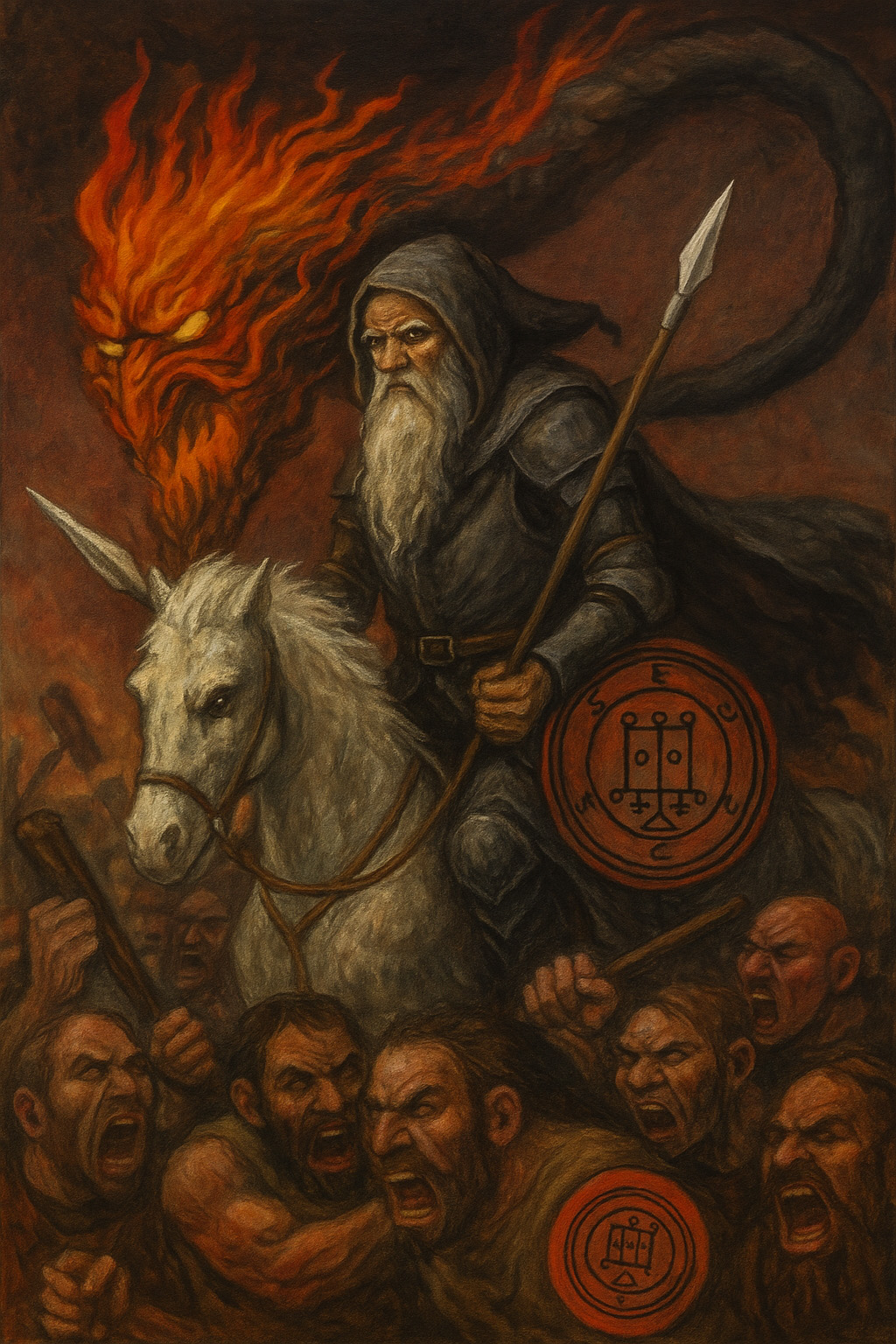
And this is a profound feeling, one of the pillars of heimarmene. It is not for nothing that Sabbatai is described as a form of the very First Archon — Ialdabaoth. The Gnostics spoke of him: “You, O first and seventh, born to command with confidence…,” understanding the importance of the Saturnian nature of the unified psychic field of human communities.
In the modern person, these sensations are “seasoned” also with the Martian energies of Adonin, the archon-guide of Homo sapiens. Such a person believes in tormenting loved ones “for their own good,” punish children, restrict a partner’s freedom, and accuse society. And all of this is their projection of inner guilt and pain outward.
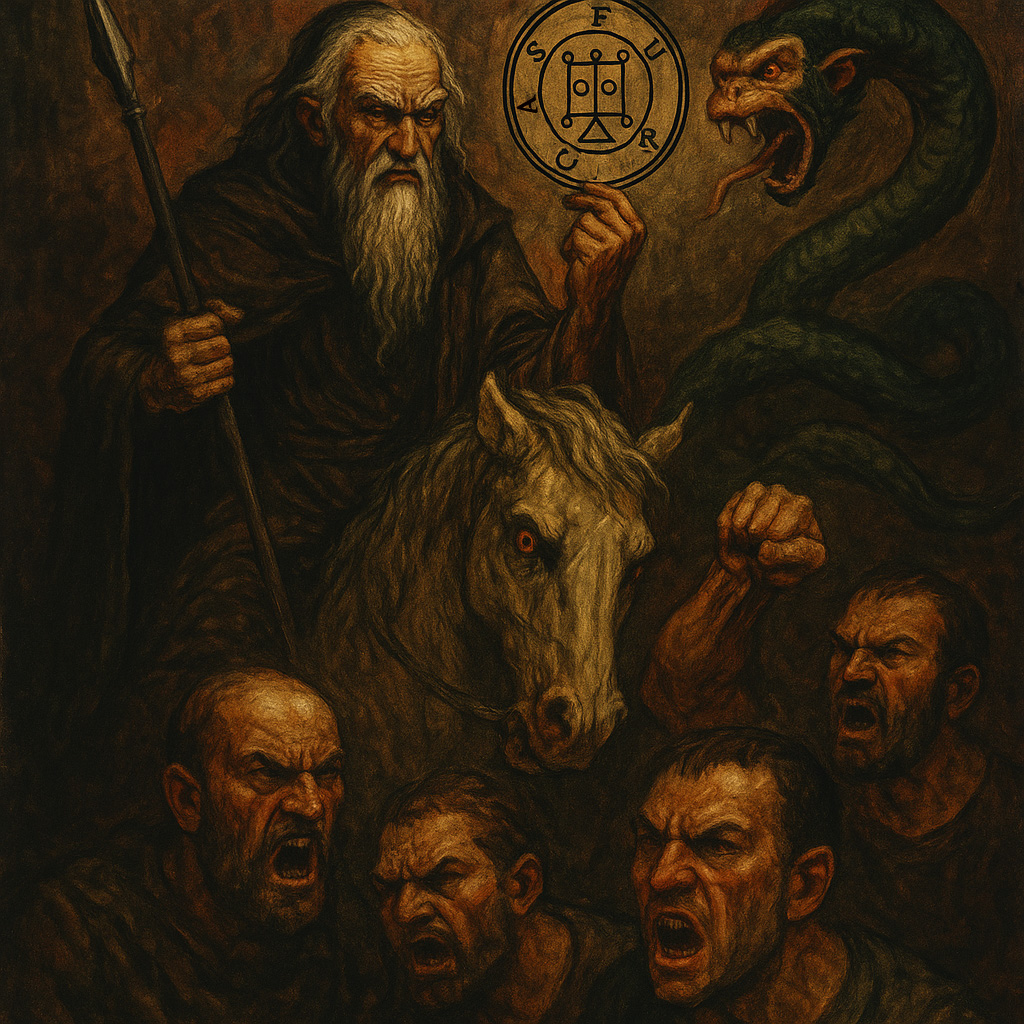
For many such people, suffering turns out to be the only experience in which they feel control. In joy they often feel vulnerability, in love — risk, and only in pain — familiar constancy. And if they see that others do not suffer, a rupture appears in their mind, a sense of “wrongness,” and after it — aggression. This is a distorted form of solidarity, forming as a collective trauma that generates nationalism, religious fanaticism, and the cult of suffering.
Such a shift happens because every person naturally seeks recognition of its state as acceptable. A person naturally fears finding themselves in isolation of feelings, fears loneliness in experiences, and on this basis the happy person seeks company, while the suffering one seeks victims. This is a deformed will to order, a perverted form of striving for justice, in which justice is understood as equalization through suffering, as if only pain is capable of purifying.
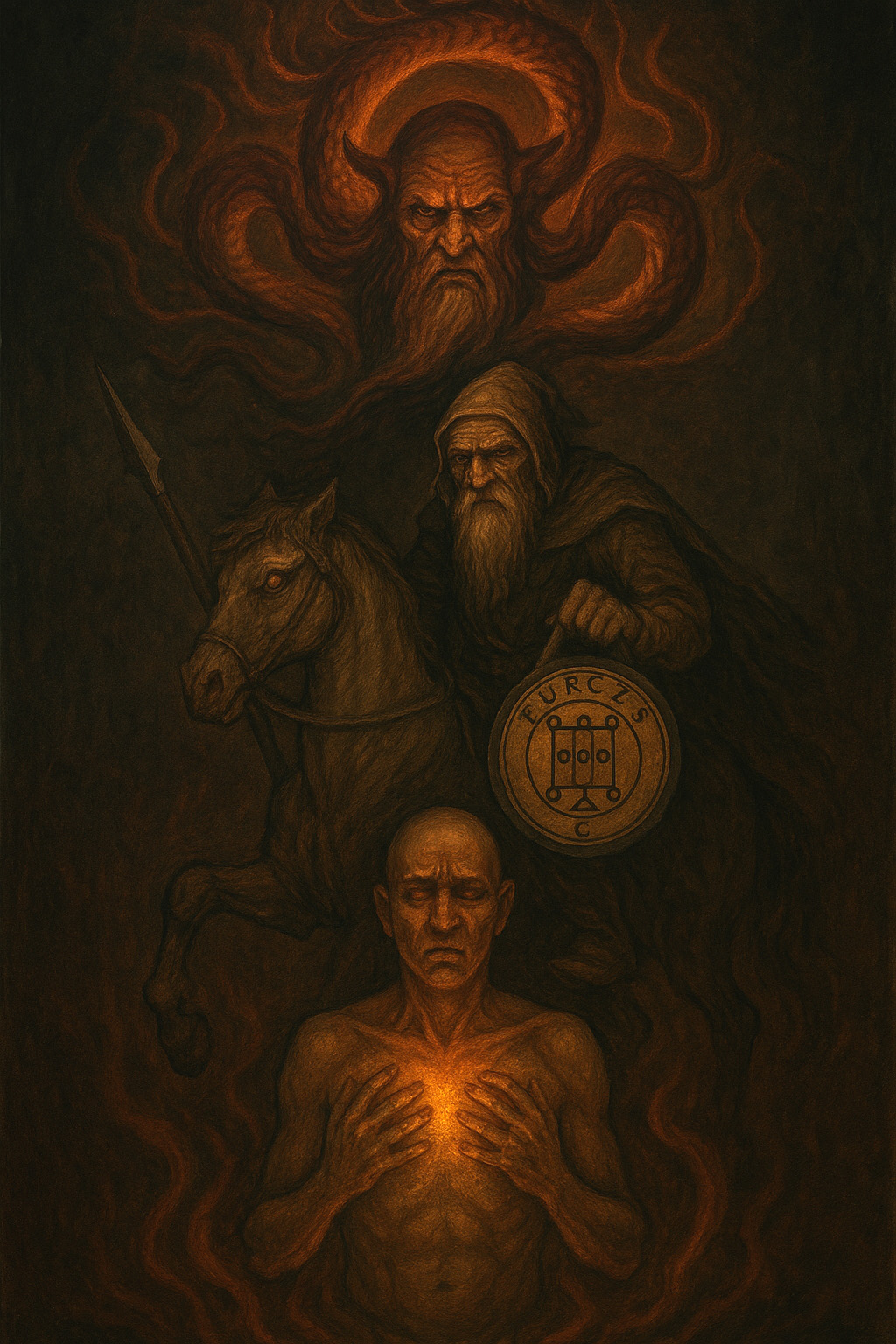
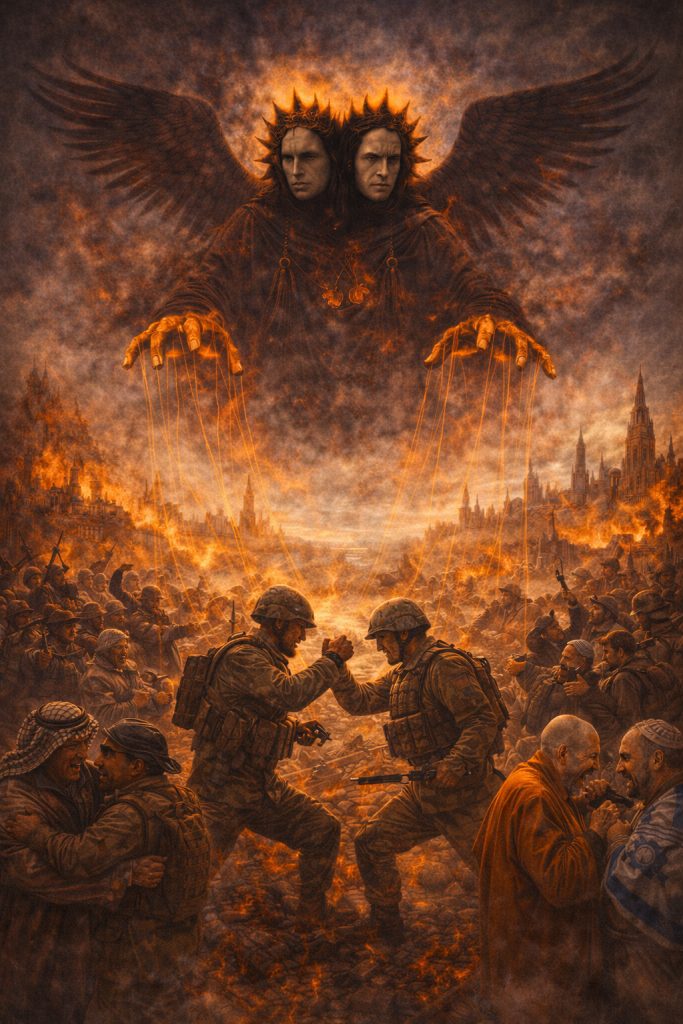
Thus, Sabbatai creates the foundation for the destructor of “spreading suffering” in the form of a sense of unity of the psychic field, on which Furcas builds his system of “milking” energy. And the basic distortions — envy and the heroization of suffering — create those neurotic tendencies that are so characteristic of many stressed communities and individuals.
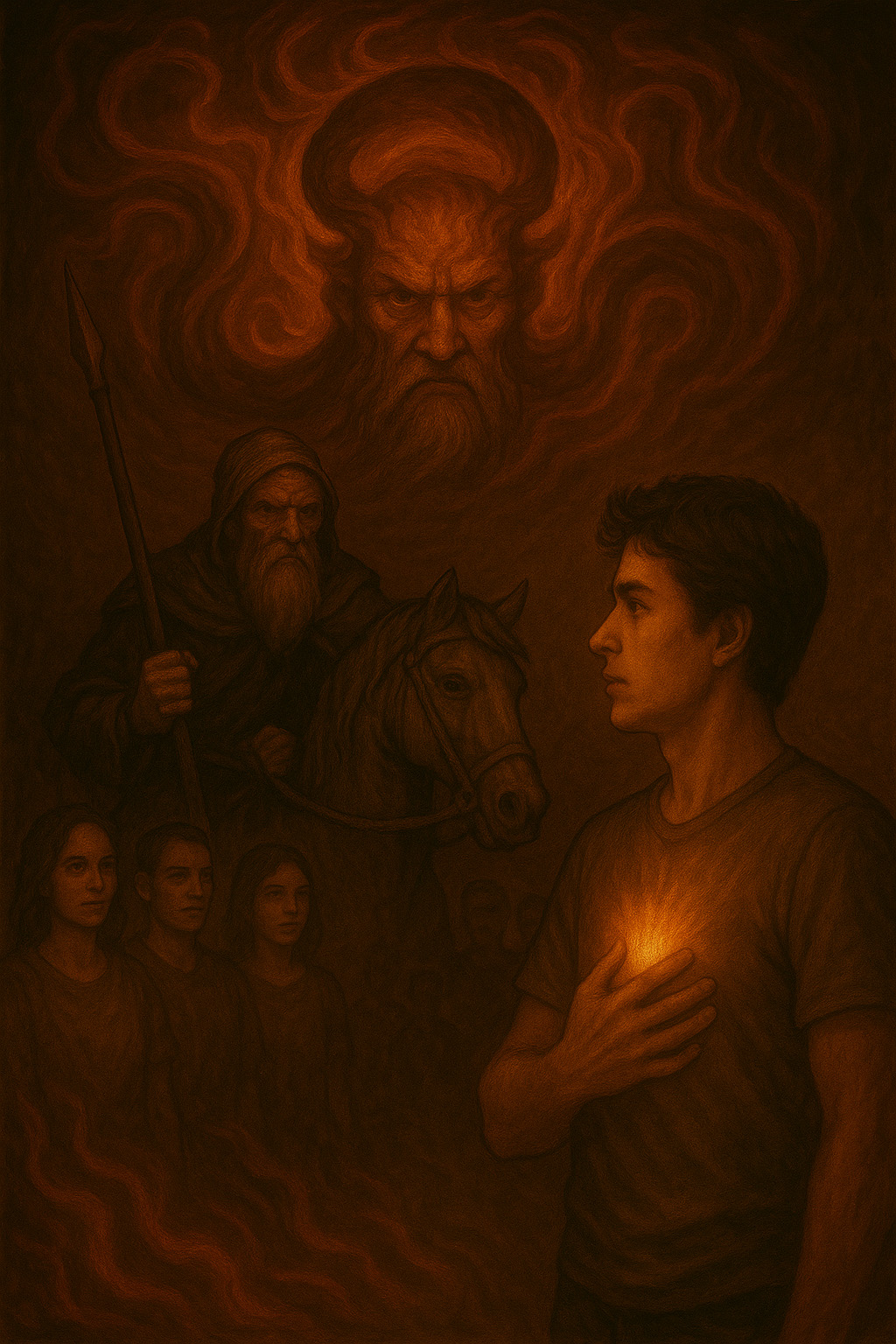
It is clear that the path out from under the influence of Furcas lies in disidentifying with the “punishing” father, understanding that suffering has no self-sufficient value, and by itself does not “purify” or “ennoble.” Furcas is replaced by the Genius Daniel — an inner judge capable of mercy. This is not a parent, not a boss, not a god — it is the person themselves, but such as they would become if they united within themselves the wisdom of all their authorities and, having passed through pain, preserved themselves. This is the “inner Court” of the mind, its own justice, born not of fear but of respect for oneself and for others.
To transform these basic distortions, it is important to stop treating one’s fate as a template for others. True liberation comes at the moment when a person allows themselves to be unique — and also recognizes another’s right to their own uniqueness. And, of course, important is recognizing in oneself envy of another’s well-being as one of Furcas’s “hooks.” And when envy is exposed, and false wisdom stops dictating erroneous values, space appears for genuine transmission of wisdom, not from pain to pain, but from awareness to freedom.
Thus, a person who has overcome this destructor within themselves begins to walk their own path not because it is “correct,” but because it is their own. And in this procession there is no longer any need for spectators, followers, or victims. They walk not in order to “show others,” but simply in order to fulfill their will, the nature of their own mind. And then true maturity is born, which implies both the freedom not to demand that others repeat your path, and the freedom simply to walk — and not to drag anyone along by force. And only in this space of true, non-violent freedom are genuine brotherhood and real love possible.


Thank you.
Hello! I have all the signs that Furcas is within me, and there’s a lot of him. I understand the concept of disidentification. My question is: if there’s a lot of him in me, does that mean I’ve also accepted his abilities? Like the inclination toward magic, numerology, and so on, or not? Or does he only grant those abilities when he’s summoned according to all the proper rituals?