
The Dreams of Ialdabaoth
We have already discussed more than once that the Interworld, the Interworld, is, in fact, a designation for an unstructured, unstructured field of potentials which, on the one hand, is a substrate for the birth of worlds, and on the other, an energy sink generated in these worlds. In this sense, the Interworld can be considered both as an Abyss, and as chaos, and as a fertile womb.
At the same time, just as the very fabric of the Interworld is potential, so too is the mind within it unmanifested, and therefore, in effect, the Interworld’s mind is always, essentially, the mind of dreaming, and everyone who perceives the Interworld spaces, in essence, dreams.
In order to clarify this point, let us first understand what we mean by “the mind of dreaming.”
Several characteristics can be distinguished:
First, the minds within worlds are structured and logical, while that of the Interworld is chaotic. Accordingly, in the “waking” state the mind tends to critically analyze reality, use logic, and be aware of cause-and-effect relationships. At the same time, dreams are often illogical; they usually contain contradictory events, unexpected plot changes, and a weak causal connection, which is characteristic of the fluid state of the Interworld.
Second, since the very categories of time and space are valid only for stable worlds, in the waking state time is felt linearly, and space is structured. For the Interworld, these categories lose all meaning, and therefore in dreams time can compress, expand, or lose its sequential order, while space changes instantly and illogically.
Third, the self-image is equally conditional; it, too, is stable only in worlds, and therefore in the waking state a being usually realizes that it is in reality, whereas in the Interworld self-conception is blurred and metacognition is weakened: the mind rarely asks whether what is happening is real.
Fourth, it is clear that in worlds and, accordingly, in waking, the mind processes a large amount of perceptual information, relying on the sense organs and their signals. In the Interworld, no new experience accumulates, no new information arrives; only processing and assimilation of what is already accumulated takes place. Therefore, in dreams, altered or even impossible forms of perception may arise (for example, the mixing of senses — synesthesia, awareness of “other people’s thoughts,” sensing objects that do not exist), and so on.
Fifth, worlds are spaces of affirmed will. That is precisely why the main inhabitants of worlds are the so-called “free” beings, whereas in the Interworld “service” and “maternal” entities prevail. Accordingly, in the waking state conscious choice and planning are possible for the mind. At the same time, in dreaming, actions are determined by external influences, subconscious impulses, and associative processes, although in lucid dreams it is possible to restore volitional control.
Sixth, the ways of storing information also differ: in worlds, information can be stored as data and memory, in the form of active chains and sequences, whereas in the Interworld information accumulates and fragments, and exists only in the form of Reshimoth and Chotemoth, imprints. Accordingly, in the waking state memories are stable and can be retrieved volitionally, while in dreaming “memory” works fragmentarily: information is easily forgotten, and some memories may appear without cause or logical connection.
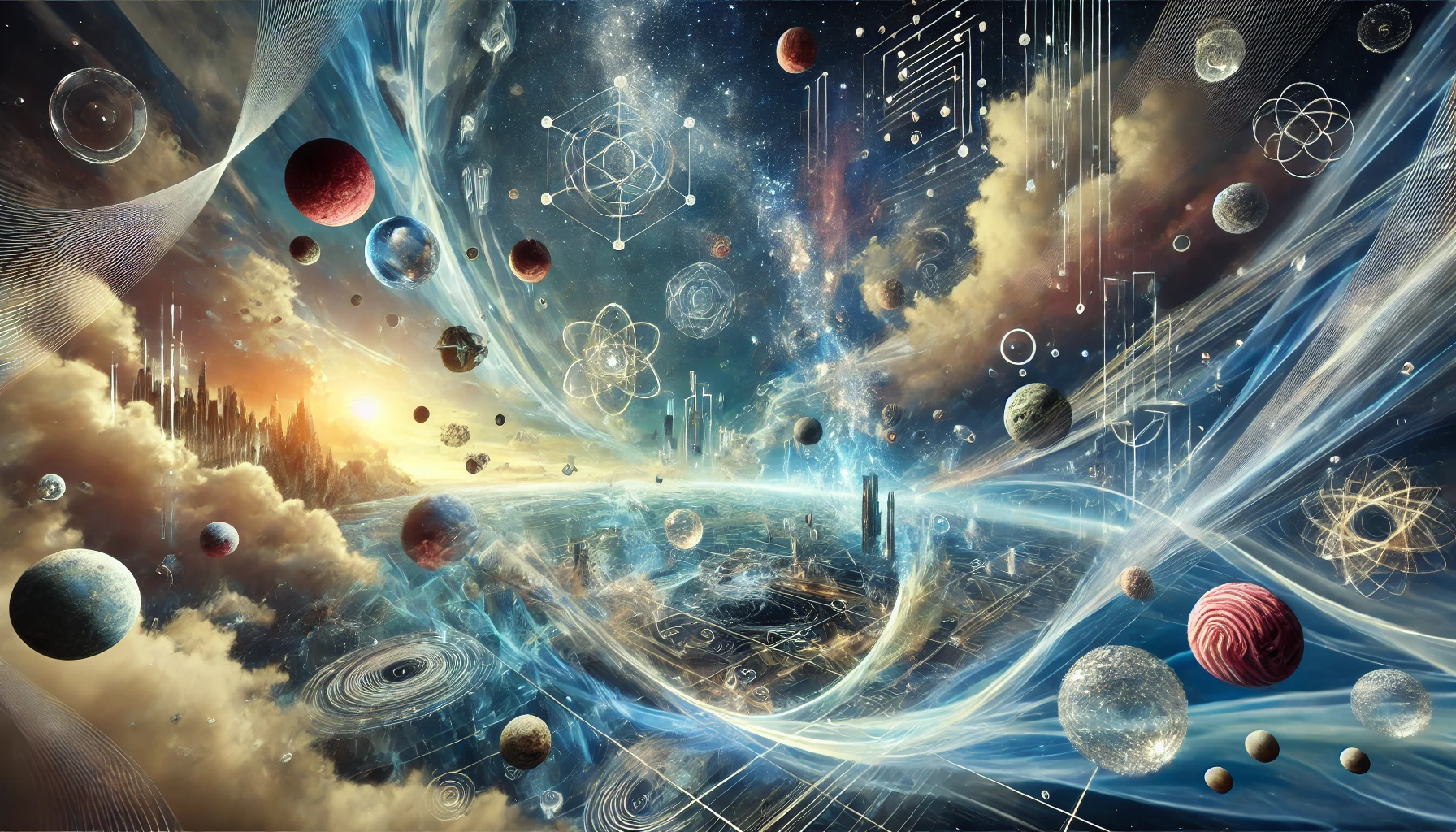
Thus, we can say that the Interworld is a space and a state where the boundaries between the possible and the impossible are blurred or absent, and the laws of physics and logic give way to associative and symbolic perception and thinking.
In other words, the Interworld is always someone’s dream; its perception is inseparable from the perceiver, or, to be more precise, the dreamer.
Thus, it can be asserted that although the Interworld contains all possibilities of all worlds, all matter, all energy, and all information manifested in all times and all universes, it itself is only an abyss, a virtual space, a dream.
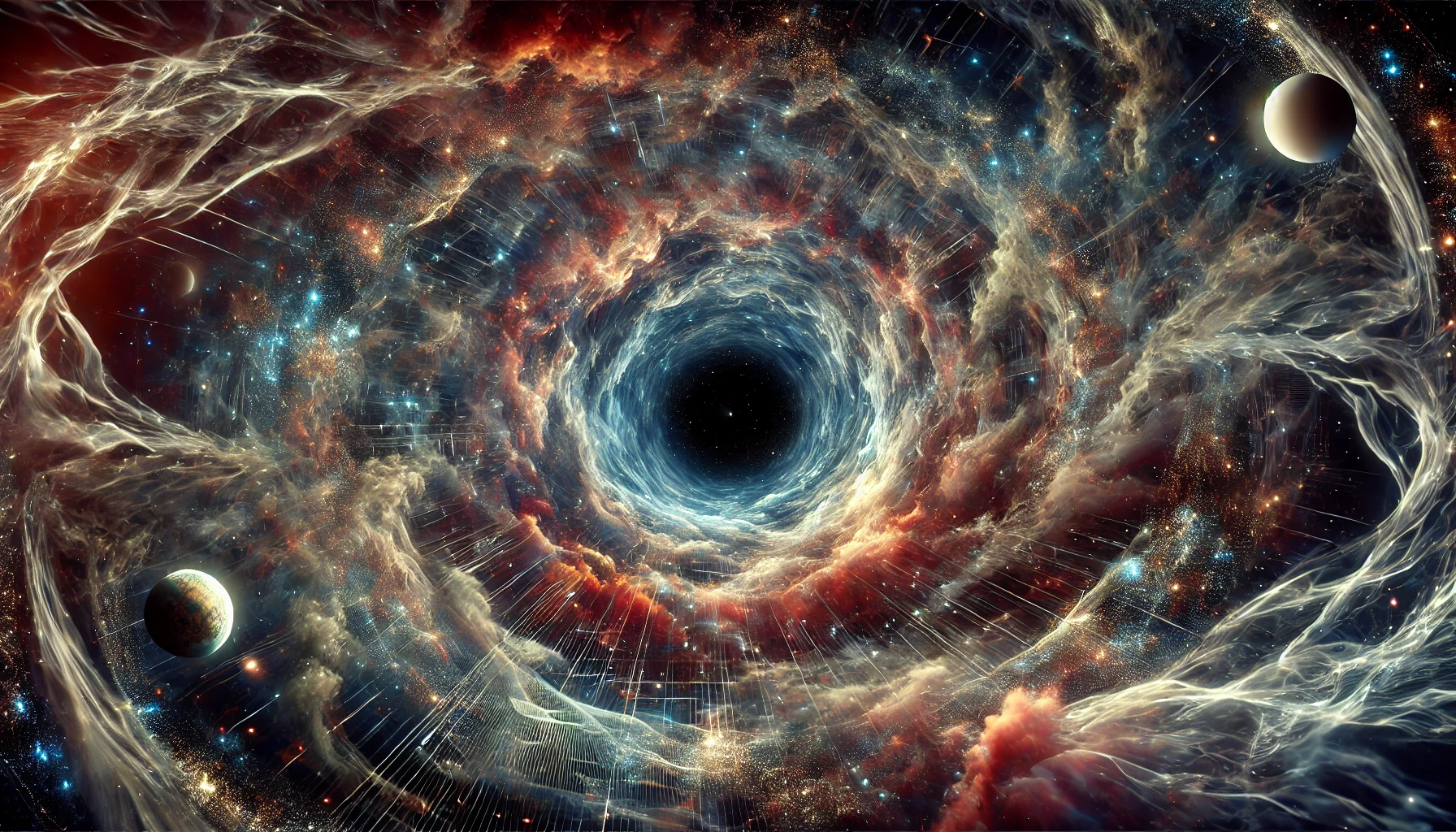
Accordingly, the question also arises about the Dreamer.
Since for the Interworld the categories of separateness, time, and space make no sense, the Gnostic myth calls this subjective component of the Interworld “aeons” or “eternities,” emphasizing their transcendental character. At the same time, three forms of relationship between these transcendental dreamers and the dream/Interworld are distinguished (in fact, analogues to these forms or layers of dreaming can also be found in descriptions of “ordinary dreams”):
At the highest level, the dreamers are more primary than the dream, and all possibilities of objectness are generated by these subjects; that is, one may say that the dream is simply a product of the dreamer, while space and possibility proceed from aeonic forces. This level is called the “Divine Octoad” and is the “possibility of possibilities,” the source of all subsequent potentials.
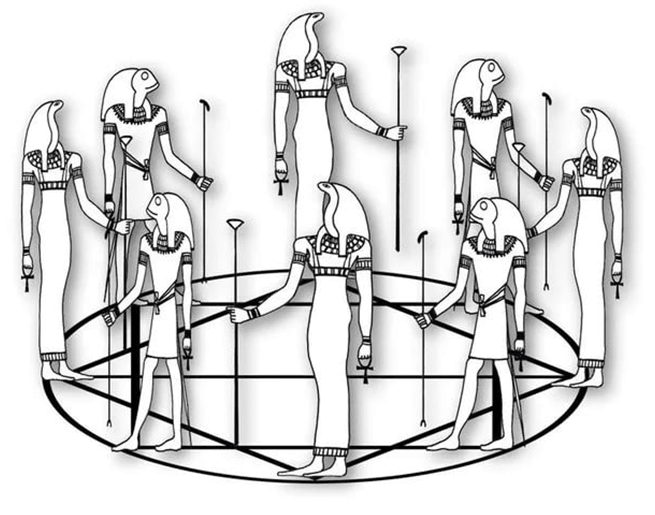
At the next level, the dreamer and the dream are interdependent. In other words, just as in worlds experience shapes attitude and behavior, the perceived and identified possibilities influence the mind that describes and distinguishes them. This interaction is described in terms of “Light and a vessel” and is the area of study of the Kabbalistic Tradition, while the level itself is known as the “Sefirotic ethers” or the “possibilities of the Sefirot.”
Finally, at the third level, the events of the dream seize the dreamer; he turns out to be not so much a subject as one of the objects of the dream, carried along by a stream of images and associations. When it comes to the “original” dream, it is the “causal” level of reality, such “dependent” Primary Dreamers are called Archons, and, accordingly, we can say that all beings of all worlds live in the “dream of the Archons,” which they, though ontologically creators, do not, in fact, control.
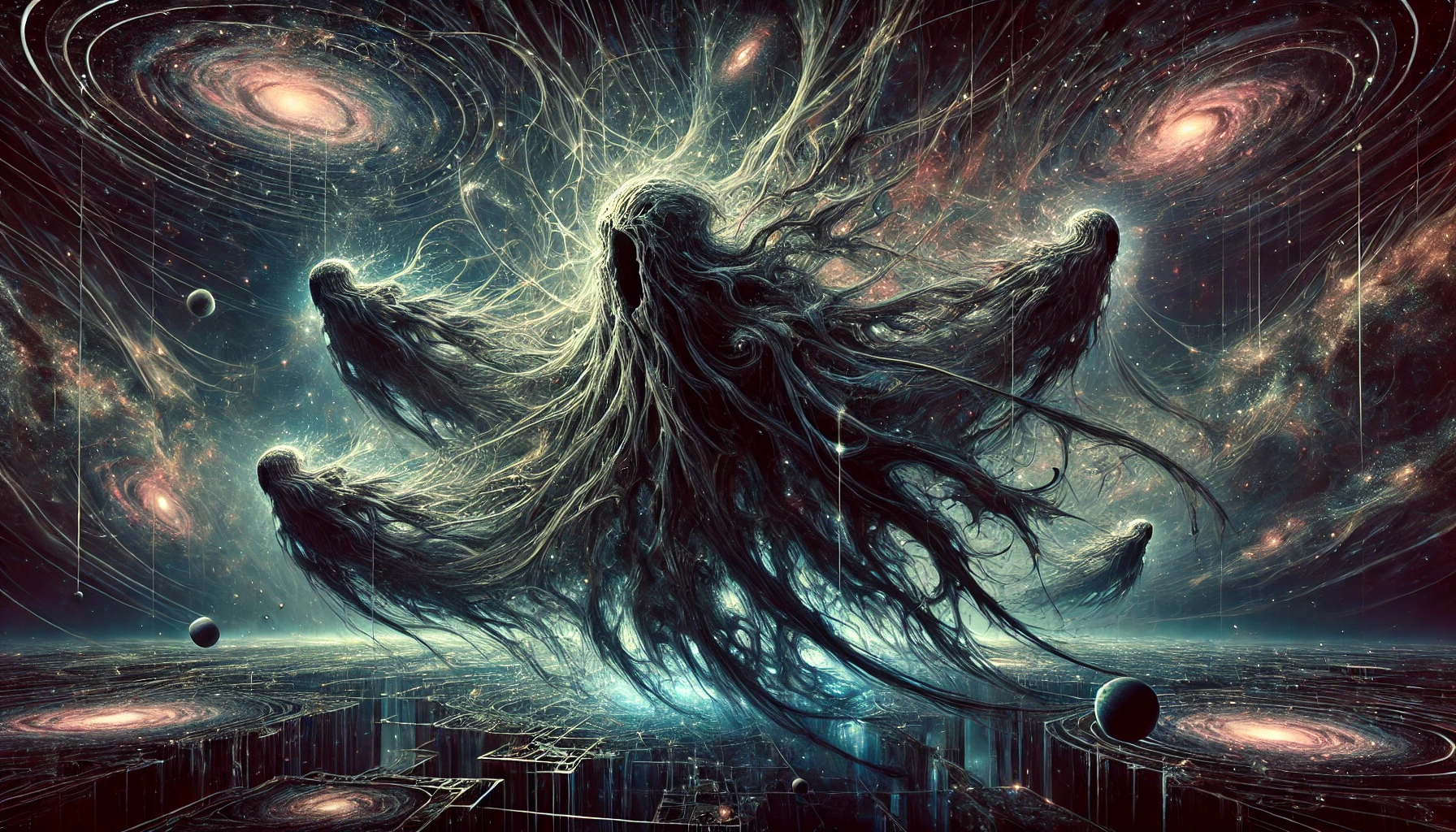
This “lower” level of the Interworld is traditionally called the “Archontic Dodecad” and is described as a set of twelve levels of “possibilities,” commonly known as the “astral,” “mental,” and “causal” planes (or, more precisely, the undersides) of reality.
Since the Archons are, in fact, “sleeping gods,” it is clear that their mind (insofar as we can imagine it) is precisely the mind of dreaming, characterized by the properties described above; and therefore the “ignorance” or “obscuration” of the Archons is a natural consequence of their position. Unlike a true lucid dreamer, they themselves do not fully realize the nature of their dream — their creation is formed as an automatic process rather than as an act of awareness.
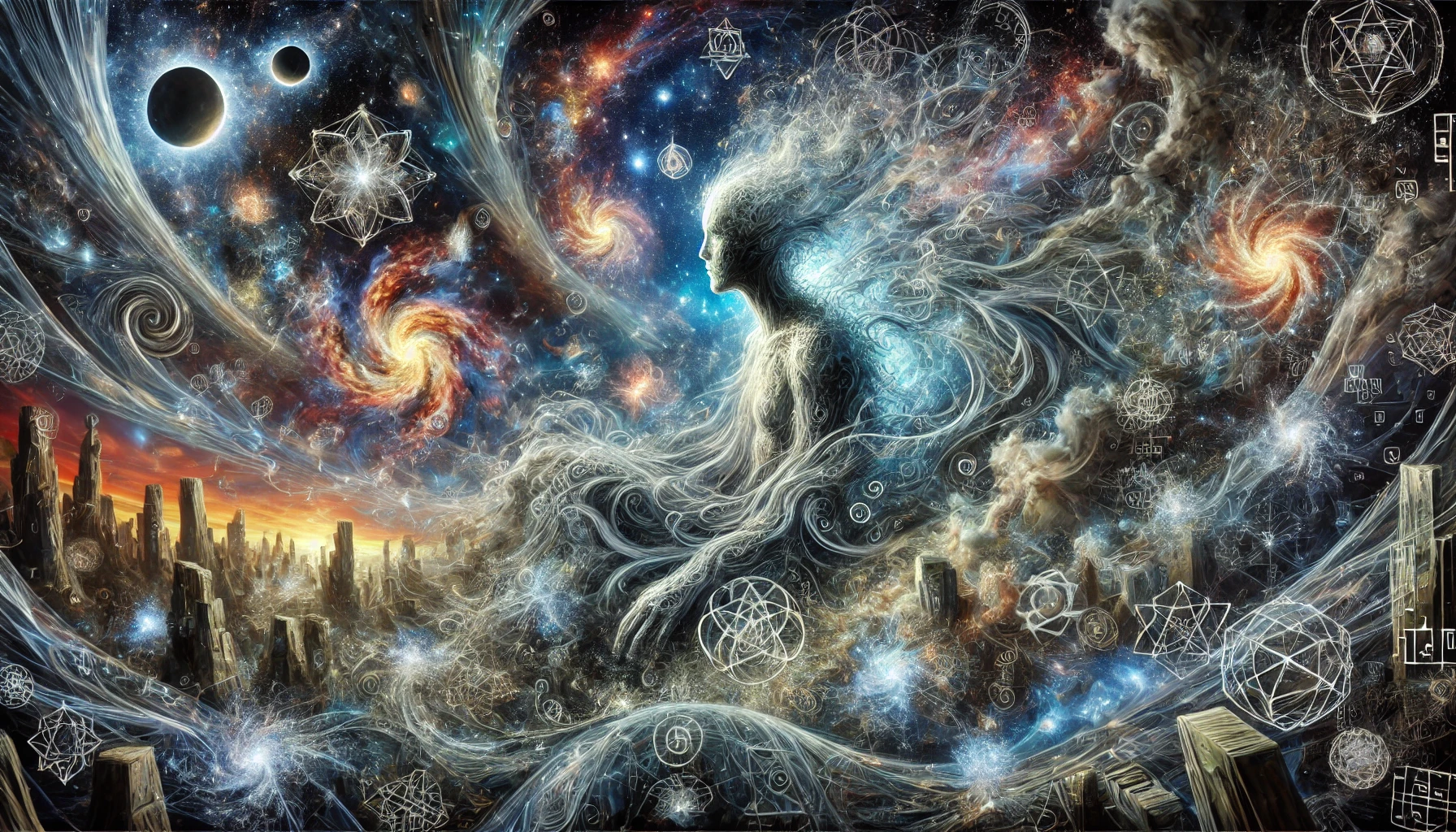
Thus, worlds are born from the Interworld in the same way (and in parallel) as waking is born from dreaming. The mind of an embryo, the mind of a gandharva, like the mind of an Archon, is the mind of dreaming — unordered and unstructured. They exist in a reality where there are no stable boundaries between inner and outer, where perception is not tied to logical structures, and images arise spontaneously, from deep impulses. In embryonic mind this is expressed as a pure, undifferentiated stream of sensations; the gandharva lives in an intermediate world of reveries between life and rebirth; and the Archons exist in their own projection of reality, unaware of higher levels of being.
At the same time, from an ontological point of view, the mind of dreaming can be considered as the primary state of any reality, whereas waking is the result of ordering, condensation, and limitation of this primary freedom of perception. Just as the waking mind arises from sleep through gradual densification and structuring, so worlds appear from the Interworld, acquiring fixed forms, laws, and parameters of existence. In this sense, the Archons, as entities governing the process of the manifestation of reality, are in a transitional state: their minds have not reached full awareness into absolute awareness, but it is also no longer pure dreaming — it is structured within the boundaries of their own sphere of influence.
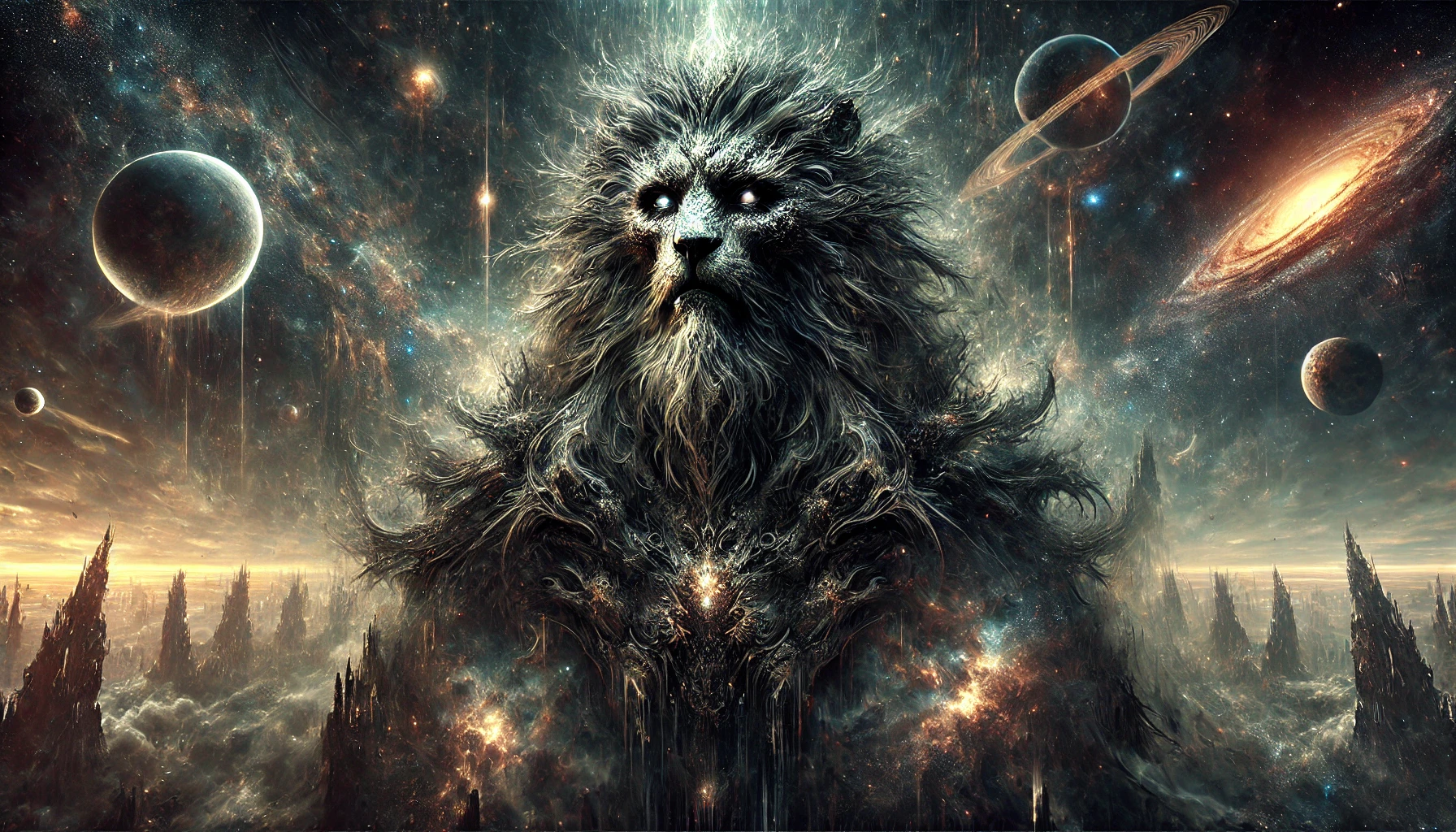
One can say that reality is a “multilayered dream,” where each level is part of a higher dream. At the same time, beings within the worlds of the Archons can realize that they are in a dream only upon awakening to a higher reality.
Thus, one can trace a direct analogy between the process of awakening and the process of cosmogony: dreams become reality, chaos becomes cosmos, a virtual void becomes manifested matter, and potential mind becomes waking awareness. In this sense, the Interworld (or the virtual seething of the vacuum) is a potential state, where all possible structures and cognitive models are not yet defined, but already “sleep” as probabilities.


Thank you. Where are the bodhisattvas? Do they create their own worlds in the interworld? That is, some analogy to conscious dreaming?
‘Pure lands’ of the Buddhas and bodhisattvas are special worlds generated by their enlightened consciousness. And although formally they, like any worlds, are born from the interworld environment, because the consciousness that generates them is enlightened, they exist above and outside the system of worlds and ethers.
Thank you.
Excuse me, but isn’t it strange to consider the interworld as a dream world, although the original creation is called a dream without dreams? And what is the difference between the archons, these primary ‘laws’, for example, and the Elohim – the boundaries of the world?
Ah, I got stuck in the interworld, shorter than the astral, mental, and causal special spirals of the real universe, with all universes existing simultaneously. The smallest universe is the demonic plane; it exists like holes in the physical universe. In the ether, there is already the physical universe, which is a limited area. There, a more expanded consciousness, rather here, humanity lives in the ether. In the astral universe, all etheric manifestations seem to be a limited area, and so on, while the interworld is just a transition beyond the transition, speaking of the interworld is meaningless.