Debts and the Afterlife
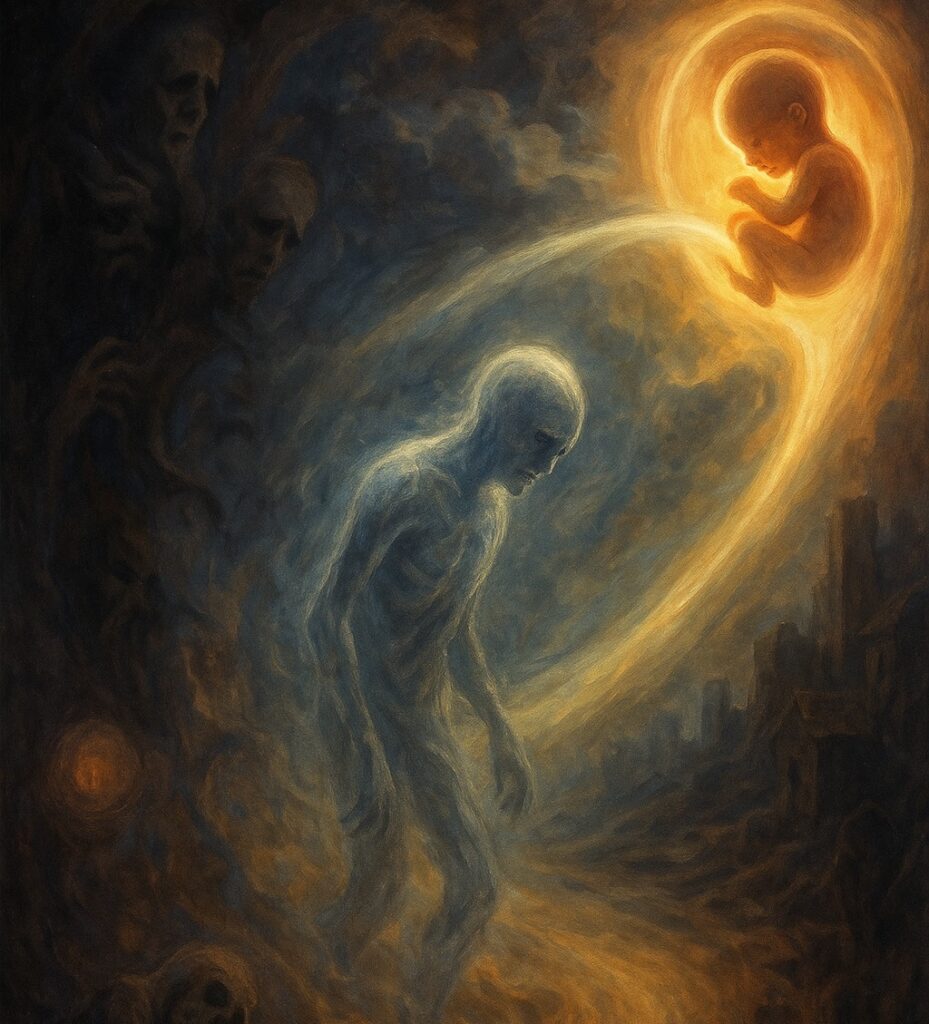
Everyone who sets out on the posthumous journey carries with them not only memory and the shadow of the life they lived, but also an entire web of energetic knots and obligations — oaths, debts, vows, and curses accumulated during life. These knots, usually imperceptible in the manifested world, in the Afterlife acquire tangible form and measurable weight, influencing the trajectory of the journey and the outcome of the Judgement. In the Duat they do not appear as guilt or merit, but turn out to be a very real energetic engine (or, conversely, a brake) — that which is tied, and therefore must be untied or balanced. Understanding the nature of these bonds and ways of dissolving them is the key to successfully passing the posthumous Way, especially at the level of the Gates, where each knot and each debt becomes either a support or fetters.
Any connection that during life the mind creates with words, intention, a gift, or a curse, fixes the flow of mind in a certain state, leaving its imprint in it. In the embodied state these fixations are almost unnoticeable, since reliance on the body gives them the form of “habits” and “relationships.” However, in the afterlife, where the supports of the dense plane are removed, they manifest in their energetic form — as knots, seals, and gravitations — largely determining the route of the Way through the Duat. And although subjectively they may look like certain “external” “punishments,” in reality they are only precise projections of the vectors created by the being itself during life.
In the Interworld, there are no “accidental” or “arbitrary” connections; however, everything that beings have ever promised, taken, cursed, or been cursed with becomes part of the overall energetic burden that the Elementer carries with them. And although in life these obligations were hidden behind habits, agreements, and “forgotten” words, after death they manifest in pure form.
At the same time, each knot has its own “record” in the DES chronicle or “Akasha,” and at the moment of Judgement the mind sees not only the energetic form of the debt itself, but also the entire chain of events that gave rise to it — though sometimes in a distorted form if the debt is accompanied by self-deception.
On the posthumous Way, the most dangerous are those oaths and debts that the deceased is not aware of — vows given in childhood, in an emotional state or trance, promises embedded in songs, rites, rituals in which they participated lightly. In the Interworld, such knots “surface” unexpectedly, blocking progress or throwing one back.
One of the heaviest energetic burdens is oaths — voluntary fixations of will that are always asymmetrical: part of a being’s energy becomes forever “allocated” to the given word. Oaths are fixed on different levels — through the name (ren), when the promise is tied to self-identification (like: “May I not be … if I break this promise”); through the heart (eb), when the vow is the result of a strong desire (or unwillingness); through the shadow (shuit), when the promise is given in secret, out of fear or desire, and therefore acts even more strongly. We have already discussed that there are special forms — an oath of blood, binding through the body; geis (or samaia), upon violation of which retribution is inevitable; an oath of discipleship, where the “Master–disciple” knot holds both minds in one field, and so on.
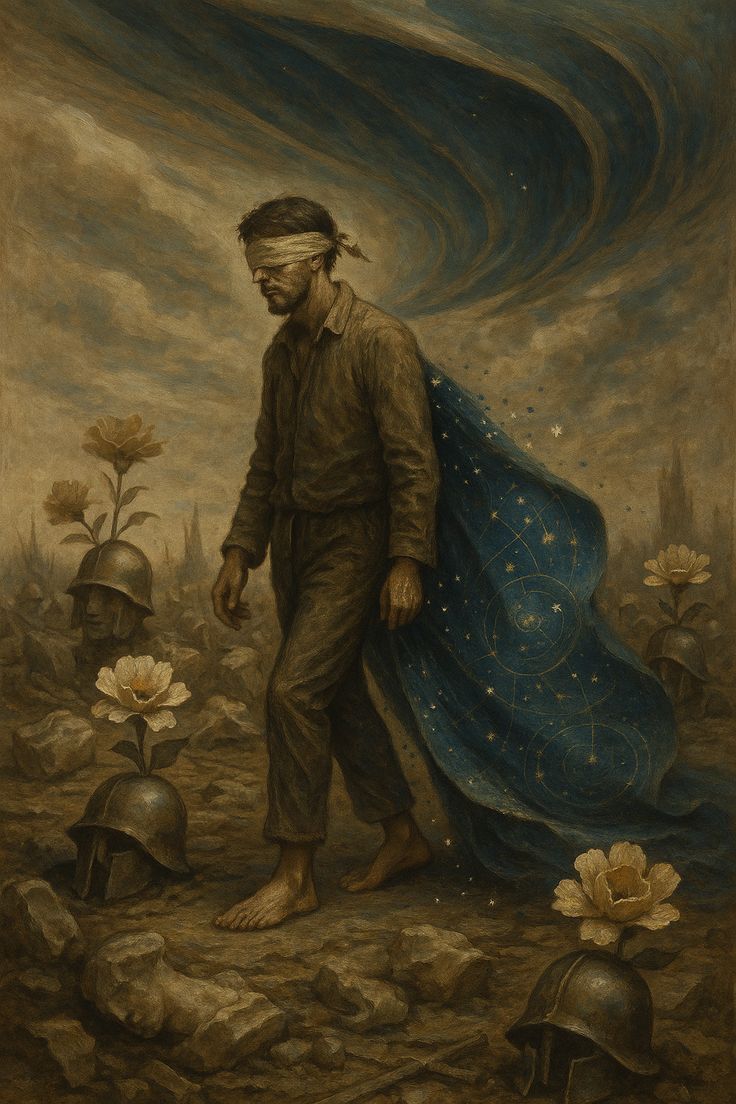
Debt knots arise when one exchange or another is not brought to equilibrium — from received power to an unacknowledged service. They are fixed in ka, as traces of life force streams, and in ba, as attraction or dependency, and their imprint is always recorded in the name. Debts can be clan debts, when the founder of a clan promises something for themselves and their descendants; guest debts, if a received gift was never balanced by equal energy (this can be the energy of gratitude, or a real payment); debts of power, when a person knowingly made use of someone else’s life energy (ka) — of a person, an egregore, a deity — but did not return what was taken. The discipleship knot is one of the most common: it forms if the energy of baraka was accepted, but the promised reciprocal work was never done.
A vow is a form of energetic self-binding in the name of some higher principle or power; at the same time, a vow in the name of enlightenment or truth makes things lighter, aligning the heart, while a vow for the sake of obtaining something always makes things heavier, enslaving the will.
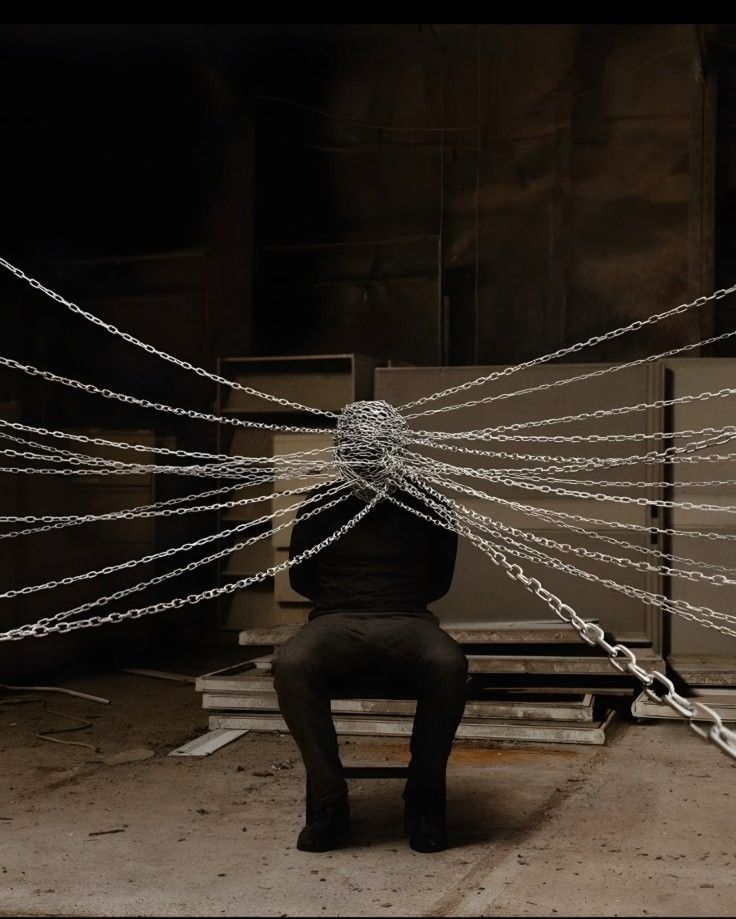
Another common kind of energetic “burdens” are curses — a fixation of mind through prohibition or negation, when the flow of mind is “tied” to a state of lack or degradation. If the one who curses is someone who had real power over the being — a parent, a master, a god recognized by them as lord — then the curse becomes fixed in the shadow and in the heart. Even heavier is self-curse — inner devaluation of one’s nature, a feeling or thought like “I am unworthy of light.”
Obligations and agreements are “fixed” where they were “signed”:
- in the body (sakh) and objects — through material bindings and “anchors”: rings, hair, notes, blood, and so on;
- in ka — as imprints of exchanges and leakage of life force; in ba — as habits and gravitations;
- in the heart (eb) — as a shaping intention;
- in the name (ren) — as oath formulas and contractual self-naming;
- in the shadow (shuit) — as hidden agreements and traumas.
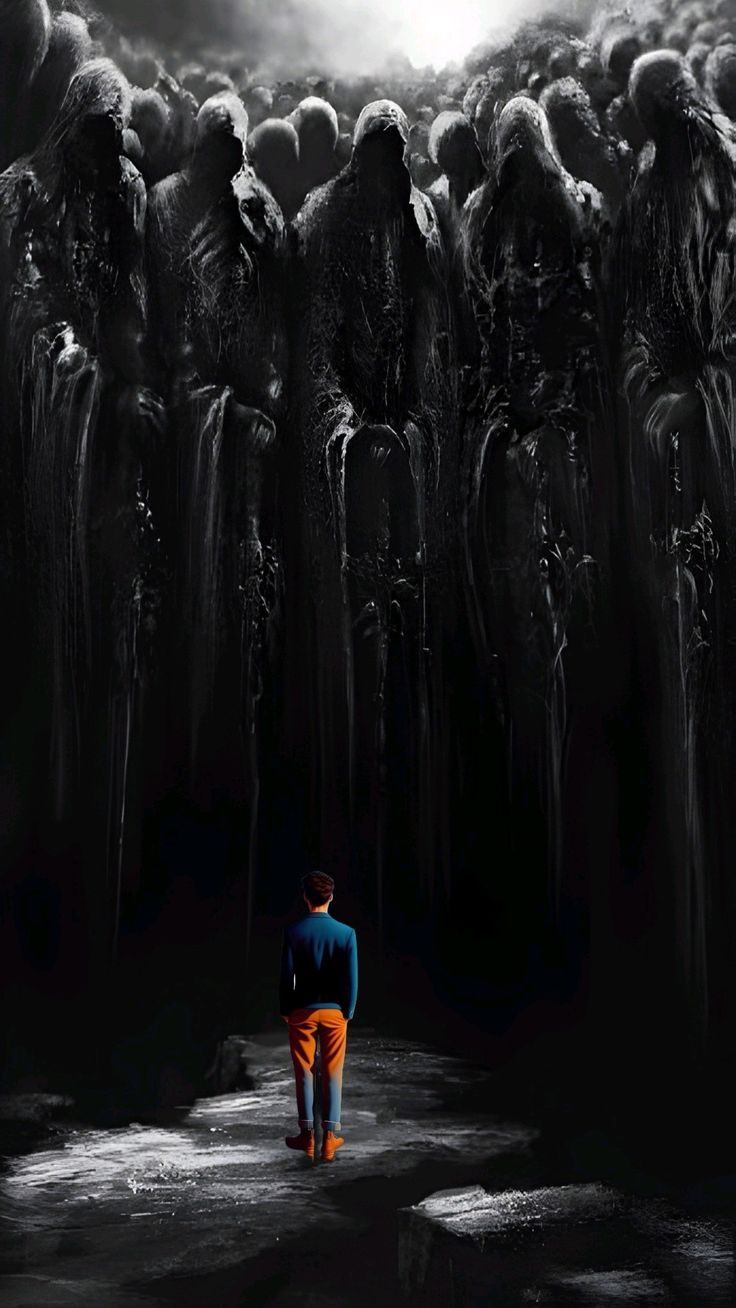
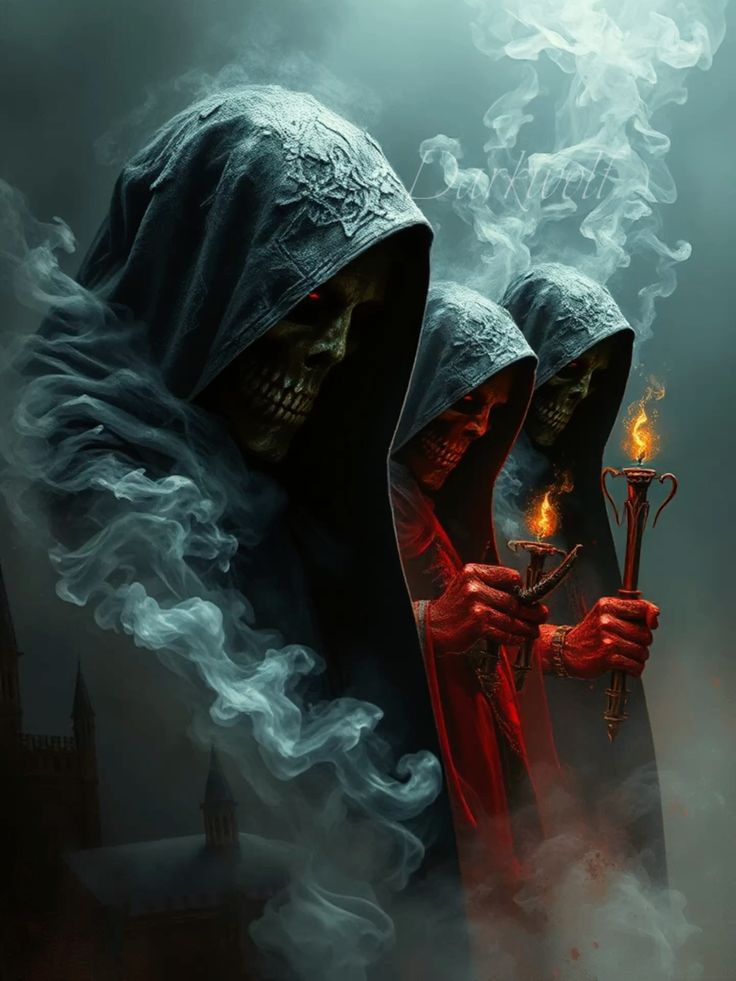
In the Interworld, many forces of the afterlife are involved in accounting for and neutralizing energetic knots and debts: Geshtinanna (or the Librarians) record them, the Anunnaki “check the balance,” the gallu collect and devour imprints if they are not prevented.
Some obligations in the Interworld are supported not by the debtor themselves and not only by the energy of the one who curses, but also by special guardians — entities created by the very fact of the agreement. Such entities do not disappear simply by wishing to “break the bond”; one has to (sometimes with difficulty) interact with them, or they must receive “proof of fulfillment” of the knot or repayment of the debt.
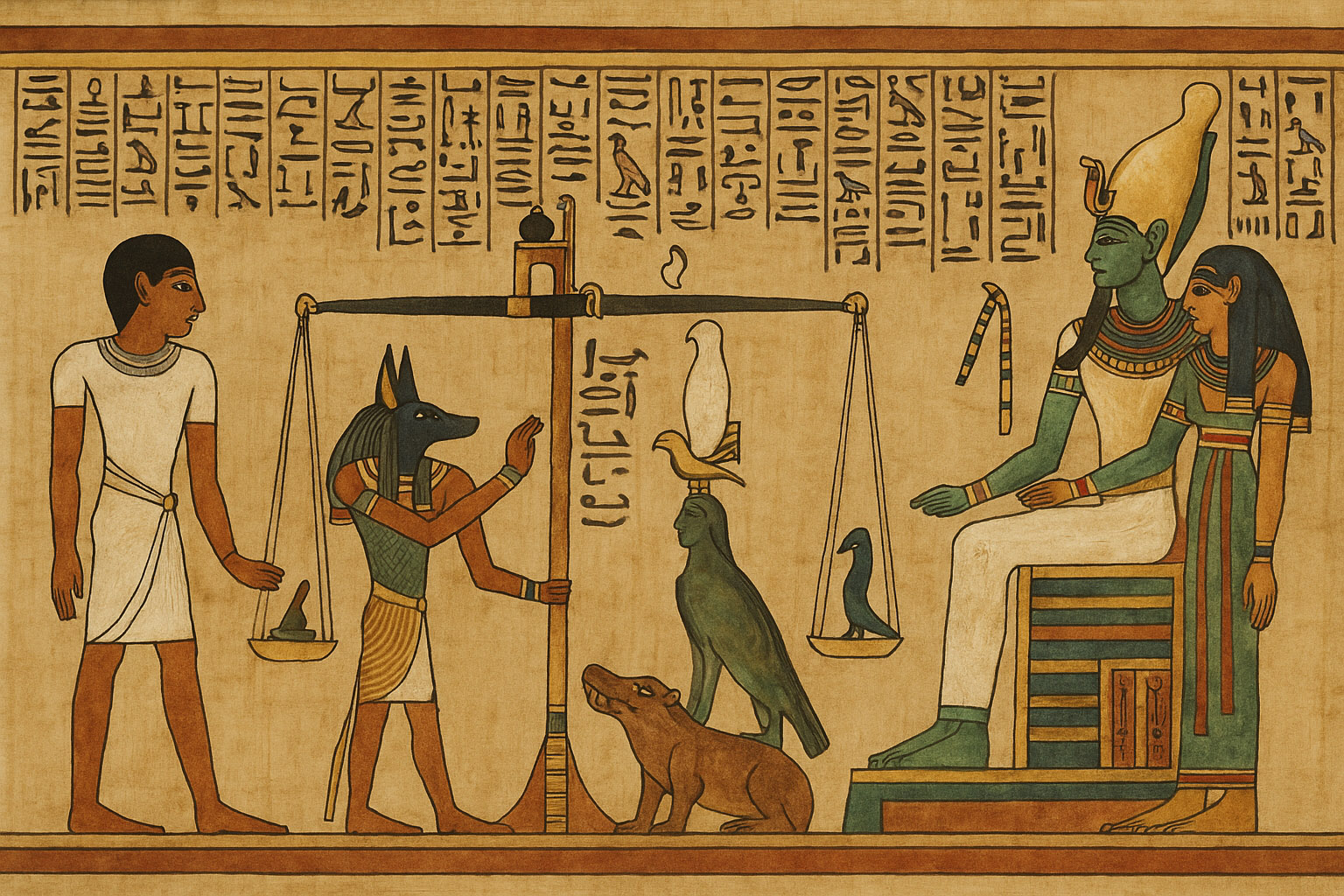
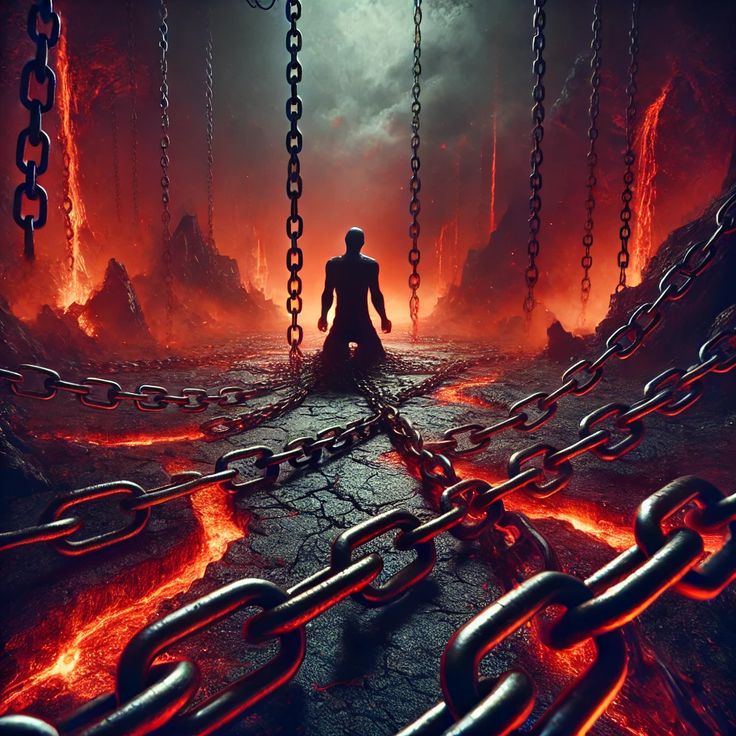
On the roads of the Duat all these kinds of “burdens” manifest clearly: at the Crossroads, at the gates of Amenti, it is easy to get stuck if the name is firmly tied to functions, identifications, or obligations: if a person’s name is firmly tied to a “bad reputation,” if they identify themselves with a job title, social status, religious or egregoric affiliation, not “noticing” behind all this their essence, their Name (ren) is replaced — they call themselves “Director,” “President,” or “Patriarch,” and, not knowing their true self, cannot pass beyond the first intermediate space, “getting stuck” in the Asphodel Meadows. If, however, behind these false identifications the deceased still manages to remember themselves, then further on, from the Lake of Fire, their blessings, curses, and strong wishes rise up — all that was imprinted at the level of the body of desire and acquires “visible” reality in the Duat. At the same time, all these “knots” and “burdens” take the form of beings or objects that help or hinder further progress. On the Field of Hills debt knots feel like burdens that make it hard to walk, yet it is precisely here that it is easiest to return what was taken (both what was received as a gift and what was taken or stolen); therefore this space is also called the field of settlements. In the arits, the seven abodes, vows, geis and samaias “surface,” which may “not let” one into this or that Abode, which means significantly lengthening the Way or even “throwing” one out of the Duat ahead of time, creating a large amount of “ripened” karma. In the Hall of the Two Truths, the “weight of the heart” is the total mass of all unresolved knots.
One can untie debts only through their energetic balancing. For this, it is important to understand the exact nature of the knot and the interaction that gave rise to it, and then to return or compensate what was taken — with power, attention, recognition; to allow the Langoliers to eat the past by refusing to feed it; to translate the obligation into another form, for example, by sending a “gift” to the one you owe; to remove self-curse by honestly acknowledging one’s own nature rather than making excuses.
In different zones of the Interworld, various ways to repay debts are possible. At the gates of TEX, one renounces false names and acting as guarantor, returning others’ freedom. At the Lake of Fire, one can “burn” curses by naming them, acknowledging them, or disputing the curser’s right. On the Field of Hills, one repays debts of power and closes the arisen energetic channels. In the arits, one unties the knots of vows and “higher” obligations by recognizing their nature and letting them go. In the Hall of the Two Truths, one acknowledges harm, withdraws curses, “re-signs” vows, and so on.
More particular cases are also possible: clan oaths are removed by recognizing the boundaries of one’s individuality, returning the “axis of the clan” to the ancestors, and refusing to continue the knot; oaths made on behalf of others can be weakened only by acknowledging one’s presumptuousness; self-curses are healed by recognizing Akh, which was before any form; agreements with demons or Archons — by withdrawing attention and refusing their rules; sometimes debts have to be repaid gradually, “in installments,” for example, through accepting the role of manes and serving the living.
Thus, the weight of the heart is the degree to which its current nature corresponds to the ideal prototype (the logos or “the Feather of Ma’at”). It is not the actions themselves that are subjected to “Judgement,” and not even their motives, but their energetic foundations, vectors — where attention flows, to whom one owes life force, with whom or what one has bound one’s name.
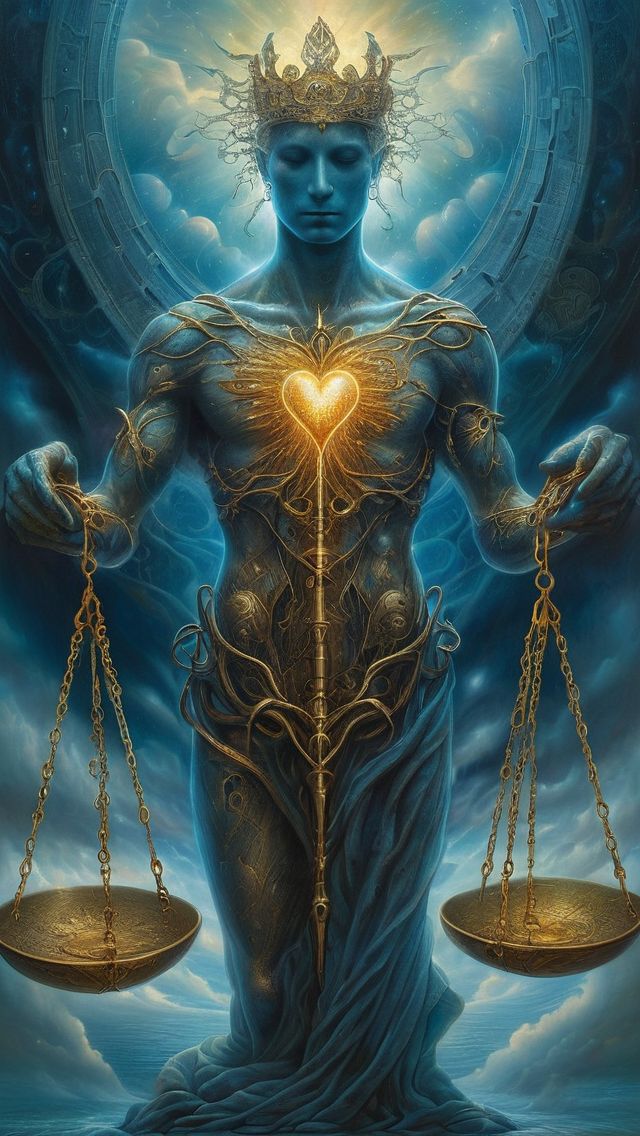
When all such knots are identified, named, and “worked on,” the heart becomes lighter; however, if they are concealed, their weight increases, and Ammit devours the accumulating lie, “throwing out” the remnants of the mind mired in it.
It is clear that the best place for dissolving obligations and repaying debts is during life. In the Interworld there are far fewer possibilities for this, and the price of a mistake is higher. But if the Way already leads through the Duat, it is necessary to carry with you three keys: your name, your responsibility, and your will.
One who, while still alive, learned to see in oaths and knots not an instrument of restraint, but an occasion for awareness, and thus a support for liberation, passes through the Duat with a lighter burden, and therefore is freer in choosing the Way. Liberation in the afterlife always correlates with equilibrium: each thread untied without residue returns part of the energy to the center of the mind, and each debt consciously fulfilled turns from fetters into support. Ultimately, passing the Judgement and weighing the heart is a measure of the wholeness of the mind: free from unresolved bonds, the straighter and brighter the path beyond the Gates.

Very useful article!
Huge thanks to you, esteemed Master.
Good day! Tell me, is it possible to simply explore the Duat space without participating in the “standard procedure”?
Hello! Yes, of course, and it’s not just “possible,” but very important, and under the conditions of recent years, vital. This, along with similar articles, is written precisely to encourage such research.
Thank you. Have you ever thought that we are already in the Duat?