
The Magus’s Oaths

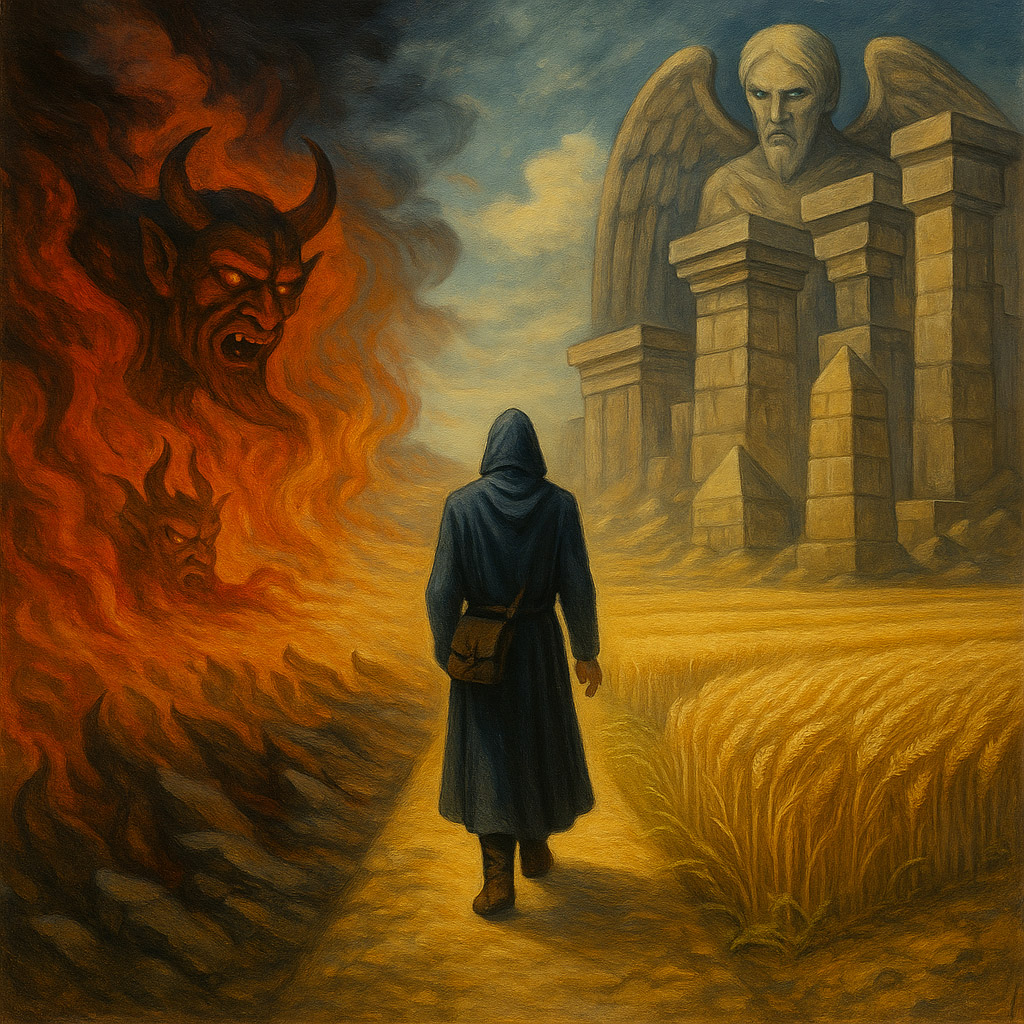
One important binary that a Magus must effectively integrate on his path of development is the balance of freedom and orderliness in the expression of feelings.
It means that, on the one hand, the Magus’s task is the full and effective realization of his desires, and, against the backdrop of the inherent disorder of the Dionysian principle itself, on the other hand, this must be combined with coherence, orderliness, and regularity of the Way as such.
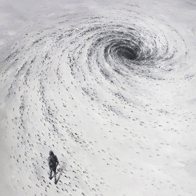
We have repeatedly discussed how Magi often fail to walk the “razor’s edge” between the extremes of this binary, and they either fall into the abyss of “pure spontaneity” and lose the thread of development, getting stuck in a Gilgul for indefinite periods, or — “harden” into a crystal of reason, deprived of the “fuel” of living feelings, passing into one of the highly ordered, yet barren, worlds.
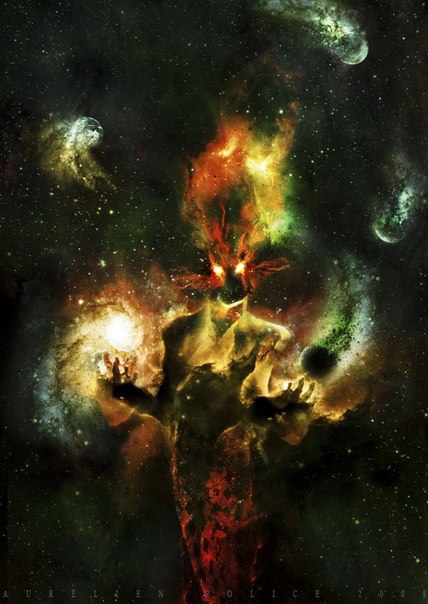
In order to successfully integrate this binary, the Magus must combine the vivacity of his emotional flow, its freedom and “spontaneity,” with a significant degree of control and order.
One of the practical approaches that helps achieve this result is the system of “oaths,” that is — certain “specific commitments” freely and voluntarily taken by the Magus. Geasa among the Irish, samayas among Buddhists, shamanic oaths — these are all ways to “tame the untameable” and “order the unordered.”
Since suppressing desires is a direct road to increasing the shadow, and therefore directly opposed to development, the question arises of how to manage this seething flow. It is clear that one can manage a raging current by placing special “breakwaters” in its path — skillfully chosen guides that allow the stream to be steered carefully, without trauma, but confidently into exactly the channel required for that being’s development.

Such “breakwaters” are the oaths — specially chosen commitments that allow one to manage the flow of feelings/desires without suppressing its nature. In other words, magical oaths should be placed at key points for that particular flow of mind; they usually do not target the strongest and most obvious desires (unless, of course, those desires are driven by predators or parasites of the psychocosmos). That is why the oaths given by a master to a student often seem strange or senseless (for example, to avoid certain foods, to wake at a certain time, etc.) — they should not suppress the flow of desires, but merely direct it properly.
In fact, strict observance of oaths can be considered and used from two perspectives.

The first is the “volitional.” By striving to keep an oath that lies “outside” the strongest streams of desire, the Magus trains his will, gradually acquiring the ability to manage ever more “untamed,” elemental currents.
The second is the “energetic.” Properly chosen oaths make it possible to redistribute energy within the psychocosmos in such a way that the danger of uncontrolled “fluctuations,” eddies, and turbulence in the flow of desires is significantly reduced.
It is clear that these two components are closely interconnected and interdependent.
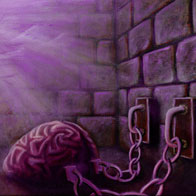
In any case, for the system of oaths to be an effective instrument rather than simply “shackles,” two conditions must be met: 1) oaths must be assumed as a result of carefully considered decisions (ideally — they are given by a Master to a student in accordance with his individual characteristics, although they can, of course, be taken independently), and 2) they must be observed without fail, regardless of any obstacles or difficulties.
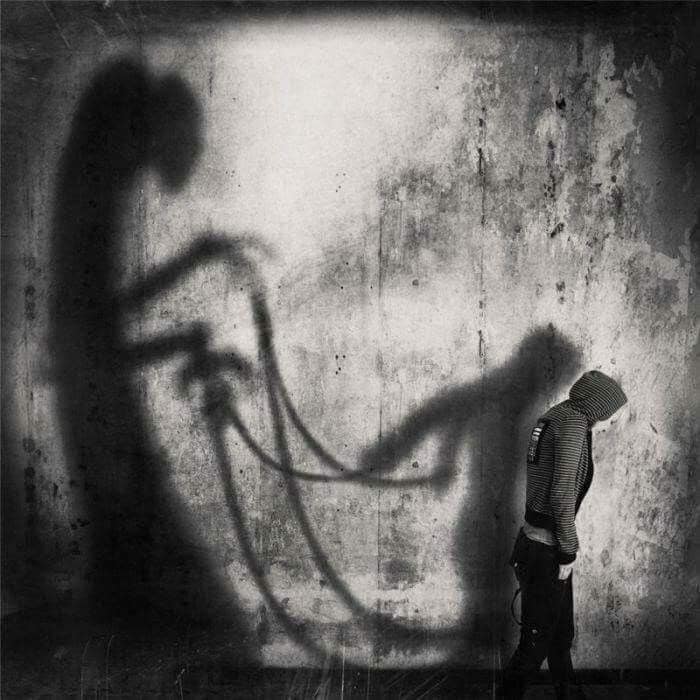
If oaths are assigned poorly, they become merely another prison for the mind and lead to the growth of the shadow; when they are broken, the stream of desires “bursts” out like a river that has broken a dam and destructively affects the structures of the psychocosmos. For a Magus, faithfulness to his word even in less crucial matters is a cornerstone of his effectiveness (as they say, it is easier to cancel the sun’s course in the sky than the word of a Magus), and in the case of oaths, this rule is multiplied many times over.
Probably, the integration of the freedom/order binary of manifestations of desire can be achieved without a system of oaths, by other means; however, the tradition’s experience shows the high effectiveness of this tool when it is used correctly.


To know oneself from within oneself, appoint from without and observe within oneself. It’s a mess.
The article seems written just for me. Thank you! To establish such a personal code (like Dexter Morgan’s) keeping a personal diary is very suitable, even if you never reread it later. The recorded vow somehow is better assimilated by consciousness.
But what if there is simply no way to realize your desire for one reason or another? Can one avoid accumulating a shadow?
I love this blog. Everything is so neatly arranged. A pleasure to look at. Not a single unexplained moment, despite the practically unfamiliar syntax with many new words.