
Langoliers
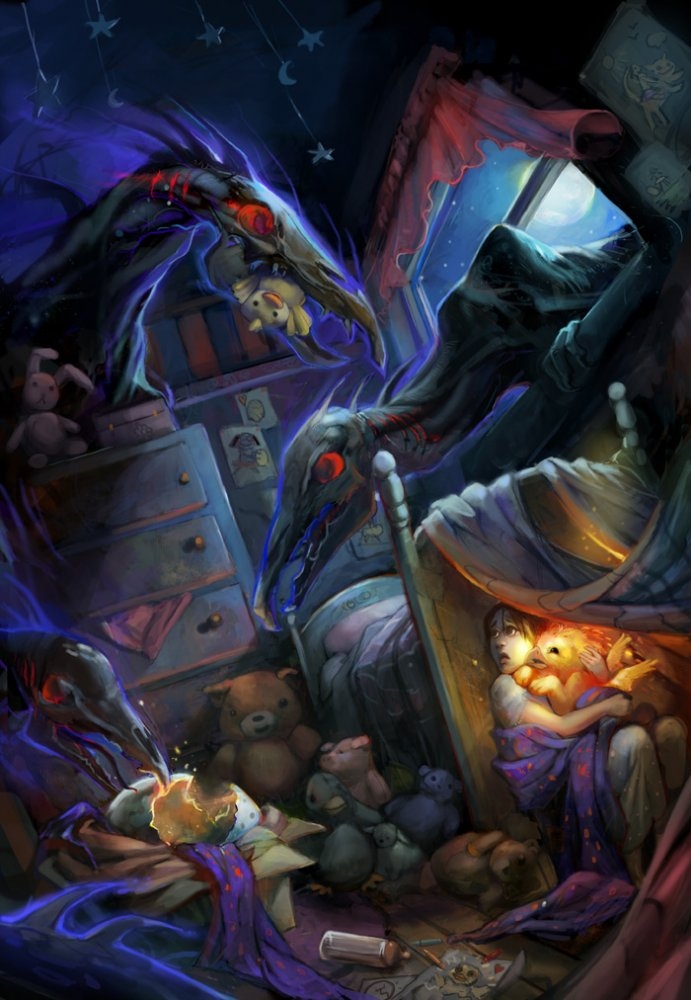
One of the figures popular in modern mythology is a grim spirit that serves as the “sanitary orderlies” of incarnated worlds and sets in motion the disincarnation of beings. The modern mind has grown accustomed to calling them “flyers,” following Latin American writers; their traditional name is Galla (Gallu). Popular culture calls them “Grim Reapers” (Eng. Grim Reaper — “Grim reaper”), but I prefer the name S. King gave them —Langoliers.
Mythology built on CC’s books often confuses the Langoliers with the Parasites of mind, though traditional understanding keeps these predators distinct. The decisive point is their position in relation to the mind, the Psychocosmos: the Parasite of mind dwells within it, while the Langoliers remain outside. Both feed on the mind’s energies, and that is what breeds the confusion. The difference is stark: Parasites of mind compel one to surrender energy; Langoliers feed on what the mind has already lost, or can no longer use.
We have already said that the Langoliers take a direct part in disincarnation, stripping the conduits of mind from the world of incarnations. Yet for all their frightening work, they are not entities “hostile” to the universe. They are necessary to it — as a protective element.
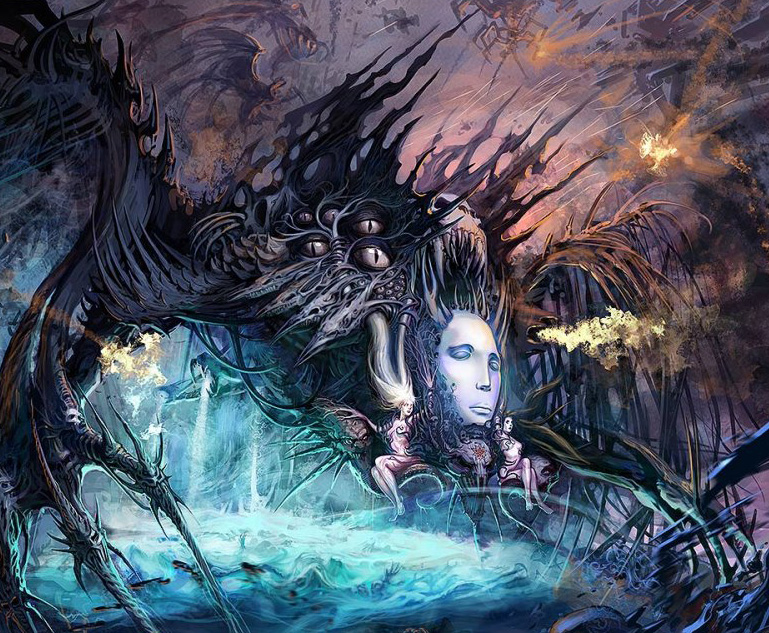
The necessity of such an element follows from a simple fact: every active act leaves an imprint in the World Passive Medium— a reshimo— which, by the Law of Analogies, preserves a connection with the mind that produced it. Interact with the imprint, and you can interact with the mind behind it as well — including stealing its energy. The inhabitants of the Qliphoth, deprived of the ability to generate Power, exploit this relentlessly. Therefore the primary condition for preserving the integrity of worlds is the removal of the mind’s imprints from the Passive Medium. This is exactly what the Langoliers do: they return the Passive Medium to a “clean” state by severing the links between the mind and its imprints. That is why S. King’s analogy strikes true: the langoliers “devour the past.”
Such work can feel unpleasant and even traumatic. For a mind fixated on its past, the “gnawing through” of that bond is painfully direct. In many cases this devouring also slows movement, stripping the mind of springboards built from past achievements. Yet if the bond remained intact, the losses would be far greater — only less noticeable.
Every action, every manifestation of will is subjected to the Langoliers’ “cleanup.” Like burying beetles that consume carrion and prevent an epidemic, the langoliers devour “dead” deeds, saving worlds from the invasion of Qliphothic entities.
The perception of the Langoliers’ presence can unbalance the mind. A clear grasp of the necessity of their work is what allows the Magus to recover composure and continue the Way in such frightening company.
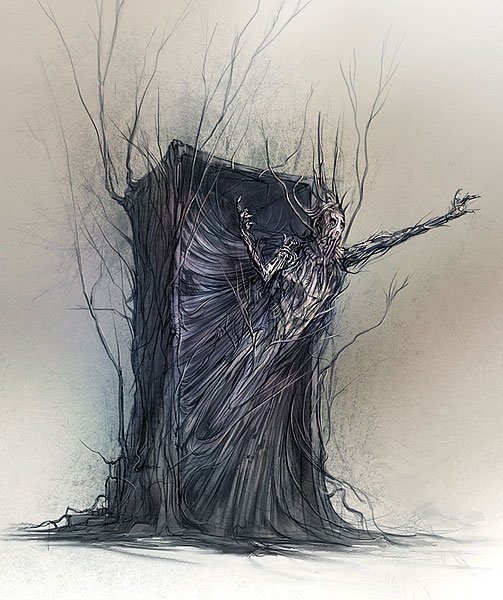
One of the figures popular in modern mythology is a grim spirit that serves as the “sanitary orderlies” of incarnated worlds. The modern mind has grown accustomed to calling them “flyers,” following Latin American writers; their traditional name is Galla (Gallu), but I prefer the name S. King gave them —Langoliers.
Mythology built on CC’s books often confuses the Langoliers with the Parasites of mind, though traditional understanding keeps these predators distinct. The decisive point is their position in relation to the mind, the Psychocosmos: the Parasite of mind dwells within it, while the Langoliers remain outside. Both feed on the mind’s energies, and that is what breeds the confusion. The difference is stark: Parasites of mind compel one to surrender energy; Langoliers feed on what the mind has already lost.
We have already said that the Langoliers take a direct part in disincarnation, stripping the conduits of mind from the world of incarnations. Yet for all their frightening work, they are not entities “hostile” to the universe. They are necessary to it — as a protective element.
The necessity of such an element follows from a simple fact: every active act leaves an imprint in the World Passive Medium— a reshimo— which, by the Law of Analogies, preserves a connection with the mind that produced it. Interact with the imprint, and you can interact with the mind behind it as well — including stealing its energy. The inhabitants of the Qliphoth, deprived of the ability to generate Power, exploit this relentlessly. Therefore the primary condition for preserving the integrity of worlds is the removal of the mind’s imprints from the Passive Medium. This is exactly what the Langoliers do: they return the Passive Medium to a “clean” state by severing the links between the mind and its imprints. That is why I like S. King’s analogy: the langoliers “devour the past.”
Such work can feel unpleasant and even traumatic. For a mind fixated on its past, the “gnawing through” of that bond is painfully direct. In many cases this devouring also slows movement, stripping the mind of springboards built from past achievements. Yet if the bond remained intact, the losses would be far greater — only less noticeable.
Every action, every manifestation of will is subjected to the Langoliers’ “cleanup.” Like burying beetles that consume carrion and prevent an epidemic, the langoliers devour “dead” deeds, saving worlds from the invasion of Qliphothic entities.
The perception of the Langoliers’ presence can unbalance the mind; a clear grasp of the necessity of their work is what allows the Magus to recover composure and continue the Way in such frightening company.

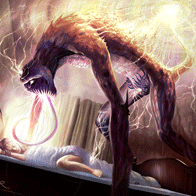


As far as I understand the mythology based on the book of K.K. (more precisely, just what is written there), then the fliers are directly the predators, and the “parasite of consciousness” is the method of this flyer milking a person. That is, it is the flyer who whispers in your ear “act inefficiently”, as is written in the book (in the link you mentioned): “They throw us meaningless problems that stimulate these spikes of awareness…”
Let me immediately quote an effective way to fight 🙂
“Only discipline can repel it… Magicians understand discipline as the ability to calmly resist adverse circumstances that do not enter our calculations. For them, discipline is an art, the art of unwavering resistance to infinity, not because you are strong and unbending, but because you are filled with reverence.”
“They found that if you load it with inner silence, then the foreign device evaporates, thereby allowing the one who practices this to fully convince themselves of the foreignness of the mind, which, of course, returns, but not as strong, after which the removal of the flyer’s mind becomes a habitual task. This continues until one day it evaporates forever.”
Parasites feed on dispersed energy and contribute to its dispersion… “Flyers” feed on dispersed energy and contribute to its dispersion. By their goals and nature of actions, as well as the methods of fighting them, it is quite logical to combine them.
An interesting distinction is that a parasite is harmful by default, but if learned, it can be utilized, while “flyers” are “unpleasantly useful” in themselves, but if learned, one can rid oneself of their company. Method: cultivating true desires (integrity of the self) and consistency in implementing willful impulses (unyielding will, intention).
Such a combination indeed has some basis. But differentiation is also useful, as it helps to separate some characteristics important for practical purposes. Moreover, Langoliers do not “force” the dispersion of power, although they may sometimes prompt this dispersion.
I really like Stephen King. He is my favorite writer. In my opinion, he is one of the best writers of our time. And I really like your articles, your thoughts, your perspective on things and phenomena. Does this mean that our Monad resonates? (If the thought seems right to me, then it aligns with my vibrations.) Or is it just my awareness parasite that flatters my ego? After all, it is certainly pleasant to “resonate” with smart people.