
Banishment Rituals
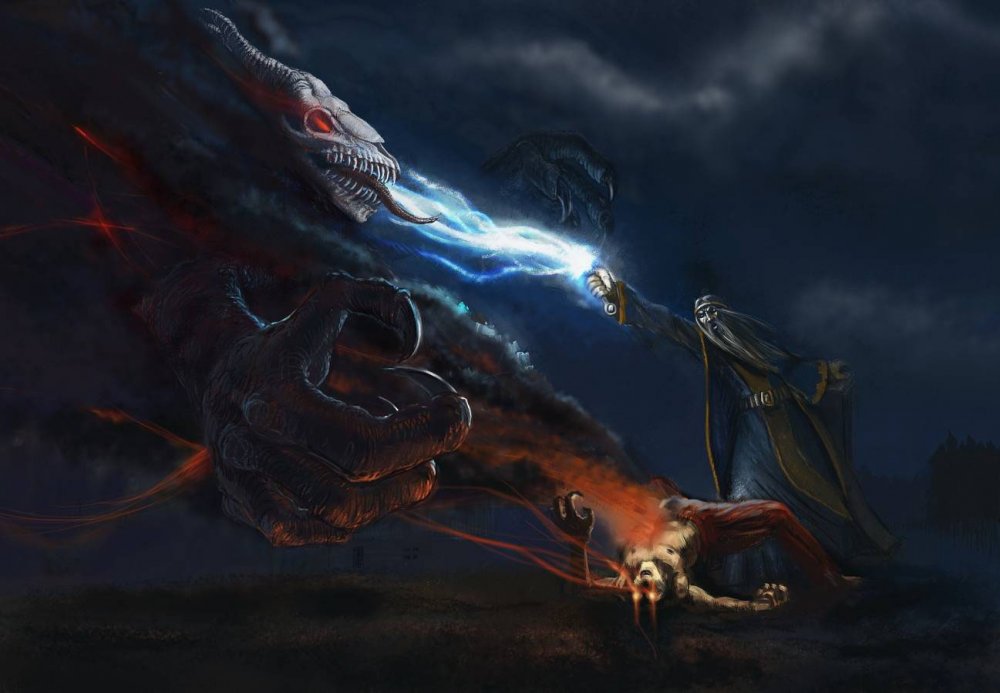
Every Ritual must include the rejection of forces. Every performance includes this act — either as Purification, as Releasing, or as both at once.
Even so, this banishing component usually draws far less attention than the component of Attraction, except in those workings where Banishment constitutes the central meaning of the Ritual itself.
This lack of attention to Banishment not only commonly explains the insufficient purity of energies in a Ritual; it also often provokes one form or another of possession.
In antiquity, the idea of ritual purity and the means of attaining it ranked among the cornerstones. Over time, people paid it less and less heed, until Magic reached its modern condition, where one often hears arguments about the “superfluity” of banishment spells. No wonder this mood correlates with the widespread inspiration of Magi and Masters by predatory forces.
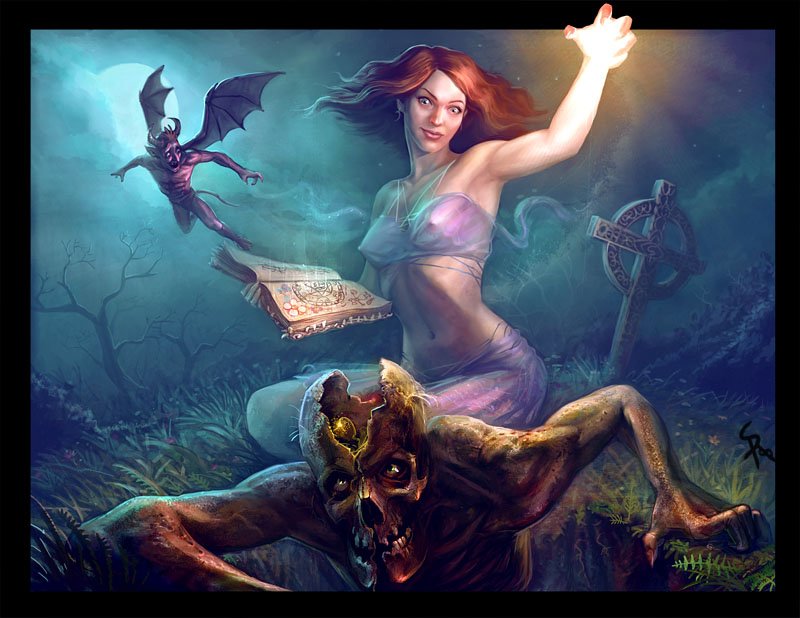
For the disciplined Magus, however, Purification and Banishment are not secondary parts of Rituals. On the contrary, the operator spends most of his effort on them.
Incantatory practices aimed at banishing alien or hostile forces from the space of the Ritual always work, in one way or another, to switch off the influence of these forces on consciousness or on an object by blocking that influence with a stronger influence that runs in the opposite direction and accords with the design of the Ritual.
This never involves a complete removal of alien influences. It involves only a more or less prolonged exit from the zone of their jurisdiction.
Two methods achieve this.

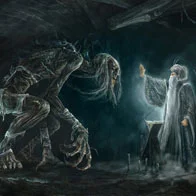
Priests of Mesopotamia developed the first method. It works more effectively, but it also carries greater danger. The practitioner brings the forces to be banished into their most manifest state and then sharply and completely blocks them with superior influences. The incantation begins by carefully and in detail listing the names and properties of the agents destined for banishment. This draws them into a field illuminated by waking consciousness. After they have been fully disclosed, the practitioner calls a Power capable of completely removing their influence from the field of operation.
This action resembles the surgical removal of a tumor: the growth is first carefully isolated and then excised.
The classic example of such an incantation is the famous Sumerian Incantation of the Seven. It first enumerates the properties of Those whose offspring is strange, and then banishes them by the Power of Heaven, by the Power of Earth.
This approach truly works with great force, but it demands immense strength from the enchanter, and no less Authority. It also carries the danger that the spirit of darkness brought into the illuminated space will resist and, at the slightest mistake, turn from an outcast into an invader.
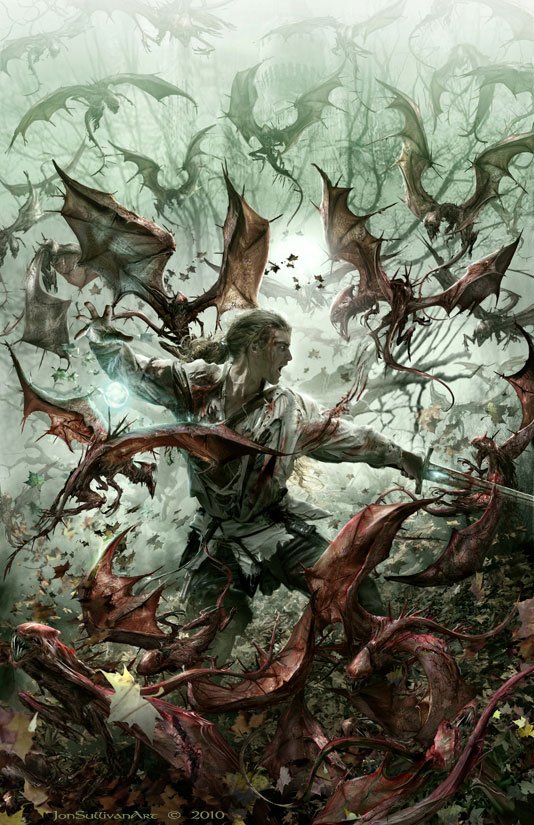
That is why a different approach is now used far more often. Ancient Egypt developed it, and it entered European Magic through the Semitic gate.
This approach consists in the placing of guardians. The practitioner stations a source of neutralizing force at every point from which an intrusion of an alien force is expected — using the Name of the Most High, an angel, or an angelic Choir. The enchanter does not contact the banished force directly, and therefore runs far less risk.
Solomon’s Incantation of the Seven provides an example. Each of the banished Demons is constrained by the Name of God and of an Archangel, for instance: “In the Name of Yahweh Tetragrammaton, let Michael command you, Havaiot…”
This approach is safer, but it is also less effective. Danger always remains that one of the points of intrusion will go unnoticed, no guardian will be posted there, and the banishment will therefore proceed incompletely — or not at all. Moreover, the lack of direct contact with the banished force grants the operator a false sense of safety. If the banishment fails, that illusion can betray him and become the cause of possession or other harm to the operator.
Whatever approach the Magus chooses, Banishment must be carried out thoroughly, attentively, and without negligence. This not only prevents unnecessary problems and dangers; it also increases the effectiveness of the performance by ensuring greater homogeneity of the energies engaged in the Ritual.
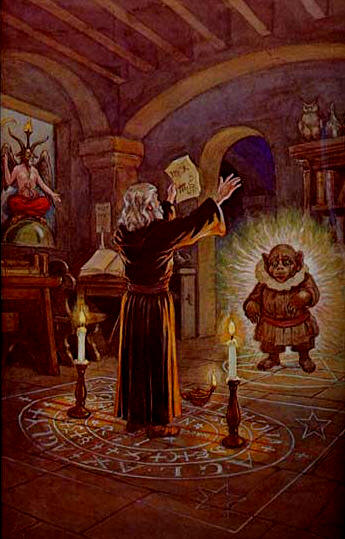



It’s useful for those who summon spirits. Sorry if this isn’t on topic – I’ve always been curious, of course, a successful summons carries power and strengthens belief in oneself, but what do the wizard and the spirit talk about if the contact was successful? 🙂 I don’t think it’s something personal, or for example where a treasure chest with gold is buried 🙂 There are many ways for a wizard to gain information… I’m just curious, do they converse or is it just a summons – hello Spirit – banishment 🙂
Enmerkar, can Crowley’s MRP be considered an effective exorcism ritual? By your classification, it will belong, as I understood it, to the second group… I would like to know your opinion on this ritual!
“MRP” is, firstly, not a Crowley ritual, but a ritual of “The Golden Dawn.” Secondly, it is designed to activate the current of power within the operator themselves, and can be used both for summoning and banishing purposes depending on the context.
Thank you for such important information!