Are the gods alive?
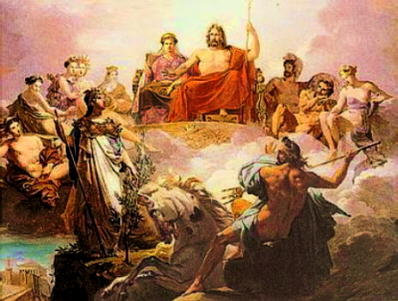
In esoteric circles, it has become a mark of good form to treat the gods as inhabitants of the psychocosmos — as “archetypes of the collective unconscious.” It is now considered proper to say that the gods are “basic and composite role models inherent in every human being.” Mythology, once a direct account of the gods’ existence, has been reduced to a set of instructive stories describing how models of mind function.
The claim is that the “undeveloped” thinking of ancient man projected the regularities he noticed within himself and reified them as gods. Yet the ancients were not more foolish than modern people — on the contrary, in many respects their grasp of the order of things surpassed ours. For them, the gods existed both within and outside the mind; they were never taken as mere projections. The psychocosmos and the macrocosmos were understood to obey the same principles of the universe — principles expressed as the gods’ roles on the macrocosmic level and as archetypes of mind on the microcosmic. To the ancient person, the difference between a god’s “functions” and his personality was self-evident. We have already said that the functions of the gods are the manifestations of their activity as we perceive it.
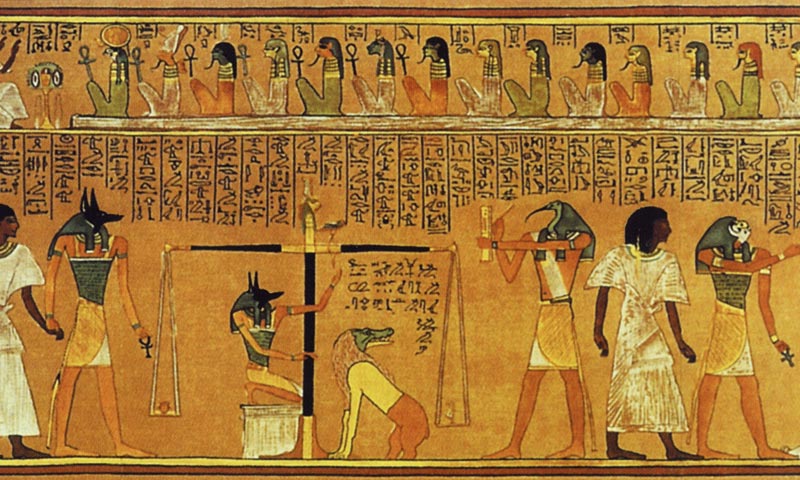
A god’s functions — his specific appearance — are, in a sense, the “clothing” worn by a certain personality. At times this “clothing” is chosen according to the needs of particular peoples who recognize the god’s influence. Shifts in ideas about the gods often reflect shifts in the gods’ own “modes of action.”
At the same time, each god is also a substantial principle: a personality, an individual unit, a being belonging to the corresponding Wave of life. The gods are marked by qualities alien to the human point of view. Thus, we have already said that when activity changes, a god changes his name— and, to some extent, the range of his personal qualities. Yet he does not lose self-identity. This very property grants the gods the plasticity required for interaction with the level of Powers on which they exist.
For the ancient person, then, the gods were a living objective reality not because he lacked any notion of Jungian psychology, but because he understood the principle of analogies that underlies manifestation. The principle of Power, for example, manifested in the realm of the gods as the necessity of Zeus, Odin, Enlil, and so on; yet each of these gods existed separately and independently of the human mind that interacted with them — interaction that, in Sumer, sharpened attention on might, in Scandinavia on frenzy, and in Greece on that god’s dominion.
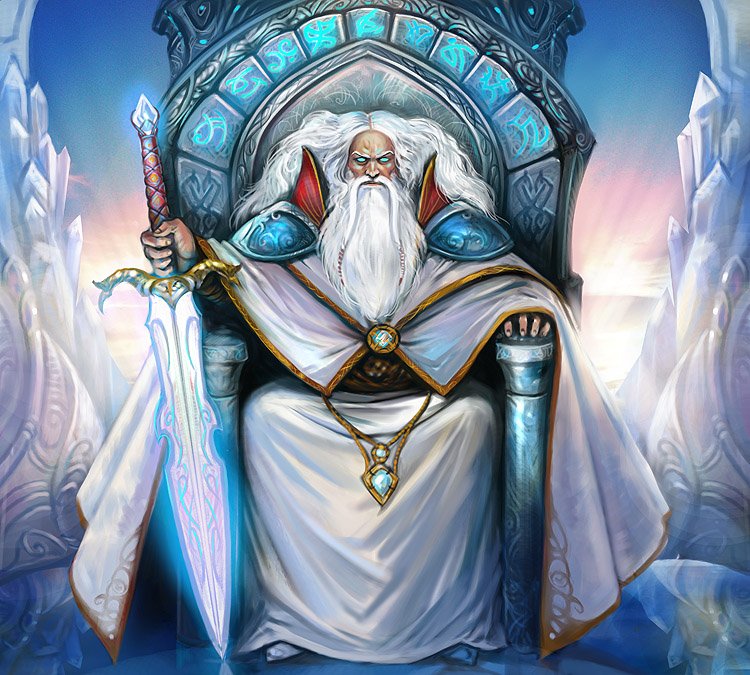

If ‘each of these gods existed separately and independently of the interacting human consciousness’, do they exist (‘are they alive’) even now when human consciousness has stopped interacting with them (or has practically ceased to do so) due to the waning of one religion or another?
Yes, they are alive, regardless of whether people perceive them. The belief in gods only affects whether they will be perceived and in what form, but not their very existence.
Do pagan deities contact modern magicians? Are there documented cases? How might Wotan look in the world? To what do his attributes transform? A baseball cap, a mobile phone, and a notebook with verses… one eye is in place but squints and seems lifeless, the other emits cosmic cold… looks like a vagabond, says he is a Ukrainian labor migrant…))) Is that right?
Yes, the gods sometimes appear today. And it’s not as grotesque as it might seem—they are as majestic as before.
I have seen up close one of the most powerful currently living magicians – a very simple guy… no pretensions. Maybe the gods don’t show off in everyday life?)))
They are here, they are among us!))))))))) They…
– When you come next time, the fire in the temple will be burning – said the god of fire.
I was overwhelmed with doubts, because in my opinion, only one person could light the fire in the temple, and he had no intention of doing it for me.
However, upon my next visit, the fire was burning in the temple. It was lit by another person, who found the strength and right to do so.
The god of fire fulfilled one of the promises given to me.
Thus, faith is born. Faith that the god is alive.
Hello, Enmerkar! When artificially creating a matrix of consciousness and saturating it with the power of the attention of people – for example, through the creation of a popular literary or cinematic hero, is it possible that this matrix over time will gain an external, independent point of support from its admirers, gaining with it immortality – turning into a living god? Perhaps you know of similar examples? Or is such a matrix merely a temporary spirit, which ultimately awaits oblivion and dissolution? Thank you.
Hello. Yes, independent life of a tulpa is possible and it can attain independence. But for that, it certainly needs a ‘connection’ to the monadic source of consciousness.
And immediately another question arises – what happens to actors who successfully reproduce a powerful matrix of consciousness? A well-known example comes to mind, that of Heath Ledger, who created an excellent image of the Joker at the peak of his fame and soon after died. Does his soul flow into and become part of the matrix that he managed to reproduce?
Also, Travis Fimmel, who played Ragnar Lothbrok in the series “Vikings,” said in an interview that during shooting, he was seemingly led by some force – that it was not him, but someone or something acted through him – that’s why he was able to create such a vivid image of the jarl, which brought enormous popularity to the series and infused a large amount of power from fans into the revival of northern myth.
Thank you.
Here, we can rather speak of a mixture of energy flows and a ‘cross’ of matrices, similar to what happens during the ‘mixing of souls,’ that is—perceptual flows created by different focuses of consciousness.