The Labyrinth of the Minotaur
The development of the Psychocosmos — the expansion of the mind and its filling with Light — is a global process that embraces all levels and strata of being.
At the same time, like any dynamic process, the development of the principle of mind proceeds according to the tetragrammatic principle, and therefore includes four distinct “stages,” levels, or layers: the “mineral,” the “vegetal,” the “animal,” and the “human.”
This is true for any degree of synthetic cognition: we see these four levels in surrounding nature; these same levels are present in the human mind itself; by them one may also describe larger-scale hierarchies (spirits, angels, gods).
At the same time, confusion in terminology often arises from insufficient clarity in descriptive efforts — efforts that must still be made, since without a clear map of the terrain it is impossible to advance purposefully.
For example, proceeding from formal features, the “angelic” level of mind is often placed above the human, and the “divine” higher still.
One is misled by the manner of analogous descriptions accepted in antiquity. One must remember that by “human” mind the Myth names the Transforming mind, and not merely the mind inherent in the biological species Homo sapiens. We have already said that, from this point of view, angels possess lower levels of mind, corresponding to the mineral (“eikhalot”), vegetal (“levushim”), and animal (“malakhim”) layers.
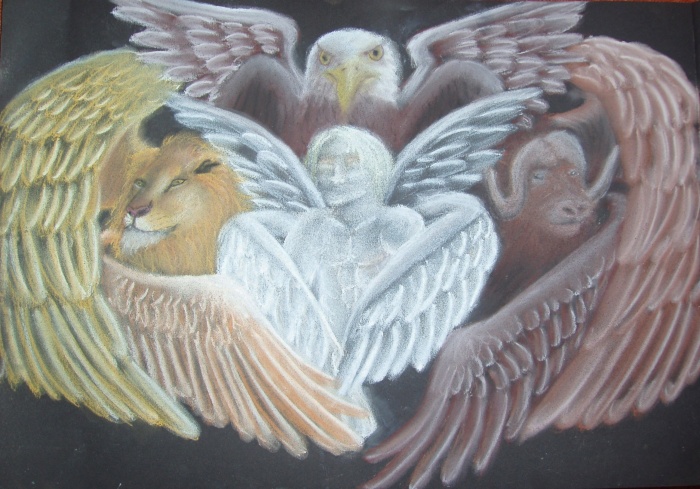
Therefore the Magical myth insists that it is precisely the human level of awareness that is the highest possible, while also indicating that in man himself this level is developed extremely weakly — more precisely, it exists only in an embryonic state and requires development — whereas in other creative hierarchies (for example, the Aesir) this level is developed to a greater degree.
Each particular mind, each center of individuation — both one supported and one deprived of the Monad — includes all four layers; however, one of them is always determining.
In other words, angels are not devoid of participation in creativity; yet their creativity is inspired from without, and their own creative level remains subordinate. Therefore the Myth names them “ministering” spirits.
In a similar way, the human mind (in the narrow sense), although by its very nature centered upon creativity, nevertheless — owing to the underdevelopment of the latter — is usually governed by the animal, vegetal, or even inert layer of the Psychocosmos.
Therefore the well-known magical maxim — “for liberation, a god must become a human being” — has several levels of interpretation, one of which points precisely to the central role of creative activity in the process of self-knowledge.
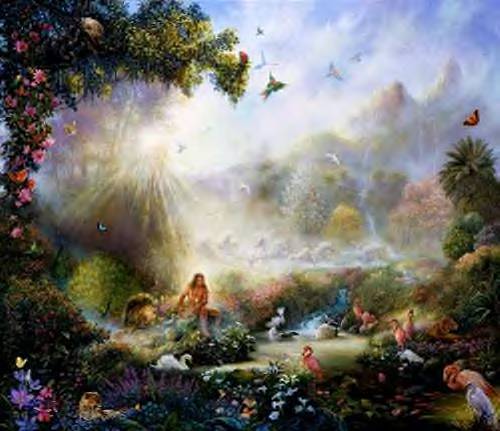
Moreover, the Magus must clearly understand that his mind is an entire world: richly strewn with stones, entwined with plants, and inhabited by animals (the Near Eastern Myth not without reason calls the mind in its fullness “Gan Eden” — a garden, an “enclosed place”), which must be “cultivated,” brought into order by the creative element — by the human level of mind.
And encounters with many of the inhabitants of this “garden,” both rightful and those who have intruded there, can be painful and traumatic. This is reflected in many myths, such as the well-known myth of the Minotaur, without victory over whom Theseus could not receive instruction from Daedalus. This myth has important mysterial significance even today: it describes with sufficient precision the mind’s journey into its depths, and it can be interpreted from both psychological and magical standpoints.
In conclusion of this conversation, let us note once again that the human mind in the broad sense is precisely that focal point in which the “primordial principles” are conjoined — “spirit” and “matter,” that is, the active and passive states of being/mind. And the task of the Magus is the purification and clarification of this focus; the liberation of it from the enslaving influence of both one’s own and external interferences; the transformation of it from a gloomy labyrinth into a flowering garden and the development of it as a perfect instrument of knowledge and creativity.
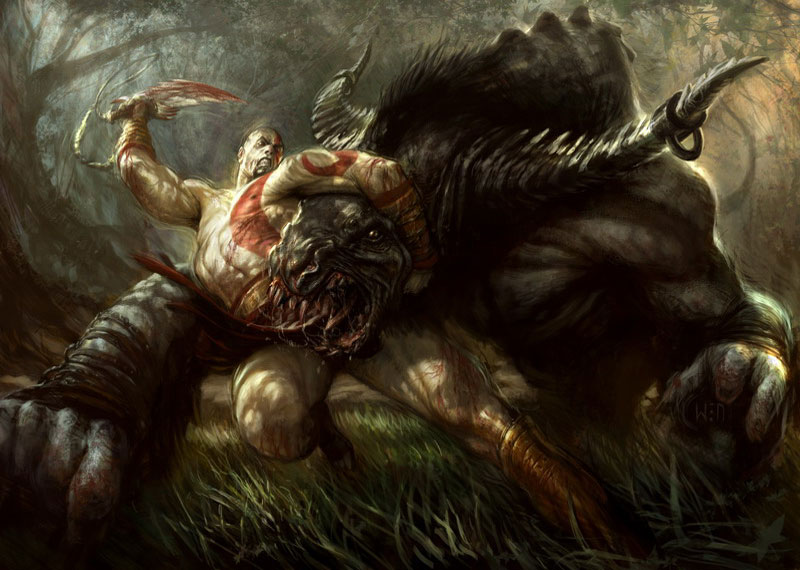

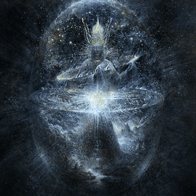
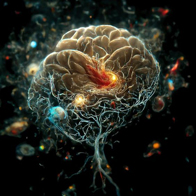
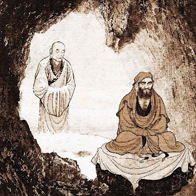
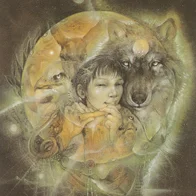
Interesting analogies between the legend and the dream from the movie “Meteor”. Theseus goes into the labyrinth (of his consciousness) to kill the monster-Minotaur living there and stop the flow of victims devoured by the beast. He is held and returned from the Labyrinth by the thread of Ariadne – his connection with his beloved. Who is the Minotaur? 4 thousand years ago it could have been a deity with a beastly beginning. Throughout the ages, the bull has been a symbol of sacrifice. Theseus brings this sacrifice – a ransom, to be the master of his consciousness, to be able to turn the terrible labyrinth with many dead ends into a cultivated garden. In the movie, instead of the Minotaur, the hero discovers Christ on the cross in the Labyrinth. He nailed Christ, and waves of redemptive blood drown everything around. It’s interesting how the image of sacrifice has changed. Maybe back then – to overcome the beastly within oneself, now – the divine. And to be human. Since such an incarnation has emerged.
There is little difference between the “beastly” and the “divine” if both are perceived as foreign with respect to consciousness 🙂 Consciousness needs to find within itself – itself, not gods or monsters. And worshipping something outside oneself, as well as following instincts – is equally alien to consciousness.
I think my consciousness is the entire garden, with labyrinths, Minotaurs, stones, flowers, and various other legitimate and invading inhabitants. You say that I will find myself there. How is that? Is that my twin? What would that look like in the pictures of the myth? Who would Theseus meet there?
That is correct. It’s all – psychocosmos. Theseus – the daytime, active consciousness – gained dominion there; he became the master of his psycho-universe by killing the Minotaur.
So, what is the higher self and where is it? Is it part of human consciousness? And does it not possess more information than a person due to a greater number of receptors?
It doesn’t matter what we call the “observing” part of consciousness – “Higher Self”, “SAH”, “Atman”, or just – a temporary point of view of a changing flow. What matters is that there is cosmos in consciousness, order, such that the flows existing there do not conflict with each other, do not fight with each other, but, on the contrary, facilitate peace and harmony. Whether we consider these flows to be substantial or void matters not; what matters is the achievement of harmony between them.
So, in the magical myth, everything is in consciousness? And the classic scheme of the development of higher bodies through a series of incarnations does not fit into the myth? And then whose consciousness remains after the incarnation?
Why not? Not “everything is in” consciousness, rather – everything is perceived, described, and classified by consciousness: https://en.enmerkar.com/magus-way/soznanie-i-illyuziya-lichnosti, https://www.enmerkar.com/en/myth/who-sees-this-dream
Then the first sentence talks about the expansion of the personality’s consciousness, which leads to the expansion of the consciousness of the monad? In that case, everything connects; the question is only where to place the consciousness of a star or a planet. In which layer? And the second from this opera – the final stage of the expansion of the human monad. Well, at least a part of this process. That is, what are the boundaries of the physical manifestation of the human monad. Specifically, the stage of the sun is whose layer?