
Entry and Initiation

Opening the Gates of Power is a mandatory stage in the development of consciousness and in its transition to a new qualitative level.
We have repeatedly shown that the development of consciousness is the sequential opening of one door after another, the filling of one potentiality after another with actuality. In this sense, one can speak with equal accuracy of the “acquisition” of Power or of its “awakening,” because both images describe one and the same process, only from different angles.
The moment of “opening” the vessel — that is, the emergence of access to new reservoirs of Power — can be a more or less revolutionary event. Sometimes it triggers global regroupings within consciousness; at other times it unfolds almost imperceptibly for it.

Traditional schools and lineages of Magic have always paid special attention to this moment, because the further Way of consciousness depends on which of the possibilities of development will be opened.
They considered it necessary, above all, to open those key elements of consciousness that determine the individuality of the Way. The Magi noticed that predators expend enormous efforts precisely on defending these “outposts” of consciousness, because the more clearly the individuality of a being manifests, the harder it is to keep that being in subjection. Accordingly, as it discovers its distinctive features, its gifts, and its natural limitations, consciousness takes a colossal step toward its freedom.
Every Way of developing consciousness insists, first of all, on the need to “become oneself.” Despite its apparent simplicity and even banality, this event — the finding of oneself— is a crucial stage. Without exaggeration, it is a being’s second birth: the birth of its individuality.
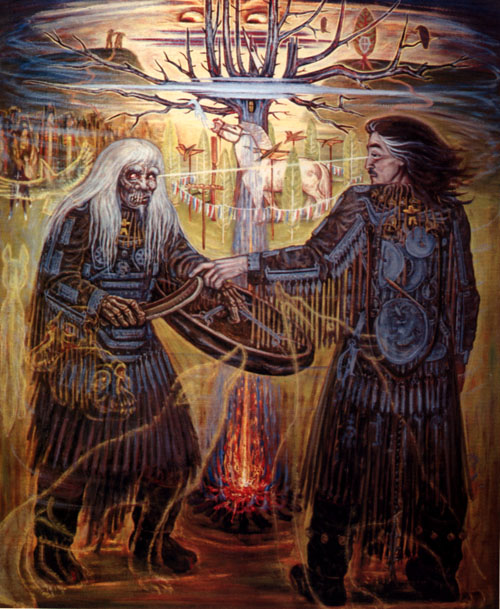
As long as consciousness is rich in “dark corners,” in elements it keeps silent about and ignores, it remains an ideal environment for predators and parasites.
“To make gold, you need gold.” Independent opening of the Gates is therefore complicated by the danger of illusions and self-deceptions, toward which destructive elements push it. That is why all Ways of developing consciousness point to the importance of initiatory events that reduce the danger of a mistaken choice.
In principle, one can open any Gate of Power on one’s own; one can attain any ability and any gift on one’s own.
Yet a fundamental difference separates “self-initiation” from traditional Initiation.
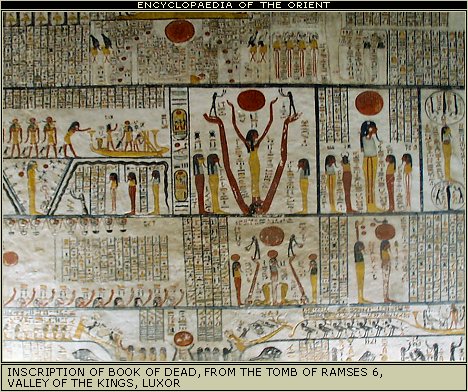
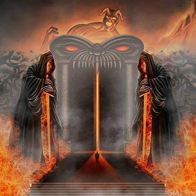
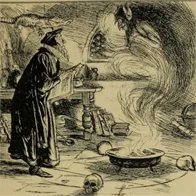
The ancient Egyptians already observed that each Gate of Power is guarded by its own “Gatekeeper” (Ostiary; in modern times “planetary gatekeepers” were also called “Consiliaries” — “advisers,” implying the possibility and necessity of dialogue with them in order to pass through the corresponding Gates) — a being that lets no one through without special permission and, conversely, opens the Gates on the condition of correct address.
Most often, people imagined the Consiliary as a special goddess— a spirit or personification of the Gates — who manifested in a threefold way: as Gatekeeper, Guard, and Herald. The Gatekeeper’s task was to identify the one approaching the Gates; the Guard’s task was to ensure that no random person entered them; and the Herald recorded (“announced”) the fact of passing through the Gates.
Funerary texts mention 21 “Secret Portals of the Palace of Osiris in the Field of Reeds,” each of which has its own name and epithet. Deities with zoo-anthropomorphic features guard these portals, and artists often depict them sitting on the ground with large, threatening knives. Some of these portals bear fearsome names, such as the 14th Gate — “Lady of Wrath, Dancing on Blood,” while others seem harmless, such as the 3rd Gate — “Lady of the Altar.” The guardian gods also have frightening names, for example, “Devourer of Sinners” and “He Who Lives on Maggots.” Yet some texts do not mention their names directly.
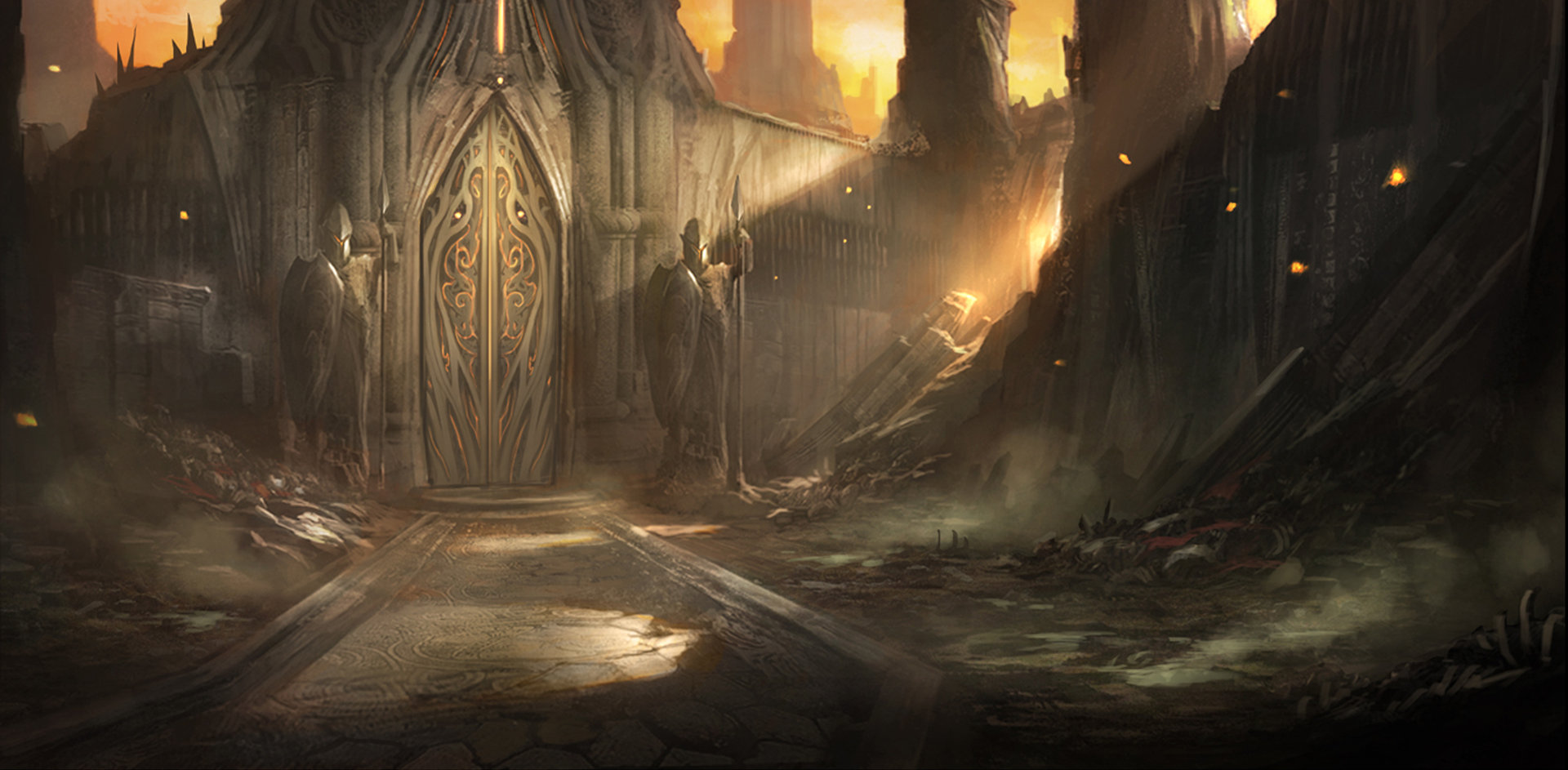
All Egyptian Magic aimed at teaching interaction with these Spirits or Powers of the Gates. The Egyptians (and other peoples — for example, Tibetans with their concept of the Demons of Bardo, and Orthodox Greeks with their teaching about the “tollhouses” that block the road to Heaven) attached great significance to overcoming these Gates after death, in the process of disembodiment. Yet development of consciousness in life also requires overcoming the Gates, and therefore knowledge of the Gatekeepers.
However one understands these Gatekeepers — whether as manifestations of dead ends within consciousness itself or as forces external to it — their task is to maintain consciousness in its current state and to limit the possibilities of its development.
Indeed, one cannot awaken, say, the sphere of Yesod without passing by Shad Bershemoth ha Shartatana, nor the sphere of Tiferet without overcoming Sorath. One cannot reach awareness power without passing by Gismael; nor can one penetrate into the depths of Knowledge without meeting Taftartarath. Accordingly, both the attainment of the degree of Adept and the awakening of creative activity require interaction with Sorath and Nakiel. It is crucial to remember that the Gatekeeper is not merely an “enemy” one should defeat, but a force one must tame.
That is why Magical Lineages and Schools, from ancient times, developed schemes for passing through the Gates that they called “degrees of Initiation,” achieving the greatest effectiveness with the least danger.
One should not idealize these schemes. Yet everyone who has encountered, for example, the effectiveness of the Golden Dawn’s Neophyte Ritual or the Kolo of Veles discovers that seemingly simple actions and their sequences bring consciousness into contact with Hierophantic forces. These forces conduct it through the Gates and open new possibilities and perspectives of development.



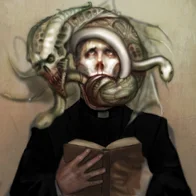
If I understand correctly, then the gatekeepers, in essence, are the distractors of consciousness, guarded by predators. Destroying each of the distractors allows one to defeat a specific gatekeeper (subdue the power).
My addition:
Through knowledge of one’s cosmogram, it is possible to independently pass through certain gates.
“… it is important to remember that the Gatekeeper is not just an ‘enemy’ to be defeated, but a force that needs to be tamed.”
And are there other options to “understand, prove”? Does the force only obligate to violence? Then what about the words on purposefulness, impeccability, and truth?
What do you mean by the words ‘gaining the Gift’?
Gaining the gift means opening a new possibility.
But gaining the gift or ability does not yet allow for the full use of the opened opportunity?
So what then allows one to utilize the opportunity?)
Generally, at least somewhat using the opportunity allows its opening, but fully – development, unfolding. And finally, the effectiveness of use depends on the degree of development and mastery (control over the possibility).
And how do you pass them: ‘Indeed, you cannot awaken within yourself, say, the sphere of Yesod without passing by Shad Bershemot ha Shartatana, and the sphere of Tiferet—without overcoming Sorata.’? I understand that we are talking about the so-called ascent on the tree of sephirot? Please tell me where to read about the practice of passing through the tree. As for the klippot, there is enough Grant, Koetting literature. I noticed that many worthy Western texts are not translated.
https://www.enmerkar.com/en/way/up-the-tree