Weight and Measure
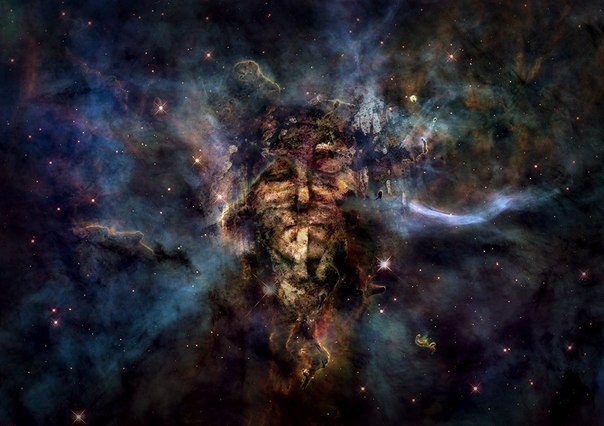
When speaking of mind, we often resort to “measures”: we speak of the “breadth” and “depth” of mind; we speak of the “weight” of the soul. And although it is obvious that these terms are not literal, what stands behind them may still remain unnoticed.
Mind — the Psychocosmos — is infinite and immeasurable, just as the macrocosmos is, and the soul is as weightless as light; yet we still apply the language of measurement to what cannot be measured, and try to define what cannot be defined. To understand why this approach is legitimate, we must recall that the Myth under consideration speaks of two states of reality — potential and actual — and of the Absolute Spirit that stands “behind” and “above” them: beyond representations of being and non-being, beyond the concepts of time and eternity, space and infinity.
At the same time, it is clear that what is measurable is what is determinate and manifested. Therefore, when we speak of the “breadth” or “depth” of mind, we mean not a property of mind as such, but the degree and manner of its actual manifestation. For example, the “breadth” of mind denotes a quantitative characteristic of the energies it perceives, while by the “depth” of mind we mean the extent to which awareness penetrates the lawful patterns of relations and interactions among these energies. In a similar way, the Myth calls “light” those thoughts and feelings that have the greatest affinity with the individual manifestations of a given mind, whereas those formed under the influence of factors uncharacteristic of that individuality are regarded as “heavy.”
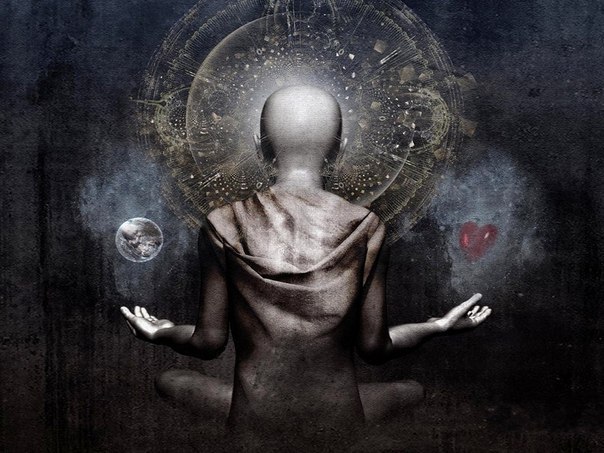
In practice, such a description — despite its relativity and conventionality — proves quite useful, since it allows us to avoid morally charged categories of “good” and “evil” when describing the development and manifestation of mind.
Nevertheless, it also conceals a certain destructor: it creates the illusion that the only possible “evolutive” Way consists in a constant, gradual change merely in “quantitative” characteristics, and it diverts attention from the need for periodic qualitative reconfigurations of mind.
When we speak of mind as such — apart from its degree of manifestedness or actuality — we must understand that we may, with equal justification, regard it as “infinitely large” and as “infinitely small,” since, in and of itself, in its pure nature, mind stands outside the notion of manifestation — awareness, being-aware. Absolute mind is absolutely unconscious; and by striving toward an infinite “expansion” of mind — that is, by thinking about development only from a “positive” point of view — we miss, and thus cast into shadow, the opposite pole: integration, the de-concretization of mind. Properly speaking, the reverse approach — understood as the “calming” or “extinguishing” of mind — is also unbalanced, for it deprives mind of the freedom to be manifested and confines it to the potential state.
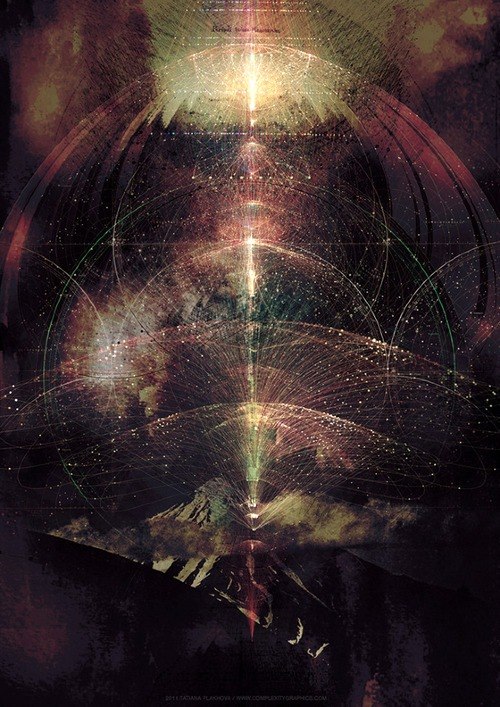
The Magus who strives to realize and actualize their individuality in the mode of manifestation most consonant with that individuality — and in the personality most suited to it — must not forget that individuality itself is elusive and indeterminate. It lies outside the notions of manifestation and action, being only a mode by which the Absolute perceives itself. And just as the Absolute alternates manifestation with immersion in itself, the Magus must alternate periods of activity — their work as a necessary and positive pole — with self-analysis and immersion in oneself, for the integration and assimilation of accumulated experience.
The Magus should not treat their development merely as “expansion and deepening,” understanding that genuine development occurs outside representations of measure and size. It can equally be understood as the actualization of potencies and the potentialization of the actual. In realizing oneself in actions, the Magus does not lose the inward orientation of self-reflection; otherwise, they risk losing equilibrium and falling into empty activity. And in immersing oneself, one does not forget the necessity of self-knowledge in actions; otherwise, one loses the meaning of one’s individuality.

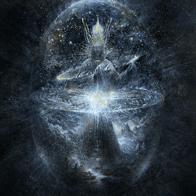
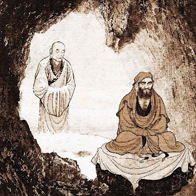

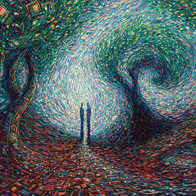
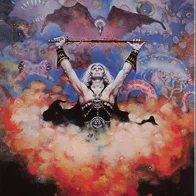
Why is absolute consciousness absolutely unconscious? – Why then is awareness needed? – At every moment, the total awareness of all conscious beings is the awareness of absolute consciousness. At every moment, absolute consciousness generates an infinity of new individual perspectives, replacing those that have already lost the ability to be aware… or maybe to individual consciousness which realizes that there will come a moment when it will lose its ability to be aware and transition into a state of unconsciousness. It seems that unconsciousness is a property of absolute consciousness?
Consciousness is one of the senses. It cannot be absolute, just as sight or hearing cannot be absolute. There is no such thing as absolute consciousness, there are different consciousnesses in different beings. There are simply no correct words to describe that which is not burdened by any specific consciousness and is not a sum of all consciousnesses.
Rational thinking sometimes deprives the ability to know, leads us into frameworks. Absolute consciousness is absolutely unconscious, as it exists outside concepts, outside representations.
Mmm… yes. After reading, I formed a firm opinion about the explanation of good, evil. And also about shadow and light. Indeed, light (good) acts as the stability of the system unlike its opposite side – evil (change), and the coloring serving as an emotional component of choice. Where the comparison of light and soul is generally unclear to me, since we are speaking of different components. Light is the basis of creation, while the soul is one of the subspaces of the world creating the foundation for its manifestation. No souls – no world. No death – no life, as there will be no renewal and enrichment. This is a primitive truth. Regarding ideas and reflections. Ideas are the prerogative of pure light, while shadow is the absence of light, and Shadows are reflections. Light from light is the absence of darkness, shadows, and reflections, which is a stopping in renewal, which will lead to the division of spaces and stasis, just like shadows from shadows.
You talk about the fact that ideas are the prerogative of pure light. But in the last comment, you ask how the embodiment of ideas affects pure light. In my opinion, it is either divine providence, and everything is predetermined (the embodiment of ideas of pure light), or everyone has this light within themselves. Or, a more holistic position, in my opinion, which is present in the blog. About light and non-light.