The Magus’s Tension
In modern colloquial language, “to strain oneself” has become a term of abuse, and the question “Why are you straining yourself?” carries clear reproach.
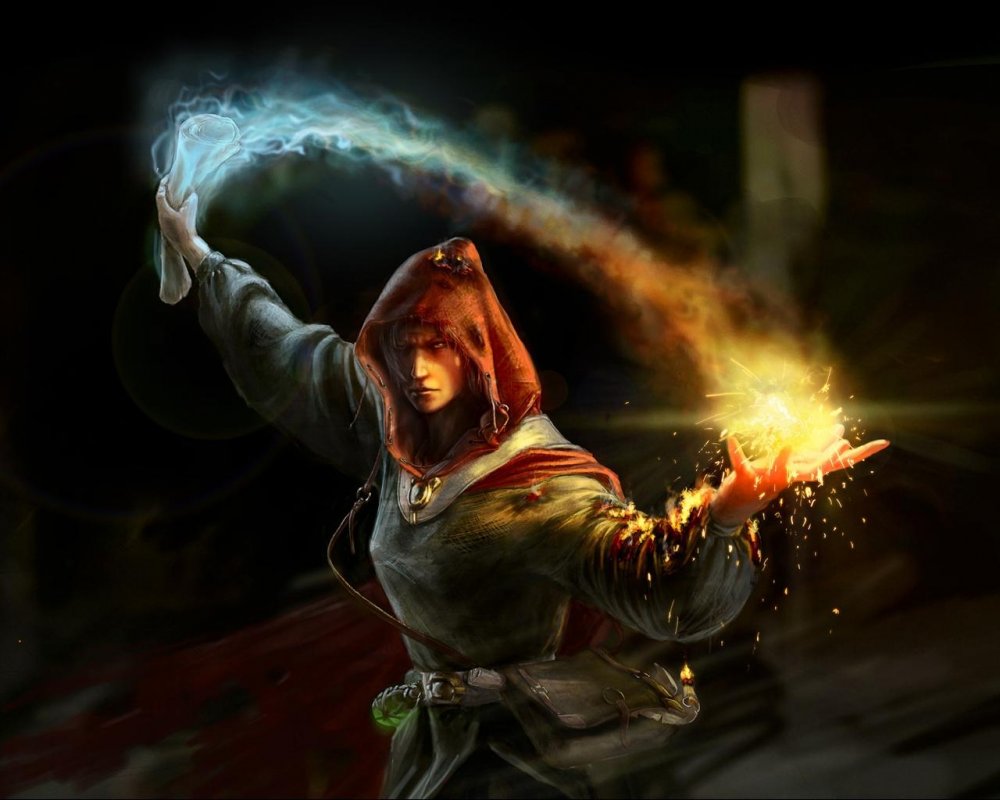
At the same time, a Magus immersed in the thick of his battles must always remain tense and has no right to relaxation.
It would seem that a Magus, locked in constant tension and preoccupied with battle, should look tormented and unhappy — deprived of rest and the simple joys of life.
Yet in practice, Magi engaged with Power usually radiate joy and confidence. And however hard their Way may be, they cherish it infinitely — not out of masochism, but out of the deep fulfillment it gives.
We have already said that, for a human being, the sense of how difficult one’s progress is comes from the perceived “weight” of the life burden one must carry. Accordingly, the heavier the burden, the harder the way, and the more tense and unhappy the person.
For a Magus, however, one thing is always obvious: his burden is, a priori, unliftable, because he must realize within himself — no more and no less than — the entire universe with all its potencies. Therefore the only viable strategy is to place the emphasis not on the burden, but on his own lightness of spirit. It is no accident that the very word “spirit” implies something absolutely light, something with no “rest mass.”
Indeed, people obsessed with the heaviness of their lives usually overlook their own heaviness — their inner disharmony — which often proves far greater than their “life problems.” A person’s soul is so overloaded with inner contradictions, buried talents, and concealed knots that it is under its weight, not the weight of external circumstances, that a person bends on the way through life. And however much one tries to shift responsibility for suffering onto others, circumstances, or the environment, in the depths of the soul one usually knows: the only real problem is oneself.
A simple, obvious way to understand one’s true nature — to discover one’s inclinations, dead ends, and prospects — is precisely to relax. Stop the race. Stop thinking about “what must be done” and “how to look.” Drop social roles; stop and look within yourself — and what is happening inside becomes visible. Of course, in the deepest depth of being there lies a single ocean of the Great Spirit. But slightly higher — where the individuality of being manifests, where this ocean stirs in its inimitable way — there arise attractions that correspond, to varying degrees, to one’s individuality: the seeds of future desires and future actions. Therefore, by “diving” to this depth — or, as they say, by “relaxing in one’s natural state” — the Magus can see who he is in the present moment, how much his personality corresponds to his individuality, and at the same time remember his essential unity with all creation.

At the same time, the soul of the Magus is light and free. He does not war with himself. He is his own ally, and his struggle is a struggle for freedom and self-realization. We have said more than once that the word “struggle” in the context of Magic does not mean a form of connection, nor a binary counterpart to “acceptance.” It means active non-entry into destructive Flows: resistance to what is destructive and brings suffering.
That is why, no matter how much the Magus tenses, he remains relaxed, and his battles are a game he plays— even though the stake in this game is not merely his life, but his very awareness. This is an extraordinarily important and productive state for the Magus: complete alertness against a background of maximal non-involvement in bustle — whether in fights, in setting oneself against another, or in copying and reproducing others’ behavioral models and value systems.
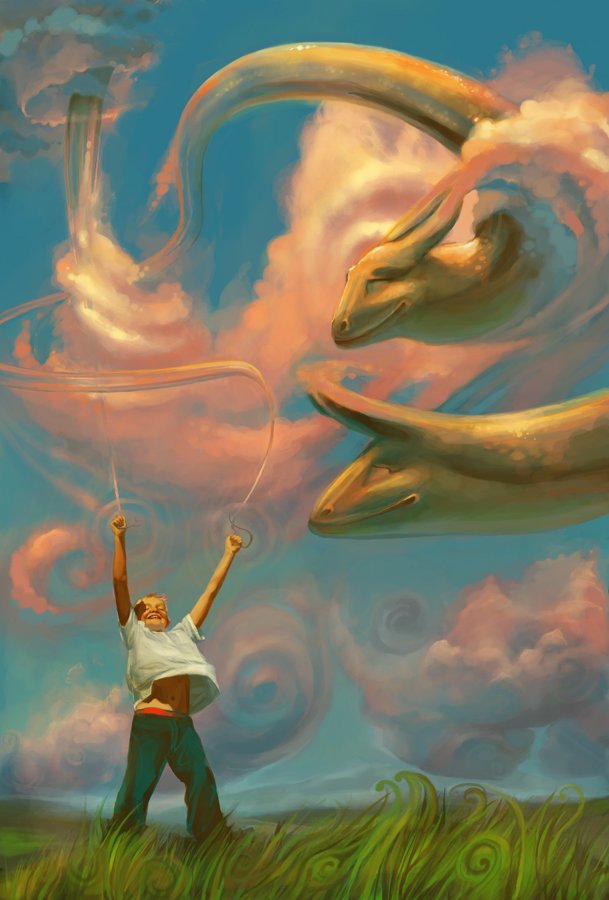
This is also affirmed by the famous motto of the Magus:
“Turn work into play.”
So there is nothing surprising in the seemingly paradoxical combination of the Magus’s absolute tension and his perfect relaxation. The Magus understands that the most terrible thing —death — is inevitable, and impeccably accepts the challenges of his Way.
However, understanding and attaining this state is not simple. It is easy to declare, “I am tense, but also relaxed,” and then, instead of the Game, begin to play at magic. In reality, intense seeking — and then years of practice and years of discipline — are required to learn how to tense without straining, and to relax without becoming sloppy. To understand that everything is already within the Magus, he must first search for it for a long time, painstakingly.
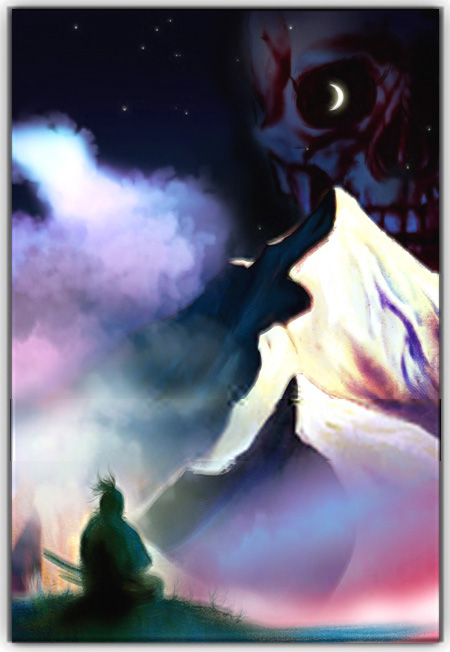
Nevertheless, the right strategy for the Way becomes possible once the goal is clear, at least in outline. Therefore even one who is only taking the first steps toward Power and Freedom must already understand that he must not become either a blinkered horse or an “enlightened wizard” who indulges his weakness.
And at every stage of his Way, the Magus must remember that his strength lies in uniting opposites: in holding balance without falling into extremes — and, at the same time, without allowing compromises. The Magus’s balance is full acceptance of both opposites, both poles of the binary, and their integration — not the search for a point of contact between them. Therefore the Magus strives to be simultaneously completely tense and just as completely relaxed.






I understand it this way: This feeling of simultaneous tension and relaxation occurs in sex, in play, in dance, in singing. When you are both concentrated and relaxed. When preparing for a performance on stage, during an exam – a clear mind, no worries about winning or losing, and complete access to available resources – you perform at 100%, as well as you can at that moment.
Is it possible to learn this? To train for it? How?
The rune Manaz teaches me this. It turns out each rune has its own awareness.
Thank you for the answer, even though I cannot make use of it. But are there simpler and more accessible methods or exercises?
A simpler way is to conceive and raise a child for a woman and a man. Children help parents, teachers, and caregivers to be simultaneously completely tense and completely relaxed. The longer they teach, the longer they remain in nirvana. The man represents tension, the woman represents relaxation, and their creation, the child, is their integration.
Palom, thank you for the “simpler way,” honestly – you are casting fog on this issue and over my head 🙂
If we are talking about the same state: simultaneous relaxation and focus, concentration – it can often be observed in animals, especially cats, in athletes, in people doing what they love. Very often, healthy children demonstrate it – in play, during walks. For adults – much rarer.
So I think entering into this state can be learned, and one can train their presence in it. I’m asking about simple exercises like “three-four – arms wide.” I’m sure there are some. And they should be simple. The difficulty lies in forcing oneself to do them every day. The option with conceiving and raising a child – there is no state one wouldn’t enter!
I recommend yoga and tai chi gymnastics; in both, tension arises while relaxing, and both are quite simple, there is plenty of material online. Overall, you have provided sound advice. =)
Yes, it turned out not difficult to find these exercises; they came to me themselves. Now the only thing left is how to make them part of everyday life? You seem to wield such alchemy: to turn knowledge into experience? What kind of magic wand should I rub? 😉
A found stream can become a magic wand, and these exercises will help in its movement.
What are these flows? How do you find them? How do you get into them?
I understand: you can feel another person, the atmosphere in the room, the situation, but how to feel, see, hear, perceive some (we must understand energy) flows?
A year ago I probably got into some ‘flow.’ It expressed itself in that a friend on FB, a poet, posts poems and this happens every time… very about me. And so almost weekly for several months. And he talks about such things that are about my innermost feelings – it takes my breath away. And we became friends afterward, so, an absolutely unfamiliar person thousands of kilometers from me wrote about my experiences as if peering into my heart. And as abruptly as it came, it left. Could it be so?
Here in the information flow, I definitely got. But something that would spin me and my arms and legs would make “swimming movements” – that hasn’t happened.
Although.. in parallel with the time when I got here there are subtle changes. For example, I started to spend more time outside, and breathing fresh air feels like drinking fresh water. Then, I began to feel synthetic additives in food – and I, a sweet tooth with extensive experience, can no longer eat sweets! (except for a few types), cakes and baked goods – only homemade, many teas and juices are replaced with boiling water and homemade compotes. Some postures have become uncomfortable; I always want to stretch – am I growing? Or on the contrary.. getting old, Volka, getting old.
That’s what I thought two weeks ago. Yesterday – I was clapping my hands – I had a feeling that I still got into that very flow. And today I felt down – sometimes not the most cheerful “circumstances” lead you into the flow. How should it storm for you to want – not want – it only left you to “relax and breathe” 🙂
The search for definitions of the flow in this blog has not been successful. Therefore, I give my own understanding, and if I turn out to be wrong, let someone who knows correct me.
A living being has a desire, and there is a goal. From the desire to the goal, the living being directs its energy and moves towards it. The movement of energy from desire to goal is the flow.
From this perspective, all movement of the world environment can be characterized as a combination of various energy flows.
Of course, a person can be in their own flows, which they create themselves, as well as in others, which facilitate their movement.
One’s own flow, of course, does not need to be found; it must be created and maintained. If other people are introduced into one’s own flow and directed towards a common goal, then the flow will certainly be strengthened.
Other people’s flows often find themselves.
In general, typically, a civilized person is at least in some kind of flow. Work is a flow. TV broadcasts are flows too. The movement of city transport is also a flow. The unconscious usually gets swept away by these flows and is usually carried away from his own desires.
For a conscious person, the question is to find the flow that contributes most to the realization of their desires. You can find them differently. Reviewing job offers with the goal of further choosing a job is one example. You can tune into the flow – purposefully imagine, and soon signs and events will start appearing on your path, which, with the right approach, will lead to just the right flow. However, as practice shows, this can turn out to be a difficult task.
As for the Internet in our time, it slightly blurs the boundaries, and therefore situations become possible in which people on opposite ends of the planet move in the same flows and therefore can meet on the Internet. But unfortunately, practice shows that such connections are quite difficult to maintain. But if you have found a partner on the internet and the connection is established, then my advice to you is to hold on to it with everything you can. Perhaps, you will get something that you could never obtain in reality.
Consciously breathing air is wonderful. There’s not far to go to pranic eating. Well, improving sensitivity to taste is also a very good bonus – yes. A healthy lifestyle in the external world is also a flow, and surprisingly, quite a strong one.
Stretching and looking for comfortable positions – that’s good too. It means you have become more sensitive to the energy flows in the physical body. You will undoubtedly be younger.
Flows can be changed and created as you please. The main thing is to clearly represent which flows you are entering and with what purpose.
For inspiration, I recommend two books:
* Vadim Zeland. “Practical Course of Transurfing.” He clearly explains everything in a simple way.
* A literary one (I already recommended it here). Michael Ende’s “The Neverending Story.” In the second part of this fairy tale, it is beautifully described with figurative language about desires and paths.
Theo, regarding sending desires (whirlwinds) to the goal, you will find it here in the blog, I think without problems.
Regarding the flow. I clearly realized, felt, understood it for the first time at the moment of a strong desire to liberate consciousness. There was a feeling that something was binding it and I need to detach from everything. Become empty. Only the empty can be filled.
Yes, on the keyword “whirlwind”, there is indeed a lot. 🙂
I understand what you mean. This is that very own, native flow, in which, ideally, one should be, where all actions are easy and the existing desires are almost realized by themselves, at the motion of a finger, and new ones arise easily too.
+ many themes for those who manage to be in such a flow.
Just I cannot understand why desire is exactly a whirlwind.
I see the picture this way. Let’s take a directed and strong stream of air. When do whirlwinds form? When obstacles meet along the path of the flow. From this point of view, a whirlwind is what remains from the flow, what has broken free from the flow.
I read the etymology of the word “desire”; it seems you are right, the desire initially implies the presence of obstacles, and therefore it is a whirlwind. And in my examples, the word “desire” is inappropriate. A word that is mentioned in transurfing – “intention” – fits better.
It turns out this way: the question of feeling flows comes down to 1) tracking what is yours, what is not yours – work, people, information, events, desires/intensions/goals;
2) the ability not to get drawn into someone else’s flows, the ability to yank yourself out of what’s not yours, and even better not to fall into someone else’s; I imagine what hearing one should have to distinguish and listen to one’s own sound in this symphony. And even if you are moving in someone else’s flow, to preserve yourself – not to dissolve.
3) creating your flows – from here, understanding yourself, your desires and goals, their hierarchy and ways to achieve them. Perhaps the most challenging is ordering the goals, as there are so many contradictions, and giving up is so difficult – from the outside, it seems like a folly, but in reality, it is a hidden desire.
Thank you, Theo, it has become clearer. And about pranic eating – you made me laugh – what a saving of resources, especially time ))
Returning to my initial request – I will find these exercises/movements myself, the ones that are mine will flow by themselves.
Although, my trick also worked – I made the exercises myself with a magic wand – I want to look in here – I have to rub the magic. And after a while, it will happen even without prompts.
In general, I agree. Wishing you success. Just one thing I would add: sometimes it is also useful to enter someone else’s flows, for example, for a skill that one cannot find in their own, or, say, to enter someone else’s flow, to find in it one’s own people, who found themselves there for some reason; if you have sufficient strength and realize the consequences, you can redirect someone else’s flow, or you can just walk through another’s flow in your own way and ignore attempts by outsiders to correct you; usually, outsiders get angry and fight in this case, and that is already a reason to defend yourself, dodge, or fight, so as to gain experience. And so on, there are many options.
For example, in a scenario where it is impossible not to react to someone else’s flow. When someone else’s flow is unpleasant and you want to block its path. Today there was such a struggle: right before Victory Day, fascist cockroaches crawl out. I wanted to discuss this small skirmish. How can I find you on the Internet?
An association with the flow – is excellent, much gives for understanding. It is clear that it is impossible to simply “not let it flow”. Just blocking it – the contents cannot just disappear and will accumulate until it bursts out. You can divert the flow aside – change its direction. You can dilute the flow, absorb it with your own, more powerful wave – but then your contents change as well. Then immediately the questions arise – where does the source of the flow come from, where is the “wind blowing from,” and where will the flow lead, what will it destroy on its way. And so on – the length of the flow – its history, width, depth, strength.
Write to the email box: titeo(at)bk.ru