
Joy and Dissatisfaction
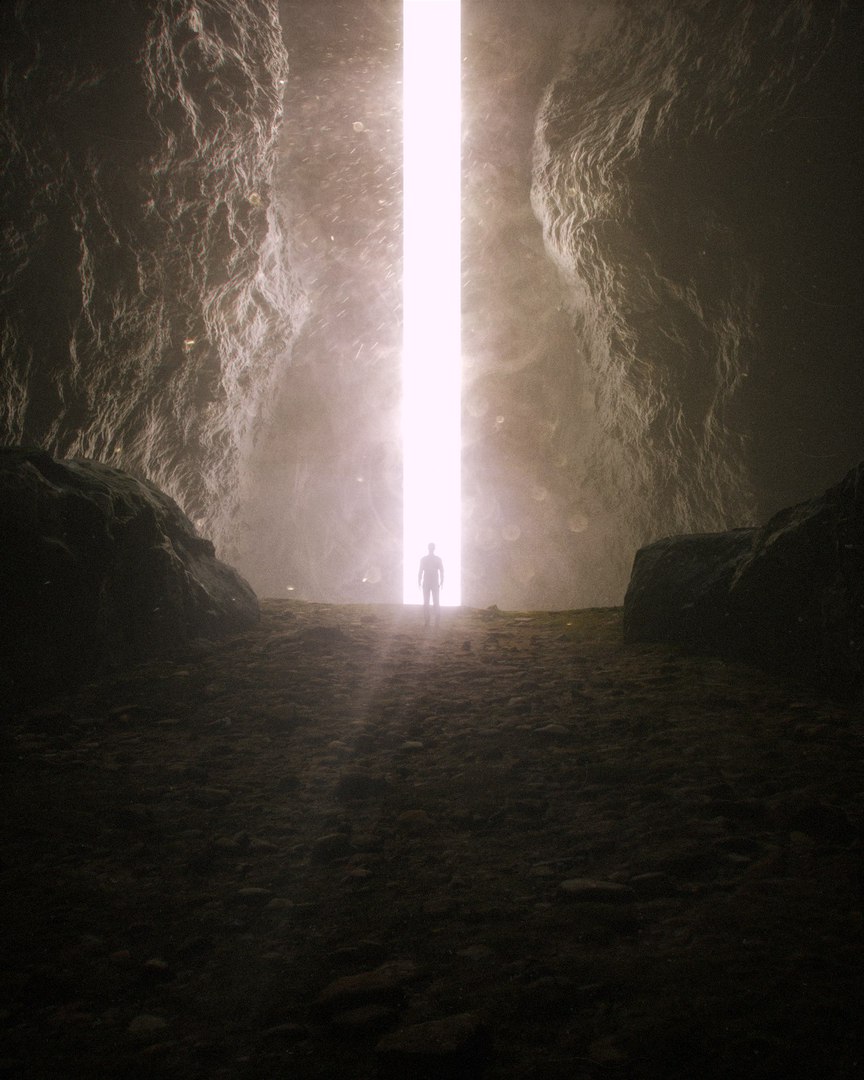
Magic is the Way of the active mind, unfolding through self-realization in action: through the actualization of potentials, through aspiration, and through attainment.
At the same time, the driving motive behind such development is an acute sense of dissatisfaction with one’s “incomplete,” “imperfect” realization — and therefore with unfreedom. Because the Magus experiences this “spurring” dissatisfaction constantly and sharply, it may seem that his mind is always oppressed and discontent.
Magic is the Way of overcoming and resistance: overcoming destructors, overcoming the inertia of material existence, overcoming barriers and obstacles. Therefore, the Magus is a warrior, and his life is a battle. From the outside, it may appear that the Magus is driven by anger and that his actions are aggressive.
It may even seem that nothing is more incompatible with Magic than the beatific affirmation of the world’s already-accomplished perfection; than “positive thinking,” which denies the dark component of the cosmos; than the proclamation that reality is “wholly luminous” here and now.

Yet the idea that Magi must remain in a gloomy state in order not to lose dissatisfaction — or that a warrior’s spirit is, by definition, aggression — are erroneous and destructive notions. They turn Magic from a path of perfecting the stream of mind into a path of its suppression. Just as destructive is the opposite misconception: that Magic is a “path to happiness,” if by “happiness” one means shifting to the “positive” pole of the binary and excluding all disharmonious elements.
Oriented toward freedom as the highest value, the Magus always strives for balance and for the greatest possible breadth of mind. This means he seeks harmony not by excluding “inconvenient” elements or states from attention, but by their transformation: by “returning” them to an original, constructive condition, and by integrating them into the overall stream. We have repeatedly said that the Magical myth proceeds from the idea that, in its primordial nature, any stable flow is evolutive and constructive, and that possible destructiveness arises from imbalance— from the predominance of one component at the expense of another — and from subsequent distortion and “darkening.” Accordingly, the Magus’s efforts are directed toward “returning” to the flows of mind and energy their equilibrial, harmonious qualities.
Thus, because the Magus’s state of mind is the state of a flow striving to move from a less harmonious current to a more harmonious one, subjectively it is perceived as joy. The paradox of the Magus’s existence is that, despite direct encounters with the darkest, gloomiest, and most ominous sides of the world, he remains joyful; he does not become either a spiteful soldier or a depressive whiner. It is precisely the ability to see darkness in all its unseemliness — precisely the habit of not averting one’s gaze from evil — that gives the Magus the capacity to truly value harmony.
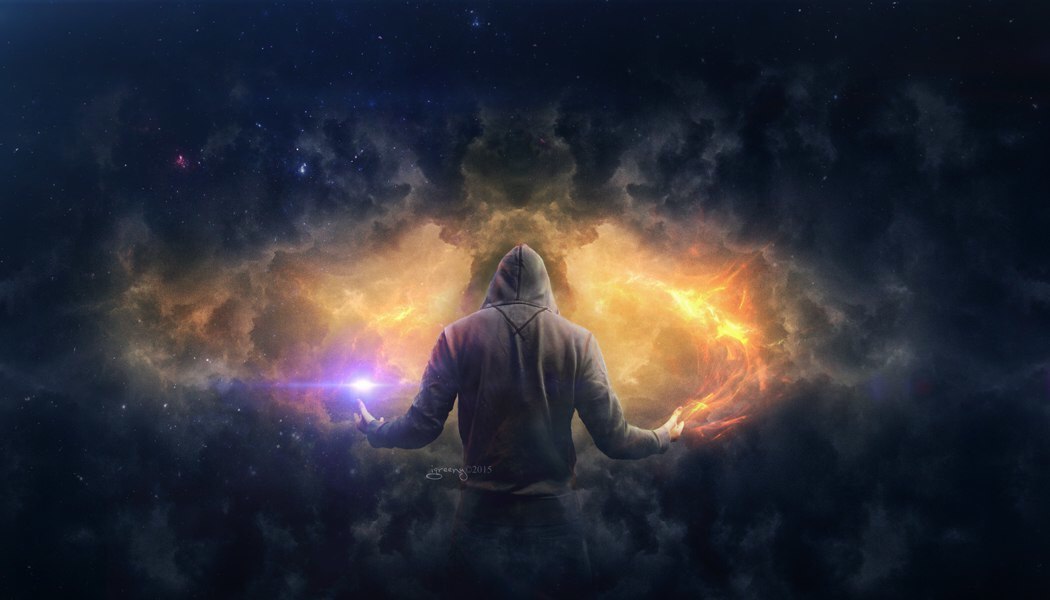
If the Magus finds his condition devoid of joy, it means that somewhere he has stumbled, departed from his Way, and must urgently look for the error and correct it. Likewise, if the world begins to appear to him as “flatly beautiful,” if perception is losing depth and multidimensionality, he must come to himself and not slip into limitation by light.
The overcoming of duality for the Magus happens through integration; and for this, each pole must be clearly revealed and brought as fully as possible into awareness.
Therefore, the Magus does not lose joy while passing through pain; he does not fall into aggression when immersed in battle; he does not get caught in the trap of indifference while striving for equilibrium. He endeavors to unite within himself all facets of the world — to discover within himself the microcosm, analogous and “identical, but otherwise,” to the macrocosm — and then to go beyond the limits of all cosmoses and chaoses, uniting them within himself without being reduced to them.




“I discovered” you a couple of days ago – an article about runes, and I have been reading for two days. Educational. A lot of information, interestingly structured. I’ve noticed how many amazing esotericists are from Kyiv. It is said that there was a powerful school there. Thank you.
The consciousness of an embodied being is limited by the consciousness of a being with a broader connection to the Almighty. “Unrealization” is a normal state instilled by the Almighty to encourage the pursuit of satisfaction.
The mage-warrior seeks ways to understand the origins of dissatisfaction and explanations for their emergence. Magic is the path of explanation and the path of creation (the emergence) of one’s own Paths based on what has been observed.
The mage is a warrior and is angry—until he understands that his anger is his instability, his lack of balance.
Regarding the path of magic… The path of magic means the return of consciousness to its source.