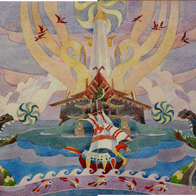
The changing face of Veles lies at the heart of the cyclical turning of the world’s cycles, ensuring eternal recurrence in the endless extension of the spiral of being.



Other Magic
Пишите мне
Enmerkar's Blog contains over 1200 original articles of an esoteric nature.
Enter your search query and you will find the material you need
The changing face of Veles lies at the heart of the cyclical turning of the world’s cycles, ensuring eternal recurrence in the endless extension of the spiral of being.

Inaction is never a winning strategy, and “thinking over” a decision often amounts, in practice, to mere inaction.

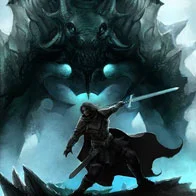
Before calling any obstacle a “trial”, a Magus must ask himself — who is testing him and why, and whether he consented to this trial.



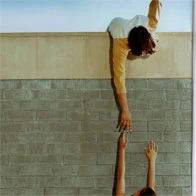
A Magus must be prepared for the fact that the wall will never disappear, that behind one barrier another will rise, and that only in overcoming them is the mastery honed that is necessary for their effective surmounting.

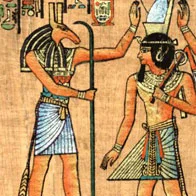
Each of the figures of the God-Disruptor is characterized by the aspects mentioned above – on the one hand, it pushes the system toward development, on the other, it is subjectively perceived as unpleasant.

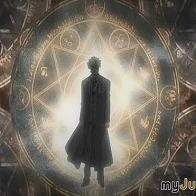
The flow of the Magus’s mind must enter into maximum resonance with the Flow of Power in order to ensure the subsequent realization of the mind’s potentials — that is, its filling with Power.

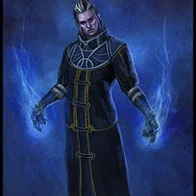
The most important feeling a Magus must cultivate is his readiness for the unexpected—alertness without which he may either lose precious time in battle with an enemy or miss a chance that suddenly appears around a corner.

It seems simple: if you want to achieve something, do it. Yet how often actions diverge from intentions.
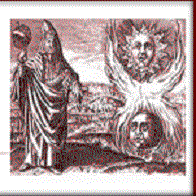
Only after the “wedding” and the “first wedding night” does the Power lawfully fill the vessel, and there occurs the union of being with mind — of the potential with the actual — which constitutes the essence and aim of the World process.

The development of consciousness within any Myth therefore falls under the action of two forces: on the one hand, the organizing, systematizing logic of the Myth, which cosmizes consciousness; on the other, the transforming force that provides “leaps” — transcensus — of consciousness.

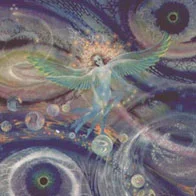
The more the very character of a Magus’s life’s movement resembles the smoothness and beauty of a dance, the more effective and harmonious his Way.
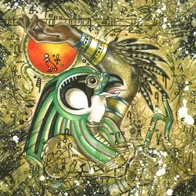
The Egyptians believed that the cosmic cycle of time was renewed each day not by the action of the cosmos’ component parts, but by the actions of humans and gods.
The Magus’s struggle for possession is a struggle for the integrity and harmony of himself and his Way.