
Habits of the Magus

Although a Magus strives for high awareness and great spontaneity in his actions, he does not need to keep all the information that describes his world and himself in that world on the surface of his mind. A Magus understands the principle of economy of thought and devotes all resources to the general direction of the struggle; therefore he must have a secure and reliable rear.
In order not to be pulled in different directions, he forms stable models of action — by the same principle the human mind uses to consolidate to form habits and skills.

Nevertheless, the “habits” of a Magus and the habits of an ordinary person are entirely different mechanisms for maintaining the stability of the Psychocosmos, since habits are formed unconsciously and become dominant drivers of action, whereas a Magus’s skills are developed deliberately and are merely convenient tactical maneuvers that can be discarded instantly when strategy requires.

In other words, a Magus creates an algorithm of action in his mind and sets it aside while attending to more important matters to accomplish more important matters; yet the mind never fully withdraws from overseeing that algorithm.
For example, in a recent conversation one blog reader gave the example of using a mobile phone “automatically,” without engaging conscious attention. The formation of this skill can occur in two ways: the first — by simply memorizing the keypress sequence and reproducing it; the second — by understanding the logic of the phone’s menu system and acting according to that logic. An algorithm formed by the first mechanism becomes a habit, offering no development of awareness; the second is a small step in expanding awareness, although at first glance the end result may appear the same. The difference becomes apparent only when the phone is changed: the person who relied on memorization will encounter difficulties mastering new menus, while the person who understood the interface’s logic will learn the new phone faster and with less effort — this is proof of expanded awareness and new possibilities.
Moreover, when confronted with a fundamentally different control system, the “habit-bound person” must make considerable effort to abandon familiar methods and adapt to the new algorithm, whereas the “skillful person” will readily discard old models and learn and adopt the new mechanisms.
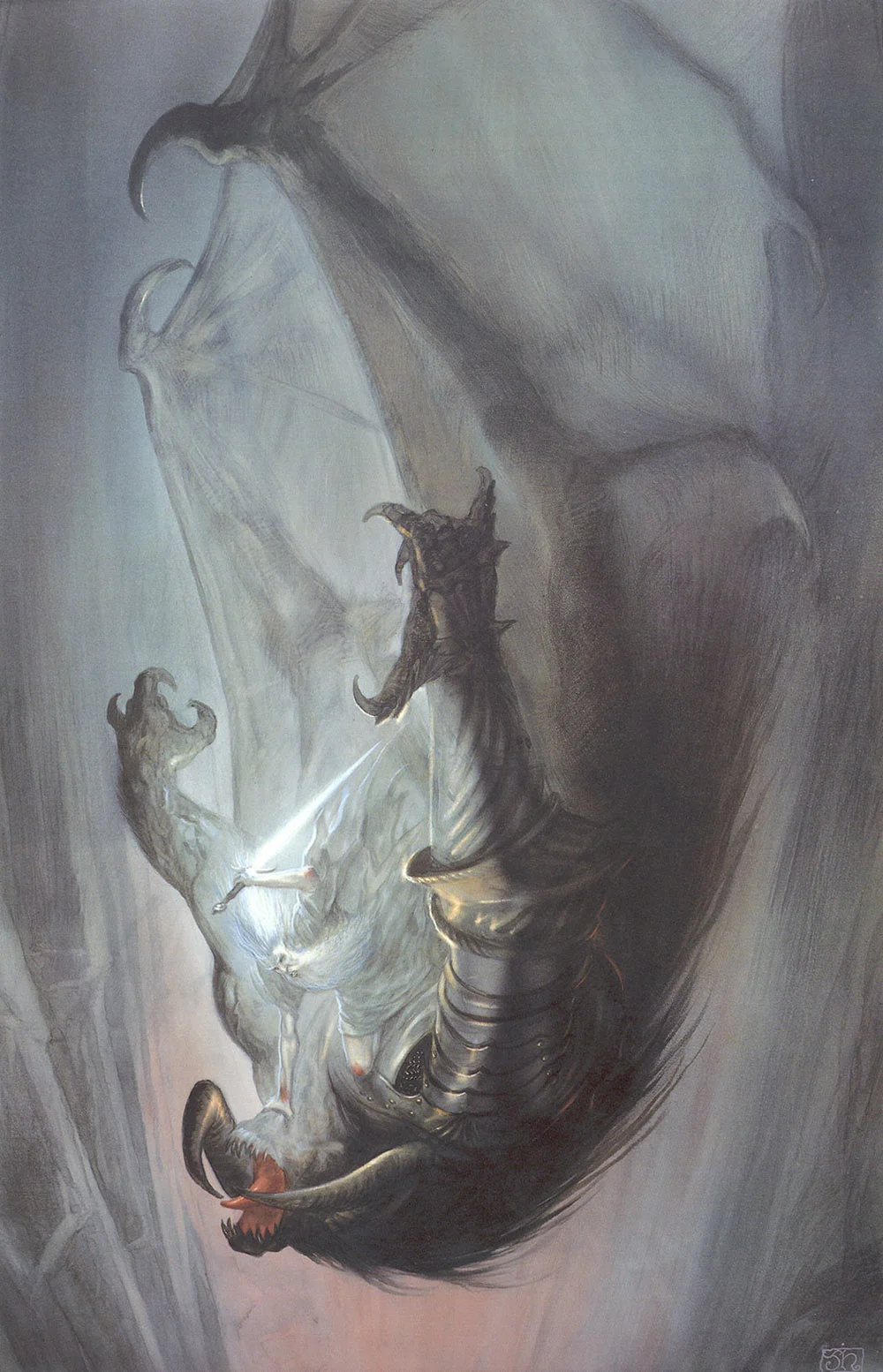
The same pattern holds in more significant cases. One common error among Magi is turning Rituals into rigid algorithms and the mindless repetition of familiar actions in different situations. Even experienced practitioners were not immune to this mistake — for example, members of the later Golden Dawn who applied the algorithm of the Ritual of the Neophyte and other basic Mathers schemes to many situations for which those algorithms were unsuitable.
This manner of acting, which allows no improvisation, can be fatal when facing entirely new forces that require an entirely new tactic — one not found in old algorithms.
That is why the cornerstone principle must be an understanding of who he is, not what he can do, summed up in the well-known maxim: “being is more important than doing.”
Thus, although a Magus should not completely shun the “automation” of his actions, automation must, first, be adopted with full awareness and, second, be carefully controlled, and it should be suitable only within a certain narrow range of conditions — when conditions change, it must be discarded immediately and with ease and replaced by a more effective tactic. This requires a high degree of critical discernment, awareness, and mental flexibility, cultivated by the Magus as key strategy components of his strategy of action.






A very useful article. On one hand, algorithms are effective as they systematize behavior and save time needed to react to changes in the external environment. On the other hand, algorithms lead to a situation where in a new environment, a person used to act within familiar templates and rituals becomes lost. This is why there are META-SYSTEM algorithms – 1. Testing ways of behavior in anew situation. 2. Constructing new ALGORITHMS from basic templates (elementary components). 3. Testing new algorithms for suitability in new realities. 4. If necessary – launching INSPIRATION and synthesizing fundamentally new algorithms. All this is imposed with another important CONDITION – the maximum allowable time for reaction. The world is extraordinarily dynamic, so an opportunity or threat that arises is realized in a relatively short time frame. Therefore, a mage must always be ready to reach LIMITING ALLOWABLE speed of thought and transformation to respond to the challenges of a world where old algorithms do not work. This touches on another important issue – the resources and reserves of the mage, which are accumulated through continuous training. Continuous training is life in magic. This is reflected in the article in the formulation ‘to be more important than to know how to do it.’
Thank you for the article!!! This is also an answer to me as ‘that very reader of the blog’. But I think this is also an answer to those who reproach the Author of this Blog for the impracticality of his materials. Quite the opposite; the maximum practicality of the Blog lies in the fact that it provides not step-by-step magical techniques for mindless copying-execution, but the very Logic of the Magical System, which expands awareness.
What does the principle of saving thought mean?
“Occam’s Razor”: if a phenomenon can be explained in two ways, for example, the first through appealing to entities (terms, factors, transformations, etc.) A, B, and C, and the second through A, B, C, and D, and both ways yield the same result, then the entity D is superfluous.