
Gamigin: Where Do Good Intentions Lead?
We have already discussed at length that, in striving to help, a person not infrequently becomes a destructor, hindering the development of the one whom this “help” is meant to serve.
Yet misconstrued help can pose no lesser danger to the one from whom this help proceeds.
It often happens that, under the pretext of “help” or “salvation,” a person descends into an abyss from which neither he himself nor the one he sought to rescue can escape.
A typical situation: one person wants to “save” another from alcoholism. To do so, they go together to a bar so the “savior” can “keep an eye” on the ward. The result: both get drunk.
And if, in the case of alcoholism or drug addiction, the situation is grim, then it is all the more deplorable in domains where the mind loses energy.
For example, an inexperienced Magus, attempting to “expel a Demon” from another, may become possessed himself; likewise, an inexperienced healer may fall ill in turn.
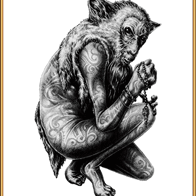
The destructor that compels a person to turn help into an instrument of his own downfall is objectified in the Western tradition as a “demonic little horse” — Gamigin.
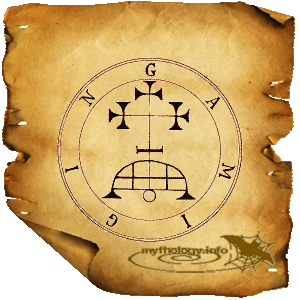
The “Lemegeton” describes the Demon thus:
“The Fourth Spirit is called SAMIGINA (Samigina), a Great Marquis. He appears in the form of a small horse or ass, but thereafter takes on human form if the summoner so desires. He … teaches the liberal arts and reckons the souls who died in sin.”
J. Weyer adds that this Demon
“… compels the souls of those drowned at sea, or of those who remained in purgatory (which is called Cartagra, that is, the misfortune of souls), to take on aerial bodies, to appear in visible form, and to answer the questions of the conjurer.”
Both descriptions indicate that the Demon provokes a vertical movement of the mind: a descent into “purgatory” with the aim of “raising” from there “souls in sin.”
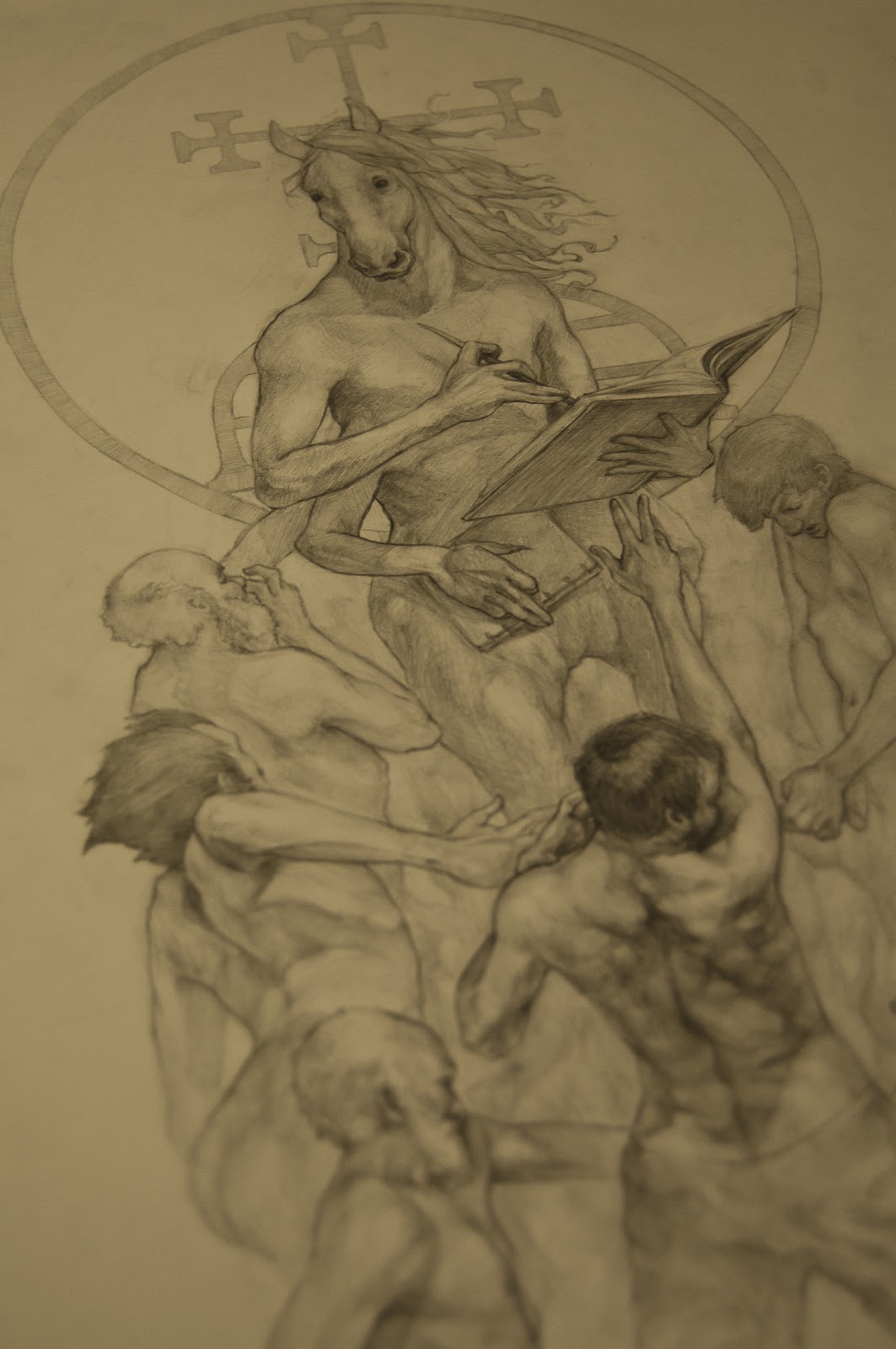
The image of the little horse, which the Demon assumes upon first appearance, also closely accords with its nature: it creates the illusion of additional strength — of a resource the person does not, in fact, possess. It provokes an overestimation of one’s forces and capacities.
Let us emphasize: the Demon does not fasten upon a lack of strength as such, but upon the mismatch between the resources required and those actually at hand. In other words, the Demon does not merely push one to perform actions for which one lacks strength; it pushes one, under the pretext of help, to manifest those worst qualities that could not have been manifested without such a respectable pretext.
To “save” an alcoholic in a bar, Gamigin will send not the one who can truly help, but the one who himself has a weakness for alcohol; to “save” a drug addict, it will impel the one who would not mind trying narcotics himself; and it will provoke into exorcism the one in whom there is already a small breach for the entry of an evil spirit.
For the Magus, tracking the Demon’s manifestation is reduced, first of all, to discerning one’s actual motives — both primary and secondary — and to setting them in correct hierarchy. One must understand that replacing one suffering soul with two suffering souls is not a particularly wise choice. And whoever is not certain he can withstand a danger ought to think a hundred times before attempting to save another from it.
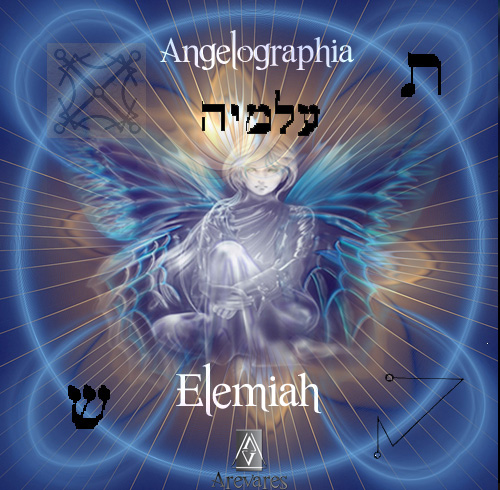
The Genius that counterbalances this Demon is Elemiah. According to Kircher, it
“…awakens in people powerful impulses of the soul, instills in them the resolve to devote themselves to some undertaking or to a person dear to them…”
In other words, a firm resolve precisely to help— not to cloak petty weaknesses by means of help, but to help truly and honestly— governs the manifestations of Gamigin.
If one’s intentions are absolutely pure, the Demon will have nothing to seize upon, and even in the absence of strength, victory may be won.
On the whole, as usual, the entire question lies in the sobriety of assessment and the purity of intention; but for Gamigin these elements take on a particular coloration. Those who are genuinely honest with themselves are not subject to this Demon — those who help, led only by their heart.





It means that the genius Elemiah begins with a powerful emotional impulse, and immediately the demon Gamigin intervenes, substituting in the consciousness that does not comprehend what is happening, the true motives with ‘beautiful’ or ‘beneficial,’ but false ones; accordingly, initially good intentions lead to a known place… The more successful the realizations, the higher the responsibility… Ignorance does not liberate from bitter consequences…. It struck a chord… now I will have to work through all 72…
It seems that there are enough resources (probably thanks to the ‘horse’). In the process, it turns out that there aren’t enough, but I still pretend that there are enough – I deceive myself. The fall is not noticeable at first (if the process is not tracked), but it is very tangible when you have already fallen.
An important component of an impeccable alchemical formula for effective assistance is the DEMAND for this assistance by the one it is offered to. Without this, Elemiah becomes a distractor, aimlessly wasting the magician’s power on unaccepted help. The vector of the magical assistance vortex should be aligned with the vector of the person’s intention, equally as it corresponds to the structure of the psychocosmos of the person receiving the help. Changing the vector of the person’s intention and the structure of their psychocosmos before offering assistance can be done, but the DECISION to accept such changes is better preserved for the person themselves, so that they bear the RESPONSIBILITY for it. EMPATHY through help is not, thus it is not advisable to dive into the abyss if the one who needs help is already there. The point of support for the magical assistance vortex is YOUR stable condition. When providing help, impeccableness and the law of partnership – equilibrium in everything should be upheld. An important distractor in providing help is the illusion of one’s omnipotence. Whatever the heart commands should be done with a caveat for current capabilities and upcoming battles. And most importantly – one should not create debtors – the assistance vortex should be released at the moment it breaks free from the rod and should no longer trouble either you or the one receiving the help.
Doctor, I agree. Co-directed co-action is effective help. Co-suffering is not co-action. Co-suffering is sharing pain and suffering with a person. The vortex of the desire to help the suffering comes from the heart, without participation of reason. Suppressing it means harming oneself. (It can be redirected harmlessly if help is inappropriate or unfelt). Only the insensitive can pass calmly by a suffering person. The vortex arises spontaneously; at that moment one should apply the art of ‘magical touch’ to assess the adequacy of actions (is it worth attempting?, will you fall yourself?)… You are right, it is very important to track the transition from pure intention to help (true motive) to the illusion of omnipotence (a beautiful but false motive). Not creating debtors – right – the expectation of gratitude and attachment is an extra burden on the Path.
You touch on the most interesting binar – reason – feelings. The dominance of any part of this binar is fraught with the loss of power and, as a consequence, it serves as a distractor. Passing by someone in need of help is not only insensitive, but also unreasonable – because within the framework of global balance such an action forms a similar vortex of not providing help directed already to the one who passed by. At the same time, providing help to any suffering is also not only insensitive but unreasonable, as it may not allow them to learn the lesson or become stronger. To the art of magical touch, I can only add reviewing the probabilistic lines for different ways of providing help; in general, it works wonderfully. The vortex of desire – this is a wonderful start for any magic (FEELINGS) and at the same time it often takes shape in a vector of intention (REASON), although sometimes just feelings (DESIRE) are enough, especially if the basic strength is very high or the potential for desire is extraordinarily high. Overall, thank you for your comment – it is both clever and filled with feelings and, as a result, carries high and pure power behind it.
Yeah…, it also seemed to me that I am almighty, now I sit, floundering at the very bottom for 13 years. Help me.
TT, please write to me, together we will try to figure it out http://vk.com/id90266536