
Understanding as an Enemy
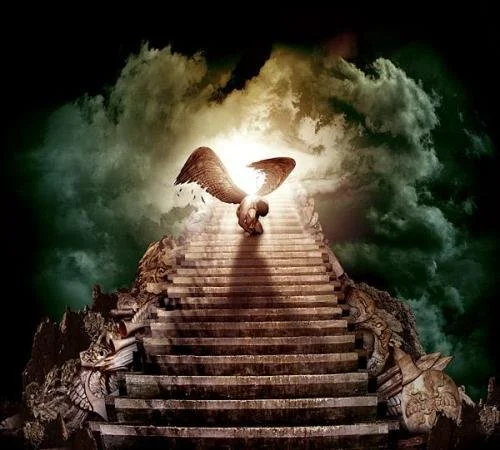
A necessary condition for the clarity of a Magus’s actions is the clarity of his notions about the field of his actions and about the forces that cooperate with or oppose him. Therefore, one of the principal aspirations on the Way of Magic is the striving to understand how the world works, and although the picture that arises in the mind in this process is only one of the possible descriptions — Myths — it is a necessary condition for the accumulation of power and for the adequacy of a Magus’s actions.
The development of the mind’s capacity to describe — that is, of the “understanding of the world” — proceeds, zigzag-like like the entire global process of expanding awareness: individual elements of understanding accumulate, on their basis more general concepts are synthesized, which in turn are further generalized, and eventually a more or less coherent and internally logical picture — a Myth — emerges. Then elements begin to accumulate that do not fit this Myth, and if the mind maintains sobriety of its functioning and honestly attempts to assimilate these new elements, the Myth begins to crack at the seams and sooner or later collapses, and upon its ruins a new, more adequate way of describing the field of embodied awareness arises.
We have already said that the most dangerous points in this process, for progress, are its “relative maxima” — the moments where the picture is most coherent and understanding is most complete.
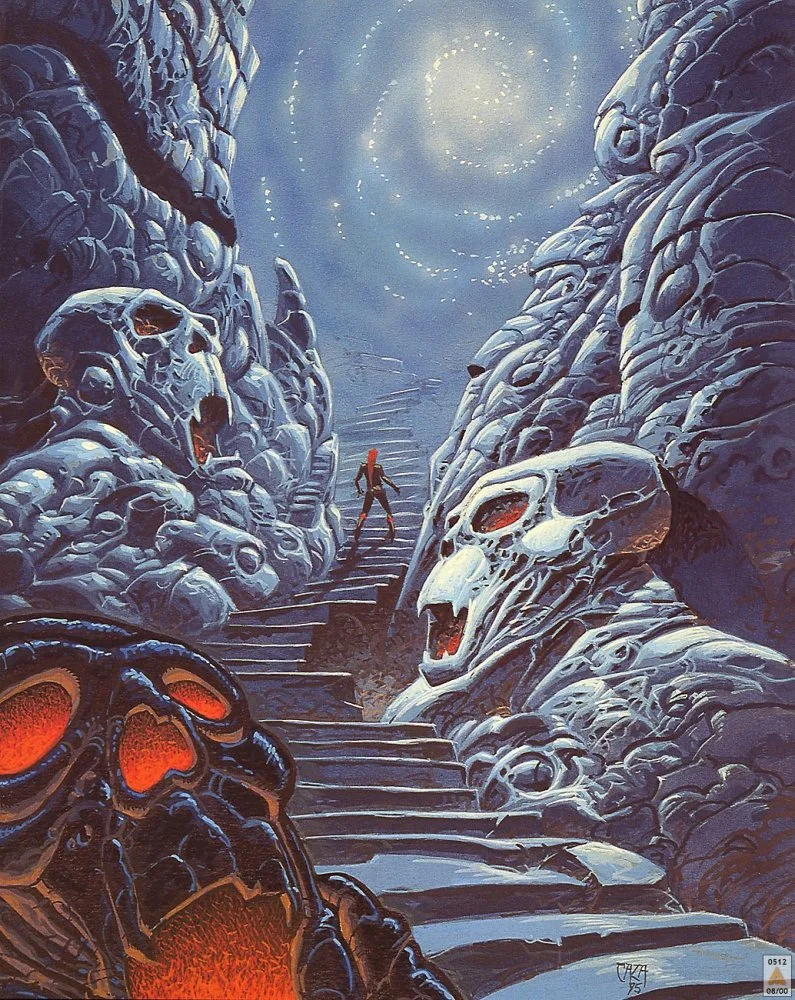
The paralyzing effect of the state of understanding consists not only in the unwillingness to leave it, not only in taking pleasure in its clarity, but also in that it generates a profound pessimism about the further path.
The mind, stumbling through the darkness of fragmentary ideas and perceptions, clings to the hope that the gloom will lift soon and the acquisition of light and freedom. But from the summits of understanding, the infinity of the Way is clearly seen, and it takes considerable courage to take a step into that infinity without any expectation of a “quick victory.”
Many Magi have become stuck on the summits of understanding in pessimism and cynicism, listlessly musing about the folly of those who continue the Way and “bang their heads against the wall,” about their “self-deception.” From the heights of their clarity, they can convince others at length of the “futility of everything” and authoritatively expound on the “world’s emptiness,” yet, alas, they do not take a single step forward.
A magus’s integrity in such a situation is continuing to act, even while convinced of its futility.
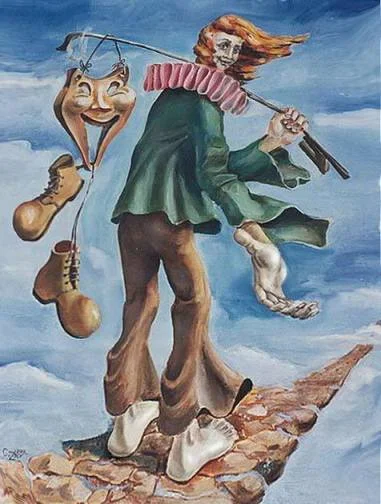
And in this sense, the steps over the abyss of the Tarot Fool, who continues his “meaningless” dance through the darkness of existence, are the only way to overcome such understanding and continue to develop the mind.
And only by reaching the lowest point again, where the world seems insurmountable and one’s understanding of its processes is nearly nil, can one push off from that low point and begin anew the cycle of ascent and the increase of power and understanding, and so ad infinitum.
The classical magical formula: “practice a lot” reduces these ideas to a simple law — the path to development is through action.
It is obvious that on the downward slopes of understanding, the effectiveness of those actions will also diminish, but only by continuing to act is it possible to return to the summits.





As far as I understand, a delay in extremes is fraught with loss of power?
Any delay in development means loss of power; but the most dangerous thing is when not just Power disappears, but the vessel for it disappears – the will to develop.
So it turns out that in this case, the seeker of Power will have to give up any canons, truths, and dogmas, as all of them inevitably lead to a closed, cohesive system of worldviews that does not need further improvement. That is to say, to a point where there is no further development. Why is this so characteristic of different orders, magical systems, dogmatizing their teachings, making them precisely such closed systems, when, after all, they should understand that this is just ‘one of the possible’?
Because such organizations emphasize the systemic nature of their Myth – after all, each Myth achieves the greatest efficiency precisely with maximum systemicity. But, of course, such dogmatization is also a trap, into which they often fall, hardening in a single description.
Does this mean that a systemic myth is identical to an egregore?
Not necessarily. A Myth is just a point of view, an egregore is a real being. One can accept the Myth of an egregore organization, but resist the egregore itself, as many non-denominational Christians do, or on the contrary, completely fall under the power of the egregore without owning the Myth, like, for example, grandmothers in church.
Thank you. An article about me lately.
Valuable clarification.
Thank you.
It seems you go through a chasm when games are improperly concluded, for example, if the goal loses its meaning, or for some reason you do not set a new goal. Or can this be explained in another way?