Runic Talismans
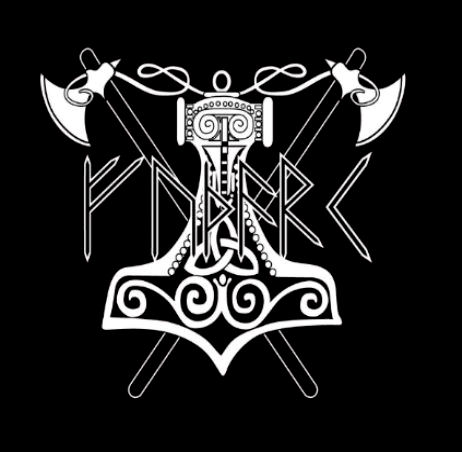
In order to use Runes as an instrument of realization, it is most convenient to create long-term vectors based on them – Runic talismans.
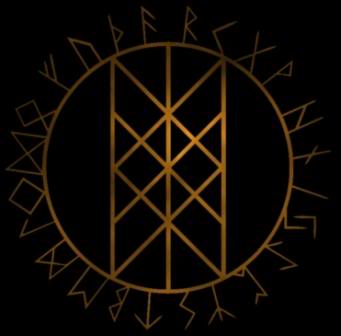
Such a talisman can be built either based on an ordinary runescript or can contain a band-rune, a galdrastaf, or an aegishjalm, but the essence remains the same – they alter the intensity of the world’s potential field.
Let’s examine how such a talisman works.
To begin, recall that on the highest level of unmanifest reality lies the fragmentation of the integral consciousness of the Great Spirit into the differential multitude of Monads, and its integral being into the aggregate of its potencies.
This aggregate of potencies is — the possibilities of manifestation — of absolute being, when passing into actual existence becomes the World Passive Medium, the great sea of being, the stirrings in which – vortices – arise in response to any manifestation of will.
In other words, the Great Spirit, in manifesting, realizes Himself in the binary of the Great Father (the field of possibilities) and the Great Mother (the field of receptivity) – Potencies and the Medium. To realize the potencies, the Son appears – the world’s aggregate of Monads in their synarchic unity.
The world evolves in the direction of the realization of potencies — that is, their being filled with consciousness — whereby the Great Spirit comes to know Himself.
At each level of this realization, some of the potencies are open to actualization by the previous stage of the world process. Such possibilities open to manifestation are called the energies of being, and it is precisely the filling of them with mind that gives birth to the manifested world. Other potencies at this stage remain inaccessible to realization; they must still be opened, and only then — become aware.
The transition of potencies from an unmanifest state to energies, and then to realization, occurs in a strictly directed manner, since each new realization opens the possibilities for the actualization of subsequent potencies.
These directions of development of processes in the potential field are called vectors of Power, and those vectors that the mind can interact with are symbolized by Runes.
In other words, Runes describe the order of reality’s transition from potential to actual; that is, they describe the order of power entering the world.
However, human will, as the primary agent of the world process, is capable not only of interacting with these vectors of Power but also of changing them.
Although the very direction of a vector — the order of realization — is not subject to change at the human (and the levels of development visible from his standpoint) level, a person is quite capable of changing 1) the vector’s initial coordinate and 2) its length.
The initial coordinate is set by the intention to realize; by default, this intention is formulated by the inner logic of the world’s developmental process, but the intervention of active will can move this starting point. The human mind is fully capable of “shifting” the vector from its “automatically” given position to another, since the realization of world potencies occurs above all at the level of consciousness. As mentioned, Magic relies on that changing reality is possible without contradicting the will of the gods, because reality is shaped by description.
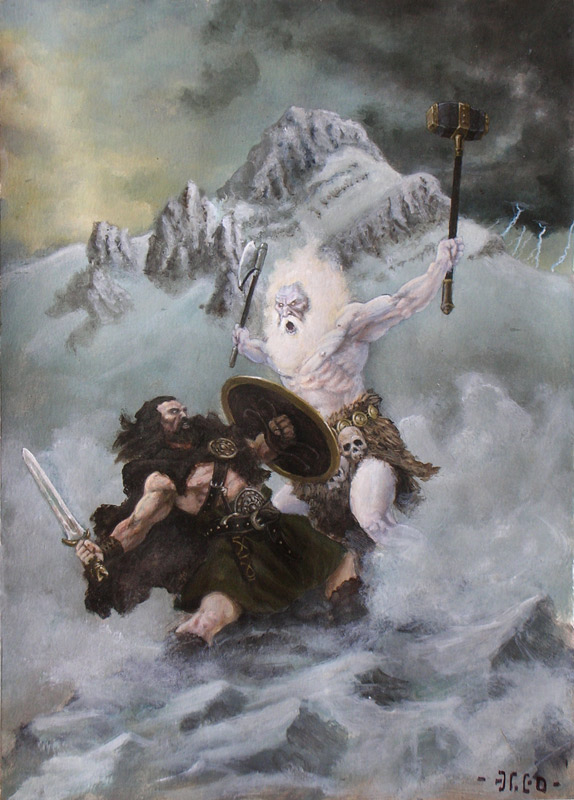
The length of a Runic vector is determined by the power invested in it. The more Power the eril invests in carving and blessing a Rune, the deeper that vector penetrates the fabric of reality, the more the potential field is altered, and thus — the Medium, and ultimately — manifested being.
By using several Runes, the eril can affect the potential field more subtly — he not only opens previously closed possibilities (or, at least, facilitates their opening), but also blocks the manifestation of other potencies for which, in his view, the time has not yet come. In this way, he not only achieves a more finely wrought alteration of the fabric of being but also avoids a backlash that might arise if destabilization occurs of the world’s equilibrium under the influence of his will.
The ritual of creating a Runic talisman has the standard structure: the eril formulates the idea, then purifies himself, selects a suitable material, chooses, carves, and paints the Runes, blesses them with elemental and divine Powers, and closes the Ritual. The action takes place not on the actual level (not in the Medium), but in the field of potencies; however, the technique remains the same, with one significant detail — besides the creation of the vector, it must be given the capacity to manifest, to take effect within the Medium. This is achieved by the Magus’s inspiration — that exceptional Oddic Power without which Runic Magic remains dead.
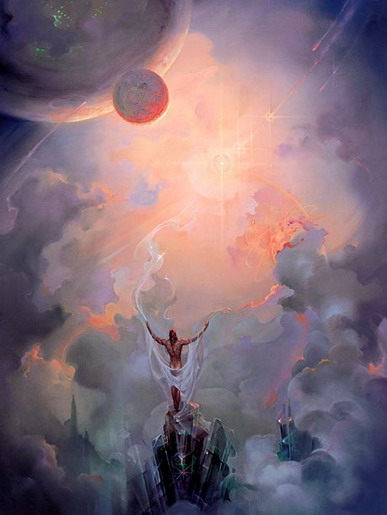

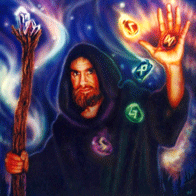
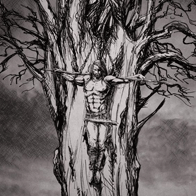
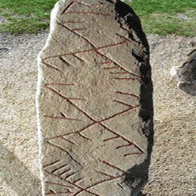
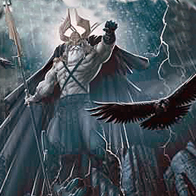
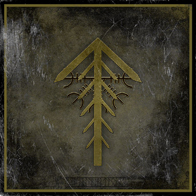
If one considers the Northern Myth as it is presented in the Sagas, then there is not even a hint at the illumination of talismans, for example, by elemental forces (like in the vikkakan ritual of Bachushkov).
The action (activation) of a talisman is triggered by the pronunciation of the corresponding verse (sometimes signs are used, e.g., Thor).
So under the stage: ‘blesses them with elemental and divine forces’ – does it mean exactly the pronunciation of the verse? Or are there additional moments not represented or not obvious in the Sagas?
Or do you think the use of ‘talismans’ rituals from other Myths (Traditions) is quite acceptable?
Unfortunately, I know nothing about the ‘vikkakan ritual of Bachushkov’, so I cannot comment. Regarding the blessing of talismans by elemental forces – it can be carried out in any way, considering that all elemental forces are contained within the person themselves, the Ritual may not require any external attributes and, indeed, be exhausted by the pronunciation of the corresponding verse. Furthermore, my deep conviction is that in Runic magic, the main thing is inspiration, not ‘correspondence to the Sagas’, though of course, the authenticity of the spirit of this Myth should be maintained as fully as possible. But do you really think that the Sagas exhaust all the diversity of magical forms of the North and that there hasn’t been a single truly traditional erily who did things differently from what is described in the sagas or even the Edda? After all, I am convinced that the main thing is to adhere to the spirit of tradition, and how the Ritual’s body gets adorned with details is a matter of personal choice and personal correspondences.
I completely agree with you! This is what I meant – composing and effectively pronouncing verses, of course, is impossible without a state of inspiration.
P.S. by ‘vikkakan ritual’, naturally, I meant ‘Wiccan’, just a typo; I respect Wicca very much)))
Wonderful articles on runes. I agree with some points, disagree with others, but they make you think and seek your own path. Therefore, I would like to ask you, esteemed Enmerkar, to shed light on such a topic as inverted and mirrored runes in formulas and talismans (amulets). I am particularly interested in the mirrored depiction (not in the sense of how it is written, but in terms of its meaning). There is too little material on this topic, and it seems quite interesting to me.
Respectfully, Runava.
So interesting! Thanks!