
The Principle of the Forest
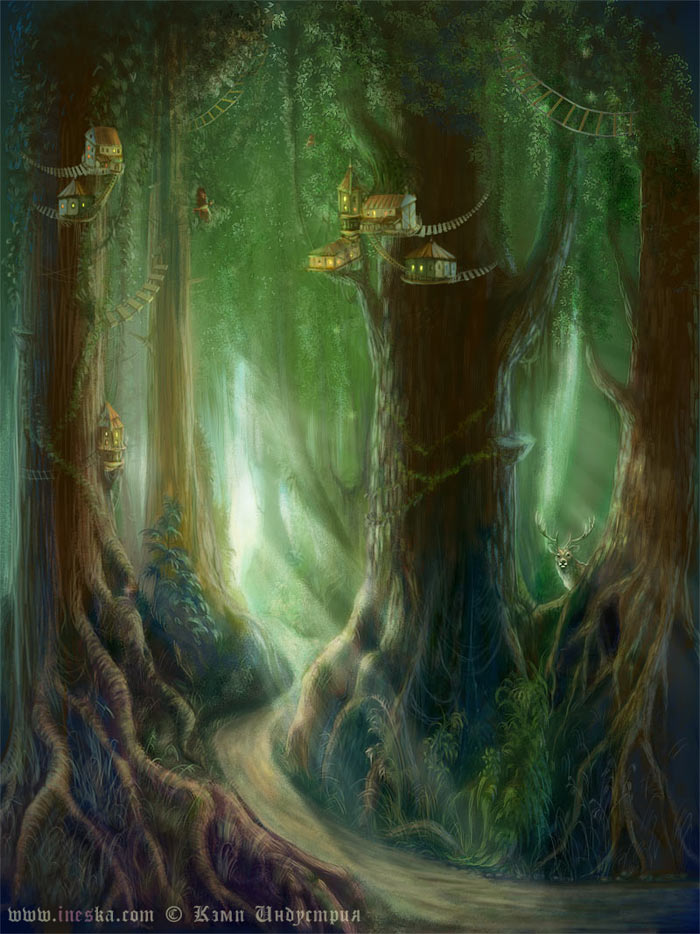
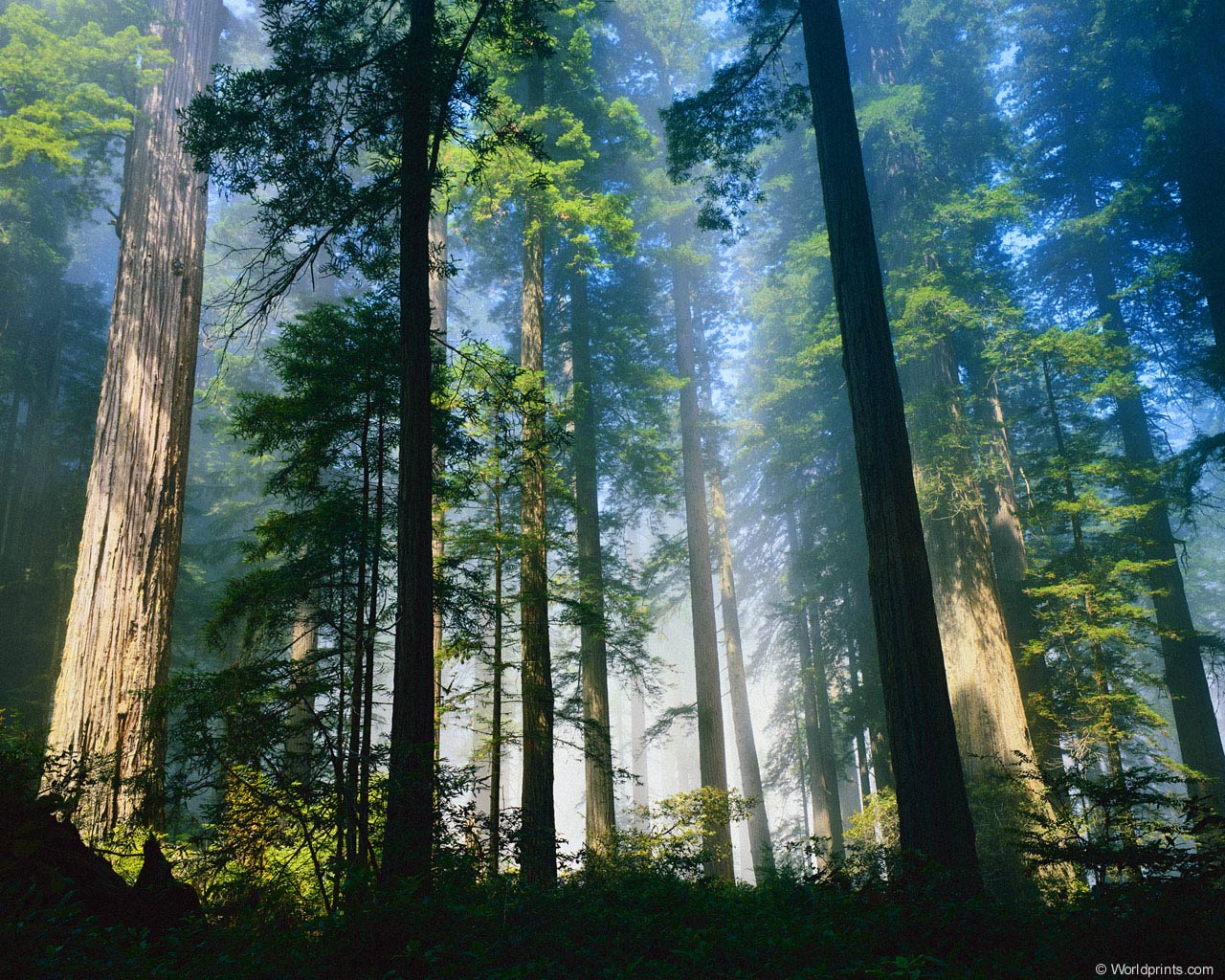
Among the various natural forms with which the Magi interact, since ancient times the forest has enjoyed the most revered status as a unique focal point of power that inspires and assists on the Way. It is no accident that the Druids, who mastered the wisdom of the forest better than anyone, gained access to powers that also surpass the capacities of most other magical schools.
The uniqueness of the forest lies precisely in its arboreal basis, since trees combine the stability of plant energies of the plant realm with the immense experience accumulated over their long lives. In addition, unlike most plants, animals, and minerals, trees acquire over their lives a pronounced individuality — not only at the species level but also personal — which also significantly structures and imbues the forest’s principle with a cosmic character.
On this foundation, at the anchor points created by the forest’s oldest and wisest trees, the rest of the community is woven together, unified by a collective spirit and governed by a god — the Spirit of the Forest — and his assistants. The Tree-warden tends the trees, the Leaf-keeper cares for the foliage, the Bushwarden is master of the bushes and saplings, the Herb-tender nurtures every blade of grass, the Root-warden watches over the health of the root systems, and the Nut-keeper, Berry-keeper, and Mushroom-keeper look after harvests and sustain forest animals.
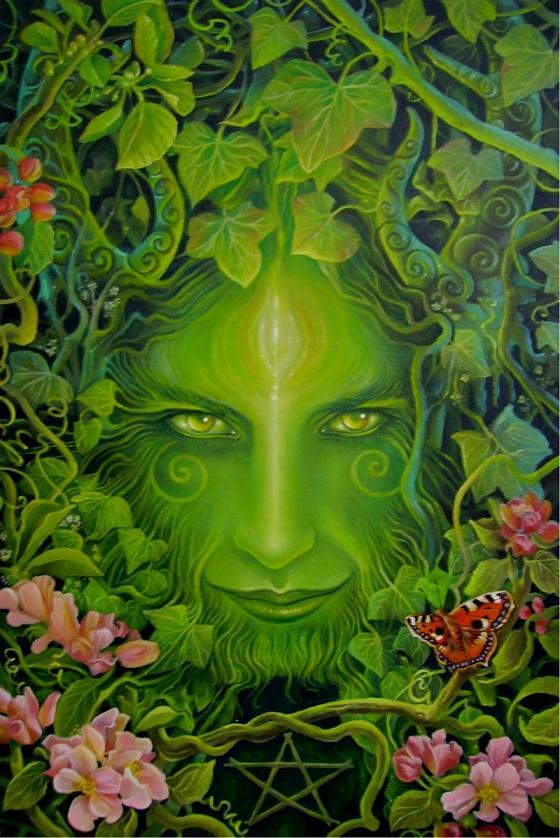
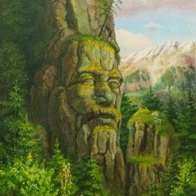
Animals and plants are drawn into the forest’s symphony, a symphony of power and harmony that no other community attains, precisely because of the system-forming force supplied by the eldest trees; it is they — the old Forest Fathers — who guard the wisdom of the woods.
It is well known that any plant community — not only in the forest but on the steppe, the meadow, and so on — interacts closely within itself both at the level of energies and physically through root systems, and thus responds to external influence systemically. But in the forest this systemic quality is expressed to the greatest degree: the forest is not only a unified whole; if the response of, say, the steppe to an invasion by elemental forces is poorly ordered and hard to control, the forest’s response is always wise and in harmony with the Great Flow of Power.
This means that, by interacting with a single tree, the practitioner not only partakes of that tree’s own power and wisdom, but also interacts with the forest as a whole, with its collective wisdom accumulated over centuries.
At the same time, a person who, in madness, harms the forest brings the community’s wrath upon himself, whose power and wisdom are incomparable to human power. That is why Slavs never cut a young tree, a sapling, or an elder for building. He chose the one his heart indicated, spoke with it for a long time, and only if he felt prompted did he cut it down. In return for the felled tree he planted several saplings, and for a coniferous tree one was expected to sow nearly a whole field with seeds from its cones.
Moreover, the forest has yet another source of its power — its mystery. The forest depths shelter not only animals, not only spirits and fairies; they are the source of life itself, the life-giving womb of manifested nature. Forest shade reduces the definiteness of the world’s description, introducing into the world an element of uncertainty and surprise — an element of Magic. Like the liminal power of twilight, the forest also has a liminal power, softening the contours of the world’s picture.
It is precisely the combination of these features — wisdom, antiquity, and the mystery of the forest — that makes the forest profoundly magical, and a proper encounter with the forest, entering its secrets, and communion with its power are, for any Magus, without exaggeration, essential.



First of all, I want to say thank you for writing all this. It’s very interesting, informative, and written accessibly.
Now a question that somehow arose during the reading: you wrote, ‘At the same time, a person, in his madness harming the forest, brings upon himself the wrath of a community whose power and wisdom are immeasurable compared to human.’ How does this wrath manifest in our time? After all, it is well known that forests, as they were dying, continue to die. I know people who go hunting just to ‘bag more’, and I simply have not noticed that, roughly speaking, someone is angry at them. Attitudes towards Nature in our time are mainly consumerist, and unfortunately, this trend continues to grow.
The wrath of the elements does not necessarily mean illnesses and ‘practical’ troubles; it also includes knots in fate, ancestral burdens, and, finally, the disorder of consciousness.
The sins of the fathers are paid for by the children. Therefore, usually, those who sin will not face consequences; their descendants, grandchildren, and future generations will bear the burden of their sins. Specifically, causing harm to nature and the earth results in problems with legs within the lineage (injuries, amputations) because the earth does not allow them to walk upon it. In general, retribution for the sins of the fathers can manifest as illnesses within the lineage or other obstacles and suffering throughout life. For example, wealth exists but there is no personal life, or everything is present except for health, or children are born sick, and this is always the consequence of the sins of the lineage. If children do not pay for everything, then grandchildren and great-grandchildren will have to. This is why, in our time, there are almost no happy and harmonious families or individuals because all are sinners – that is, people break all divine laws, even if through ignorance. Knowledge of spiritual laws has been deliberately concealed by demons under the guise of materialistic science, so modern materialistic science is essentially ‘satanism’ as it was intentionally created by demons to make people sin and thus become fodder for spirits.
In the first approximation, such anger does not seem effective, and the forests continue to vanish. Taking this opportunity, I want to ask, why, despite its power and wisdom, Slavic paganism lost its positions, just like druidism, to ‘powerless’ monotheistic religions?
Wisdom, as the emergence of the First Medium, is passive by itself; it excludes aggression, which is why one can only regret the retreat of ancient mighty wisdom before youthful aggressive exuberance. Nature everywhere retreats before man – and this, unfortunately, is the order of things; the only question is whether humanity will bear the responsibility for the destruction of its roots, its source… As for the conflict of religions – new religions are not ‘powerless’ at all; on the contrary, they accurately reflect new needs of humanity – for uniformity. But this, however, does not mean that such needs should exist for all representatives of the human race.
‘The wrath of the forest’ is more likely expressed in a person’s inability to take advantage of the gifts that the forest can give to its ‘native’ person on Earth. A consumer will not meet magical animals and other unusual inhabitants in the forest, he will not hear the whispers of elves and will not discover an old portal… and in the next lives – will be confused in guesses – ‘what for was he treated like this?’
Trees, like people, each bear their own imprint of individuality. One is happy to ‘show’ you how it grew and what it experienced.. I see how my bright Power, like mist, envelops the tree and breaks apart into a sparkling coating. Another tree might respond cautiously, while in another, it seems as if there is someone.. It looks out from it and ‘says’: there’s nothing for you here.. go further)). And recently, a strong desire arose to go to the forest and find something. I can’t explain this.. It’s like I must see or understand something.. but what??? And like a hunter, you walk tensely through the forest, looking and waiting))
Enmerkar, what do you think is the reason for the genocide of fir trees before the New Year? Who benefits from exterminating these coniferous trees? What demons could have created the custom of destroying firs and taught humanity that killing firs leads to bad karma? After all, you write: “to sow seeds from cones, it was necessary to cover an entire field,” which means that the genocide of firs before the New Year is a great sin that will be punished.
Sin is a violation of what is accepted. Natural forces are involved in all aspects of the world, and even a small unplanned destruction of resources is perceived by them quite painfully, especially in this technological world.
Sin is any actions whose energy is not drawn from the universe (God) imho, and rules are written for those fools who cannot independently distinguish the energy of the universe from other energies. And there used to be a rule – to live with an open heart. But it has been somewhat forgotten. Only an open heart connects with the energy of God.