
The Honor of the Magus
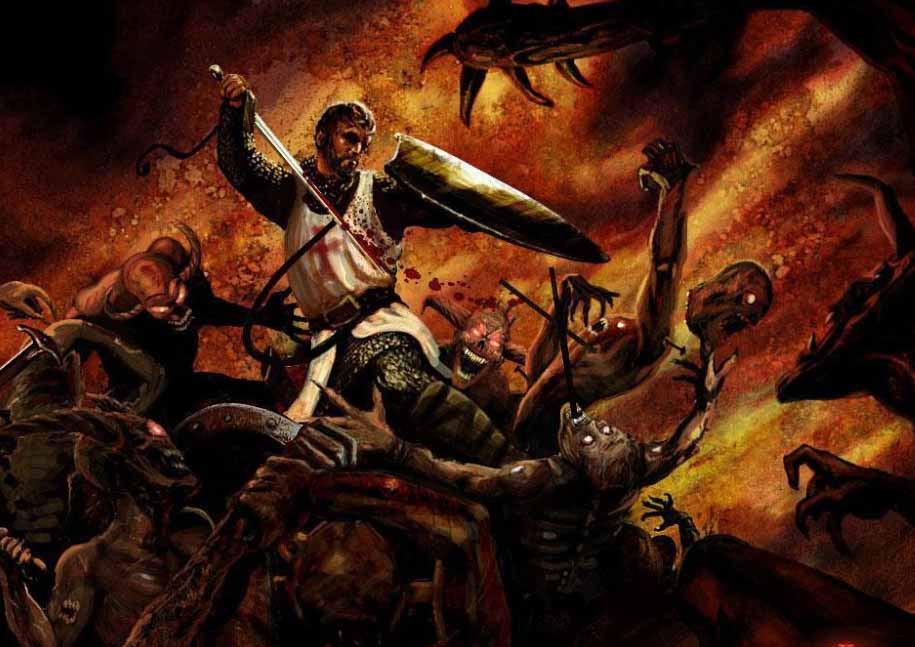
Among concepts that have nearly fallen out of use today yet remain very important on the Way of the Magus, the notion of honor occupies a special place.
In the pagan world, honor was one of the foremost values; to lose one’s honor was worse than to lose one’s life.
The word itself derives from the Old Slavic ch’sti, ch’tu — “to esteem, to read, to reckon”, cognate with Lithuanian skaitýti — “to read”, and Old Indic citti- — “thought”. The same root appears in the words chitat’, chtit’, schitat’, chot (the even number). The idea was that the property of an honorable person could be accounted for.
In Old Russian literature the word “honor” had three meanings — first, it denoted a person’s dignity, his high social standing; second, it served as a synonym for glory, especially martial glory; and third, it meant a special moral purity, sanctity. Conversely, “dishonor” meant lack of esteem, disgrace, implying not only human disrespect but also falling into “sin”, i.e. “impiety“. In most cases the Greek timē is translated as “honor.” Sometimes “honor” is also used to translate other Greek words: for example, euphemia (“reputation”), dosis (“grant”), geras (“reward”). In Greece, honor was considered the greatest quality for a hero; the Greeks understood honor as “honouring” appropriate to merit and rank — a fitting, respectful attitude. Honor is the hero’s most intimate and vulnerable aspect, the decisive cause of upheaval in the heroic world. For example, the plot of the Iliad is based on the quarrel between Achilles and Agamemnon, which arose because Agamemnon dishonored Achilles by taking a captive woman whom Achilles had earned as a prize after a successful battle; Hector, for the sake of martial honor, must set aside his love for his wife and young son and pity for his elderly father. In ancient Rome, the concept of honor (existimatio) mixed with the idea of civil rights; honor belonged to a person only insofar as he enjoyed the privileges of citizenship; those who were not Roman citizens did not enjoy honor.
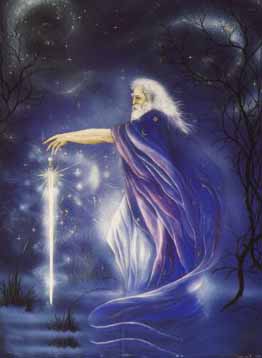
In all conceptions of honor, the key element is the conformity of the hero to certain standards and demands placed upon him. “To have honor” means, to the fullest degree, to conform to certain ideals.
For the Magus, the idea of honor aligns with the idea of the rules of his game. In other words, a Magus’s honor depends directly on how scrupulously he observes those rules. The clear awareness of the relativity of the rules themselves does not in the slightest diminish his scrupulous observance. Understanding the illusory nature of the game and the arbitrariness of the rules, the Magus nevertheless treats them with utmost seriousness, and it is precisely this seriousness — that is, the Magus’s honor — that makes him most effective.
In this sense, honor actually means consistency of behavior — the fulfillment of undertaken obligations (that is, their being accounted for — again the same root), even in cases when it seems at the moment that one could abandon them. (At the same time, it is important to understand that each set of rules is valid only under certain conditions, and when those conditions change, the rules change as well, and consequently the order of observance changes.)
Such consistency implies maximal composure — and therefore the integrity of the Magus’s intention, and in this respect the notion of honor converges with the idea of impeccability.
Thus, the honor of the Magus is his sense of self; it is his acceptance of responsibility for his decisions and the fulfillment of his undertaken obligations. Such a state, first, is a manifestation of the Magus’s will, and second, a testament to and which supports it. Both of these factors are important for increasing the effectiveness of the Way of the Magus, for his struggle for his independence and authenticity.
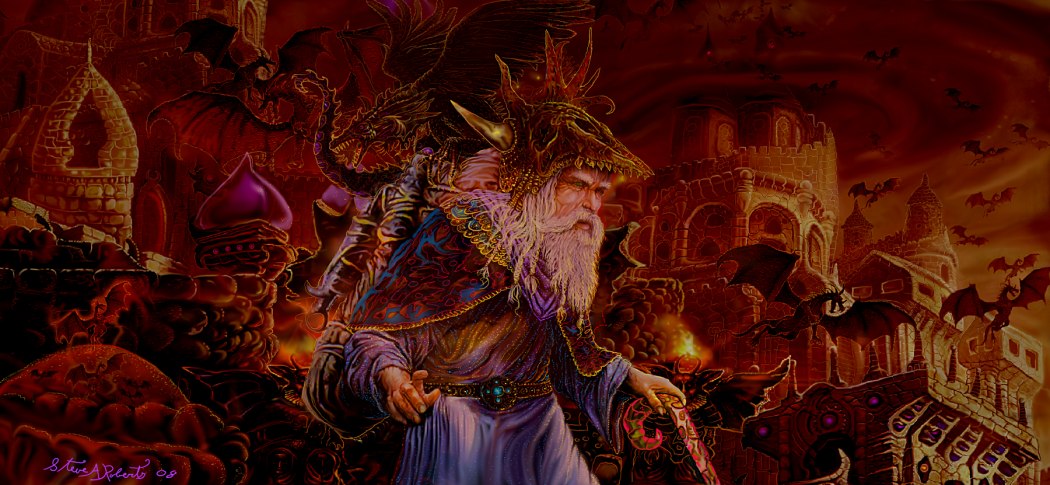




In these not boring times, the word honor has almost been forgotten. And in many modern sources that highlight various aspects of magic, honor is somehow not in honor… In this article, the parallels between honor, integrity, and effectiveness are very correctly drawn. Enmerkar – I will bring you as an example of a Titan of enlightening activity:)
Hello, En! Why do you think that now the word, as well as the very concept of ‘honor,’ has become almost an anachronism? It seems that many are interested in esotericism, there are many schools (real ones), but there is no such concept in society. Or does the egregore of magicians not intersect with the social one?
Well, why is there no such concept? It is not fashionable to talk about honor – this is true, but most, as before, test their actions for honesty or dishonor.
In my opinion, this concept has long turned into a ‘niche’. I think that the monotheistic religions played a significant role in this, as honor can be expressed as a measure of responsibility for one’s actions. The monotheistic cult creates its artificial rules, in which there is almost no place for independent behavior. Nowadays, almost the same can be observed in secular life.
It is quite logical that if society does not impose requirements for the honesty of its members, then citizens will not flaunt their honesty, and honest people do not become less or more … to be honest in the absolute means to be holy, and humans tend to err. Such public honesty, a kind of status of recognition, is not needed by a Magician as an antisocial element, while honesty with oneself, as an internal compass, is necessary.
Honor and honesty are not quite the same, and honor is not exhausted by the social element. Furthermore, ‘atonement’ is not a way to restore honor, but a way to renew a certain status – transitioning from the status of ‘criminal’ to ‘correct’, and to restore honor in this process, even greater internal work is needed.
I agree, it is certainly not the same … honor is an acquired quality of the subject, while honesty is a quality of the subject’s attitude towards something. Honor must be demanded, either externally or internally, otherwise, as a quality, it makes no sense. Honesty is, to a large extent, akin to sincerity/truthfulness, i.e., relationships not built on honesty or actions not performed with honesty are false/fictitious and can be said to generate internal conflicts. Having or not having honor is a personal choice, but to consciously act ‘dishonestly’ is fraught with deep internal conflicts; it is like constantly doing everything against the internal vector. From all of this, it seems to me that honesty is most suitable for the Path of the magician since it allows one to remain in harmony with one’s composition and, accordingly, act effectively, while honor can serve both as a bonus (fame, respect) facilitating advancement and as a burden (honor can be wounded, it can be tarnished) that slows it down, and ultimately, honor is an acquired quality, and therefore in the end, it becomes unnecessary…
Wonderful thoughts. Thank you.
[…] aspiration to keep it in an unclouded, self-consistent state — that is traditionally described as honor. In other words, the more firmly a Magus’s stream of mind is rooted in evolutionary aspiration, […]