Runic Orders
Like all sacral systems, the Futhark has its own order and inner logic. The sequence of the Runes reflects the multilevel understanding of reality held by the ancient erils.
This order may be approached from two standpoints: the ontological— that is, as the logic of the world-process “in time,” in its becoming — and the epistemological, as that same order reflected in the mind. These two perspectives correspond to two forms of a being’s development, two of its hypostases— the aspect of being and the aspect of mind; and these forms necessarily condition and mirror one another.
We have already discussed in sufficient detail the ontological order of the Runes, and the correspondence of the Aetts to the elements of the world-process as it unfolds.
Yet viewing the Futhark from the standpoint of its unfolding in the world mind is no less important.
If, from the standpoint of being, the logic of the Futhark is linear — sequential, processual — and its cyclicity follows from the very dynamics of realization, then from the standpoint of the levels of mind the Futhark appears more holistically. It unfolds not merely as a stream of realization, but as a system coming to disclosure. The “order of realization” aligns the Runes with the phases of creation, whereas the “order of disclosure” corresponds to the stages of awareness.
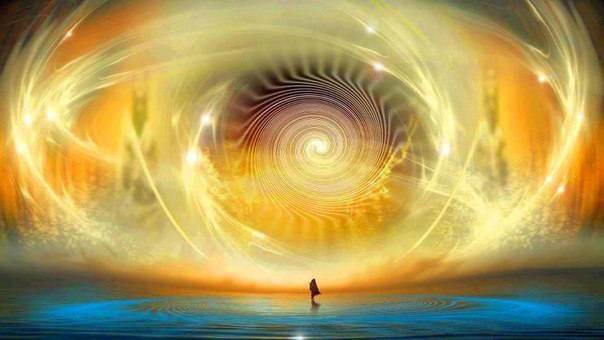
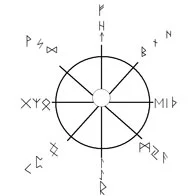
From the standpoint of mind, the unfolding of the Futhark proceeds neither from top to bottom nor from bottom to top, but from the center to the periphery.
In this view, any system is a conjunction of three components: the higher, “overseeing” one; the lower, “generative” one; and the middle, “realizing” one. Moreover, in the order of influences, the center holds the field of potencies — the “lower world” — while the periphery holds the field of control — the “upper world.” Between them — arising not only from their interaction but also as an autonomous active element — manifested mind is born: the “middle world.”
Therefore, if from the standpoint of realization Creation begins with the First Rune of the first Aett — with the primordial impulse of Fehu — then, from the standpoint of mind, the primordial nucleus of manifestation is original creative activity, the Seed of worlds — Hagalaz. This primary activity has three manifestations: at its “original level,” in the world of Potencies, it is not yet formed — it is only a spermatozoon seeking a path to its ovum (this is precisely the symbolism of Hail fertilizing the soil); in the Upper world it is already the primordial fire of creation, “earned income”; and in the middle world it is Man as active realization (Teyvaz).
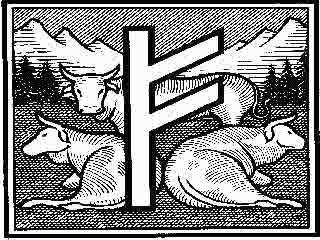
The second component — attractive Attractiveness — is expressed in the Depths (the Aett of Laws) as a call, pure attraction — “Need” — Nauthiz; in the Heights it manifests as the potential, deep might of Uruz; and in the Manifested as maternal care: the bearing and protection of the fetus — Berkana.
Thus the spermatozoon fertilizes the ovum, giving rise to the fetus. Yet this fetus must affirm itself as a distinct element: mind strives to find itself by opposing the whole remaining world and establishing its boundaries.
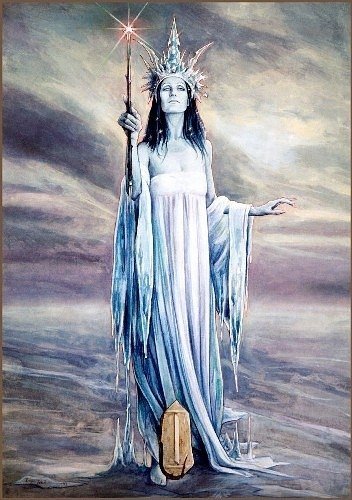
Self-affirmation — the establishment of Boundaries, necessary for bringing forth a discrete unit — appears as adolescent struggle and opposition: in the Depths this is Isa, an insurmountable Wall; in the Heights it is striving Thurisaz; and in the manifested sense it is the unbroken stallion Ehwaz.
Gradually, however, mind understands that it will not discover itself through resistance alone, and it opens to external influences. The child exchanges parental care for “the street”: instead of remaining under the influence of parents, it absorbs the influences of the “world” — society, friends — falling into the opposite extreme, dissolution in the currents of collective mind. At the level of Depths, this stage is symbolized by the turning of the Year — Jera — bringing its fruits and reflecting the turning of time; at the level of Heights, by the aspiration to self-expression, Ansuz; and at the level of realizations, by the socialization of Mannaz.
The rejection of origins — and the subsequent entry into mighty collective currents of mind — gives way to the search for oneself, the “road to oneself.” Mind must find its Way, its place in the overall system. At the level of Depths this is expressed as a sense of universal interconnectedness and structuredness: Eiwaz. As a higher aspiration, this search is symbolized by the Road, Raido; and as a concrete expression, it becomes an attempt to drink from different sources in order to find one’s own — learning, Laguz.
The next vector — striving to understand oneself and the world, born of the search for the Way — is expressed at the level of Depths as the Uncertainty of Perthr; at the level of Heights as the illuminating power of Kenaz; and at the level of “daytime mind” as the nurturing activity of Ingwaz. Little by little, mind cracks the “nut of knowledge,” clarifying for itself and disclosing within itself potencies and the regularities of the world-order.
This, in turn, engenders the sense that the being is not alien to the world. It begins to understand its place, and the world is no longer perceived as a hostile environment that must be fought, but as a home that must be cared for — and within which order must be established. At the level of Depths this is expressed by the state of Protectedness, Algiz; at the level of Heights by the law of Exchange, Gebo; and at the level of realizations by the construction of one’s “Fief” — Othila.
Finally, mind — formed, having found itself, and ready to transition to the next levels of development — comprehends, at its own level, both its place and the work that lies ahead. At the level of Depths this is reflected as the radiance of Sowelu; at the level of Heights as the joy of Wunjo; and at the level of realizations as the illumination of Dagaz.
Such a view of the Runes makes it possible to open new aspects of both “inner” and “outer” Galdr, and to forecast more clearly the results of vectorizing the force of realization and the force of awareness by means of particular Signs. For example, by carving Hagalaz we not only destroy the old system, but also create the seed of a new one — thereby activating both the recompense of Fehu and the activity of Teyvaz. Likewise, when we use Algiz for protection, we must understand that we thereby accept responsibility for what takes place in our “home,” and that we ourselves must care for our “gifts.”
The breadth of the Runic gaze — its inspiration — is an essential condition for the successful application of the Runes, both for transforming the world and for transforming the mind of the eril; and one is impossible without the other.

Hello! Perhaps I just imagined it, but in such a seamless, maximally postulated interpretation of the Runes or any similar systems like Tarot, there is at least the danger of mistaking the desired for the real. For example, there are cases when people who have read NLP and socionics gather into groups and start behaving according to ‘their psychotype’, squeezing their behavior into a narrow measured template, behaving unnaturally, as if ‘by the book’. With such an approach to the Runes, something similar may arise – a perceiving consciousness striving to get quickly from point A to point B (after all, the route exists) may resolve completely different tasks than those that follow the logic of its Path, but those that it should resolve at the chosen stage of the scenario, again ‘by the book’, shifting the responsibility for its movement to the ‘autopilot’ of the system. Nevertheless, I think the Runes are more of a free tool, indicating principles and interconnections, but not mandatory, rather recommendatory, leaving room for creativity and self-formation. And in general, it’s more pleasant to consider consciousness as primary, rather than matter or oneself for building the flow of the world by templates, and the world flow as a foundation for the development of oneself 🙂
I have a question: what is pleasant about believing that the world is chaotic, and what would be unpleasant about learning otherwise? Or perhaps, in your view, is there some other system that fully describes the world, not Tarot and runes, but something else? This question is truly important to me, as I have believed in order for quite some time) I’ve seen it myself. After working as a business coach for 10 years, I saw the same process based on principles. In thousands of variations, dependent on individuality and situation and current level. But it was the same process. And none of us got bored – everyone experienced their feelings, experiences, and insights to the fullest. I want to emphasize that it would be important for me to know your opinion because I come from a different side and have long forgotten what was important to me when I thought exactly as you do.
If the question is to me – I do not think the world is chaotic; on the contrary, I believe it is a cosmos, and it is extremely multi-faceted. There is a constant mixing of energies in it, osmotic interaction, self-expansion, not just simple crystallization. At the same time, some processes of energy connection are more evolutionarily successful, more stable, and are repeated more often; they are the logical result of the world’s development, but only in general cases. Most systems of development, as sets of recommendations and indications, are based on such ‘natural’ solutions, interpreted in different ways. On one hand, it is guidance for travelers to the invented bicycles to lighten their path and save time, but on the other hand, I believe that this approach can constrain consciousness in its cognitive activity. There is a concept of the ‘golden hammer,’ when one successful solution begins to be applied in appropriate and inappropriate situations, which leads to a misunderstanding of the functioning of the system by the user and its overall degradation. That’s where I see some danger in such ‘ideal aspirations’; no chaos here, just for development, power counteraction is always necessary – one’s Nakhash, Prometheus, call it what you like, while in such integral systems, I do not observe such dualism.
Thank you very much for your thoughts) on one hand, I know perfectly well about systems, that there are other systems beyond them and you automatically move into them as you fully realize the previous one (this applies to both runes and simple social movements), then I also know that in the runic reality, in case of boredom and stagnation – there is a whole Loki. And I also agreed with you that yes, it happens, and it’s all true – about the golden hammer and that sometimes the structure clearly does not fit. Therefore, I had to sit down for 20 minutes to reconcile my world anew, finding something that connects and is above these two points of view) I really enjoyed it) and expanded my boundaries a bit.
Is the direction definitely from the center to the periphery?
And where is the second process – from the periphery to the center?
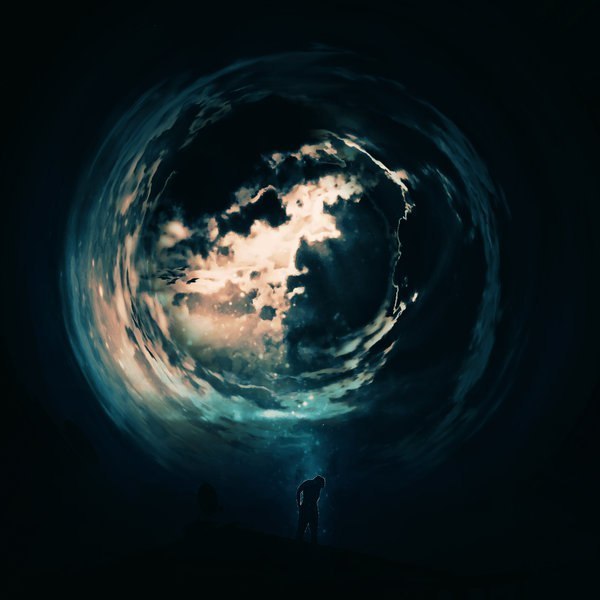
The vortex is a symbol of involution, opening acts of creation. The vortex is a spiral, but with a downward vector (from center to periphery), unlike another spiral, that of evolution, characterized by movement upward (from periphery to center). Involution is identical to the descent of Spirit into Matter, which means the creation of the manifested World. This reflects the ‘consent’ of the (Spirit) to ‘enter’ certain forms of Other-Being, into matter. Evolution is movement from periphery to center or ascent in a higher flow, from matter to existence beyond its laws (Existence of pure spirit or consciousness). These processes are cyclical and exist beyond the concepts of space-time; as soon as one cycle ends, the next begins. In Vedic philosophy, this act is expressed in the form of a swastika (left-handed – evolution, and right-handed – involution of spirit/consciousness), which essentially means an infinite process.