
Questions and Answers
A widespread view of teaching Magic is that students should ask questions and teachers should answer them. This model is treated as universal; it is applied to ordinary education as well. Yet even in ordinary education it achieves little, and in Magic it is outright unacceptable.
The questions that confront a student of Magic can, условно, be divided into two groups. The first — overwhelmingly the larger — are driven by curiosity, and the answers are purely informational. This is the “I want to know everything” stance cultivated by social habit. The student looks around, reflects on the world, and asks questions to which he is, in truth, indifferent; the questioning becomes a social performance.

The second, smaller group consists of problems whose solution is genuinely essential for advancing along the Way. Yet even answers to questions in this group do not necessarily help in overcoming the problems themselves. When the Master answers such questions, he risks replacing the search for a solution with knowledge of a solution — forming a habit in which escape from difficulty is reduced to sorting through known fixes and forcing an old answer onto a new task. In Magic, that approach can be fatal: even a seemingly insignificant difference can completely alter an object’s energetic structure and make a solution that fits a very similar problem utterly unsuitable.
For example, when developing a ritual for summoning a spirit, a Magus may borrow an incantation that worked in calling another spirit, reasoning from some resemblance between them (for instance, their hierarchical rank). The incantation may work — or it may produce the opposite effect, turning the spirit against the Magus. Then the spirit begins to persecute the Magus, demanding the error be corrected, and that is not always easy to achieve. I know cases where such mistakes cost practitioners dearly.

A more effective strategy is for the Magus not to choose a ready-made solution, but to construct it anew each time — relying on knowledge and experience, and refusing to miss even the smallest detail.
To avoid this trap, the central skill that must be cultivated in a student of Magic is the ability to pose questions correctly. A correctly posed question already contains most of the answer: its formulation brings the questioner into direct contact with the problem, and therefore with the way to resolve it. In such a case, all the Master must do is nudge the Student toward the answer — because that nudge is often what lacks the strength.
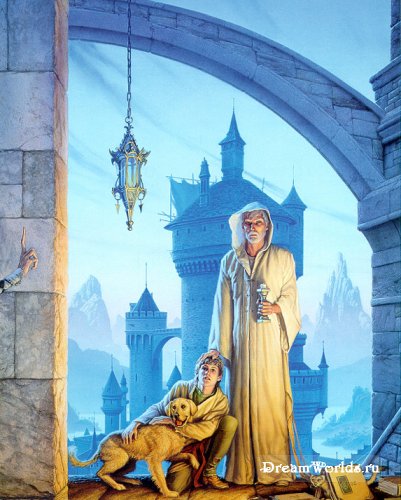
All of this leads to a conclusion that captures the essence of traditional instruction in Magic: the better the Master, the less he tries to teach. A good teacher of Magic, instead of answering the student’s questions with solemn importance, should walk with him again through the Way of learning — exposed to all the dangers of that Way — with only one difference: his strength is greater, and he knows where the traps lie. Yet remember: when two people walk through the jungle, their passage is more effective if one knows the route; but leopards do not spare a traveler because he knows the way. The dangers threaten both. The teaching of Magic is a hard ordeal for student and teacher alike; completing it successfully is their shared victory, just as failure is their shared defeat.







To start, the teacher should introduce the student to what lies ahead and then guide them along their learning path, otherwise, the student may not grant the trust placed in them.
Now it is clear why you do not answer all the questions. Thank you for that.