
Honor and Honesty

As we have already discussed, for the Magus honesty— that is, self-identity, consistency, and responsibility — is the key quality that safeguards the evolutionary vector of the current of his mind.
At the same time, the degree of this self-identity forms in him a special characteristic —honor— which becomes an “energetic equivalent”: a measure of the gatheredness and steadiness of the current of his manifestation.
In other words, for the Magus, honesty as an inner quality and honor as a state are not merely ethical categories, but tangible factors that directly affect his success and efficacy.

We have also discussed that, etymologically, these terms trace back to meanings such as “accounting” and “enumeration” — that is, the determination of one’s inner qualities and fidelity to them. Accordingly, it is impossible to be honest without knowing oneself — without the identification of one’s essential characteristics. For this reason, simply “following” the first impulses and urges that arise does not necessarily mean having honor, since those urges may have a destructive nature.
Precisely to describe a state of mind that follows its actual characteristics, notions such as the “hidden light,” “epinoia,” “augoeidos,” and other “ideal” sources of inner vision are introduced. What these notions share is “hiddenness”: the need to search within oneself and uncover one’s essential qualities.
From this point of view, it becomes evident that only a sufficiently developed mind can be truly honest — one capable of “separating the grain from the chaff.” Thus, honor is not something given to a being from the beginning, but something that must be cultivated and won.
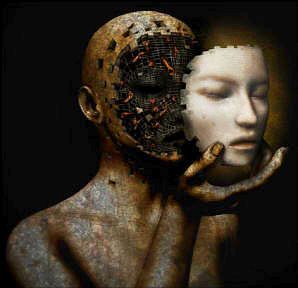
Accordingly, it also becomes clear that at the initial stages of development the “guiding star” is the quality of conscience (a word meaning co-knowledge— a “shared” knowing or sensation that seems to arrive “from outside,” from “higher,” still-unknown layers of mind). As development proceeds, this is replaced by the property of honor: an already aware and structured reliance upon one’s nature.
Honor thus becomes both the foundation and the condition for the manifestation and accumulation of the next energy —baraka. If honor signifies an inner evolutionary striving, then mastery is its “outer” expression. From what has been said, it is clear that only one who has attained stable, directed movement within himself can induce evolutionary changes outwardly; moreover, this condition is not a speculative category but a concrete energetic fact.
This is precisely why the energy of mastery also bears the name “tzedakah,” “piety” — that is, “honor directed toward the good,” or, in other words, inner development that awakens development outwardly. It is well known that this energy cannot be imitated, and that a wayfarer’s level of development is judged precisely by his capacity to evoke growth in others. One may say that a successful wayfarer “induces honor” in his surroundings, helping other wayfarers discover their qualities and strive to follow them. In this sense, honor is “contagious,” like other concrete energetic constituents of the being of the Magus.
The Magus must understand that his search, his effort, his struggle are never limited to himself alone. By identifying his nature — by bringing the current of his mind into correspondence with its essential characteristics — the Magus performs both a microcosmic and a macrocosmic act, contributing to the harmonization of mind as such. The more honest the Magus is with himself, the more clearly he sees his characteristics and follows them, the more responsible and impeccable he becomes, the greater his contribution to the overall “purification” of the cosmos. For this reason, it is so often repeated that the perfection of the world must begin with the perfection of oneself.







This can be seen as the interaction of three forces: Devotion + Service = Honor. In this sense, the quality of honesty, as realized devotion to the principle of “telling the truth” will be a special case of the principle of interaction.
Sometimes this path is called the path of following duty (dharma), which, together with three others (artha, kama, moksha – division by ultimate goal), constitutes everything possible in the current manifestation of the cosmos.
As far as I understand the idea of “dharma”, this word would be more accurately translated not as “duty” but as “order”, just as, for example, the Chinese “dao”. And in this sense, following one’s own Order, that is – the flow through which consciousness flows, is of course, honor. It seems to me that it would be more accurate to describe this state not as “do what you must”, but as “do what you are and what you can be”.
Dharma is a multi-valued concept, and in the context of the four paths, it is undoubtedly, from my perspective, duty. Duty in the most direct sense, the most mundane. That is, the necessity to fulfill obligations taken before someone (a simple promise). As much as a person is “faithful to their word”, that much Honor is distributed to them.
But in a more general sense, we can undoubtedly speak of the inherent existential duty of each being either to themselves (more precisely to their super-Ego) or to God (which is equivalent). Accordingly, Honor as a result of devoted adherence to this existential duty and Dishonor as a result of betrayal are also present.
Therefore, you are undoubtedly right in emphasizing the aspect of “do what you are…”. But “do what you must” should not be disregarded either. In the stream of consciousness, a sub-stream is formed – the so-called “sense of duty”, upon violation of which a certain type of “disturbance” (the voice of conscience) arises. Therefore, for a harmonized stream; “do what you are…” and “do what you must” are two equivalent statements.
I fear that very often what we “must” is decided for us by others: society/environment/parents, etc., moral imperatives, concepts, shadows, and distractors. Therefore, if we are to speak in Eastern terms, I would relate “duty” to the category of karma but not dharma. It is clear that one must be true to their word, one must fulfill their obligations made, and all this, in my opinion, is called “responsibility”, but not “duty”, as it arises not from violence, but from understanding causal relationships. Having sown a cause (for example, giving a promise) – it is unnatural to refuse the effect – that is, its fulfillment. And this cause-and-effect relationship, in my view, is precisely described by the category of “order“, and then relates to dharma. But if we begin to pressure ourselves, to force ideas: “I must fulfill my promise”, if this fulfillment is not natural for us – it simply attests to a low level of understanding, insufficient awareness, an inability to see simple regularities, and thus triggers the following processes – responsibility for not taking responsibility – and then relates to the category of karma.
Undoubtedly, the surrounding life is far from ideal, and our “sense of duty” is, to put it mildly, not entirely harmonized and can create “holes” through which life energy leaks out. Many predators are aware of such distortions and exploit this vulnerability (the notorious manipulations of the kind “a honest person must…”).
The category of karma, however, in my humble opinion, does not quite apply here. We can speak of karma and duty (in the sense of “must necessarily follow from”) for several reasons. One of which is the peculiarities of the Russian language in the use of the word “duty” (semantics). The second is boundary conditions of the path. That is, although there are 4 relatively directional paths, their beginnings and ends coincide – these are like two poles of intersection of 4 “meridians” on the surface of a sphere. And although in private cases these concepts may coincide, from a practical viewpoint (due to our current position), it is more profitable to consider not these special points, but the entire “surface”.
So I would not mix karma (which is the law and a “reflection” of Will) with dharma, which is an obligation (and, as you emphasize, voluntary). In essence, goodwill is the boundary between Duty and Law. We are certainly not talking about earthly law (a norm of law), which is merely a contract (and pertains to obligations).
It is also said that the Law manifests itself as a triad of forces Will + Obedience = Justice (hamingiya). Whereas Duty manifests through Devotion + Service = Honor (baraka). But here I am not ready to assert this categorically.
In the context of your dialogue and in the context of Knowledge of Self, the names of the Norns come to mind: Fate, Becoming, Duty. …………………..For example, the duty of a patriot is to fight in the war for the Motherland, the duty of conscious parents is to care for their children. And here Following Duty can be identified with Following Inner Order, for in general neither the patriot nor the parents promised anyone to follow their duty, except to themselves. And fulfilling the duty is internally correct and honest towards oneself, despite the fact that it can be very heavy or deadly dangerous………………….But the Duty of a Magician – (as Don Juan once said, that if he and the magicians of his line stray from the Path of the Warrior, they will die) means that the Duty of a Magician is to Follow the Path, because otherwise all efforts and time spent will be in vain and meaningless…
I don’t know what duty or honor is. I know what I was born for. I know my goals. Is knowing and fulfilling them my duty or honor? Is there a difference?
Duty for me is to be obligated to someone. Honor is to be oneself and defend one’s interests.
“.. There are articles that are written from the heart… Their aim is to reach your inner being, to cleanse, to awaken your heart… To hear it. To feel its power and turn towards it. But people continue to read with their minds, continue to wave their brains in search of dry definitions. Why?… ”
Does anyone reading this have the question – do they have inner honesty or not?) There is a silent island within everyone, which is sometimes referred to as the heart… what is honesty? The answer lies within you, comrades.
Perhaps it is worth writing what is behind this message, rather than acting according to the principle of “a stone thrown into the water”))
After reading the article, I had a question – is there honesty in me (or it would be more correct to say – how honest am I… Before myself. Because if a person is honest with themselves, then they are honest with others – I thought. Moreover, I decided that honesty is a measure of strength… and I can learn this through my reflections, i.e., my surroundings… How honest they are with me and “not faking”, open. Here you even define not with your mind, but with feeling. And in this feeling, there arose discomfort, as if a false note got lost somewhere. I have problems with honesty, but I couldn’t analyze with my mind which note in me is false. So I dove deeper into feeling… Something that also has a facet of honesty (contains it within itself) comes from the depths of being, incarnating in its pristine form outside, it means to live from the heart… And I wanted to write this here)) The first question arose immediately – “why?” A good question – I immediately started to search for an explanation for my action, to come up with usefulness, but I felt how my notes are false. My actions were conditioned by egoism. An interesting paradox – isn’t it?) And how are things with you? Find your honesty by asking your willful spirit or your heart or maybe someone doesn’t even need to search) Something like that.
Honesty = truth, which relates to the space of Neka. This space is harmony, the place where all forces are balanced. So to be honest (a part of the truth) means to reflect your desires wholistically.
Numen
Honor is essentially past experience, which makes a person/magician who they are now. And without honor, the true self cannot exist, at least not for the current life.
In another way, honor is the observance of the rules of the Game that allow one to Win in this Game.
Therefore, it was not a sin to shoot in duels for honor. And to die for honor was always more preferable for a warrior than to lose it and continue to live, for a subsequent life without honor would lose all original meaning and logic, while dying for honor would allow that meaning to be preserved and continue the Path.
(Non-Warriors cannot understand this.)
Russian officers knew this very well. Although they did sometimes exaggerate.
The debt book and contemplation of oneself in it. It allows following one’s duty.
Transforming yourself… you transform the world. Something open within yourself… over time opens up in your close environment. This is contagious.
As always, thank you.