
Can the Voice of the Heart Be Heard?

The current reading of the Law, formulated at the beginning of the twentieth century by the great Magus, holds that the Way to attaining liberation consists in listening to your heart and following its commands.
At the same time, many questions often arise about what exactly one should “listen” to, how to do it, how to identify what is heard, and how to determine whether the perceived “voice” is the right one.
To begin to sort out these questions, let us first clarify what Myth calls “the voice of the heart.”

In laying the foundation of the Magic of the New Age, the Founders of the Golden Dawn developed and expanded the long-known idea of the possibility and necessity of contact between the “diurnal” layers of the mind and its foundation, the deep (or, as it turned out to be identical, the upper) layers.
As a method of “establishing” this self-regulation of the mind they chose the Abramelin Ritual, supplemented by a substantially reworked Hellenistic “Call of the Headless,” which produced the well-known and by the mid-twentieth century practically canonical Way of Attaining Knowledge and Conversation.
Various Traditions have, over their histories, developed many similar methods, but one rarely encounters such an unconditional requirement for this step as a key element of the Way.
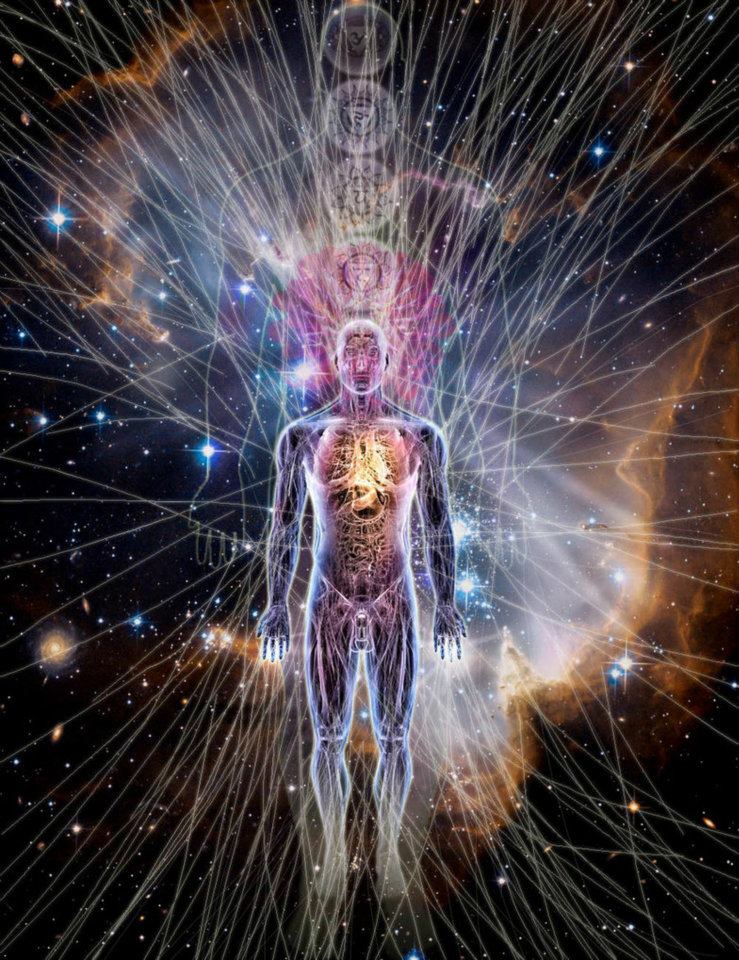
In any case, the Myths converge on two points: first, far from all impulses, urges, and drives that arise in the mind are rooted in the mind itself, and second, it is possible (and, for those striving for development — necessary) to differentiate among these impulses those that belong to the basic, original, essential nature of that individual stream of mind.
Moreover, the realization of such essential drives is regarded as the Way to achieving the “target,” a fully actualized, and therefore liberated, state of mind.
Accordingly, the success of development is determined largely by the “correct selection” and ranking of the impulses that arise in the mind as ones to be realized, replaced, or transformed.

To carry out such a classification, one must, first, identify as many impulses as possible (this is achieved by meta-thinking — self-observation and reflection), and, second, establish their origin.
Despite their apparent obviousness, both of these steps often present difficulties.
The first problem is that people often do not want to know themselves. Most frequently this unwillingness arises from a rejection of the results of reflection because they do not fit accepted images and criteria of the “true self”: the mind tries to look inward, discovers many impulses that do not fit its self-image, and decides to ignore or deny a number of drives. At the same time, other, not yet fully identified drives are often rejected as well, by association out of fear that they too will fail to fit the Procrustean bed of that self-image.

Similar problems arise at the next step, when the mind identifies as “its own” impulses that conform to its criteria, and “alien” those that do not. In doing so, the nature and sources of the criteria themselves are often set aside and subjected either to no analysis at all or only to superficial scrutiny.
Therefore, in order to learn to “listen to your heart,” one must first learn to listen to all the “voices” speaking, shouting, and whispering in the mind — that is, to detect the maximum number of impulses — desires and drives — present in the stream of mind. It is very important, meanwhile, not to engage with those impulses, regardless of their attractiveness and intensity, and to maintain the observing state of the meta-mind.
This capacity is often called “witnessing” in contemporary spiritual literature and lies at the core of such traditional approaches as, for example, Zen Buddhism; it is also reflected in the famous hermetic injunction: “Know thyself.”

Less obvious is the next step — identifying the sources of the discovered impulses.
Traditionally, two approaches to this identification are possible — “deductive” and “inductive.”
The first approach (exemplified by the Abramelin Ritual mentioned above and other methods of Vision Quest) involves a transcendental shift of the mind to a level free of contamination, and in considering impulses from that vantage point — in other words, the discovery of one’s “true will.”
The second approach assumes the sequential discarding of alien impulses, testing the remaining ones, discarding them again, and so on until only impulses unclouded by foreignness remain. Essentially, this approach amounts to Inner Goetia and consists in “testing” and “questioning,” and therefore requires significant skills in inner honesty as well as knowledge and classifications of all manner of destructive influences that develop in the flow of the mind.

In fact, Goetia is traditionally learned precisely with the aim of such a gradual internal distillation. In practice this usually means attempts to realize all the mature impulses, with later recording of their results, because an impulse once realized no longer “masks” itself and is available for analysis in terms of its evolutionary value, harmony with the rest of the system, and energetic fullness. Thus, the three questions one should ask oneself after the realization of a desire/drive are: 1) Did I become stronger from this realization (that is, did my inner capacities expand)? 2) Did I become more harmonious (that is, did internal contradictions diminish)? 3) Was this an use of energy or its dissipation (that is, did new prospects open up)? If the answers to all these questions are positive, one should try to recall the state in which the impulse was identified and enter it in the category “presumably essential”; if the answer to at least one of the questions is negative, the state should be considered “conditionally alien,” and both hypotheses should be rechecked later. Thus, gradually one can most fully identify that state of mind in which essential impulses are born and separate it from those states that correspond to the birth of alien drives.

In any case, the Way to development does not lie in suppression of impulses, but through their realization, identification, and analysis, which results in control over their arising at the stage of germination by managing mental states.
The key point here is complete self-knowledge, self-observation, and self-recording. Problems arise when “dark corners” remain in the mind not encompassed by the meta-mind, because it is precisely in such shadowed areas that monsters usually nest.






A very necessary article, esteemed Enmerkar. Thank you!
Dear Enmerkar! Your website is 10 years old! Congratulations! I want you to be happy!
I join the comments written above. Thank you, Enmerkar.