Enmerkar's Blog contains over 1200 original articles of an esoteric nature.
Enter your search query and you will find the material you need
01.03.2009 / 3
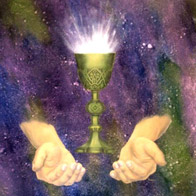
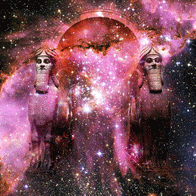
We have already spoken of artifacts that have affected (at least on the psychological level) the course of human history — the Spear of Destiny and the Holy Grail.
Yet these artifacts, though the best known, are not the only objects shrouded in mystery and legend.
Another such Item is the great Sword of Nergal.
READ ARTICLE
28.02.2009 / 5
The fundamental difference between the early and later attitudes toward the world’s duality is evident: over time the polarization acquires a strongly felt emotional coloring — a positive attitude toward Light and a negative one toward Darkness. Apparently this shift reflects processes that took place in humanity’s awareness of the world-process, its origins and purposes.
READ ARTICLE
27.02.2009 / 4
Always and everywhere, the Gnostics were anathematized, tortured, and burned. Yet the enchantment of these views proved stronger than the pyre; in the form of countless schools and movements, they have survived into our own day.
READ ARTICLE
26.02.2009 / 1
The ideal of Galahad — the pure man — charted a course in the age of monastic knighthood to new heights of spirit and insight.
It was precisely this ideal that was embraced both by the Albigensians (the Cathars) and, later, by the Templars.
READ ARTICLE
25.02.2009 / 6
Although the picture of the world is fairly stable, from time to time fluctuations arise in it, and it trembles and thins. It is at those moments that its provisional nature is revealed and another reality peers through the attenuated veil.
READ ARTICLE
24.02.2009 / 7
The role of cauldrons and sacred vessels was very great in ancient culture, from the Celtic cauldron of Gundestrup to the cup of the Holy Grail.
READ ARTICLE
23.02.2009 / 4
The best known of the spears in European mythology are Odin’s Spear (Gungnir), Lugh’s Spear (Assal) and Longinus’ Spear (the Spear of Destiny).
READ ARTICLE
22.02.2009 / 26
At the same time, there are far more examples of people who, having abandoned the support of Traditions, ended up nowhere, having accumulated nothing but overweening self-conceit.
READ ARTICLE
21.02.2009 / 11
Magical traditions of different eras and peoples clearly understood the importance of Power in both magical and everyday life. Naturally, the question arose: how does one increase the level of Power?
There are several fundamentally important answers to this question.
READ ARTICLE
20.02.2009 / 6
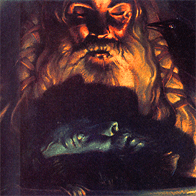
The Eddic tales of Ragnarøkr — the final battle between the gods of the second generation and the thurses — include a strange episode: the battle begins with the unconquerable Odin, the Great Aesir, riding straight into the maw of the wolf Fenrir, where he perishes.
READ ARTICLE
19.02.2009 / 6
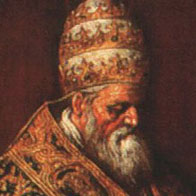
The principal work attributed to Honorius is the “Grimoire of Honorius.” The “Manuscript of Honorius” was first printed in Rome between 1628 and 1671. No manuscripts of this text have survived, and the first printed edition appeared only in the 17th century in France. According to Arthur Waite, this book, attributed to the Roman Pope, is a malicious forgery intended to discredit the Catholic Church.
READ ARTICLE
18.02.2009 / 5
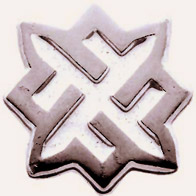
Oktoada, as the static imprint of the Quadripolar Quaternary, signifies a moment in infinite extension, the eternal present that lies beyond time
READ ARTICLE
17.02.2009 / 12
In the folklore of the British peoples, a plot appears often enough to be called “marvelous funerals” — the funerals of the Fair Folk. Yet tales and legends repeat that Fairies do not die — at least, not of old age (they can only be killed or mortally wounded).
Yet at times they grow so weary of life that they begin to dream of death, which would deliver them from the burden of being. And to die, a Fairy must obtain an immortal soul, like a human one…
One would very much not want there to be more of such “marvelous funerals”…
READ ARTICLE