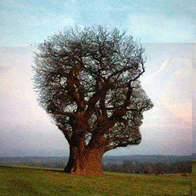
Ancestral force, ancestral ties, ancestral debts — all these concepts are connected to the Physiological egregore. This term typically denotes the general energetic structure of a particular lineage or family.
Other Magic
Пишите мне
Enmerkar's Blog contains over 1200 original articles of an esoteric nature.
Enter your search query and you will find the material you need
Ancestral force, ancestral ties, ancestral debts — all these concepts are connected to the Physiological egregore. This term typically denotes the general energetic structure of a particular lineage or family.
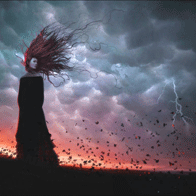
Anyone who, in one way or another, has had the experience of perceiving the Interworld has noticed that a strong wind constantly blows there. Since it is odd to attribute the properties of earthly weather to the Elements, the question arises: what is the nature of this wind and what explains its its strength and constancy.
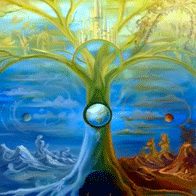
World mythology contains many images of the Cosmic Tree. Yet analogies often arise where their fit is not harmonious. An example of such a strained analogy is the common conflation of the Kabbalistic Tree of Life with the pagan World Tree (in particular, Yggdrasil).
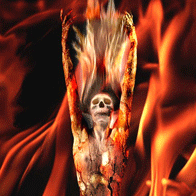
Although the concept of “Hell” in the familiar Christian sense is foreign to magical thought, magic nonetheless organically includes the notion of grim Worlds of Retribution.
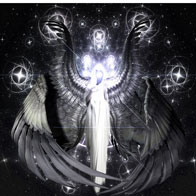
The Myth under consideration describes life as an essentially unified, yet differentiated Flow, made up of individual Waves.
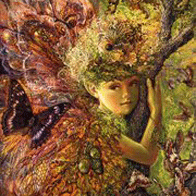
The Slavs were in particularly close communication with the spirits of nature, which is why Slavic lower mythology preserved numerous descriptions of the character and peculiarities of various Stikhials.
Arguably it is difficult to find, in any mythology, a figure as contradictory both in its very nature and in the attitudes toward it as Loki — the Cunning Aesir of the North.
In fact, the point is precisely that the shared elements contained in the Compositions of different people, illuminated by their unique individuality, when properly combined are perceived and brought into awareness much more effectively and, accordingly, lead to a greater accumulation of Power than one-sided, purely personal development of awareness.
If the process of the Father entering the Mother, the Spirit entering Matter, is excessively accelerated, it leads to traumatic consequences, since the new, light-filled elements do not have time to integrate into the existing system.
The sole reality acknowledged was precisely the Most High, who, in proceeding to the creation of the World, was conceived in his creative aspect as Rod the All-Sustainer.
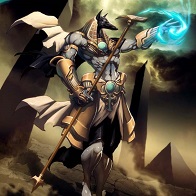
In addition to the Guide who helps the soul cross from life to death, this journey requires a figure who makes the process irreversible. It is precisely the Ferryman’s function of severing ties that renders him the bleakest character in the drama of disembodiment.
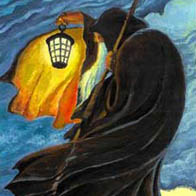
We have said many times that at a certain stage in the development of the Magus’s self-awareness he confronts the obvious fact of the falsity of the world’s ordering, the error of the basic principles of the worldview, and the inauthenticity of the motives for existence within that picture. At this moment the Magus experiences a kind of “midlife crisis,” but far more serious, often accompanied by illness and depression, and leading to an irreversible change in his mind.
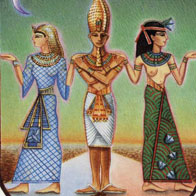
Most schools and teachings regard the possession of free will as the most important distinction of a human being.
We have already said that, for the Magi, “will” signifies the capacity to create stable vectors of desire. But what, then, is its freedom?