Any collectivity, any multiplicity, strives to individualize. The whole process of evolution consists in organizing simpler elements into more complex wholes, and their individualization.


Other Magic
Пишите мне
Enmerkar's Blog contains over 1200 original articles of an esoteric nature.
Enter your search query and you will find the material you need
Any collectivity, any multiplicity, strives to individualize. The whole process of evolution consists in organizing simpler elements into more complex wholes, and their individualization.
It is well known that unlearning what has been learned wrongly is much harder than learning it for the first time. A wrong, profane understanding imposes a perceptual cliché that is subsequently very difficult to shake off.

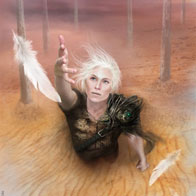
This is exactly how the pagan schools perished under the onslaught of Christianity: Magi who failed to assess the situation made critical mistakes, and Power (the Gods) turned away from them.

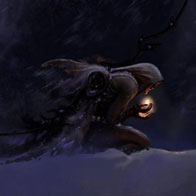
Power flows only to where there is room for it. The reverse is also true: as soon as a place for Power appears, a readiness to receive it, Power must flow there.

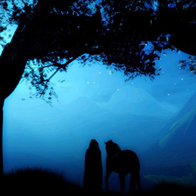
Long ago people understood: love brings a person not only light but also darkness; it not only elevates, it also oppresses.

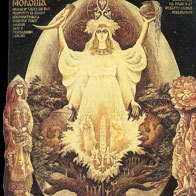
The ancient Mother, Mokosh is older than Creation itself. She does not belong to the strictly Creative pantheon of the Slavs, yet she stands within their great Ennead.
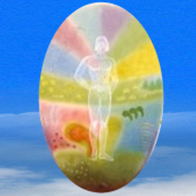
It often seems that the “Vision” described in Mesoamerican literature and “aura vision” are the same ability.

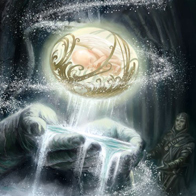
Among the luminous hierarchies of ministering spirits there exists one as necessary to human development as it is inaccessible to the human mind.

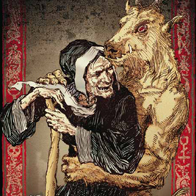
Spells and love charms, curses and “crowns of celibacy” — these familiar manipulations either grew out of, or, rather, are the degenerate product of, two branches of Magic — Nominative and Contact (contagious, partial, sympathetic).
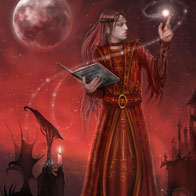
Mass culture has created an extremely alluring — yet utterly false — image of such institutions. It suggests that a person who finds a “secret book” or a “secret amulet” automatically receives Power and strength that strike the imagination.
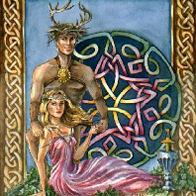
Beltane or Beltan (Ir. Bealtaine, Scot. Bealltainn, Eng. Beltane) is a Celtic festival marking the beginning of the bright half of the year, traditionally celebrated on May 1.
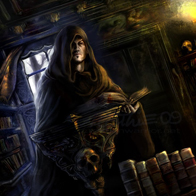
Among the Grimoires of the so-called “Solomonic” cycle, aside from the “Keys”, the best known is the Great Grimoire (Grand Grimoire), preserved in several variants that differ little from one another.
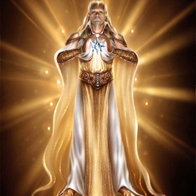
Prav also has a microcosmic application — in the sense of the right, that is, one’s own Way.
In fact, the Way to Power is always guided by Prav, directed and governed by it.