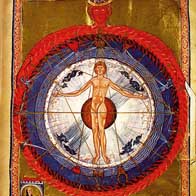
On the one hand, beings whose level of mind permits free interaction with one another may exist at four stages of development of mind, and on the other hand, each such level (traditionally called a “wave of life”) inevitably includes four sublevels.



Other Magic
Пишите мне
Enmerkar's Blog contains over 1200 original articles of an esoteric nature.
Enter your search query and you will find the material you need
On the one hand, beings whose level of mind permits free interaction with one another may exist at four stages of development of mind, and on the other hand, each such level (traditionally called a “wave of life”) inevitably includes four sublevels.
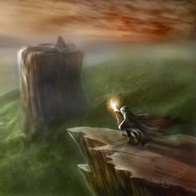
You must ask your heart a thousand times whether this is its Way before you set out upon it, and two thousand times before you leave it.

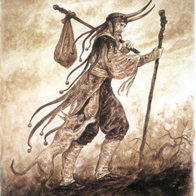
A person has no sufficient grounds to judge confidently and unambiguously what his ultimate goal should be (the best available result of his activity), and therefore he must strive to reach such a degree of development that these grounds will appear.

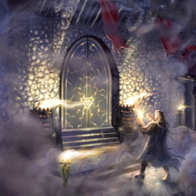
Traditionally, a chance is called a concurrence of circumstances that opens a new opportunity for a short time, the use of which alters the direction of the flow of events.


Emptiness always denotes cold, an absence of motion, while fullness, although it does not guarantee motion, gives it a chance.
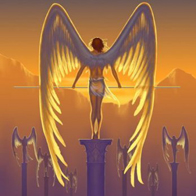
While it draws a hard line between “angels” and “qliphothic” forces, Kabbalah still states plainly the — put mildly — unfriendly attitude of certain angels toward man.

People have always intuitively felt the dualism of Power: it is a vortex, and yet it is a Flow. It is cyclical, and at the same time always directed.
The notion that every event has a kind of introduction, a prelude manifesting in the world and open to observation, goes back to hoary antiquity.

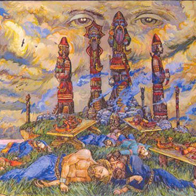
The very debate over the authenticity of such sources draws wide attention to the revival (or reconstruction) of paganism itself, and thus expands the horizon of myths available to the human mind.
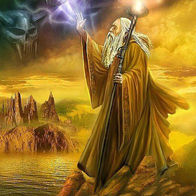
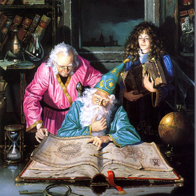
It is unlikely that there is a practicing Magus who does not know this work, which inspired Goethe and J. Dee, lauded by some as a “textbook of Magic” and dismissed by others as merely a “play of the mind”.
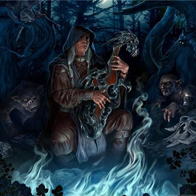
For the Magus it is very important not to “fight” fear, since such a struggle often drives fear into the subconscious; rather, one should become aware of fear as a natural reaction, face it, and—without pretending that “it’s not scary”—endeavor to preserve clear-headed judgment and steadily proceed toward one’s goal.


The teaching of Magic is a hard ordeal for student and teacher alike; completing it successfully is their shared victory, just as failure is their shared defeat.

By entering into interaction with the different Kingdoms of nature, the Magus learns to see the World more broadly and more deeply