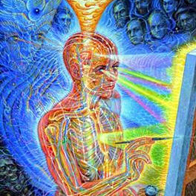
The art of translating objects and situations from potential existence into actuality through the application of the operator’s will was regarded as key to attaining Power and Wisdom.


Other Magic
Пишите мне
Enmerkar's Blog contains over 1200 original articles of an esoteric nature.
Enter your search query and you will find the material you need
The art of translating objects and situations from potential existence into actuality through the application of the operator’s will was regarded as key to attaining Power and Wisdom.
There are many documented cases in which directors or staff of reserves that include Places of Power began jealously guarding those sites against all visitors; similar situations have occurred with museum personnel who handled magical artifacts.


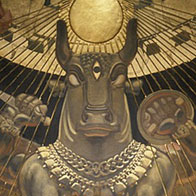
For the ancient person, the gods were a living objective reality not because he lacked any notion of Jungian psychology, but because he understood the principle of analogies that underlies manifestation.


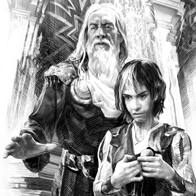
By offering no concessions, the Master steels the student’s spirit, preparing him for real battles in which the stakes are higher than life.


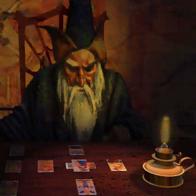
Using a sephirothic spread of the Arcana in accordance with the current situation, and skillfully swapping cards within that spread, the operator is capable of quite effectively changing situations in the desired direction.
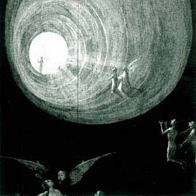
The soul is understood as the product of the spirit’s action upon the body, “ensouled matter,” which arises as a potentiality at the very beginning of creation, and, as the potentials of the monads are realized, grows.
According to the magical myth, behind each element stands an entity that governs it — a deity or a ministering spirit — for whom that element is as much a “middle part” as the human’s “outer body”.
The immutable part of an object is commonly called that object’s “matrix”; the Gnostics called it the “logos”, the absolute model, and the ancient Sumerians called such a matrix “Me”.
Forming the House of realization—whether at the level of a single operation or the whole life of a Magus (Line)—is the crucial part of the entire process, creating a kind of “double being” composed of the symbiosis of the creator (the Magus) and his creation (the realization).
Strangely, in the public mind an attitude has formed toward Magic and occultism, as well as Runes and shamanic practices, treating them as something inherently common knowledge and universally accessible.
There is no need to argue over who is more right, wiser, or stronger; there is no need to squander power on fighting one another: we all stand on the same side of the barricades, while chaos and death stand on the other. Do not make their victory easier.

Not every manipulation of the energies of the dead can be classified as necromancy. Unlike coercive, violent summonings, the tradition also knew of a voluntary renunciation of ordinary disembodiment.
In ordinary mind the words “sexual ritual” conjure an image of naked people cavorting around a fire, waiting for the moment when they can stop hopping and begin coupling.