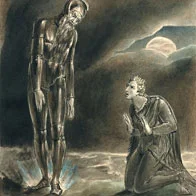
An encounter with the Breath of Bones is the same as encountering any corpse — unpleasant, ritually unclean, but in itself not dangerous — unless, of course, you make mistakes.



Other Magic
Пишите мне
Enmerkar's Blog contains over 1200 original articles of an esoteric nature.
Enter your search query and you will find the material you need
An encounter with the Breath of Bones is the same as encountering any corpse — unpleasant, ritually unclean, but in itself not dangerous — unless, of course, you make mistakes.
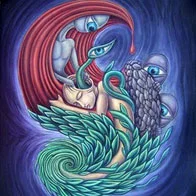
One must not be left with the impression that there is no—and cannot be—an absolute mystery in the world, for it is precisely the world’s indivisibility to intelligence that constitutes the condition for the possibility of Magic.


By absolutizing emotions to the detriment of feelings, the mind sacrifices its stability, plunging into the ecstasy of an ever-changing principle; and at the moment of the sweetest, most intense union with life it simultaneously drains the cup of death, consumed in those fiery embraces.


If excessive seriousness makes movement impossible through its rigidity, excessive flippancy renders it chaotic.
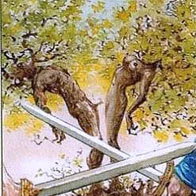
The most important biner, neutralizing which is vitally necessary for any Wayfarer, is the duality of his selfhood and sociality — the duality of “I” and “We”.

Chthonic functions of dogs manifest not only in the mythological and symbolic sphere — for the magus they are a living reality, above all in the form of dogs who guard the Threshold, the sacred Pack of Semargl, or, in Celtic conception, the Dogs of Annwn.



The combination of the forest’s wisdom, age, and mystery makes its principle so deeply magical, and a proper encounter with the forest, entering its secrets, and communion with its power are, for any Magus, without exaggeration, vitally necessary.

For a Magus it is very important to know their periods of maximal and minimal availability of Power and to take them into account in their tactics.
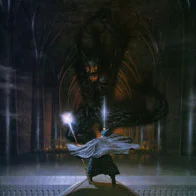
The Magus’ state is complete confidence in his mastery over himself. Can such a state truly fail to confer protectedness?

Entering the Way, the Magus must strive with all his might for systemness — a systematic account of the Way, the systemness of the mind itself, and the systemness of movement. Neglecting systemness threatens not only the Way, but the very being of the Magus.

One can reach the other side only by jumping into the chasm, descending to its bottom, and, pushing off from it, passing through the Demon’s Horns to emerge victorious.


Gratitude is not merely a formal rite accompanying any reception; it is the condition for terminating the process itself, the rupture of the connection between giver and receiver.


For the Magus it is very important to learn to assess a situation in terms of the timeliness of ideas — to understand when it is better to speak and when it is better to remain silent.